The double-standard show Western countries are putting on is enough to make your skin crawl.
Outrage Over Sentencing
Last Friday (November 6), a Hong Kong court sentenced Joshua Wong to 10 years in prison. He had pleaded guilty to colluding with foreign and overseas forces.
Ten Western countries led by the United States fired back with a joint statement. They claimed Wong's case proves the Hong Kong National Security Law is being used to target people for political speech or political activity. They demanded an immediate end to all “unjust” prosecutions under the law and called for Hong Kong people to be granted every right and freedom.
US Secretary of State Marco Rubio went further. He said the United States strongly condemns the Hong Kong court's decision to once again jail Wong for exercising his freedom of speech, and he called for Wong's immediate release along with everyone else unjustly detained.
The Collusion Trail
Make no mistake: Joshua Wong stands charged with colluding with foreign forces, and the focus is collusion with the United States. Multiple strands of evidence show Washington instigating the likes of Jimmy Lai and Joshua Wong to carry out anti-government activities in Hong Kong. Of course, the United States hopes the Joshua Wong and the likes of this world enjoy every freedom to overthrow the Chinese government.
Joshua Wong plainly colluded with the United States time and again. He first emerged during the 2014 Occupy Central movement, and Washington took notice, judging this kind of young protest leader worth cultivating.
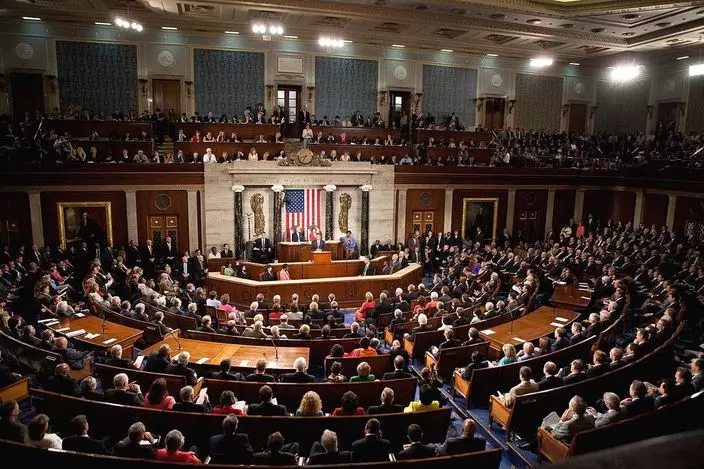
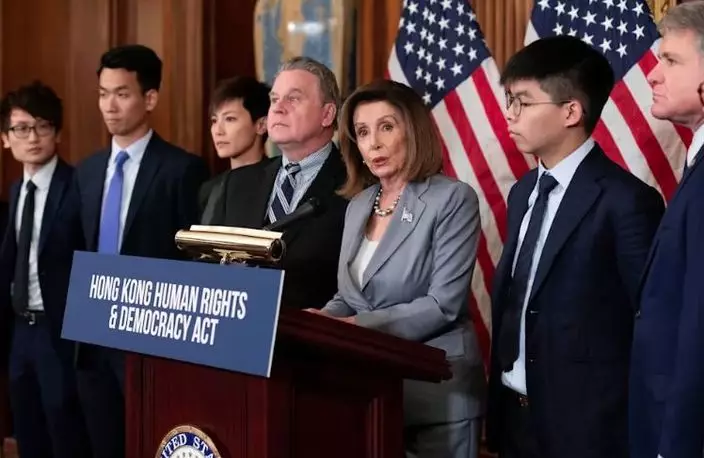
So in November 2016, arrangements were made for Wong to visit the United States and meet then House Speaker Nancy Pelosi, Senator Marco Rubio and other US political figures.
Rubio is now US Secretary of State. Given the background of direct collusion between Rubio and Wong, one can imagine just how neutral his statement on Wong's sentencing really is. This is nothing but a thief crying "stop the thief!."
By March 2018, the United States had launched a trade war against China, and relations between the two countries were extremely tense.
In June a year later, the Black Riots erupted in Hong Kong, with demonstrations filling the streets. Washington concluded the unrest could be exploited.
So in July 2019, it arranged for Jimmy Lai to visit the United States, where he was received by then Vice President Mike Pence, Secretary of State Mike Pompeo, National Security Advisor John Bolton and other senior officials, who cheered him on.
Just think: if Jimmy Lai were merely the media boss of one city, how could a visit to the United States earn a reception of this level? Apart from the US President, every heavyweight of the US government turned out.
If you believe Lai's identity is nothing more than a media boss, you are a fool.
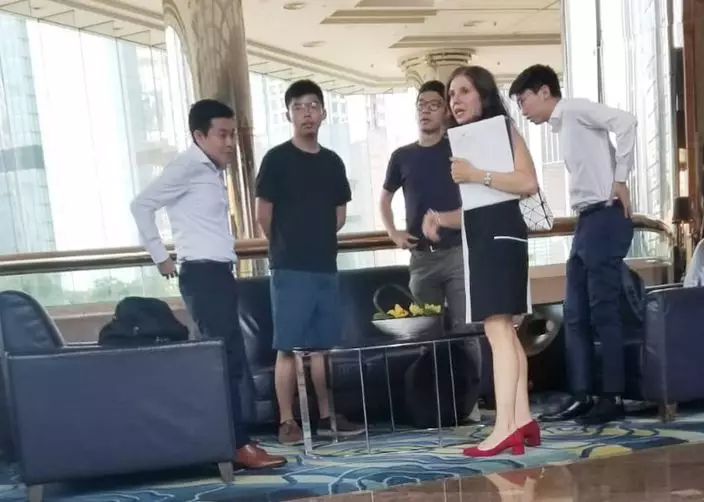
After senior US government officials met Jimmy Lai, they widened the circle of collusion further. On August 6, 2019, Joshua Wong was photographed with Nathan Law and others at a hotel, meeting Julie Eadeh, then political counselor at the US Consulate General in Hong Kong (Eadeh has since risen to US Consul General to Hong Kong and Macau).
After the consular officials met Wong, they arranged on September 17 that year for Wong and others to travel to the United States for congressional hearings, where they were received by Speaker of the US House of Representatives Nancy Pelosi. The trip burnished Wong's image as a student leader and cheered on the Hong Kong rioters.
Wong and the others urged the US Congress to pass the Hong Kong Human Rights and Democracy Act, which amounted to calling on the United States to sanction China. At the peak of the China-US trade war, the United States played every card it had to pressure China, seeking maximum economic benefit and even hoping to use the trade war to crush the Chinese regime.
The Collapse Fantasy
A religious leader close to Jimmy Lai at the time went around telling people he had received a tipwords from senior US officials: "the Chinese Communist regime cannot withstand the trade war and is about to collapse."
These people swallowed the casual fabrications of US officials. They rushed in as a crowd and threw themselves heavily into street violence, saying they were fighting for democracy and freedom while in substance seeking to overthrow the central government.
Which country could tolerate such behavior, willingly serving foreign powers and seeking to subvert one's own country's regime?
Now the United States supports Joshua Wong, Jimmy Lai and others. Could what these two typical figures who collude with foreign forces have done happen in the United States?
Besieging Police Headquarters
First: Launch Protests to Topple the Government
On June 21, 2019, Joshua Wong mobilized a crowd to besiege Hong Kong's Police Headquarters. He later pleaded guilty to charges including incitement, and organizing and participating in an unauthorized assembly.
America has seen its share of street rage, from Occupy Wall Street in 2011 to the Capitol riot in 2021. But never has an American crowd dared lay siege to the country's police headquarters.
Now flip the script. Imagine some Americans flying regularly to Russia, getting repeated audiences with senior Russian officials, then mobilizing a mob in Washington to besiege the capital's police headquarters, their aim to overthrow the government plain for all to see. Would the United States tolerate it?
Lobbying for Sanctions
Second, lobbying for foreign sanctions.
Joshua Wong pushed the United States to pass the Hong Kong Human Rights and Democracy Act. Even after the Hong Kong National Security Law took effect in 2020, he kept working with Nathan Law and others on an the international front, urging sanctions on Chinese Mainland and Hong Kong officials.
Now flip the script. Imagine an American politician standing before Russia's State Duma and calling on Moscow to sanction the United States. Would Washington tolerate that for a second?
Troops at the Border
Third, Lobbying Foreign Troops to Mass at the Border
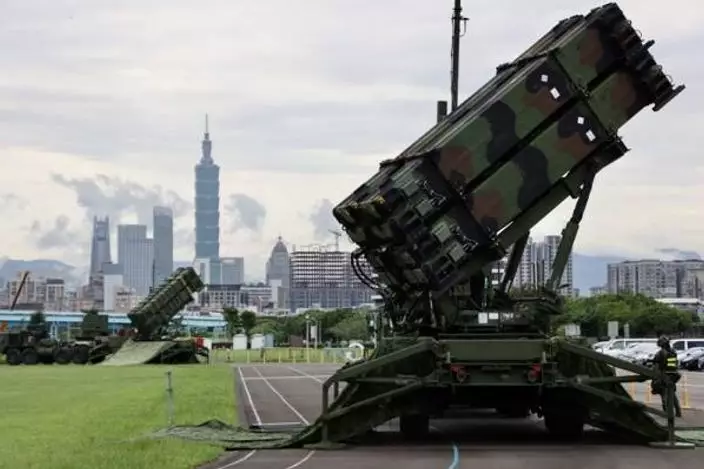
Joshua Wong never had Jimmy Lai's nerve. Lai's trial laid bare just how far he was willing to go. He lobbied the United States to shift its troops stationed in Japan over to Taiwan, bringing a massive military presence to bear against China.
Now flip the script. Suppose an American lobbied Russian President Putin to move Russian troops into Cuba, right on America's doorstep, to threaten the United States. Would Washington tolerate that for a second?
The Guantanamo Standard
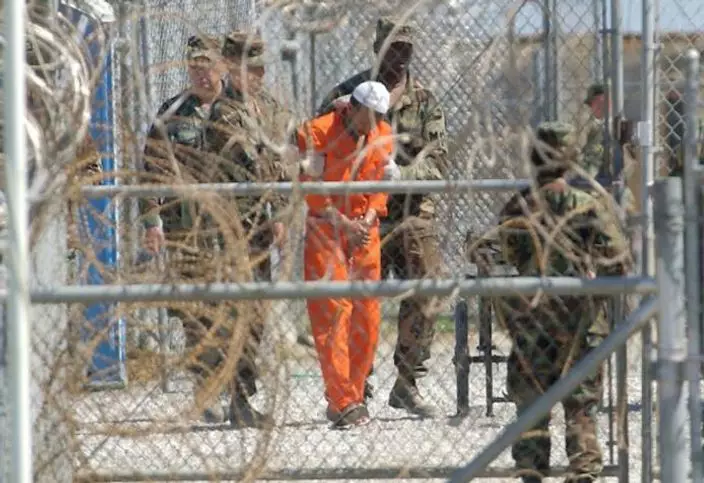
If Joshua Wong and Jimmy Lai had pulled in the United States what they pulled in Hong Kong, colluding with foreign forces, there would be no treason charge. No need to wait for a court ruling, either. They would be shipped straight to Guantanamo Bay for waterboarding. That is America.
So the Hong Kong court's 10-year prison sentence for Joshua Wong, who pleaded guilty, is a punishment that truly fits the crime. You collude with foreign forces to topple the central government, your rebellion fails, and 10 years is already merciful.
The US government waged a trade war and failed to bring China down. Now it has flipped around, all smiles, patching up relations with China and starting a fresh round. And with that, it has sent the Joshua Wongs of the world on their way.
In 10 or 20 years, when the United States goes hunting for anti-China pawns again, there will be new 'Jimmy Lais' and new 'Joshua Wongs.'
Lo Wing-hung
Bastille Commentary
** 博客文章文責自負,不代表本公司立場 **