France is burning. Nationwide demonstrations have erupted and descended into serious violence, and the wave of unrest has spilled into Italy, Belgium, Switzerland and several other European countries.
France Burns, Trump Pounces
Click to Gallery
White shop owner kicked down by Black protester.
White woman blocks looters at retail store.
Meme mocks white leftist begging protesters to stop.
Meme mocks white leftist begging protesters to stop.
Where some lose, others gain. The winners in this chaos include not only Europe's homegrown anti-immigrant far right, but also US President Donald Trump.
Trump wasted no time cashing in. On October 19, he wrote on social media: "Immigrants have taken over France. They (the authorities) must close the borders ..."
That same day, at a campaign rally near Wichita, Kansas, he drove the point home: "If you want to see what is at stake in this election, just look at what's
The Blame Game
Trump pins France's latest explosion of violence on immigrants, "jihadists" and "communists." He accuses Europe's left-wing leaders of pushing immigration policies that are hollowing out their own countries. "We're not going to let that happen to this country," he vows.
Trump also dredged up the warning he says he delivered to French President Emmanuel Macron years ago: close your borders, or lose France. Letting immigrants flood into France, Trump said, was a serious mistake on Macron's part.
At the rally, Trump claimed his administration had spared America a similar fate by tightening immigration policy. Nothing of the sort, he insisted, would ever happen in the United States of America.
Then he turned his fire on the Democratic Party. What is unfolding in France, he claimed, is exactly what Democrats want to see in America. "When you see burning steeples and raging fires in France, remember: this is exactly what the radical Democrats want to do to America." His reference point: the Limoges City Hall building in central France, which was set ablaze.
Vice President JD Vance sang from the same hymn sheet. Writing on X, Vance said: “Western liberals imported the third world into France and other countries in the name of diversity and compassion.” He added: “And I hope Americans are paying attention. This is the future congressional Democrats seek for your country.”
Trailing at the Polls
The US midterm elections are now just two weeks away, on November 3, and Republicans are already staring at a huge deficit.
Trump and Russian President Vladimir Putin reached a deal for Russia to supply diesel to the United States. The agreement did little to lift Trump's standing.
A Reuters poll released on October 19 puts Trump's approval rating at 31%, the lowest of his two presidential terms.
In the congressional vote intention survey, 47% of registered voters support the Democratic Party and 35% back the Republican Party. That 12-point gap is the widest of this election cycle, and it has nearly doubled from the Democrats' 7-point lead two weeks earlier.
In the final sprint, Republican prospects look like a patient on the table who needs a defibrillator jolt to come back. Trump is pulling every trick he has.
He claims that if Republicans hold both the Senate and the House in the midterms, every American adult citizen will receive a $5,000 "Trump dividend." Republicans currently control both chambers.
His old friend Elon Musk is handing out money too. Musk announced on October 19 that next year he will give one SpaceX share to every child in the United States. At SpaceX's Friday price of $146, or HK$1,146, Musk is effectively distributing $10.7 billion on his old friend's behalf to 73 million Americans under 18.

White shop owner kicked down by Black protester.

White woman blocks looters at retail store.
Chaos as Campaign Fuel
Handing out cash may buy a little goodwill. But the biggest variable in the US election has become the psychological shock of the French riots. Trump's most potent pitch to American voters is his anti-immigration platform, and the overwhelming majority of rioters seen online in France are ethnic minorities.
Now picture what Americans are watching. A stout white French shopkeeper stands guard in front of his store, only to be kicked to the ground by black demonstrators. Another clip shows a white woman trying to stop looters from ransacking a retail shop. Online rumors claim she said she herself had voted to support immigration and that it should not be like this, though nobody knows what the truth is. For white Americans preparing to vote Democratic, the impact is real.
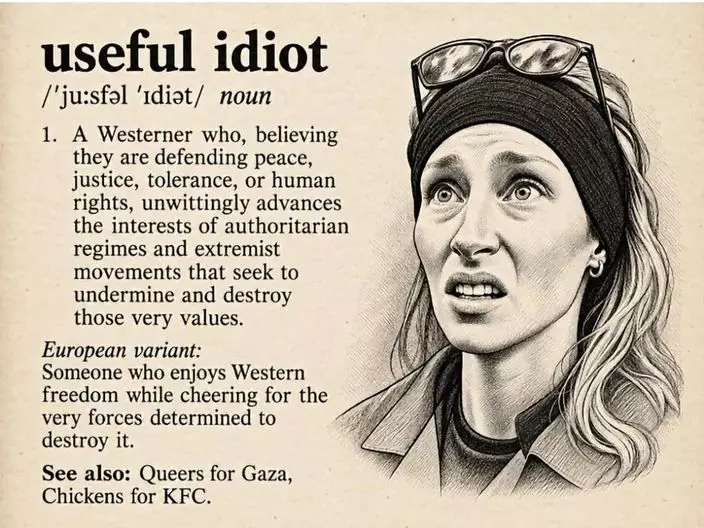
Meme mocks white leftist begging protesters to stop.
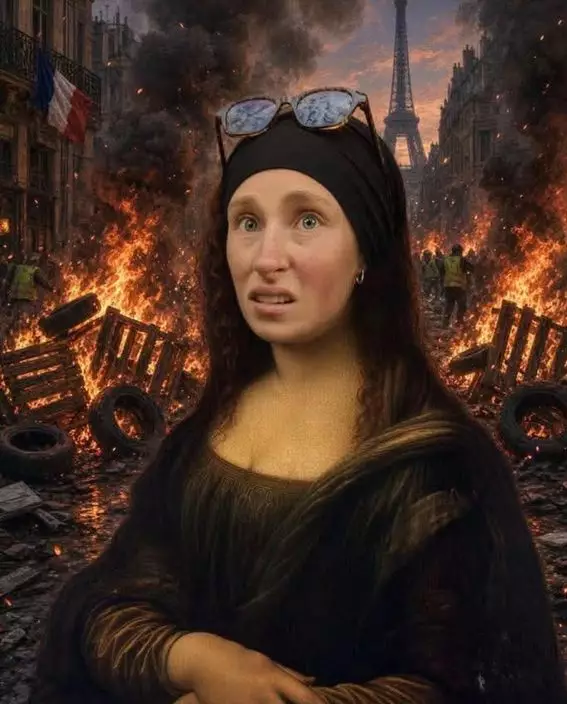
Meme mocks white leftist begging protesters to stop.
That leaves one final question: is the United States the hidden hand behind the French riots? There are two possibilities. One, Trump created the chaos in France. Two, Trump exploited the chaos in France. The first cannot be confirmed. But at the very least, the second is so true.
From Trump's point of view, holding just one chamber is enough. Keep either the Senate or the House out of full Democratic control, and he has already won by losing less.
Lo Wing-hung
Bastille Commentary
** 博客文章文責自負,不代表本公司立場 **
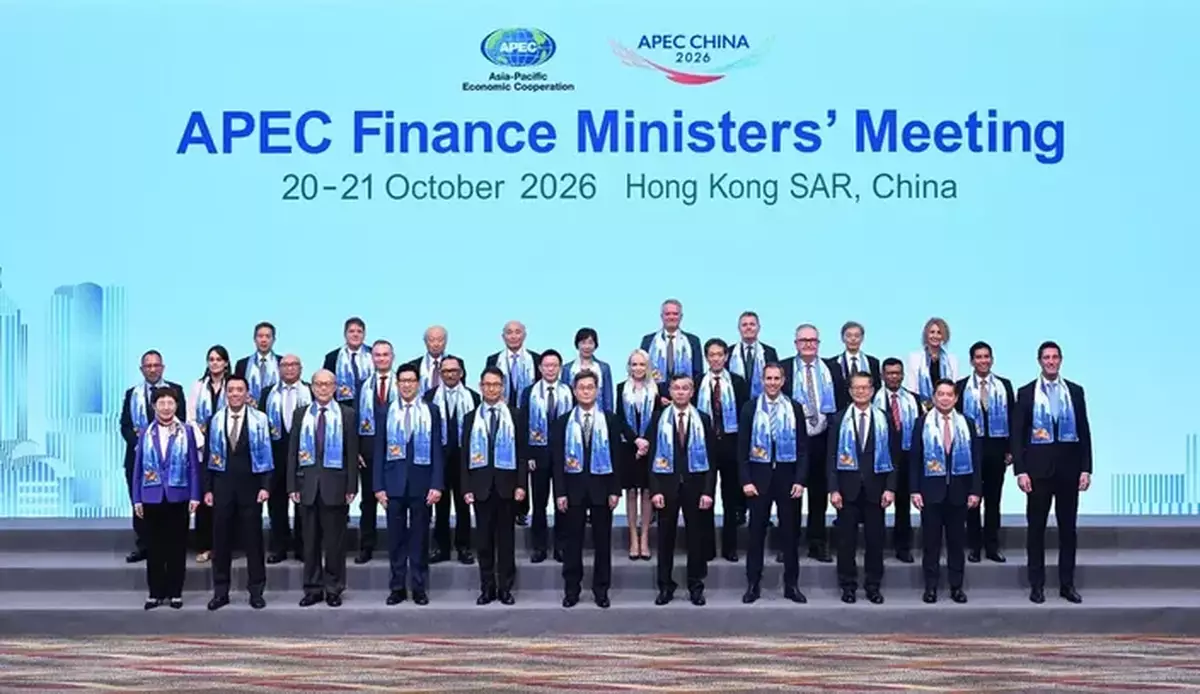
Hong Kong is hosting the Asia-Pacific Economic Cooperation (APEC) Finance Ministers' Meeting on behalf of the country. The gathering serves as a high-profile prelude to the 33rd APEC Economic Leaders' Meeting, which China will host in Shenzhen this November.
Hong Kong's APEC Moment
It is China's third turn as APEC host after an 11-year gap, and Hong Kong's first time staging the finance ministers' meeting. More than 500 financial officials, delegates and business leaders from 21 member economies have descended on the city.
The timing tells its own story. In early October, the US-hosted Group of Twenty (G20) trade ministers met in Milwaukee, where Washington tried to rally a statement targeting so-called "China's overcapacity." The push ended in failure.
The contrast could hardly be sharper. While Washington plays confrontation, Beijing plays cooperation. This APEC Finance Ministers' Meeting zeroed in on areas where members can work together, from closer macroeconomic policy communication to the new opportunities opened up by artificial intelligence.
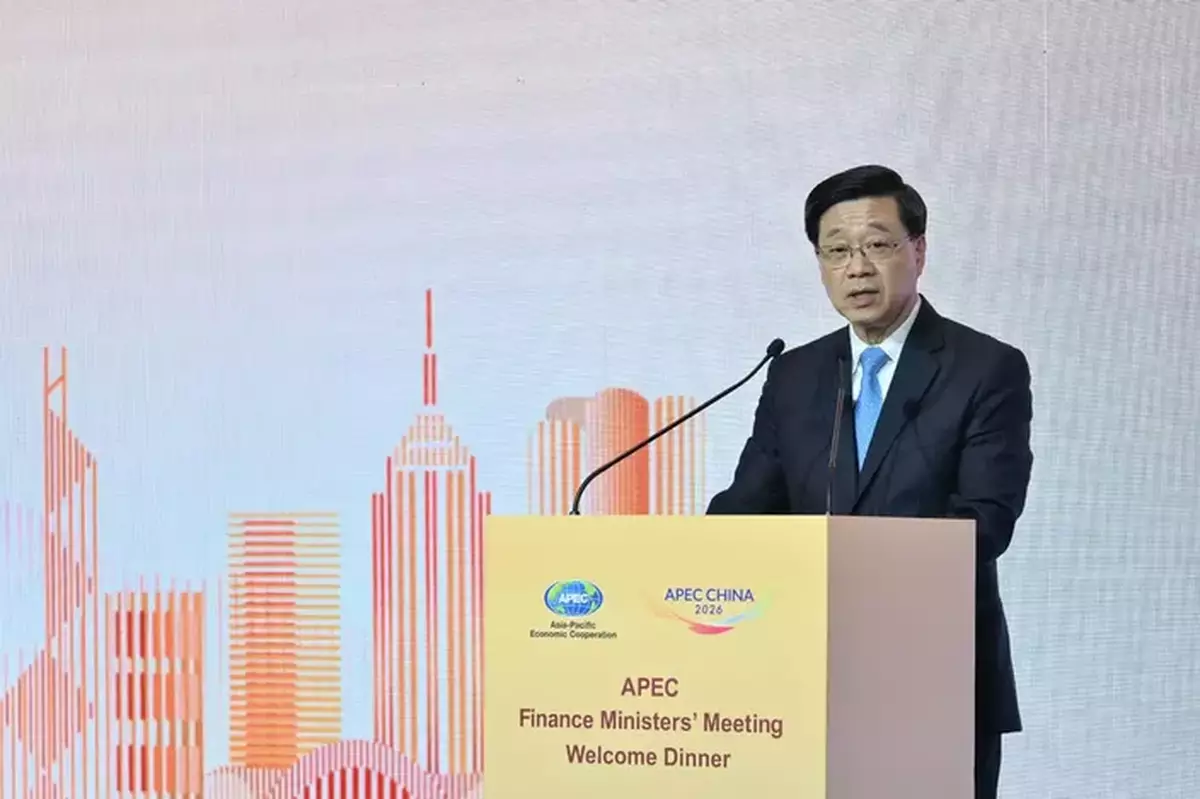
Chief Executive John Lee said on October 20 that the Hong Kong Special Administrative Region is hosting the APEC Finance Ministers' Meeting for the first time. Hong Kong will seize this high-level international platform and put its role as an international financial center to work, showing the attending APEC finance officials, international organization representatives and the wider world its all-round development across the economy, finance and society.
Lee will also introduce Hong Kong's combined strengths as a core city of the Guangdong-Hong Kong-Macao Greater Bay Area, a hub that connects national opportunities with international ones.
Hong Kong has been here before, and the memories are not all fond. The last time the city hosted a major international conference was 21 years ago, in December 2005, when it staged the Sixth WTO Ministerial Conference. Crowds of Korean farmers came to protest the World Trade Organization, and together with local demonstrations the event erupted in repeated clashes.
This time, the APEC Finance Ministers' Meeting came off peacefully, a success from start to finish.
A Deliberate Signal
China is this year's APEC host economy, and its decision to stage the Finance Ministers' Meeting in Hong Kong carries a deliberate message.
The backdrop is tense. The United States began sanctioning Chinese Mainland and Hong Kong officials in 2020, and the Chief Executive himself is on that list. The aim was to undercut Hong Kong's standing as an international financial center.
Lately, though, China-US relations have thawed slightly. US Secretary of State Marco Rubio, himself under Chinese sanctions, traveled to China in May alongside President Donald Trump. Chief Executive John Lee, meanwhile, hosted a welcome dinner for the APEC Finance Ministers' Meeting. Both sides are playing down the effect of their mutual sanctions.
Hong Kong's turn as host of the APEC Finance Ministers' Meeting helps burnish the city's status as an international hub. That can be seen on several levels.
First, the meeting amounts to rock-solid backing from Beijing.
This APEC Finance Ministers' Meeting is hosted by China's Ministry of Finance and organized by the Hong Kong SAR Government. That arrangement is widely read as a strong endorsement of Hong Kong's role as an international hub.
The timing matters. Hong Kong is rolling out its first five-year plan and aligning with the national 15th Five-Year Plan. Handing the city such a high-level multilateral financial dialogue shows the world that Hong Kong's unique place in the Asia-Pacific financial landscape is not fading. It is growing stronger.
Show, Don't Tell
Second, it puts Hong Kong's existing strengths under the global spotlight.
The meeting brings together financial and economic policymakers from 21 APEC member economies. By hosting it, Hong Kong gives these officials and business leaders a chance to see the city firsthand, clearing away their misunderstandings and biases.
Consider what I hear from foreign diplomats and consular officials posted here. Even their own families and friends have doubts about the assignment. The usual questions: Is Hong Kong chaotic? Can you even get on the internet there?
Bringing these visitors, who rarely came to Hong Kong in the past, to see the situation for themselves helps erase bias and misunderstanding.
It also opens their eyes to Hong Kong's institutional strengths: a mature offshore renminbi market, a financial management and regulatory framework aligned with international standards, comprehensive legal and professional services, and a free and open business environment. That is Hong Kong showing its strengths, live and on the ground, to the Asia-Pacific business community.
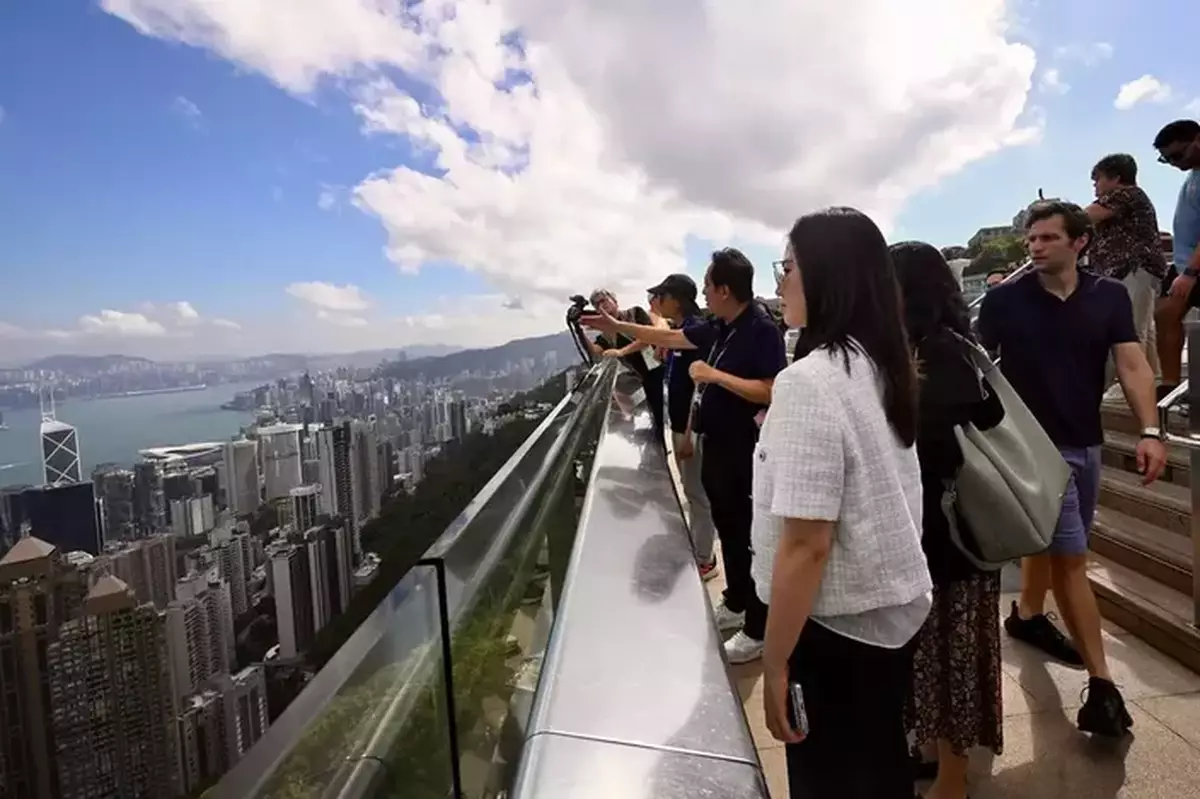
Hong Kong has lined up a program of visits for these foreign APEC members and business leaders. Day one is mostly sightseeing. Day two takes in the Science Park, Cyberport and the International Mediation Institute, along with the Palace Museum and the Museum of Art.
Every stop drives home the role Hong Kong can play in innovation and technology, culture, and even international affairs.
The Bigger Prize
Third, it highlights Hong Kong's status as an international center.
Geopolitical rivalry used to be less fierce. London, New York, Switzerland, Singapore and Hong Kong were all international centers that China could put to work.
That era is ending. As a once-in-a-century upheaval arrives and China-US competition intensifies, China has no choice but to weigh the security of those centers. Under One Country, Hong Kong's status comes into full relief.
There is no ISO-style certification for an international center, but some institutions have built yardsticks. The International Exchange Center City Index, released by Tsinghua University and Deloitte, defines one as a city that connects and serves the world, gathers high-end international factors, and carries real influence in global affairs.
Its framework has three first-level indicators: attractiveness, influence and connectivity. Those sit above 11 second-level measures, including livability, business friendliness, international affairs, technological innovation and transport facilities.
In the 2025 assessment, Hong Kong ranks seventh. Ahead of it, in order, are London, Paris, New York, Seoul, Singapore and Beijing. That is a strong position, with room still to rise.
For the specific role of international financial center, the Global Financial Centres Index (GFCI) is one of the most authoritative systems. It continually assesses major financial cities across five dimensions: business environment, human capital, infrastructure, financial-sector development, and reputational and general.
In that system, Hong Kong has long ranked third worldwide. It stands in the first tier alongside New York and London.
Overall, with national support, Hong Kong keeps advancing along the path toward becoming an international center.
An international city's central standing rests on lasting inflows of capital and talent, predictable law and regulation, and deep links to the real economy.
The role is not just to be a node for international exchange, or only a market that follows established rules. It is to fight for a say where rules are made. Hong Kong's progress on that front is crucial, and hosting the APEC Finance Ministers' Meeting is only a beginning.
Lo Wing-hung