Under the National 15th Five-Year Plan, Hong Kong is accelerating its integration into China's overall development. As the workplace and social environment transform, fluent Putonghua and solid Chinese language skills have evolved from a “bonus” to a “must-have.” Education technology company Chinese Road has developed its own AI self-learning and management system targeting the pain points Hong Kong students face in Putonghua learning. Combining speech assessment, scenario-based dialogue and automatic correction, the system allows students to practise anytime, anywhere.
The system has now been adopted by over 100 schools across Hong Kong, with 20,000 one-to-one online Putonghua students. Chinese Road has also built a DSE Chinese language learning platform featuring an AI teaching assistant covering reading analysis, writing guidance, and correction, helping students tackle this challenging subject.
Click to Gallery
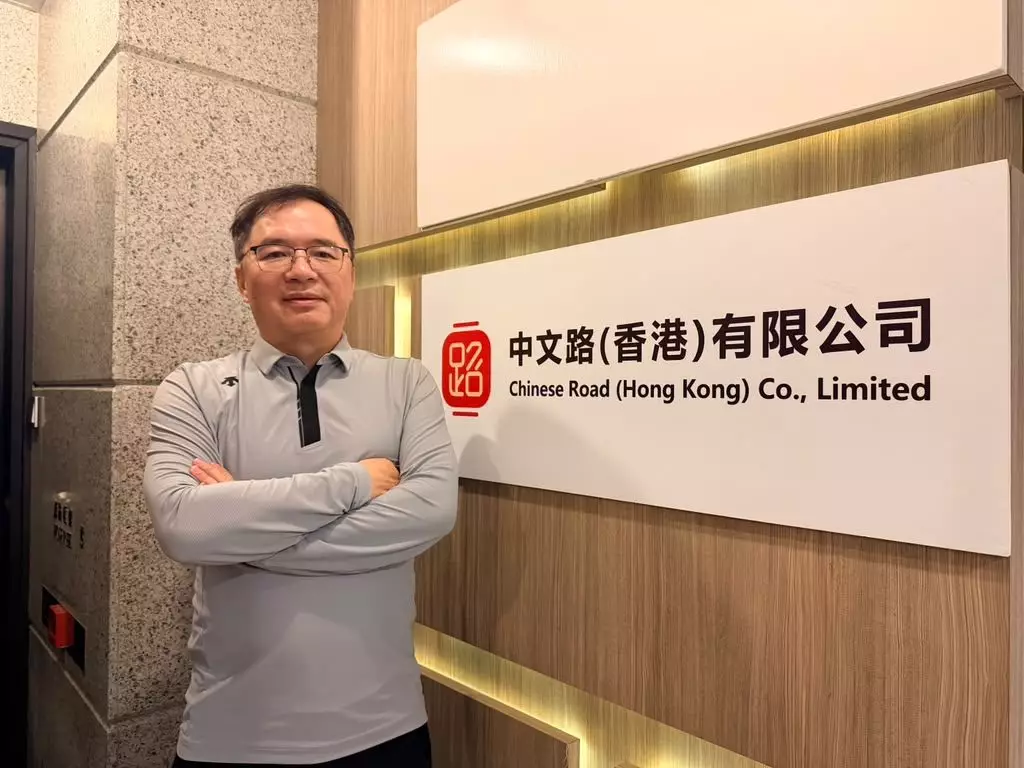
Guo Xinlin, Chairman of Chinese Road. Photo by Bastille Post
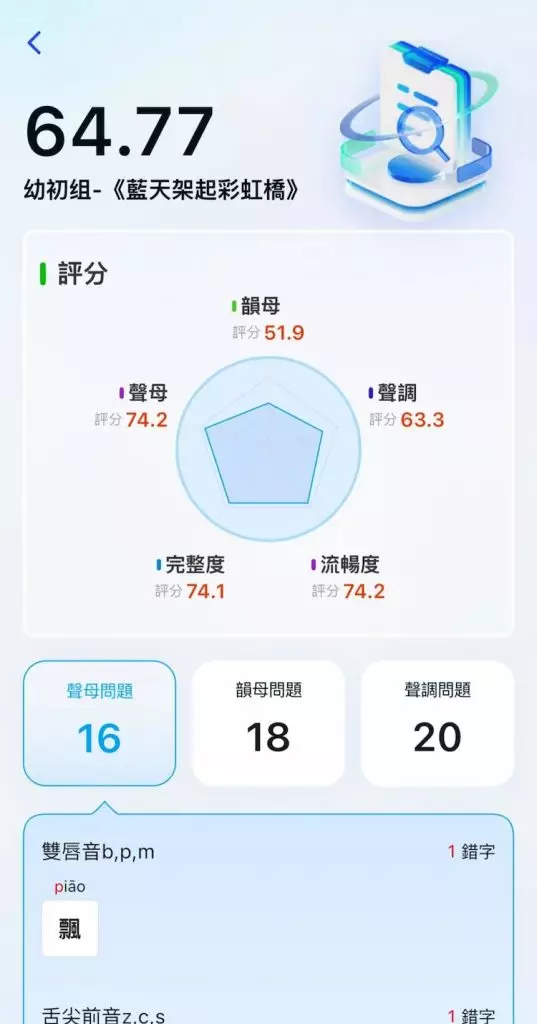
Chinese Road was the first to apply AI speech technology and an intelligent scoring system in 2022 to organise the inaugural Tseng Hin Pei Bauhinia Cup Hong Kong Children's Putonghua Recitation Competition. Photo source: Chinese Road
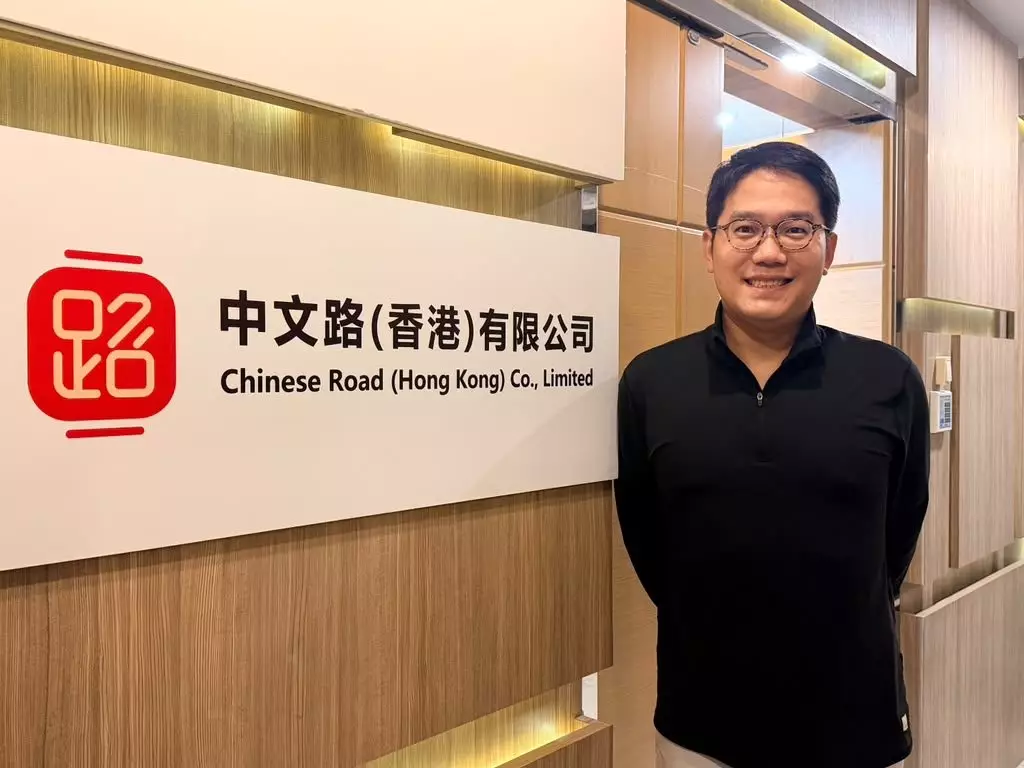
Yao Kai, Chief Executive Officer of Chinese Road. Photo by Bastille Post
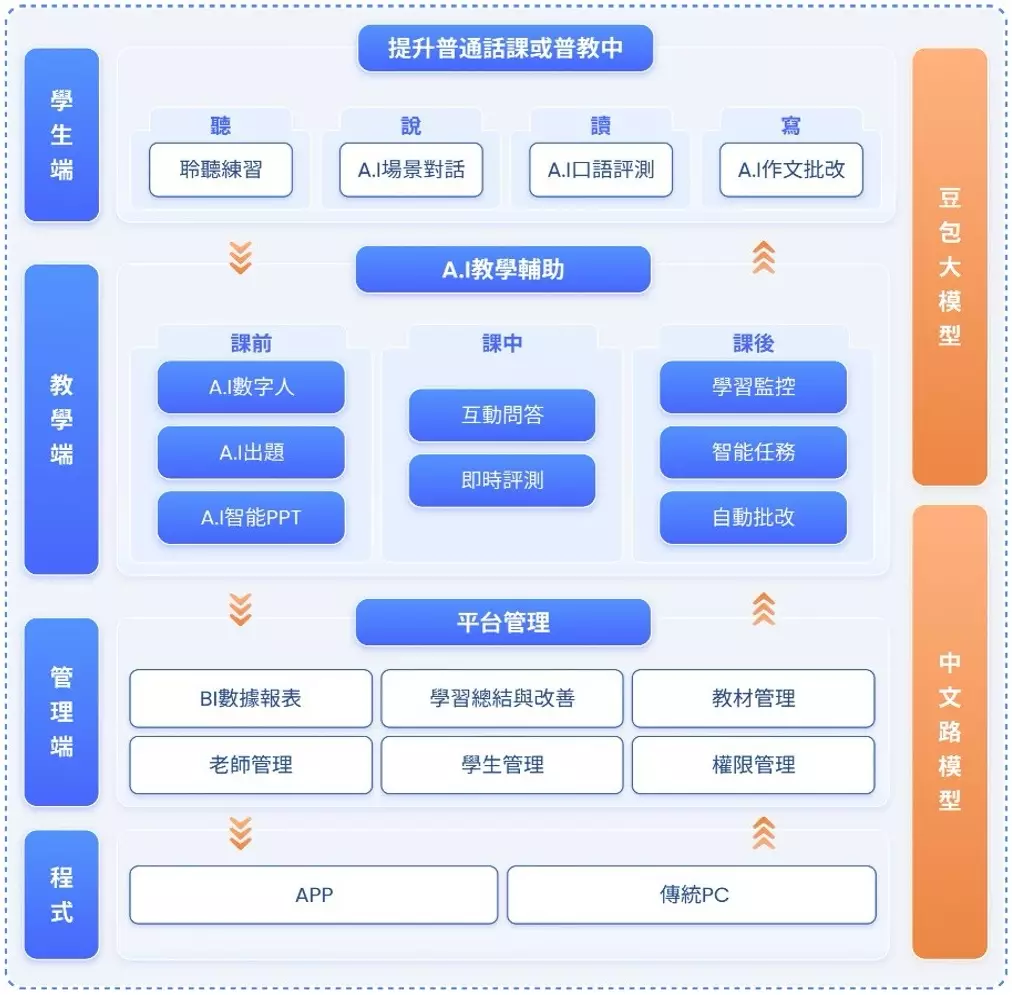
Chinese Road developed the AI Putonghua self-learning and management system designed specifically for Hong Kong primary and secondary schools. Photo source: Chinese Road
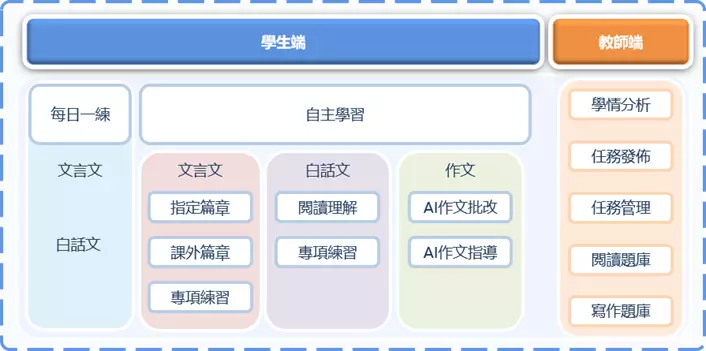
Beyond Putonghua teaching, Chinese Road has also built the “ AI DSE Chinese Language Learning Platform,” an AI teaching assistant covering reading analysis, writing guidance, and correction, targeting the Chinese Language paper dubbed the “dreaded paper” in the HKDSE. Photo source: Chinese Road
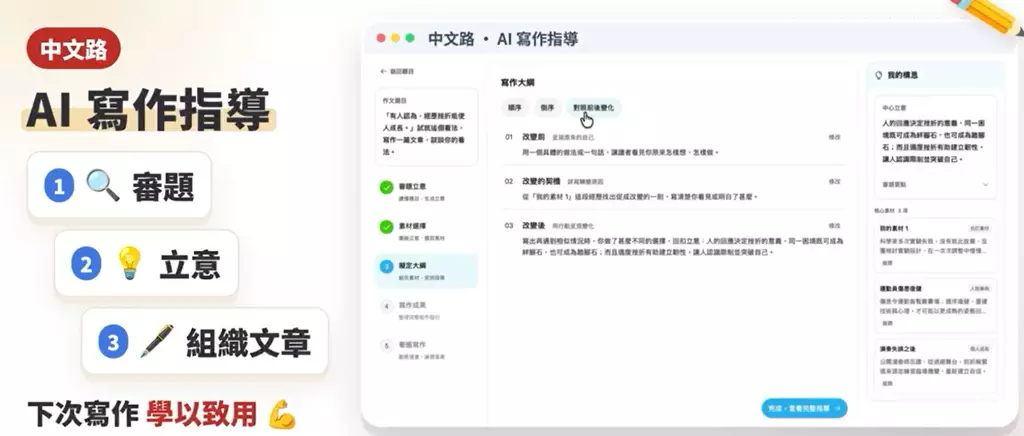
For writing, the platform has built a loop of “AI writing guidance, correction and summary.” Photo source: Chinese Road
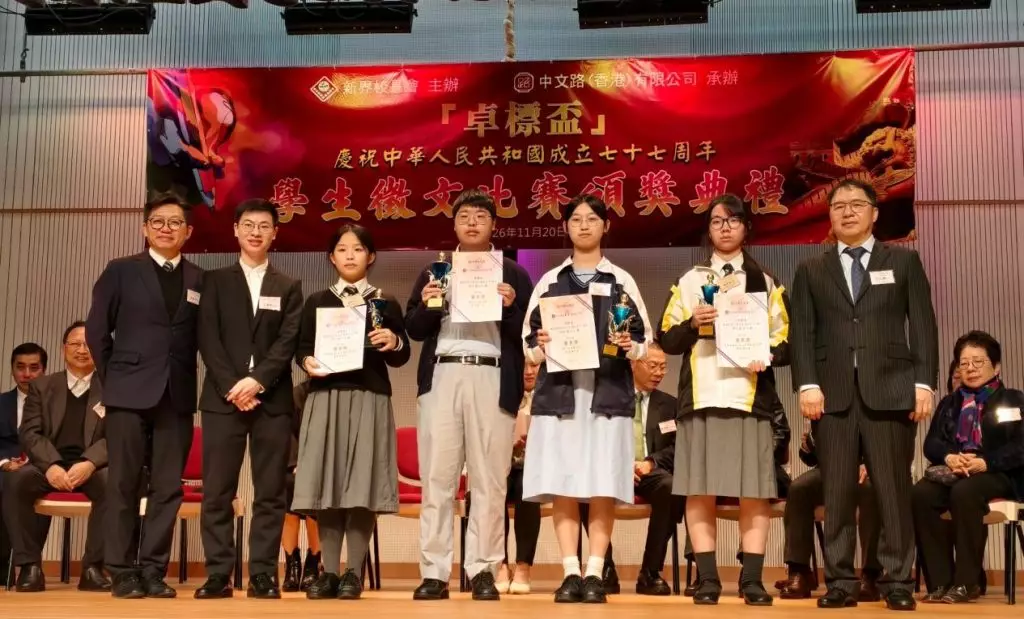
At the Zhuo Biao Cup Student Essay Competition held this month, Chinese Road also successfully applied its “AI essay correction” technology to efficiently process over 2,800 entries. Photo source: Chinese Road
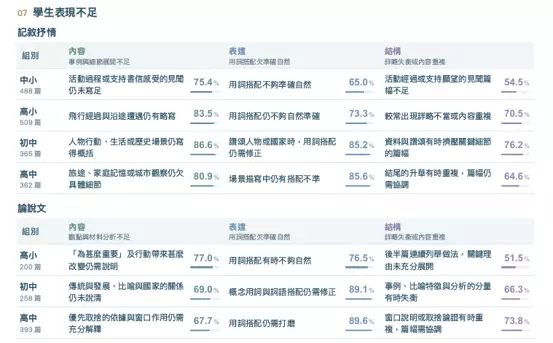
Yao further noted that this model substantially reduces the manpower and time costs of traditional judging, ensuring objectivity and efficiency, while safeguarding students’ creative space and humanistic care through human oversight. Photo source: Chinese Road
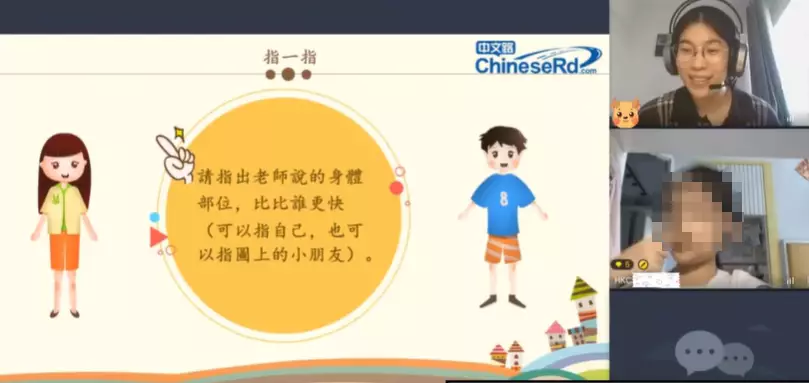
Chinese Road currently has branches and teams in Vietnam, Indonesia and Thailand, with over 1,000 part-time teachers and more than 500 active teachers, 20,000 one-to-one online Putonghua students, and systems covering a total of over 100,000 students across various categories. Photo source: Chinese Road
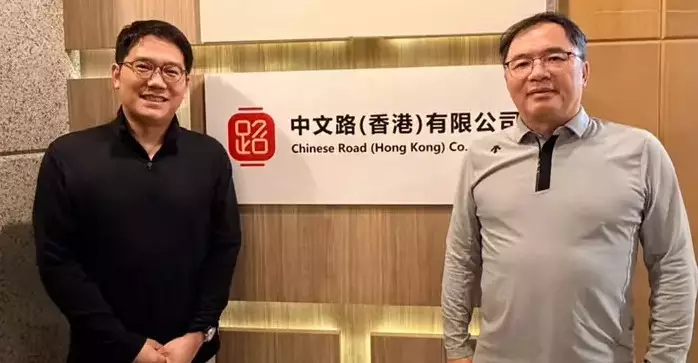
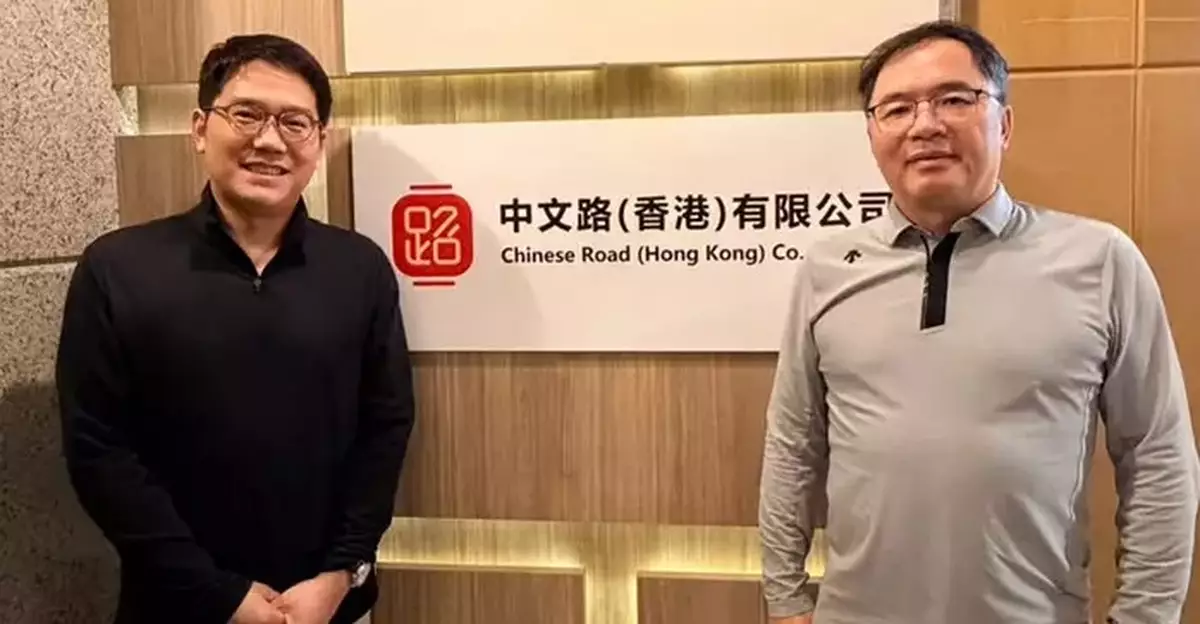
Guo Xinlin, Chairman of Chinese Road (Hong Kong) Co., Limited (right), and Yao Kai, Chief Executive Officer (left). Photo by Bastille Post
Founded in 2018, Chinese Road seized the opportunity presented by the Education Bureau’s push for digital transformation and its AI application subsidies, combining years of accumulated Chinese education data with AI technology to develop dedicated AI Putonghua and DSE Chinese language management platforms for primary and secondary schools across Hong Kong.
In an interview with Bastille Post, Guo Xinlin, Chairman of Chinese Road (Hong Kong) Co., Limited, and Yao Kai, Chief Executive Officer, said Chinese Road’s cumulative one-to-one Putonghua student base has exceeded 20,000, with a repurchase rate of over 80 percent. The AI Putonghua self-learning and management system has been adopted by more than 100 schools in Hong Kong, with a school renewal rate of over 90 percent. Looking ahead, the company aims to continue serving middle-class and grassroots families with cost-effective services, helping Hong Kong youth groups seize development opportunities under the 15th Five-Year Plan.
Guo Xinlin, Chairman of Chinese Road, said the company was initially headquartered in Shenzhen, focusing on international Chinese education markets in Southeast Asia, including Vietnam, Thailand and Indonesia. During the COVID-19 pandemic in 2020, the company identified an opportunity for online learning and launched one-to-one online Putonghua courses for children, receiving an enthusiastic response from a large number of Hong Kong parents, prompting it to shift its focus further “back” to Hong Kong.
Guo Xinlin, Chairman of Chinese Road. Photo by Bastille Post
Guo explained that the traditional offline tutoring model is extremely costly in Hong Kong and difficult to scale, nor can it fully mobilise high-quality Putonghua teachers from the Mainland. The online model, by contrast, can flexibly deploy outstanding teachers from across China. Chinese Road’s cumulative one-to-one Putonghua student base has now exceeded 20,000, with a repurchase rate of over 80 percent.
Beyond its online learning platform, Chinese Road was the first to apply AI speech technology and an intelligent scoring system in 2022 to organise the inaugural Tseng Hin Pei Bauhinia Cup Hong Kong Children's Putonghua Recitation Competition, attracting over 2,000 student registrations. By 2026, the competition had been successfully held for five consecutive years.
Chinese Road was the first to apply AI speech technology and an intelligent scoring system in 2022 to organise the inaugural Tseng Hin Pei Bauhinia Cup Hong Kong Children's Putonghua Recitation Competition. Photo source: Chinese Road
In 2025, in response to the Education Bureau’s “One-off Grant for Promotion of Self-directed Language Learning (Putonghua)”, Chinese Road developed the AI Putonghua self-learning and management system designed specifically for Hong Kong primary and secondary schools. CEO Yao Kai acknowledged that Putonghua is currently a “minor subject” in Hong Kong, facing the practical difficulty of extremely limited class hours: “Schools across Hong Kong average only one to two Putonghua lessons per week; some have one lesson every two weeks. Coupled with relatively tight teaching resources, one teacher often has to cover an entire year group or even more than ten classes. Each student may have less than two minutes of actual speaking practice in class. Lacking a language environment and practice time, teaching is very difficult to make effective.”
Yao Kai, Chief Executive Officer of Chinese Road. Photo by Bastille Post
He pointed out that the system combines speech assessment, scenario-based dialogue and automatic correction, not only allowing students to practise anytime, anywhere, but also enabling its back-end learning analytics to precisely identify weaknesses at class and year-group levels, so teachers can make targeted improvements and principals can review semester outcomes. The system has now been introduced by over 100 schools in Hong Kong, with a school renewal rate of over 90 percent.
Chinese Road developed the AI Putonghua self-learning and management system designed specifically for Hong Kong primary and secondary schools. Photo source: Chinese Road
Beyond Putonghua teaching, Chinese Road has also built the “AI DSE Chinese Language Learning Platform,” an AI teaching assistant covering reading analysis, writing guidance, and correction, targeting the Chinese Language paper dubbed the “dreaded paper” in the HKDSE.
For reading, the platform contains a bank of over 2,000 reading comprehension questions, covering 12 designated texts and a large number of extracurricular passages, offering complete classical Chinese explanations and instantly accessible materials. Targeting Hong Kong students’ commonly weak classical Chinese, the platform uses AI to produce background videos. For example, explaining the historical context of Memorial to Yueyang Tower and the writer Fan Zhongyan’s creation motivation, helping students build prior cultural knowledge. The platform is also planning a “daily new changes” function that will combine daily current affairs to precisely push suitable reading articles to students of different age groups, helping them accumulate writing materials and improve analytical skills in their daily lives.
Beyond Putonghua teaching, Chinese Road has also built the “ AI DSE Chinese Language Learning Platform,” an AI teaching assistant covering reading analysis, writing guidance, and correction, targeting the Chinese Language paper dubbed the “dreaded paper” in the HKDSE. Photo source: Chinese Road
For writing, the platform has built a loop of “AI writing guidance, correction and summary”: “writing guidance” helps students analyse the requirement, determine the theme and plan the structure; “writing correction” not only gives a score but also provides specific comments indicating directions for improvement; “writing summary” helps teachers, after receiving whole-class results, conduct focused explanations in class. The platform also supports a high degree of school-based customisation: teachers can upload their own passages or questions, and AI will automatically generate questions or correction suggestions for teachers to review before use.
For writing, the platform has built a loop of “AI writing guidance, correction and summary.” Photo source: Chinese Road
In addition, the platform features “second-round training on wrong answers” to help students consolidate weak areas, and will soon launch a “post-writing guidance” function—unlike directly providing a revised version, AI only indicates the direction for revision, such as pointing out insufficient evidence, allowing students to revise on their own and then receive additional marks from the system, so that students, like editors, can genuinely improve their writing through repeated iterations.
At the Zhuo Biao Cup Student Essay Competition held this month, Chinese Road also successfully applied its “AI essay correction” technology to efficiently process over 2,800 entries. Yao Kai explained that the company pioneered an innovative “AI preliminary assessment plus human expert” evaluation mechanism: the platform completed the first round of correction and generated comments with handwriting traditional and simplified Chinese recognition (OCR) accuracy of up to 99 percent, closely aligned with DSE marking standards; multiple AIs scored independently, and whenever the discrepancy between AI scores exceeded 5 percent, or when an essay had an unconventional structure or was highly creative, the system would automatically flag it and refer it to expert judges for re-assessment.
At the Zhuo Biao Cup Student Essay Competition held this month, Chinese Road also successfully applied its “AI essay correction” technology to efficiently process over 2,800 entries. Photo source: Chinese Road
Yao further noted that this model substantially reduces the manpower and time costs of traditional judging, ensuring objectivity and efficiency, while safeguarding students’ creative space and humanistic care through human oversight. For everyday teaching, AI is not simply about “reducing workload,” but about freeing teachers from mechanical correction so they have more time for targeted teaching and genuinely improving students’ abilities. The platform is currently applicable to different year levels from upper primary to senior secondary, and will continue to be optimised with reference to the Education Bureau’s marking guidelines.
Yao further noted that this model substantially reduces the manpower and time costs of traditional judging, ensuring objectivity and efficiency, while safeguarding students’ creative space and humanistic care through human oversight. Photo source: Chinese Road
Hong Kong’s star tutors charge high fees. Guo Xinlin acknowledged that the value of star tutors essentially lies in accumulated experience and data, which is precisely AI’s strength. Chinese Road hopes to provide a “fail-safe” option for the broad middle-class and grassroots families at an extremely cost-effective price of a few thousand Hong Kong dollars per year.
Chinese Road currently has branches and teams in Vietnam, Indonesia and Thailand, with over 1,000 part-time teachers and more than 500 active teachers, 20,000 one-to-one online Putonghua students, and systems covering a total of over 100,000 students across various categories. As the HKSAR Government accelerates its alignment with the National 15th Five-Year Plan, Chinese Road will focus its future resources on the Hong Kong and Macao markets, leveraging sample data from over 3 million online lessons accumulated to date to provide high-quality, cost-effective, and inclusive Chinese education services for Hong Kong families.
Chinese Road currently has branches and teams in Vietnam, Indonesia and Thailand, with over 1,000 part-time teachers and more than 500 active teachers, 20,000 one-to-one online Putonghua students, and systems covering a total of over 100,000 students across various categories. Photo source: Chinese Road
Asked about trends in Hong Kong students learning Putonghua, Yao Kai observed a marked decline in the age of learners in recent years: “In the past, most students enrolling in online courses were in Primary 3 or 4. In recent years, the number of K2 and K3 kindergarten students has increased significantly. Parents realise that early childhood is the golden period for language initiation, and Putonghua has become an important bonus item in primary school admission interviews.”
However, Guo Xinlin also acknowledged that there is still room for improvement in how much the Hong Kong education sector and some parents value Putonghua and Chinese soft power. He believes that in the future, Putonghua and the DSE Chinese Language subject can be more closely integrated. Against the backdrop of deep integration in the Greater Bay Area, he said, mastering authentic Putonghua and Chinese language skills with cultural depth will be key for Hong Kong youth groups to maintain their core competitiveness.
Guo Xinlin, Chairman of Chinese Road (Hong Kong) Co., Limited (right), and Yao Kai, Chief Executive Officer (left). Photo by Bastille Post