Skip to Content Facebook Feature Image

India's GREEN Olympiad Wins MBRKA 2026 for Advancing Environmental Education

Business

India's GREEN Olympiad Wins MBRKA 2026 for Advancing Environmental Education
Business

Business

India's GREEN Olympiad Wins MBRKA 2026 for Advancing Environmental Education

2026-11-25 17:50 Last Updated At:18:00

DUBAI, United Arab Emirates--(BUSINESS WIRE)--Nov 25, 2026--

The GREEN Olympiad, a flagship environmental education initiative of The Energy and Resources Institute (TERI) in India, won in the Organizations category at the ninth edition of the Mohammed bin Rashid Al Maktoum Knowledge Award (MBRKA). The recognition highlights the initiative’s outstanding contributions to advancing environmental literacy, promoting sustainability awareness, and empowering future generations through knowledge.

This press release features multimedia. View the full release here: https://www.businesswire.com/news/home/20261124584563/en/

Announced during the special edition of the Knowledge Summit 2026 held in Dubai, the award highlights India’s longstanding efforts to integrate environmental education into diverse learning systems. Such efforts help equip young people with the knowledge and skills needed to address global sustainability challenges.

The GREEN Olympiad has developed into one of India’s leading educational initiatives, empowering millions of students for more than two decades. Notably, its influence extends beyond India, reaching over 15 countries, including the UAE, the United States, Singapore, and Türkiye. The initiative has thus significantly contributed to fostering environmental responsibility and sustainability awareness among students worldwide.

Organized by TERI’s Environment Education and Awareness (EEA) Division, the GREEN Olympiad goes beyond conventional academic examinations by encouraging students to apply critical thinking and problem-solving skills to tackle real-world environmental challenges. Its syllabus covers climate change, biodiversity conservation, natural resource management, the circular economy, waste management, and sustainable lifestyles.

The initiative has a strong presence within India’s educational landscape. According to TERI, the Olympiad reached over 580 districts and engaged over 120,000 students in its previous edition. The program is offered in seven languages: Assamese, English, Hindi, Kannada, Marathi, Odia, and Tamil. It continues to advance its vision of making sustainability education more accessible to diverse student communities across the country.

Furthermore, the GREEN Olympiad aligns with India’s Mission LiFE (Lifestyle for Environment), the National Education Policy 2020, and Target 4.7 of the United Nations Sustainable Development Goals, which promotes education for sustainable development. Such alignment further strengthens its role in transforming environmental knowledge into practical action and responsible everyday behavior.

Taking its educational impact beyond schools, TERI introduced the GREEN Olympiad for Youth (GO4Youth) in 2020, extending sustainability learning opportunities to those in higher education programs. The program aims to nurture a deeper understanding of environmental challenges, green skills, and sustainability policies, creating pathways for continued engagement with environmental issues.

The recognition highlights MBRKA’s commitment to honoring initiatives that use knowledge and innovation to address pressing global challenges. It further aligns with the UAE’s longstanding commitment to sustainability and environmental education, building upon its global climate leadership and ongoing efforts to strengthen international knowledge exchange following the hosting of COP28 in Dubai.

*Source:AETOSWire
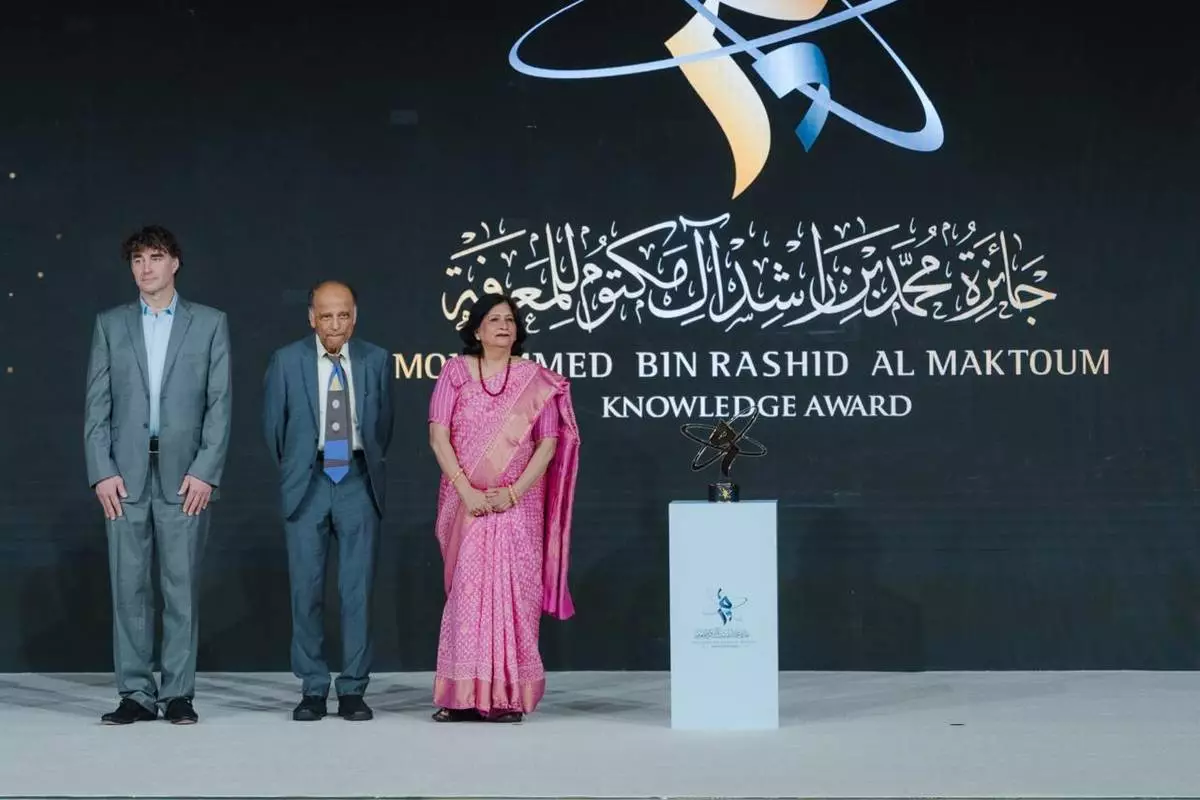
India's GREEN Olympiad Wins MBRKA 2026 for Advancing Environmental Education (Photo: AETOSWire)


India's GREEN Olympiad Wins MBRKA 2026 for Advancing Environmental Education (Photo: AETOSWire)

MELBOURNE, Australia (AP) — Australia’s Parliament on Wednesday passed online safety laws that could expose tech giants to multibillion-dollar fines for failing to prevent foreseeable online harms.

The United States and the Australian opposition party warned that the legislation would lead to censorship of lawful speech.

The Digital Duty of Care Act requires Big Tech to proactively reduce the risk of harm before it occurs, according to an Australian government statement.

The legislation is similar to the European Union’s Digital Services Act, passed in 2022, and the United Kingdom’s Online Safety Act passed a year later.

The legislation became law in the House of Representatives, where the center-left Labor Party government commands a majority, by 97 votes to 43.

Prime Minister Anthony Albanese told Parliament the law would stand as a “powerful instrument to protect our children and our society from online harms by placing the onus on the tech platforms to ensure a safer online environment.”

“This is a victory for our children and young people. The dangers were unforeseen when the digital world was young,” Albanese said. “But now that the digital world has matured, they can be easily recognized and they can be remedied."

Opposition leader Angus Taylor told Parliament he would repeal the legislation if his conservative Liberal Party wins elections in 2028. Taylor described the legislation as “authoritarian.”

“This bill is a blank check for political censorship,” Taylor told Parliament. “The bill is an attack on free speech that is absolutely central to our democracy."

The government struck a deal with the minor Greens party on Tuesday to get the legislation through the Senate, where no party holds a majority.

“Today, the safety and wellbeing of Australians and their children have finally been put ahead of Big Tech’s bottom line,” Greens chief negotiator Sarah Hanson-Young said in a statement after the bill passed the Senate by 36 votes to 23.

“My message to Big Tech companies is, it’s time to make your platforms safe or we will see you in court,” she added.

The Australian legislation sets minimum safety standards for online services, including games, apps and artificial intelligence chatbots, requiring them to protect Australians from seriously harmful material and conduct, the government said.

The Greens’ amendments include increasing maximum penalties for breaches from 109 million Australian dollars ($72 million), as the government originally proposed, to 5% of a tech company’s global revenue.

U.S. Ambassador to Australia David Brat said on Tuesday the then-proposed laws would “impose disproportionate compliance burdens on American companies relative to competitors.”

“Vaguely defined ‘harms,’ backed by penalties of up to 5% of global revenue, will push platforms to censor lawful speech,” Brat posted on social media.

FILE - 14-year-old Henry, left, and Angel, 15, use their phones to view social media in Sydney, Nov. 8, 2024. (AP Photo/Rick Rycroft, File)

FILE - 14-year-old Henry, left, and Angel, 15, use their phones to view social media in Sydney, Nov. 8, 2024. (AP Photo/Rick Rycroft, File)

FILE - A young girl uses her phone while sitting on a bench in Sydney, Nov. 8, 2024. (AP Photo/Rick Rycroft, File)

FILE - A young girl uses her phone while sitting on a bench in Sydney, Nov. 8, 2024. (AP Photo/Rick Rycroft, File)

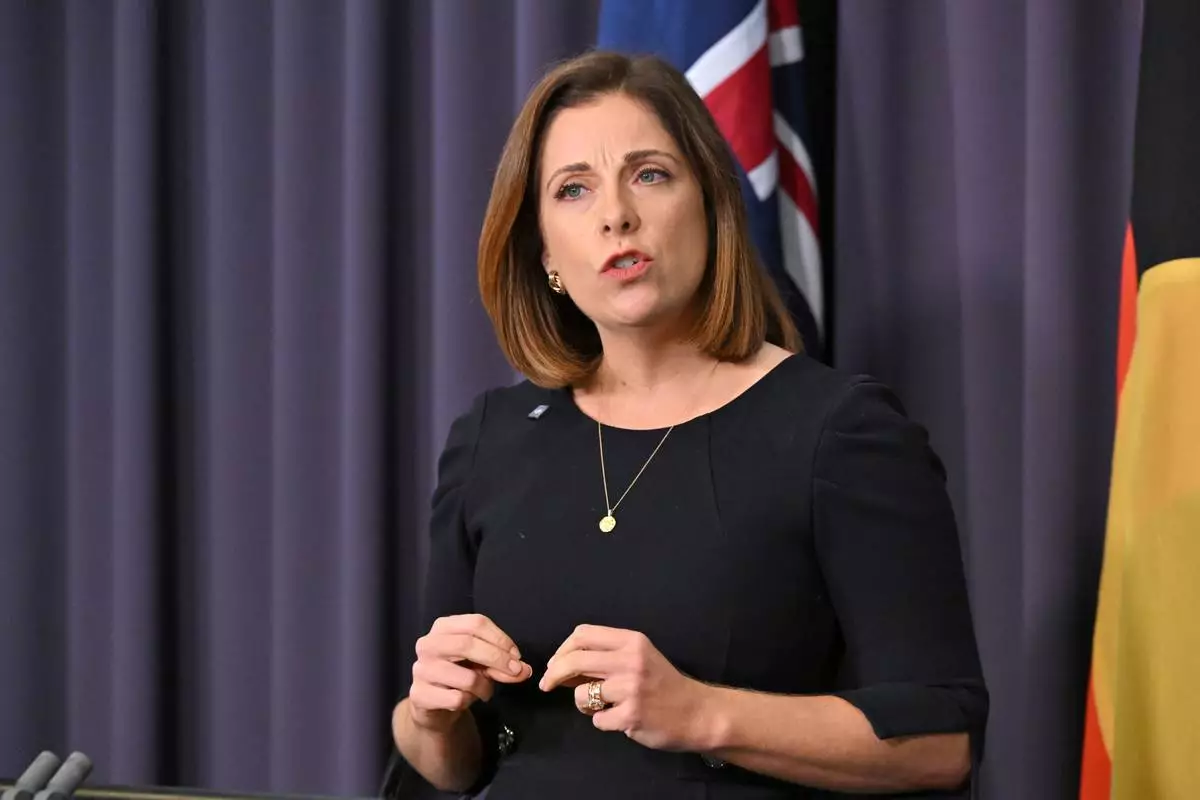
Australia's Minister for Communications Anika Wells speaks to journalists at a press conference at the Parliament House in Canberra, Australia, Tuesday, Nov. 24, 2026. (Mick Tsikas/AAP IMAGE via AP)

Australia's Minister for Communications Anika Wells speaks to journalists at a press conference at the Parliament House in Canberra, Australia, Tuesday, Nov. 24, 2026. (Mick Tsikas/AAP IMAGE via AP)

Recommended Articles