NAIROBI, Kenya (AP) — Shelling of civilian neighborhoods in Tigray by Ethiopian forces and an allied militia should be investigated as possible war crimes, Amnesty International said Tuesday, as residents near the Eritrean border described military buildups and fears of another war.
Amnesty said it independently verified 14 civilian deaths in four artillery attacks on Alamata between Sept. 26-28, when Ethiopian forces and the allied Tigray Peace Forces advanced on the city.
It also accused forces allied with the Tigray People’s Liberation Front of endangering civilians by establishing military positions in residential areas and schools. The TPLF rejected those allegations in a written response to Amnesty.
The findings come amid renewed fighting in Tigray and growing fears of a wider confrontation between Ethiopia and neighboring Eritrea.
Amnesty interviewed residents, including survivors and medical personnel, and analyzed videos, photographs and satellite imagery.
The Ethiopian government and the military have so far not responded to the report by Amnesty. The human rights group said neither the military nor the allied militia had responded before publication.
Berhe Sibagadis, 41, a father of four in Alitena in Tigray’s Irob district, several kilometers from the border with Eritrea, is preparing to move his family further from the border region with neighboring Eritrea.
“I have to save my family, therefore I have to move to the center of Tigray,” he told The Associated Press by phone.
He said Eritrean forces are occupying a part of his local administration inside Ethiopia's borders.
“Eritrean forces committed a crime against our community during the 2020 war, so why should we stay here?” he said.
The 2020-2022 war caused an estimated 500,000 civilian deaths in Tigray from violence, famine and the collapse of health services, according to researchers at Belgium’s Ghent University.
Human rights groups and U.N. experts accused Eritrean troops of wartime abuses. President Isaias Afwerki dismissed the allegations as “a fantasy” in 2023.
Hagos Niguse, another Irob resident, said Eritrean troops are living in his area inside the border of Ethiopia and that he saw them moving tanks and heavy weapons toward the border and digging fortifications.
In Rama, resident Yonas Desta described military movements and drones overhead.
“Both countries are preparing for war and we cannot sleep when we think what could happen tomorrow,” he said.
Hagos and Yonas said TPLF fighters were positioned alongside Eritrean forces. During the 2020-2022 war, Eritrean troops fought alongside Ethiopia’s army against Tigrayan forces.
Conflict monitor Armed Conflict Location & Event Data, known as ACLED, reported Ethiopian drone attacks on suspected Eritrean positions around Badme on Nov. 12, followed by Eritrean artillery fire and direct clashes.
“The risk of a full-scale military confrontation along the Badme front is now high,” ACLED’s senior analyst for East Africa, Jalale Getachew Birru, said in comments emailed Nov. 17.
ACLED said Eritrean troops reentered Badme around Nov. 15 after withdrawing in October, deploying reinforcements as Ethiopian troops massed nearby.
Badme was a flashpoint in the 1998-2000 border war between Ethiopia and Eritrea, which killed about 70,000 people, according to the U.N. peacekeeping mission established afterward.
A 2018 rapprochement helped Ethiopian Prime Minister Abiy Ahmed win the 2019 Nobel Peace Prize.
Relations have since deteriorated over Ethiopia’s accusations that Eritrea supports Tigrayan rebels, which Eritrea denies, and Abiy’s demands for access to Eritrea’s Red Sea coast.
Fighting resumed in September, following a November 2022 agreement that ended the two-year war in Tigray.
Rahel Kidane, a 35-year-old shopkeeper in Sheraro, spent more than two years with relatives in Axum after fleeing that war. She returned after the peace agreement.
“I live in fear of being displaced again,” she told the AP by telephone. “When will this misery end?”
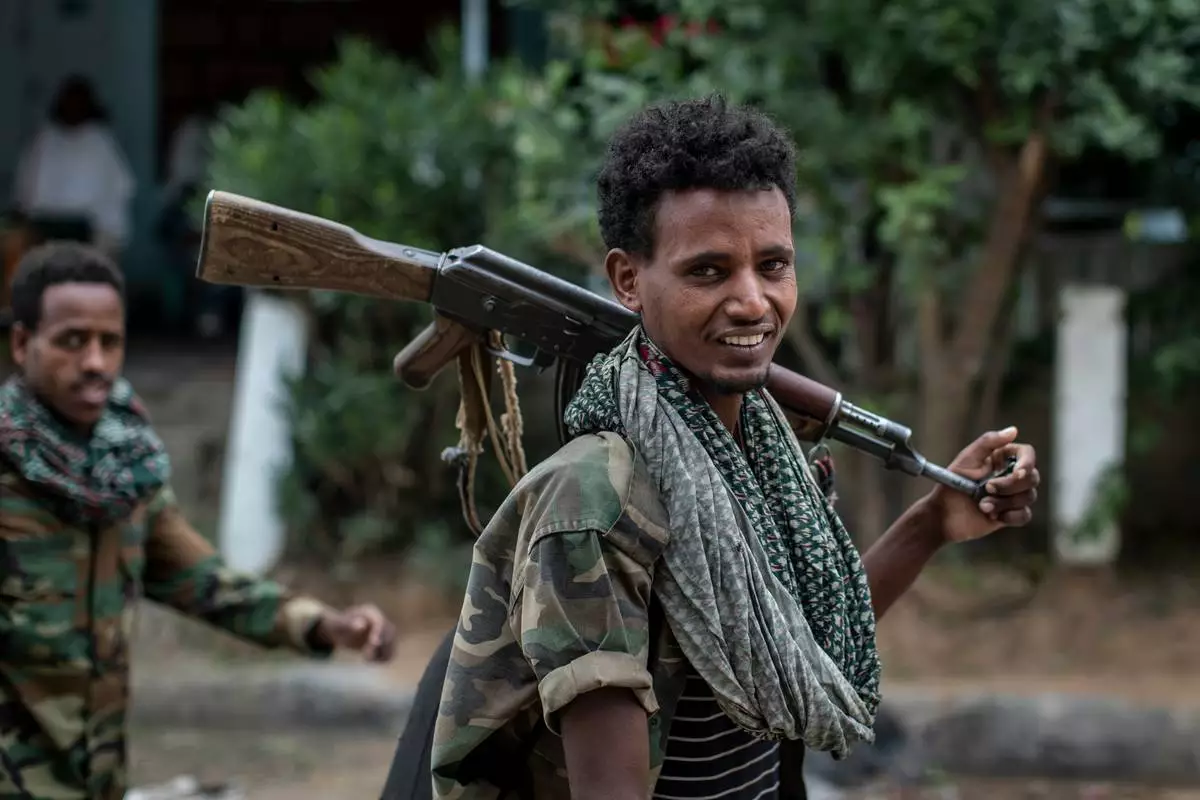
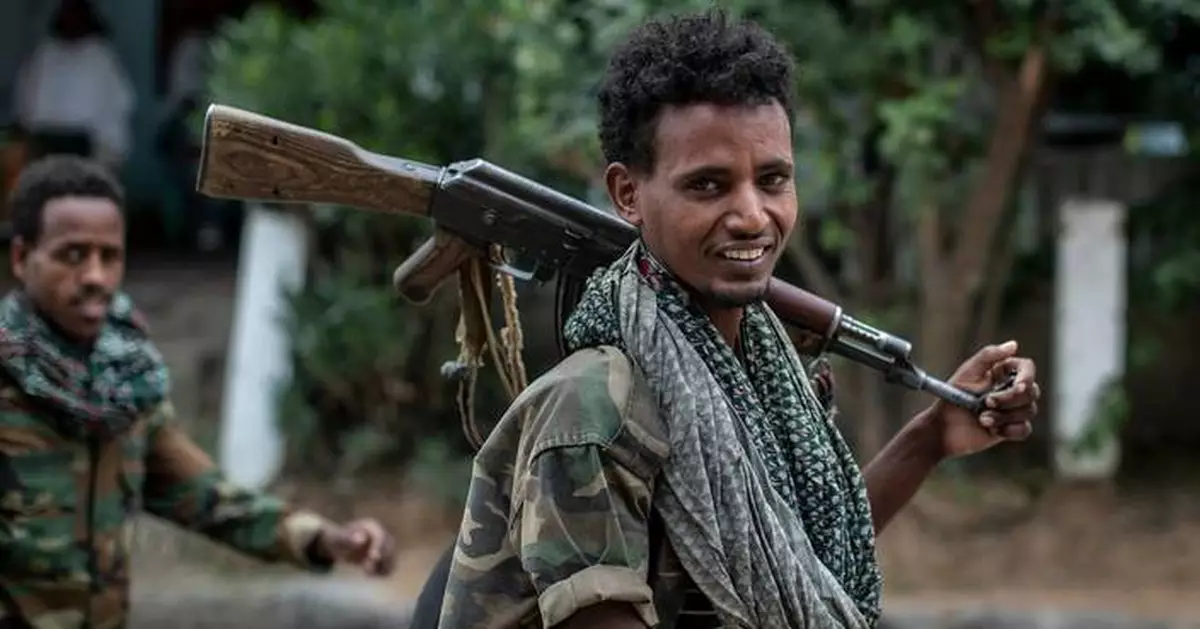
FILE - Fighters loyal to the Tigray People's Liberation Front (TPLF) walk along a street in the town of Hawzen, then controlled by the group, in the Tigray region of northern Ethiopia, May 7, 2021. (AP Photo/Ben Curtis, File)
Two Libyan naval officers have died following the Ukrainian drone attack on a Russian warship in Libya that opened a new theater in the conflict, thousands of miles from the front lines of the Russia-Ukraine war.
Jordan sentenced a man to death for an attack outside the Sri Lankan Embassy in Amman that killed one security officer and injured another. And the Iran-backed Houthi rebels claimed they hit the Saudi capital 's financial district.
Here is the latest news from the Middle East on Wednesday. Read our full coverage here.
The two officers died Tuesday of their wounds sustained in the attack on a Russian warship moored in eastern Libya, the self-styled Libyan National Army said in a statement late Tuesday.
The army’s general command vowed to take revenge “at the appropriate time and place, and by the appropriate means,” the statement said.
The LNA is the most powerful group in Libya, a country fractured by years of civil war and chaos, and has close ties to Russia.
Ukraine’s President Volodymyr Zelenskyy said his country's forces deployed seven sea drones in the operation that struck the Russian ship on Sunday. Libyan authorities said it had docked at the Benghazi Naval Base to refuel and resupply.
The Iran-backed Houthi rebels claimed responsibility on Wednesday for strikes on a refinery in Saudi Arabia and the financial district in the kingdom’s capital, Riyadh.
The Saudi-led coalition said Tuesday that a Houthi drone targeted a tower in the King Abdullah Financial District. In a statement early Wednesday, it said four drones targeting the Ras Tanoura refinery in the eastern region were intercepted.
Houthi military spokesperson Yahya Saree claimed Wednesday, without providing evidence, that the rebels had carried out the two attacks. The AP could not independently verify the claim.
The Houthis have attacked Saudi energy facilities and airports in recent weeks, saying they aim to pressure the kingdom into lifting its blockade on Yemen.
Separately, the Houthis blamed Saudi Arabia for a strike that killed eight people from the same family, including women and children, on Tuesday. The AP could not independently verify the claim. The Houthi-run Health Ministry said the attack was on Lahj, a province where displaced families have fled since fighting resumed.
At least six women were among those killed by strikes on southeastern Sudan, according to Emergency Lawyers, a rights group tracking the Sudan war. It blamed the killings on the Rapid Support Forces paramilitary group.
The rights group said the strikes on neighborhoods in Damazin, the capital of southeastern Blue Nile province on the border with Ethiopia, also wounded 15 people. Strikes on Roseires, another city in Blue Nile, also hit a reservoir and power plants.
The attacks came as Sudan’s government had rejected an Ethiopian government effort to mediate talks between warring parties to end the four-year conflict.
In a statement carried by the state-run SUNA news agency, the government in Khartoum said Ethiopia “doesn’t meet terms of neutrality” to host such dialogue because of its alleged support for the RSF. Sudan's government accused Ethiopia of allowing the RSF to use its territories to launch drone attacks on the military-held areas in Sudan. Sudan called for an independent investigation into the allegation, which Ethiopia rejects.
The overnight airstrike on the Shati refugee camp killed four people and wounded six more, according to health officials.
The strike killed Mohammad Majid Abu al-Ouf, his wife and two teenage daughters, the Hamas-run Health Ministry said. It identified him as the director of internal security services in northern Gaza.
The Israeli military said it targeted a Hamas militant, and confirmed he was a member of the internal security services.
The latest strike came after Israel carried out several strikes on Gaza this week, killing at least nine people between Monday night and Tuesday, including another top security official.
More than 74,710 Palestinians in Gaza have been killed since the war began three years ago, according to the Gaza Health Ministry, which is part of the Hamas-run government. Its figures are generally considered reliable by the international community.
Israel continues to launch near-daily strikes on the territory amid a fragile ceasefire with Hamas.
Jordan’s State Security Court said Wednesday that it had sentenced a man to death for killing a security officer near the Sri Lankan Embassy in Jordan’s capital, Amman, earlier this month.
Jordan’s Public Security Directorate had said there was evidence the attacker had been planning to commit a “terrorist act" against the security officer and another officer injured in the attack.
The decision followed the court sentencing three men to death for a fatal shooting at a Greek Orthodox Church in October. Nine people were killed, making it one of the deadliest attacks on Jordan’s Christian minority in decades.
Khaled and Magdy reported from Cairo, and Akour reported from Amman.
This report will be updated throughout the day as new developments emerge.
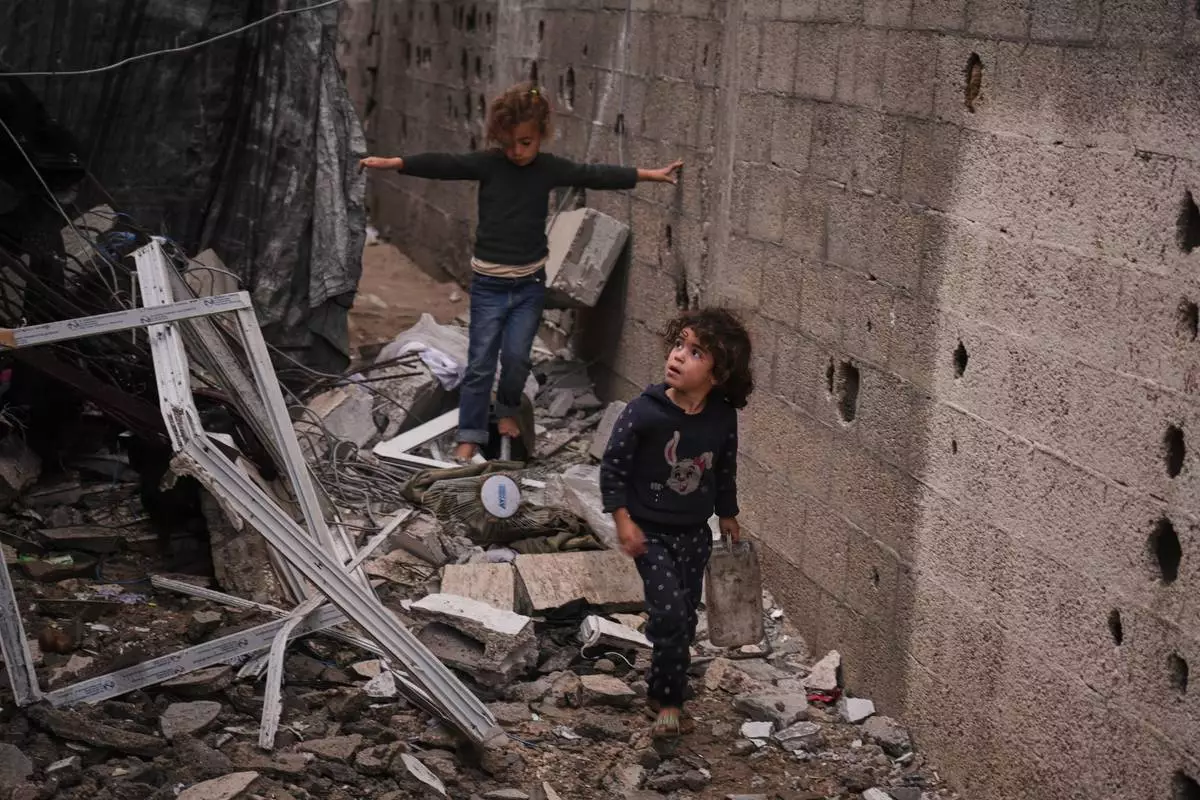
Palestinian children look at an apartment destroyed in an Israeli strike in Gaza City, Wednesday, Nov. 25, 2026. (AP Photo/Jehad Alshrafi)
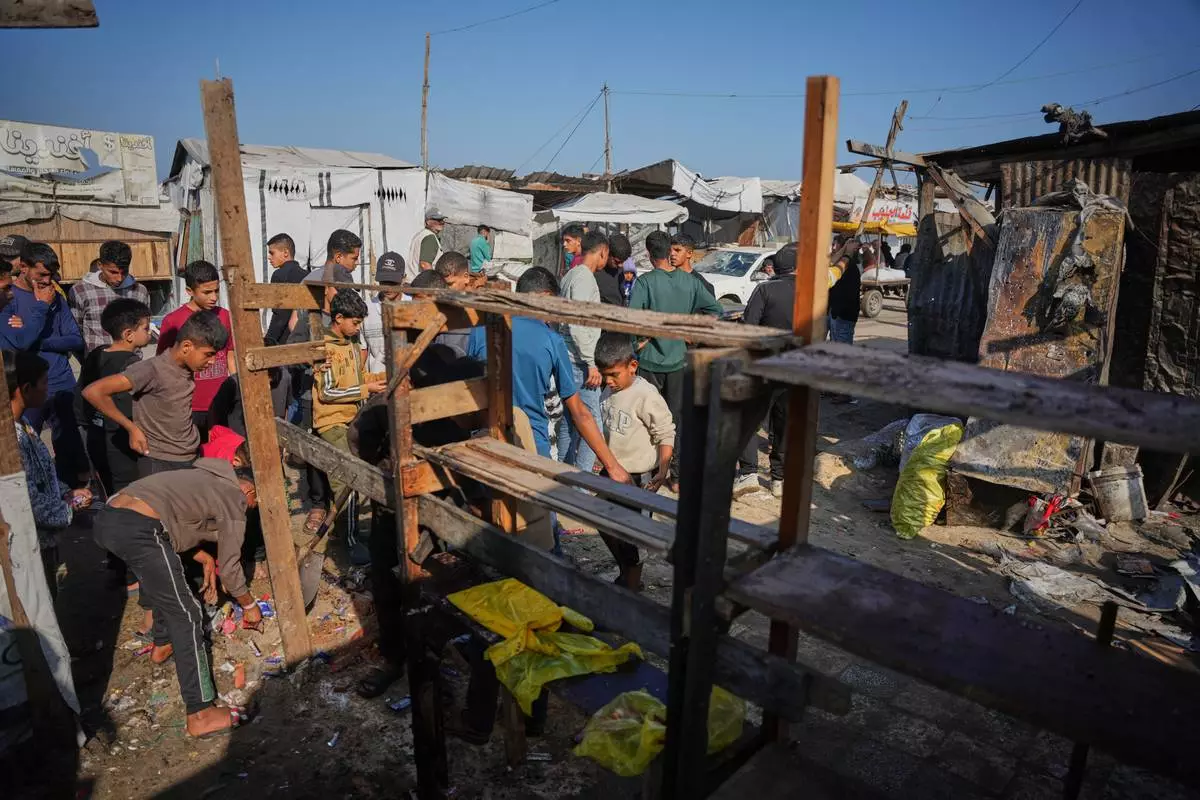
Palestinians inspect the site of an Israeli airstrike in Khan Younis, Gaza Strip, Tuesday, Nov. 24, 2026. (AP Photo/Abdel Kareem Hana)
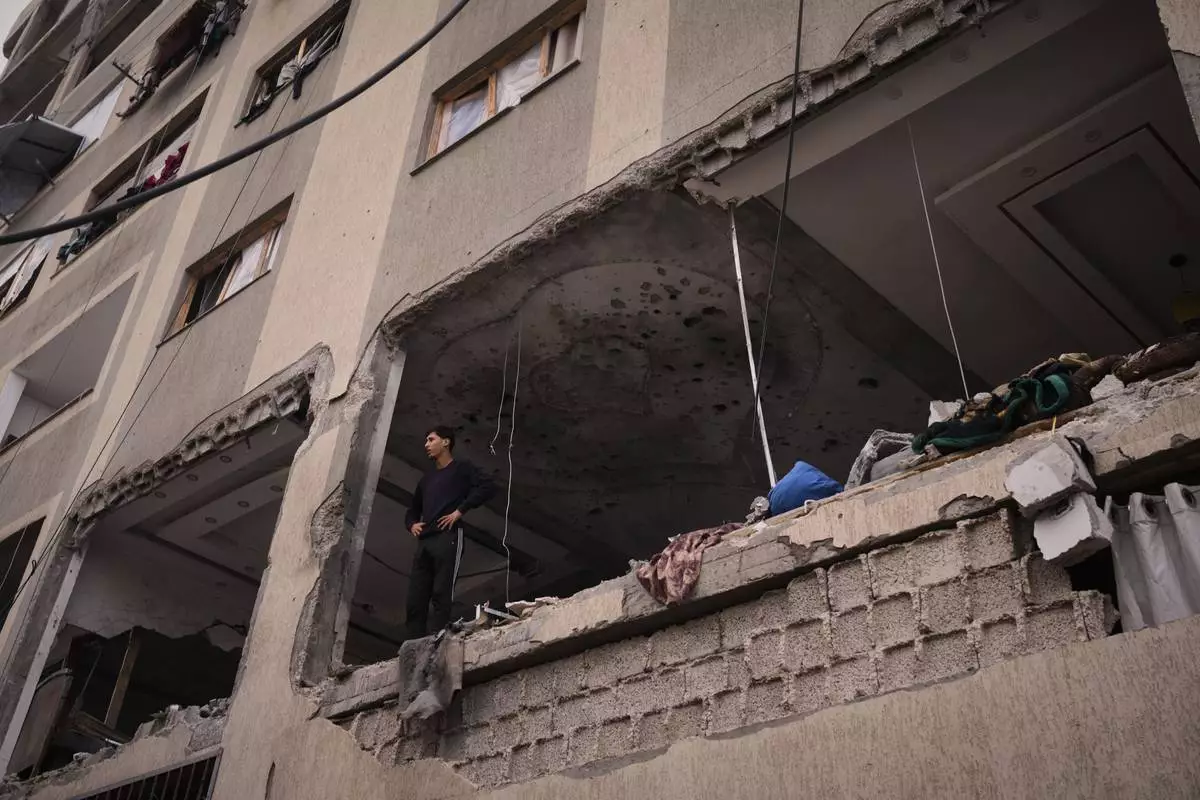
A Palestinian man inspects an apartment destroyed in an Israeli strike in Gaza City, Wednesday, Nov. 25, 2026. (AP Photo/Jehad Alshrafi)

In this screen grab from a video provided by the Security Service of Ukraine on Monday, Nov. 23, 2026, a Ukrainian Sea Baby drone attacks the Russian cargo ship MV Angara near Benghazi, Libya. (Security Service of Ukraine via AP) CORRECTION: Removes word suicide.