South Africa is hoping to expand its space cooperation with China into crewed missions, eyeing a future in which a South African astronaut joins the crew of China's Tiangong space station, the CEO of the South African National Space Agency (SANSA) said.
In a recent interview with the China Global Television Network (CGTN), Humbulani Mudau described a partnership that has gained remarkable momentum over the past three years, evolving from joint Earth monitoring into more ambitious ventures that now rank among his agency's strategic priorities.
"In the last three years, we've seen a huge surge in collaboration between South Africa and China. We're expanding beyond Earth observation. We're looking at space exploration and discovery which is one of our strategic pillars in our strategic plan,” he said.
Looking further ahead, Mudau framed the cooperation as a path to drawing young South Africans into science and engineering, saying the ultimate goal is to see one of them carry out research aboard the Chinese station for the benefit of their country and the wider world.
"But ultimately we want to inspire young people in South Africa through space exploration and discovery to take STEM, and therefore we want to work with China in ensuring that someday in the future we can have a South African in the Tiangong Space Station conducting health experiments, microgravity experiments to benefit South Africa and humanity at large," he said.
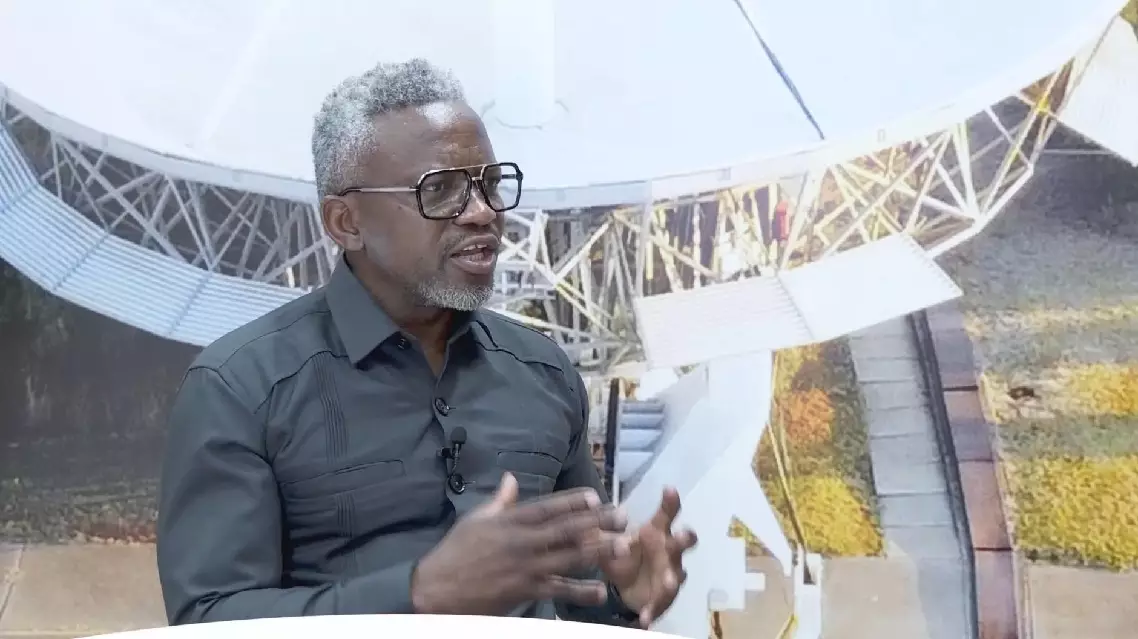
S African space agency CEO looks forward to astronaut training with China
Pakistan's space community celebrated a landmark moment on Wednesday as China's Shenzhou-24 spacecraft carried the country's first astronaut toward China's Tiangong space station, a flight hailed as taking the deep-rooted Pakistan-China friendship into orbit.
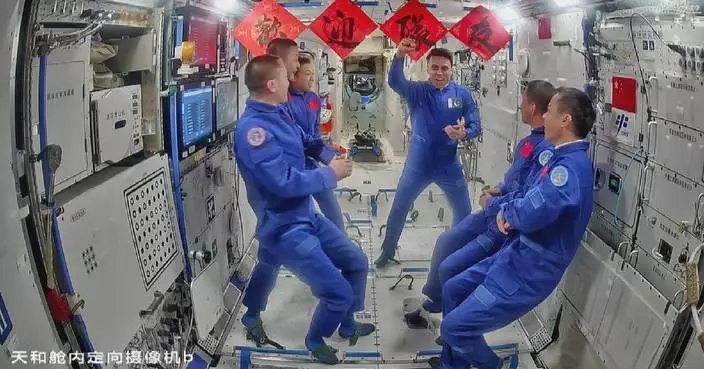
The community gathered in Islamabad in the early morning to witness the launch live, as the spaceship, atop a Long March-2F carrier rocket, blasted off at 08:18 (Beijing time) from the Jiuquan Satellite Launch Center in northwest China, carrying Chinese astronauts Tang Hongbo and Wu Yi along with Pakistan's Muhammad Zeeshan Ali to the orbiting station.
For Amjad Ali, director general of Space Application and Research at Pakistan Space and Upper Atmosphere Research Commission (SUPARCO), the liftoff crowned years of cooperation that has helped Pakistan build up its own space capabilities, and he voiced confidence that the momentum would only grow.
"We are always thinking very high of China because they have been helping us in most of the science and technology fields and keeping in view the pace of the China with respect to the science and technology. So we are also thinking high and we are also looking forward for a very good cooperation even in days to come," he said.
Zain Bukhari, general manager at SUPARCO, said the moment was extraordinary for Pakistan and held special meaning in the history of the two countries' profound friendship, noting that the scientific experiments planned for the mission are of a unique nature.
"Most importantly the kind of the experiments that Shenzhou-24 crew is going to take place is also of a unique nature because we published for the proposals in our country and we received almost 300 proposals and after that we have selected around three to four proposals that are going to be experimented on board in the environment of microgravity and the solar radiations," he said.
Najam Abbas Naqvi, chairman of the National Center of Geographic Information Systems (GIS) and Space Applications, described the mission as a symbol of the two countries' collaboration and a powerful sign of mutual trust.
"This is our national pride and this is the symbol of Pakistan-China collaboration and friendship. This is a wonderful sign of trust, friendship, relationship, technology and the transfer of the trainings and human resource," he said.
Marking a new chapter in Pakistan-China space ties, Ali is set to become the first foreigner to board Tiangong. Once in orbit, he will join the crew's routine work, primarily installing experiment samples and units and carrying out in-orbit tests, according to the China Manned Space Agency.
After a short-term joint flight, he will return to Earth aboard the Shenzhou-23 spacecraft alongside two of its crew members.
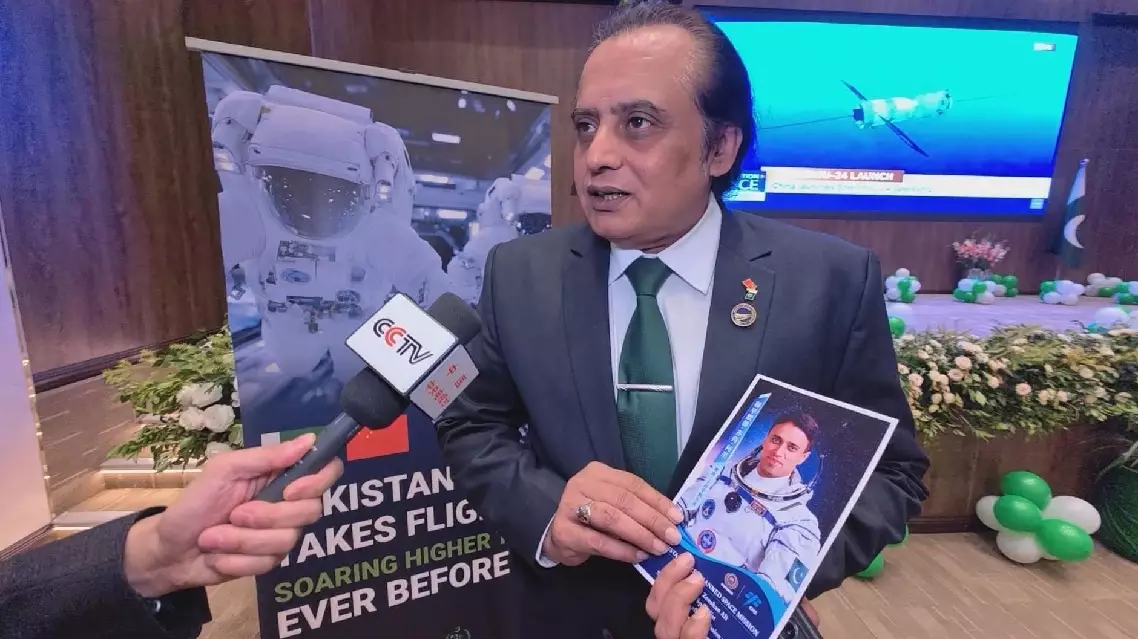
Pakistani community hails historic Shenzhou-24 launch as friendship reaches new height
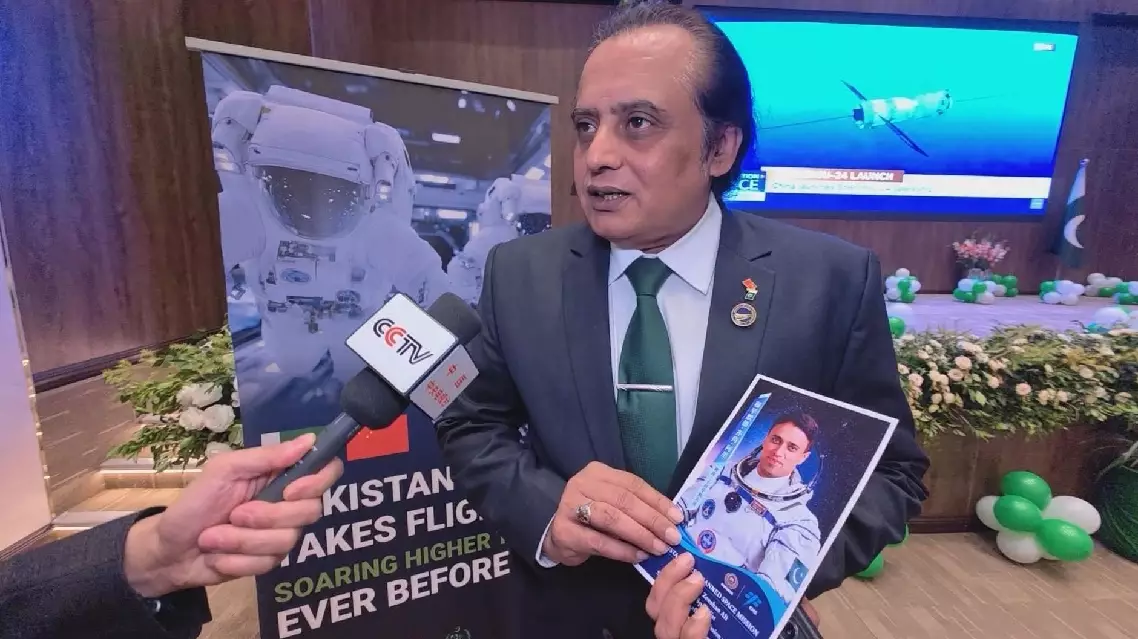
Pakistani community hails historic Shenzhou-24 launch as friendship reaches new height