China is spearheading the development of 78 international standards on artificial intelligence (AI), including the world's first international standards proposal targeting generative AI governance, turning its industrial practices and technological innovations into global public goods, according to the State Administration for Market Regulation (SAMR).
Sun Wei, deputy head of the department of standards innovation under the SAMR, told a press conference on Tuesday that the administration is working to improve the international standards system architecture for AI.
Working with leading companies and top research institutions, the SAMR has led the development of 29 foundational and common international standards, covering key areas that include data governance, human-computer interaction, security and trustworthiness, Sun said.
In response to common risks such as deepfakes and model "poisoning" in generative AI, China has jointly developed a guideline on addressing risks in generative AI inn cooperation with several other countries. According to the administration, this is the world's first international standards proposal targeting generative AI governance and can provide key support for promoting the formation of a global consensus on risk management.
"The international standard on AI data quality led by China has effectively addressed the challenges of full-lifecycle data governance and has been adopted by the European Union as an important basis for AI compliance assessment. To tackle common global risks in generative AI, such as deepfakes and model poisoning, we have drawn on our own practices and worked with multiple countries to jointly develop the international standard 'Information technology — Artificial Intelligence — Guidance on addressing risks in generative AI systems,' filling the gap in standards for end-to-end risk governance," Sun said.
The SAMR is also helping coordinate the efforts of 15 technical standards bodies in developing 49 international standards for sector-specific applications, including smart cities and intelligent manufacturing, according to Sun.
Sectoral application standards act as a key lever to drive the scaled and standardized implementation of AI technologies.
In recent years, the SAMR has expanded its efforts to advance international standards in key areas, such as smart manufacturing, smart cities, smart logistics and smart water management, drawing on China's extensive use cases and mature industrial practices.
Sun said China's systematic efforts to develop application-oriented standards across multiple industries offered technical standards and practical solutions for wider international adoption, supporting AI-empowered real economy development and inclusive, shared digital transformation.
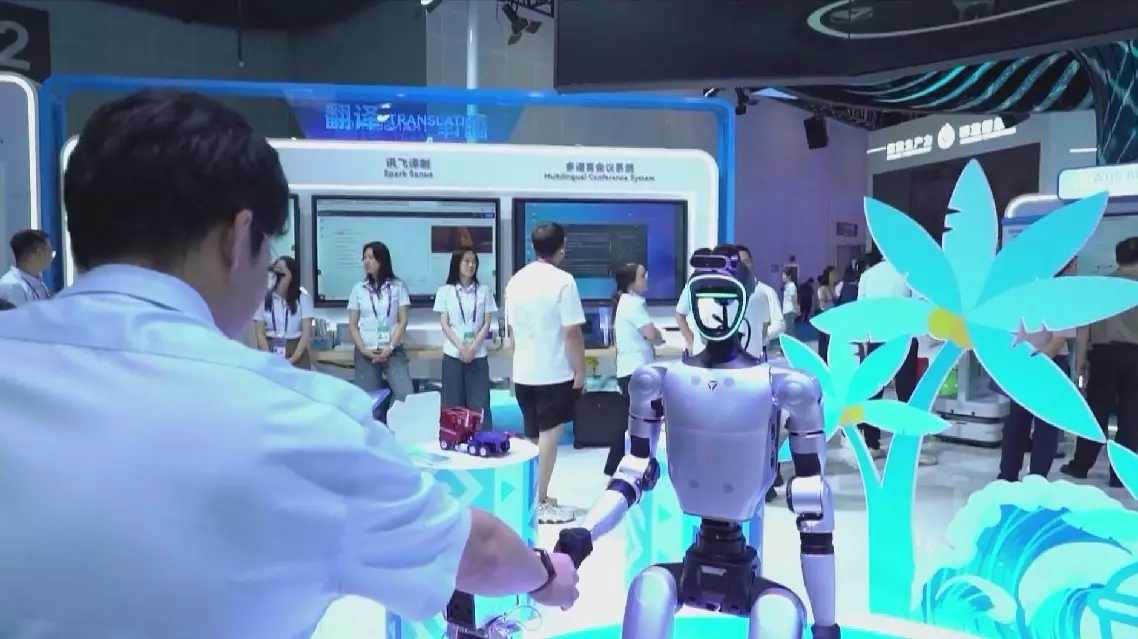
China leads development of 78 international standards on AI