BANGKOK (AP) — The leader of the Myanmar military-backed government said it will refuse to comply with some aspects of a landmark international court ruling that found the country responsible for genocide against the Rohingya minority.
President Min Aung Hlaing told a Cabinet meeting that his government would act accordingly but would reject measures it considered “inappropriate,” the state-run Global New Light of Myanmar newspaper reported on Thursday.
The president on Wednesday described the case as a “one-sided accusation” against the country, and said the use of the term “genocide” had seriously damaged Myanmar’s reputation.
The International Court of Justice, the United Nations' top court, ruled last week that Myanmar committed genocide against the Rohingya in a brutal 2017 military operation. The court found that Myanmar’s security forces killed thousands of Rohingya civilians, perpetrated widespread acts of sexual violence and acts of extreme violence against children.
The court rejected Myanmar's defense that the campaign was a legitimate operation against insurgents. Min Aung Hlaing, the former military leader, was in charge of the operation.
The report said that Min Aung Hlaing considered himself primarily responsible for all matters concerning Myanmar as the country's leader, and would not accept actions that undermined the nation.
“Myanmar would take the actions appropriate for a responsible country but would not comply with requirements it considered inappropriate," he said, without elaborating.
Myanmar's government earlier described the International Court of Justice’s decision as unfair and a great disappointment, pointing out that six of the 15 judges had dissented.
The ruling was the first time the international court has ruled that a state committed genocide. It ordered Myanmar's government to allow the Rohingya to return home safely, pay reparations and prosecute those suspected of having committed genocide.
The court’s rulings are final and legally binding, but it has no way to enforce them beyond reporting noncompliance to the U.N. Security Council. Myanmar is considered unlikely to fulfill any of the court’s demands.
The separate International Criminal Court, or ICC, also based in The Hague and considering legal action concerning Myanmar and the Rohingya, is under U.S. sanctions along with many of its judges and staff, so any action by the Security Council could face a U.S. veto. The council’s other permanent members, China and Russia, which maintain close relations with Min Aung Hlaing's administration and have supported it internationally, could also block action.
ICC prosecutors requested an arrest warrant for Min Aung Hlaing in late 2024 over alleged crimes against humanity against the Rohingya, but judges have yet to publicly announce a decision.
Many Western governments and international organizations have pressed Myanmar to comply with the ICJ ruling. Human rights groups urged targeted sanctions against the military, its economic networks and arms supplies to enforce accountability.
The United Kingdom said Monday that it formally recognized the genocide against the Rohingya. It imposed sanctions on five senior Myanmar military officers, announced plans to restrict aviation fuel supplies to Myanmar and pledged 8 million pounds ($10.5 million) for humanitarian assistance and justice initiatives.
The Security Council is expected to meet privately on Dec. 7 at the request of the U.K., which expelled Myanmar’s defense attache after the ruling.
Myanmar is now embroiled in a bloody civil war, with pro-democracy and other militias fighting against the military. Min Aung Hlaing seized power from Aung San Suu Kyi 's elected government in 2021 and became president earlier this year in an election critics said was neither free nor fair.
This version corrects paragraph 11 to state that the ICC, not the ICJ, is under U.S. sanctions.
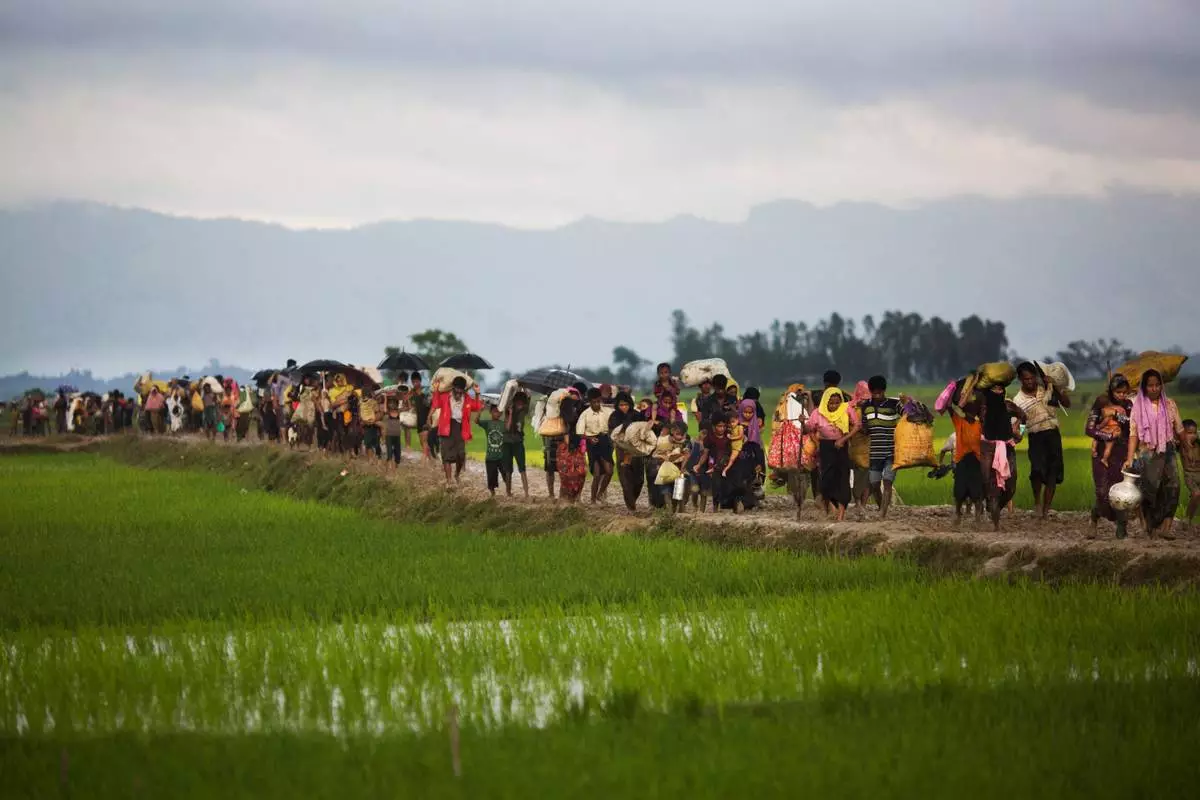
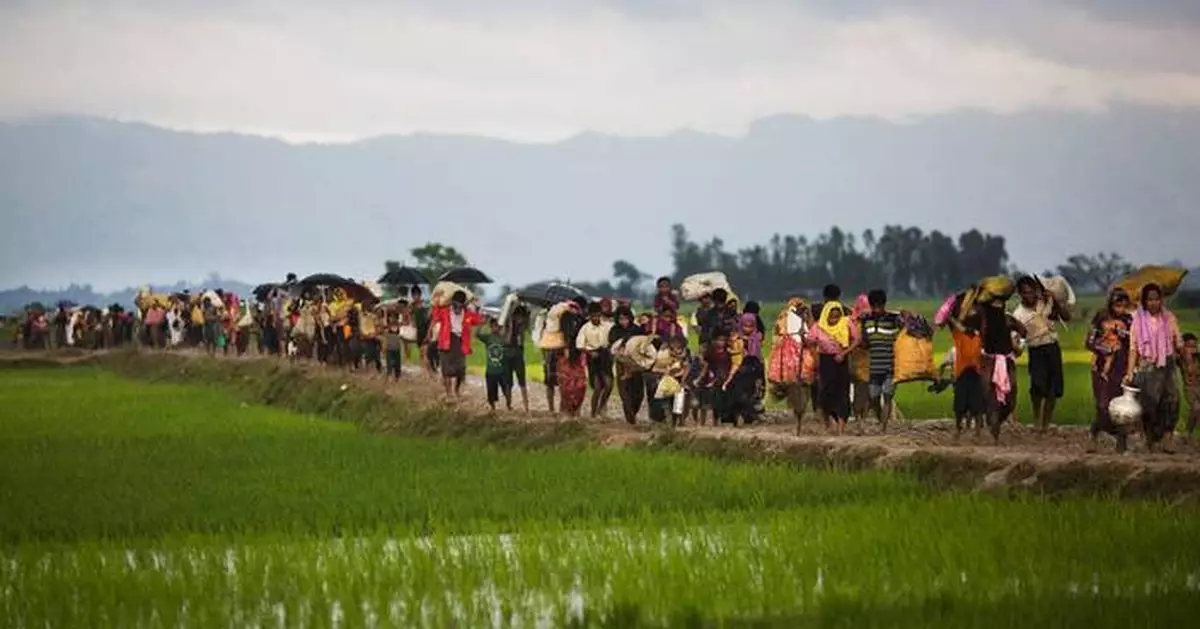
FILE - A group of Myanmar's Rohingya ethnic minority walk past rice fields after crossing the border into Bangladesh near Cox's Bazar's Teknaf area on Sept. 1, 2017. (AP Photo/Bernat Armangue, File)
IRBIL, Iraq (AP) — Thousands of demonstrators gathered Thursday in Irbil, the capital of Iraq's semiautonomous northern Kurdish region, protesting a move by the federal government to take control of oil operations and border crossings previously run by Kurdish authorities.
Iraqi Prime Minister Ali al-Zaidi announced the measures Tuesday, describing them as steps to address oil smuggling.
The decision marked a new escalation in a long-running power struggle between the central government and Kurdish authorities and spurred rival Kurdish parties to come together in opposition to Baghdad.
Al-Zaidi — who took office earlier this year with the backing of U.S. President Donald Trump — has been trying to assert authority on several fronts, including sending security forces into an area long controlled by a powerful Iran-backed militia last week.
Tuesday's decision brings official and unofficial border crossings in the Kurdish region under federal government management. It places approval for oil exports from the region under the authority of the federal oil ministry and transfers the management of oil fields in Diyala, Kirkuk, Salahuddin and Nineveh provinces to it.
Al-Zaidi also dismissed Kirkuk’s operations commander and police chief and the head of the Border Ports Commission. He said the measures reflect Iraq’s “independent national will.”
Iraq’s Federal Supreme Court on Wednesday backed Baghdad’s move and ruled that federal authorities may deploy troops to secure all of Iraq’s international borders, “including the borders located within the territories administered by the Kurdistan Region.”
Defense Ministry spokesman Maj. Gen. Yahya Rasool said Wednesday evening that al-Zaidi, who is also commander in chief, had ordered the deployment of military units to Kirkuk and other provinces and had ordered dirt roads used for oil smuggling to be blocked.
Iraq’s Kurds have governed themselves since 1991, and the 2005 constitution recognized the Kurdish region and its government. But since 2003, Irbil and Baghdad have struggled for control over land, oil and money.
The Kurdish regional government's cabinet said Wednesday that al-Zaidi’s order “violates both the Constitution and the constitutional rights of the Kurdistan Region” and represents “an attempt to return Iraq to a centralized regime.” It accused Baghdad of using “military rhetoric and threats” to carry out a “premeditated, long-standing plan directed against the constitutional structure of the Kurdistan Region.”
The Federal Supreme Court said the Kurdish regional government's authority covers only the land it administered on March 19, 2003, the day before the U.S.-led invasion that unseated Saddam Hussein. Kurdish peshmerga forces moved into many disputed areas after 2003, including the oil fields covered by this week’s orders.
The Iraqi constitution's Article 140 was meant to settle the fate of the disputed territories, a band of land from the Syrian to the Iranian border that is home to Kurds, Arabs, Yazidis, Assyrians, Turkmen and other communities.
The article called for reversing Saddam-era policies that expelled Kurds from the area and moved Arabs in. It also called for a census and a referendum by the end of 2007 on whether the areas would join the Kurdistan Region. Neither was held.
Peshmerga forces took control of oil-rich Kirkuk in 2014, when the Iraqi army collapsed in the face of an offensive by Islamic State militants. Iraqi forces pushed them out in October 2017, weeks after the Kurdish region held an independence referendum that Baghdad called unconstitutional.
The disputes between Baghdad and Irbil have largely centered around oil exports and revenues. The country relies on oil revenues for about 90% of its budget.
In 2014, Baghdad suspended federal budget transfers to the Kurdish region amid a dispute over oil exports. Disagreements over oil revenues and budget allocations have since repeatedly delayed salary payments for public employees in the region.
In 2022, Iraq’s Federal Supreme Court ruled the Kurdish region's oil and gas law unconstitutional. The following year, oil exports through Turkey were suspended after an international arbitration ruling found Turkey had violated its pipeline agreement with Iraq by allowing independent Kurdish oil exports. Exports resumed in 2025 under an agreement placing sales under federal government oversight.
The Kurdish region’s own politics are also in turmoil.
On Nov. 5, the Patriotic Union of Kurdistan quit the government led by the Kurdistan Democratic Party, calling it “failed” and threatening to form a parallel administration.
No new cabinet has been formed since October 2024 regional elections, and the legality of the current government is being challenged at the Federal Supreme Court.
Abdul-Zahra reported from Baghdad.
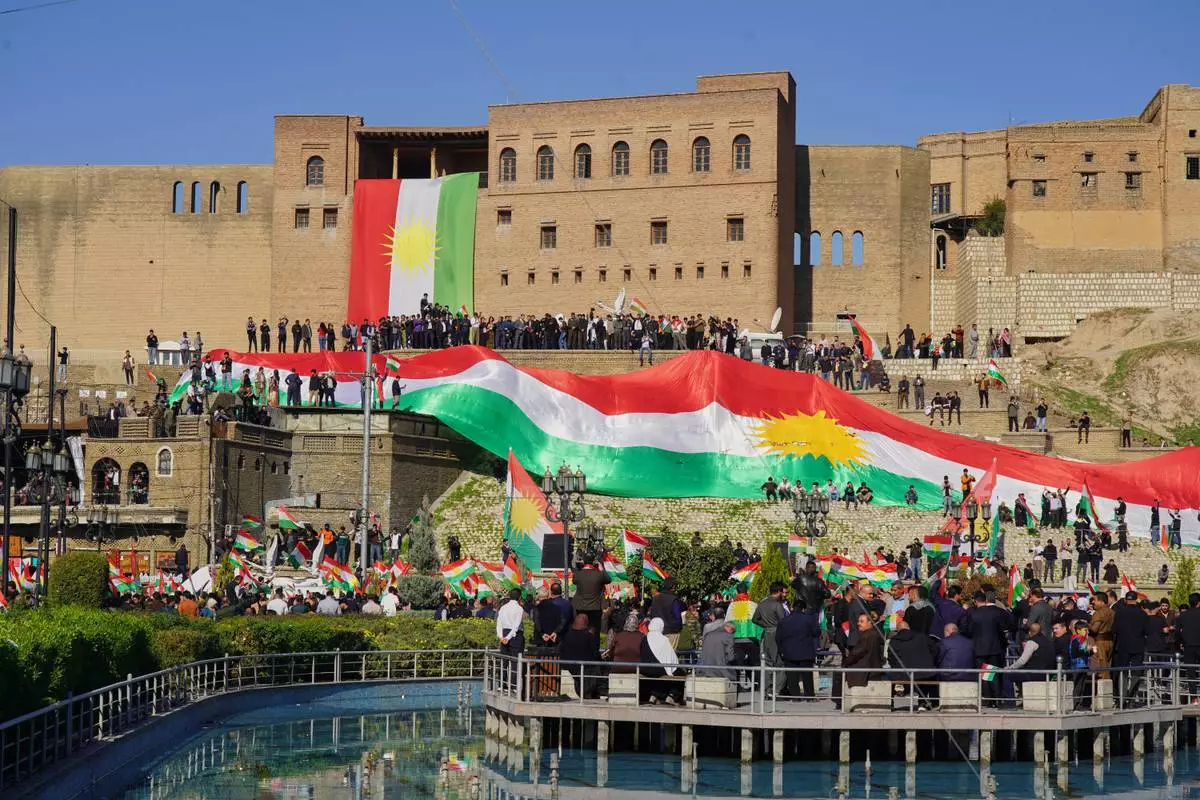
Demonstrators gather beside a giant Kurdish flag draped across the slopes of the historic citadel during a rally in support of Iraq's semi-autonomous Kurdish region amid tensions with Baghdad over control of border crossings and oil resources, in Irbil, Iraq, Thursday, Nov. 26, 2026. (AP Photo/Rashid Yahya)
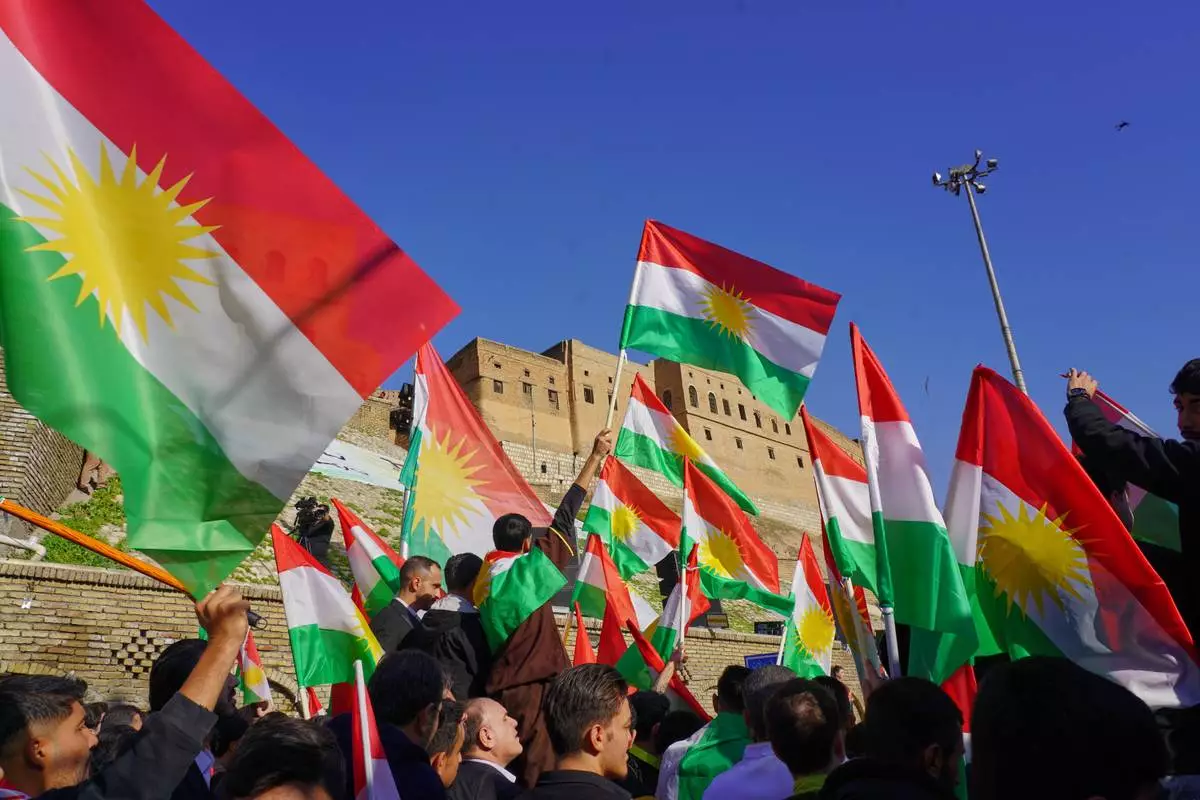
Demonstrators carrying Kurdish flags rally in support of Iraq's semi-autonomous Kurdish region amid tensions with Baghdad over control of border crossings and oil resources, beside the historic citadel in Irbil, Iraq, Thursday, Nov. 26, 2026. (AP Photo/Rashid Yahya)
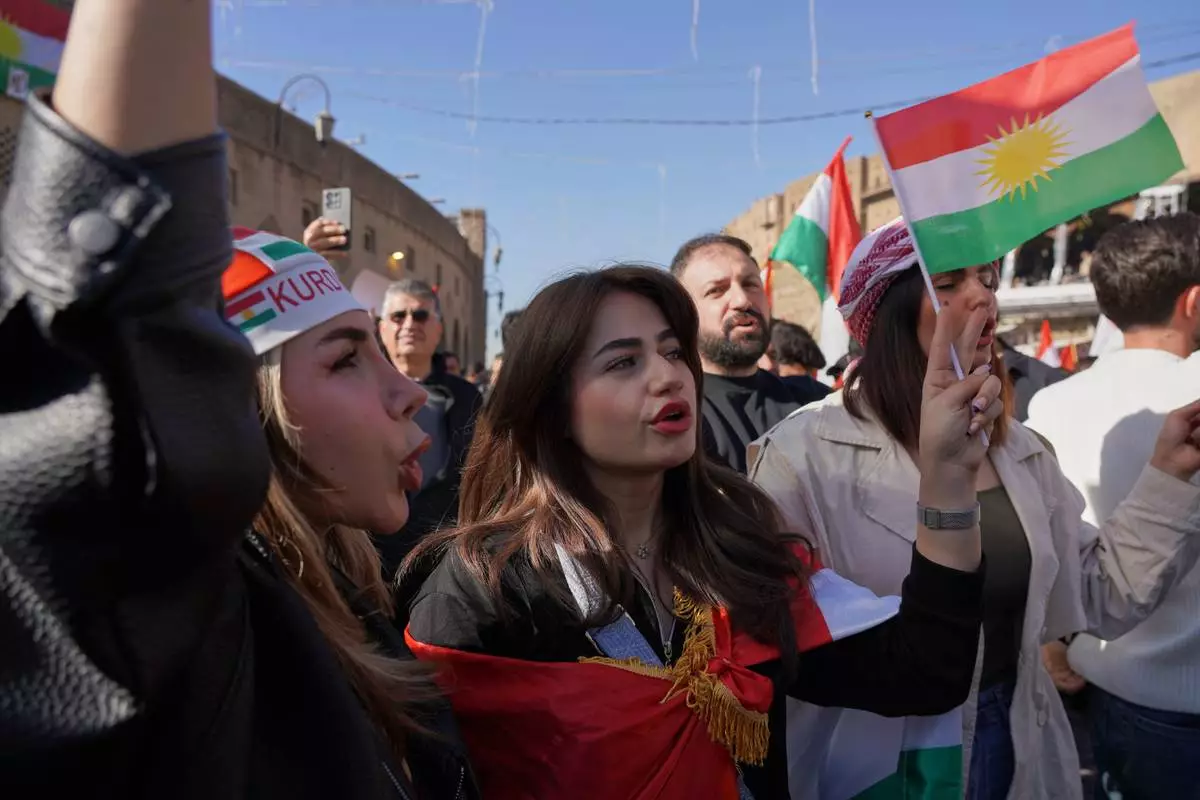
A demonstrator draped in a Kurdish flag flashes a victory sign during a rally in support of Iraq's semi-autonomous Kurdish region amid tensions with Baghdad over control of border crossings and oil resources, in Irbil, Iraq, Thursday, Nov. 26, 2026. (AP Photo/Rashid Yahya)
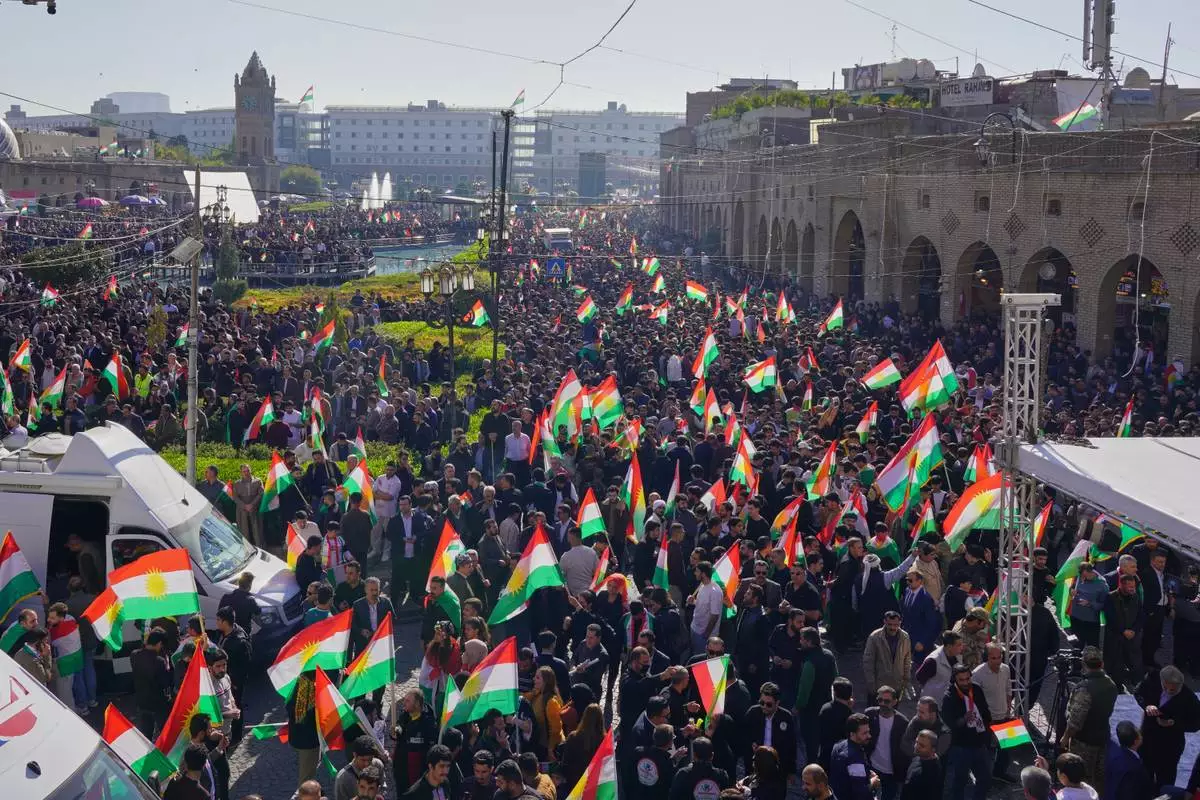
Thousands of demonstrators, many carrying Kurdish flags, rally in support of Iraq's semi-autonomous Kurdish region amid tensions with Baghdad over control of border crossings and oil resources, in Irbil, Iraq, Thursday, Nov. 26, 2026. (AP Photo/Rashid Yahya)
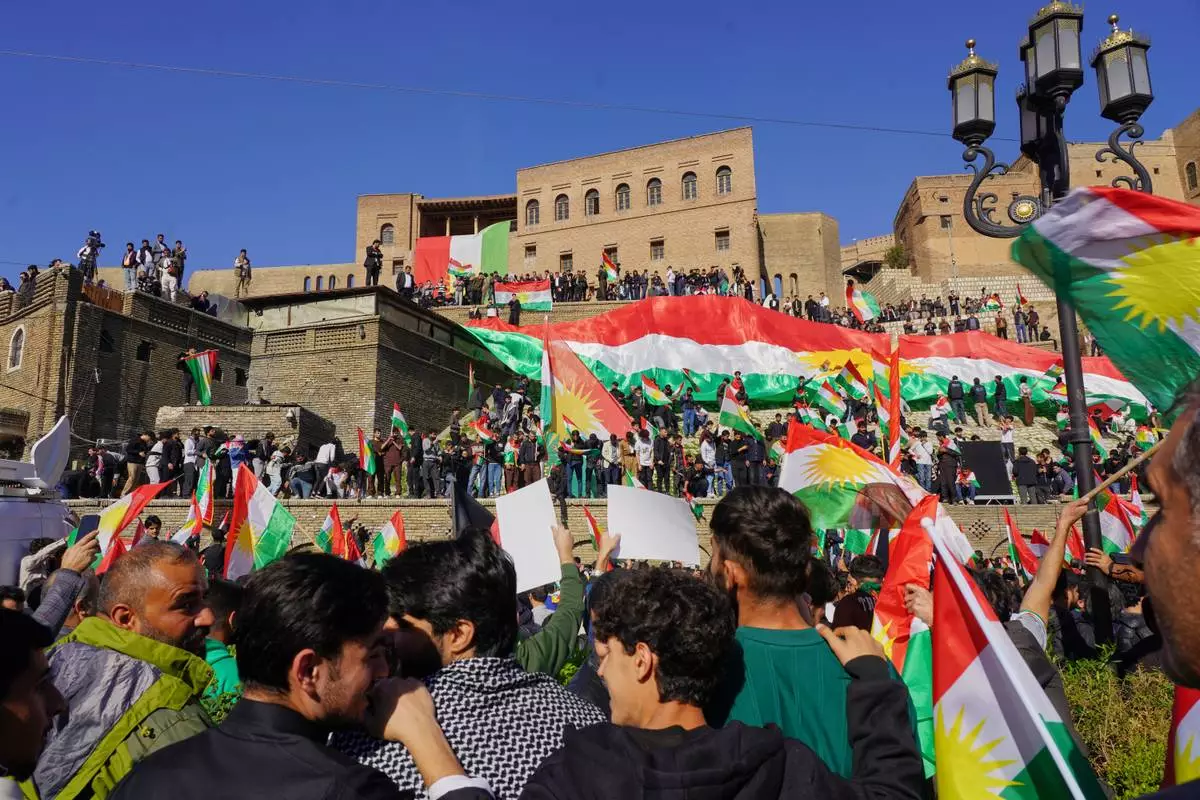
Demonstrators hold Kurdish flags in front of the historic citadel during a rally in support of Iraq's semi-autonomous Kurdish region amid tensions with Baghdad over control of border crossings and oil resources, in Irbil, Iraq, Thursday, Nov. 26, 2026. (AP Photo/Rashid Yahya)