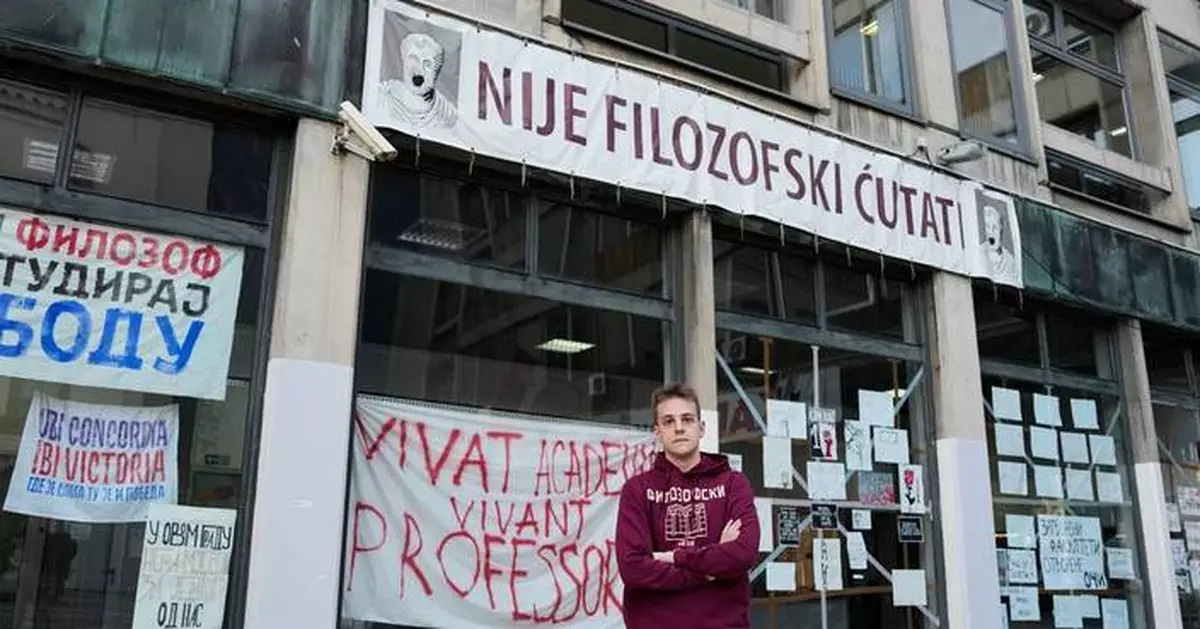
BELGRADE, Serbia (AP) — Marko Bojovic got up early on the day of Serbia's parliamentary election last month. As a logistics coordinator for the student movement, he wanted one final look at a plan designed to make sure activists were safe and the ballot was not rigged.
The meticulously crafted plan relied on a network of some 60,000 volunteers with specialized mobile teams that communicated through dedicated phone apps and kept changing venues to avoid state surveillance and stay connected, he said.
After all, the grassroots movement was taking on a formidable opponent. Strongman ruler Aleksandar Vucic was in power for 14 years, equipped with a well-oiled electoral machine, seemingly unlimited resources, a state apparatus, and almost the entire media landscape under the control of his right-wing Serbian Progressive Party.
Nonetheless, 24-year-old Bojovic was confident that the Students List would succeed. After leading two years of protests, the students managed nationwide mobilization, flawless organization, and — crucially — empathy.
Bojovic, who has a degree in history, drew a comparison between the election showdown and a Spartan battle. ”We would either come back with our shields, or on them," he said.
Their preparations paid off. Serbia’s youth on Oct. 25 scored a stunning victory admired well beyond the Balkan country’s borders. A month later, Bojovic and another logistics team member, Adrian Kraljevic, spoke to the AP about the strategy that helped undermine Vucic's popularity and defeat his party by a landslide.
The students’ protests demanding accountability over the November 2024 train station tragedy in Serbia’s north resonated among the voters hungry for justice and equality after decades of crisis and corruption. The canopy collapse at the Novi Sad train station killed 16 people, and many in Serbia were convinced that shoddy renovation work tainted by graft and negligence was to blame.
Djordje Trikos, a London-based political campaign strategist, said the disaster acted as a catalyst for change.
“This is where they started thinking: ‘I have nothing to lose if I change my vote,’” Trikos said. “Many people switched sides not because they necessarily believed the students were the better alternative, but because they considered the reality they lived in unbearable.”
Bojovic said the students realized Vucic's system was a “pyramid” and that the way was to dismantle the base and work upwards. To achieve this, activists launched a “student in every village” campaign, marching and cycling through the country to reach Vucic’s strongholds.
“We knocked on almost every door in Serbia," he said.
It wasn't easy. Pro-government media and officials, including Vucic himself, repeatedly attacked the students as enemies of the state who wanted to destroy the country under orders from abroad.
The students, Bojovic said, countered by showing the citizens that "we are their children.”
Dragica Jovanovic, an 83-year-old pensioner from Belgrade, said it worked. Though she “liked our president (Vucic) very much ... the students touched my heart," Jovanovic said.
Vucic, she added, "made me choose between him and my grandchildren.”
The next step was to involve volunteers from all backgrounds at every stage of the election. Most were trained as polling-station observers, ballot counters, security staff, or call-center operators, Bojovic said.
With their resolve and youth, the students won the hearts and minds of many Serbians who were fed up with both Vucic’s SNS and the other established parties. The students vowed to restore democracy and fight corruption, while avoiding divisive topics such as relations with Russia or the European Union.
Trikos drew a comparison with Hungary, whose authoritarian ex-Prime Minister Viktor Orban was swept from power in a similar way in April. Both Hungary and Serbia, Trikos said, were governed by leaders with nearly 15 years in office who had faced a changed electorate, an aging base, and young voters who wanted to change the system.
“So, it’s not only the students and their, say, creative genius or plan that contributed to these results,” he said. “This is almost like a rule across all democracies: young voters tend to vote anti-establishment, and if you are in power for 15 years, they will naturally perceive you as the establishment.”
Two rounds of local elections in 2025 and 2026 helped shape the students’ strategy for the crucial vote in October. Those earlier ballots were marred by reports of pro-government supporters attacking election monitors, students and journalists.
Bojovic said that students “took a beating but the regime has shown its cards."
Kraljevic, who is 21, added that the students realized “we need to know where our people are in real time so that we could help them if they are in danger or get hurt."
The solution was a set of special apps, created with the help of Serbia's inventive IT community, Kraljevic said. The apps — which were turned off after the Oct. 25 vote — were designed to track mobile election teams and serve as tools of communication that creators hoped could not be traced or monitored by the authorities.
The apps were protected by multiple security layers and hosted on Android and iOS stores under cryptic names, Kraljevic said. Volunteers at the parliamentary ballot received their usernames and security codes to activate them on election day, he added.
Each of the apps, Kraljevic said, featured three core tools: a team-tracking map, a live communication panel and a panic button so that anyone in danger could send an immediate call for help — which thankfully wasn't widely used. Multiple apps compartmentalized risk — if one group was compromised, the rest of the groups could continue without jeopardizing the entire operation of several thousand people, he explained.
Local and international digital watchdog groups said they have evidence that the phone of the Belgrade university rector was infected with spyware, along with the phones of several students, activists and a prosecutor. The spyware included both Israeli NSO Group’s Pegasus and domestically developed malware, the report said.
Separately, some students said they noticed people watching them, or saw the content of their meetings popping up in pro-government tabloids.
Bojovic said the students changed venues for meetings to avoid surveillance, and were “constantly on the move,” going through “every basement, every attic, and countless cafes.”
Serbia’s Security Information Agency, or BIA, has dismissed allegations as “false and malicious” and aimed at fueling instability.
Balloting raised hope for the students from early hours on Oct. 25. with people lining up for hours in a joyful atmosphere. But as the day drew to a close, tensions began to rise.
Special police were deployed in central Belgrade, fencing off streets. Vucic's masked and hooded loyalists started converging in a park near Parliament where they had been camping for over a year, and from where they had repeatedly attacked journalists and activists.
Kraljevic said masked men lined up in front of his polling station, and “it was very tense.” But as Vucic conceded defeat at 9.30 p.m., the group “quietly dispersed,” he said.
Hundreds of thousands of people soon flooded the streets in an outburst of spontaneous celebration. For Bojovic and Kraljevic, the election victory meant a return to their everyday lives before the protests.
Kraljevic said he is happy that “my mother can finally say my name over the phone.” Previously, he said, she was afraid that he would be followed and come to harm. Now her anxiety has lifted.
AP Writer Jovana Gec contributed to this report.
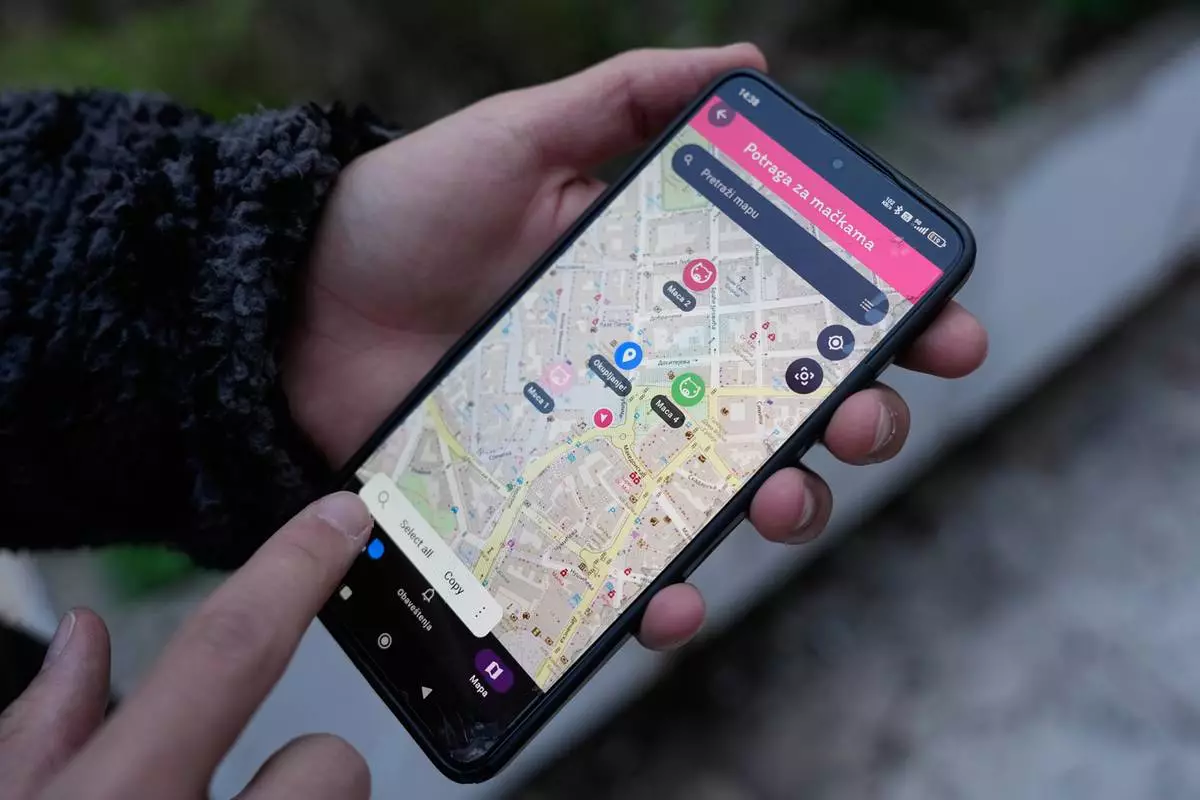
Adrian Kraljevic, member of the students' logistics team shows special phone apps designed to track mobile election teams and serve as tools of communication that could not be tracked or monitored by the authorities in Belgrade, Serbia, Nov. 20, 2026. (AP Photo/Darko Vojinovic)
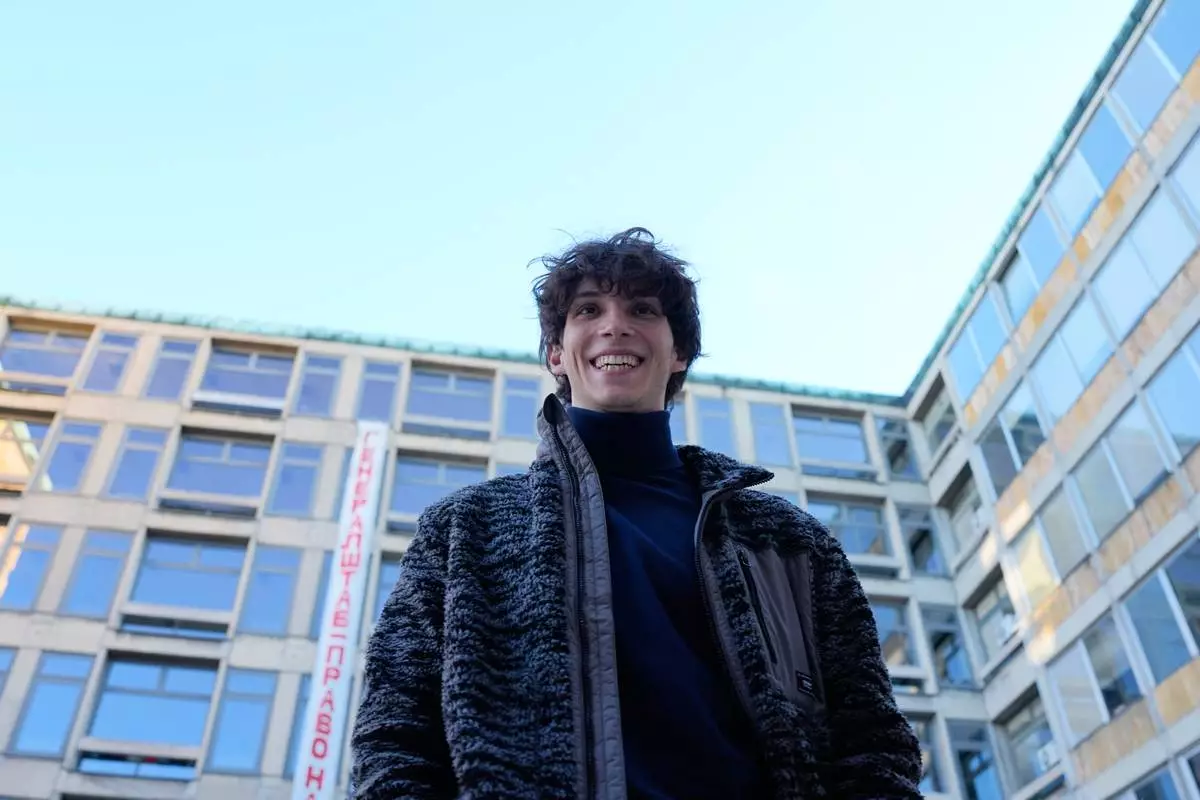
Adrian Kraljevic, member of the students' logistics team smiles during an interview for The Associated Press in Belgrade, Serbia, Nov. 20, 2026. (AP Photo/Darko Vojinovic)
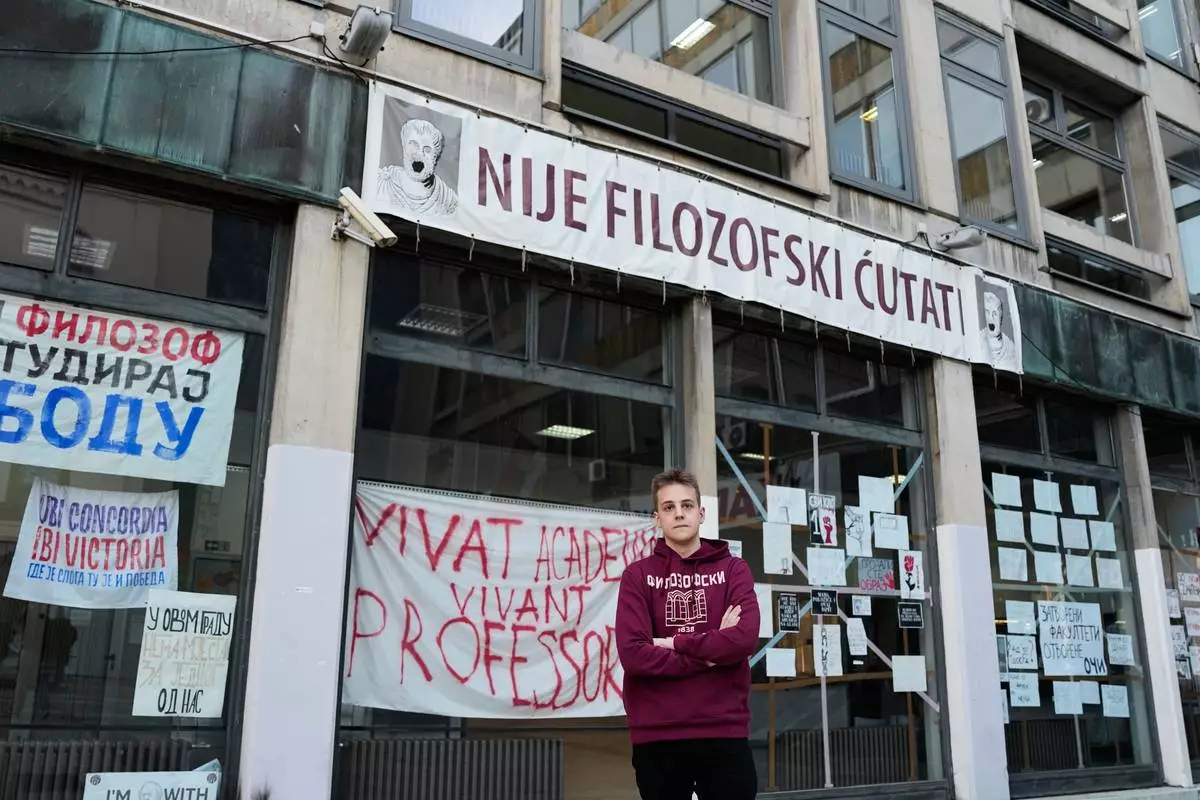
Marko Bojovic, logistics coordinator for the student movement on the day of Serbia's parliamentary election last month, poses in front of the Faculty of Philosophy in Belgrade, Serbia, Nov. 20, 2026. (AP Photo/Darko Vojinovic)