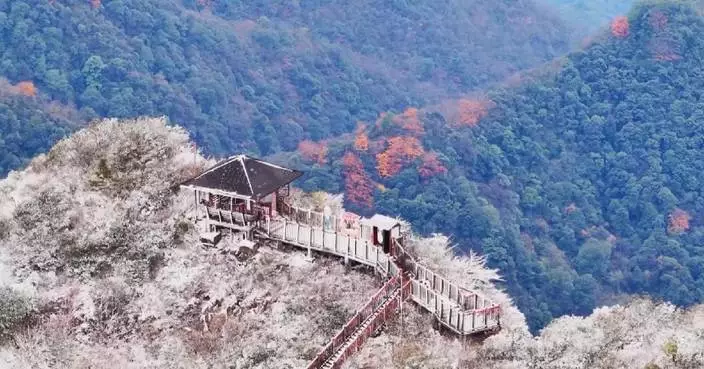
The picturesque autumn foliage is drawing flocks of international visitors and photographers to Huangshan, a well-known scenic spot in east China's Anhui Province where traditional villages and vibrant seasonal colors have become a major draw for inbound travelers.
In the Tachuan Village in Yixian County, clusters of Chinese tallow trees have turned shades of red and yellow. Along with traditional Huizhou-style residences and terraced fields, it has created the vibrant autumn scenery.
The seasonal display has recently attracted a group of 62 tourists and photographers from 25 other countries and regions to capture its beauty.
"It's been a wonderful day. The weather's been fine, and the lighting is very good. [It] really caught my eye and I really enjoyed looking at their daily life and documenting the daily life of people within those ancient towns," said John Andrew Hughes, a photographer from the United States.
Omani photographer Ahmed Al Busaidi echoed the sentiment.
"It's a very nice and beautiful place. I think I hope I will come again, and again, and again," said Busaidi.
China's expanded 240-hour visa-free transit policies and upgraded local tourism offerings have also helped encourage longer, in-depth international visitor stays in the area.
From January to September, Huangshan received 443,700 overnight inbound tourist visits, up 20.24 percent from the same period a year earlier, local tourism data showed.
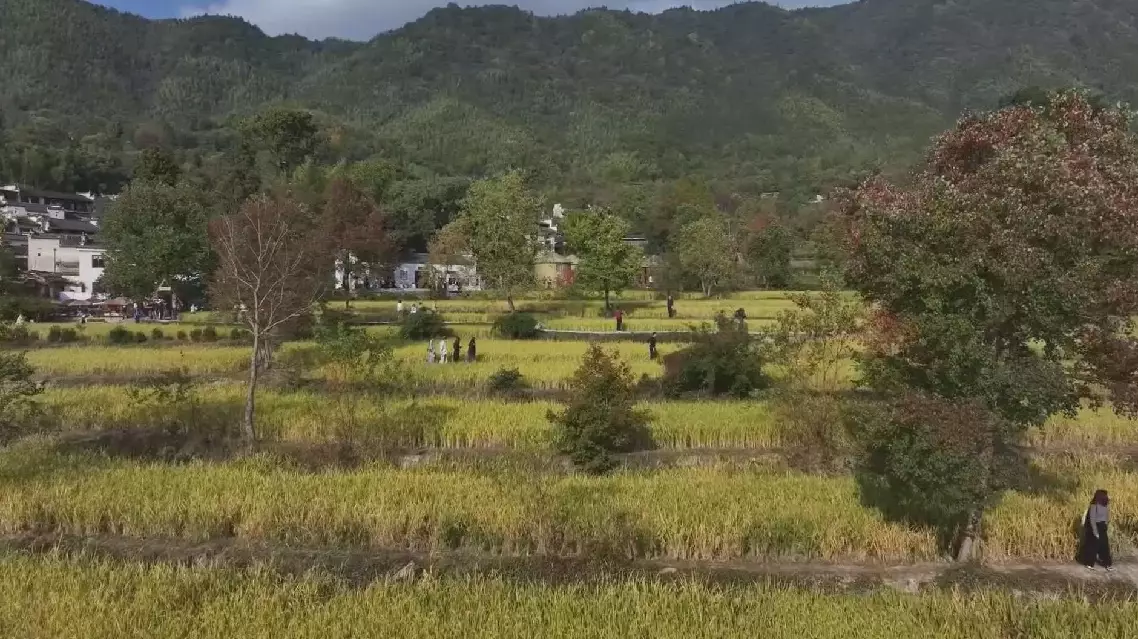
Autumn foliage draws wave of tourists to east China's Huangshan scenic spot
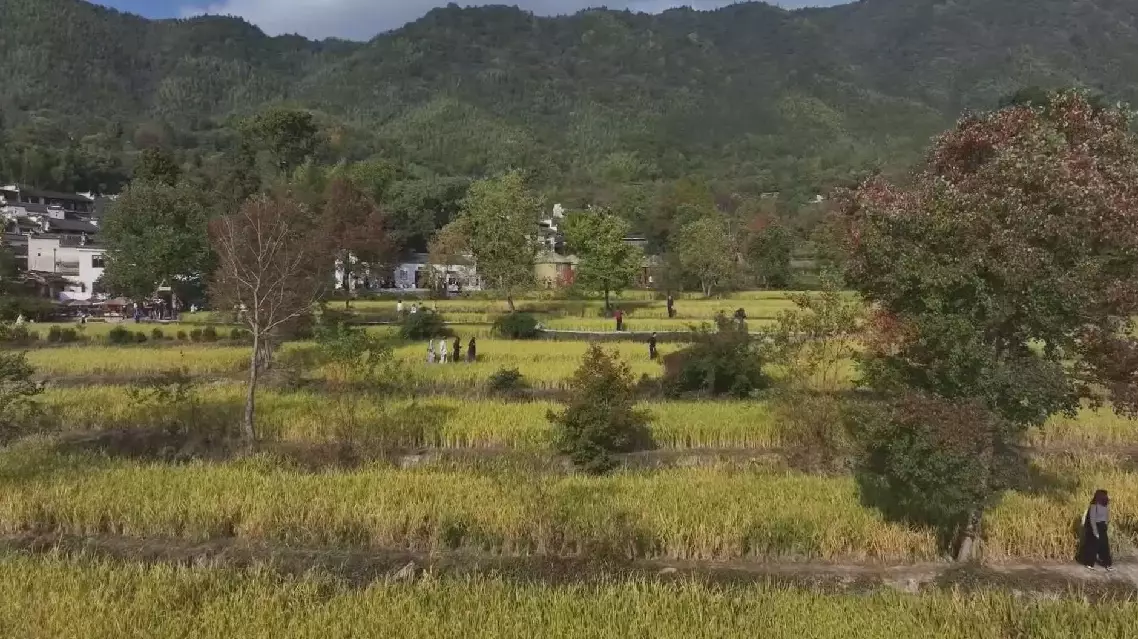
Autumn foliage draws wave of tourists to east China's Huangshan scenic spot
Two years after the Lebanon-Israel ceasefire agreement took effect, fighting still continues and is putting a damper on the olive harvest in southern Lebanon, which is now drawing to a close.
On November 27, 2024, the Lebanon-Israel ceasefire agreement officially took effect. However, the fighting has not ceased.
The persistent conflict has made it difficult for Lebanese farmers in the south to return home and gather their crops.
In the village of Lebaa, located in the Jezzine region south of the Lebanese capital Beirut, agriculture remains a vital source of income for local residents.
For generations, families here have made their living from olive cultivation and olive oil production. To them, the olive trees are far more than a means of survival. They embody a deep-rooted affection to the land.
After generations of operation, a 93-year-old local factory now boasts a modern olive oil production line, processing about 90 tonnes of olive oil annually.
This year, amid the conflict, not every family has been able to deliver their harvested olives to the factory as they did in previous years.
In the hometown of Eddith Tegho, a local villager, the olive trees left by his ancestors still yield a harvest year after year; yet further south in Lebanon, olive trees guarded by some families for generations have been destroyed by the war.
Among the farmers living on olive cultivation for generations, some are struggling to rush the harvest under the shadow of war, while others cannot even set foot on their own land.
"Since the war broke out in 2023, we have suffered greatly. We've had difficulty accessing our own land and have been forced to rush to harvest our crops. In 2024, as the crisis intensified, we were forced to leave our village. Our source of livelihood has been completely abandoned, with our land unattended and uncultivated. Everything has fallen into nothing," said Joseph Ruhana, a villager from the Jizzine region in southern Lebanon.
An immediate challenge is that Rouhana's farmland and orchards can no longer be cultivated normally as they were in the past.
"Some orchards have been bombed, while others we simply cannot access. In peacetime, we could harvest at our own pace. The entire process usually took two to three weeks. But now, we have to hire workers. When workers feel they're in danger, they demand extra pay, which places a heavy burden on us. To be honest, this has put us in a very difficult situation," he said.
In areas closer to the Blue Line, a UN-demarcated borderline between Lebanon and Israel established in 2000, some villagers face even more severe hardships.
Along the mountain roads of Seddiqine village in the Tyre region of southern Lebanon, less than 20 kilometers from the Blue Line, flags bearing the photos of Hezbollah fighters killed in clashes with Israel serve as a stark reminder that the conflict is, in fact, not far away.
Abbas Al-Hajj, a villager living near the temporary border, said he had lost everything in his hometown.
"(My hometown is) Meiss El Jabal. It's near the border, exactly at the border. We didn't go there since three years (ago). We went between the two wars, but it was all destroyed, so there's no way to live there. So, in Meiss we lost everything, the houses, the shops, the trees, the harvest, everything. We cannot go there anymore," he said.
Hajj, who once owned more than 700 olive trees, has had his home occupied and completely destroyed by the Israeli military.
Unable to return home or harvest the ripe olives, he now relies on odd jobs to make a living.
During military operations on the Lebanese side of the Blue Line, Israeli forces used bulldozers to level farmland and uprooted or even burned vast tracts of orchards and olive groves.
Lebanese Agriculture Minister Nizar Hani said that some 24,000 hectares of olive groves in southern Lebanon had been directly affected by the conflict with Israel.
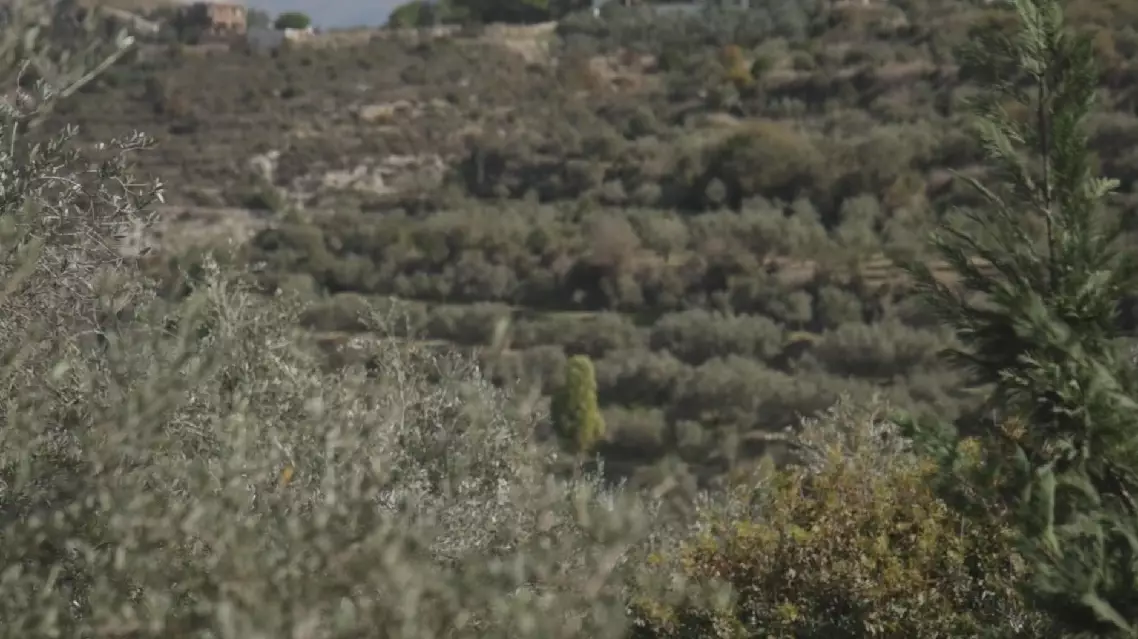
Lingering Lebanon-Israel conflict hinders Lebanon's olive harvest