DUESSELDORF, Germany (AP) — Agit Kabayel has the belt. Now he needs to look the part.
The unbeaten Kabayel (27-0) became the first German boxer to be heavyweight world champion since Max Schmeling in 1932 when he was handed the WBC heavyweight title after Oleksandr Usyk vacated his belts earlier this year.
Click to Gallery
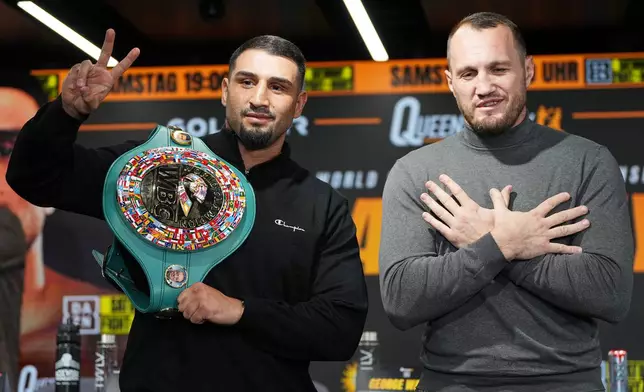
WBC heavyweight champion Agit Kabayel of Germany, left, and challenger Nelson Hysa of Albania pose for photographers during a press conference ahead of their title fight in Duesseldorf, Germany, Thursday, Nov. 26, 2026. (AP Photo/Martin Meissner)
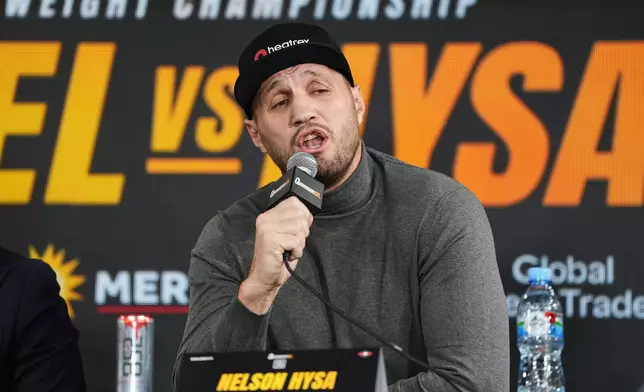
WBC heavyweight challenger Nelson Hysa of Albania speaks during a news conference with champion Agit Kabayel of Germany ahead of their title fight in Duesseldorf, Germany, Thursday, Nov. 26, 2026. (AP Photo/Martin Meissner)
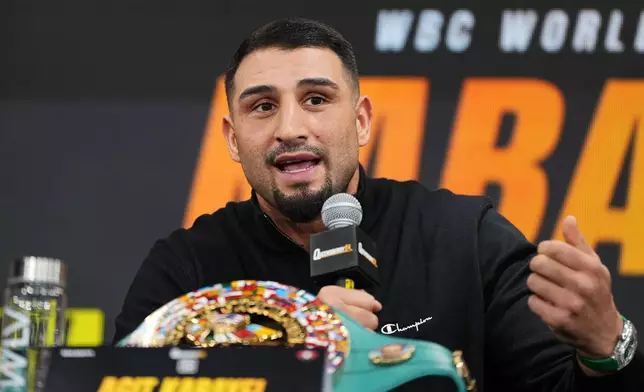
WBC heavyweight champion Agit Kabayel of Germany speaks during a press conference with challenger Nelson Hysa of Albania ahead of their title fight in Duesseldorf, Germany, Thursday, Nov. 26, 2026. (AP Photo/Martin Meissner)
Champions Agit Kabayel of Germany arrives at a news conference with challenger Nelson Hysa of Albania ahead of their boxing match for the WBC world heavyweight title at the arena in Duesseldorf, Germany, Thursday, Nov. 26, 2026. (AP Photo/Martin Meissner)
WBC heavyweight champion Agit Kabayel of Germany, left, and challenger Nelson Hysa of Albania face off during a news conference ahead of their title fight in Duesseldorf, Germany, Thursday, Nov. 26, 2026. (AP Photo/Martin Meissner)
His first defense Saturday comes at home in Germany against 42-year-old Nelson Hysa (25-0), who could become boxing's ultimate late developer after an unconventional route to the top.
“It’s my era. I’m writing my own story right now,” Kabayel said Thursday.
Get past Hysa, and bigger fights could open up.
Kabayel has said he's had contact with Filip Hrgovic's camp about a unification fight with the IBF champion. WBO champ Daniel Dubois could be another option, or the winner of next month's mega-fight between former champions Tyson Fury and Anthony Joshua.
The fight is in the same soccer stadium in Duesseldorf where Kabayel's old sparring partner Fury beat Wladimir Klitschko by unanimous decision exactly 11 years earlier.
The Klitschko brothers spent years fighting in Germany and winning, and Fury's win sent interest in boxing in Germany into decline. Kabayel aims to turn the tide.
“When was a stadium sold out (for boxing) in Germany? I can only remember 11 years ago, same date, same stadium, because I was there myself,” Kabayel said.
He has known Fury for years and credits him with “kind of putting me on the map” as a fighter.
Kabayel is representing Germany but also his Kurdish roots. Hysa is flying the flag for Albania, which has never had a heavyweight champ. The heavyweight division's newest challenger is older than Usyk, Fury and Joshua.
With an amateur career going back over two decades, Hysa only turned pro at the age of 37 and hasn't wasted any time since, fighting up to nine times a year. He's already talking up plans for a rematch in Albania after beating Kabayel.
“He’s a big boxer, he’s a good boxer, but this doesn’t mean that I will not beat him,” Hysa said Thursday.
See AP’s full sports coverage here
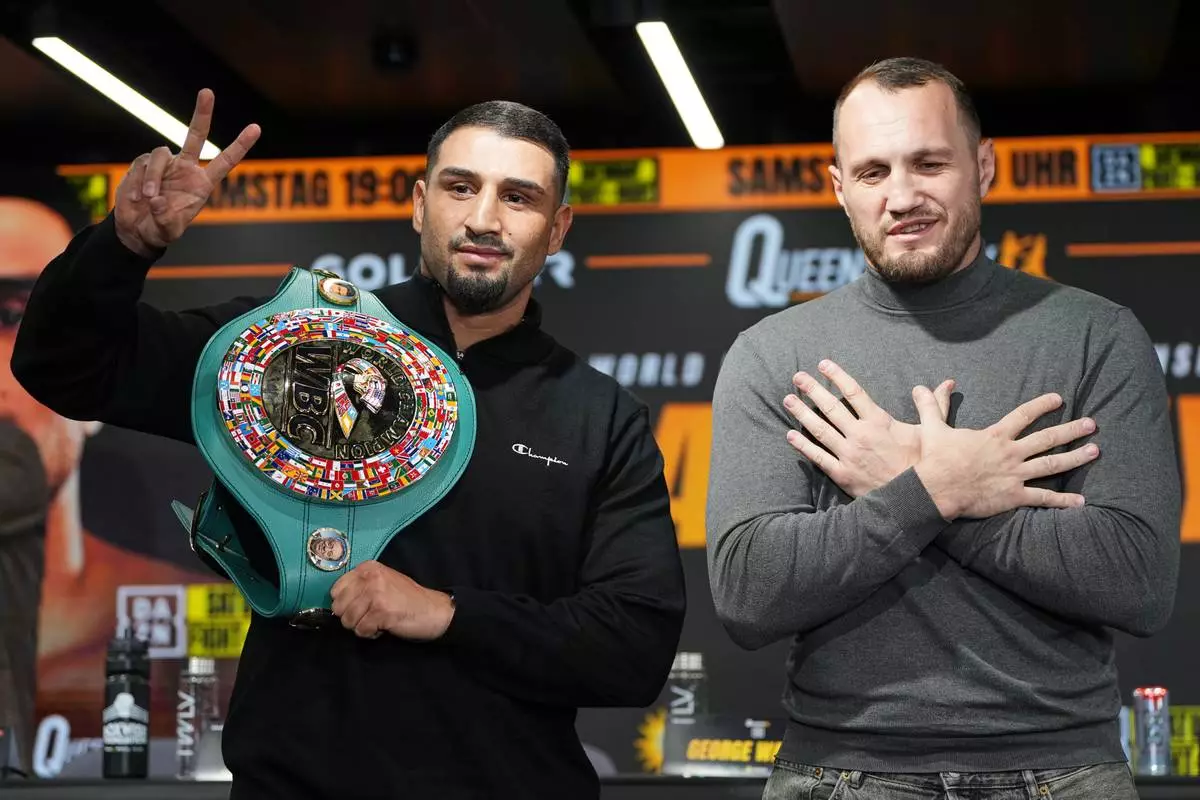
WBC heavyweight champion Agit Kabayel of Germany, left, and challenger Nelson Hysa of Albania pose for photographers during a press conference ahead of their title fight in Duesseldorf, Germany, Thursday, Nov. 26, 2026. (AP Photo/Martin Meissner)
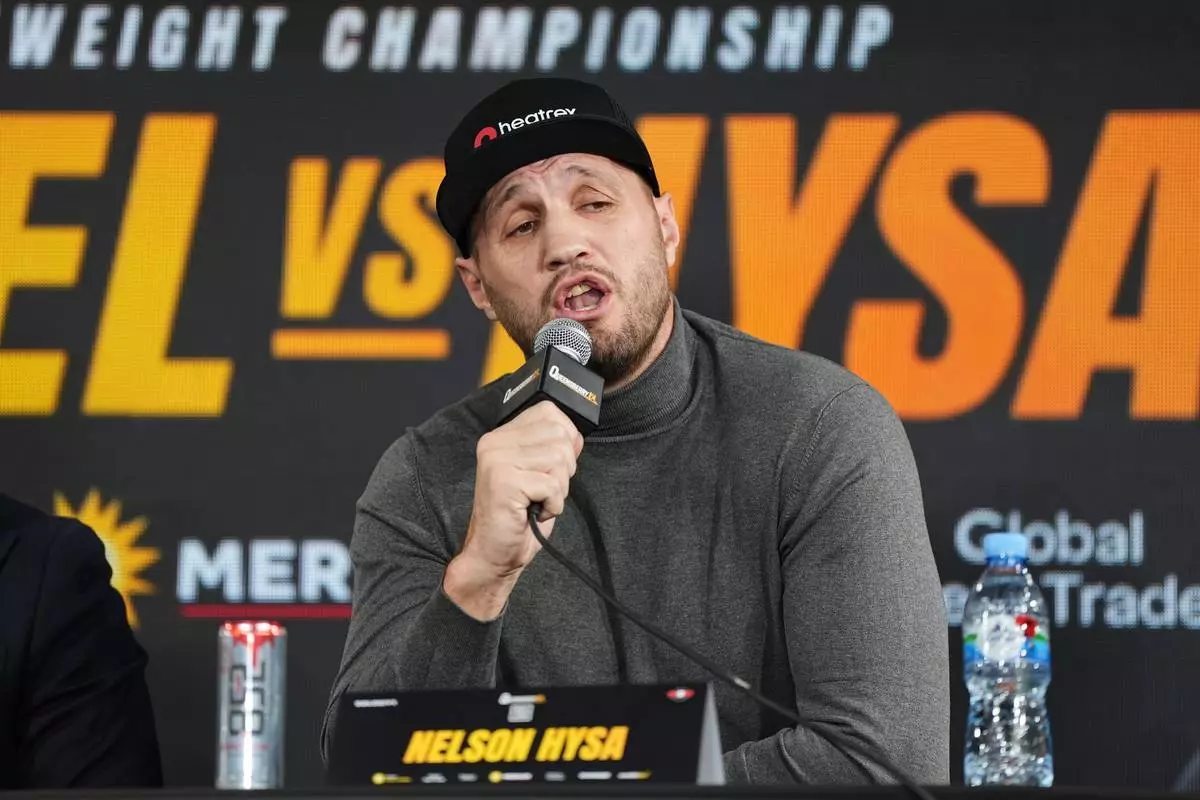
WBC heavyweight challenger Nelson Hysa of Albania speaks during a news conference with champion Agit Kabayel of Germany ahead of their title fight in Duesseldorf, Germany, Thursday, Nov. 26, 2026. (AP Photo/Martin Meissner)
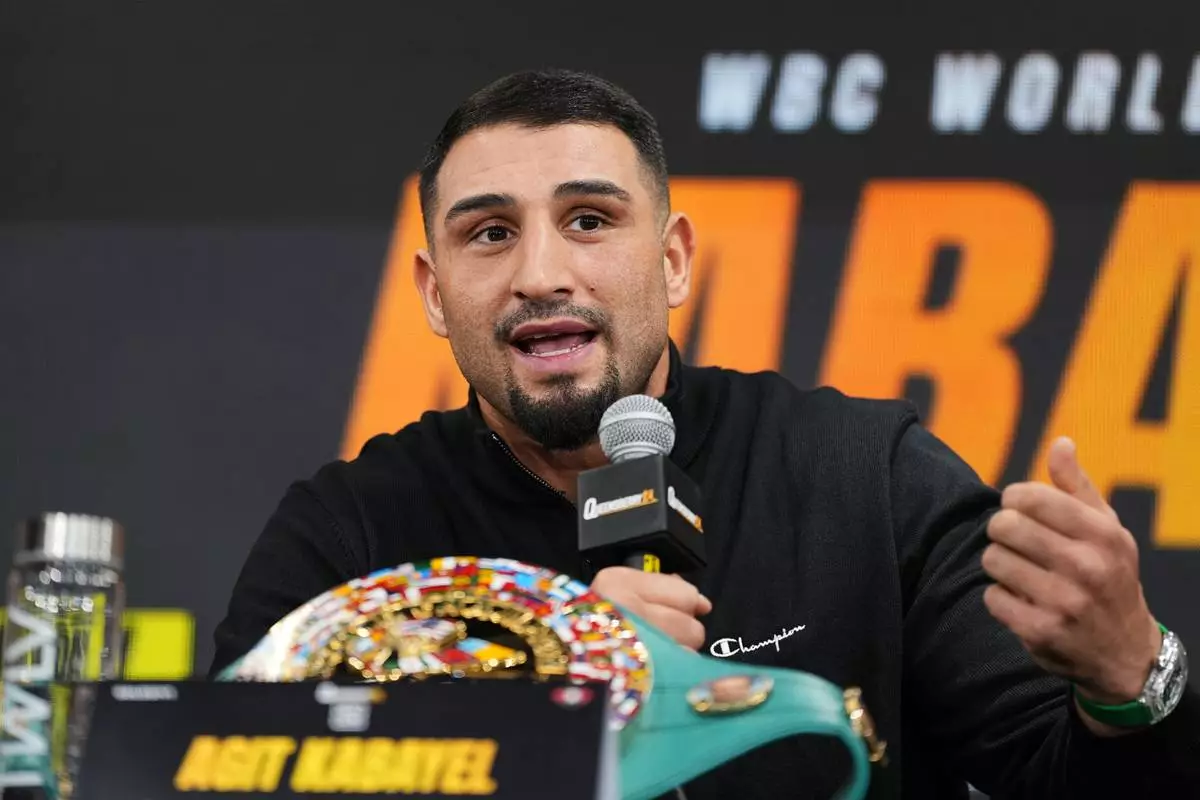
WBC heavyweight champion Agit Kabayel of Germany speaks during a press conference with challenger Nelson Hysa of Albania ahead of their title fight in Duesseldorf, Germany, Thursday, Nov. 26, 2026. (AP Photo/Martin Meissner)
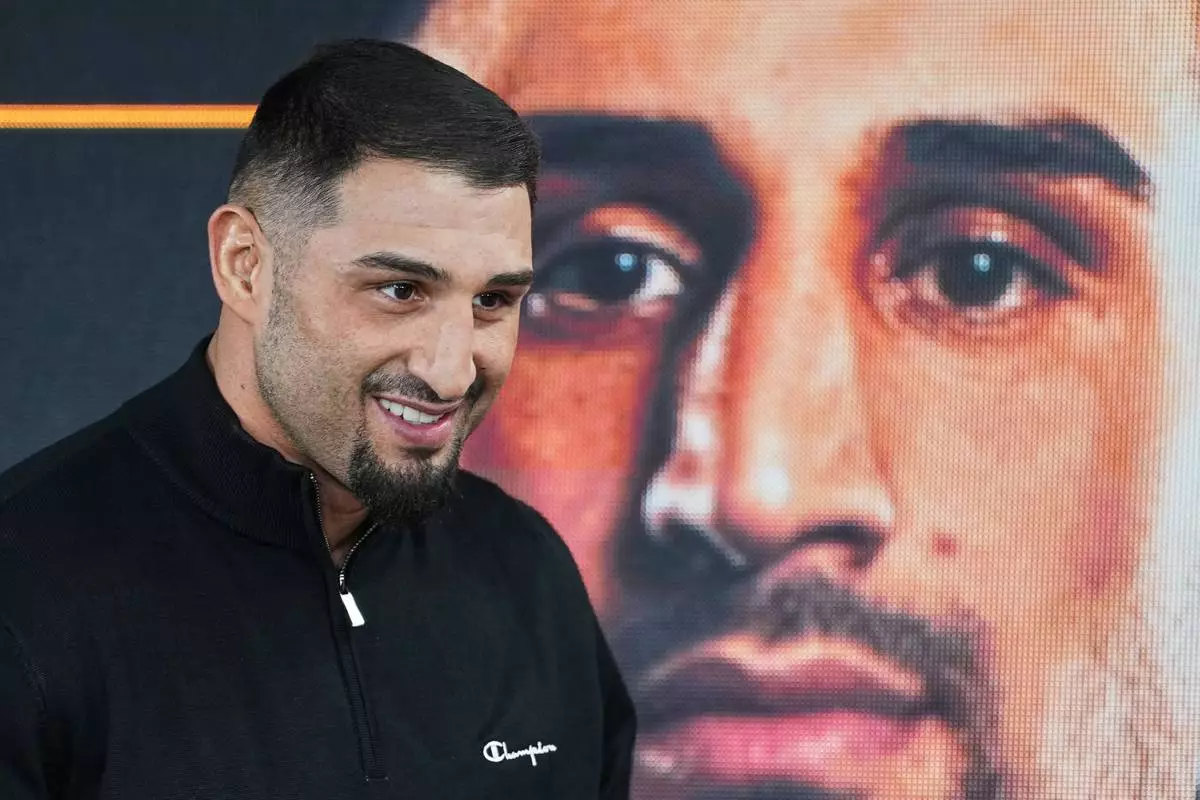
Champions Agit Kabayel of Germany arrives at a news conference with challenger Nelson Hysa of Albania ahead of their boxing match for the WBC world heavyweight title at the arena in Duesseldorf, Germany, Thursday, Nov. 26, 2026. (AP Photo/Martin Meissner)
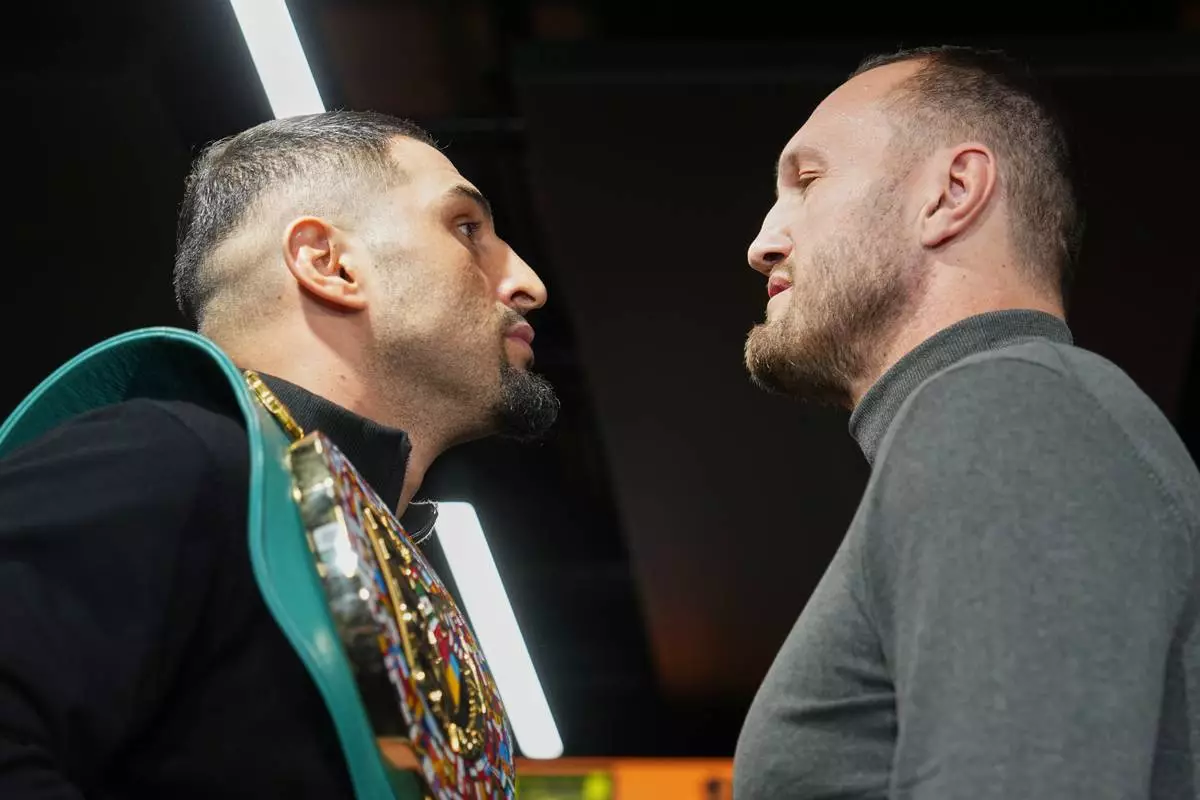
WBC heavyweight champion Agit Kabayel of Germany, left, and challenger Nelson Hysa of Albania face off during a news conference ahead of their title fight in Duesseldorf, Germany, Thursday, Nov. 26, 2026. (AP Photo/Martin Meissner)
BRUSSELS (AP) — After struggling to chaperone Europe’s leaders through more than 12 hours of high-stakes budget negotiations, European Council President António Costa faced reporters early Friday with a stark assessment. “We didn’t reach an agreement,” he said.
Government leaders from the 27-nation European Union failed to narrow down the size of the 2028-2034 budget — let alone how it might be used. An important loan for Ukraine was caught up in the wrangling.
The spending package is small compared to national budgets — around 1% to 1.2% of gross national income — but it encapsulates the ambitions of the world’s biggest trading bloc and how it sees itself on the international stage.
Costa said “some member states asked for further reductions" in how much they would have to pay in, according to his latest proposals, while most were "opposed to further cuts, and some even proposed to reverse some cuts.”
It was a day of brinksmanship that saw the leaders playing tough for national audiences.
In three weeks, they will try again. The stakes are high. Elections in some key countries are approaching, and new hardline governments or shaky coalitions could complicate matters further.
In coming days, Costa will draw his conclusions from the summit talks — held in two plenary sessions, several group meetings, and the corridor conversations that typify EU budget negotiations — and consult again with capitals.
Some leaders, notably from countries that pay more into the budget than they get back in allocations, skipped certain meetings. But Costa, a former Portuguese prime minister, was unruffled.
“This is a negotiation process,” he said. “It’s normal that the member states try to defend their own national interests.”
“For me, it was very useful to figure out the parameters of a possible landing zone in December,” Costa said. He insisted that a new budget must be in place by Jan. 1, 2028. “In order to do this, we need to reach a final agreement by the end of this year," he said.
French President Emmanuel Macron said elections in his country in April, which hard right figurehead Marine Le Pen is favorite to win, mean that he is not willing to negotiate further in 2027.
“I won’t be politically and democratically in a position after December 31 to be able to relaunch a discussion on the budget and to conclude it,” he said, as it will be “a period much too close to the presidential elections.”
Spain has elections this weekend. Voters head to the polls in Italy and Poland next year.
Macron said he’s willing to sign up to “a good agreement” at the next summit on Dec. 17-18. But he said Europe is making “a strategic error” if it narrows its ambitions, and that “France will not accept more cuts.”
German Chancellor Friedrich Merz noted that two days have been set aside for the next budget talks but that “it could be longer. I want to be home by Christmas.”
Hungarian Prime Minister Péter Magyar, a newcomer to EU budget haggling, said he had seen “zero results” and that a deal by “Christmas looks unlikely."
If the leaders continue to clutch their purse strings, money will have to be found elsewhere, but not just for the bloc’s traditional policies and future ambitions.
Funds are also needed to pay down debt on the 850-billion-euro ($932 billion) loan that was agreed after the last long-term budget negotiations to dig Europe out of its worst-ever recession, sparked by the COVID-19 pandemic.
Costa has proposed an EU-wide tax on digital services. It would be drawn from online advertising and money that companies make from user data, and could amount to 5 billion euros ($5.5 billion) a year.
Irish Prime Minister Micheál Martin voiced “strong opposition” to the levy. “Europe is reducing competitiveness and we feel, in principle, a digital tax is sending out all the wrong messages,” he said.
But European Commission President Ursula von der Leyen said that inside the room the tax had “gathered broad support, and I see good prospects for a solid package of new own resources.”
The EU already raises its “own resources” through customs duties and value added tax, and the commission is exploring ways to find more through the carbon emissions trading system and a tobacco duty.
Recent budget proposals foresee a 100 billion-euro ($110 billion) envelope for Ukraine over seven years. The leaders must also decide on a new 45 billion-euro ($49.4 billion) loan to help meet Kyiv’s economic and military needs next year.
A big issue is whether to deduct the interest that European countries pay on that loan from the budget envelope, or put more in to cover it. Ukraine will only reimburse the loan once Russia pays war reparation costs.
A year ago, EU leaders endorsed a loan of 90 billion euros ($99 billion) to cover most of Ukraine’s needs for two years. But Russia’s intensified attacks on energy and civilian infrastructure, along with disruptions to Black Sea trade, are draining resources.
Costa said 24 of the 27 member countries support the loan plan, with Bulgaria insisting that its share should only pay for economic needs. Costa must find a way to get the Czech Republic, Hungary and Slovakia on board by next month.
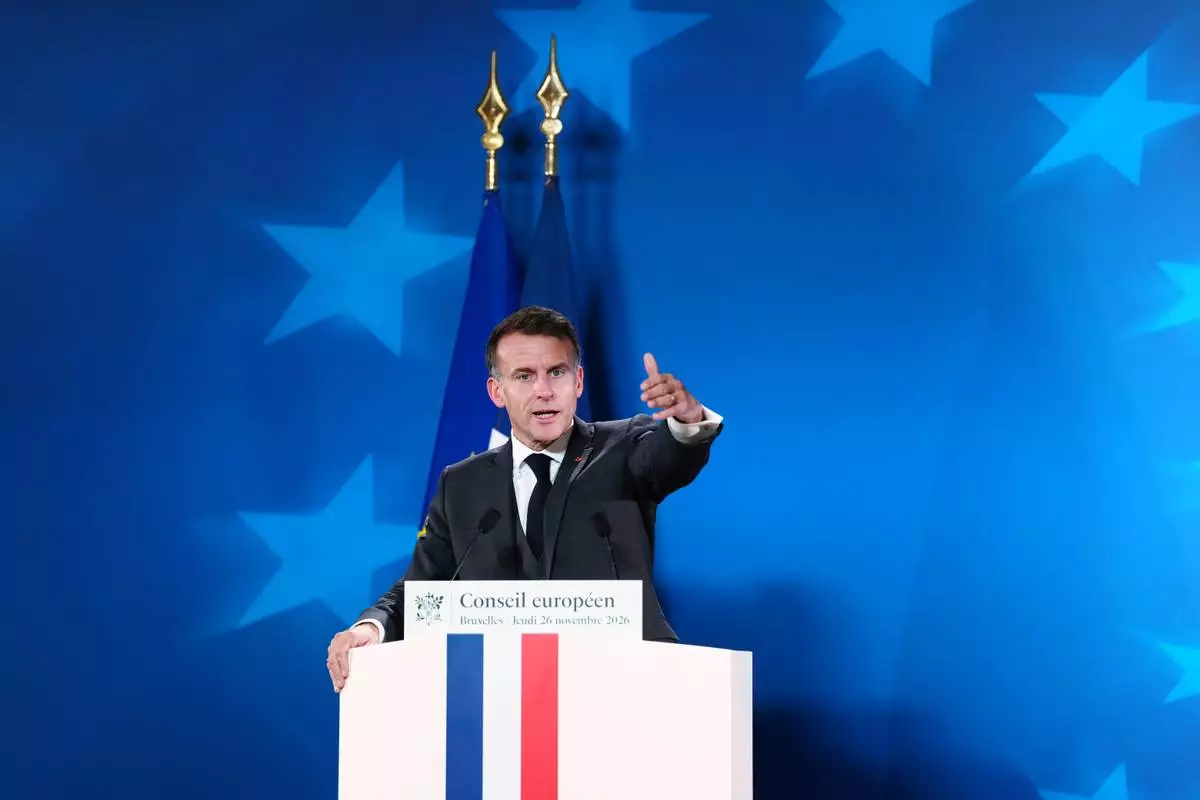
French President Emmanuel Macron speaks during a media conference at the EU summit in Brussels, Thursday, Nov. 26, 2026. (AP Photo/Marius Burgelman)
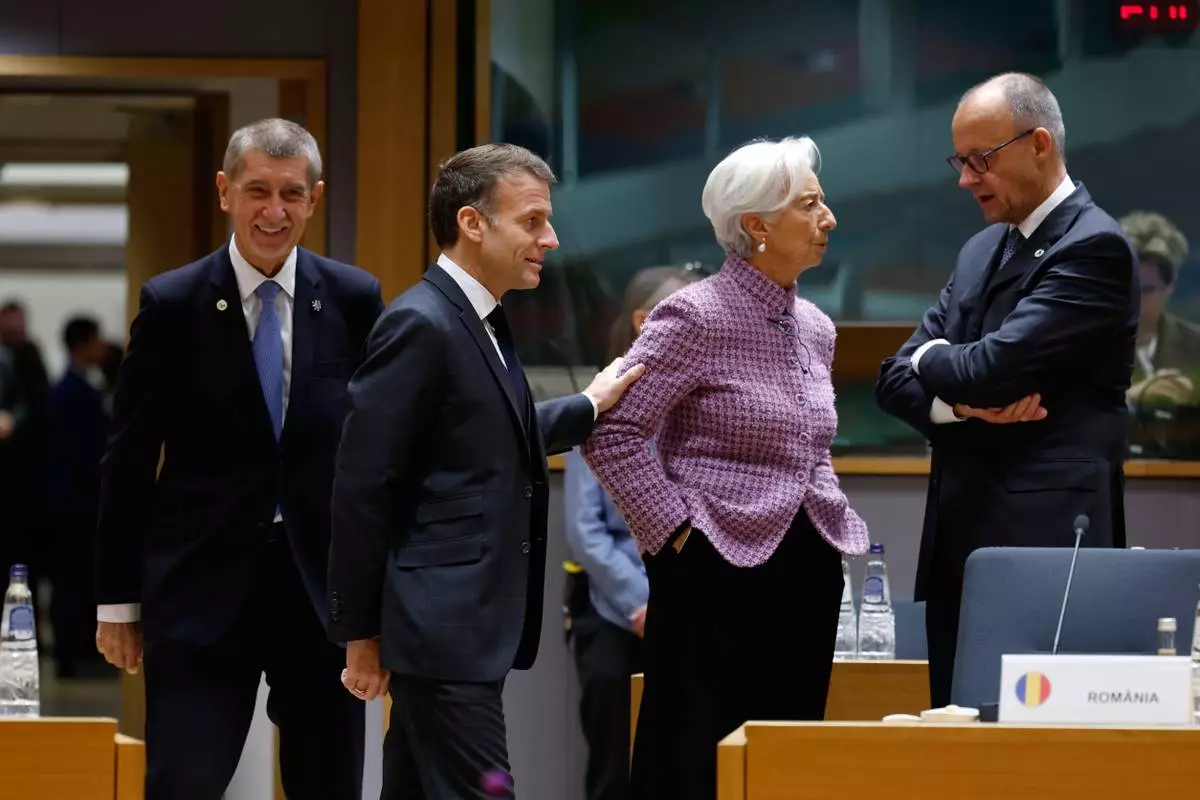
From left, Czech Republic's Prime Minister Andrej Babis, French President Emmanuel Macron, European Central Bank President Christine Lagarde and Germany's Chancellor Friedrich Merz during a round table meeting at the EU summit in Brussels, Thursday, Nov. 26, 2026. (AP Photo/Geert Vanden Wijngaert)
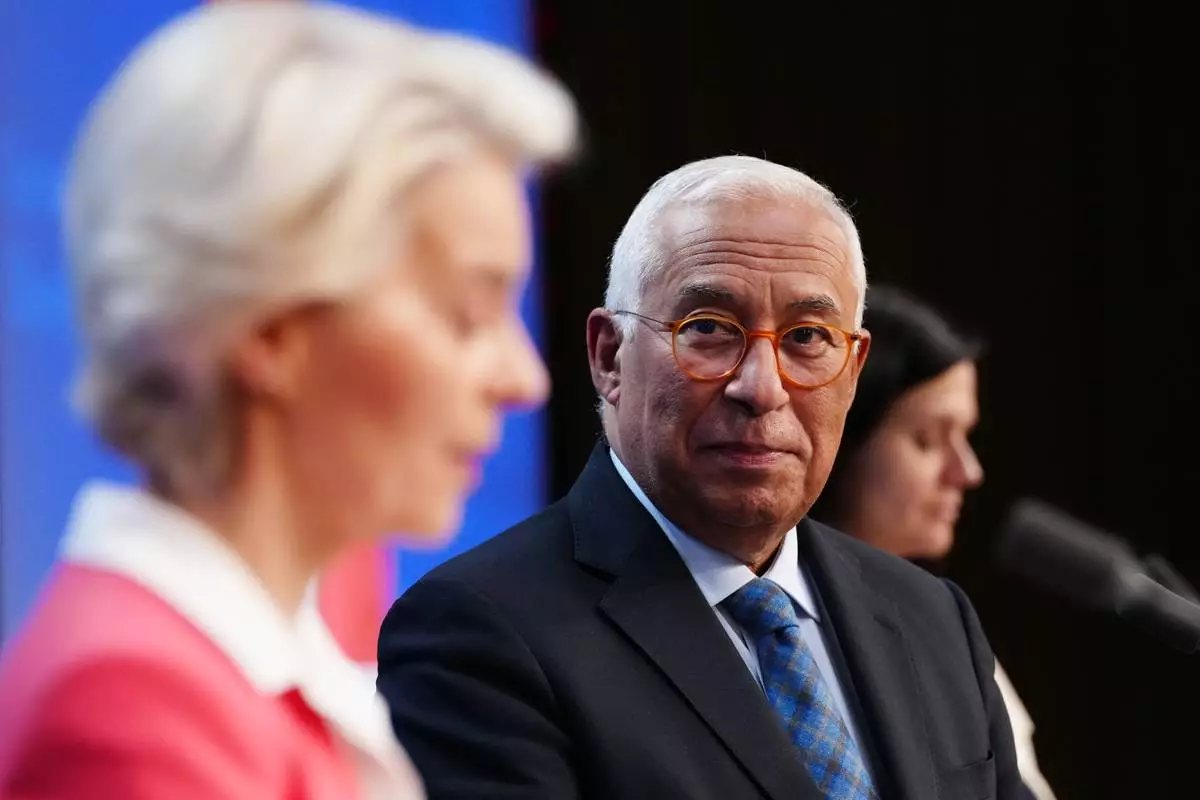
European Council President Antonio Costa, center, and European Commission President Ursula von der Leyen address a media conference at the EU summit in Brussels, Friday, Nov. 27, 2026. (AP Photo/Marius Burgelman)
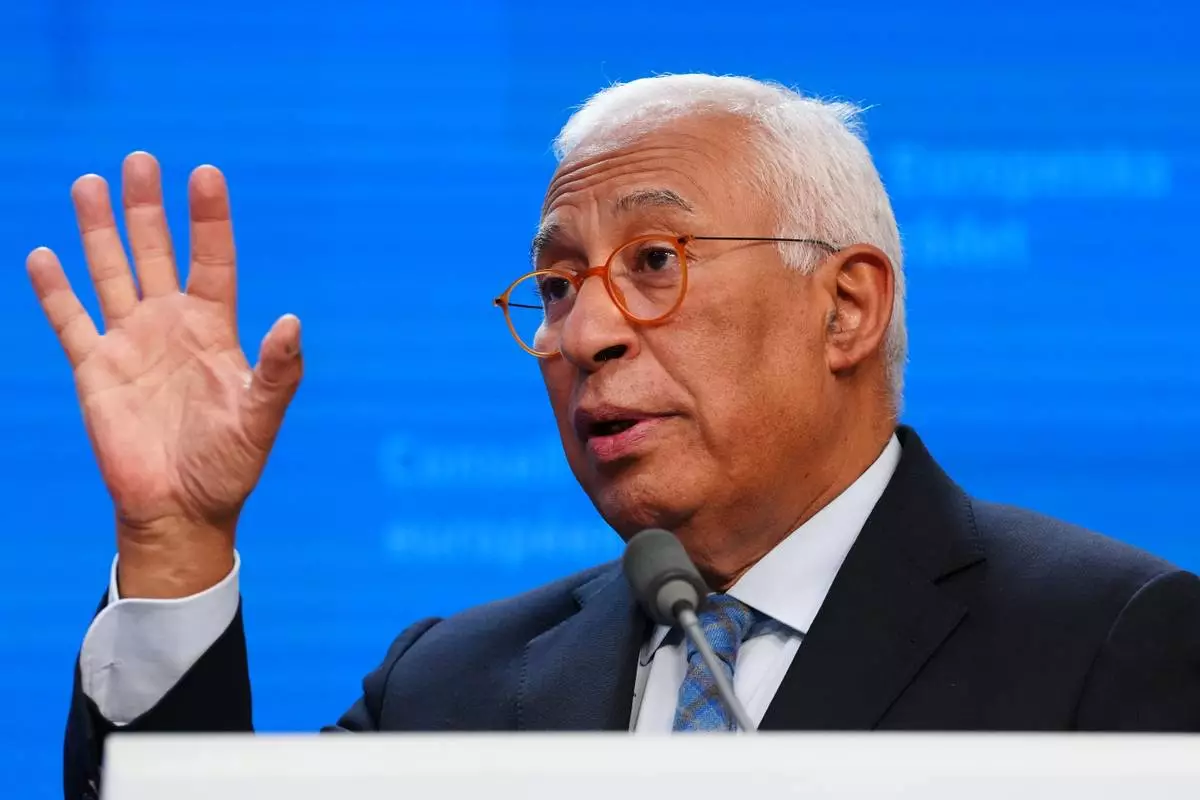
European Council President Antonio Costa speaks during a media conference at the EU summit in Brussels, Friday, Nov. 27, 2026. (AP Photo/Marius Burgelman)