KARACHI, Pakistan (AP) — The death toll from the collapse of a six-story building under construction in southern Pakistan rose to eight Friday after rescuers recovered four more bodies, officials said.
Rescuers are still searching for about 10 people believed trapped beneath the rubble of the building, which collapsed Wednesday in Karachi’s Baloch Colony neighborhood, police official Raja Sarwar said.
Relatives of those still missing were in tears as they prayed for their safety.
On Friday, helmeted rescuers carried a body wrapped in a white covering on a stretcher across a mound of shattered concrete and tangled steel bars. Others were trying to reach into gaps in the wreckage in a congested residential area.
Sarwar said crews were carefully removing debris in hopes of finding survivors.
Building collapses are common across Pakistan, where construction standards are often poorly enforced and builders frequently use substandard materials or disregard safety regulations to cut costs. Last month, the roof of a private school collapsed in the northwestern city of Peshawar, killing 34 children and a teacher.
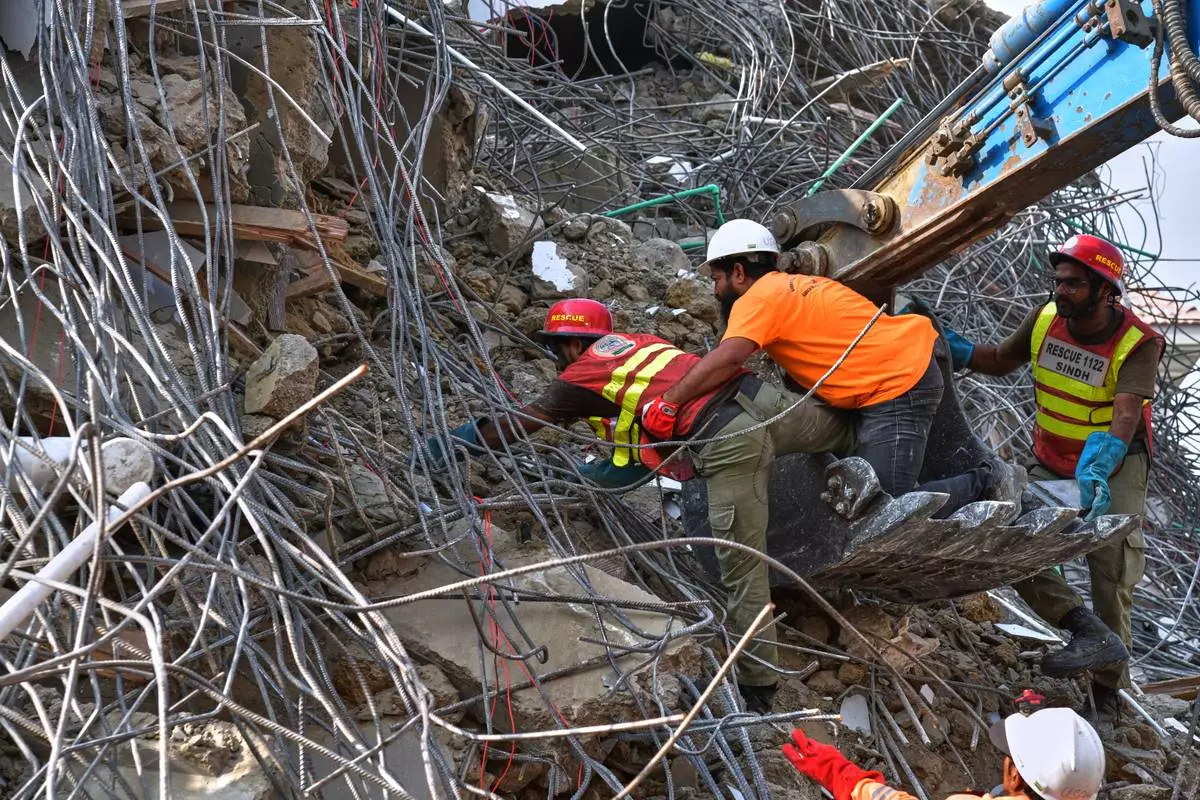
Rescue workers search survivors in the rubble at the site of a multi-story building collapsed, in Karachi, Pakistan, Friday, Nov. 27, 2026. (AP Photo/Ali Raza)
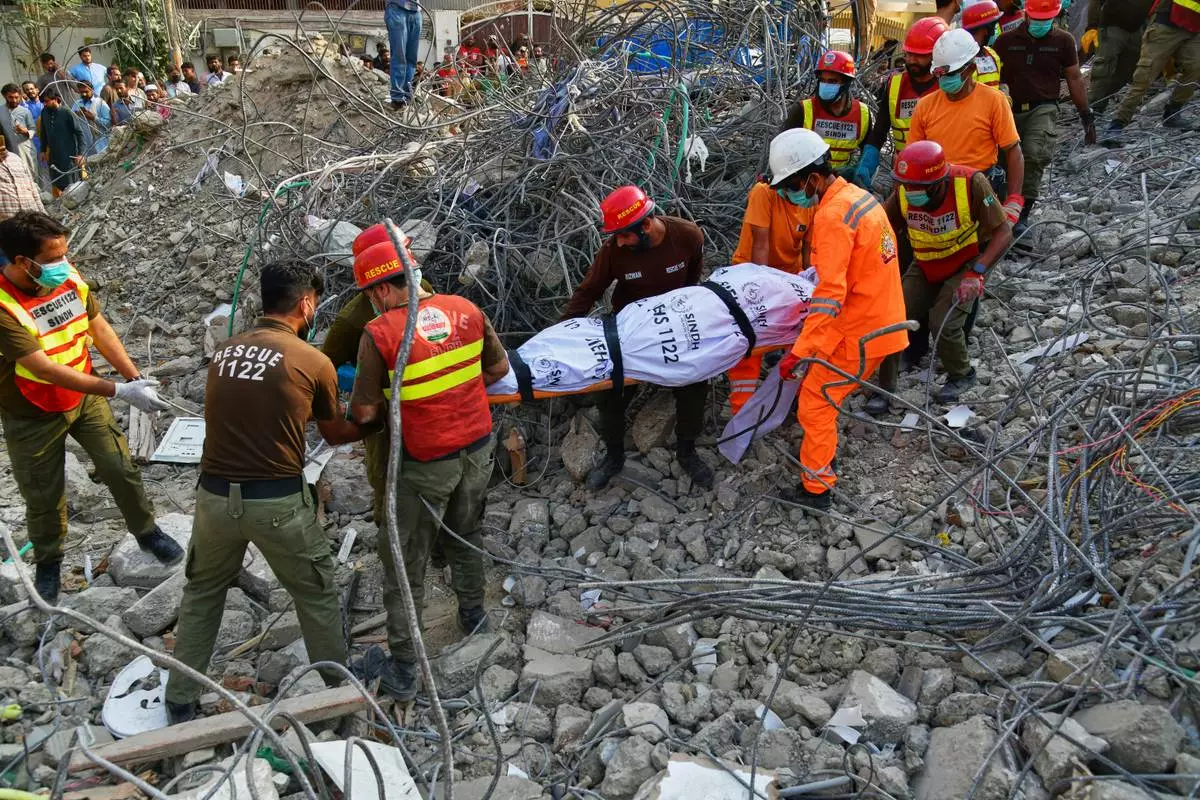
Rescue workers transport a body after recovering it from the rubble at the site of a collapsed multi-story building in Karachi, Pakistan, Friday, Nov. 27, 2026. (AP Photo/Ali Raza)

People mourn after their family member's body recover from the rubble at the site of a multi-story building collapsed, in Karachi, Pakistan, Friday, Nov. 27, 2026. (AP Photo/Ali Raza)
Geir Moulson, whose gift for languages, dedication to precision and encyclopedic knowledge of Germany made him the heart of The Associated Press' Berlin bureau for more than two decades, died at age 54, his colleagues and friends said this week.
Moulson's career with the AP spanned nearly 30 years, most of it in Berlin, where he became the bureau's leading authority on German politics as well as its ethical compass.
“Geir was a calm, unflappable force and a journalist of the very highest AP standards,” said James Jordan, news director for Europe and Africa. “He was kind to newcomers and always willing to share his knowledge and analysis of what really mattered in the news. His professionalism was admired across Europe and the whole of the AP.”
Reporters and editors valued his meticulous writing and firm convictions, which often led him, in the middle of breaking news, to persuade others to slow down and ensure that a story's nuance or context was properly reflected.
An intensely private and often taciturn man, he nevertheless routinely delighted colleagues with his dry wit and unexpected zingers. They recalled his generous spirit and said his knowledge of German history and culture was surprisingly vast for someone who grew up in another country. He was British and later also acquired German citizenship.
“He helped me with my German class homework, with basically every story I wrote, with suggestions for sightseeing around Berlin and the broader country. Sitting across from him at our desks was one of the greatest joys of my life,” Berlin bureau colleague Stefanie Dazio said. “He could be cranky and grumpy and would have been horrified to see how much we all love him.”
First hired in Geneva in 1998, Moulson moved to Berlin in late 2000. He was a hobbyist photographer and devoted to his weekly yoga classes. He spoke English, German, French and Spanish fluently, and graduated with a degree in modern and medieval languages from Fitzwilliam College at the University of Cambridge.
Charlie Hobson, who met Moulson in their undergraduate French class, said he was the best linguist of their cohort and was famous among their friends for always wearing a denim jacket with jeans.
“He had a reputation for being super smart, getting amazing grades,” Hobson said. “He used to sort of shrug it off as you said that to him.”
London-based AP editor Naomi Koppel, who proudly called herself Moulson's “closest friend in the company,” worked with him in Geneva, and the two frequently vacationed together. She recalled how he liked to “visit all corners of Germany and photograph odd things.”
His friend and former AP reporter Frank Jordans described how Moulson's social media feeds featured photos of stork nests dotted across the countryside and a series of red squirrels in Berlin parks. He loved to take walks around his adopted city, including along the Berlin Wall trail.
Moulson had an “eye for detail, both in his copy and when it came to observing nature,” Jordans recalled.
Kirsten Grieshaber, a reporter in Berlin who worked with Moulson for almost 20 years, recalled him as a “shy friend who always cared and worried for me.”
“But he never made a big deal out of all the many ways he took care of me and everyone else at work,” she added.
His mother, Ann Moulson, said his fascination with languages and animals dated to his childhood. As a boy, he loved to hear his parents read aloud the word “phosphorescent,” laughing every time they came to it in one of his favorite books about a mouse and a whale, she said.
“He was always interested in words,” she said, “and once came to ask us what kind of a creature a dilemma was. We asked the context, and he had read about someone being ‘on the horns of a dilemma'!”
AP colleagues said his attention to detail — including getting just the right translation for the quotes he captured on his handheld recorders — was an editor’s dream.
“Geir was the ultimate news agency reporter," said Karl Ritter, deputy global editor for international sports and former Northern Europe news director. "He would seize on that one newsworthy quote in a long speech and instantly recognize when something that sounded like news to me was just a repeat of what had been said before.”
Moulson hated nothing more than being stuck at home and much preferred being in the office to working remotely.
“When news broke, his corner of the newsroom would erupt with the cacophony of the clacking keyboard, typically followed by a loud string of invectives directed at his computer for its inability to keep up with his brain,” said David Rising, who worked with Moulson in Berlin before transferring to AP's Bangkok bureau.
Colleagues noted that he saved them from mistakes many times.
“I’ve never met anyone who knew the story as well as Geir, or who wore that knowledge so lightly,” said Fisnik Abrashi, AP's senior director of global customer engagement and another former Northern Europe news director. “He’d pull you aside and help you understand, in his quiet, understated way.”
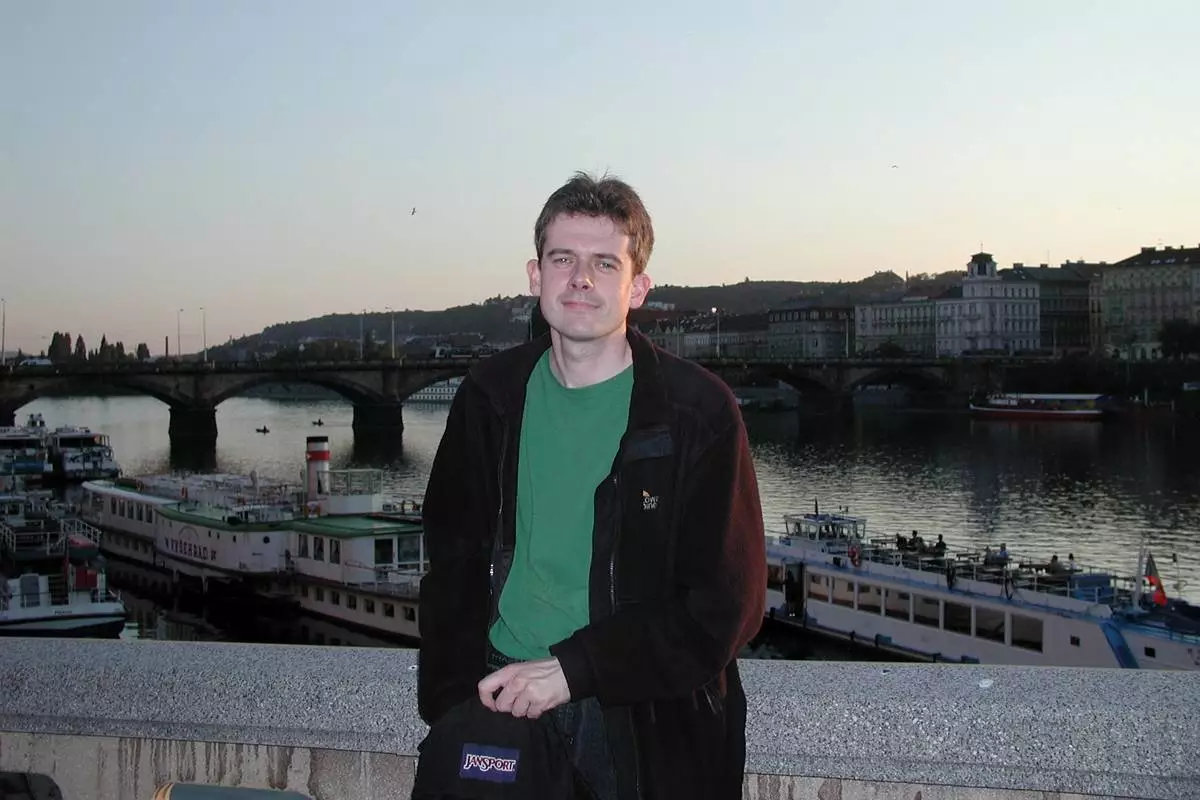
The Associated Press correspondent Geir Moulson poses for a photo in Prague, Oct. 7, 2001. (AP Photo/Naomi Koppel)
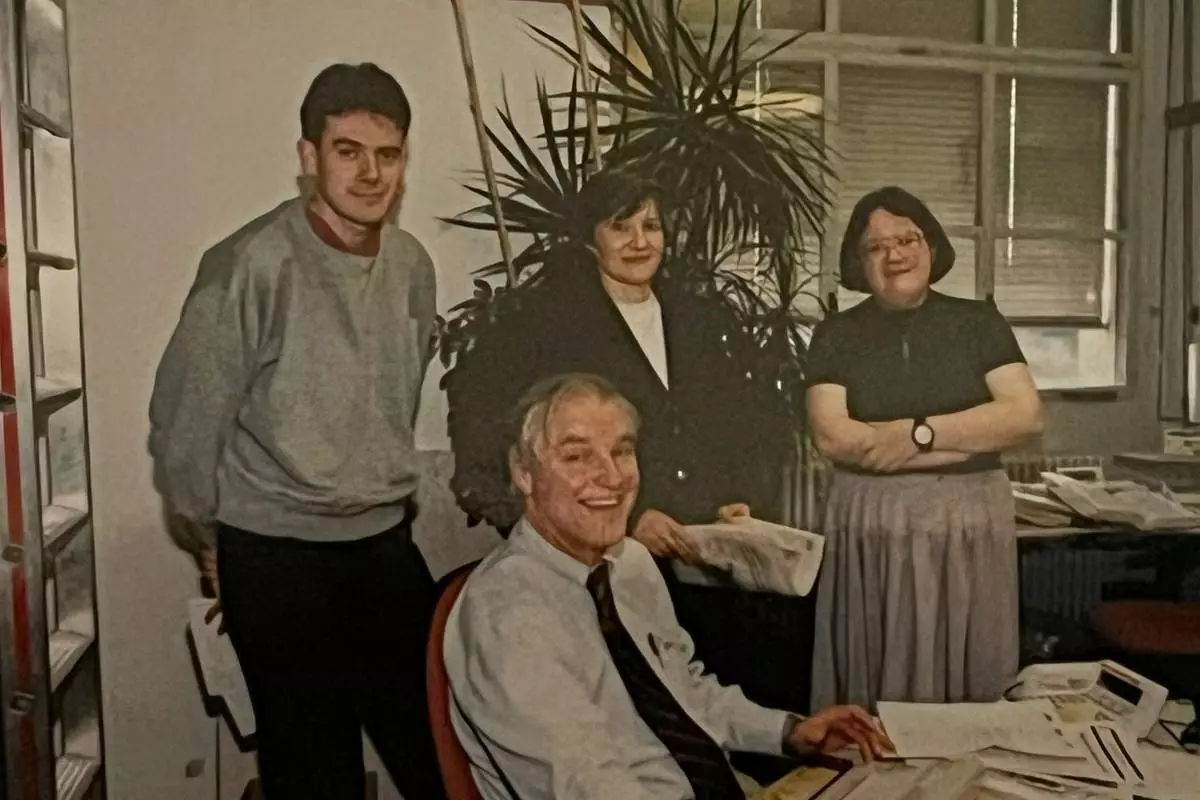
From left: Geir Moulson, Clare Nullis and Naomi Koppel stand next to bureau chief Sandy Higgins in the AP office in Geneva, Switzerland, Nov. 17, 1998. (AP Photo/Donald Stampfli)
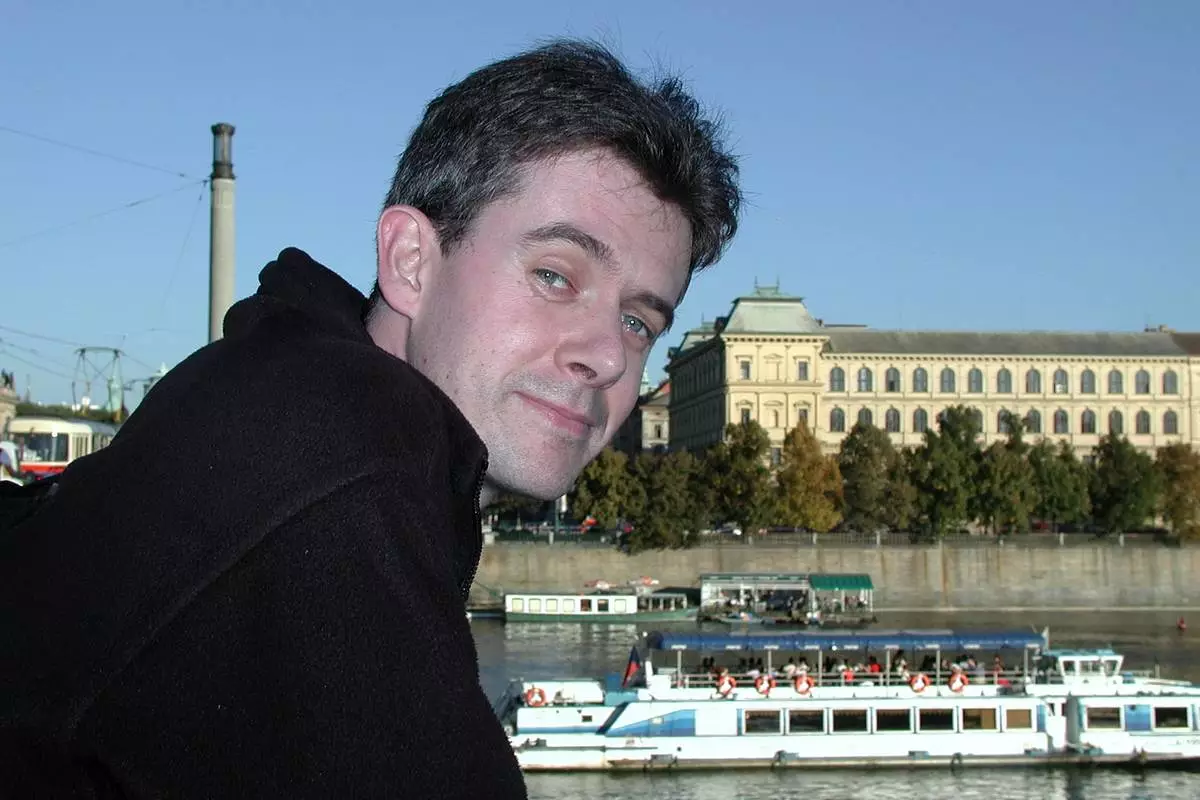
The Associated Press correspondent Geir Moulson poses for a photo in Prague, Oct. 7, 2001. (AP Photo/Naomi Koppel)
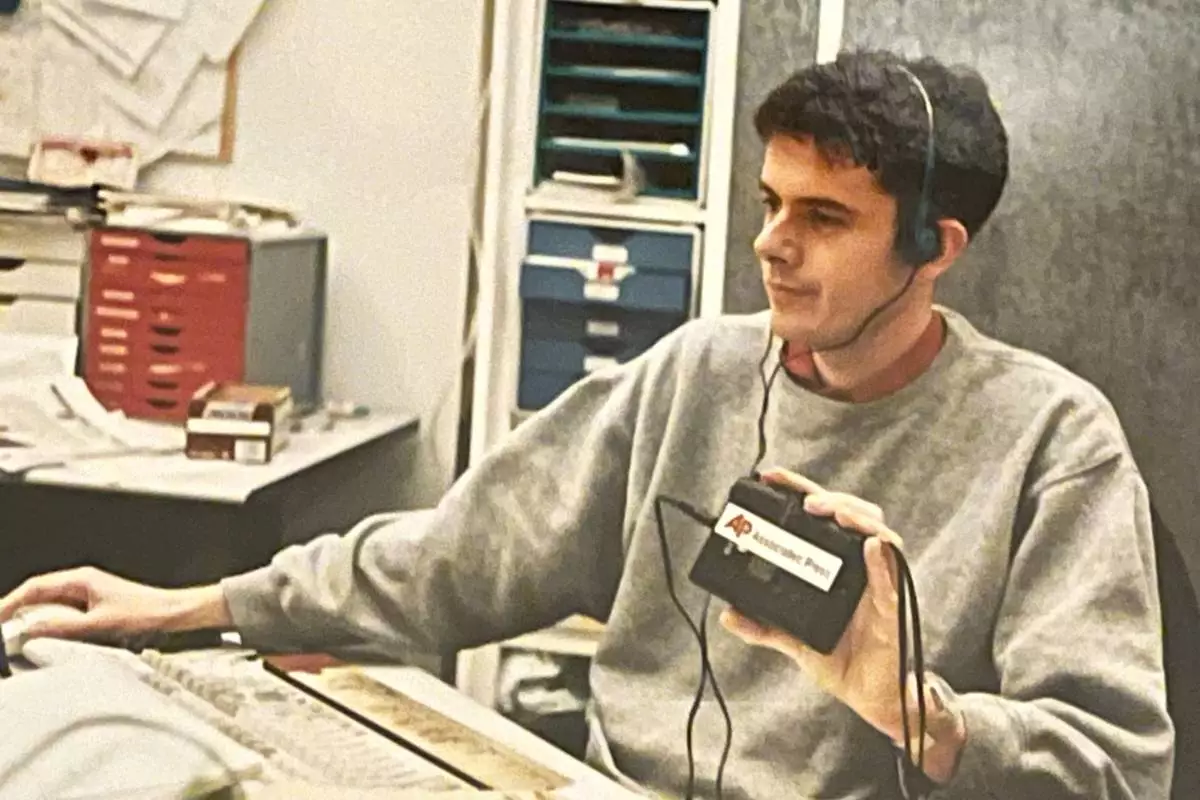
The Associated Press correspondent Geir Moulson works in the AP office in Geneva, Switzerland, Nov. 17, 1998. (AP Photo/Donald Stampfli)
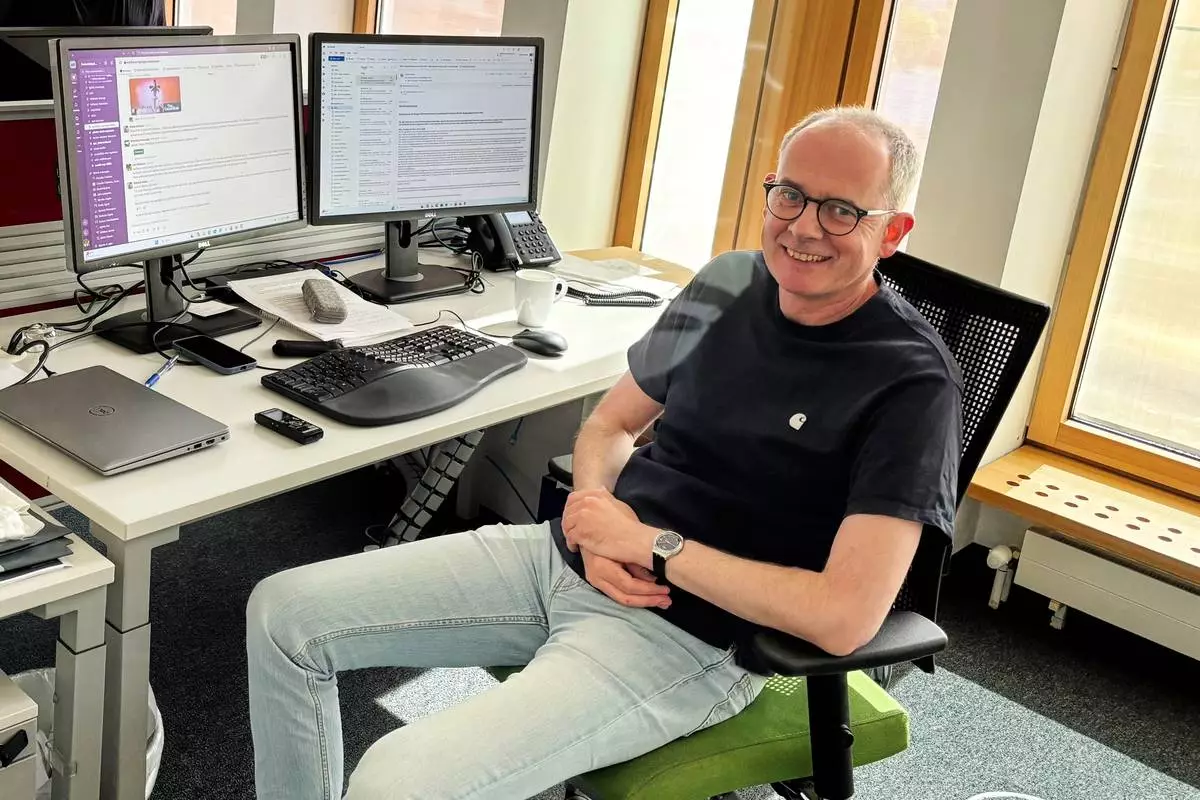
The Associated Press correspondent Geir Moulson in the AP office in Berlin, Germany, Thursday, July 16, 2026. (AP Photo/Pietro De Cristofaro)