
The Middle East war is spreading. The United Arab Emirates and Dubai have been attacked repeatedly, and now the fire has reached Saudi Arabia's capital. Yemen's Houthi forces have hit Riyadh's King Abdullah Financial District (KAFD) hard, striking the district's symbolic PIF Tower twice in a single week. Several floors suffered severe damage to exterior walls and windows, and nearby buildings were also caught in the blasts. No one was killed, but Riyadh's financial sector has taken a heavy blow.
Missiles Hit Riyadh
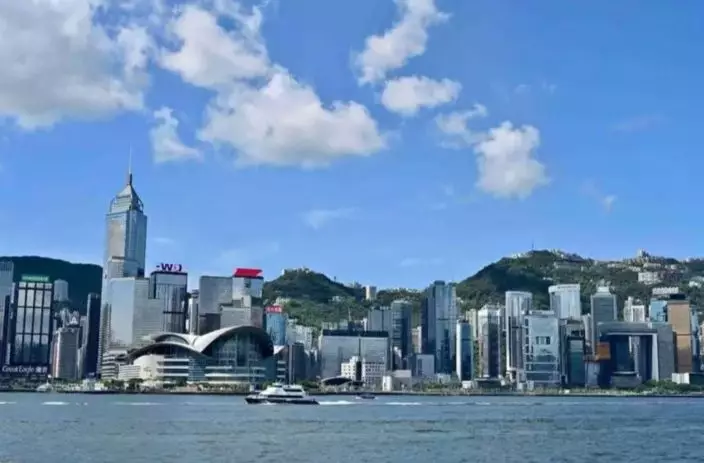
The war drags on with no end in sight. From Dubai to Riyadh, the Middle East's financial centers now face missile and drone threats, and foreign staff are pulling out in droves. Hong Kong is the unexpected winner.
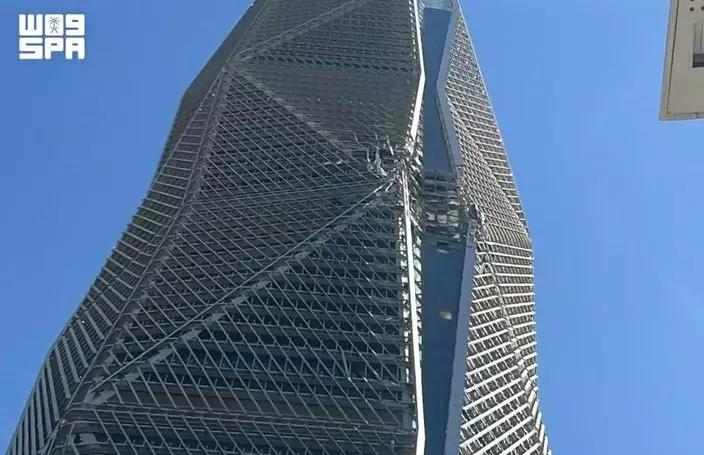
PIF Tower in Riyadh struck twice in one week.
The first strike on Riyadh's financial tower came in the early hours of November 19. Photos show the 385-meter, 80-story skyscraper took missile fragments across seven or eight floors of windows. Some metal panels on the exterior wall were bent. Miraculously, no one was hurt.
A few days later, the Houthis struck again on November 24. The PIF Tower was the target once more, and its exterior walls were damaged. This time at least 11 people were injured.
Earlier this month, the Houthis also bombed the King Abdullah Financial District. A building owned by oil giant Saudi Aramco was damaged in that attack.
Click to Gallery
PIF Tower in Riyadh struck twice in one week.
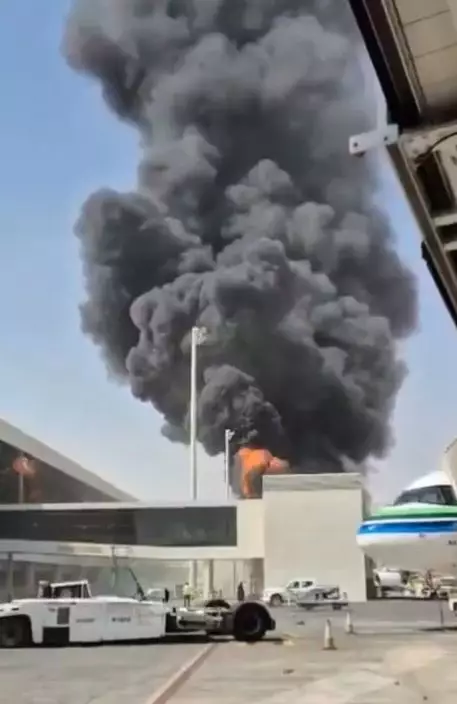
Riyadh's international airport was also attacked last month.
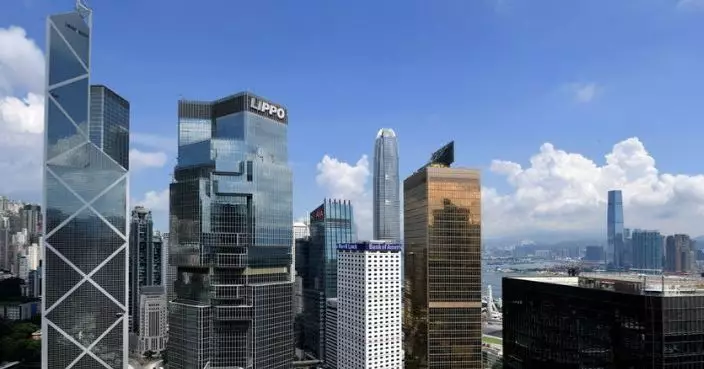
Middle East war boosts Hong Kong Grade A offices.
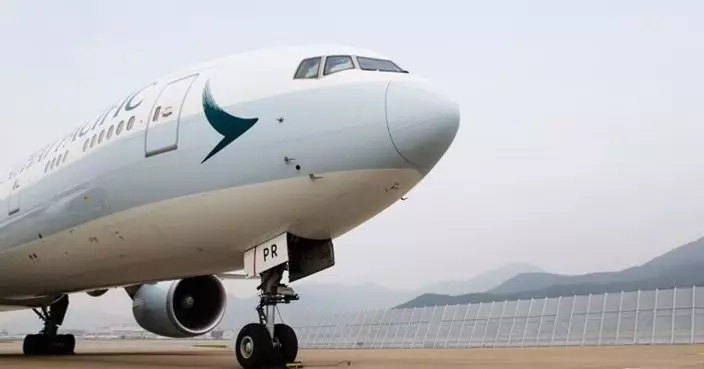
Cathay: passengers up 13%, cargo up 9% in 10 months.
Riyadh's international airport was also attacked last month.
Foreign Money Flees
The PIF Tower is the headquarters of Saudi Arabia's sovereign wealth fund and a magnet for foreign capital. BlackRock, Goldman Sachs, JPMorgan Chase, HSBC and Franklin Templeton all have their Middle East headquarters here. Last year alone, about US$33 billion in foreign investment flowed into Saudi Arabia.
But repeated hits on the financial tower forced a wave of foreign investors to flee. Some fund managers even ran for their lives during an attack.
An executive director at a major Hong Kong conglomerate said a fund manager friend happened to work in that tower. When the blast hit that day, it missed his floor. He still had to escape through the chaos and panic, close enough to feel the war at his side.
Yet this endless war is handing Hong Kong an unexpected windfall.
Middle East war boosts Hong Kong Grade A offices.
Hong Kong Cashes In
The Middle East war is sending money Hong Kong's way. A private banking chief at a global bulge-bracket bank says his firm has picked up 100,000 new clients since the fighting broke out. Private investment banking business has surged, and a wave of wealth management funds has relocated to Hong Kong.
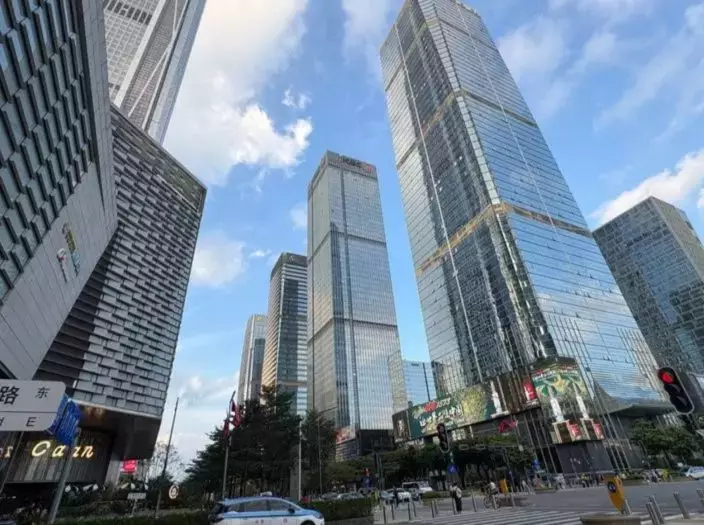
The windfall is showing up in Central's office towers too. The boss of a major property group says demand for Grade A office space in Central is red hot, with the towers essentially fully leased. Rents are climbing fast, and even a major barristers' chambers long based in Central has been forced to move out.
Two years ago, the mood could not have been more different. When Henderson Land and Cheung Kong completed their two Grade A towers, outsiders worried whether the buildings would ever fill up. Now the picture has flipped completely.
Cathay: passengers up 13%, cargo up 9% in 10 months.
Cathay Rides the Boom
Grade A offices are not the only winners. Hong Kong's aviation industry is cashing in too. Civil aviation stocks have spent the past six months in the doldrums, hammered by high oil prices. Cathay Pacific has flown in the opposite direction.
The airline's share price is now more than double its 2021 level. The stock has pulled back slightly in recent weeks, but it is still up about 14% for the year. Measured from this year's March low to its intra-year high, the biggest swing gain topped 40%.
The fighting has scrambled Middle East routes. Travelers who once changed planes in Dubai and Doha are now flying through Hong Kong, Singapore, Seoul and Shanghai. That shift lets Cathay keep grabbing share in long-haul and transit traffic, and its slice of the Hong Kong market has climbed from about 40% to roughly 50%.
The airline's own numbers tell the story. In the first 10 months of this year, Cathay carried 13% more passengers than a year earlier. Cargo volume rose 9% over the same period.
The earnings are even more striking. In the first half of 2026, Cathay Pacific's revenue hit HK$68.06 billion, up 25.3% year on year. Net profit surged 71% to HK$6.24 billion.
A veteran market watcher says Cathay is profiting from three niches: low costs, transit traffic and cargo. The airline has also made full use of Hong Kong's transfer power as a shipping hub.
The guns of the Middle East have handed Hong Kong International Airport a windfall in passengers and cargo. They have also shown, once again, the muscle behind Hong Kong's status as an aviation hub.
Ariel
** 博客文章文責自負,不代表本公司立場 **