KILLINGTON, Vt. (AP) — Mikaela Shiffrin leads the women’s giant slalom after one run at Killington in her return to the slopes where she endured a painful crash two years ago.
Shiffrin set the best time at 0.39 seconds faster than Alice Robinson of New Zealand on the first run. Run two is later Saturday.
Click to Gallery
United States' Mikaela Shiffrin inspects the course ahead of an alpine ski, women's World Cup giant slalom, in Killington, Vt., Saturday, Nov. 28, 2026. (AP Photo/Marco Trovati)
United States' Mikaela Shiffrin speeds down the course during an alpine ski, women's World Cup giant slalom, in Killington, Vt., Saturday, Nov. 28, 2026. (AP Photo/Marco Trovati)
The Colorado native is in position to add to her record 110 World Cup wins in Alpine ski racing.
Shiffrin has won six slaloms at Killington and finished on the giant slalom podium on three occasions. But in 2024 Shiffrin suffered a deep puncture wound to her side when she crashed and somersaulted down the hill during a giant slalom at the venue.
She spent weeks healing from her injury and then had to deal with post-traumatic stress disorder associated with the crash. But she soon returned to her winning ways. Shiffrin won nine of 10 World Cup slaloms last season. She also captured Olympic gold in the slalom in February at the Milan Cortina Games.
That said, she has yet to add to her 22 World Cup wins in GS in nearly three years.
This is Shiffrin's first race in over a month.
The six-time overall World Cup champion kicked off the season in Soelden, Austria, where she finished seventh in a GS won by teammate Paula Moltzan. Shiffrin sits 18th in the overall standings after three races and 224 points behind leader Lara Colturi, the Italian-born racer who represents Albania.
Shiffrin has opted to change her focus this season, prioritize the GS and the super-G over her signature event the slalom.
Her first slalom of the season will be on Sunday at Killington.
See AP’s full Alpine skiing coverage here

United States' Mikaela Shiffrin inspects the course ahead of an alpine ski, women's World Cup giant slalom, in Killington, Vt., Saturday, Nov. 28, 2026. (AP Photo/Marco Trovati)

United States' Mikaela Shiffrin speeds down the course during an alpine ski, women's World Cup giant slalom, in Killington, Vt., Saturday, Nov. 28, 2026. (AP Photo/Marco Trovati)

United States' Mikaela Shiffrin inspects the course ahead of an alpine ski, women's World Cup giant slalom, in Killington, Vt., Saturday, Nov. 28, 2026. (AP Photo/Marco Trovati)

United States' Mikaela Shiffrin speeds down the course during an alpine ski, women's World Cup giant slalom, in Killington, Vt., Saturday, Nov. 28, 2026. (AP Photo/Marco Trovati)
Initial laboratory results indicate the controlled detonation of five tons of dangerous lead azide in southeastern Iowa has not caused a rise in the heavy metal in the bodies of water that supply drinking water to the area, the U.S. environmental agency said Saturday.
Test results from sampling done following the U.S. Army’s detonation of an aging stockpile of lead azide in Iowa were released by the Environmental Protection Agency.
The EPA said about 300 people spent Thursday in the field sampling schools, playgrounds, churches and homes across the region. More than 1,500 samples were taken of air, water, soil and dust before the detonation and hundreds of samples, including from homes, parks and drinking water, afterward.
“The EPA monitored for the presence of airborne lead for 30 consecutive hours after the controlled detonation using the Xact air monitoring systems. We will continue to provide updates in the coming days as new lab results for over 3,200 air, soil, dust and water samples … return and get validated,” the EPA said in a post on X.
The mayor of Muscatine, Iowa, a small city about 50 miles north of Middletown, the tiny town where the Army stockpile was held, said that EPA’s initial test results showing no elevated lead in drinking water or in the air were encouraging.
Mayor Brad Bark said in an email statement that the findings are a “reassurance for communities” and that the city will continue to collaborate with government agencies.
“Our priority remains the health and safety of our residents. We will continue to follow the recommendations and stay in close coordination with the EPA, the Army, state and county partners,” said Bark.
Lead is a heavy metal that’s especially dangerous to children and pregnant women. The Army has said the safest option was to detonate the stockpile right away because it was degrading and might explode uncontrollably at any time as the weather got colder.
But the detonation has spurred widespread concerns about potential environmental contamination as well as questions about how and when the federal government communicated its plans.
Residents and some elected officials have criticized the Army for not being more transparent and providing more notice when it first determined the stockpile was unstable.
Middletown residents knew of the plans, but few others did — and the warnings largely failed to register with elected officials and the broader public until days before the planned detonation.
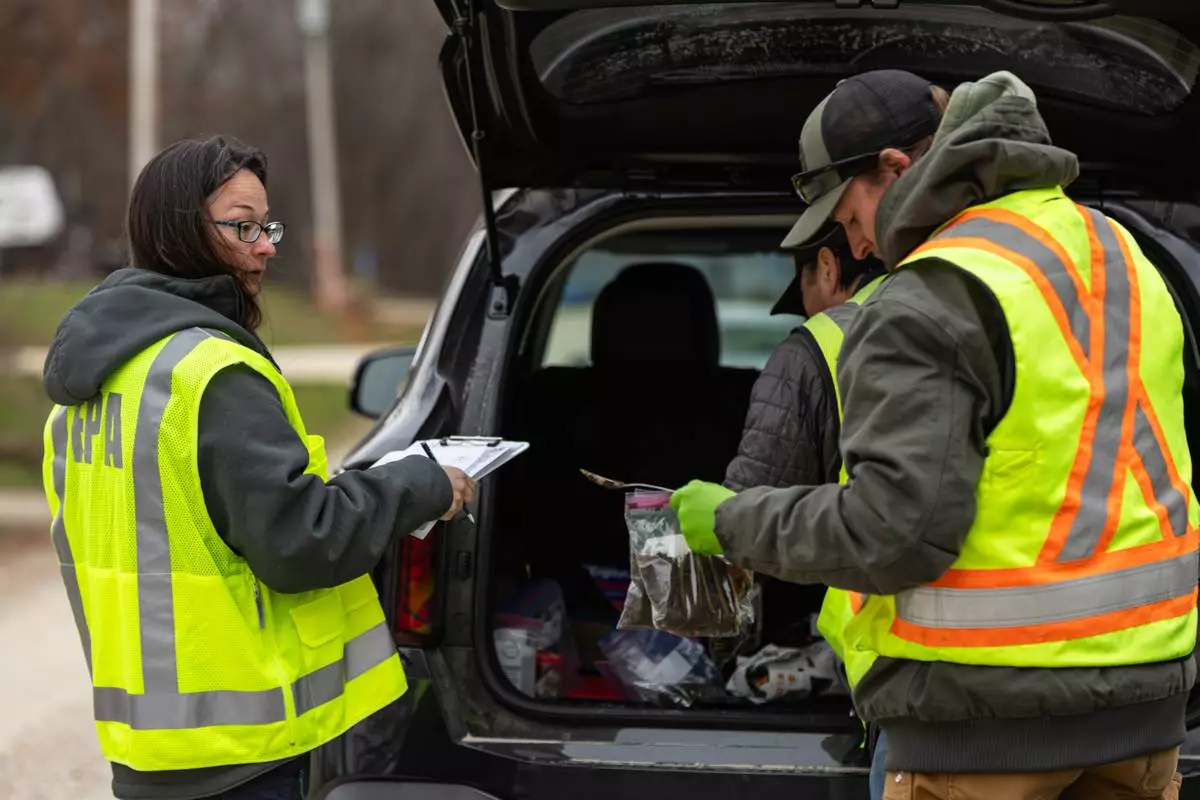
Environmental Protection Agency On-Scene Coordinator Sharon Kennedy, left, catalogs soil samples collected by her hired contractors in Augusta, Iowa, Wednesday, Nov. 25, 2026. Augusta lies along the perimeter of the Iowa Army Ammunition Plant, where earlier that day the U.S. Army detonated a stockpile of lead azide. (AP Photo/Austin Johnson).
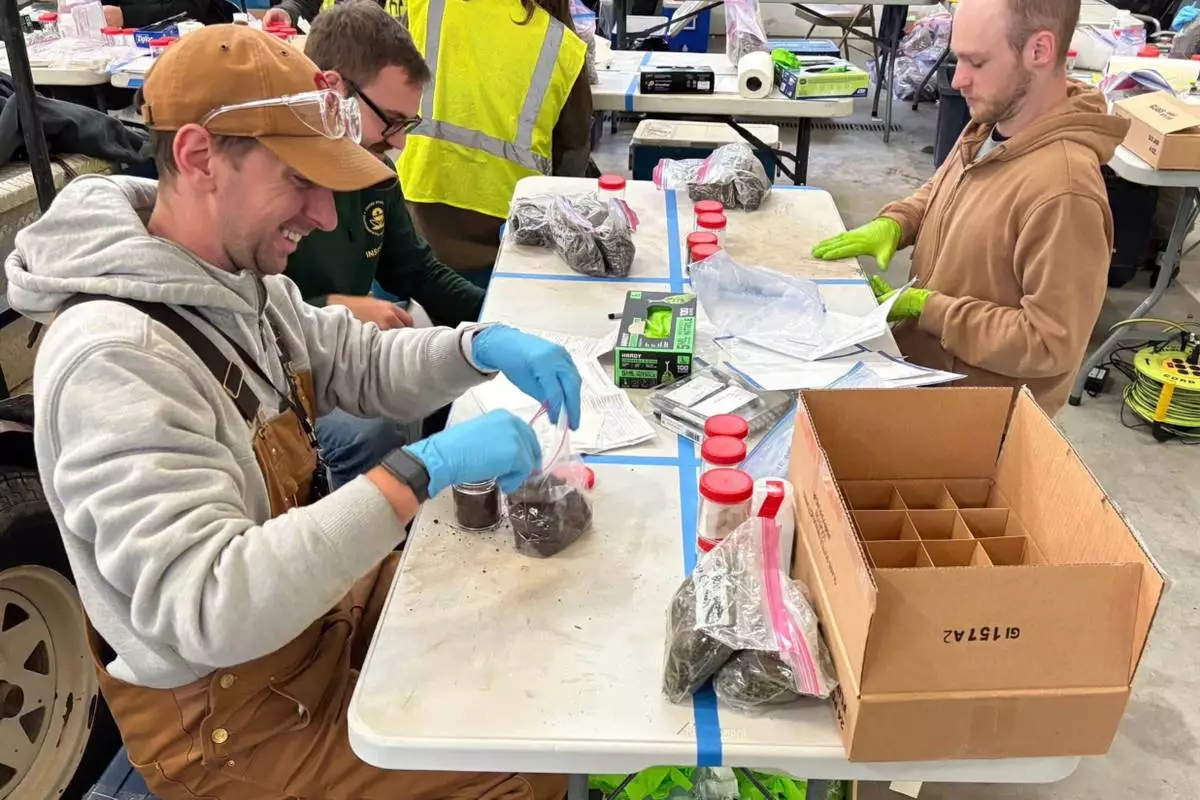
This image provided by the U.S. Environmental Protection Agency (EPA) shows workers in Middletown, Iowa, preparing soil samples to be shipped to laboratories for testing on Thursday, Nov. 26, 2026. (EPA via AP)
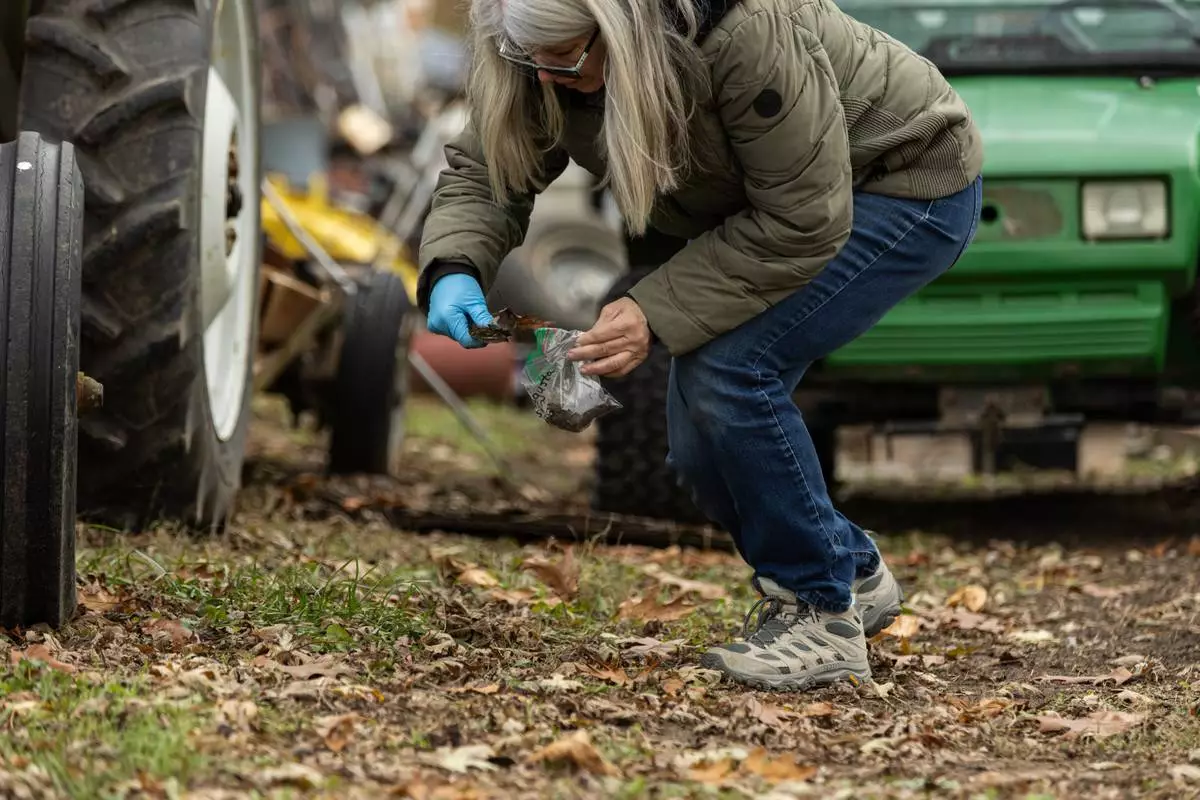
Environmental Protection Agency Supervisor Susan Fisher collects soil samples in Augusta, Iowa, Wednesday, Nov. 25, 2026. Augusta lies along the perimeter of the Iowa Army Ammunition Plant, where earlier that day the U.S. Army detonated a stockpile of lead azide. (AP Photo/Austin Johnson).