Parts of Africa and Central America have been added to the list of hunger hotspots amid El Nino concerns, and their acute food insecurity is expected to worsen significantly between December 2026 and May 2027, according to a report released Friday by UN food agencies.
The Food and Agriculture Organization (FAO) and the World Food Programme (WFP) warned in the latest Hunger Hotspots report that as El Nino continues to strengthen, drier and hotter weather disrupts crop planting in southern Africa, leaving three million people in Zimbabwe, 2.6 million in Malawi and 1.8 million in Mozambique vulnerable to high levels of acute food insecurity.
Central America faces similar threats. In Guatemala alone, 3.2 million people are projected to face high levels of acute food insecurity between October 2026 and February 2027.
Meanwhile, increased rainfall raises the risk of flooding in eastern Africa.
"We have real challenges that are happening right now with this mega El Nino event and phenomenon that's manifesting itself globally and it's also impacting these hunger hotspots. It impacts them in different ways. In many of the areas, the primary manifestation is a lack of rain, and so concern about drought, access to water for livestock, access to water for crops, vegetables to be able to plant in a timely fashion where we have rainfed agriculture as a main strategy. But in other areas, flooding is a real challenge," said Rein Paulsen, Director of the Office of Emergencies and Resilience at FAO.
The FAO and the WFP called for urgent, targeted assistance -- including anticipatory action taken before disasters strike -- to protect agricultural production, livelihoods, and essential food consumption, thereby preventing famine and further loss of life, especially as humanitarian funding shrinks and access for aid remains restricted.
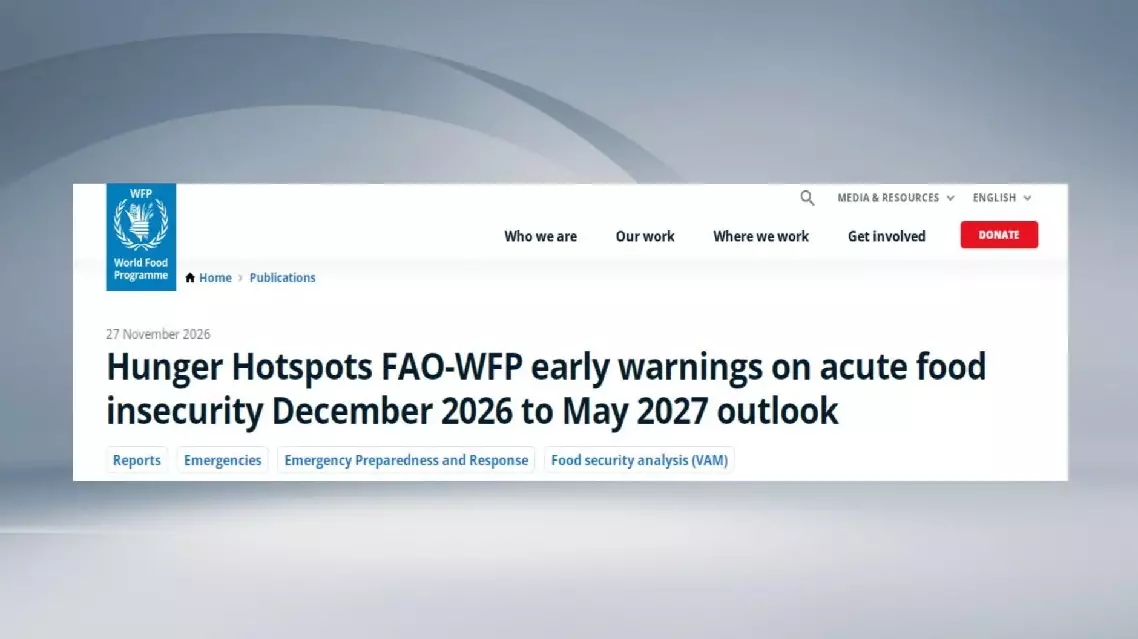
FAO, WFP warn El Nino to worsen food insecurity in Africa, Central America
The Japanese government is expected to state in the country's three key security documents, which are to be revised by the end of this year, that it will "start considering" and "reach a conclusion" on whether to introduce nuclear-powered submarines, Jiji Press reported Saturday.
The government will finalize the wording in the documents after examining proposals by an expert panel and the results of discussions within the ruling Liberal Democratic Party, the report said, citing informed sources.
Compared with Japan's existing diesel-powered submarines, nuclear-powered ones can stay underwater longer and travel faster, and can be equipped with vertical launch systems for long-range missiles, which could be used to strengthen Japan's so-called counterstrike capabilities, according to the report.
Debate over nuclear-related issues has been intensifying in Japanese politics. Defense Minister Shinjiro Koizumi has repeatedly said that Japan would "not rule out any options" in discussions about introducing nuclear-powered submarines.
In October this year, Prime Minister Sanae Takaichi told the parliament that the government would seriously consider the possibility of the Self-Defense Forces acquiring such submarines in a "concrete and realistic manner."
The government's leaning toward acquiring nuclear-powered submarines has raised widespread concern.
At a seminar held in Tokyo last month, several Japanese nuclear experts and peace activists said that for Japan, which has long adhered to its "exclusively defense-oriented policy," introducing nuclear-powered submarines would not only pose policy, financial and nuclear safety challenges, but also severely undermine the regional security environment and the international nuclear non-proliferation regime.
Japanese civic groups recently submitted a petition bearing nearly 47,000 signatures to the Defense Ministry, opposing the acquisition of nuclear-powered submarines and calling on the government to abandon the plan.
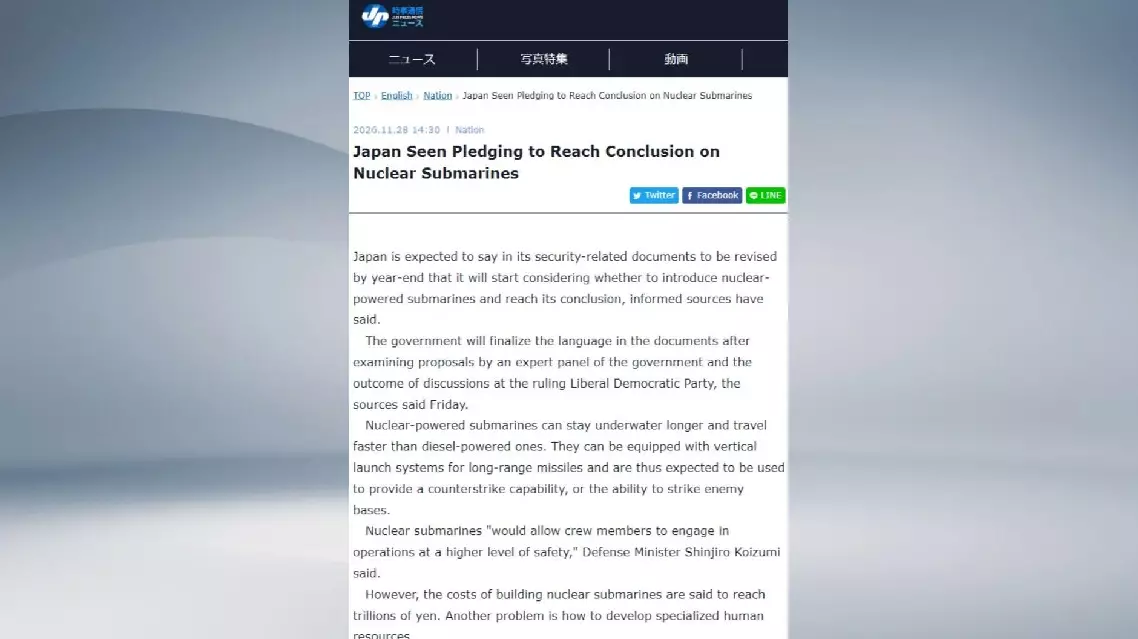
Japan eyes adding nuclear-powered submarine study to key security documents: media
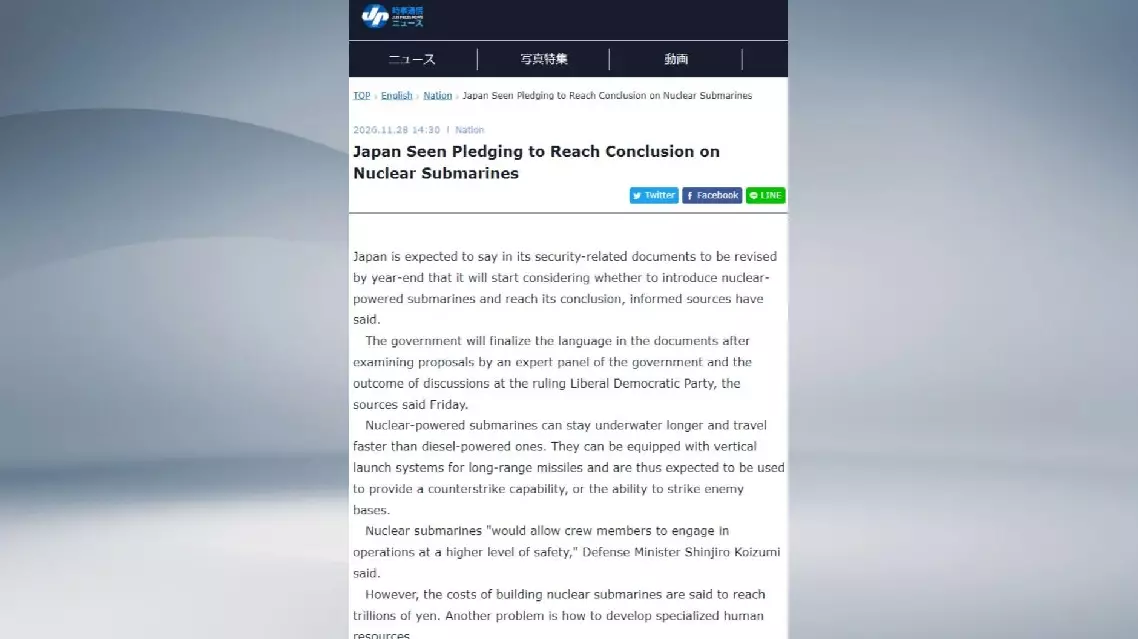
Japan eyes adding nuclear-powered submarine study to key security documents: media