PARIS (AP) — There are no Elon Musk-like billionaire bankrollers in the race to succeed Emmanuel Macron as president of France.
Campaign-financing rules that govern French elections are far more restrictive than those in the United States and largely exclude private money.
Violators can face prison. Former President Nicolas Sarkozy is awaiting an appeals court verdict on Monday in one of several cases involving his campaign spending in 2007 and 2012. Sarkozy was sentenced to five years in prison for his role in a scheme to obtain funding from the government of then Libyan leader Moammar Gadhafi.
For some critics, France's limitations on campaign financing produce elections that are too cash-starved and sober to excite voters.
Proponents say they help safeguard French democracy from the power of private wealth, so candidates win with ideas and personalities not because of money.
Here’s a closer look:
The public purse covers the bulk of candidates’ campaign costs. Limited donations from private individuals are permitted. Company donations are not.
The 12 candidates in the 2022 presidential contest that saw Macron reelected for his second and final term together declared 83.5 million euros ($91.6 million) in expenses. The state reimbursed just over half of their combined costs and their political parties paid for much of the rest. Together, they declared just 9 million euros ($9.9 million) in donations.
The combined spending was less than Musk alone spent mobilizing Donald Trump’s supporters in 2024.
Party financing scandals in the 1980s prompted what became “very detailed and increasingly restrictive” rules, said Abel François, a University of Strasbourg campaign-financing specialist and co-author of “The financing of political life: Regulations, practices and political effects.”
Parties had been illicitly funding themselves by skimming from public contracts and building permits, François said. Lawmakers overreacted “a bit like headless chickens,” introducing limitations that “were never, ever, ever thought through.”
“So many things are prohibited,” François said. “The price we pay is that we cannot get a large part of the electorate interested in the election and politics in any depth."
Candidates can spend up to 16.8 million euros ($18.4 million) before the first-round vote on April 18, and 22.5 million euros ($24.6 million) if they're among the two who qualify for the decisive May 2 runoff.
Candidates who fail to win 5% of the first-round vote will take a financial hit. The state will reimburse only a small fraction of their expenses, no more than about 800,000 euros ($880,000).
“This makes running for office far more uncertain and financially risky," said Dominique de Villepin, a former prime minister now putting together a presidential run.
Candidates who surpass the 5% threshold can expect to recoup almost half of their expenses from the state. The president-elect and the runner-up could recoup more — up to 10.7 million euros ($11.7 million).
Candidates who exceed the spending limit risk prosecution and must pay an amount equal to the excess spending to the Treasury.
Separately from the Libya scandal, Sarkozy was also convicted of illegal campaign financing over his unsuccessful 2012 reelection bid. His campaign spent almost twice the legal limit.
Private funding can take several forms, including candidates’ own contributions, proceeds from commercial activities such as merchandise sales, party membership dues and bank loans taken out by political parties.
Individuals who are French nationals or reside in France may donate no more than 4,600 euros ($5,050), either to one candidate or spread among several.
Companies, associations and trade unions cannot fund campaigns through donations or in-kind contributions.
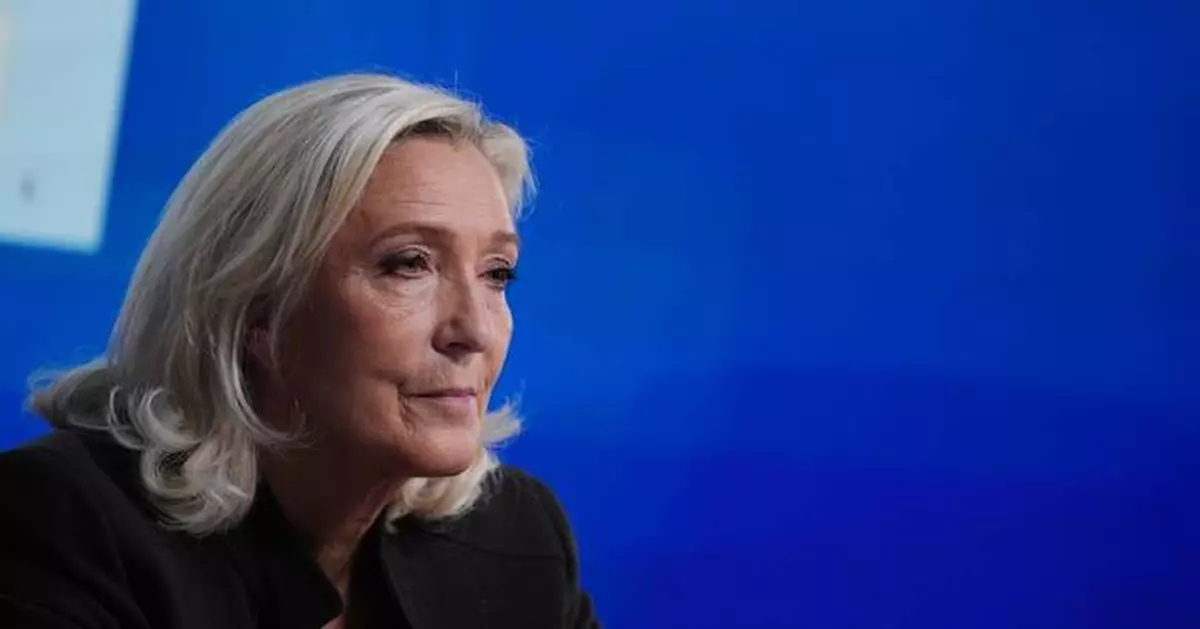
Marine Le Pen is the front-runner in the 2027 presidential race but has long struggled to secure loans from private banks concerned about the potential reputational risks of financing the far-right leader and her National Rally party.
Only European banks are allowed to lend to candidates.
Le Pen previously faced scrutiny over a 9 million euro ($9.9 million) loan that her party received in 2014 from the First Czech-Russian Bank. With French lenders reluctant to finance her, she secured a 10.7 million euro ($11.7 million) loan from Hungary’s MKB Bank for the 2022 campaign.
De Villepin, speaking in an interview with The Associated Press, said financial constraints have resulted in “a gridlocked system” dominated by political parties that "are the only organizations truly capable of running an election campaign.”
“That leaves far less room for spontaneity and innovation in politics," he said.
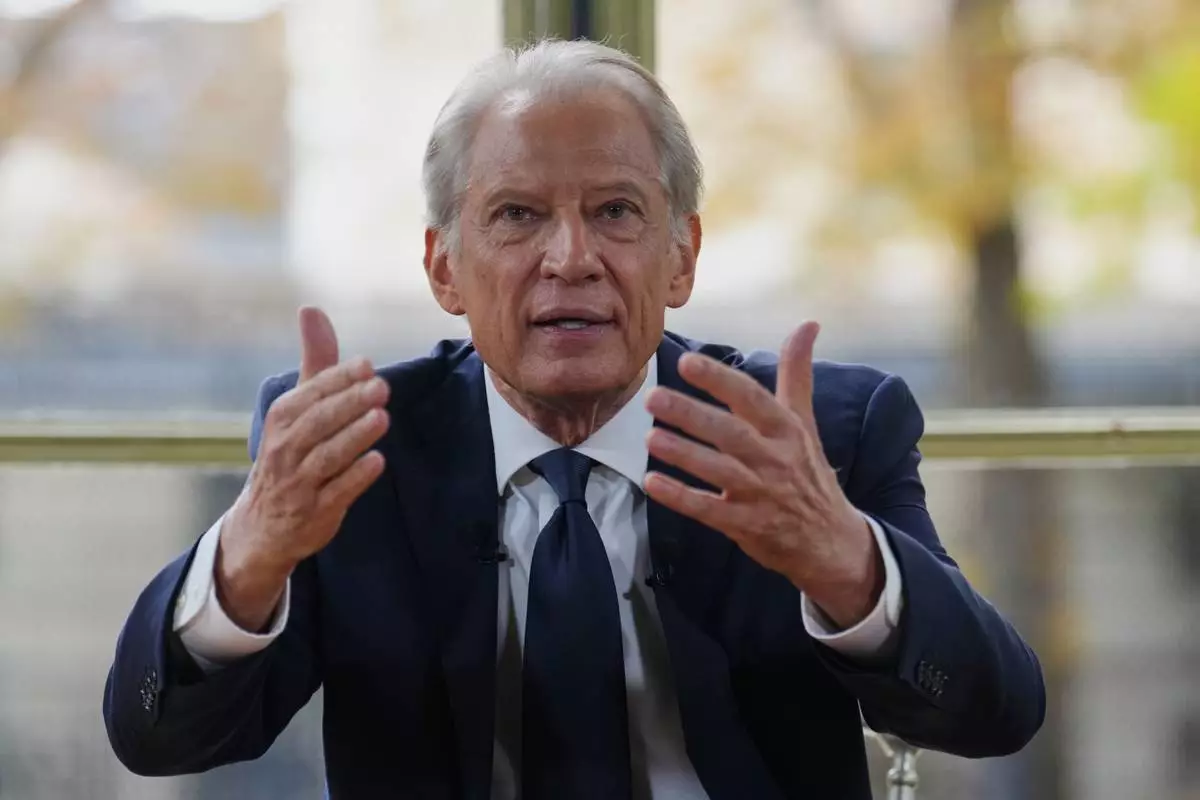
Former French foreign minister, Dominique de Villepin, gestures at a press conference to announce his candidacy for the 2027 French presidential election in Paris, Friday, Nov. 20, 2026. (AP Photo/Aurelien Morissard)
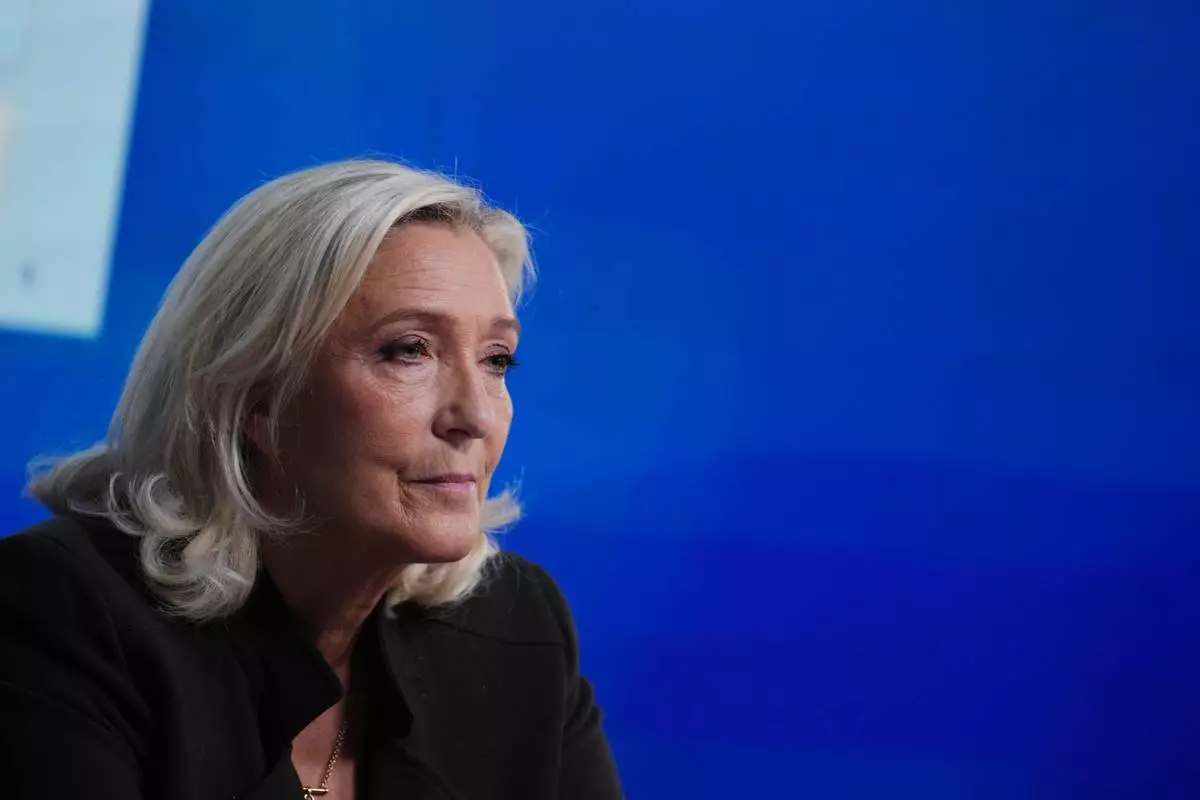
FILE - Marine Le Pen, leader of France's far-right National Rally (RN) party, looks on during a press conference in Paris, Tuesday, Nov. 17, 2026. (AP Photo/Aurelien Morissard, File)
MADRID (AP) — Millions of Spaniards on Sunday are voting in a national election dominated by concerns over housing affordability and which could provide an opening for the far right to enter the national government for the first time in Spain's post-dictatorship democracy.
The election is widely seen as a referendum on incumbent Prime Minister Pedro Sánchez. The leader of the left-wing Socialist party has governed Spain for eight years through numerous crises, but also a period of economic growth that, for many voters, has been eclipsed by cost-of-living concerns.
No issue has galvanized Spaniards in recent years quite like access to affordable housing. Soaring home and rental costs in cities and tourism hot spots have caused widespread discontent, especially among the young.
Last month, Sánchez announced an early election for Nov. 29, after right-wing parties in parliament voted down measures that his left-wing government introduced to alleviate housing pressures.
He has warned voters that a conservative government wouldn't make their lives more affordable, and has frequently said his opponents would take Spain backward. Sánchez's decision to hold the vote followed nationwide protests that sprang up around the country of 50 million after the dramatic eviction of an 87-year-old woman from her apartment in Madrid.
Opposition leader Alberto Núñez Feijóo of the conservative Popular Party, or PP, has excoriated Sánchez's record, promising voters more stability and better governance.
He has criticized Sánchez not just for his government's failure to improve Spaniards' housing woes during eight years in office, but also for two fatal train crashes this year on Spain's high-speed rail network, a nationwide blackout in April 2025 and a border crisis in Spain's North African exclave.
Feijóo also pilloried Sánchez — who relied on backing from far-left and separatist parties to cling to power in 2023 — for not being able to pass a budget in nearly four years, because of a lack of parliamentary support.
“It's not that Spain is failing, it's its government,” Feijóo said after the October train crash south of Madrid in which 69 people were killed.
It's widely expected that Feijóo would attempt to form a coalition with the far-right Vox party, led by its bearded and barrel-chested leader Santiago Abascal, who has campaigned almost entirely on an immigration crackdown.
Vox is betting its hard-line stance will win over voters and enable it to play kingmaker with the PP.
Spain in recent years has welcomed millions of people mainly from Latin America but also from Africa and elsewhere in Europe. One in five residents was born outside Spain, according to census data. Earlier this year, the Spanish government legalized the status of nearly 1.2 million immigrants living in the country without authorization.
Both Feijóo and Abascal have portrayed Sánchez's immigration-friendly policies as harmful to ordinary Spaniards, often connecting the issue to the housing supply-and-demand imbalance and strained public services. Both candidates have condemned the migrant legalization measure.
If Vox entered a new government as a junior member with the PP, it would mark the return of an ultranationalist, far-right party to power for the first time since the death of Spain's military dictator, Gen. Francisco Franco, in 1975.
The result will also be closely watched across Europe before an election-packed 2027, in which voters will head to the polls in France, Italy, Greece and Poland.
In France, the far-right National Rally is aiming to take power, while in Italy, Premier Giorgia Meloni's right-wing coalition is expected to seek another term.
A Spanish prime minister is elected by parliament. A candidate needs the support of an absolute majority — or at least 176 lawmakers — in the first parliamentary vote, often relying on coalition agreements or support from other parties. If an absolute majority isn't secured in the first parliamentary vote, a second vote is held in which a candidate needs more votes in favor than against.
Several opinion polls conducted before Sunday showed Sánchez’s Socialist Party behind the combined support of the PP and Vox. Sánchez will likely need backing from smaller parties to the left of the socialists. However, infighting between those parties in the lead-up to the election is expected to weaken Sánchez's chance at forming a progressive coalition like he did in 2023.
Traditional regionalist parties in Catalonia, the Basque region, Galicia and the Canary Islands, the Spanish archipelago off the coast of western Africa, could also play a role in forming a governing coalition if results are close.
Voting in Spain generally takes place in schools, community centers, town halls and other municipal facilities. Spaniards can also vote by mail, though it's less popular than doing so in person.
About 38 million people are eligible to cast ballots. Voting started at 9 a.m. and closes on the mainland at 8 p.m. and an hour later in the Canary Islands. Votes are tallied quickly and the result is usually known within hours.
Sánchez, a Madrid native and former economics professor, became a hero to the global left for his government's opposition to the Israel-Hamas war in Gaza, which he has called a genocide, and his resistance to U.S. President Donald Trump. He roundly criticized the U.S. and Israel over the Iran war, and was one of Western Europe’s first major leaders to formally recognize Palestinian statehood.
His government has turbocharged Spain's climate commitments, pledging to source all its energy from renewable sources by 2050. The country already generates more than half its electricity from noncarbon sources.
The Spanish leader also regularly defends causes like multilateralism and an international rules-based order, and has pushed for more regulation of artificial intelligence. He is the first Spanish prime minister to speak comfortably in English.
Sánchez's party, including members of his inner circle, has been dogged by legal cases involving corruption. The cases have implicated a former minister and top officials, eroding trust in him and the socialists.
Feijóo, in contrast, is a lifelong civil servant-turned-politician from rural northwestern Galicia who doesn't speak English and projects himself as a sensible, moderate and effective administrator.
Feijóo won election after election in Galicia during the 13 years in which he governed the region of 2.7 million people. He is expected to mend bridges with the United States and Israel if he wins.
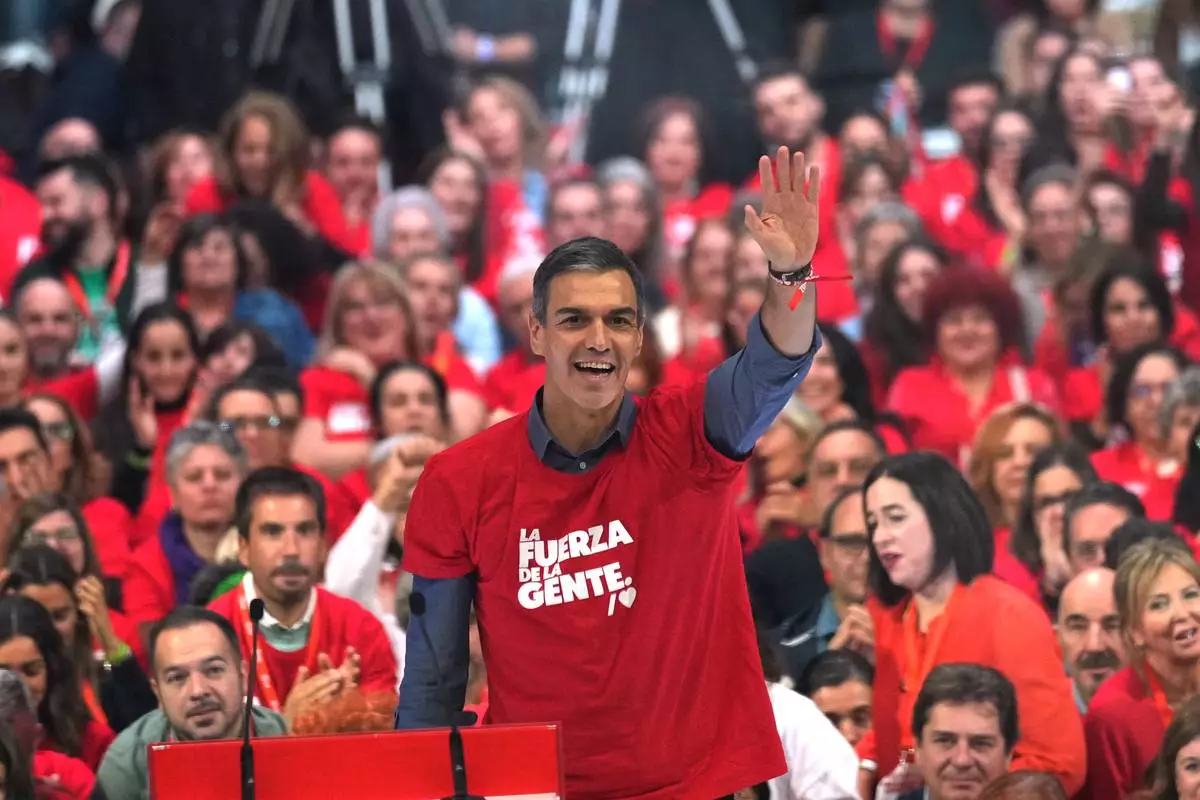
Spain's Prime Minister and Socialist Party Secretary-General Pedro Sánchez waves to supporters at the final campaign rally ahead of Sunday's general election in Madrid, Spain, Friday, Nov. 27, 2026. (AP Photo/Francisco Seco)
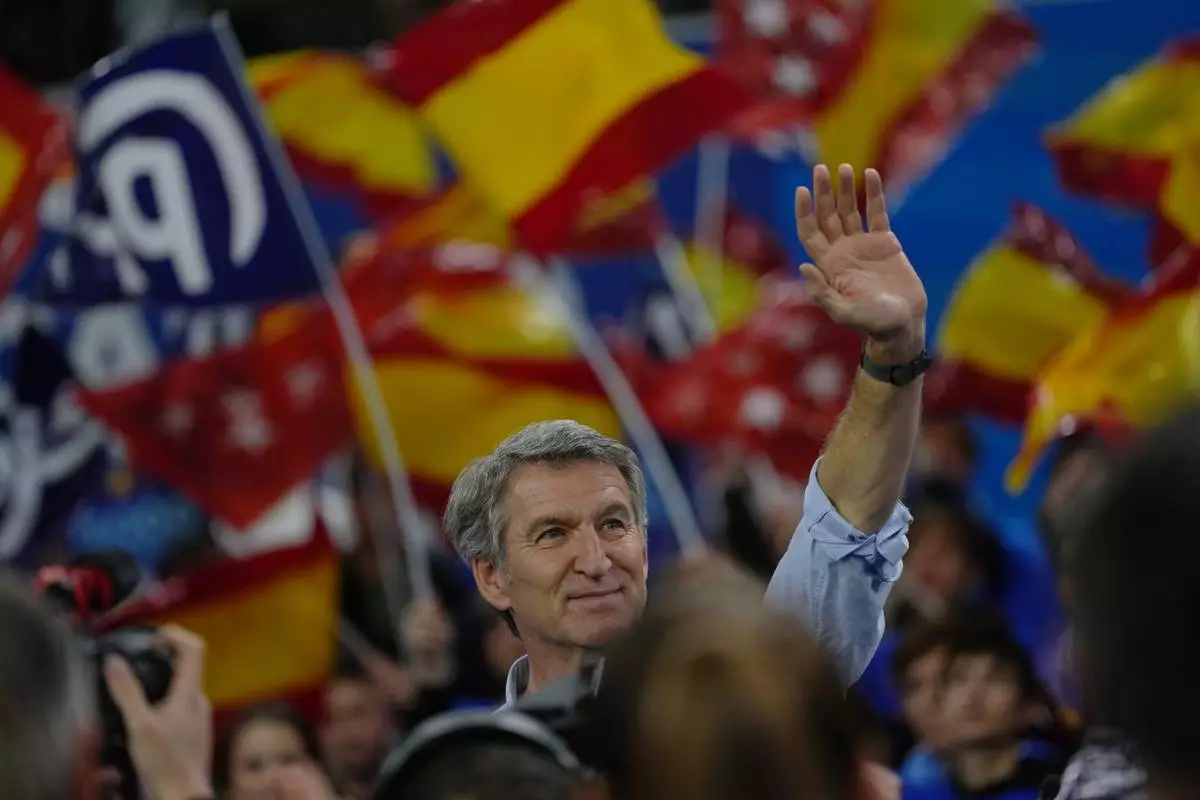
Popular Party candidate Alberto Nunez Feijoo waves to supporters during a campaign rally ahead of the general election in Madrid, Spain, Wednesday, Nov. 25, 2026. (AP Photo/Francisco Seco)
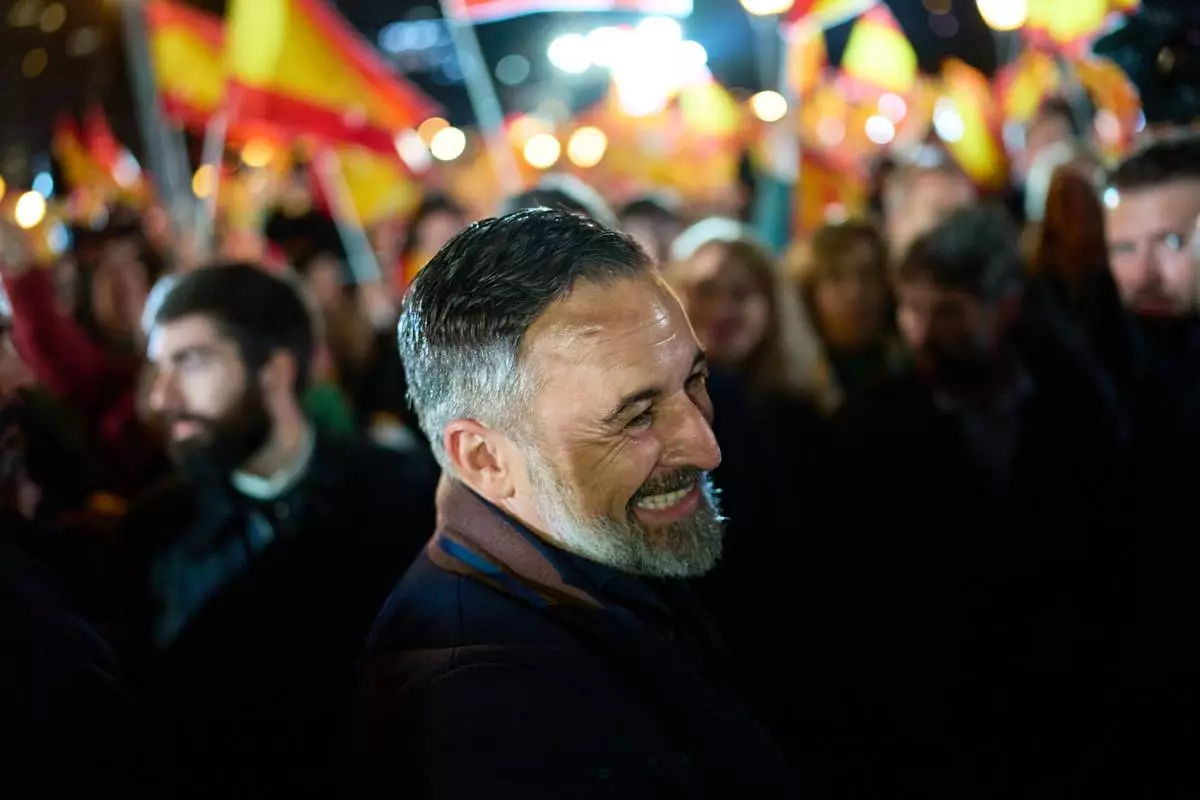
FILE, Santiago Abascal, leader of the far-right Vox party, arrives to an electoral rally in Madrid, Friday, Nov. 13, 2026, on the first day of the campaign ahead of general elections. (AP Photo/Francisco Seco, File)
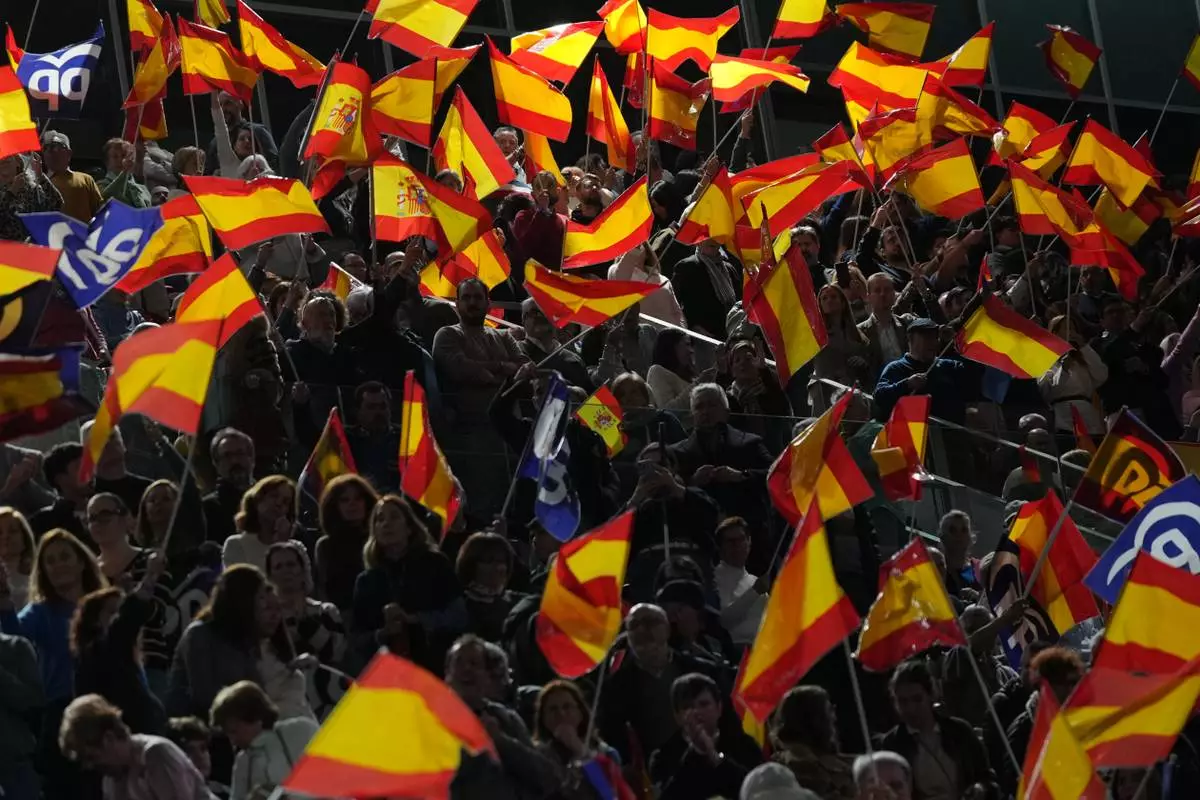
Popular Party supporters wave Spanish flags as they listen to speeches during a campaign rally ahead of the general election in Madrid, Spain, Wednesday, Nov. 25, 2026. (AP Photo/Francisco Seco)
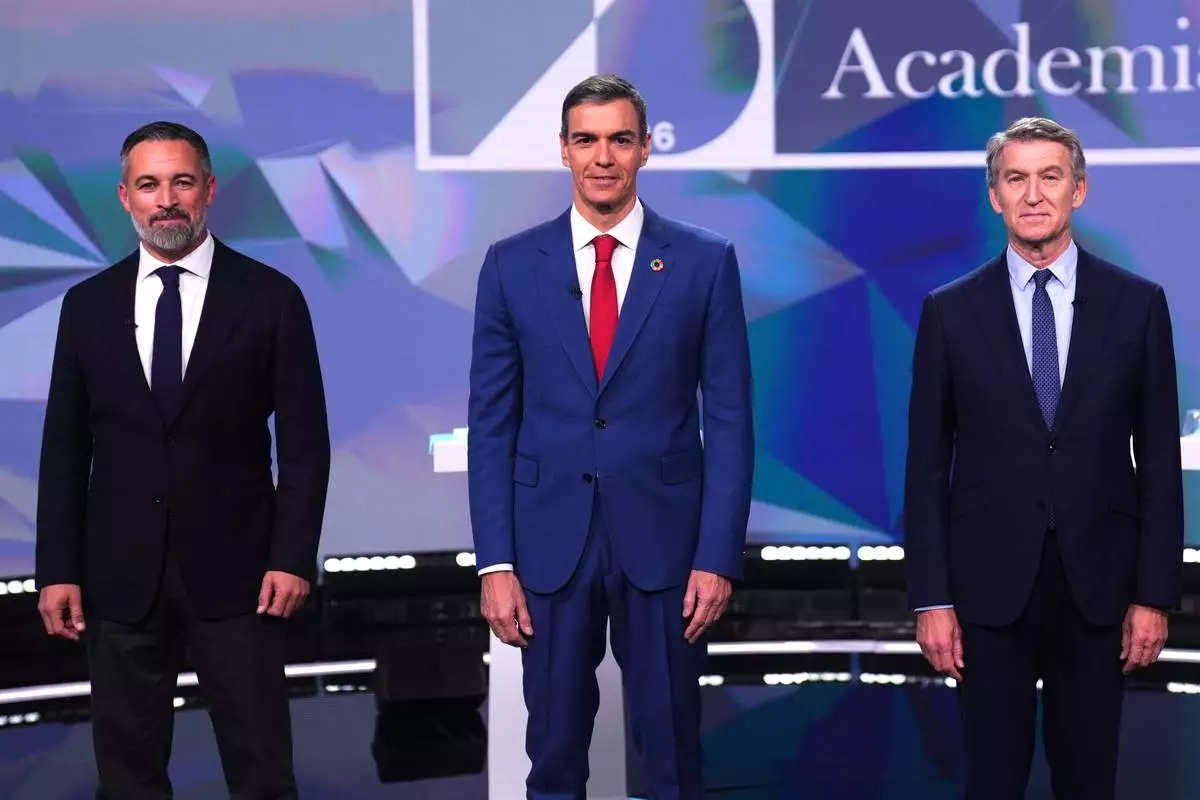
From left, the leader of the far-right Vox party, Santiago Abascal, Spain's Prime Minister and Socialist Party Secretary-General Pedro Sánchez and Popular Party candidate Alberto Núñez Feijóo pose for a photo at the start of a live televised debate in Madrid, Spain, Thursday, Nov. 26, 2026. (AP Photo/Manu Fernandez)