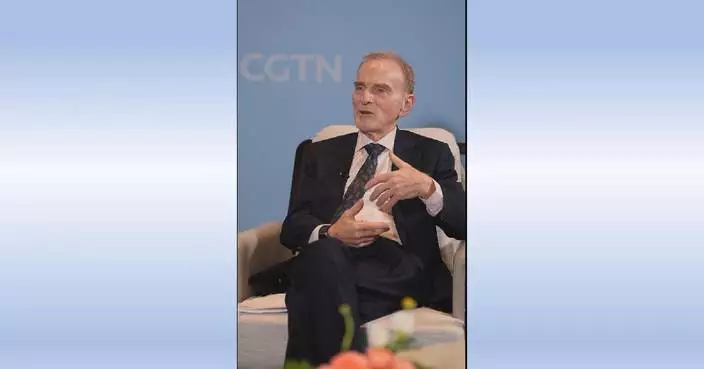
Renowned physician-scientist Napoleone Ferrara has highlighted artificial intelligence as a vast, still largely untapped tool for treating eye diseases, praising China's progress in integrating the technology into healthcare at the 2026 World Life Science Conference in Guangzhou on Saturday.
Ferrara, recipient of the 2010 Lasker-DeBakey Clinical Medical Research Award, has spent the past decade at the University of California, San Diego, developing new drugs and therapies, primarily for eye conditions such as macular degeneration.
Speaking on the sidelines of the conference, Ferrara noted that while some claims surrounding artificial intelligence may be overstated, the technology holds significant promise for diagnostics and drug discovery.
"There are lots of possibilities other than that. It's exactly like any other disease, you could design new drugs. There are AI-based methods that allow you to design new proteins and new scaffolds. At the same time, AI could have a huge diagnostic use, because you can actually quickly diagnose whether there is any relapse in the treatment. So there are almost endless possibilities with AI," he said.
"There are lots of applications that seem to be a little bit exaggerated -- AI will cure cancer, it will cure eye disease, that's probably not totally true. I think AI can make a huge impact in diagnostics, even in finding new drugs," he added.
Ferrara also pointed to China's potential in applying AI to medical research and biopharmaceutical development.
"My understanding is that China seems to be kind of at the forefront of using AI, probably more than other countries. I think there are many, many actually areas where China could make a contribution. There is this expertise in AI. It could be finding a new target, that's a possibility. Making of novel drugs -- there is this expertise in making new antibodies, trying specific antibodies, which could block multiple targets at the same time. So, China can do a lot in that," he said.
As one of China's most influential international academic events for life sciences, the three-day 2026 World Life Science Conference features high-level keynote speeches showcasing cutting-edge breakthroughs in the field.
More than 30 sub-forums will be held, covering a broad spectrum of topics ranging from gene editing and AI-powered precision medicine to public health systems and global health governance.
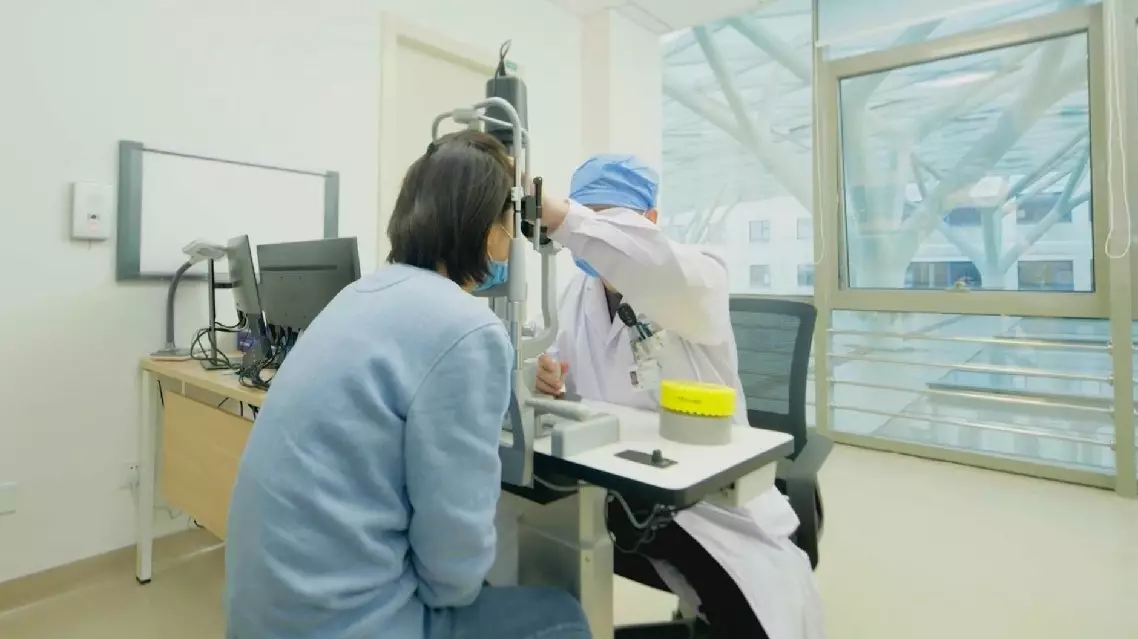
Lasker laureate highlights AI's promise in eye care, sees China at forefront of medical AI