Nobel laureate Randy Schekman has identified the cell biology of the human brain as the next major frontier in life sciences, urging China and other countries to sustain investment in basic research and grant young scientists the freedom to explore different methodologies.
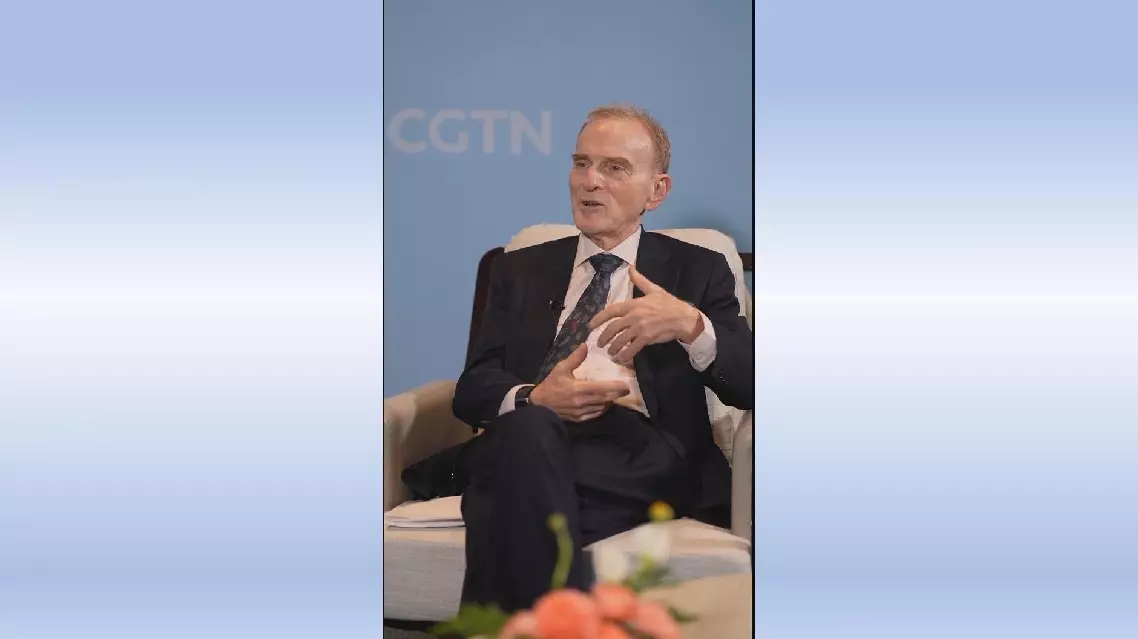
Schekman, a professor of cell biology at the University of California, Berkeley, who was awarded the 2013 Nobel Prize in Physiology or Medicine, shared his outlook on the future of biological research on the sidelines of the 2026 World Life Science Conference, which opened in Guangzhou, south China's Guangdong Province, on Saturday.
"I don't have a crystal ball. Winning a Nobel Prize doesn't give me a vision into the future. But if I were to start again, I would be studying the cell biology of nerve cells in neural networks in the human brain. The human brain is the next frontier in our understanding of life. It's enormously complex. Tens of billions of nerve cells making up to 1 trillion or more different connections, each of which informs a pathway of our memory, our knowledge, our emotions. Everything about us is dictated by these tightly controlled communications between nerve cells. That is the next frontier. We know we're only scratching the surface. That's what I would do if I were starting over again," he said.
Looking ahead, Schekman emphasized that countries must empower the next generation of neuroscientists by funding foundational research and allowing them the autonomy to choose among reductionist, computational or systems-level approaches.
"It's no different than any country's role. China must invest in giving young neuroscientists of a cell biological bent the opportunity to define exactly how they would approach this. They would take a reductionist approach as I would to identify the molecules, or they would take a computational approach, or they would take a systems approach. I can't predict which will be more revealing, but China simply needs to continue to invest in basic science and to give people the freedom to pursue what they wish," said Schekman.
As one of China's most influential international academic events for life sciences, the three-day 2026 World Life Science Conference features high-level keynote speeches showcasing cutting-edge breakthroughs in the field.
More than 30 sub-forums will be held, covering a broad spectrum of topics ranging from gene editing and AI-powered precision medicine to public health systems and global health governance.
Nobel laureate calls human brain next scientific frontier, urges basic research investment