More than a year after the ceasefire in Gaza, children continue to face serious health risks as health authorities sound the alarm over a rise in meningitis cases amid worsening environmental conditions and a struggling healthcare system.
At Al-Rantisi Children's Hospital in Gaza City, wards are crowded with sick children, many of them suffering from meningitis. Doctors and mothers are caring for them amid severe shortages of medicines and medical equipment.
"We are worried about our child because there is no proper treatment or enough medical care. We are slowly dying in our own country. We feel helpless as we try to find treatment for him," said Reema Hamada, grandmother of a sick child.
Gaza's Health Ministry has warned that infants are particularly vulnerable, with children under one year old accounting for around 77 percent of reported suspected cases.
"Since the beginning of the year we have handled more than 1,700 cases, among them about 25 percent were bacterial meningitis and 75 percent were viral meningitis. During the last time we were able to identify the viral causative agent, which was the enterovirus. And as you know this virus is directly related to the deterioration of the environmental situation," said Dr. Nidal Ghunaim, director of public health at Al-Rantisi Children's Hospital.
The crisis reaches well beyond the hospital, with more than one million displaced Palestinians continuing to live in harsh conditions across the territory, adding to Gaza's health, social and environmental crises.
In central Gaza City, hundreds of worn-out tents stand crowded together with little access to proper sanitation. Among those living there is Zainab Miqdad, who shares a tent with her children.
"We have been living in these terrible conditions for three years. As you can see, the water is dirty and causes many illnesses among our children. The food is poor. Everything we experience here is making us sick," she said.
A newly released report by Oxfam, an international charity organization, warns that 99 percent of Gaza's land is contaminated, with widespread water and groundwater pollution exposing residents to toxic substances through food and water.
"As the report highlights, pregnant women, newborns and children in particular are the most vulnerable, as they are exposed to multiple sources of pollution at the same time," said Ruba Al-Daour, water and hygiene program manager at Oxfam Gaza.
For Gaza's children and their families, recovery will require more than medical treatment. Clearing the rubble and restoring access to safe water, sanitation and basic healthcare are essential to preventing further health crises.
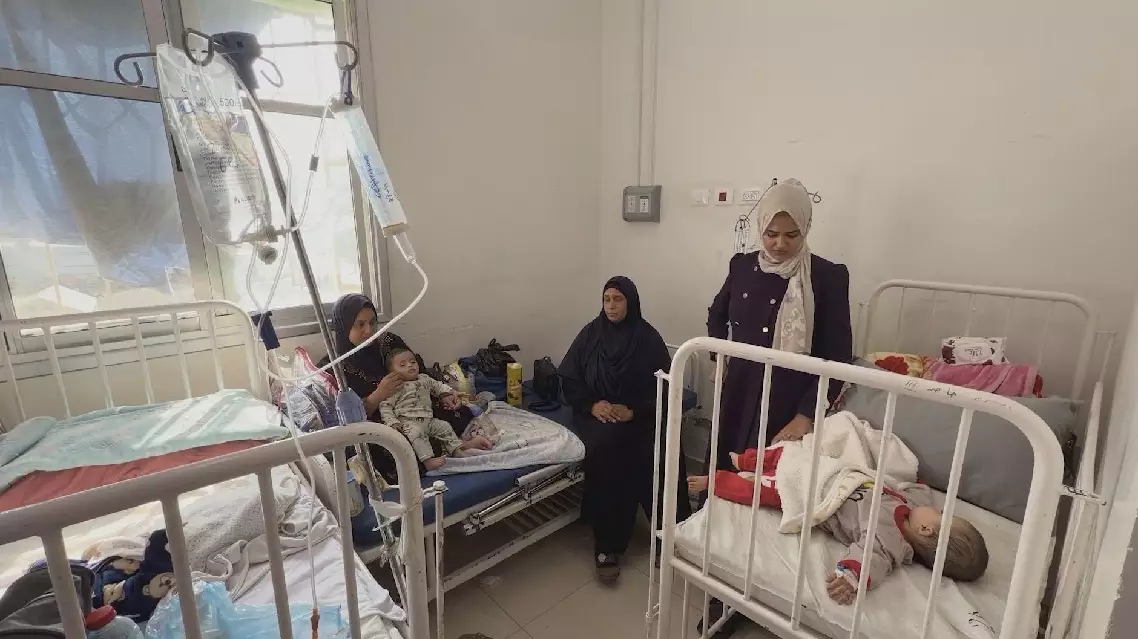
Gaza's children face growing meningitis threats amid ongoing humanitarian crisis