Skip to Content Facebook Feature Image

In Germany, neo-Nazis get to march but threats are verboten

News

In Germany, neo-Nazis get to march but threats are verboten
News

News

In Germany, neo-Nazis get to march but threats are verboten

2017-08-19 10:06 Last Updated At:10:06

Given Germany's grim history as the home of National Socialism and the efforts it has made since then to atone for its genocidal past, it might seem surprising that far-right extremists who glorify a dead Nazi official are allowed to march in his honor this weekend.

Police in Berlin have given far-right extremists permission to hold a 500-person strong rally commemorating the death of Adolf Hitler's deputy Rudolf Hess in the city's western district of Spandau.

But there's a catch.

Neo-Nazi sympathisers demonstrate prior to the beginning of a commemoration march for Adolf Hitler's deputy Rudolf Hess in the northeastern Bavarian town of Wunsiedel where Hess is buried. (AP Photo/FILE)

Neo-Nazi sympathisers demonstrate prior to the beginning of a commemoration march for Adolf Hitler's deputy Rudolf Hess in the northeastern Bavarian town of Wunsiedel where Hess is buried. (AP Photo/FILE)

Police have told organizers they can march, but they're not allowed to glorify Hess, who died at Spandau prison 30 years ago. The neo-Nazis are allowed to bring banners: but only one for every 50 participants. And military music is strictly forbidden, unless a court overturns that rule before Saturday's march.

Such restrictions are common in Germany and rooted in the experience of the pre-war Weimar Republic, when opposing political groups would try to forcibly interrupt their rivals' rallies, resulting in frequent bloody street violence, said Sven Richwin, a Berlin lawyer.

The exact rules differ according to the circumstances, but police in Germany generally try to balance protesters' rights to free speech and free assembly against the rights of counter-demonstrators and residents, he said.

"Anything intimidating is 'verboten,'" Richwin told The Associated Press on Friday.

The rules mean that shields, helmets and batons carried by far-right and Neo-Nazi protesters in Charlottesville last weekend wouldn't be allowed in Germany. Openly anti-Semitic chants would prompt German police to intervene, although efforts would be made to detain specific individuals rather than to stop an entire rally, said Richwin.

Left-wing groups expect about 1,000 people to attend counter-protests Saturday in Spandau.

Hess, who received a life sentence at the Nuremberg trials for his role in planning World War II, died on Aug. 17, 1987. Allied authorities ruled his death a suicide, but Nazi sympathizers have long claimed that he was killed and organize annual marches in his honor.

The marches used to take place in the Bavarian town of Wunsiedel, where Hess was buried until authorities removed his remains.

In 2014, residents and former far-right extremists got donors to pledge 10 euros ($12.50) toward a Nazi rehab program for every meter that the Hess supporters marched. The stunt and similar ones elsewhere in Germany have since collected tens of thousands of euros to help people leave Germany's neo-Nazis scene.
GELSENKIRCHEN, Germany (AP) — Thieves stole tens of millions of euros' worth of property from safety deposit boxes inside a German bank vault that they drilled into Monday during the holiday lull, police said.

Some 2,700 bank customers were affected by the theft in Gelsenkirchen, police and the Sparkasse bank said. About 3,000 safety deposit boxes, which made up more than 95% of the bank’s inventory, were broken into.

Thomas Nowaczyk, a police spokesperson, said investigators believe the theft was worth between 10 million and 90 million euros ($11.7 million to $105.7 million).

German news agency dpa reported that the theft could be one of Germany's largest.

The bank remained closed Tuesday, when some 200 people showed up demanding to get inside, dpa reported.

Each safety deposit box is insured for 10,300 euros ($12,088) unless a bank customer additionally insures it privately, Sparkasse said on its website.

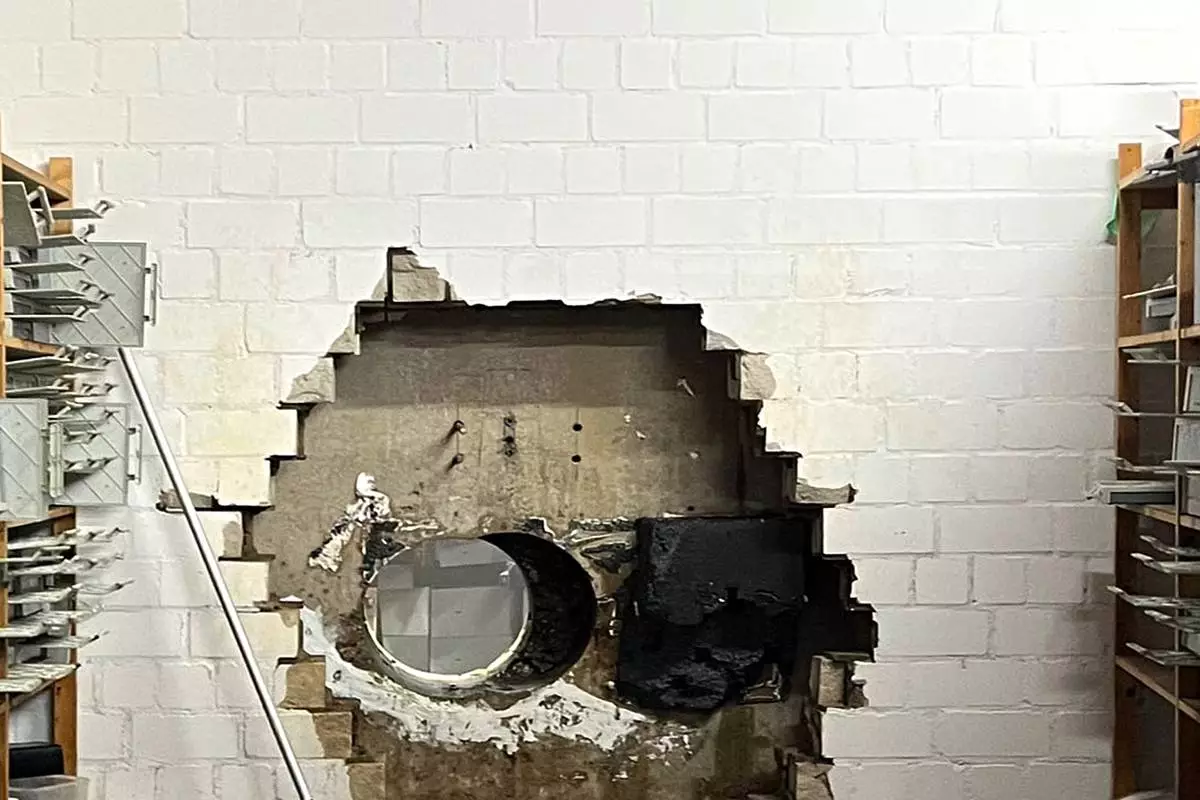
A fire alarm summoned police officers and firefighters to the bank branch shortly before 4 a.m. Monday. They found a hole in the wall and the vault ransacked. Police believe a large drill was used to break through the vault's basement wall.

Witnesses told investigators they saw several men carrying large bags in a nearby parking garage over the weekend. Video footage from the garage shows masked people inside a stolen vehicle early Monday, police said.

The fire alarm was also triggered Saturday but authorities did not find any damage.

Gelsenkirchen is about 192 kilometers (119 miles) northwest of Frankfurt.

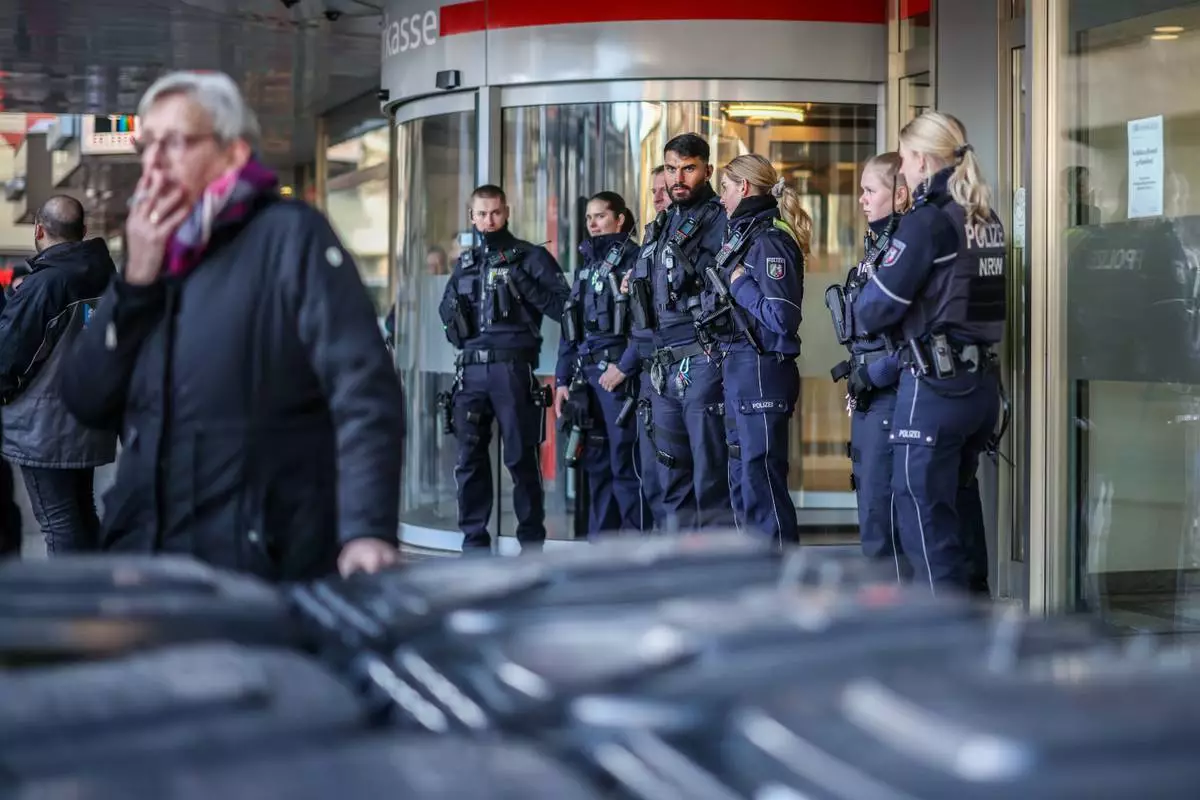
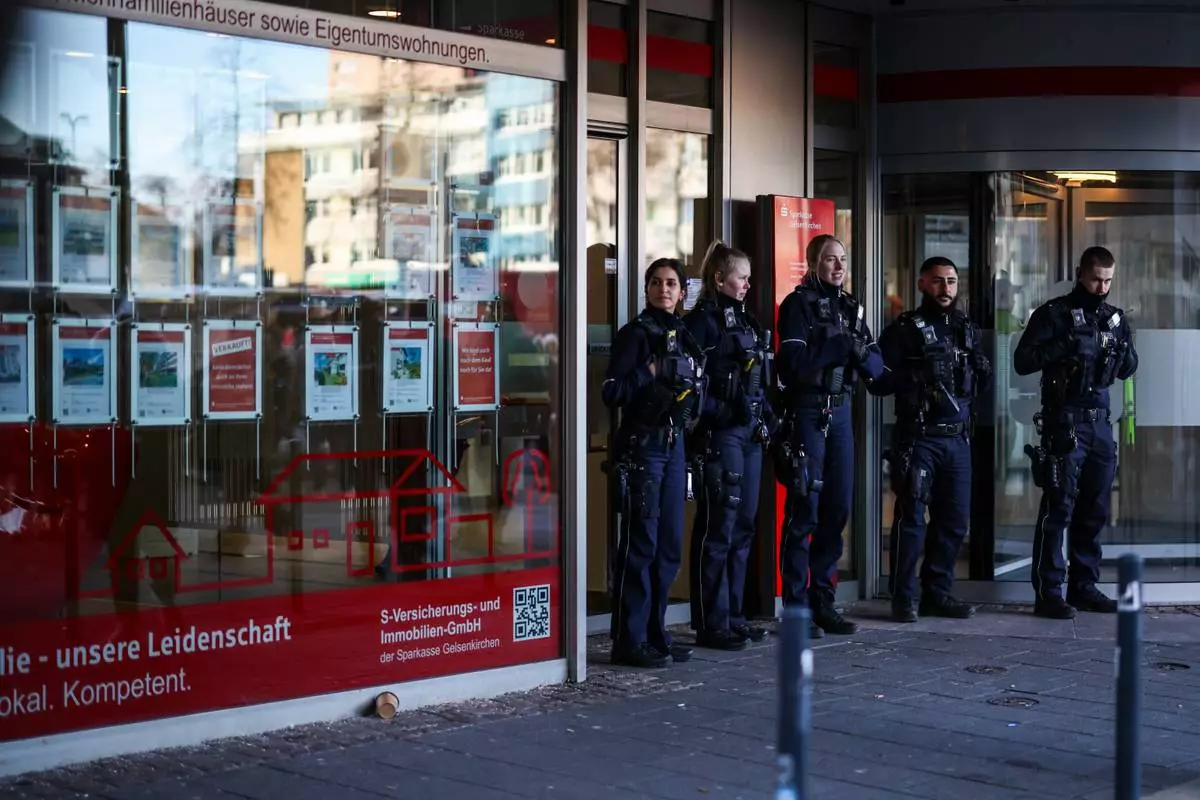
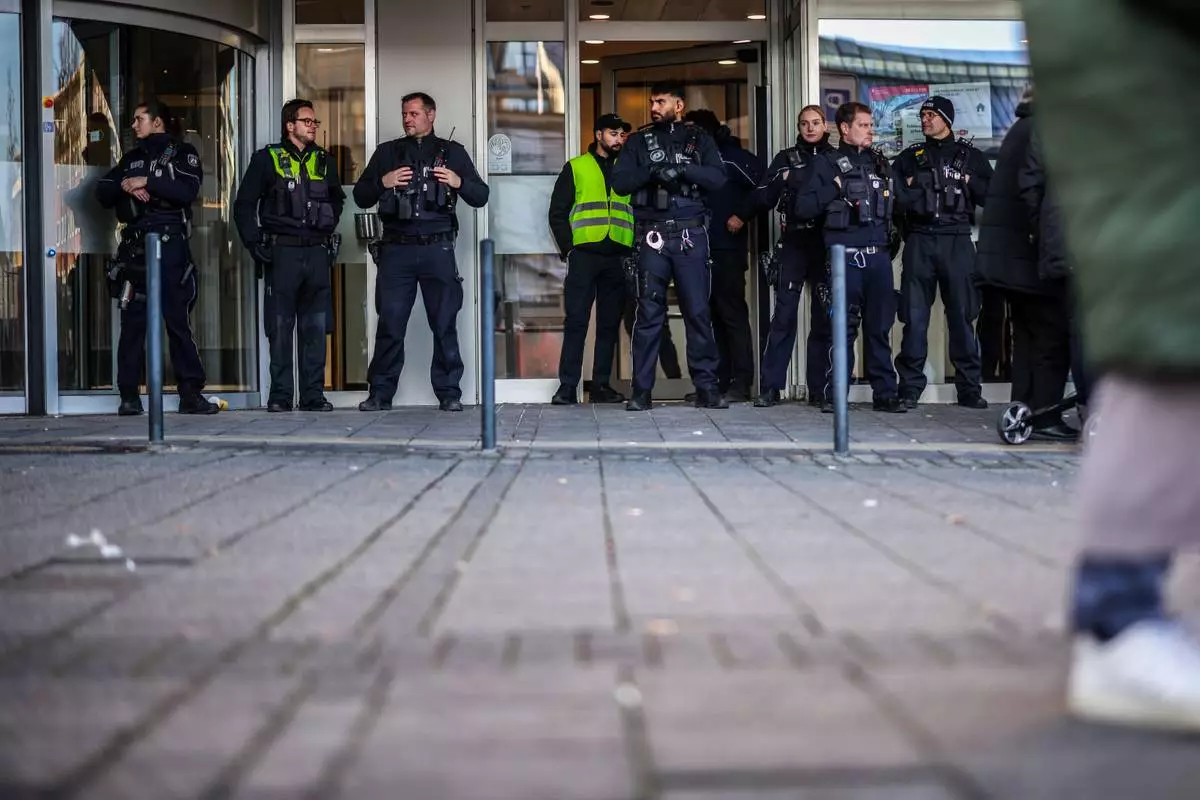
Police officers stand in front of the savings bank branch in the Buer district in Gelsenkirchen, Germany, Tuesday, Dec. 30, 2025 following a break-in into the bank's vault. (Christoph Reichwein/dpa via AP)

Police officers stand in front of the savings bank branch in the Buer district in Gelsenkirchen, Germany, Tuesday, Dec. 30, 2025 following a break-in into the bank's vault. (Christoph Reichwein/dpa via AP)

Police officers stand in front of the savings bank branch in the Buer district in Gelsenkirchen, Germany, Tuesday, Dec. 30, 2025 following a break-in into the bank's vault. (Christoph Reichwein/dpa via AP)

Police officers stand in front of the savings bank branch in the Buer district in Gelsenkirchen, Germany, Tuesday, Dec. 30, 2025 following a break-in into the bank's vault. (Christoph Reichwein/dpa via AP)

This picture, provided by the Gelsenkirchen Police on Monday, Dec. 29, 2025 shows a hole in a wall of the savings bank branch in the Buer district in Gelsenkirchen, Germany. (Police Gelsenkirchen via AP)

This picture, provided by the Gelsenkirchen Police on Monday, Dec. 29, 2025 shows a hole in a wall of the savings bank branch in the Buer district in Gelsenkirchen, Germany. (Police Gelsenkirchen via AP)

Police officers stand in front of the savings bank branch in the Buer district in Gelsenkirchen, Germany, Tuesday, Dec. 30, 2025 following a break-in into the bank's vault. (Christoph Reichwein/dpa via AP)

Police officers stand in front of the savings bank branch in the Buer district in Gelsenkirchen, Germany, Tuesday, Dec. 30, 2025 following a break-in into the bank's vault. (Christoph Reichwein/dpa via AP)

Recommended Articles