

Dutch tennis player Jean-Julien Rojer wore a shirt showing the Statue of Liberty while winning the U.S. Open men's doubles championship on Friday to send what he called a message about peace and freedom in the aftermath of last month's violence at a rally of neo-Nazis and white nationalists in Charlottseville, Virginia.
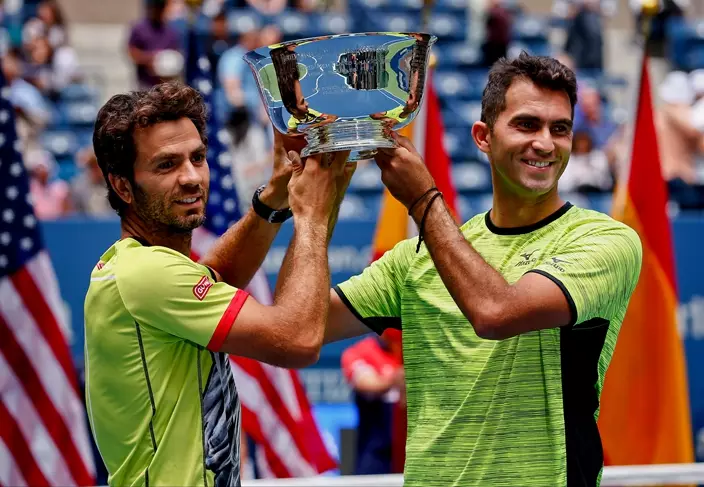
Jean-Julien Rojer, of Holland, left, and Horia Tecau, of Romania, hold up the championship trophy after beating Marc Lopez and Feliciano Lopez, both of Spain, in the doubles final of the U.S. Open tennis tournament, Friday, Sept. 8, 2017, in New York. (AP Photo/Julie Jacobson)
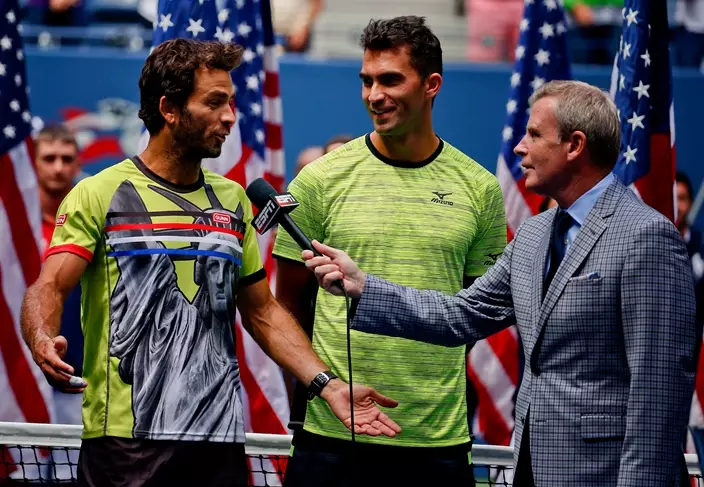
"I just wanted to have the conversation going (by) promoting ... freedom and justice, liberty, for everybody on gender issues, on racial issues, which we deal a lot with in this country," said Rojer, who was born in Curacao, Netherlands Antilles, and moved to Florida when he was 12 to work with a private coach.
Click to Gallery
Jean-Julien Rojer, of Holland, left, and Horia Tecau, of Romania, hold up the championship trophy after beating Marc Lopez and Feliciano Lopez, both of Spain, in the doubles final of the U.S. Open tennis tournament, Friday, Sept. 8, 2017, in New York. (AP Photo/Julie Jacobson)
Dutch tennis player Jean-Julien Rojer, left, talks with ESPN reporter Tom Rinaldi as doubles partner Horia Tech, of Romania, listens, after the two won the doubles championship match against Marc Lopez, and Feliciano Lopez, of Spain after the doubles championship match of the U.S. Open tennis tournament, Friday, Sept. 8, 2017, in New York. (AP Photo/Julie Jacobson)
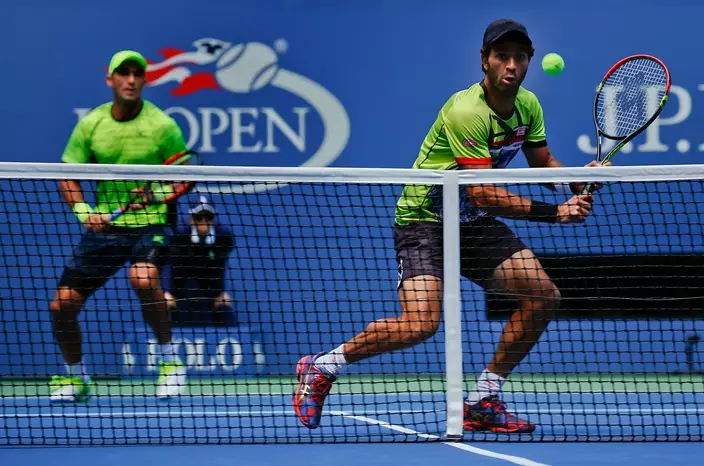
Jean-Julien Rojer, of Holland, right, returns a shot as doubles partner Horia Tecau, of Romania, looks on during the championship doubles match of the U.S. Open tennis tournament against Marc Lopez and Feliciano Lopez, both of Spain, Friday, Sept. 8, 2017, in New York. (AP Photo/Julie Jacobson)
Marc Lopez, lower left, and Feliciano Lopez, both of Spain, slap hands after winning a point against Horia Tecau, of Romania, top right, and Jean-Julien Rojer, of Holland, during the championship match of the U.S. Open tennis tournament, Friday, Sept. 8, 2017, in New York. (AP Photo/Julie Jacobson)
Jean-Julien Rojer, of Holland, right, and Horia Tecau, of Romania talk between serves to Marc Lopez and Feliciano Lopez, both of Spain, during the championship doubles match of the U.S. Open tennis tournament, Friday, Sept. 8, 2017, in New York. (AP Photo/Julie Jacobson)
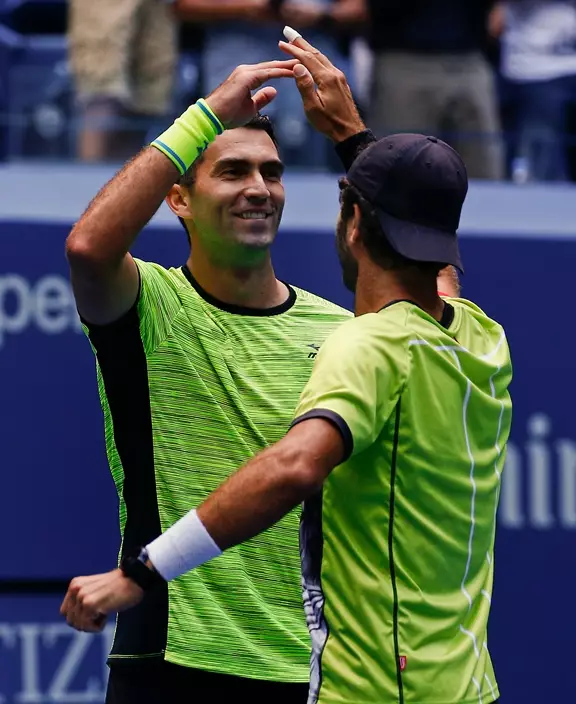
Horia Tecau, of Romania, left, and Jean-Julien Rojer, of Holland, celebrate after beating Feliciano Lopez, of Spain, and Marc Lopez in the doubles final of the U.S. Open tennis tournament, Friday, Sept. 8, 2017, in New York. (AP Photo/Julie Jacobson)
Jean-Julien Rojer, of Holland, left, and Horia Tecau, of Romania, hold up the championship trophy after beating Marc Lopez and Feliciano Lopez, both of Spain, in the doubles final of the U.S. Open tennis tournament, Friday, Sept. 8, 2017, in New York. (AP Photo/Julie Jacobson)
Dutch tennis player Jean-Julien Rojer, left, talks with ESPN reporter Tom Rinaldi as doubles partner Horia Tech, of Romania, listens, after the two won the doubles championship match against Marc Lopez, and Feliciano Lopez, of Spain after the doubles championship match of the U.S. Open tennis tournament, Friday, Sept. 8, 2017, in New York. (AP Photo/Julie Jacobson)
Jean-Julien Rojer, of Holland, right, returns a shot as doubles partner Horia Tecau, of Romania, looks on during the championship doubles match of the U.S. Open tennis tournament against Marc Lopez and Feliciano Lopez, both of Spain, Friday, Sept. 8, 2017, in New York. (AP Photo/Julie Jacobson)
Marc Lopez, lower left, and Feliciano Lopez, both of Spain, slap hands after winning a point against Horia Tecau, of Romania, top right, and Jean-Julien Rojer, of Holland, during the championship match of the U.S. Open tennis tournament, Friday, Sept. 8, 2017, in New York. (AP Photo/Julie Jacobson)

Jean-Julien Rojer, of Holland, right, and Horia Tecau, of Romania talk between serves to Marc Lopez and Feliciano Lopez, both of Spain, during the championship doubles match of the U.S. Open tennis tournament, Friday, Sept. 8, 2017, in New York. (AP Photo/Julie Jacobson)

Horia Tecau, of Romania, left, and Jean-Julien Rojer, of Holland, celebrate after beating Feliciano Lopez, of Spain, and Marc Lopez in the doubles final of the U.S. Open tennis tournament, Friday, Sept. 8, 2017, in New York. (AP Photo/Julie Jacobson)

"I feel in tennis we don't say much about it, but this is just tennis," Rojer said. "We deal with real life issues out there."
Rojer and his doubles partner, Horia Tecau of Romania, won their first title at Flushing Meadows by beating the 11th-seeded Spaniards Feliciano Lopez and Marc Lopez 6-4, 6-3 in the final.
Dutch tennis player Jean-Julien Rojer, left, talks with ESPN reporter Tom Rinaldi as doubles partner Horia Tech, of Romania, listens, after the two won the doubles championship match against Marc Lopez, and Feliciano Lopez, of Spain after the doubles championship match of the U.S. Open tennis tournament, Friday, Sept. 8, 2017, in New York. (AP Photo/Julie Jacobson)
During the on-court trophy ceremony in Arthur Ashe Stadium, Rojer spoke about his yellow T-shirt with a black-and-white image of the Statue of Liberty and red, white and blue stripes across the chest. He said it's part of a clothing line made by a friend of his.
"The idea came after the tragic incident in Charlottesville, and we came up with this line, promoting peace and freedom and liberty," Rojer said. "Hopefully we're moving in that direction. I've been here since I'm 12 years old and I'm happy they let me in and I got to do my job here. So hopefully we will create those opportunities for everybody."
Tecau said that professional athletes should feel free to state their political views.
"It's nice to send this message and spread it, because you have a lot of people that look up to you. Jules is an outspoken guy. You know, he'll talk more than other players, but I think as role models for the generations that are behind us, the young generation, it's important to see that, as well," Tecau said. "We're not just athletes competing, you know, for Slams and prize money and glory."
Jean-Julien Rojer, of Holland, right, returns a shot as doubles partner Horia Tecau, of Romania, looks on during the championship doubles match of the U.S. Open tennis tournament against Marc Lopez and Feliciano Lopez, both of Spain, Friday, Sept. 8, 2017, in New York. (AP Photo/Julie Jacobson)
Added Rojer, who was an All-American tennis player at UCLA: "It's important that everybody do their job or do their part, and that's how you make either change or progress, because we do it. And maybe I change five people's minds, you know. It's a step in the right direction. ... But we all have a platform and we have to be conscious of our actions and respectful of each other."
This is the second Grand Slam title for the 12th-seeded Tecau and Rojer, who also won Wimbledon in 2015.
They are currently on a 10-match winning streak, including a victory over top-seeded Henri Kontinen and John Peers in the U.S. Open semifinals.
"It's tough when you get to these matches. Tension, expectations, everything around. People start calling you. Messages. But you just try to stay focused (on) one more match," Tecau said. "That's what we did so well towards the end of the tournament. Pushed each other to stay focused one more match and to execute."
The two Lopezes, who are not related, won the 2016 French Open.
Marc Lopez, lower left, and Feliciano Lopez, both of Spain, slap hands after winning a point against Horia Tecau, of Romania, top right, and Jean-Julien Rojer, of Holland, during the championship match of the U.S. Open tennis tournament, Friday, Sept. 8, 2017, in New York. (AP Photo/Julie Jacobson)

Jean-Julien Rojer, of Holland, right, and Horia Tecau, of Romania talk between serves to Marc Lopez and Feliciano Lopez, both of Spain, during the championship doubles match of the U.S. Open tennis tournament, Friday, Sept. 8, 2017, in New York. (AP Photo/Julie Jacobson)
Horia Tecau, of Romania, left, and Jean-Julien Rojer, of Holland, celebrate after beating Feliciano Lopez, of Spain, and Marc Lopez in the doubles final of the U.S. Open tennis tournament, Friday, Sept. 8, 2017, in New York. (AP Photo/Julie Jacobson)
NEW YORK (AP) — U.S. flu infections surged over the holidays, and health officials are calling it a severe season that is likely to get worse.
New government data posted Monday — for flu activity through the week of Christmas — showed that by some measures this season is already surpassing the flu epidemic of last winter, one of the harshest in recent history.
The data was released the same day that the Trump administration said it will no longer recommend flu shots and some other types of vaccines for all children.
Forty-five states were reporting high or very high flu activity during the week of Christmas, up from 30 states the week before.
The higher numbers appear to be driven by the type of flu that’s been spreading, public health experts say.
One type of flu virus, called A H3N2, historically has caused the most hospitalizations and deaths in older people. So far this season, that’s the type most frequently reported. Even more concerning, more than 90% of the H3N2 infections analyzed were a new version — known as the subclade K variant — that differs from the strain in this year’s flu shots.
Flu seasons often don’t peak until January or February, so it’s too early to know how big a problem that mismatch will be.
“The fact that we’ve seen steady increases over the last several weeks without much of a decline or even a flattening would suggest to me that we’ve got the peak ahead of us,” said Dr. Robert Hopkins, medical director of the National Foundation for Infectious Diseases.
Last flu season was bad, with the overall flu hospitalization rate the highest since the H1N1 flu pandemic 15 years ago. Child flu deaths reached 288, the worst recorded for regular U.S. flu season.
Nine pediatric flu deaths have been reported so far this season. For children, the percentage of emergency department visits due to flu has already surpassed the highest mark seen during the 2024-2025 season.
Hopkins said H3N2 typically hits older adults hardest, and rising rates among children and young adults suggest a severe flu season across all age groups.
Another ominous sign: The percentage of doctor's office and medical clinic visits that were due to flu-like illness also was higher late last month than at any point during the previous flu season.
Deaths and hospitalizations have not reached last year's levels, but those are lagging indicators, Hopkins noted.
The U.S. Centers for Disease Control and Prevention estimates at least 11 million illnesses, 120,000 hospitalizations and 5,000 deaths from flu have already occurred this season.
Public health experts recommend that everyone 6 months and older get an annual influenza vaccine.
But federal health officials on Monday announced they will no longer recommend flu vaccinations for U.S. children, saying it's a decision parents and patients should make in consultation with their doctors.
However, flu vaccine will continue to be fully covered by private insurers and federal programs, including Medicaid, the Children’s Health Insurance Program and the Vaccines for Children program, a U.S. Department of Health and Human Services spokesperson said.
COVID-19 infections also have been rising, other federal data show, though so far this winter they remain less common than flu. The Trump administration stopped recommending COVID-19 shots for healthy children last year.
Hopkins voiced concern about a federal notice posted last week that said government Medicaid programs, which pay for medical services for low-income families, will no longer have to report on immunization rates.
CDC survey data suggests that U.S. flu vaccination rates are about the same as last year. But the Medicaid data — for flu as well as measles and other bugs — is a more comprehensive look at children who are at higher risk for many diseases, he said.
Federal health officials framed the move as part of an effort to distance how Medicaid doctors are rated and paid from how often they provided childhood vaccinations.
“Government bureaucracies should never coerce doctors or families into accepting vaccines or penalize physicians for respecting patient choice,” wrote Health Secretary Robert F. Kennedy Jr., who was a leading voice in the anti-vaccine community before President Donald Trump put him in charge of federal health agencies.
“That practice ends now,” Kennedy wrote on social media last week.
But Hopkins said the move will “eliminate a major source of data” that allows communities to assess efforts to protect children from vaccine-preventable diseases.
“This is a disastrous plan,” he added.
The Associated Press Health and Science Department receives support from the Howard Hughes Medical Institute’s Department of Science Education and the Robert Wood Johnson Foundation. The AP is solely responsible for all content.
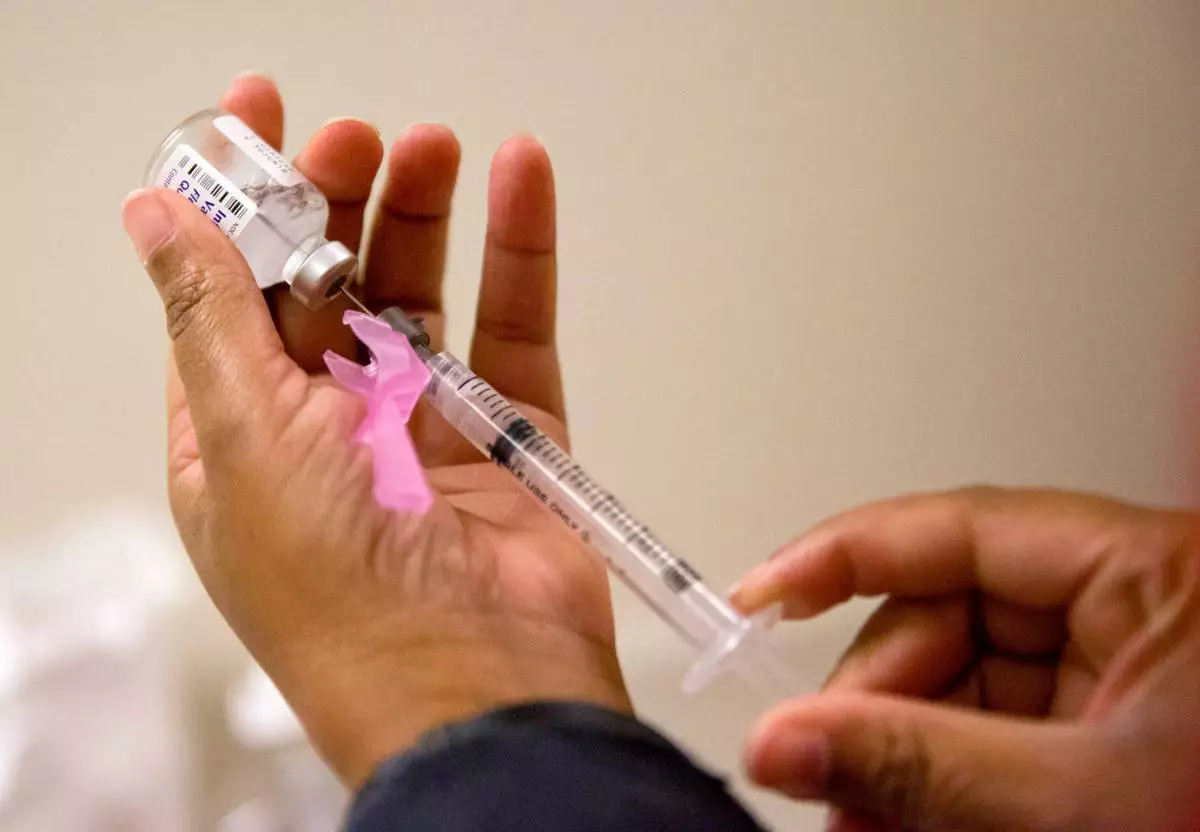
FILE - In this Feb. 7, 2018 file photo, a nurse prepares a flu shot at the Salvation Army in Atlanta. (AP Photo/David Goldman, File)