It is not just about war, but also the humiliation towards female. This is why those brave woman should fight back!
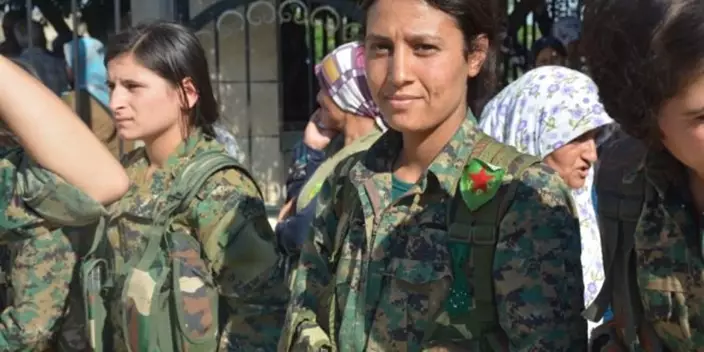
A 23-year-old Syria Kurdish female soldier, Barin Kobani, was killed by the anti-government army. Her clothes were raised, showing the chest, and her body was badly mutilated with hands missing
online photo
Several members of the Syria free Army stood beside the corpse, and they regarded Kopani as a trophy, and even some of them trampled their feet to her chest.
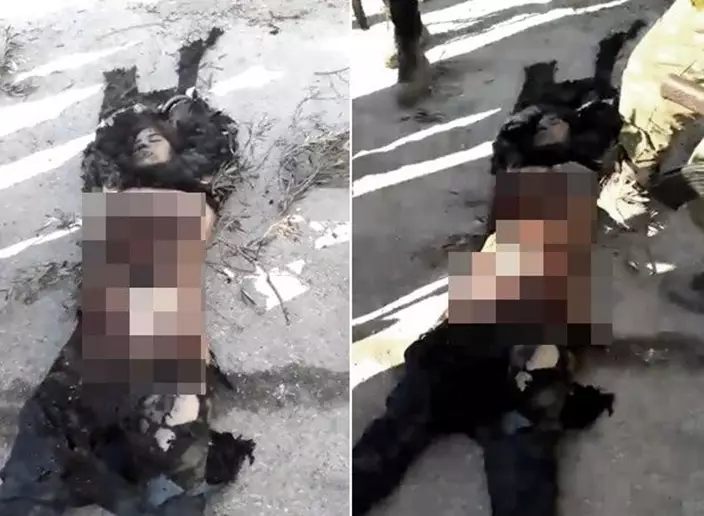
online photo
The mobs sent the bloody video to the Syria Human Rights Watch organization. The Syrian government and Human Rights Watch organization all condemned this brutal crime.
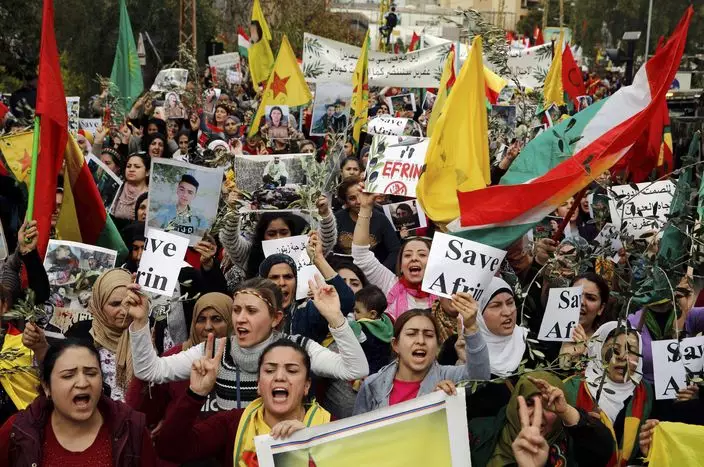
AP photo
And there are thousands of people went on the street to mourn Kopani and other soldiers and civilians who have been killed in the battle with the Turkey camp.
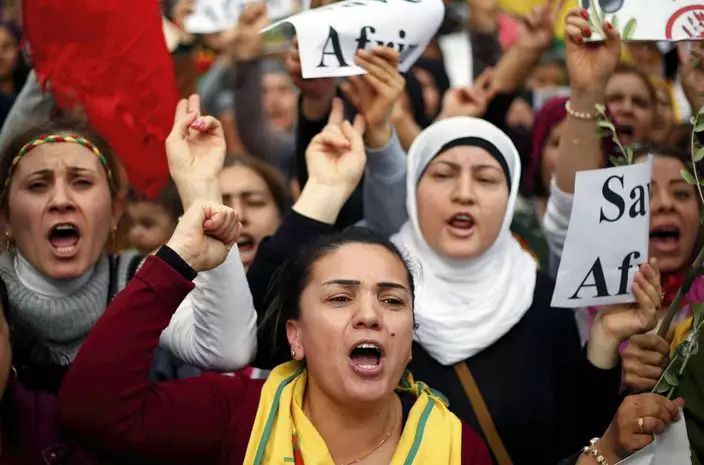
AP photo
The grieving family of Kopani also attend some events to protest against the atrocities of the anti-government free army and vowed revenge.
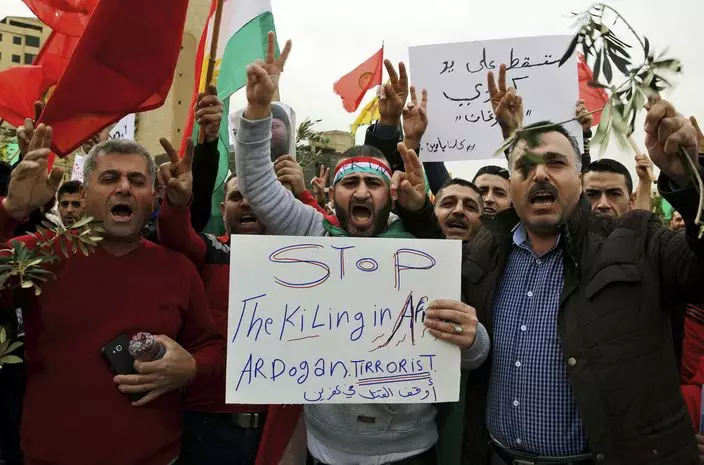
AP photo
Barin Kobani was a member of the Kurdish Women Protection Organization, and once involved in the fight against the extremist organizations ISIS.
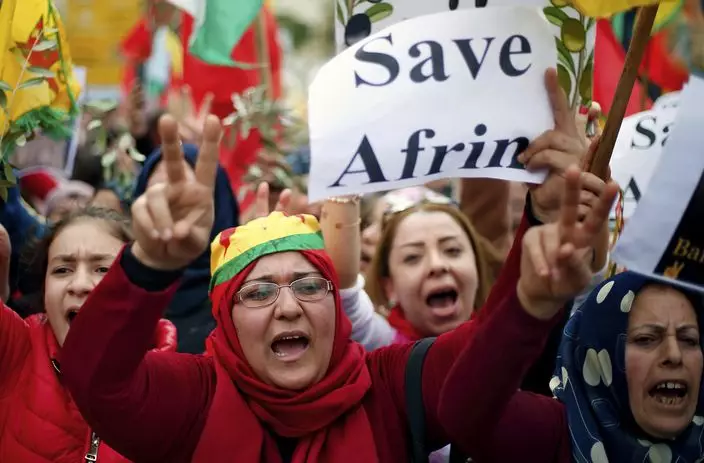
AP photo
It is said that Kopani was killed with other three women soldiers, and they did not surrender, having been fighting till the last minute before they died.
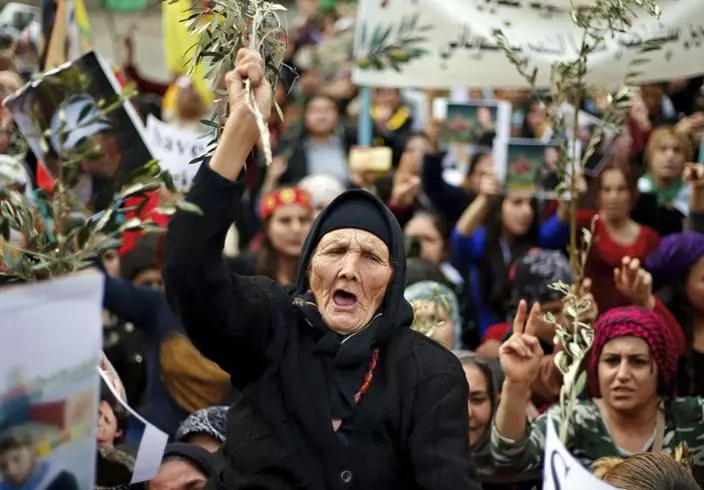
AP photo
BEIRUT (AP) — The Lebanese military said Thursday it had concluded the first phase of their plan to fully deploy across southern Lebanon and disarm non-state groups, notably Hezbollah.
The effort to disarm Hezbollah comes after a Washington-brokered ceasefire ended a war between the group and Israel in 2024.
The military's statement didn't name Hezbollah or other armed groups in particular, but it comes before President Joseph Aoun is set to meet with Prime Minister Nawaf Salam and his government to further discuss the deployment and disarmament plans. Both said disarming non-state groups was a priority upon beginning their terms not long after the ceasefire went into effect.
Neither Israel nor Hezbollah immediately commented on the Lebanese military’s announcement.
The government had set a deadline of the end of 2025 to clear the area south of the Litani River of non-state weapons. The Lebanese military has been clearing tunnels, rocket-launching positions, and other structures since its disarmament proposal was approved by the government and went into effect in September.
“The army confirms that its plan to restrict weapons has entered an advanced stage, after achieving the goals of the first phase effectively and tangibly on the ground,” the military statement read.
Israel still strikes Lebanon near daily and occupies five strategic hilltop points along the border, the only areas south of the Litani where the military said it has yet to control.
“Work in the sector is ongoing until the unexploded ordnance and tunnels are cleared ... with the aim of preventing armed groups from irreversibly rebuilding their capabilities," the statement read, adding that it will soon announce the next stages of the plan.
Officials have said the next stage of the disarmament plan is in segments of southern Lebanon between the Litani and the Awali River, which include Lebanon’s port city of Sidon, but they have not set a timeline for that phase.
Regular meetings have taken place between the Lebanese and the Israelis alongside the United States, France, and the U.N. peacekeeping forces in southern Lebanon, known as UNIFIL, to monitor developments after the ceasefire.
Lebanon’s cash-strapped military has since been gradually dispersing across wide areas of southern Lebanon between the Litani River and the U.N.-demarcated “Blue Line” that separates the tiny country from Israel. The military has also been slowly confiscating weapons from armed Palestinian factions in refugee camps.
Israel accuses Hezbollah of trying to rebuild its battered military capacity and has said that the Lebanese military’s efforts are not sufficient, raising fears of a new escalation. Lebanon, meanwhile, said Israel's strikes and control of the hilltops were an obstacle to the efforts.
Lebanon also hopes that disarming Hezbollah and other non-state groups will help to bring in money needed for reconstruction after the 2024 war.
Hezbollah says it has been cooperative with the army in the south but will not discuss disarming elsewhere before Israel stops its strikes and withdraws from Lebanese territory.
The latest Israel-Hezbollah conflict began the day after the Oct. 7, 2023, Hamas-led attack on Israel triggered the war in Gaza. The militant group Hezbollah, largely based in southern Lebanon, began firing rockets into Israel in support of Hamas and the Palestinians.
Israel responded with airstrikes and shelling. The low-level conflict escalated into full-scale war in September 2024. Israeli strikes killed much of Hezbollah's senior leadership and left the group severely weakened.
Hezbollah still has political clout, holding a large number of seats in parliament representing the Shiite Muslim community and two cabinet ministers.
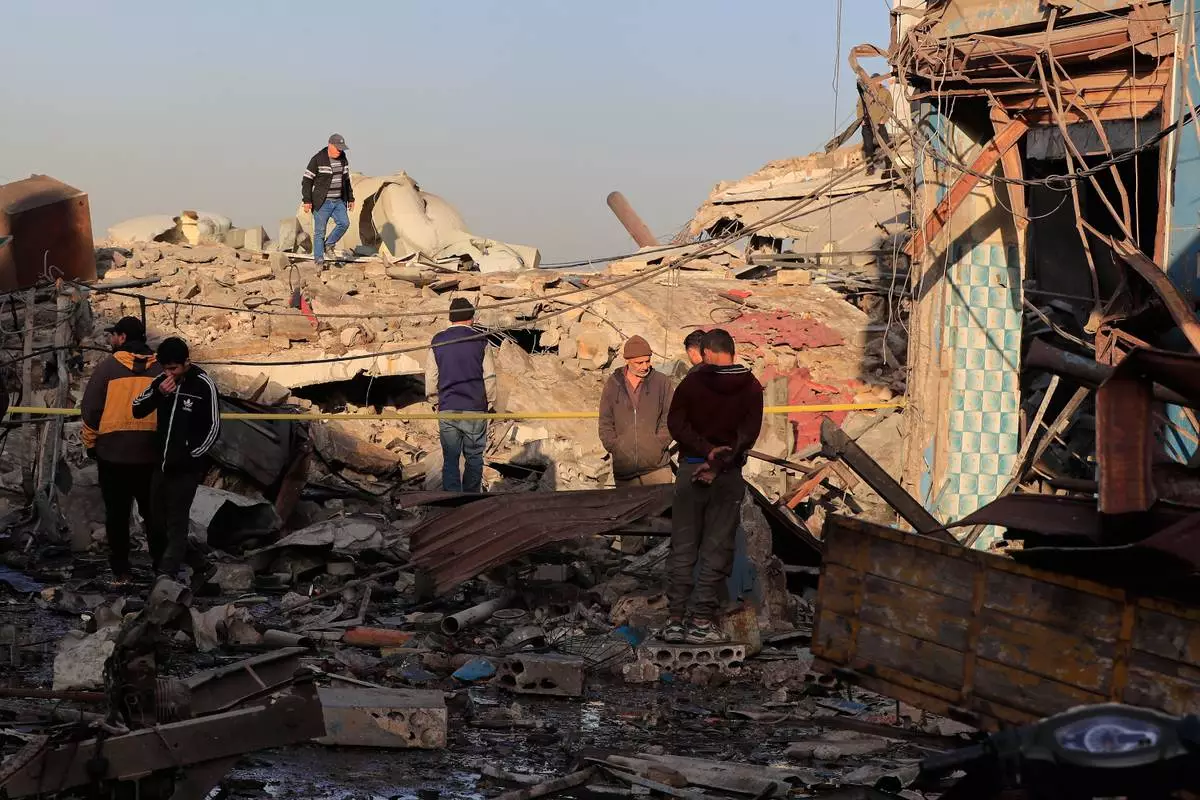
People check the site where an Israeli strike destroyed a building at a commercial district, in the southern port city of Sidon, Lebanon, Tuesday, Jan. 6, 2026. (AP Photo/Mohammed Zaatari)
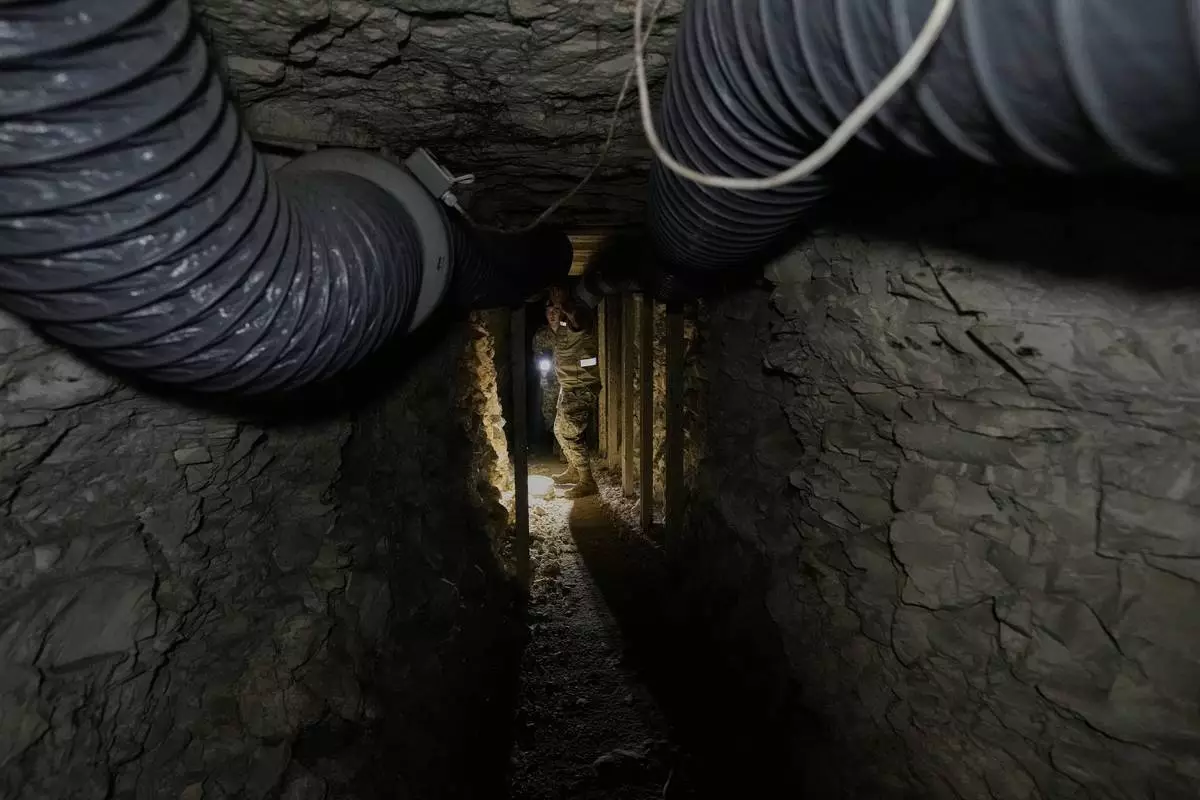
FILE - Lebanese army soldiers walk through a tunnel dug into a mountain that was used by Hezbollah militants as a clinic and storage facility near the Lebanese-Israeli border in the Zibqin Valley, southern Lebanon, Nov. 28, 2025. (AP Photo/Bilal Hussein, File)