
WASHINGTON (AP) — Rep. Steny Hoyer of Maryland, the longest-serving Democrat in Congress and once a rival to become House speaker, announced Thursday that he will retire at the end of his term.
Hoyer, who served for years in party leadership and helped steer Democrats through some of their most significant legislative victories, reflected on the House floor about how the Congress he entered in 1981 has changed from a time when “most Republicans and Democrats worked together in a collegial and productive way.” He said he is now “deeply concerned that this House is not living up to the Founders’ goals.”
Click to Gallery

Rep. Steny Hoyer, D-Md., leaves after speaking on the House floor at the Capitol, Thursday, Jan. 8, 2026, in Washington. (AP Photo/Mark Schiefelbein)

Rep. Steny Hoyer, D-Md., leaves after speaking on the House floor at the Capitol, Thursday, Jan. 8, 2026, in Washington. (AP Photo/Mark Schiefelbein)

Rep. Steny Hoyer, D-Md., leaves after speaking on the House floor at the Capitol, Thursday, Jan. 8, 2026, in Washington. (AP Photo/Mark Schiefelbein)

Rep. Steny Hoyer, D-Md., second from right, leaves after speaking on the House floor at the Capitol, Thursday, Jan. 8, 2026, in Washington. (AP Photo/Mark Schiefelbein)

FILE -Rep. Steny Hoyer, D-Md., speaks at a news conference about the Protect Our Probationary Employees Act on Capitol Hill, March 11, 2025, in Washington. (AP Photo/Mark Schiefelbein, File)
Hoyer, who choked up at times during his 10-minute speech, said in the next year he will have “much more to say about the issues we have grappled with and the ways this House has changed during my time.”
“I urge my colleagues on both sides of the aisle to examine their conscience, renew their courage, and carry out the responsibilities that the first article of the Constitution demands," Hoyer said. "Only in that way can we insure that our 250 years will be a preface to a stronger, brighter beacon in a free and principled democracy.”
Lawmakers have wrestled with fundamental questions about what it means to be a representative during a tumultuous period in American history. Politically polarized times have created a climate that has appeared to reward hard-line positions rather than more traditional compromises.
Lawmakers stood and applauded as he concluded his speech. One by one, Republicans and Democrats went up to shake his hand or to hug him.
Republican Rep. Glenn Thompson, of Pennsylvania, spoke after Hoyer on Thursday, praising his colleague as a “statesman.”
“I just offer my congratulations to his announced retirement and my thanks for his service as a statesman, especially at a time of what we have been living through of growing divisiveness,” Thompson said.
At 86, Hoyer is the latest in a generation of senior-most leaders stepping aside, making way for a new era of lawmakers eager to take on governing. Retirements have been high in the two major political parties, Democrats and Republicans, ahead of the midterm elections in November that will determine control of Congress.
Hoyer said he gradually decided not to seek another term.
“Over the last three or four months my wife and I have been discussing it," he said Thursday afternoon in a telephone interview with The Associated Press. "I’ve been discussing it with some of my friends, and I just decided now is the right time.”
Hoyer said he would spend his last year working on appropriation bills to avoid another federal government shutdown "and see if we can get some more bipartisanship.”
First arriving in the House in 1981 after a special election, Hoyer's reach extended beyond his Chesapeake Bay-area district, and he quickly climbed the leadership ranks to become the No. 2 Democrat. He served as majority leader after Democrats swept to power after the 2006 election and again in 2019 after they regained control during President Donald Trump's first term.
Through those years Hoyer worked as a partner and sometimes rival to then-Speaker Nancy Pelosi, part of a trio of top Democrats alongside Rep. James Clyburn of South Carolina.
That was the era when Democrats, with President Barack Obama, ushered the Affordable Care Act and other signature legislation to law. Hoyer counts among his career achievements the passage in 1990 of the Americans with Disabilities Act, which he co-sponsored.
During the Trump era, as Democrats worked to win back House control, Hoyer campaigned to court blue-collar voters outside of party strongholds and positioned himself as a potential alternative to Pelosi. For years, Hoyer championed what he called his “Make it in America” agenda to boost industry, production and jobs.
But the leaders have often moved in tandem, and when Pelosi announced last fall she would end her own storied career after this term, Hoyer's next step was widely watched.
Hoyer represents a district that stretches from the suburbs of Washington to southern Maryland, a blue state where Democrats outnumber Republicans 2-1 statewide. He won re-election in 2024 with about 68% of the vote.
Witte reported from Annapolis, Md.
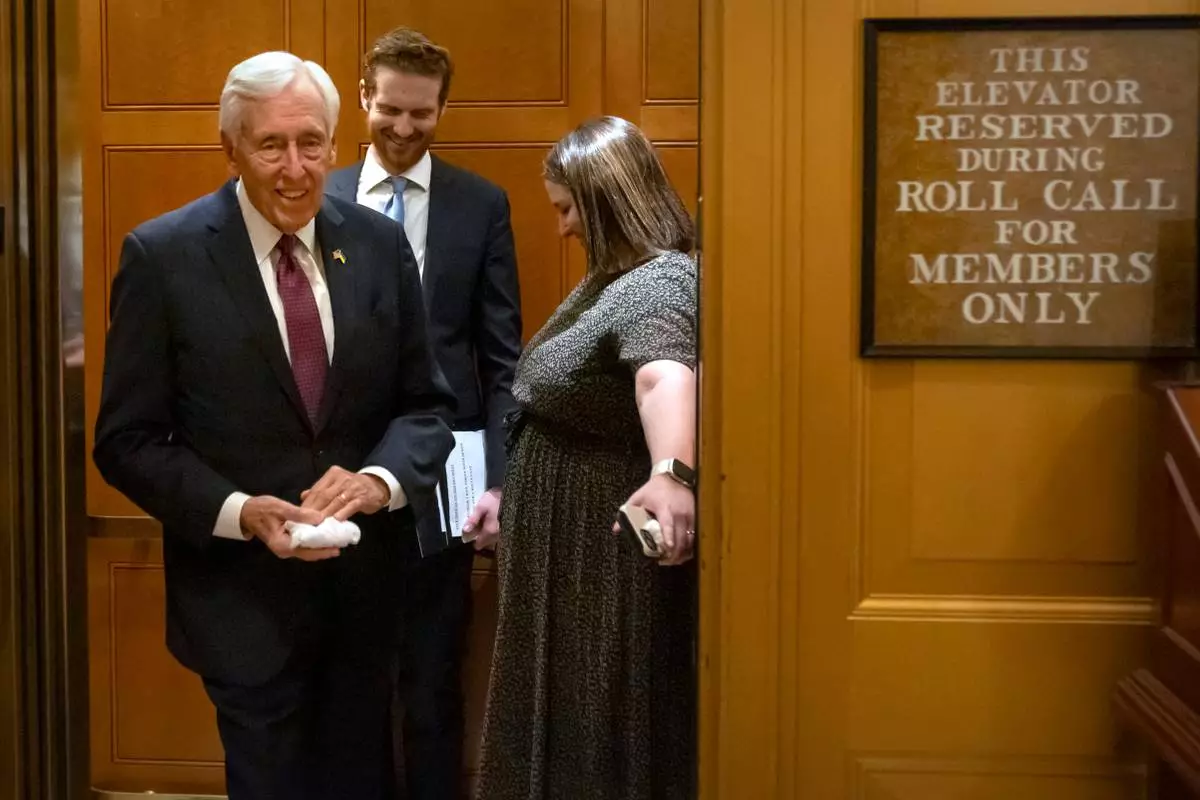
Rep. Steny Hoyer, D-Md., leaves after speaking on the House floor at the Capitol, Thursday, Jan. 8, 2026, in Washington. (AP Photo/Mark Schiefelbein)
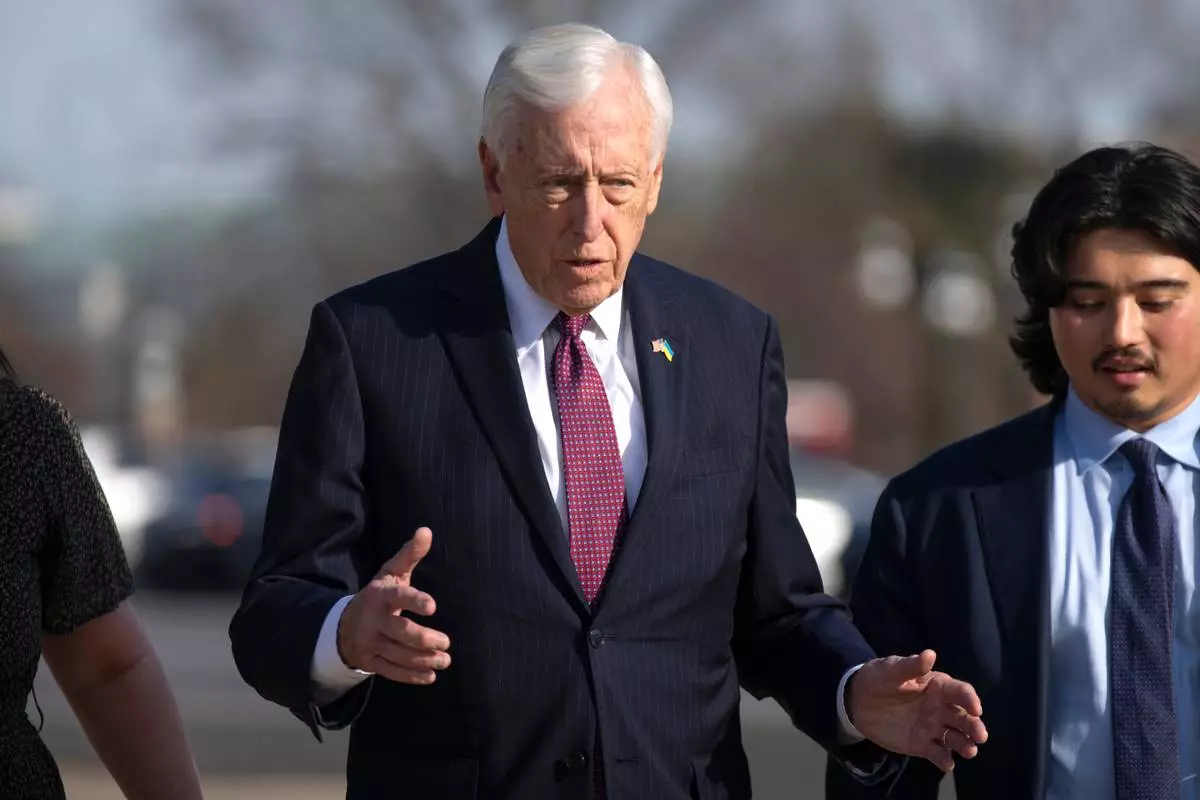
Rep. Steny Hoyer, D-Md., leaves after speaking on the House floor at the Capitol, Thursday, Jan. 8, 2026, in Washington. (AP Photo/Mark Schiefelbein)

Rep. Steny Hoyer, D-Md., leaves after speaking on the House floor at the Capitol, Thursday, Jan. 8, 2026, in Washington. (AP Photo/Mark Schiefelbein)

Rep. Steny Hoyer, D-Md., second from right, leaves after speaking on the House floor at the Capitol, Thursday, Jan. 8, 2026, in Washington. (AP Photo/Mark Schiefelbein)
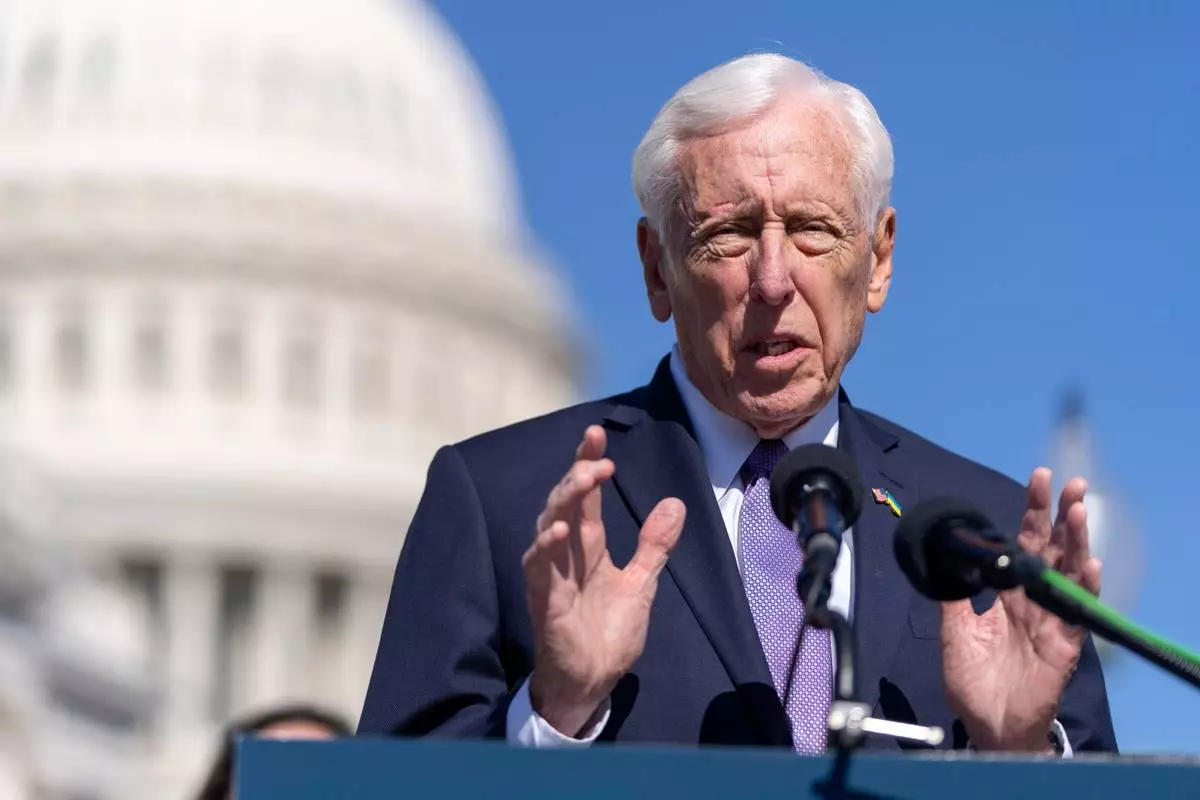
FILE -Rep. Steny Hoyer, D-Md., speaks at a news conference about the Protect Our Probationary Employees Act on Capitol Hill, March 11, 2025, in Washington. (AP Photo/Mark Schiefelbein, File)