Skip to Content Facebook Feature Image

Species battle pits protected sea lions against fragile fish

News

Species battle pits protected sea lions against fragile fish
News

News

Species battle pits protected sea lions against fragile fish

2018-03-23 12:48 Last Updated At:13:21

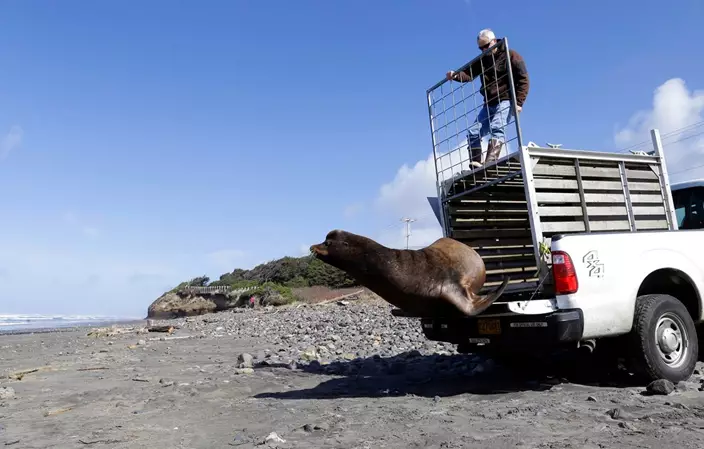
The 700-pound sea lion blinked in the sun, sniffed the sea air and then lazily shifted to the edge of the truck bed and plopped onto the beach below.

Freed from the cage that carried him to the ocean, the massive marine mammal shuffled into the surf, looked left, looked right and then started swimming north as a collective groan went up from wildlife officials who watched from the shore.

More Images
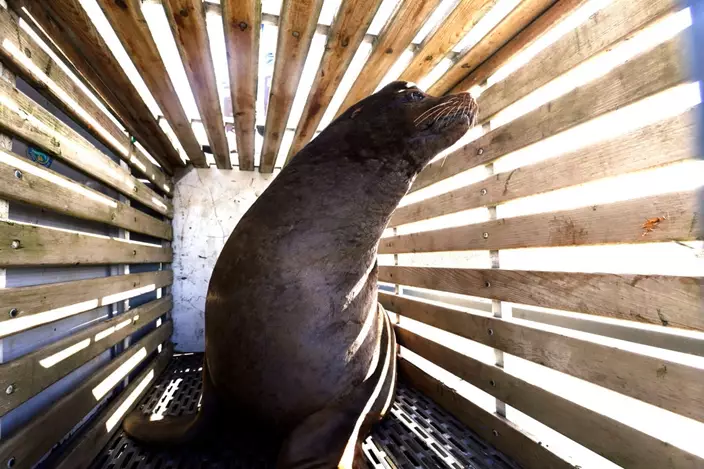
In this March 14, 2018, photo, a California sea lion waits to be released into the Pacific Ocean in Newport, Ore. Two species of fish listed as threatened under the Endangered Species Act are facing a growing challenge in Oregon from hungry sea lions. The federally protected California sea lions are traveling into the Columbia River and its tributaries to snack on fragile fish populations. (AP Photo/Don Ryan)
In this March 14, 2018, photo, a California sea lion waits to be released into the Pacific Ocean in Newport, Ore. Two species of fish listed as threatened under the Endangered Species Act are facing a growing challenge in Oregon from hungry sea lions. The federally protected California sea lions are traveling into the Columbia River and its tributaries to snack on fragile fish populations. (AP Photo/Don Ryan)

In this March 14, 2018, photo, a California sea lion, designated #U253, leaps out of a cage towards the beach and open Pacific Ocean as Oregon Department of Fish and Wildlife scientist Bryan Wright holds the gate open in Newport, Ore. (AP Photo/Don Ryan)
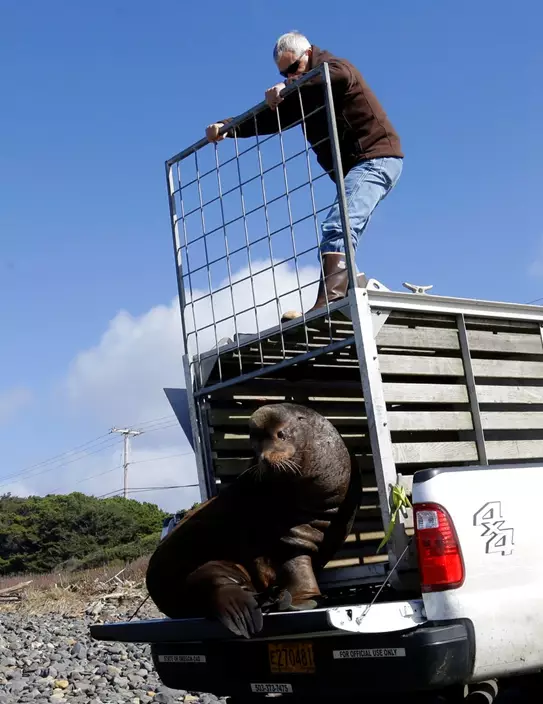
In this March 14, 2018, photo, a California sea lion, designated #U253, leaps out of a cage towards the beach and open Pacific Ocean as Oregon Department of Fish and Wildlife scientist Bryan Wright holds the gate open in Newport, Ore. (AP Photo/Don Ryan)

In this March 14, 2018, photo, Oregon Department of Fish and Wildlife scientist Bryan Wright releases a California sea lion in Newport, Ore. Biologists this spring started trapping the sea lions in the Willamette River and releasing them at the coast. (AP Photo/Don Ryan)
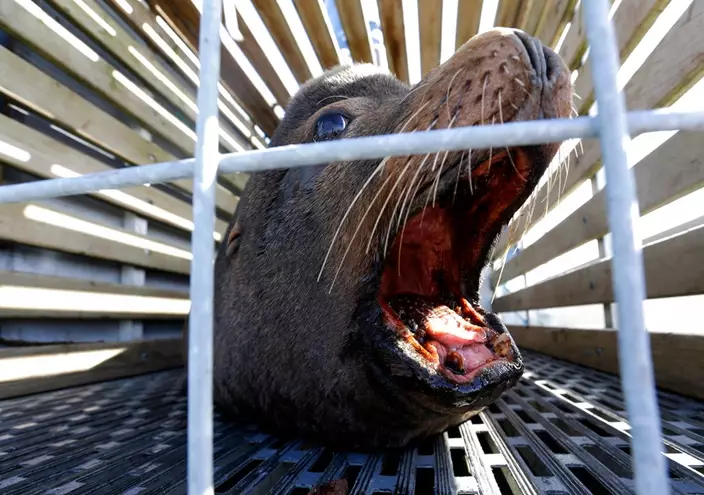
In this March 14, 2018, photo, Oregon Department of Fish and Wildlife scientist Bryan Wright releases a California sea lion in Newport, Ore. Biologists this spring started trapping the sea lions in the Willamette River and releasing them at the coast. (AP Photo/Don Ryan)

In this March 14, 2018, photo, a California sea lion waits to be released into the Pacific Ocean in Newport, Ore. Two species of fish listed as threatened under the Endangered Species Act are facing a growing challenge in Oregon from hungry sea lions. The federally protected California sea lions are traveling into the Columbia River and its tributaries to snack on fragile fish populations. (AP Photo/Don Ryan)
In this March 14, 2018, photo, a California sea lion waits to be released into the Pacific Ocean in Newport, Ore. Two species of fish listed as threatened under the Endangered Species Act are facing a growing challenge in Oregon from hungry sea lions. The federally protected California sea lions are traveling into the Columbia River and its tributaries to snack on fragile fish populations. (AP Photo/Don Ryan)

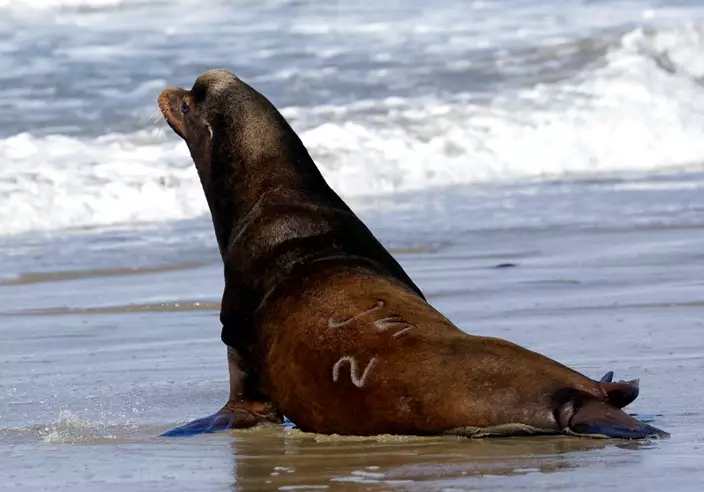
In this March 14, 2018, photo, a California sea lion, designated #U253, heads towards the Pacific Ocean after being released in Newport, Ore. After a decade killing the hungriest sea lions in one area, wildlife officials now want to do so at Willamette Falls, a waterfall in the Willamette River about 25 miles (40 kilometers) southeast of Portland. (AP Photo/Don Ryan)
In this March 14, 2018, photo, a California sea lion, designated #U253, heads towards the Pacific Ocean after being released in Newport, Ore. After a decade killing the hungriest sea lions in one area, wildlife officials now want to do so at Willamette Falls, a waterfall in the Willamette River about 25 miles (40 kilometers) southeast of Portland. (AP Photo/Don Ryan)

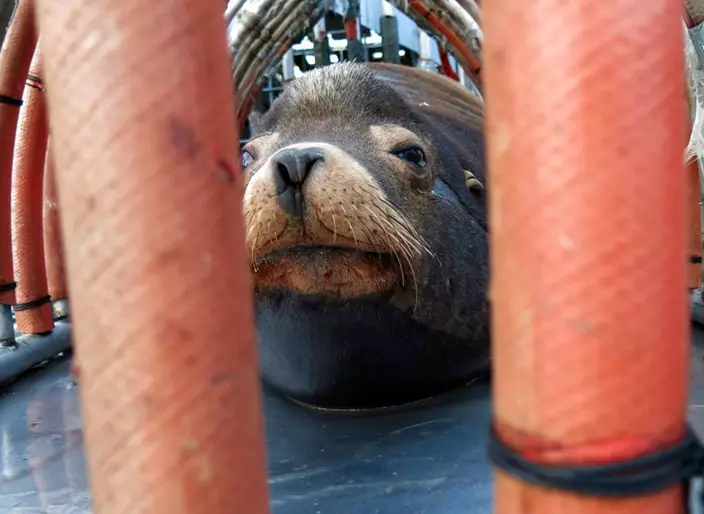
In this March 14, 2018, photo, a California sea lion peers out from a restraint nicknamed "The Squeeze" near Oregon City, Ore., as it is prepared for transport by truck to the Pacific Ocean about 130 miles away. The male sea lion was released south of Newport, Ore., in a program designed to reduce the threat to wild winter steelhead and spring chinook salmon in the Willamette River. (AP Photo/Gillian Flaccus)
In this March 14, 2018, photo, a California sea lion peers out from a restraint nicknamed "The Squeeze" near Oregon City, Ore., as it is prepared for transport by truck to the Pacific Ocean about 130 miles away. The male sea lion was released south of Newport, Ore., in a program designed to reduce the threat to wild winter steelhead and spring chinook salmon in the Willamette River. (AP Photo/Gillian Flaccus)

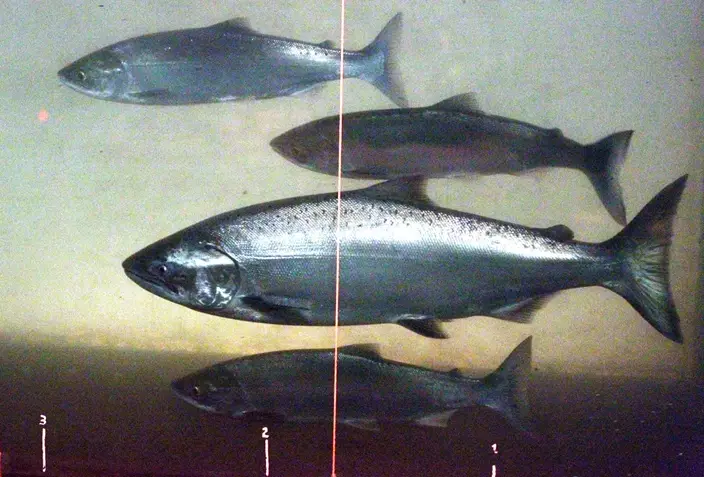
FILE - In this June 27, 2012, file photo, a Chinook salmon, second from the bottom, swims in the Columbia River with sockeye salmon at the Bonneville Dam fish-counting window near North Bonneville, Wash. (AP Photo/Rick Bowmer, File)

FILE - In this June 27, 2012, file photo, a Chinook salmon, second from the bottom, swims in the Columbia River with sockeye salmon at the Bonneville Dam fish-counting window near North Bonneville, Wash. (AP Photo/Rick Bowmer, File)

In this March 14, 2018, photo, a California sea lion waits to be released into the Pacific Ocean in Newport, Ore. Two species of fish listed as threatened under the Endangered Species Act are facing a growing challenge in Oregon from hungry sea lions. The federally protected California sea lions are traveling into the Columbia River and its tributaries to snack on fragile fish populations. (AP Photo/Don Ryan)

In this March 14, 2018, photo, a California sea lion waits to be released into the Pacific Ocean in Newport, Ore. Two species of fish listed as threatened under the Endangered Species Act are facing a growing challenge in Oregon from hungry sea lions. The federally protected California sea lions are traveling into the Columbia River and its tributaries to snack on fragile fish populations. (AP Photo/Don Ryan)

After two days spent trapping and relocating the animal designated #U253, he was headed back to where he started — an Oregon river 130 miles (209 kilometers) from the Pacific Ocean that has become an all-you-can-eat fish buffet for hungry sea lions.

"I think he's saying, 'Ah, crap! I've got to swim all the way back?'" said Bryan Wright, an Oregon Department of Fish and Wildlife scientist.

In this March 14, 2018, photo, a California sea lion, designated #U253, leaps out of a cage towards the beach and open Pacific Ocean as Oregon Department of Fish and Wildlife scientist Bryan Wright holds the gate open in Newport, Ore. (AP Photo/Don Ryan)

In this March 14, 2018, photo, a California sea lion, designated #U253, leaps out of a cage towards the beach and open Pacific Ocean as Oregon Department of Fish and Wildlife scientist Bryan Wright holds the gate open in Newport, Ore. (AP Photo/Don Ryan)

It's a frustrating dance between California sea lions and Oregon wildlife managers that's become all too familiar in recent months. The state is trying to evict dozens of the federally protected animals from an inland river where they feast on salmon and steelhead that are listed under the Endangered Species Act.

The bizarre survival war has intensified recently as the sea lion population rebounds and fish populations decline in the Pacific Northwest.

In this March 14, 2018, photo, Oregon Department of Fish and Wildlife scientist Bryan Wright releases a California sea lion in Newport, Ore. Biologists this spring started trapping the sea lions in the Willamette River and releasing them at the coast. (AP Photo/Don Ryan)

In this March 14, 2018, photo, Oregon Department of Fish and Wildlife scientist Bryan Wright releases a California sea lion in Newport, Ore. Biologists this spring started trapping the sea lions in the Willamette River and releasing them at the coast. (AP Photo/Don Ryan)

The sea lions breed each summer off Southern California and northern Mexico, then the males cruise up the Pacific Coast to forage. Hunted for their thick fur, the mammals' numbers dropped dramatically but have rebounded from 30,000 in the late 1960s to about 300,000 today due to the 1972 Marine Mammal Protection Act.

With their numbers growing, the dog-faced pinnipeds are venturing ever farther inland on the watery highways of the Columbia River and its tributaries in Oregon and Washington — and their appetite is having disastrous consequences, scientists say.

In this March 14, 2018, photo, a California sea lion waits to be released into the Pacific Ocean in Newport, Ore. Two species of fish listed as threatened under the Endangered Species Act are facing a growing challenge in Oregon from hungry sea lions. The federally protected California sea lions are traveling into the Columbia River and its tributaries to snack on fragile fish populations. (AP Photo/Don Ryan)

In this March 14, 2018, photo, a California sea lion waits to be released into the Pacific Ocean in Newport, Ore. Two species of fish listed as threatened under the Endangered Species Act are facing a growing challenge in Oregon from hungry sea lions. The federally protected California sea lions are traveling into the Columbia River and its tributaries to snack on fragile fish populations. (AP Photo/Don Ryan)

In Oregon, the sea lions are intercepting protected fish on their way to spawning grounds above Willamette Falls, a horseshoe-shaped waterfall about 25 miles (40 kilometers) south of Portland. Last winter, a record-low 512 wild winter steelhead completed the journey, said Shaun Clements, the state wildlife agency's senior policy adviser.

Less than 30 years ago, that number was more than 15,000, according to state numbers.

"We're estimating that there's a 90 percent probability that one of the populations in the Willamette River could go extinct if sea lion predation continues unchecked," he said. "Of all the adults that are returning to the falls here, a quarter of them are getting eaten."

In this March 14, 2018, photo, a California sea lion, designated #U253, heads towards the Pacific Ocean after being released in Newport, Ore. After a decade killing the hungriest sea lions in one area, wildlife officials now want to do so at Willamette Falls, a waterfall in the Willamette River about 25 miles (40 kilometers) southeast of Portland. (AP Photo/Don Ryan)

In this March 14, 2018, photo, a California sea lion, designated #U253, heads towards the Pacific Ocean after being released in Newport, Ore. After a decade killing the hungriest sea lions in one area, wildlife officials now want to do so at Willamette Falls, a waterfall in the Willamette River about 25 miles (40 kilometers) southeast of Portland. (AP Photo/Don Ryan)

Clements estimates the sea lions also are eating about 9 percent of the spring chinook salmon, a species prized by Native American tribes still allowed to fish for them.

Oregon wildlife managers say sea lions are beginning to move into even smaller tributaries where they had never been seen before and where some of the healthiest stocks of the threatened fish exist. The mammals also have been spotted in small rivers in Washington state that are home to fragile fish populations.

California sea lions are not listed under the Endangered Species Act, but killing them requires special authorization under the Marine Mammal Protection Act, which was changed to address the issue of fish predation.

Biologists this spring started trapping the sea lions in the Willamette River and releasing them at the coast. They also have applied with the federal government to kill the worst offenders to protect the fish runs.

Native tribes, which have fished for salmon and steelhead for generations, support limited sea lion kills because of the cultural value of the fish, said Doug Hatch, a senior fisheries scientist with the Columbia River Intertribal Fish Commission.

"You're pitting this protected population that has been fully recovered against these Endangered Species Act-listed fish," Hatch said. "We think it's an easy choice."

In this March 14, 2018, photo, a California sea lion peers out from a restraint nicknamed "The Squeeze" near Oregon City, Ore., as it is prepared for transport by truck to the Pacific Ocean about 130 miles away. The male sea lion was released south of Newport, Ore., in a program designed to reduce the threat to wild winter steelhead and spring chinook salmon in the Willamette River. (AP Photo/Gillian Flaccus)

In this March 14, 2018, photo, a California sea lion peers out from a restraint nicknamed "The Squeeze" near Oregon City, Ore., as it is prepared for transport by truck to the Pacific Ocean about 130 miles away. The male sea lion was released south of Newport, Ore., in a program designed to reduce the threat to wild winter steelhead and spring chinook salmon in the Willamette River. (AP Photo/Gillian Flaccus)

If U.S. officials grant the request, the trap-and-kill program would expand a similar and highly controversial effort on another major Pacific Northwest river. Oregon and Washington wildlife managers are allowed to kill up to 93 sea lions trapped each year at Bonneville Dam on the Columbia River under certain conditions.

In the past decade, the agency has removed 190 sea lions there. Of those, 168 were euthanized, seven died in accidents during trapping and 15 were placed in captivity, according to state data.

The Humane Society of the United States sued over the trap-and-kill program and may sue again if it's allowed on the Willamette River, said Sharon Young, the organization's field director for marine wildlife.

The animals are not the only problem facing wild winter steelhead and chinook salmon, she said.

FILE - In this June 27, 2012, file photo, a Chinook salmon, second from the bottom, swims in the Columbia River with sockeye salmon at the Bonneville Dam fish-counting window near North Bonneville, Wash. (AP Photo/Rick Bowmer, File)

FILE - In this June 27, 2012, file photo, a Chinook salmon, second from the bottom, swims in the Columbia River with sockeye salmon at the Bonneville Dam fish-counting window near North Bonneville, Wash. (AP Photo/Rick Bowmer, File)

Hydroelectric dams that block rivers, agricultural runoff, damage to spawning grounds and competition with hatchery-bred fish have all hurt the native species, Young said. And new sea lions will take the place of those that are killed, she added.

"It's easier to say, 'If I kill that sea lion, at least I keep him from eating that fish.' But if you don't deal with the cause of the problem, you're not going to help the fish," she said. "It's like a treadmill of death. You kill one, and another one will come."

While Oregon awaits word on the sea lions' fate, wildlife managers are trapping them and hauling them to the ocean, which can sometimes seem futile.

Five days after his 2 ½-hour drive to the Oregon coast, #U253 was back at Willamette Falls, hungry for more fish.


PARIS (AP) — Ukrainian President Volodymyr Zelenskyy said Friday that the U.S. 30-day waiver on Russian oil sanctions amid the Iran war is “not the right decision” and won’t help bring a stop to Russia’s more than 4-year-old invasion of Ukraine.

“This easing alone by the United States could provide Russia with about $10 billion for the war,” Zelenskyy said. “This certainly does not help peace.”

“I believe that lifting sanctions will, in any case, lead to a strengthening of Russia’s position. It spends the money from energy sales on weapons, and all of this is then used against us,” Zelenskyy said at a news conference with French President Emmanuel Macron during a visit to Paris.

“Therefore, ultimately lifting sanctions only so that more drones will later be flying at you is, in my opinion, not the right decision,” he said.

The U.S. Treasury Department announced Thursday a 30-day waiver on Russian oil sanctions. The step aims to free up Russian cargoes stranded at sea and ease supply shortages caused by the Iran war.

Analysts say that spiraling oil prices due to Persian Gulf production blockages are benefiting the Russian economy. Moscow relies heavily on oil revenue to finance its invasion, and sanctions were a growing handicap.

U.S.-mediated talks between Moscow and Kyiv that seek to stop Europe’s biggest conflict since World War II are on hold due to the Iran war, though they could resume next week, according to Zelenskyy.

Macron noted that broad sanctions on Russia still stand despite the temporary U.S. waiver.

U.S. waivers announced in recent days are “limited” and “taken on an exceptional basis,” Macron said. “It does not broadly or permanently roll back the sanctions that they themselves decided to apply,” he added.

German Chancellor Friedrich Merz adopted a more critical stance. He said Friday that a meeting earlier this week of heads of state and government from the Group of Seven industrialized democracies discussed with U.S. President Donald Trump the issue of Russian oil and liquefied natural gas supplies.

“Six members of the G7 expressed a very clear view that this (waiving of Russia sanctions) is not the right signal to send,” Merz said during a visit to Norway. “We learned this morning that the U.S. government has apparently decided otherwise. Once again, we believe this is the wrong decision.”

Merz added: “There is currently a price problem, but not a supply problem. And in that regard, I would like to know what additional motives led the U.S. government to make this decision.”

Ukraine has become one of the world’s leading producers of drone interceptors, and Kyiv is offering its expertise to the United States and its Gulf partners for the war in the Middle East, hoping to receive in return the high-end weaponry it can’t manufacture at home.

But Trump spurned Ukraine’s offer of assistance to the U.S. in comments aired Friday. “No, we don’t need their help on drone defense,” Trump told the “Brian Kilmeade Show” on Fox News Radio.

Zelenskyy had said on Thursday that Ukraine is awaiting White House approval for an agreement on producing battle-tested drones.

In Paris, he said Kyiv had received a request for drone combat assistance from Washington. The cause of the discrepancy between the leaders' comments was not immediately clear.

Zelenskyy said that Ukraine has received requests from six countries for help with drones. It has already sent expert teams to three countries, he said, without naming them.

Zelenskyy noted that providing interceptors was not enough to help fight drone attacks. The Ukrainian military has expertise in deploying the systems, he said.

“There must be proper, systematic work with radars and with the entire air defense system,” Zelenskyy said. “Ukraine is ready to share this experience for the sake of the security of those partners who are helping us.”

Novikov contributed from Kyiv, Ukraine. Associated Press writer Kostya Manenkov in Tallinn, Estonia contributed to this report.

Follow AP’s coverage of the war in Ukraine at https://apnews.com/hub/russia-ukraine

France's President Emmanuel Macron, left, welcomes Ukrainian President Volodymyr Zelenskyy prior to a meeting at the Elysee Palace, Friday, March 13, 2026, in Paris, France. (AP Photo/Michel Euler)

France's President Emmanuel Macron, left, welcomes Ukrainian President Volodymyr Zelenskyy prior to a meeting at the Elysee Palace, Friday, March 13, 2026, in Paris, France. (AP Photo/Michel Euler)

France's President Emmanuel Macron, left, welcomes Ukrainian President Volodymyr Zelenskyy prior to a meeting at the Elysee Palace, Friday, March 13, 2026, in Paris, France. (AP Photo/Michel Euler)

France's President Emmanuel Macron, left, welcomes Ukrainian President Volodymyr Zelenskyy prior to a meeting at the Elysee Palace, Friday, March 13, 2026, in Paris, France. (AP Photo/Michel Euler)

France's President Emmanuel Macron, right, welcomes Ukrainian President Volodymyr Zelenskyy prior to a meeting at the Elysee Palace, Friday, March 13, 2026, in Paris, France. (AP Photo/Michel Euler)

France's President Emmanuel Macron, right, welcomes Ukrainian President Volodymyr Zelenskyy prior to a meeting at the Elysee Palace, Friday, March 13, 2026, in Paris, France. (AP Photo/Michel Euler)

Recommended Articles