As trade disputes simmer, Chinese telecommunications giant Huawei, the No. 3 smartphone brand, is shifting its growth efforts toward Europe and Asia in the face of mounting obstacles in the U.S. market.
In this May 26, 2016, photo, a man walks past a Huawei logo during a launch event for the Huawei Matebook in Beijing. (AP Photo/Mark Schiefelbein)
Shenzhen-based Huawei, the world's largest maker of telecoms equipment, has long coveted access to the U.S. but recently laid off key American employees at its Washington D.C. office.
Click to Gallery
In this May 26, 2016, photo, a man walks past a Huawei logo during a launch event for the Huawei Matebook in Beijing. (AP Photo/Mark Schiefelbein)
In this March 13, 2018, photo, Jim Xu, vice president of Sales and Marketing at Huawei, pauses while speaking to reporters at Huawei's headquarters in Shenzhen in southern China's Guangdong Province. (AP Photo/Dake Kang)
In this May 26, 2016, photo, attendees walk past an electronic display during a launch event for the Huawei Matebook in Beijing. (AP Photo/Mark Schiefelbein)
In this May 26, 2016, photo, attendees stand near a pillar with the Huawei logo during a launch event for the Huawei Matebook in Beijing. (AP Photo/Mark Schiefelbein)
In this March 13, 2018, photo, the logo of Huawei is displayed at its headquarters in Shenzhen in southern China's Guangdong Province. (AP Photo/Dake Kang)
In this March 13, 2018, photo, a Huawei employee looks up as he walks toward the company's headquarters in Shenzhen in southern China's Guangdong Province. (AP Photo/Dake Kang)
The U.S. has regularly stymied Huawei's efforts to enter the America, citing national security concerns. Huawei has failed to find a U.S. carrier to partner with for its smartphones, and the Federal Communications Commission on Tuesday approved a draft order that could damage Huawei's existing business in network gear. The order cited Huawei and its Chinese rival ZTE by name.
That came after Huawei canceled a planned January announcement that a major U.S. carrier would sell its smartphones for the first time. The company gave no details but news reports said that partner was AT&T Inc. and scrapped the deal under government pressure.

In this March 13, 2018, photo, Jim Xu, vice president of Sales and Marketing at Huawei, pauses while speaking to reporters at Huawei's headquarters in Shenzhen in southern China's Guangdong Province. (AP Photo/Dake Kang)
Huawei's struggles in the United States are in contrast to its booming business in developing countries and growing presence in Europe, where it has been working on next-generation, or "5G," wireless standards. The company's profits rose 28.1 percent in 2017, boosted by strong enterprise and consumer sales and booming business overseas.
The recent setbacks have left Huawei's future in the U.S. uncertain. Huawei recently let go of several American employees in their Washington D.C. office, including William Plummer, who spearheaded efforts to convince the U.S. to allow Huawei in for nearly a decade. Though Huawei declined to comment on the layoffs, the news was first reported by the New York Times and independently confirmed by the Associated Press.
"There is no change to our business strategy in the US," said Huawei spokesman Joe Kelly. "Any changes to staffing size or structure are simply a reflection of standard business optimization."
In this May 26, 2016, photo, attendees walk past an electronic display during a launch event for the Huawei Matebook in Beijing. (AP Photo/Mark Schiefelbein)
Kelly said fears that Huawei's network equipment could be used to collect sensitive information reflected "baseless suspicion." Experts say the concerns could be valid, but suspect they're mainly a pretext for limiting competition and allowing U.S. suppliers to charge higher prices.
"What we've seen so far suggests that there's not a lot of concrete evidence that Huawei poses a national security threat," said Josephine Wolff, Professor of Cybersecurity Policy at the Rochester Institute of Technology. "It leads a lot of people to believe that this is more about trying to protect the U.S. tech sector."
American companies have long chafed under Chinese regulations that require them to operate through local partners and share technology with potential competitors in exchange for market access.
Foreign companies are increasingly alarmed by initiatives such as Beijing's long-range industry development plan, dubbed "Made in China 2025." It calls for creating global leaders in electric cars, robots, and other fields.
In this May 26, 2016, photo, attendees stand near a pillar with the Huawei logo during a launch event for the Huawei Matebook in Beijing. (AP Photo/Mark Schiefelbein)
"That sense that China is cultivating national champions, and cultivating companies within its own borders at the expense of other companies, has a lot of U.S. companies concerned about how much their intellectual property rights will be safeguarded there," Wolff said.
Huawei and ZTE's burgeoning 5G research is seen as a particular threat, as its expanded transmitting capabilities are seen as crucial for a host of emerging technologies based on artificial intelligence - including self-driving vehicles, robots and other machines that transmit vast amounts of data in real time.
ZTE faces devastating threats to its business after the U.S. Commerce Department blocked the company from importing American components for seven years, accusing the smartphone maker of misleading U.S. regulators after it settled charges of violating sanctions against North Korea and Iran.
But unlike ZTE, efforts to impede Huawei in the U.S. likely won't stop its rapid expansion elsewhere.
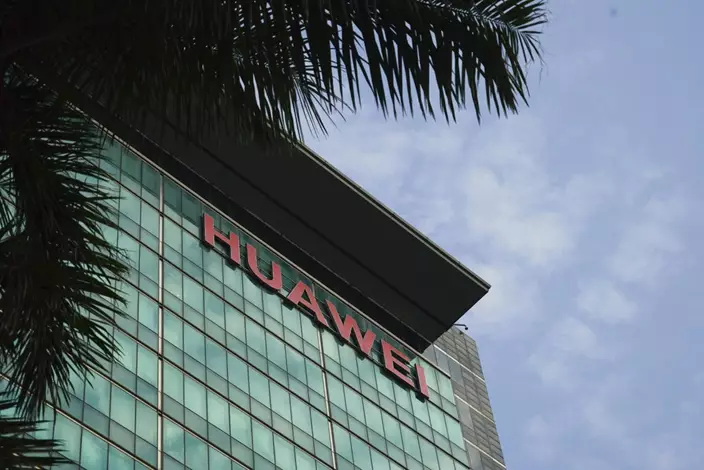
In this March 13, 2018, photo, the logo of Huawei is displayed at its headquarters in Shenzhen in southern China's Guangdong Province. (AP Photo/Dake Kang)
Last month, Huawei's president of consumer handsets Kevin Ho said the company is pivoting to Europe and developing Asian markets. He called them priorities "No. 1" and "No. 2."
Huawei chose to unveil its latest flagship phone last month at the Grand Palais in Paris, while in Finland, the company employs more than 300 engineers developing cameras, audio algorithms, and 5G technology. Many used to work at Finnish rival Nokia.
Apart from expanding its clout on UN bodies that coordinate cellular technology standards, early on Huawei joined forces with European companies to develop 5G standards. In February, it completed the world's first 5G test call in partnership with London-based Vodafone.
Still, while Chinese trade relations with Europe remain calm, Washington has been warning officials in Canada and Australia about Huawei, raising questions about the company's long-term global prospects.
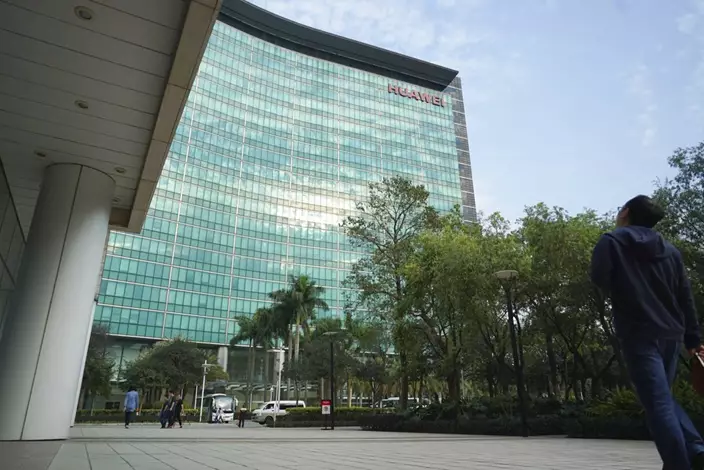
In this March 13, 2018, photo, a Huawei employee looks up as he walks toward the company's headquarters in Shenzhen in southern China's Guangdong Province. (AP Photo/Dake Kang)
"Huawei is perceived differently in Europe but that's definitely a risk for the company," said Thomas Husson, principal analyst at technology research firm Forrester. "Let's not forget Europeans can still try to push in favor of European-based solutions from Nokia or Ericsson."
President Donald Trump on Thursday threatened to invoke the Insurrection Act to justify deploying troops as protests against Immigration and Customs Enforcement persist in Minneapolis.
Trump made the threat to “quickly put an end to the travesty” after a federal officer shot a man in the leg while being attacked with a shovel and broom handle on Wednesday. The incident further heightened the sense of fear and anger radiating across the city a week after an immigration agent fatally shot a woman in the head.
Trump has repeatedly threatened to invoke the rarely used federal law to deploy the U.S. military or federalize the National Guard for domestic law enforcement, over the objections of state governors.
The Latest:
When Trump entered office, immigration was among his strongest issues. An AP-NORC Poll published Thursday suggests that it has since faded, a troubling sign for Trump who campaigned on crackdowns to illegal immigration.
Just 38% of U.S. adults approve of how Trump is handling immigration, down from 49% at the start of his second term. The most recent poll was conducted January 8-11, shortly after the death of Renee Good, who was shot and killed by a U.S. Immigration and Customs Enforcement officer in Minneapolis.
There are still signs that Americans give Trump some leeway on immigration issues. Nearly half of Americans — 45% — say Trump has “helped” immigration and border security in his second term.
Homeland Security Secretary Kristi Noem wrote Thursday on social media, “Motor Tanker Veronica had previously passed through Venezuelan waters, and was operating in defiance of President Trump’s established quarantine of sanctioned vessels in the Caribbean.”
The Veronica is the sixth tanker seized by U.S. forces as the Trump administration moves to control the production, refining and global distribution of Venezuela’s oil products, and the third since the U.S. ouster of Venezuela President Nicolás Maduro in a surprise nighttime raid almost two weeks ago.
Noem wrote that the raid was carried out with “close coordination with our colleagues” in the military as well as the State and Justice departments.
“Our heroic Coast Guard men and women once again ensured a flawlessly executed operation, in accordance with international law,” Noem added.
The Associated Press has reached out to the offices of Gov. Tim Walz and Minneapolis Mayor Jacob Frey for comment on Trump’s latest threat to invoke the Insurrection Act.
During a televised speech before the latest shooting, Walz described Minnesota as being in chaos, saying what’s happening in the state “defies belief.”
“Let’s be very, very clear, this long ago stopped being a matter of immigration enforcement,” he said. “Instead, it’s a campaign of organized brutality against the people of Minnesota by our own federal government.”
Threatening to invoke the Insurrection Act and send troops to Minneapolis, Trump noted that presidents have used the 19th century law many times. This is true — but they haven’t necessarily done it in the circumstances found in Minneapolis, where the tensions have arisen from Trump already sending federal authorities into the city.
In modern times, the act has been used to mobilize troops to help local authorities or to ensure a federal court order is carried out.
The law was last used in 1992 by President George H.W. Bush to help quell riots in Los Angeles after local officials asked for the assistance. Presidents Dwight Eisenhower, John F. Kennedy and Lyndon Johnson all invoked it during the Civil Rights Movement to help enforce desegregation orders in Southern states where state and local governments were resisting.
A 1964 Justice Department memo said the act can apply in three circumstances: when a state requests help, when deployment is needed to enforce a federal court order, or when “state and local law enforcement have completely broken down.”
In a statement describing the events that led to Wednesday’s shooting, Homeland Security said federal law enforcement officers stopped a person from Venezuela who was in the U.S. illegally. The person drove away and crashed into a parked car before taking off on foot, DHS said.
After officers reached the person, two other people arrived from a nearby apartment and all three started attacking the officer, according to DHS.
“Fearing for his life and safety as he was being ambushed by three individuals, the officer fired a defensive shot to defend his life,” DHS said.
The two people who came out of the apartment are in custody, it said.
Police Chief Brian O’Hara’s account of what happened largely echoed that of Homeland Security. O’Hara said the man shot was in the hospital with a non-life-threatening injury.
Jacob Frey spoke Wednesday night after federal officers wearing gas masks and helmets fired tear gas into a small crowd while protesters threw rocks and shot fireworks.
“This is an impossible situation that our city is presently being put in and at the same time we are trying to find a way forward to keep people safe, to protect our neighbors, to maintain order,” he said.
Frey described a federal force that is five times as big as the city’s 600-officer police force and has “invaded” the city, scaring and angering residents, some of whom want the officers to “fight ICE agents.”
The Department of Homeland Security says it has made more than 2,000 arrests in the state since early December and is vowing to not back down.
Trump made the threat Thursday after a federal officer trying to make an arrest shot a man in the leg Wednesday after being attacked with a shovel and broom handle. The incident further heightened the sense of fear and anger radiating across the city a week after an immigration agent fatally shot a woman in the head.
Trump has repeatedly threatened to invoke the rarely used federal law to deploy the U.S. military or federalize the National Guard for domestic law enforcement, over the objections of state governors.
“If the corrupt politicians of Minnesota don’t obey the law and stop the professional agitators and insurrectionists from attacking the Patriots of I.C.E., who are only trying to do their job, I will institute the INSURRECTION ACT, which many Presidents have done before me, and quickly put an end to the travesty that is taking place in that once great State,” Trump said in social media post.
▶ Read more about Trump’s latest threats to Minnesota
An AP-NORC poll from January found that about 4 in 10 U.S. adults approve of Trump’s performance as president. That’s virtually unchanged from March 2025, shortly after he took office for the second time.
The new poll also shows subtle signs of vulnerability for Trump, mainly regarding the economy and immigration.
Two senators from opposite parties are joining forces in a renewed push to ban members of Congress from trading stocks, an effort that has broad public support but has repeatedly stalled on Capitol Hill.
Democratic Sen. Kirsten Gillibrand of New York and Republican Sen. Ashley Moody of Florida on Thursday plan to introduce legislation, first shared with The Associated Press, that would bar lawmakers and their immediate family members from trading or owning individual stocks.
It’s the latest in a flurry of proposals in the House and the Senate to limit stock trading in Congress, lending bipartisan momentum to the issue. But the sheer number of proposals has clouded the path forward. Republican leaders in the House are pushing their own bill on stock ownership, an alternative that critics have dismissed as watered down.
▶ Read more about the cross-party effort
Senate Republicans voted to dismiss a war powers resolution Wednesday that would have limited Trump’s ability to conduct further attacks on Venezuela after two GOP senators reversed course on supporting the legislation.
Trump put intense pressure on five Republican senators who joined with Democrats to advance the resolution last week and ultimately prevailed in heading off passage of the legislation. Two of the Republicans — Sens. Josh Hawley of Missouri and Todd Young of Indiana — flipped under the pressure.
Vice President JD Vance had to break the 50-50 deadlock in the Senate on a Republican motion to dismiss the bill.
The outcome of the high-profile vote demonstrated how Trump still has command over much of the Republican conference, yet the razor-thin vote tally also showed the growing concern on Capitol Hill over the president’s aggressive foreign policy ambitions.
▶ Read more about the war powers vote
While President Donald Trump says he’ll take action on Greenland whether its people “ like it or not, ” his newly handpicked U.S. special envoy is setting off on his own approach.
Gov. Jeff Landry, appointed as envoy in December, said he is not interested in meeting diplomats. The Republican has not visited the Arctic island and did not attend Wednesday’s meeting at the White House that included Danish officials, Vice President JD Vance and Secretary of State Marco Rubio. However, the governor was scheduled to travel to Washington on Thursday and Friday for meetings that include the topic of Greenland, Landry’s spokesperson Kate Kelly said.
▶ Read more about Landry 's new role
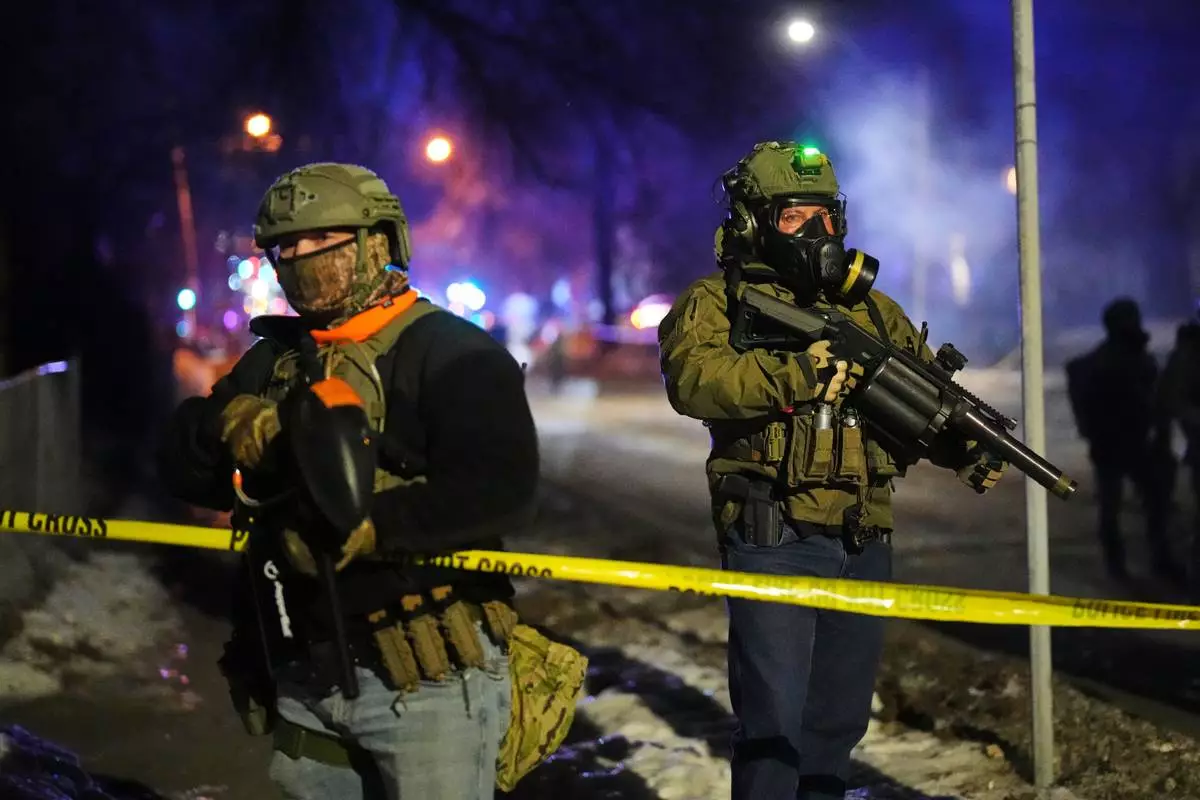
Law enforcement officers at the scene of a reported shooting Wednesday, Jan. 14, 2026, in Minneapolis. (AP Photo/Adam Gray)
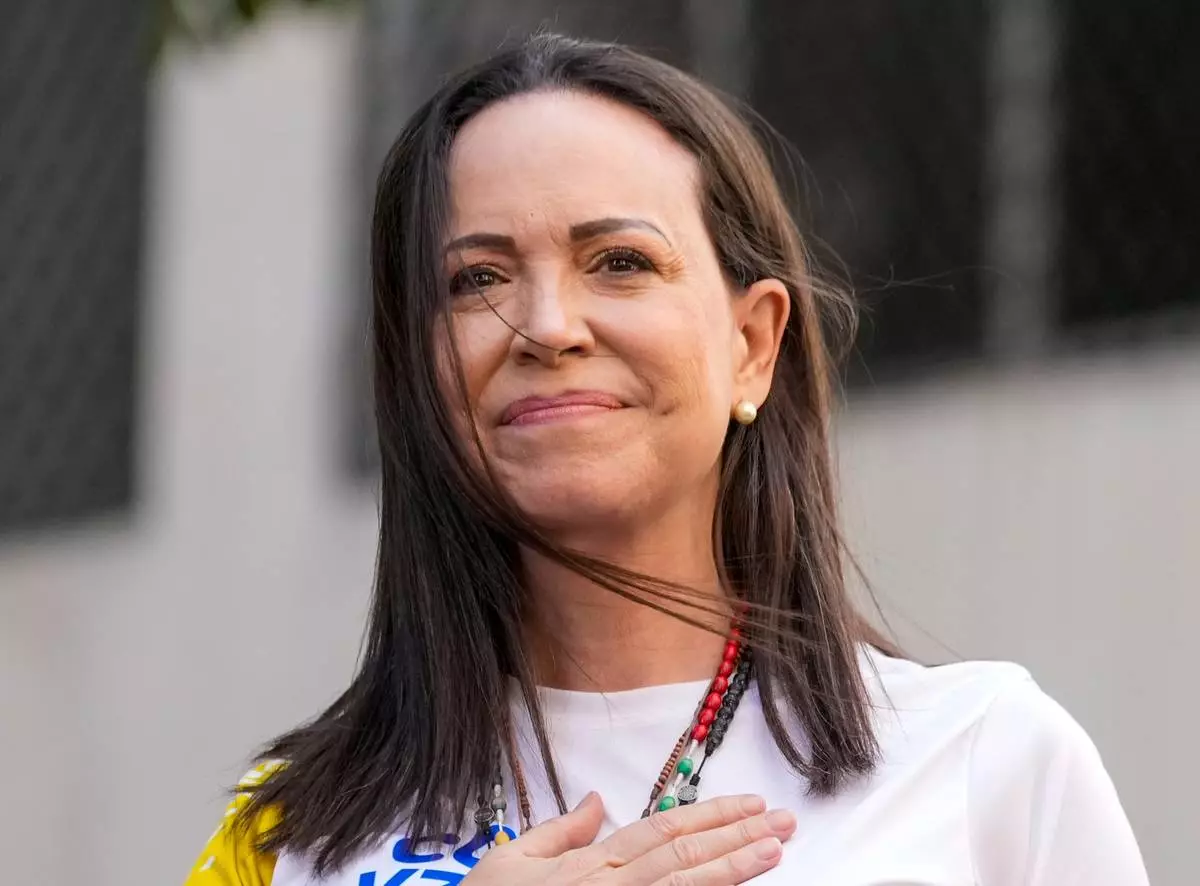
FILE - Opposition leader Maria Corina Machado gestures to supporters during a protest against President Nicolas Maduro the day before his inauguration for a third term, in Caracas, Venezuela, Thursday, Jan. 9, 2025. (AP Photo/Ariana Cubillos, file)
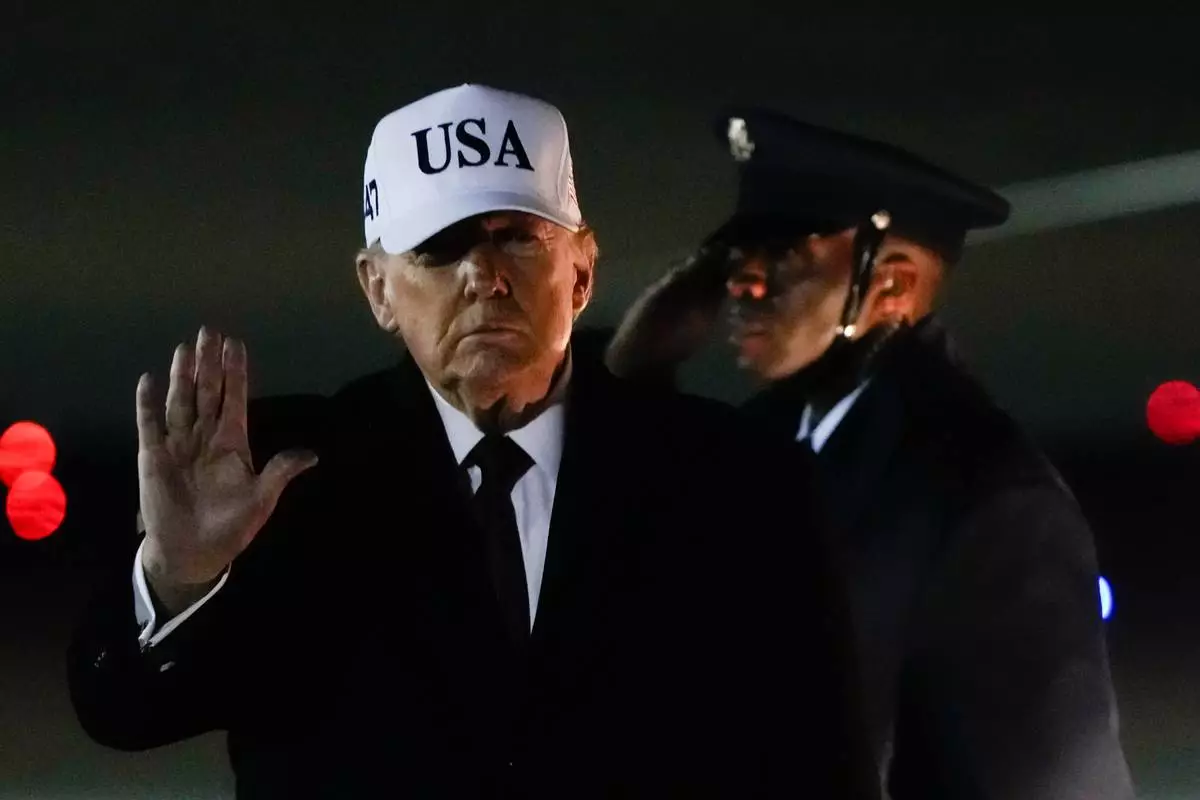
FILE - President Donald Trump waves after arriving on Air Force One from Florida, Jan. 11, 2026, at Joint Base Andrews, Md. (AP Photo/Julia Demaree Nikhinson, File)