Skip to Content Facebook Feature Image

RFK funeral train photo exhibit: Kennedy's final journey

ENT

RFK funeral train photo exhibit: Kennedy's final journey
ENT

ENT

RFK funeral train photo exhibit: Kennedy's final journey

2018-04-25 15:32 Last Updated At:16:31

The assassination of Robert F. Kennedy 50 years ago this June fractured the nation just two months after the assassination of Martin Luther King, Jr. and five years after his brother John F. Kennedy was killed.
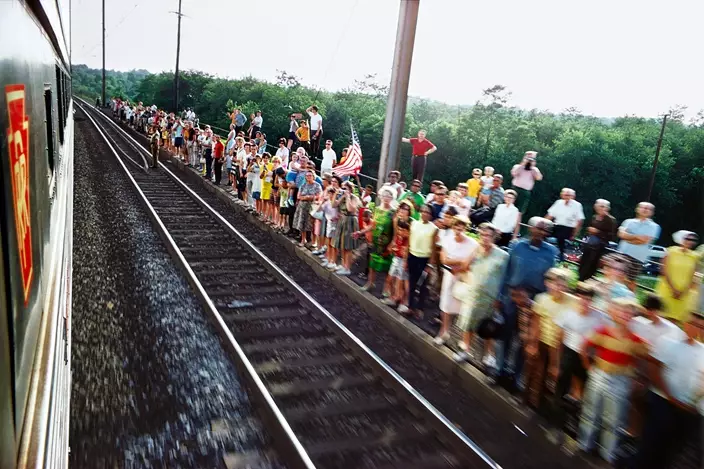
In this 1968 photo provided by the San Francisco Museum of Modern Art is the photograph Paul Fusco, Untitled, from the series RFK Funeral Train, that is part of the exhibit, "The Train: RFK's Last Journey," at the San Francisco Museum of Modern Art. (Paul Fusco/Magnum Photos, courtesy Danziger Gallery/San Francisco Museum of Modern Art via AP)
In this 1968 photo provided by the San Francisco Museum of Modern Art is the photograph Paul Fusco, Untitled, from the series RFK Funeral Train, that is part of the exhibit, "The Train: RFK's Last Journey," at the San Francisco Museum of Modern Art. (Paul Fusco/Magnum Photos, courtesy Danziger Gallery/San Francisco Museum of Modern Art via AP)

But RFK's funeral, particularly the train that took his body from New York City, following a funeral Mass at St. Patrick's Cathedral, to Washington, D.C., brought the country together: An estimated 2 million ordinary Americans gathered beside railroad tracks to honor him as the train passed by.

More Images
In this 1968 photo provided by the San Francisco Museum of Modern Art is the photograph Paul Fusco, Untitled, from the series RFK Funeral Train, that is part of the exhibit, "The Train: RFK's Last Journey," at the San Francisco Museum of Modern Art. (Paul Fusco/Magnum Photos, courtesy Danziger Gallery/San Francisco Museum of Modern Art via AP)

In this 1968 photo provided by the San Francisco Museum of Modern Art is the photograph Paul Fusco, Untitled, from the series RFK Funeral Train, that is part of the exhibit, "The Train: RFK's Last Journey," at the San Francisco Museum of Modern Art. (Paul Fusco/Magnum Photos, courtesy Danziger Gallery/San Francisco Museum of Modern Art via AP)

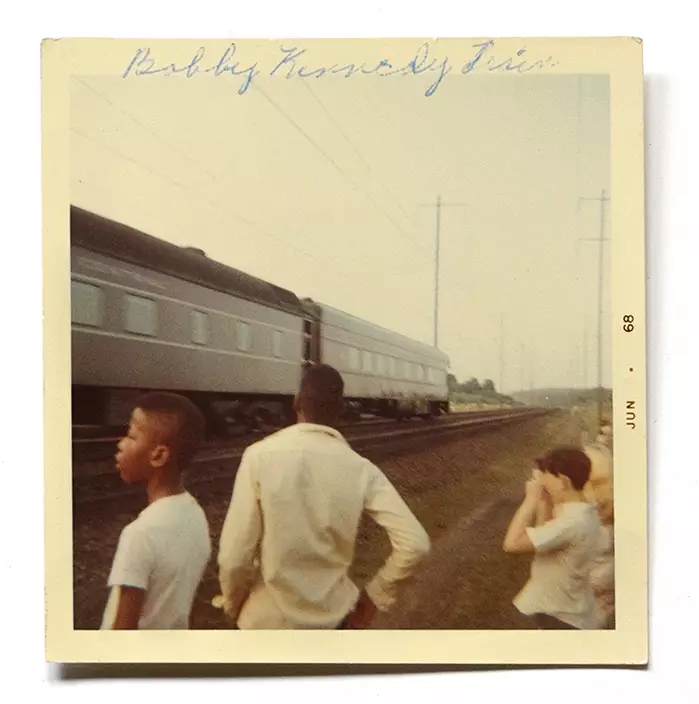
This 1968 photo provided by the San Francisco Museum of Modern Art shows Annie Ingram's, "Elkton, Maryland," from Rein Jelle Terpstra's "The People's View," a conceptual project that is part of the exhibit, "The Train: RFK's Last Journey," at the San Francisco Museum of Modern Art. (Annie Ingram/San Francisco Museum of Modern Art via AP)
This 1968 photo provided by the San Francisco Museum of Modern Art shows Annie Ingram's, "Elkton, Maryland," from Rein Jelle Terpstra's "The People's View," a conceptual project that is part of the exhibit, "The Train: RFK's Last Journey," at the San Francisco Museum of Modern Art. (Annie Ingram/San Francisco Museum of Modern Art via AP)

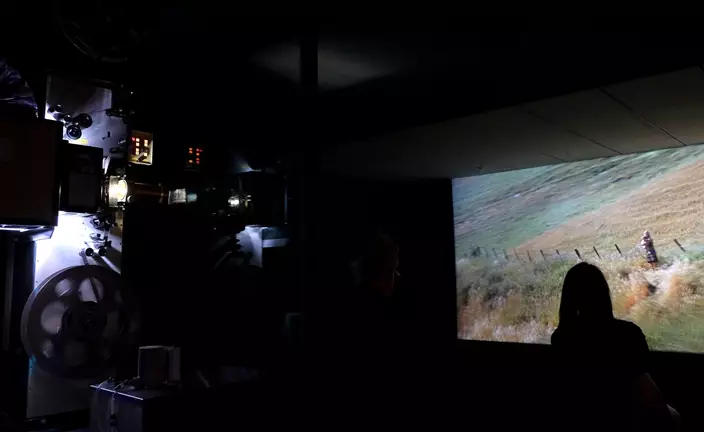
In this March 15, 2018 photo, a woman watches a 70mm film by French contemporary artist Philippe Parreno that is part of the exhibit, "The Train: RFK's Last Journey," at the San Francisco Museum of Modern Art in San Francisco. (AP Photo/Eric Risberg)
In this March 15, 2018 photo, a woman watches a 70mm film by French contemporary artist Philippe Parreno that is part of the exhibit, "The Train: RFK's Last Journey," at the San Francisco Museum of Modern Art in San Francisco. (AP Photo/Eric Risberg)
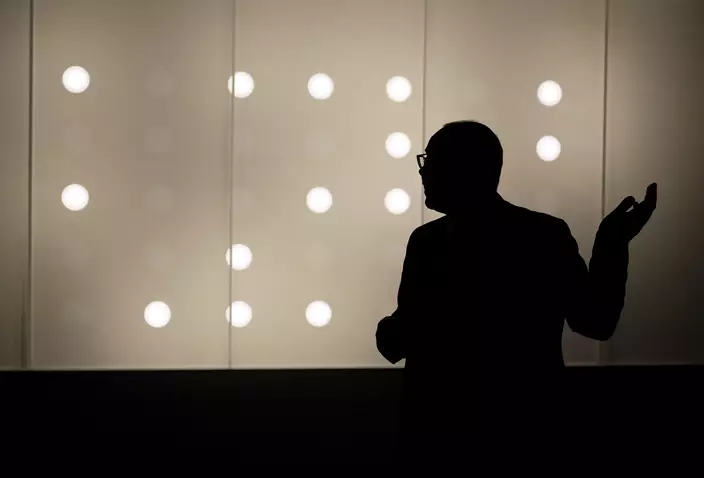
In this March 15, 2018 photo, Clement Cheroux, senior curator for photography, gestures while speaking about a 70mm film by French contemporary artist Philippe Parreno that is part of the exhibit, "The Train: RFK's Last Journey," at the San Francisco Museum of Modern Art in San Francisco. (AP Photo/Eric Risberg)
In this March 15, 2018 photo, Clement Cheroux, senior curator for photography, gestures while speaking about a 70mm film by French contemporary artist Philippe Parreno that is part of the exhibit, "The Train: RFK's Last Journey," at the San Francisco Museum of Modern Art in San Francisco. (AP Photo/Eric Risberg)
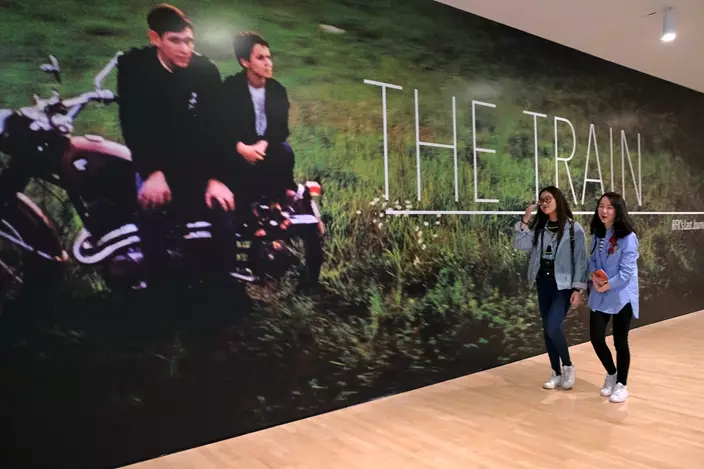
In thisMarch 15, 2018 photo, two women walk past a mural of a Paul Fusco photograph that is part of the exhibit, "The Train: RFK's Last Journey," at the San Francisco Museum of Modern Art in San Francisco. (AP Photo/Eric Risberg)

In thisMarch 15, 2018 photo, two women walk past a mural of a Paul Fusco photograph that is part of the exhibit, "The Train: RFK's Last Journey," at the San Francisco Museum of Modern Art in San Francisco. (AP Photo/Eric Risberg)

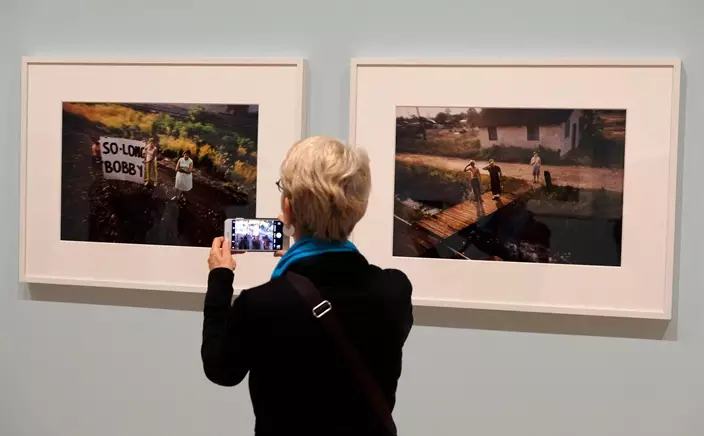
In this March 15, 2018 photo, a woman views a pair of Paul Fusco photographs that are part of the exhibit, "The Train: RFK's Last Journey," at the San Francisco Museum of Modern Art in San Francisco. (AP Photo/Eric Risberg)

In this March 15, 2018 photo, a woman views a pair of Paul Fusco photographs that are part of the exhibit, "The Train: RFK's Last Journey," at the San Francisco Museum of Modern Art in San Francisco. (AP Photo/Eric Risberg)

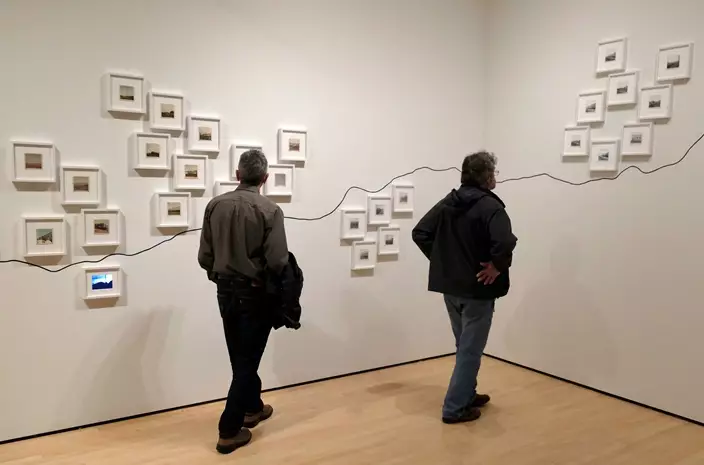
In this March 15, 2018 photo, two men look at the conceptual project "The People's View" by Dutch artist Rein Jelle Terpstra that is part of the exhibit, "The Train: RFK's Last Journey," at the San Francisco Museum of Modern Art in San Francisco. The photographs taken by bystanders, are arranged on the wall by where they were taken on the route from New York City to Washington. (AP Photo/Eric Risberg)
In this March 15, 2018 photo, two men look at the conceptual project "The People's View" by Dutch artist Rein Jelle Terpstra that is part of the exhibit, "The Train: RFK's Last Journey," at the San Francisco Museum of Modern Art in San Francisco. The photographs taken by bystanders, are arranged on the wall by where they were taken on the route from New York City to Washington. (AP Photo/Eric Risberg)

In this 1968 photo provided by the San Francisco Museum of Modern Art is the photograph by Paul Fusco, Untitled, from the series RFK Funeral Train, that is part of the exhibit, "The Train: RFK's Last Journey," at the San Francisco Museum of Modern Art. (Paul Fusco/Magnum Photos, courtesy Danziger Gallery/San Francisco Museum of Modern Art via AP)
In this 1968 photo provided by the San Francisco Museum of Modern Art is the photograph by Paul Fusco, Untitled, from the series RFK Funeral Train, that is part of the exhibit, "The Train: RFK's Last Journey," at the San Francisco Museum of Modern Art. (Paul Fusco/Magnum Photos, courtesy Danziger Gallery/San Francisco Museum of Modern Art via AP)
This 1968 photo provided by the San Francisco Museum of Modern Art shows Annie Ingram's, "Elkton, Maryland," from Rein Jelle Terpstra's "The People's View," a conceptual project that is part of the exhibit, "The Train: RFK's Last Journey," at the San Francisco Museum of Modern Art. (Annie Ingram/San Francisco Museum of Modern Art via AP)

This 1968 photo provided by the San Francisco Museum of Modern Art shows Annie Ingram's, "Elkton, Maryland," from Rein Jelle Terpstra's "The People's View," a conceptual project that is part of the exhibit, "The Train: RFK's Last Journey," at the San Francisco Museum of Modern Art. (Annie Ingram/San Francisco Museum of Modern Art via AP)

An exhibit at the San Francisco Museum of Modern Art, "The Train: RFK's Last Journey," displays 21 of the 1,000 unique color slides made by photographer Paul Fusco on June 8, 1968. The images captured America's grief in a way that was unusual in photography, by seeing the events through the eyes of ordinary people.

The photos show Americans of all colors and classes. Catholic schoolgirls, field hands, firefighters, blue-collar workers and housewives in their bonnets create a tableau of those who came to say farewell to the man many knew simply as "Bobby."

In this March 15, 2018 photo, a woman watches a 70mm film by French contemporary artist Philippe Parreno that is part of the exhibit, "The Train: RFK's Last Journey," at the San Francisco Museum of Modern Art in San Francisco. (AP Photo/Eric Risberg)

In this March 15, 2018 photo, a woman watches a 70mm film by French contemporary artist Philippe Parreno that is part of the exhibit, "The Train: RFK's Last Journey," at the San Francisco Museum of Modern Art in San Francisco. (AP Photo/Eric Risberg)

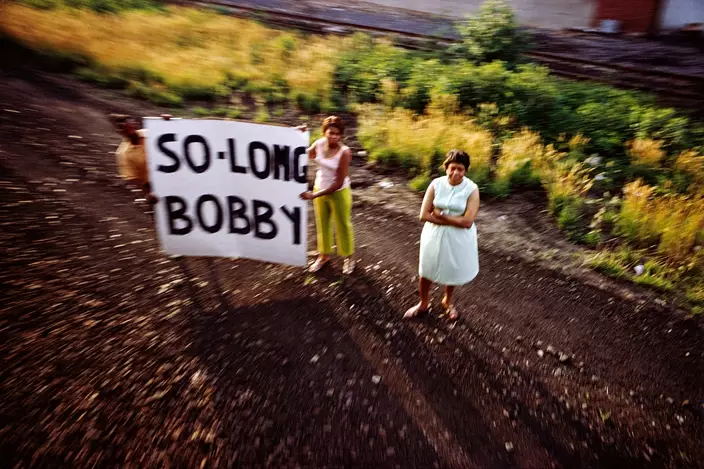
Some climbed fence posts to get a better view. Some saluted. Others stood rock-ribbed straight. Some waved American flags or handmade posters: "So Long Bobby." Others turned from work to see what was happening as the maroon train car holding his coffin rolled by en route to Washington, and from there to his final resting place at Arlington National Cemetery in Virginia.

In this March 15, 2018 photo, Clement Cheroux, senior curator for photography, gestures while speaking about a 70mm film by French contemporary artist Philippe Parreno that is part of the exhibit, "The Train: RFK's Last Journey," at the San Francisco Museum of Modern Art in San Francisco. (AP Photo/Eric Risberg)

In this March 15, 2018 photo, Clement Cheroux, senior curator for photography, gestures while speaking about a 70mm film by French contemporary artist Philippe Parreno that is part of the exhibit, "The Train: RFK's Last Journey," at the San Francisco Museum of Modern Art in San Francisco. (AP Photo/Eric Risberg)

Fusco, at the time a staffer for Look magazine, made the images from his unique position aboard the funeral train. He said he was astonished when the train emerged from a New York City tunnel to see hundreds of people gathering beside the tracks. At times he used a panning motion to isolate certain people and scenes, creating a blur around the edges of the images.

In thisMarch 15, 2018 photo, two women walk past a mural of a Paul Fusco photograph that is part of the exhibit, "The Train: RFK's Last Journey," at the San Francisco Museum of Modern Art in San Francisco. (AP Photo/Eric Risberg)

In thisMarch 15, 2018 photo, two women walk past a mural of a Paul Fusco photograph that is part of the exhibit, "The Train: RFK's Last Journey," at the San Francisco Museum of Modern Art in San Francisco. (AP Photo/Eric Risberg)

The exhibit also shows the importance of the day for those who were there, through a collection of personal images sought out by Dutch artist Rein Jelle Terpstra, who became fascinated with Fusco's photos and launched a research project in 2014 to collect pictures and films from the observers who watched the funeral procession go by. Among the most striking is a carefully labeled page from a photo album collage decorated with red, white and blue construction paper.

The moving exhibit also includes a 70 mm film reconstruction of the day by French artist Philippe Parreno, complete with the haunting sound of a train clacking through fields and cities.

In this March 15, 2018 photo, a woman views a pair of Paul Fusco photographs that are part of the exhibit, "The Train: RFK's Last Journey," at the San Francisco Museum of Modern Art in San Francisco. (AP Photo/Eric Risberg)

In this March 15, 2018 photo, a woman views a pair of Paul Fusco photographs that are part of the exhibit, "The Train: RFK's Last Journey," at the San Francisco Museum of Modern Art in San Francisco. (AP Photo/Eric Risberg)

So many people came to say goodbye to Bobby Kennedy on June 8, 1968, that the train slowed and the journey took nearly twice as long as usual, nearly eight hours to travel a typically four-hour route.

The RFK funeral train echoed a similar journey more than 100 years earlier when Abraham Lincoln's body was transported by train from Washington to his home state of Illinois in 1865, with scheduled stops along the way where crowds of people turned out to pay their respects. The trip took nearly two weeks.

In this March 15, 2018 photo, two men look at the conceptual project "The People's View" by Dutch artist Rein Jelle Terpstra that is part of the exhibit, "The Train: RFK's Last Journey," at the San Francisco Museum of Modern Art in San Francisco. The photographs taken by bystanders, are arranged on the wall by where they were taken on the route from New York City to Washington. (AP Photo/Eric Risberg)

In this March 15, 2018 photo, two men look at the conceptual project "The People's View" by Dutch artist Rein Jelle Terpstra that is part of the exhibit, "The Train: RFK's Last Journey," at the San Francisco Museum of Modern Art in San Francisco. The photographs taken by bystanders, are arranged on the wall by where they were taken on the route from New York City to Washington. (AP Photo/Eric Risberg)

Kennedy, a U.S. senator from New York, was running for president and had just won the California primary when he was shot at the Ambassador Hotel in Los Angeles by Sirhan Sirhan. Kennedy died June 6, 1968.

"The Train: RFK's Last Journey" is on display at the museum through June 10.

In this 1968 photo provided by the San Francisco Museum of Modern Art is the photograph by Paul Fusco, Untitled, from the series RFK Funeral Train, that is part of the exhibit, "The Train: RFK's Last Journey," at the San Francisco Museum of Modern Art. (Paul Fusco/Magnum Photos, courtesy Danziger Gallery/San Francisco Museum of Modern Art via AP)
In this 1968 photo provided by the San Francisco Museum of Modern Art is the photograph by Paul Fusco, Untitled, from the series RFK Funeral Train, that is part of the exhibit, "The Train: RFK's Last Journey," at the San Francisco Museum of Modern Art. (Paul Fusco/Magnum Photos, courtesy Danziger Gallery/San Francisco Museum of Modern Art via AP)
BERLIN (AP) — The German government has sharply rejected accusations by U.S. Health Secretary Robert F. Kennedy Jr. claiming that it has been sidelining patient autonomy, especially during the COVID-19 pandemic.

“The statements made by the US Secretary of Health are completely unfounded, factually incorrect, and must be rejected,” German Health Minister Nina Warken said in a statement late Saturday.

Kennedy said in a video post earlier on Saturday that he had sent the German minister a letter based on reports coming out of Germany that the government was “limiting people’s abilities to act on their own convictions when they face medical decisions.”

The American health secretary said that “I've learned that more than a thousand German physicians and thousands of their patients now face prosecution and punishment for issuing exemptions from wearing masks or getting COVID-19 vaccines during the pandemic."

Warken rejected Kennedy’s claims, saying that “during the coronavirus pandemic, there was never any obligation on the medical profession to administer COVID-19 vaccinations. Anyone who did not want to offer vaccinations for medical, ethical, or personal reasons was not liable to prosecution, nor did they have to fear sanctions.”

Kennedy did not give provide specific examples or say which reports he was referring to but added that “in my letter, I explained that Germany is targeting physicians who put their patients first and punishing citizens for making their own medical choices.”

He concluded that "the German government is now violating the sacred patient physician relationship, replacing it is a dangerous system that makes physicians enforcers of state policies.”

Kennedy said that in his letter he made clear that “Germany has the opportunity and the responsibility to correct this trajectory, to restore medical autonomy, to end politically motivated prosecutions.”

Warken pointed out that there were no professional bans or fines for not getting vaccinated.

“Criminal prosecution was only pursued in cases of fraud and document forgery, such as the issuance of false vaccination certificates or fake mask certificates," the minister said.

She also clarified that in general in Germany “patients are also free to decide which therapy they wish to undergo.”

Former German Health Minister Karl Lauterbach, who was in charge during the pandemic, also replied, addressing Kennedy directly on X saying that he “should take care of health problems in his own country. Short life expectancy, extreme costs, tens of thousands of drug deaths and murder victims."

“In Germany, doctors are not punished by the government for issuing false medical certificates. In our country, the courts are independent,” Lauterbach wrote.

While a majority of Germans were eager to get vaccinated against the COVID-19 virus during the pandemic, there were also protests by a small minority of vaccine skeptics in Germany which were sometimes supported by far-right movements.

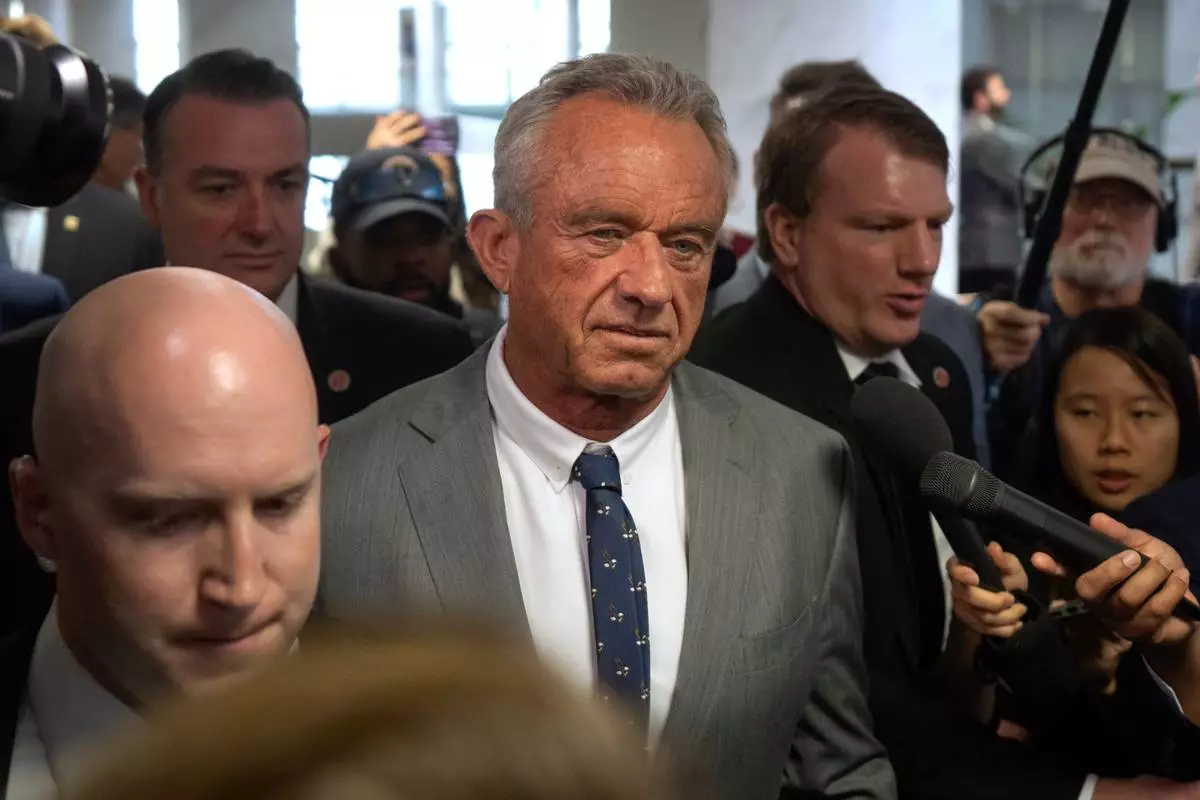
FILE - Robert Kennedy Jr., center, President-elect Donald Trump's pick to lead the Health and Human Services Department, walks between meetings with senators on Capitol Hill, Tuesday, Dec. 17, 2024, in Washington. (AP Photo/Mark Schiefelbein, File)

FILE - Robert Kennedy Jr., center, President-elect Donald Trump's pick to lead the Health and Human Services Department, walks between meetings with senators on Capitol Hill, Tuesday, Dec. 17, 2024, in Washington. (AP Photo/Mark Schiefelbein, File)

Recommended Articles