Skip to Content Facebook Feature Image

Police response to Vegas shooting divides experts, survivor

Police response to Vegas shooting divides experts, survivor

Police response to Vegas shooting divides experts, survivor

2018-05-04 11:41 Last Updated At:11:41

Police and hotel employees' actions as gunfire rained from a Las Vegas resort onto an outdoor concert drew mixed reactions Thursday after newly released video showed authorities making their way through a casino and carefully checking rooms before bursting into the shooter's suite.
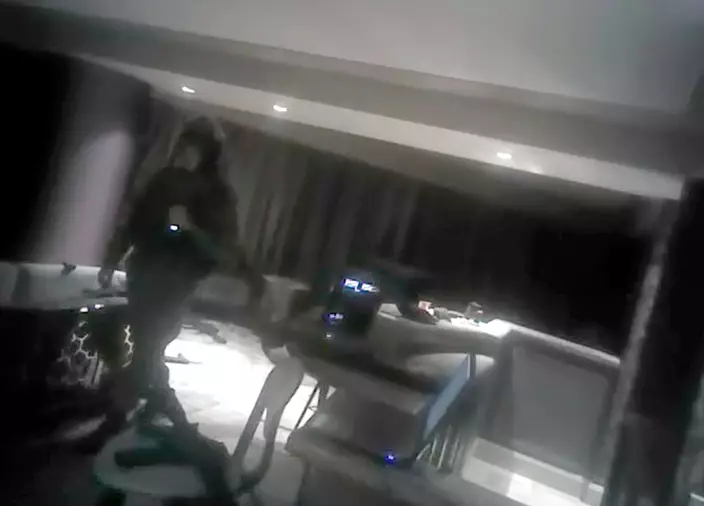
This photo from an Oct. 1, 2017, police officer body camera video provided Wednesday, May 2, 2018, by the Las Vegas Metropolitan Police Department, shows an officer amid automatic weapons found after they breached the shooter's room during the deadliest mass shooting in modern U.S. history by Stephen Paddock, at the Mandalay Bay hotel in Las Vegas, released. (Las Vegas Metropolitan Police Department via AP)
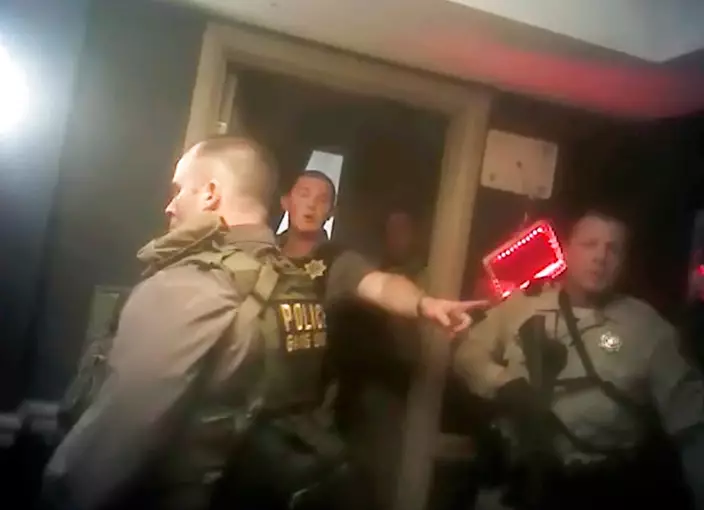
This photo from an Oct. 1, 2017, police officer body camera video provided Wednesday, May 2, 2018, by the Las Vegas Metropolitan Police Department, shows an officer amid automatic weapons found after they breached the shooter's room during the deadliest mass shooting in modern U.S. history by Stephen Paddock, at the Mandalay Bay hotel in Las Vegas, released. (Las Vegas Metropolitan Police Department via AP)

More Images
This photo from an Oct. 1, 2017, police officer body camera video provided Wednesday, May 2, 2018, by the Las Vegas Metropolitan Police Department, shows an officer amid automatic weapons found after they breached the shooter's room during the deadliest mass shooting in modern U.S. history by Stephen Paddock, at the Mandalay Bay hotel in Las Vegas, released. (Las Vegas Metropolitan Police Department via AP)

This photo from an Oct. 1, 2017, police officer body camera video provided Wednesday, May 2, 2018, by the Las Vegas Metropolitan Police Department, shows an officer amid automatic weapons found after they breached the shooter's room during the deadliest mass shooting in modern U.S. history by Stephen Paddock, at the Mandalay Bay hotel in Las Vegas, released. (Las Vegas Metropolitan Police Department via AP)

This photo from police officer video body camera footage on Oct. 1, 2017, provided by the Las Vegas Metropolitan Police Department, shows officers as they breach the shooter's room during the deadliest mass shooting in modern U.S. history by Stephen Paddock, at the Mandalay Bay Hotel in Las Vegas, released Wednesday, May 2, 2018. (Las Vegas Metropolitan Police Department via AP)
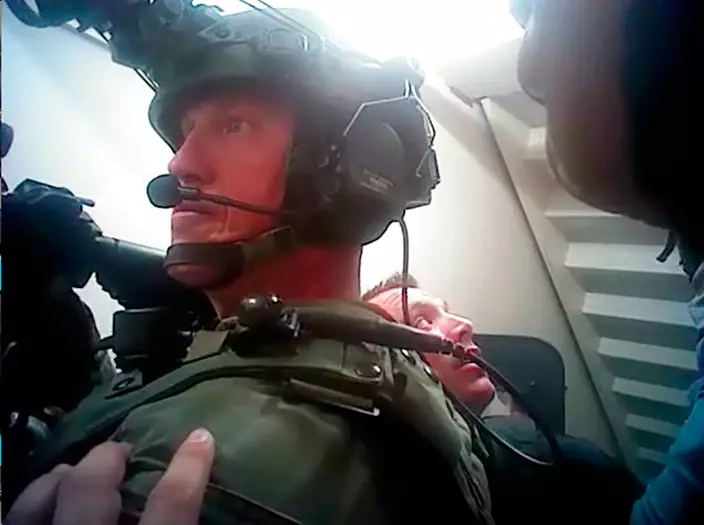
This photo from police officer video body camera footage on Oct. 1, 2017, provided by the Las Vegas Metropolitan Police Department, shows officers as they breach the shooter's room during the deadliest mass shooting in modern U.S. history by Stephen Paddock, at the Mandalay Bay Hotel in Las Vegas, released Wednesday, May 2, 2018. (Las Vegas Metropolitan Police Department via AP)
This photo from police officer video body camera footage on Oct. 1, 2017, provided by the Las Vegas Metropolitan Police Department, shows officers going up a stairway during the deadliest mass shooting in modern U.S. history by Stephen Paddock, at the Mandalay Bay Hotel in Las Vegas, released Wednesday, May 2, 2018. (Las Vegas Metropolitan Police Department via AP)
This photo from police officer video body camera footage on Oct. 1, 2017, provided by the Las Vegas Metropolitan Police Department, shows officers going up a stairway during the deadliest mass shooting in modern U.S. history by Stephen Paddock, at the Mandalay Bay Hotel in Las Vegas, released Wednesday, May 2, 2018. (Las Vegas Metropolitan Police Department via AP)

This photo from police officer video body camera footage on Oct. 1, 2017, provided by the Las Vegas Metropolitan Police Department, shows officers searching hallways during the deadliest mass shooting in modern U.S. history by Stephen Paddock, at the Mandalay Bay Hotel in Las Vegas, released Wednesday, May 2, 2018. (Las Vegas Metropolitan Police Department via AP)

This photo from police officer video body camera footage on Oct. 1, 2017, provided by the Las Vegas Metropolitan Police Department, shows officers searching hallways during the deadliest mass shooting in modern U.S. history by Stephen Paddock, at the Mandalay Bay Hotel in Las Vegas, released Wednesday, May 2, 2018. (Las Vegas Metropolitan Police Department via AP)

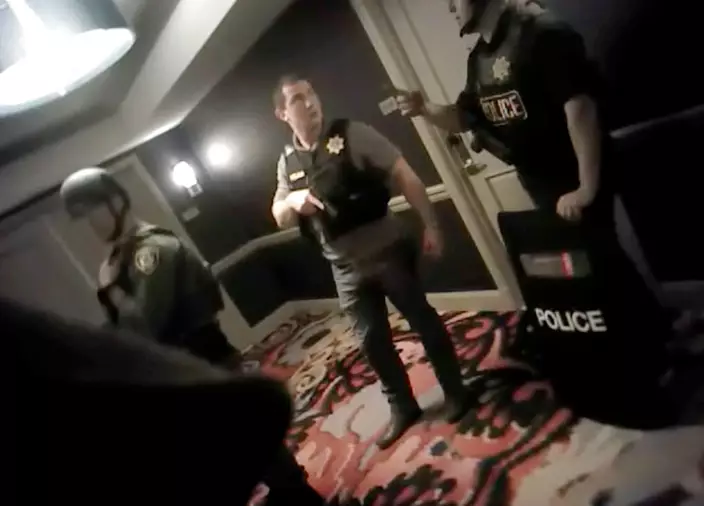
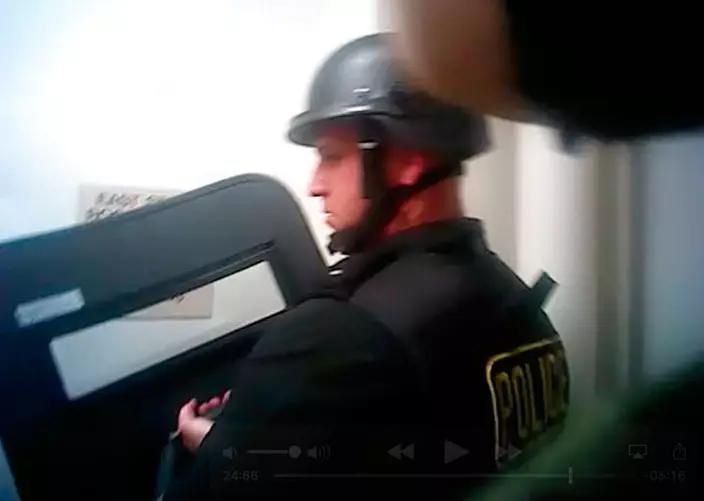
This photo from police officer video body camera footage on Oct. 1, 2017, provided by the Las Vegas Metropolitan Police Department, shows officers deploying a shield and weapons during the deadliest mass shooting in modern U.S. history by Stephen Paddock, at the Mandalay Bay Hotel in Las Vegas, released Wednesday, May 2, 2018. (Las Vegas Metropolitan Police Department via AP)

This photo from police officer video body camera footage on Oct. 1, 2017, provided by the Las Vegas Metropolitan Police Department, shows officers deploying a shield and weapons during the deadliest mass shooting in modern U.S. history by Stephen Paddock, at the Mandalay Bay Hotel in Las Vegas, released Wednesday, May 2, 2018. (Las Vegas Metropolitan Police Department via AP)

Security experts and a survivor of the deadliest mass shooting in modern U.S. history said the footage from officers' body-worn cameras offered only a glimpse of what unfolded as police responded to the rampage and didn't provide clues about why the gunman killed 58 people and injured hundreds last fall.

"There's no real context that gives any kind of glue to put this puzzle together," said Brian Claypool, an attorney from Pasadena, California, who survived the Oct. 1 shooting and now represents dozens of victims and families considering suing for damages.

"What the survivors and people across this country want to see are answers," Claypool said. "How did this happen? Why did it happen? And could this have been prevented?"

This photo from police officer video body camera footage on Oct. 1, 2017, provided by the Las Vegas Metropolitan Police Department, shows officers as they breach the shooter's room during the deadliest mass shooting in modern U.S. history by Stephen Paddock, at the Mandalay Bay Hotel in Las Vegas, released Wednesday, May 2, 2018. (Las Vegas Metropolitan Police Department via AP)

This photo from police officer video body camera footage on Oct. 1, 2017, provided by the Las Vegas Metropolitan Police Department, shows officers as they breach the shooter's room during the deadliest mass shooting in modern U.S. history by Stephen Paddock, at the Mandalay Bay Hotel in Las Vegas, released Wednesday, May 2, 2018. (Las Vegas Metropolitan Police Department via AP)

The Associated Press and other news organizations sued to obtain videos, 911 recordings, evidence logs and interview reports to shed light on the response by public agencies, emergency workers and hotel officials. Videos spanning 2½ hours were released Wednesday, and more recordings will come in batches in coming weeks.

A preliminary report released in January said Stephen Paddock meticulously planned the attack, researched police SWAT tactics, rented hotel rooms overlooking outdoor concerts and investigated potential targets in at least four U.S. cities. Police said the 64-year-old high-stakes video poker player killed himself as authorities closed in.

An expert in police tactics dismissed questions about whether officers should have evacuated the packed Mandalay Bay casino, where gamblers played slots seemingly unaware of the shooting 32 floors above them.

"There's no textbook. Every incident is unique," said Thor Eells, executive director of the National Tactical Officers Association. "The last thing they want to do is create more chaos and put people ... into potential fields of fire."

This photo from police officer video body camera footage on Oct. 1, 2017, provided by the Las Vegas Metropolitan Police Department, shows officers going up a stairway during the deadliest mass shooting in modern U.S. history by Stephen Paddock, at the Mandalay Bay Hotel in Las Vegas, released Wednesday, May 2, 2018. (Las Vegas Metropolitan Police Department via AP)

This photo from police officer video body camera footage on Oct. 1, 2017, provided by the Las Vegas Metropolitan Police Department, shows officers going up a stairway during the deadliest mass shooting in modern U.S. history by Stephen Paddock, at the Mandalay Bay Hotel in Las Vegas, released Wednesday, May 2, 2018. (Las Vegas Metropolitan Police Department via AP)

Mehmet Erdem, a hotel operations professor at the University of Nevada, Las Vegas, said employees are trained to avoid inciting panic in guests.

"Looking at the video objectively, there's no flags, nothing that shows any indication of negligence from the hotel management perspective," Erdem said. "You want them to get out, but you want them to do so in an orderly manner."

Members of the initial police team who got to Mandalay Bay didn't know if there were multiple assailants or where they might be, Eells said.

Video showed the officers with armored shields methodically checking rooms on the 29th, 30th and 31st floors before igniting an explosive charge at the door of the shooter's room on the 32nd.

"Every door they pass or come in contact with is a potential adversary," said Bernard Zapor, a former agent in charge with the U.S. Bureau of Alcohol, Tobacco, Firearms and Explosives in Milwaukee and Phoenix.

This photo from police officer video body camera footage on Oct. 1, 2017, provided by the Las Vegas Metropolitan Police Department, shows officers searching hallways during the deadliest mass shooting in modern U.S. history by Stephen Paddock, at the Mandalay Bay Hotel in Las Vegas, released Wednesday, May 2, 2018. (Las Vegas Metropolitan Police Department via AP)

This photo from police officer video body camera footage on Oct. 1, 2017, provided by the Las Vegas Metropolitan Police Department, shows officers searching hallways during the deadliest mass shooting in modern U.S. history by Stephen Paddock, at the Mandalay Bay Hotel in Las Vegas, released Wednesday, May 2, 2018. (Las Vegas Metropolitan Police Department via AP)

"For the amount of people who were in there, you are basically having an active-shooter scene in a small city," Zapor said. "The complexity of this is unimaginable. I think they did everything they were supposed to do."

Tim Bedwell, a retired North Las Vegas police lieutenant, SWAT officer and Marine, said he believed police acted too slowly. Bedwell is running against Clark County Sheriff Joe Lombardo to head the Las Vegas Metropolitan Police Department.

"They should have gone directly to that room, breached that room and engaged the threat," Bedwell said. "In this case, it has been said that Metro slowed because the shooting stopped. The problem is they didn't know it stopped. There was still a need to treat it as an active-shooter and go direct to the threat."

Unlike previous video released by police, the footage made public Wednesday was not stamped with time and date information.

This photo from police officer video body camera footage on Oct. 1, 2017, provided by the Las Vegas Metropolitan Police Department, shows officers deploying a shield and weapons during the deadliest mass shooting in modern U.S. history by Stephen Paddock, at the Mandalay Bay Hotel in Las Vegas, released Wednesday, May 2, 2018. (Las Vegas Metropolitan Police Department via AP)

This photo from police officer video body camera footage on Oct. 1, 2017, provided by the Las Vegas Metropolitan Police Department, shows officers deploying a shield and weapons during the deadliest mass shooting in modern U.S. history by Stephen Paddock, at the Mandalay Bay Hotel in Las Vegas, released Wednesday, May 2, 2018. (Las Vegas Metropolitan Police Department via AP)

Lombardo said this week that no one in the department would comment on the videos, and a police spokesman reiterated that Thursday.

Jim Ferrence, Lombardo's campaign manager, said Bedwell should be ashamed of trying to score political points on a horrific act of violence.

Claypool, who escaped injury at the concert, questioned why police have not released audio of a hotel security guard alerting staff that he had been shot on the 32nd floor and why police who arrived didn't seem to know which floor they were going to.

"Every second mattered in that shooting," he said. "That's where I'm upset in looking at this footage."
CENTERVILLE, Mass. (AP) — On the day of the Pearl Harbor attack, the country's oldest living survivor of the Japanese bombing was far below deck helping repair one of the boilers of the USS St. Louis.

Freeman Johnson, who turned 106 in March, never witnessed the surprise attack. He never heard his shipmates firing anti-aircraft guns at the attacking planes — shooting down a torpedo plane. By the time he was topside, the St. Louis, a light cruiser, had evaded midget submarines and safely set out to sea.

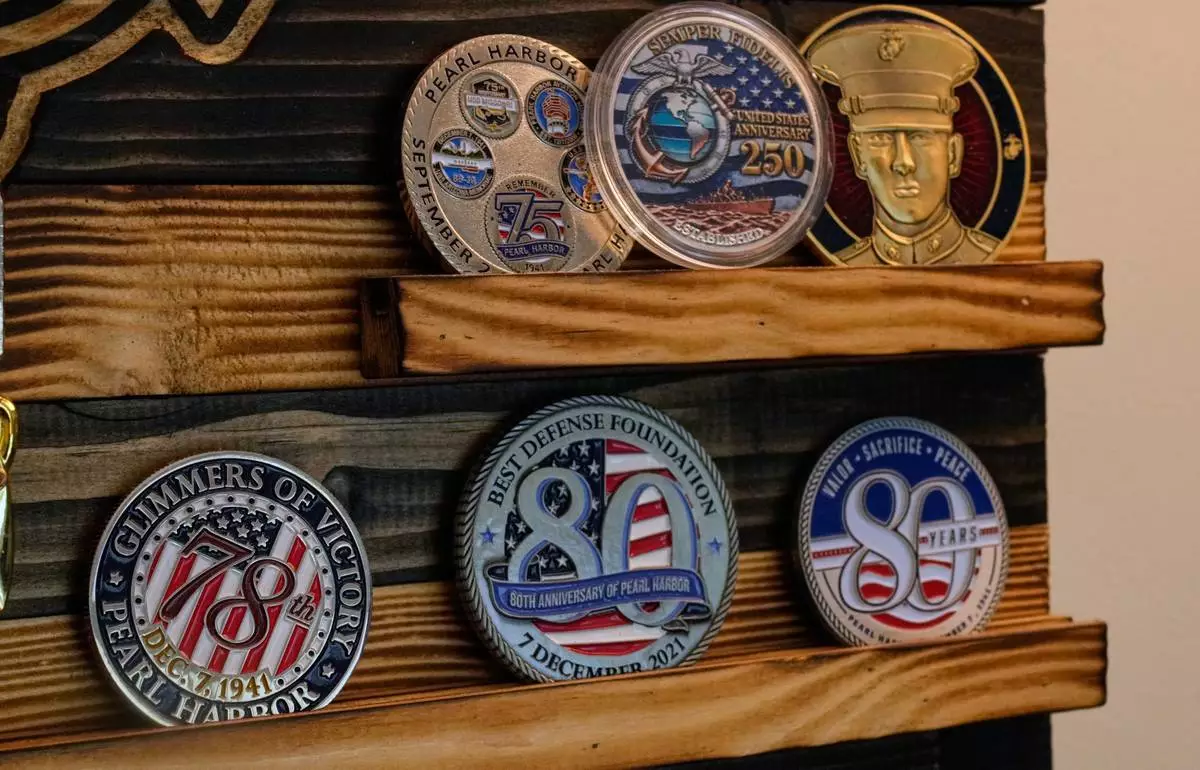
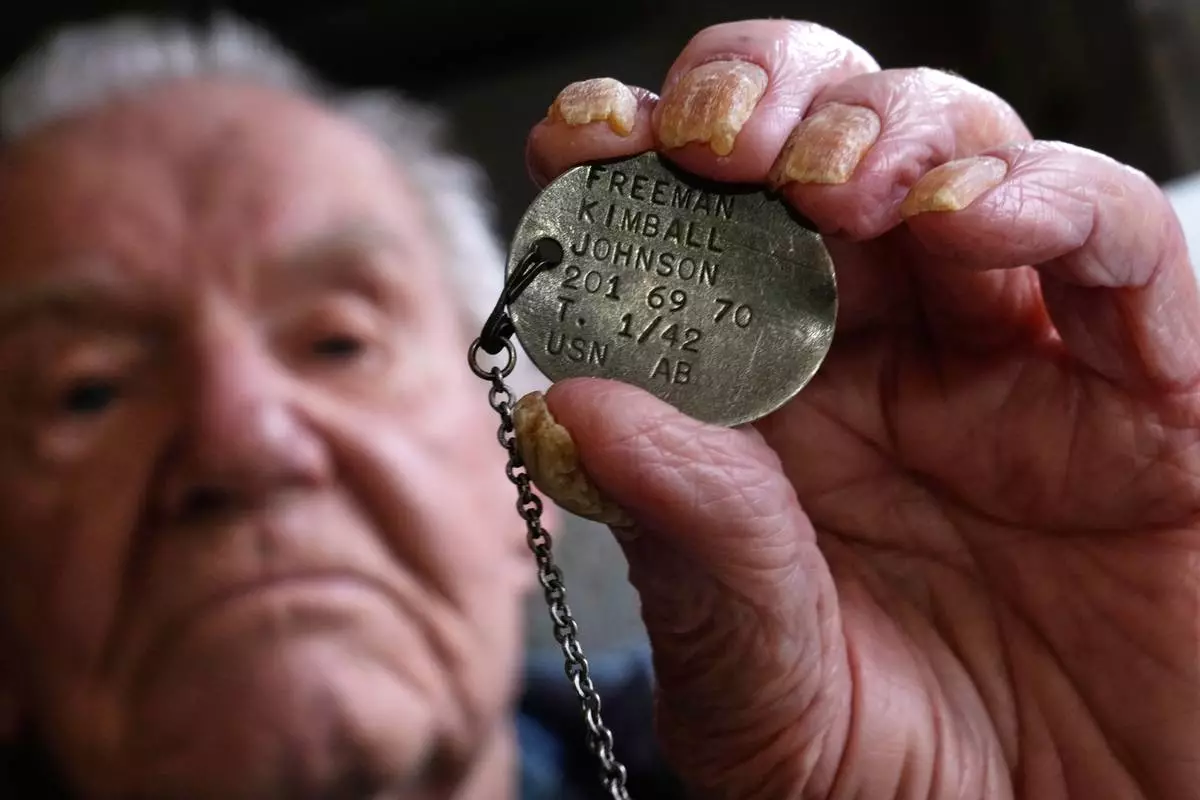
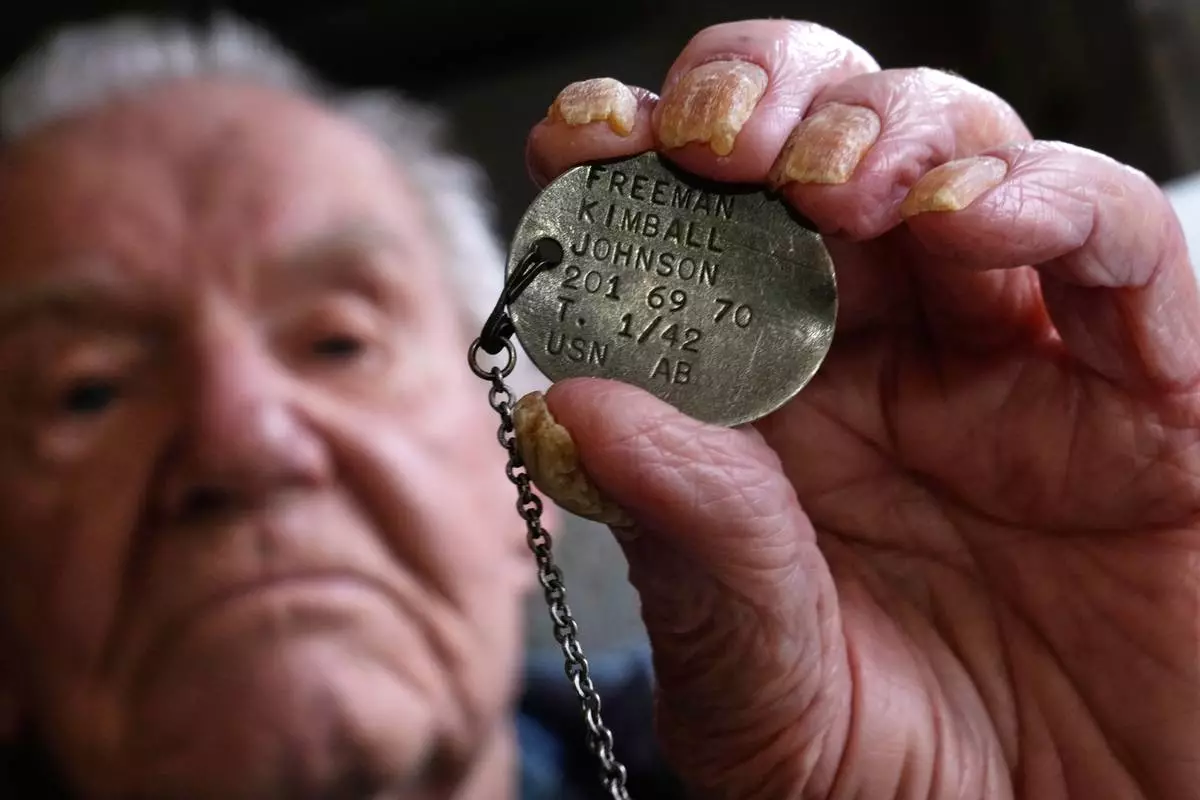
“While all the rigamarole was going on topside, I was inside a steam drum. Couldn’t see anything, absolutely nothing,” said Johnson, a Centerville, Massachusetts, resident whose living room is filled with mementos and photos of his Navy service, including photos of the St. Louis and him as a young sailor, along with a collection of Navy challenge coins and ribbons representing the places he visited. He still has his military identification tag — popularly known as dog tag.

Even as the St. Louis headed into the Pacific Ocean, Johnson, whose job was known as a fireman on the ship, knew little about the attack.

“We were way out to sea, way out. You couldn’t see any land at all. All you saw was ocean,” he said. “I was just a sailor, just a swabbie, I was not an officer. They don’t tell you anything if you don’t need to know. And I didn’t need know it. So they tell you nothing.”

When he visited schools, children often asked Johnson whether he was scared that day. “You’re not scared. You’re too busy to be scared,” he said, his gravelly voice rising. “Besides, you don’t know what you’re scared of. You can’t see anything. What are you afraid of?”

Johnson became the oldest survivor after World War II Navy veteran Ira “Ike” Schab died in December. He was 105. With Schab's passing and the death of Clarence Lane in February at the age of 100, there remain only 11 survivors of the surprise attack, which killed just over 2,400 Americans and propelled the United States into the war. The U.S. mourns the nation’s fallen service members on Memorial Day, which takes place Monday.

Every year, there is a remembrance ceremony at the military base’s waterfront for Pearl Harbor survivors.

About 2,000 survivors attended the 50th anniversary event in 1991. A few dozen have showed in recent decades. In 2024, only two made it. That is out of an estimated 87,000 troops stationed on Oahu that day. None made the pilgrimage to Hawaii last year.

For most of his life, Johnson avoided the spotlight and talked little about surviving the bombing. After all, he was one of the tens of thousands sailors who were there on that tragic day. He recalled his wife, Ruth, “thought that was something special,” so she called the Navy and “the girl laughed at her.”

But as the oldest survivor, he's become a local celebrity and the reluctant face of one of the most important events in World War II. Johnson showed up at his 106th birthday party in a limousine and was mugged by television cameras. He gets letters from all over the world and is routinely called a hero wherever he goes out.

Johnson, who is hard of hearing, needs a walker to get around and suffers from congestive heart failure, can recall his wartime experience down to the smallest detail. A 19-year-old who was unemployed and living at home in Waltham, Johnson said he feared being drafted so he signed up for the Navy — because he felt it would be less physically taxing than the Army.

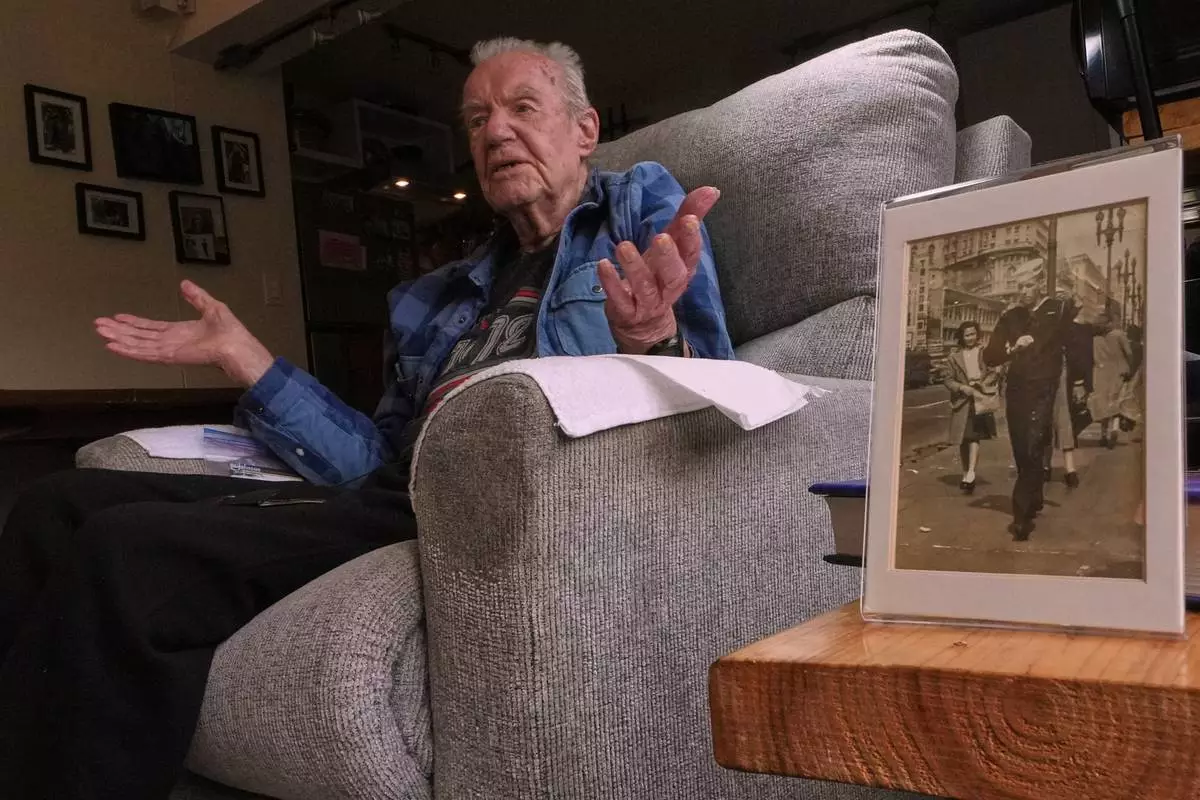
“As a kid, I walked. If I wanted to go somewhere, I walked or took my bicycle. But I didn't want to walk from France to Germany," he said, sitting in a recliner, dressed in an oversized flannel shirt and waving his hands like an orchestra conductor.

“It's a long way carrying a knapsack with you. ... Water for a day, food for a day, a 9-pound Springfield rifle all on your back and walking through the mud,” he said. “No thanks. That’s why I joined the Navy.”

Johnson's memories have less to do with battles while on the St. Louis, and later aboard the USS Iowa, than their significant roles in history. He helped commission the Iowa and recalled the battleship's preparations in November 1943 ahead of transporting President Franklin D. Roosevelt to the Tehran Conference with British Prime Minister Winston Churchill and Soviet dictator Josef Stalin.

The ship was equipped with two elevators and a bathtub. All the ammunition and much of the oil was removed to lighten the ship as it made its way down the Potomac River to pick up Roosevelt. It was reloaded before the ship headed out to sea.

“It was a big meeting,” Johnson said, recalling how the crew were photographed with Roosevelt. “I don’t know what they talked about, but I didn’t need to know. We picked him back up, brought him home.”

Johnson also witnessed the war's end aboard the Iowa. He was on the Iowa's mast watching the surrender ceremonies about a mile away in Tokyo Bay aboard the USS Missouri on Sept. 2, 1945.

“I could see the boats coming up with the Marines escorting the Japanese onto ship and sitting around a table,” he said. “It was all over. That was the end of the war. A bunch of us got together — the war is over. Let's go home.”

These days, his daughter, Diane Johnson, is often by his side. They live together and always take a trip on Dec. 7, often attending Pearl Harbor remembrance events, including the 65th and 80th anniversary in Hawaii. She often poses questions to get her father talking and likes to nag him that he has “a responsibility” to share the story of Pearl Harbor —- especially for children who know little about the bombing.

“It’s kind of overwhelming when you think of it. Well, the 106 is what gets me,” she said. “When I think about his history, he’s at the beginning, he’s at middle, he is at the end when he witnessed the surrender. It’s something.”

Johnson began getting more attention when Diane Johnson heard a local television report suggesting the last survivor in the state had died. She called to correct the record and that raised his profile. Johnson also started making regular appearances in the Cape Cod St. Patrick's Parade, often leading from the front.

“I wish more people were like him today. He just gets on and doesn't complain about anything,” said Desmond Keogh, the chairman of the parade who has accompanied Johnson. “It's what this country was all about. They were just a different generation. They did what was best for their country.”

For all the attention to Pearl Harbor, the gruff Johnson, who is known for his cackling laugh and mischievous smile, doesn't see it as a defining moment in his life.

That would have been getting married after the war to his late wife and having three daughters. He also worked for years in a machinist shop, then in a convenience store and, finally, delivering meals to seniors — all jobs he retired from, the last one at the age of 90.

“Pearl Harbor just happened. I can’t put it any other way,” he said.

Freeman K. Johnson, a 106-year-old Pearl Harbor survivor, holds up his dog tag, May 6, 2026, in Centerville, Mass. (AP Photo/Charles Krupa)

Freeman K. Johnson, a 106-year-old Pearl Harbor survivor, holds up his dog tag, May 6, 2026, in Centerville, Mass. (AP Photo/Charles Krupa)

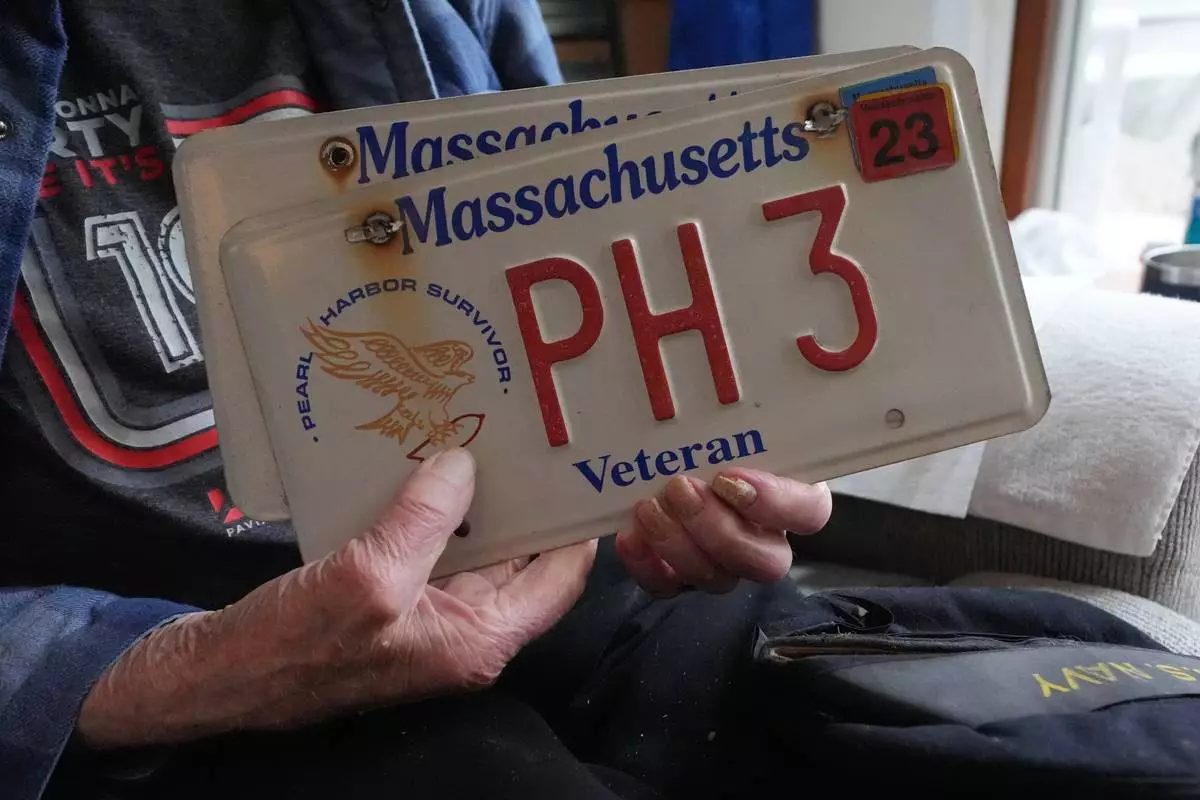
Freeman K. Johnson, a 106-year-old Pearl Harbor survivor, holds his veteran license plate during an interview at his home, May 6, 2026, in Centerville, Mass. (AP Photo/Charles Krupa)

Freeman K. Johnson, a 106-year-old Pearl Harbor survivor, holds his veteran license plate during an interview at his home, May 6, 2026, in Centerville, Mass. (AP Photo/Charles Krupa)

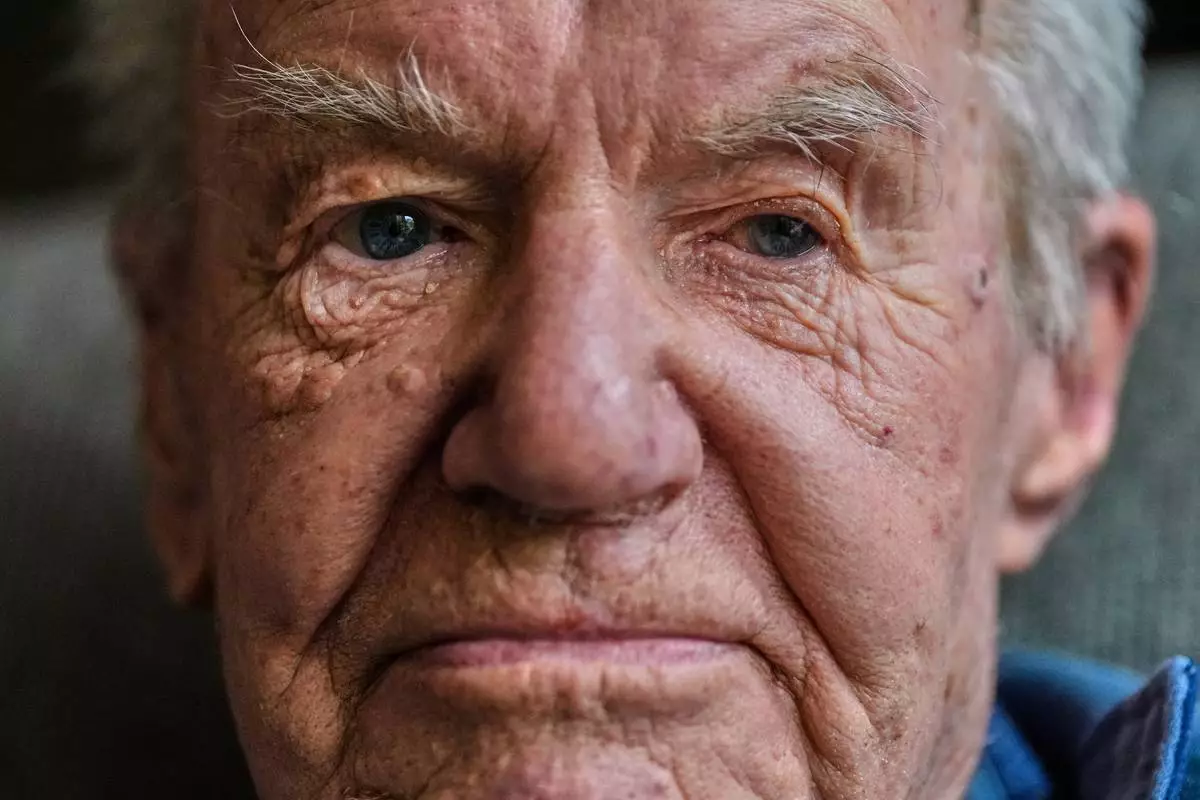
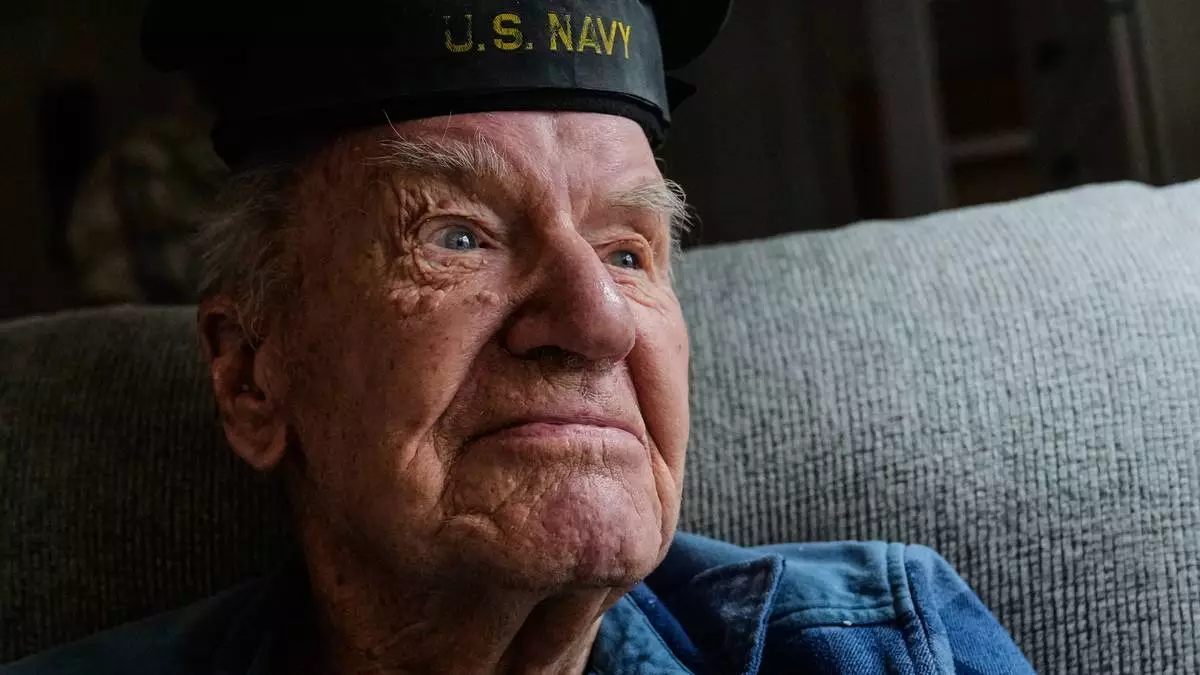
Freeman K. Johnson, a 106-year-old Pearl Harbor survivor, listens to a question during an interview at his home, May 6, 2026, in Centerville, Mass. (AP Photo/Charles Krupa)

Freeman K. Johnson, a 106-year-old Pearl Harbor survivor, listens to a question during an interview at his home, May 6, 2026, in Centerville, Mass. (AP Photo/Charles Krupa)

Freeman K. Johnson, a 106-year-old Pearl Harbor survivor, gestures during an interview, next to a photograph of himself on leave in 1943, at his home on May 6, 2026, in Centerville, Mass. (AP Photo/Charles Krupa)

Freeman K. Johnson, a 106-year-old Pearl Harbor survivor, gestures during an interview, next to a photograph of himself on leave in 1943, at his home on May 6, 2026, in Centerville, Mass. (AP Photo/Charles Krupa)

A collection of challenge coins is on display in Pearl Harbor survivor Freeman K. Johnson's home, May 6, 2026, in Centerville, Mass. (AP Photo/Charles Krupa)

A collection of challenge coins is on display in Pearl Harbor survivor Freeman K. Johnson's home, May 6, 2026, in Centerville, Mass. (AP Photo/Charles Krupa)

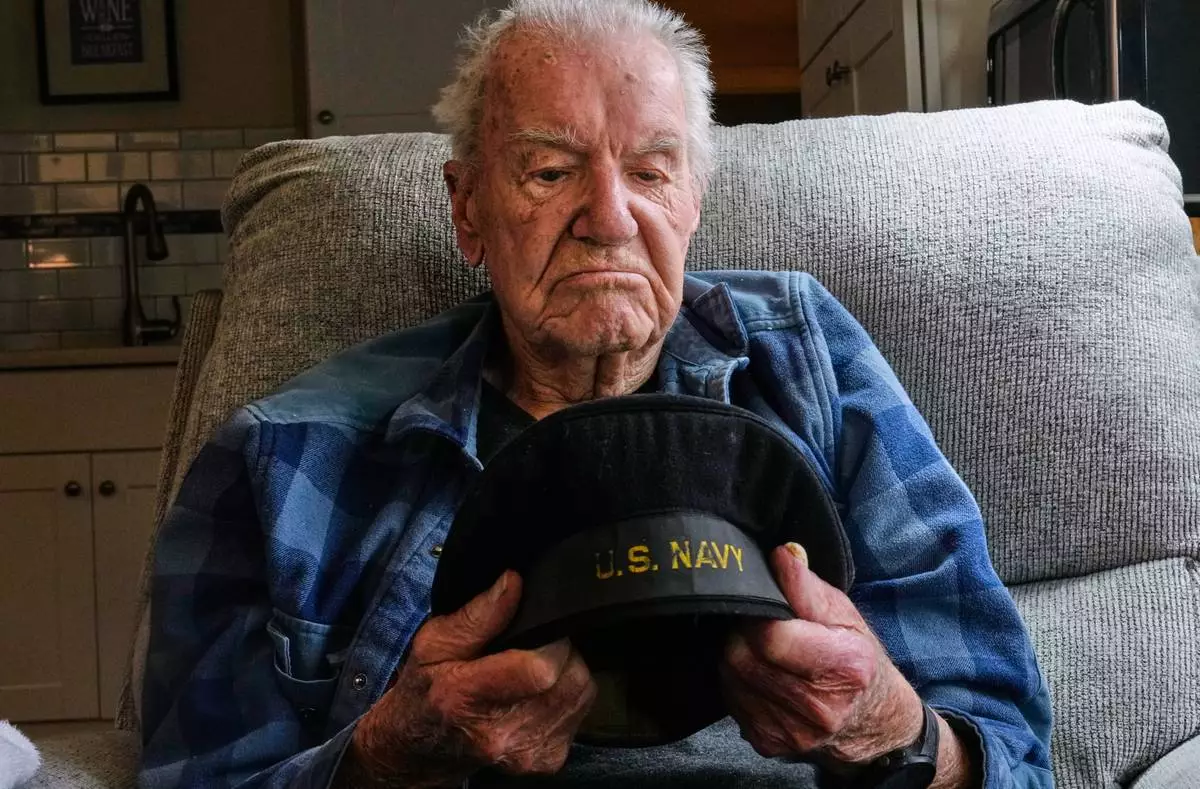
Freeman K. Johnson, a 106-year-old Pearl Harbor survivor, looks down at his flat cap during an interview at his home, May 6, 2026, in Centerville, Mass. (AP Photo/Charles Krupa)

Freeman K. Johnson, a 106-year-old Pearl Harbor survivor, looks down at his flat cap during an interview at his home, May 6, 2026, in Centerville, Mass. (AP Photo/Charles Krupa)

Freeman K. Johnson, a 106-year-old Pearl Harbor survivor, holds up his dog tag, May 6, 2026, in Centerville, Mass. (AP Photo/Charles Krupa)

Freeman K. Johnson, a 106-year-old Pearl Harbor survivor, holds up his dog tag, May 6, 2026, in Centerville, Mass. (AP Photo/Charles Krupa)

Freeman K. Johnson, a 106-year-old Pearl Harbor survivor, listens to a question during an interview at his home, May 6, 2026, in Centerville, Mass. (AP Photo/Charles Krupa)

Freeman K. Johnson, a 106-year-old Pearl Harbor survivor, listens to a question during an interview at his home, May 6, 2026, in Centerville, Mass. (AP Photo/Charles Krupa)

Recommended Articles