

Jack Phillips seems like an unlikely U.S. Supreme Court plaintiff.
The laconic 62-year-old has quietly run his Masterpiece Cakeshop from a strip mall in suburban Denver for a quarter of a century.
Click to Gallery
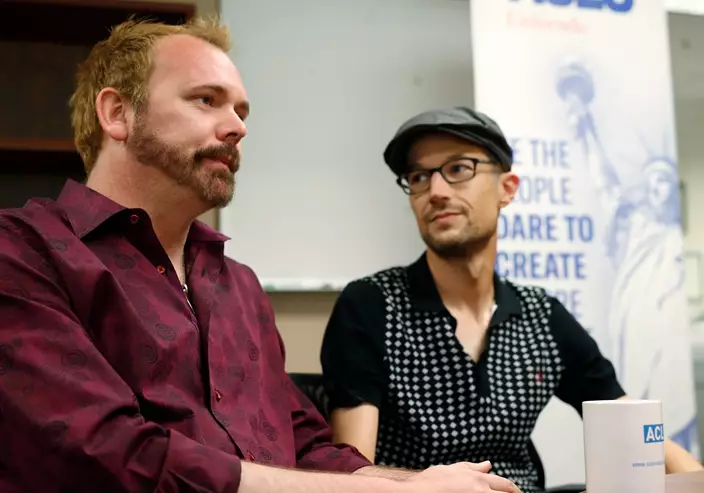
Charlie Craig, left, and David Mullins talk about a U.S. Supreme Court ruling that sets aside a Colorado court decision against a baker who would not make a wedding cake for the same-sex couple as they meet reporters Monday, June 4, 2018, in Denver. The Court has not decided on the larger issue in the case, however--whether a business can refuse to to serve gay and lesbian people. (AP Photo/David Zalubowski)
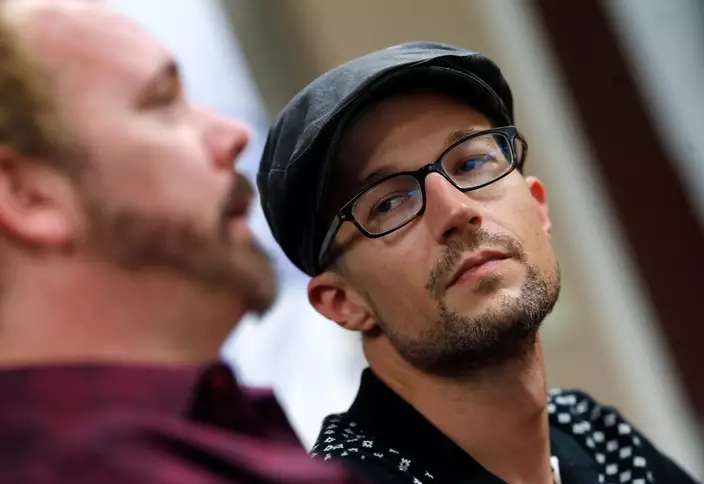
Charlie Craig, front, and David Mullins talk about a U.S. Supreme Court ruling that sets aside a Colorado court decision against a baker who would not make a wedding cake for the same-sex couple as they meet reporters Monday, June 4, 2018, in Denver. The Court has not decided on the larger issue in the case, however--whether a business can refuse to to serve gay and lesbian people. (AP Photo/David Zalubowski)
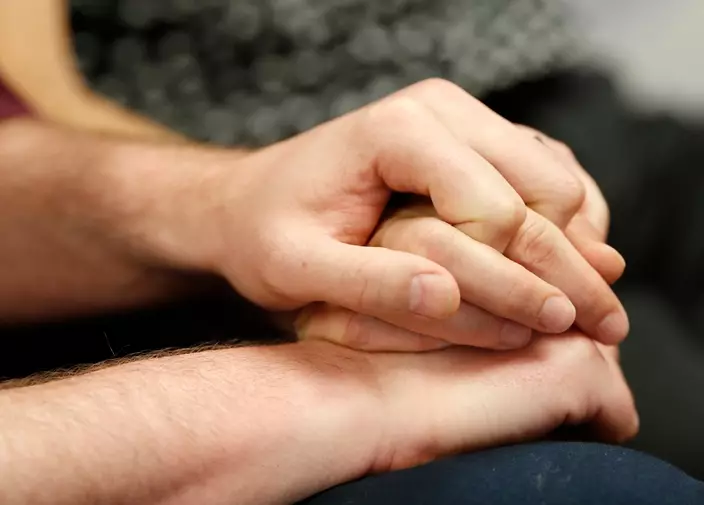
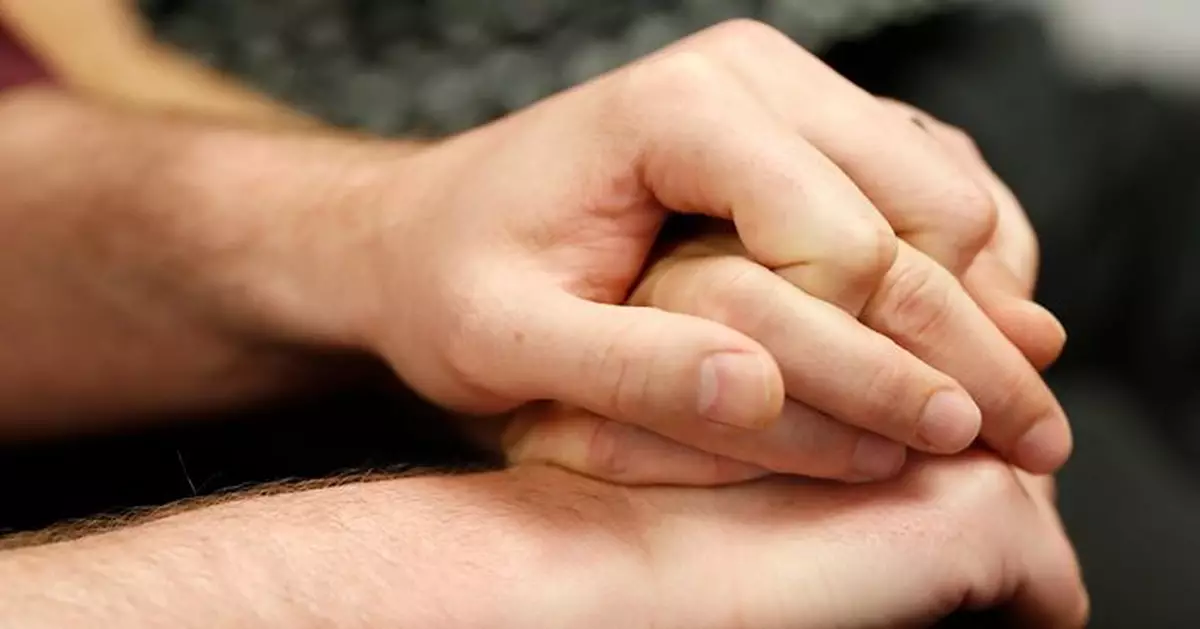
Charlie Craig and David Mullins hold hands as they talk about a U.S. Supreme Court ruling that sets aside a Colorado court decision against a baker who would not make a wedding cake for the same-sex couple as they meet reporters Monday, June 4, 2018, in Denver. The Court has not decided on the larger issue in the case, however--whether a business can refuse to to serve gay and lesbian people. (AP Photo/David Zalubowski)
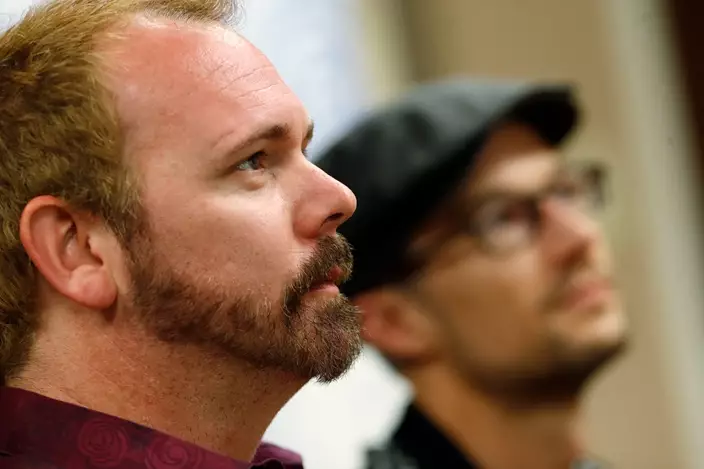
Charlie Craig, front, and David Mullins talk about a U.S. Supreme Court ruling that sets aside a Colorado court decision against a baker who would not make a wedding cake for the same-sex couple as they meet reporters Monday, June 4, 2018, in Denver. The Court has not decided on the larger issue in the case, however--whether a business can refuse to to serve gay and lesbian people. (AP Photo/David Zalubowski)
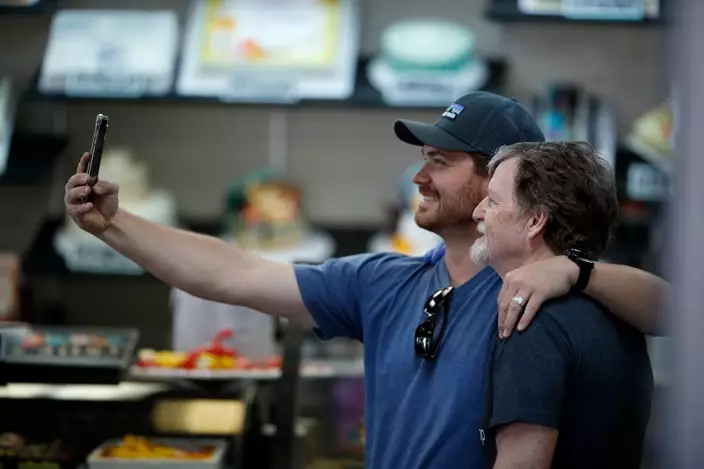
Baker Jack Phillips, front, owner of Masterpiece Cakeshop, poses for a photograph with Sebastian Muller, an assistant pastor at Calvary South Denver Church, in Phillips' shop Monday, June 4, 2018, in Lakewood, Colo., after the U.S. Supreme Court ruled that he could refuse to make a wedding cake for a same-sex couple because his religious beliefs did not violate Colorado's anti-discrimination law. (AP Photo/David Zalubowski)
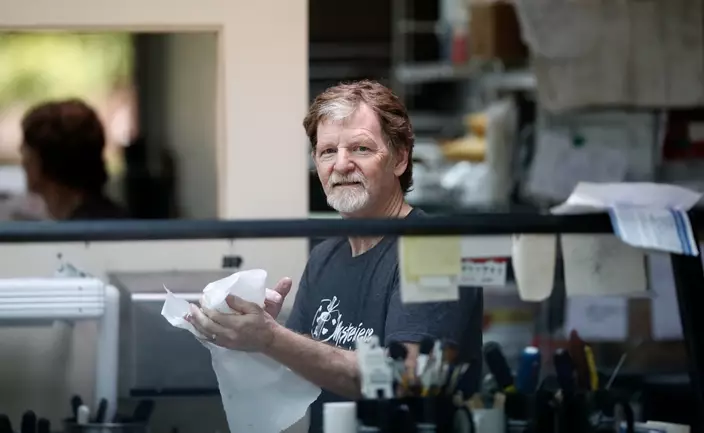
Baker Jack Phillips, owner of Masterpiece Cakeshop, manages his shop Monday, June 4, 2018, in Lakewood, Colo., after the U.S. Supreme Court ruled that he could refuse to make a wedding cake for a same-sex couple because his religious beliefs did not violate Colorado's anti-discrimination law. (AP Photo/David Zalubowski)
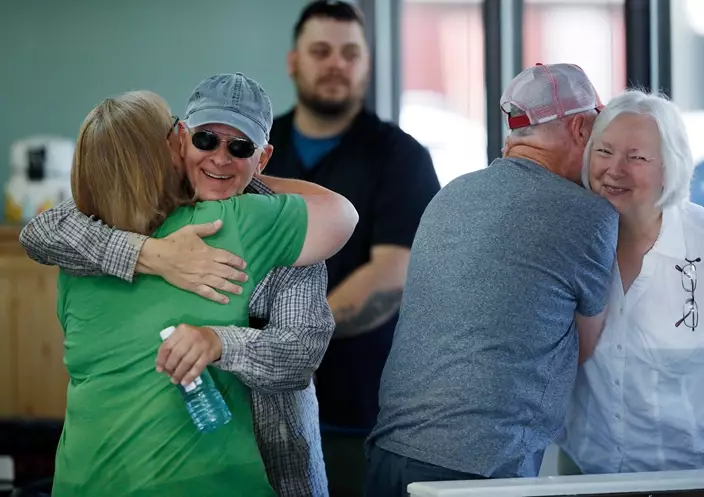
Supporters of baker Jack Phillips, owner of Masterpiece Cakeshop, hug inside Phillips' shop Monday, June 4, 2018, in Lakewood, Colo., after the U.S. Supreme Court ruled that he could refuse to make a wedding cake for a same-sex couple because his religious beliefs did not violate Colorado's anti-discrimination law. (AP Photo/David Zalubowski)
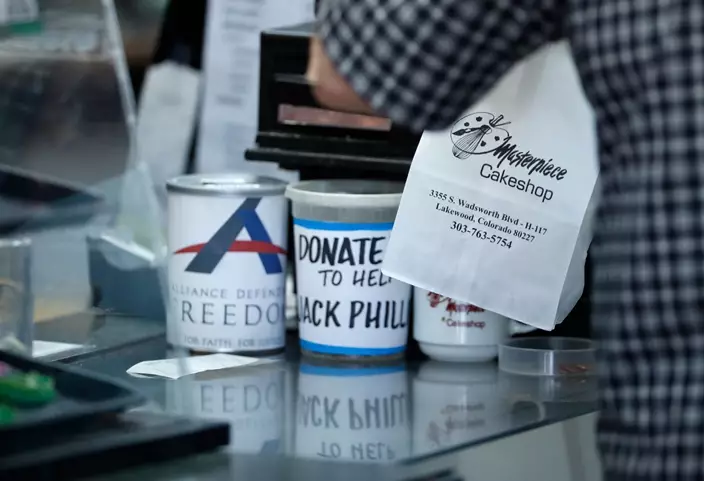
Donation tins sit next to the cash register as a customer picks up a bag of baked goods after paying baker Jack Phillips, owner of Masterpiece Cakeshop, Monday, June 4, 2018, in Lakewood, Colo., following the U.S. Supreme Court ruling that he could refuse to make a wedding cake for a same-sex couple because his religious beliefs did not violate Colorado's anti-discrimination law. (AP Photo/David Zalubowski)
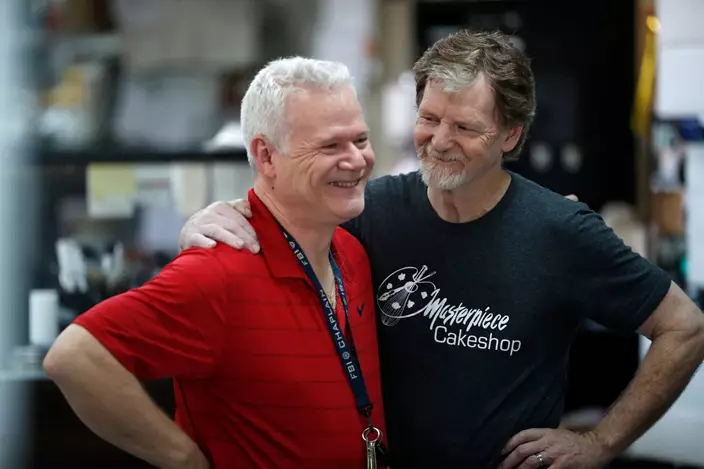
Baker Jack Phillips, right, owner of Masterpiece Cakeshop, hugs an unidentified man who was in Phillips' shop Monday, June 4, 2018, in Lakewood, Colo., after the U.S. Supreme Court ruled that he could refuse to make a wedding cake for a same-sex couple because his religious beliefs did not violate Colorado's anti-discrimination law. (AP Photo/David Zalubowski)
Charlie Craig, left, and David Mullins talk about a U.S. Supreme Court ruling that sets aside a Colorado court decision against a baker who would not make a wedding cake for the same-sex couple as they meet reporters Monday, June 4, 2018, in Denver. The Court has not decided on the larger issue in the case, however--whether a business can refuse to to serve gay and lesbian people. (AP Photo/David Zalubowski)
That changed, however, when a gay couple asked him to make their wedding cake in 2012 and Phillips said no, citing his religious beliefs.
Now, after winning a partial victory Monday from the high court, Phillips has become a beacon for conservatives who feared a shift toward gay rights could make them an oppressed minority.
"I'm profoundly thankful that the court saw the injustice that the government inflicted on me," Phillips said in a statement issued through his lawyers. "This is a great day for our family, our shop, and for people of all faiths who should not fear government hostility or unjust punishment. Today's decision makes clear that tolerance is a two-way street."
Charlie Craig, front, and David Mullins talk about a U.S. Supreme Court ruling that sets aside a Colorado court decision against a baker who would not make a wedding cake for the same-sex couple as they meet reporters Monday, June 4, 2018, in Denver. The Court has not decided on the larger issue in the case, however--whether a business can refuse to to serve gay and lesbian people. (AP Photo/David Zalubowski)
The justices cited anti-religious bias on the part of the Colorado Civil Rights Commission, saying it was unfairly dismissive of Phillips' religious beliefs.
But the court stayed out of the thornier issue of whether people can avoid providing services to same-sex weddings because of religious beliefs
Even so, people streamed into Phillips' cake shop after the ruling came down, embracing him as his phone rang repeatedly with congratulations from people who view him as their champion.
Supporter Ann Sewell, who brought a clutch of congratulatory balloons to the bakery, compared Phillips' bravery to people opposed to the Vietnam War.
Charlie Craig and David Mullins hold hands as they talk about a U.S. Supreme Court ruling that sets aside a Colorado court decision against a baker who would not make a wedding cake for the same-sex couple as they meet reporters Monday, June 4, 2018, in Denver. The Court has not decided on the larger issue in the case, however--whether a business can refuse to to serve gay and lesbian people. (AP Photo/David Zalubowski)
"If you could be a conscientious objector and not fight in a war then you should be able to hold to your convictions in something as simple as this when it is not hurting anyone," Sewell said. "It might offend someone, but that's life."
The case stems from a brief meeting in 2012 between Phillips and Charlie Craig and Dave Mullins. The couple had just married in Massachusetts and wanted a cake for a celebration in the suburb of Lakewood.
Phillips told the men he'd be happy to sell them other products, but he didn't make wedding cakes for gay marriages.
The newlyweds filed a complaint with the state civil rights commission, which forbid Phillips from refusing service again.
Charlie Craig, front, and David Mullins talk about a U.S. Supreme Court ruling that sets aside a Colorado court decision against a baker who would not make a wedding cake for the same-sex couple as they meet reporters Monday, June 4, 2018, in Denver. The Court has not decided on the larger issue in the case, however--whether a business can refuse to to serve gay and lesbian people. (AP Photo/David Zalubowski)
Phillips fought back, appealing that ruling all the way to the Supreme Court. To avoid future liability, he stopped making any wedding cakes — a 40 percent drop in business — and cut his bakery staff of 10 by six people, according to his attorney Kristen Waggoner.
His case is one of several in the legal pipeline in which professionals — video producers, florists, graphic artists — declined to provide services for same-sex weddings. Phillips' case was the first to make it to the high court.
That landed the normally private baker in the spotlight. In November, just before arguments in his case were heard in Washington, Phillips headlined a rally at Colorado Christian University, not far from his bakery.
Baker Jack Phillips, front, owner of Masterpiece Cakeshop, poses for a photograph with Sebastian Muller, an assistant pastor at Calvary South Denver Church, in Phillips' shop Monday, June 4, 2018, in Lakewood, Colo., after the U.S. Supreme Court ruled that he could refuse to make a wedding cake for a same-sex couple because his religious beliefs did not violate Colorado's anti-discrimination law. (AP Photo/David Zalubowski)
He appeared awkward on stage, laughing nervously and his voice rattling as he thanked those attending.
"I love using cakes as a canvas," Phillips continued. "One of the favorite parts of my job is making wedding cakes because it allows me to bring my love of art — painting, sculpting, airbrushing — to create something beautiful and unique to mark the beginning of something held sacred by many."
At the conclusion of his five-minute address, the crowd swarmed around Phillips, touched him and prayed.
Baker Jack Phillips, owner of Masterpiece Cakeshop, manages his shop Monday, June 4, 2018, in Lakewood, Colo., after the U.S. Supreme Court ruled that he could refuse to make a wedding cake for a same-sex couple because his religious beliefs did not violate Colorado's anti-discrimination law. (AP Photo/David Zalubowski)
Supporters of baker Jack Phillips, owner of Masterpiece Cakeshop, hug inside Phillips' shop Monday, June 4, 2018, in Lakewood, Colo., after the U.S. Supreme Court ruled that he could refuse to make a wedding cake for a same-sex couple because his religious beliefs did not violate Colorado's anti-discrimination law. (AP Photo/David Zalubowski)
Donation tins sit next to the cash register as a customer picks up a bag of baked goods after paying baker Jack Phillips, owner of Masterpiece Cakeshop, Monday, June 4, 2018, in Lakewood, Colo., following the U.S. Supreme Court ruling that he could refuse to make a wedding cake for a same-sex couple because his religious beliefs did not violate Colorado's anti-discrimination law. (AP Photo/David Zalubowski)
Baker Jack Phillips, right, owner of Masterpiece Cakeshop, hugs an unidentified man who was in Phillips' shop Monday, June 4, 2018, in Lakewood, Colo., after the U.S. Supreme Court ruled that he could refuse to make a wedding cake for a same-sex couple because his religious beliefs did not violate Colorado's anti-discrimination law. (AP Photo/David Zalubowski)