This once again proves that animals are remarkably humane and emotional.

Video screenshot
Many animals possess the ability to recognise when it has been helped and even knows how to show appreciation to its benefactors, as exemplified by this Andean condor, who was saved from what would be certain death had human conservationists not intervened, and later thanked them for saving it.

Video screenshot
The condor, which was named "Sayani" was poisoned in December of 2012 when it accidentally caught and ate a poisonous prey, and was discovered nearly dead by conservationists, who, with the assistance of local police and officials, managed to transport Sayani to be treated at the Buenos Aires Zoo.

Video screenshot
After 16 months of treatment and recovery, Sayani recovered all of its previous strength and the veterinarians at the zoo determined that the vulture was fit to be released back into the wild. As such, in March of 2014, Sayani was taken to the top of a mountain in Catamarca by the staff who had rescued and cared for it for the past year and a half, all prepared to witness the majestic beast finally regain its freedom in the skies.

Video screenshot
However, instead of ditching its caretakers, the bird perched on a rock, but did not fly away immediately. Instead, to the amazement and delight of the caretakers, Sayani turned back to the humans and bowed its head slightly, like a symbol of thanks and appreciation for its guardians.

Video screenshot
After the heartwarming gesture of gratitude, it finally spread its wings and, to the cheering and clapping of its carers, soared freely into the blue sky enthusiastically.

Video screenshot
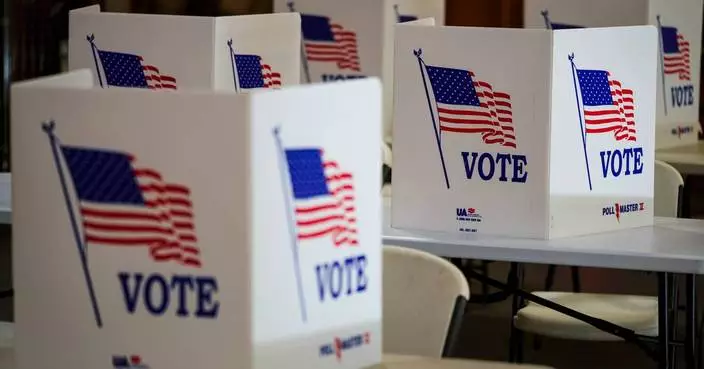
WASHINGTON (AP) — Majority Leader John Thune said Tuesday that the Senate will consider a bill to impose strict new proof-of-citizenship requirements in elections, but says “the votes aren’t there” to pass it through a marathon talking filibuster sought by President Donald Trump.
Trump has said he won’t sign any other legislation until the bill — known as the Safeguard American Voter Eligibility or SAVE America Act — is passed. But it faces unified opposition from Democrats, meaning that the Senate can’t pass it unless Republicans change the rules and eliminate the filibuster.
Thune has said there aren’t enough votes to do that, or to launch a talking filibuster that would force Democrats to hold the floor indefinitely to block the bill.
“That is just a function of math,” Thune told reporters on Tuesday, making his strongest statements yet after weeks of discussions among GOP senators. “For better or worse, I’m the one who has to be a clear-eyed realist about what we can achieve here.”
Republican senators are discussing, instead, voting on the legislation as soon as next week under regular procedure — meaning it will likely fail. Thune said that Republicans are “going to have a fight on the floor” and will force Democrats to vote on “whether they think noncitizens should vote in American elections.”
Trump’s aggressive effort to dictate Senate procedure has put Thune in an awkward position as he has tried to appease the president and increasingly angry base voters who have called for Republicans to do whatever they can to pass it ahead of the midterm elections. But most Republican senators appear to be backing Thune’s approach.
“There’s been enough dithering,” said Sen. John Kennedy, R-La.. “It’s time to go and let the chips fall where they may.”
Trump has made the SAVE America Act a priority ahead of the midterm elections, arguing that Republicans need it to win — even as his party won the presidency and congressional majorities in 2024 without it. Federal law already requires that voters in national elections be U.S. citizens.
“It’ll guarantee the midterms,” he told House Republicans Monday at their annual retreat at his Florida golf club. “If you don’t get it, big trouble.”
But Trump's push is running into the realities of the Senate, where minority Democrats can filibuster any piece of legislation and force Republicans to find 60 votes when they only hold 53 seats. Democrats uniformly oppose the legislation, arguing that it would disenfranchise some 20 million American voters who don’t have birth certificates or other documents readily available.
Republicans could change the rules and eliminate the filibuster to pass it, or they could attempt the talking filibuster. But Thune says they don’t have enough support within the GOP conference to do either.
Even if they did, a talking filibuster would not guarantee passage. Supporters of that approach say that Democrats would eventually tire of speaking or allow the legislation to pass. But Democrats would also be allowed to bring up an indefinite number of amendments on any subject, forcing Republicans to take hard votes in an election year and delaying the process even more.
“We can’t find a piece of legislation in history that’s been passed that way,” Thune said this week.
Utah Sen. Mike Lee, who has led the talking filibuster push with Trump, posted on X Tuesday that the “Senate should do everything it can in an effort to pass” the bill.
“While passage isn’t guaranteed, we can be certain that failure will be the outcome if we don’t try," Lee wrote.
But leaving a GOP conference meeting on Tuesday, several senators said it was time to move on the legislation, even if they couldn’t accommodate the president’s procedural demands.
“I think we just go ahead and try to get on the bill,” said Sen. Roger Marshall, R-Kansas.
Wisconsin Sen. Ron Johnson suggested that they should debate the bill on the floor for an extended time. There should not be a “one and done vote,” he said.
“Our base would scream about that and that wouldn’t be smart,” Johnson said.
There was little anger at Thune, as many of his GOP colleagues agree that eliminating the filibuster would be unwise and the talking filibuster would be risky. Republicans have long pushed back on efforts to “nuke” the filibuster, arguing that minority rights need to be preserved for legislation.
“There’s a right way to do it, there’s a wrong way to do it,” said Republican Sen. Thom Tillis of North Carolina. “Nuking the filibuster doesn’t work. The talking filibuster would be a goat rodeo.”
Tillis said Thune “has the toughest job in Washington, D.C. He’s doing just fine. And he, quite honestly, has taken on a lot for the members.”
Trump said over the weekend that he also wants to add new priorities to the legislation, including a ban on mail-in ballots that he has pushed since losing the 2020 presidential election. He said he also wants to add on two unrelated provisions around transgender rights issues — one that would ban those born as men from playing in women’s sports and another to block sex reassignment surgeries on some minors.
“Let’s go for the gold,” Trump told the House Republicans.
House Speaker Mike Johnson said Tuesday at the Florida retreat that they are “looking at mechanisms” to do that, even though the House has already passed the bill and sent it to the Senate. But it’s unclear if a ban on mail-in ballots would pass the House, as they are popular in many states.
Thune said that the House would probably have to pass a new bill to add those issues.
“It would probably make sense for them to send over another version,” he said.
Associated Press writers Kevin Freking and Lisa Mascaro in Washington and Steven Sloan in Doral, Florida contributed to this report.
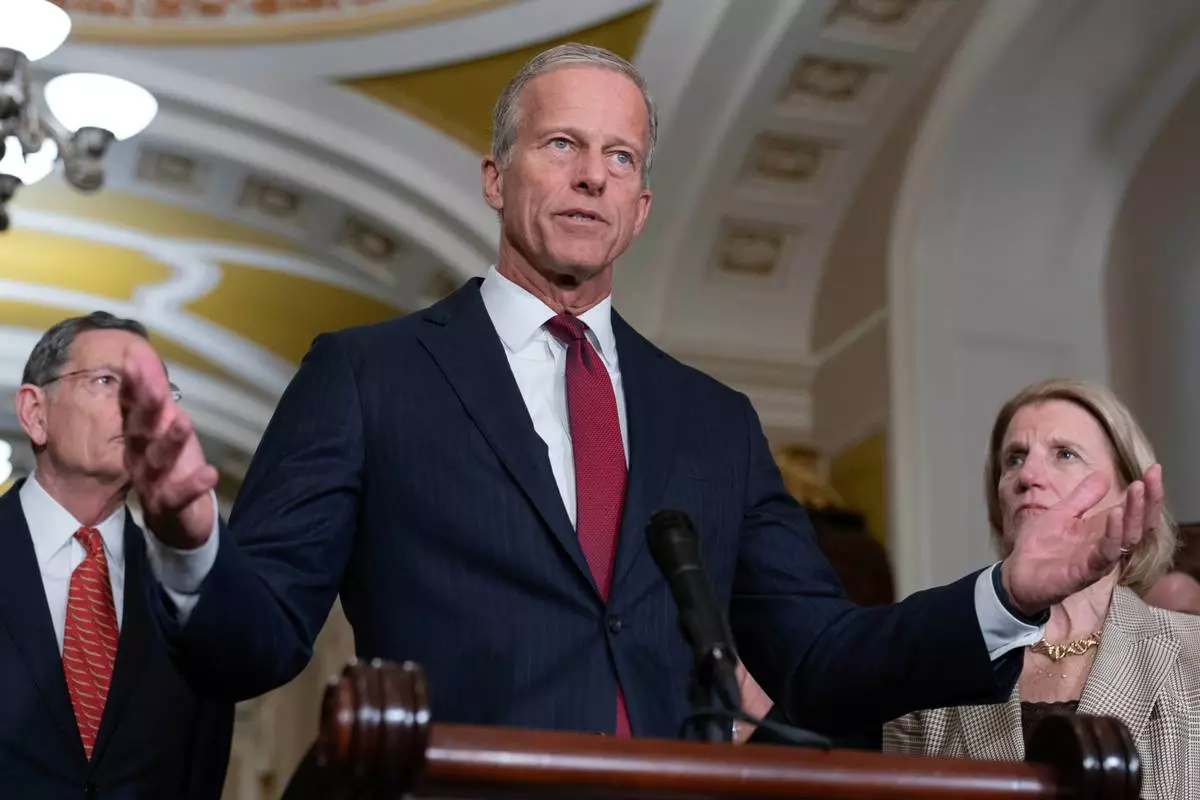
Senate Majority Leader John Thune, R-S.D., speaks to reporters after a weekly Republican luncheon, at the Capitol in Washington, Tuesday, March 10, 2026. (AP Photo/Jose Luis Magana)
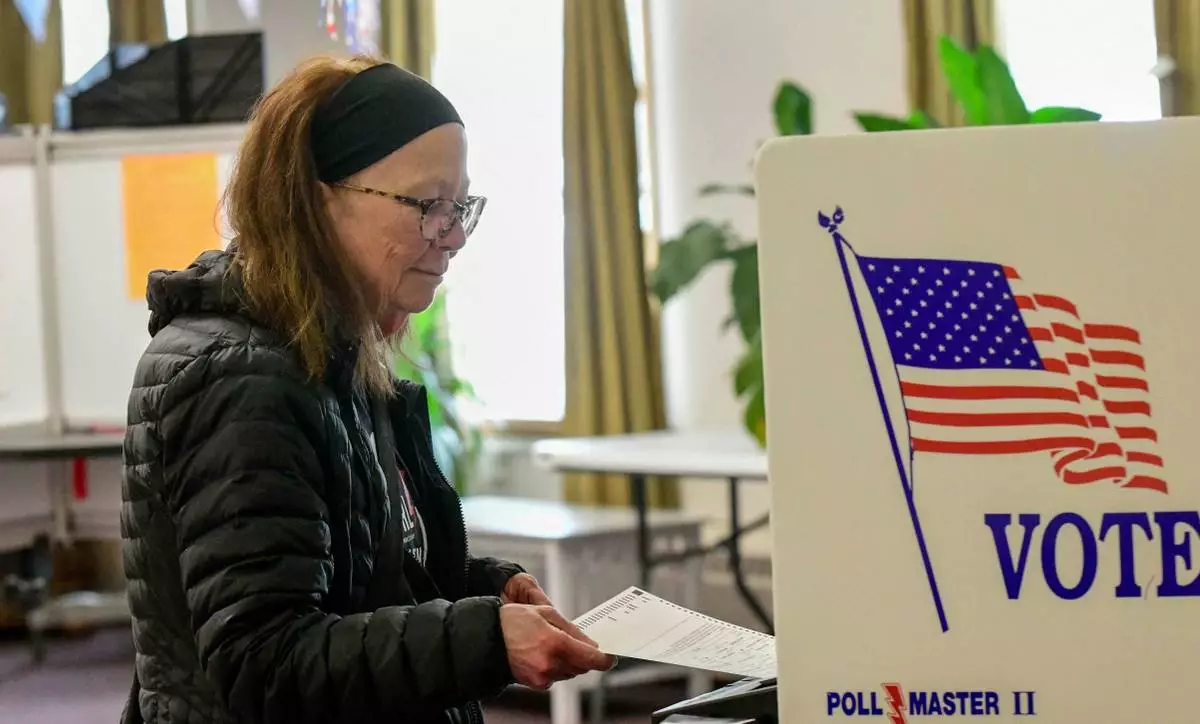
Kathleen Nutter of Wilmington, Vt., casts her ballot at the polling station in Wilmington, during Town Meeting Day in Vermont, Tuesday, March 3, 2026. (Kristopher Radder/The Brattleboro Reformer via AP)