Relapse is part of recovery. That's what one doctor in "Beautiful Boy " tells David Sheff (Steve Carell), the distraught father of a teenage son, Nic (Timothee Chalamet), who has been dabbling in alcohol, weed, cocaine, heroin and crystal meth, and has become an addict.
He disappears for nights on end from his father's idyllic home in the woods outside of San Francisco which he shares with a stepmother, Karen (Maura Tierney), and his two very young step-siblings. He steals his little sister's savings ($8). He lies. He hurts everyone around him. He goes to rehab. He seems to be turning over a new leaf. And then he starts the cycle all over again.
"Beautiful Boy" is an honest portrait of how addiction affects families and how it's not something that can be wrapped up and packaged into a neat and tidy narrative. It's ugly and messy, with moments of grace and hope, but mostly despair. The film is based on a pair of memoirs, one by Nic Sheff and one by David Sheff, and directed by Belgian filmmaker Felix Van Groeningen in his English language debut. This may be depicting a family's story in the recent past, but there is hardly a more timely subject matter to explore.
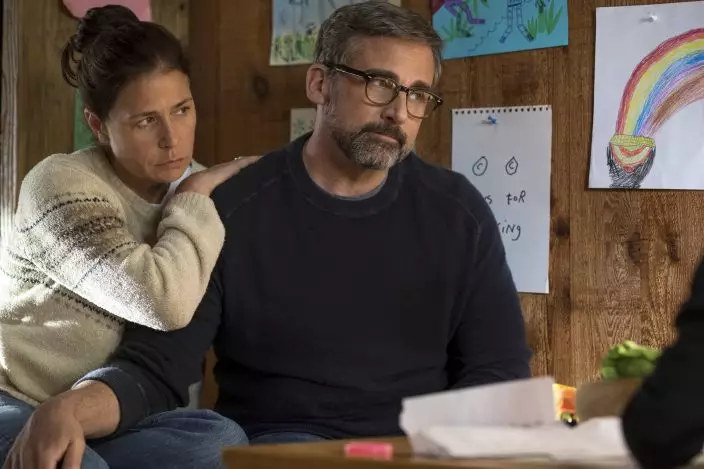
This image released by Amazon Studios shows Maura Tierney, left, and Steve Carell in a scene from "Beautiful Boy." (Francois DuhamelAmazon Studios via AP)
Van Groeningen directs the melded stories in an unconventional and often disorienting way, jumping back and forward in time with abandon and not a lot of establishing context. Some jumps make sense, like David, sitting in a cafe and waiting for his grown son to meet him after a bender, and remembering sitting at that same table years ago with Nic as a much younger child and goofing around trying to speak Klingon to one another. Others are just confusing. Is Nic returning after a semester in college, you wonder? Did he graduate? When, exactly, does he smoke pot with his father? Before or after he confesses to trying meth?
Perhaps disorientation is the point, a commentary on life and jumbled memories, but for the viewer it can be trying at times. The editing choices can make this film seem occasionally like one extended montage or lovely-looking music video. Van Groeningen also tends to favor flashbacks to various stages of Nic's pre-teen childhood as David looks adoringly on his sweet, innocent son. It's all well and good, but are we to be surprised that an addict could have once been a sweet and innocent child?
It is a frustrating diversion mainly because the best parts of "Beautiful Boy" are when Carell and Chalamet are together. I wonder whether there is a version of this movie that exists where the timeline is straight, and it is just laser focused on Nic's ups and downs since he started using drugs. Both actors excel together, especially in gut-wrenching scenes like the aforementioned one in the cafe, where David refuses this time to give Nic any money. You can see in Carell's empathetic eyes that the ultimatum is killing him inside.
Although you can empathize with David's struggles, the film keeps the viewer at a bit of a distance by plopping us down in the middle of the crisis and not really letting us get to know this father and son outside of it. And forget about the other characters: Save for one scene that comes out of nowhere, Tierney, as the stepmother, seems to only be around to look concerned in the background. And Nic's birth mother Vicki (Amy Ryan) gets even less to do, and we never learn why she's so distant in her son's life other than the fact that she lives in Los Angeles. That's not to say it is not beautifully shot, and acted, with compelling and affecting music cues from Neil Young to Radiohead. But a film like this, as authentic and raw as it is, should probably leave audiences in a puddle and not exiting the theater wondering why they're not.
"Beautiful Boy," an Amazon Studios release, is rated R by the Motion Picture Association of America for "drug content throughout, language, and brief sexual material." Running time: 112 minutes. Two and a half stars out of four.
MPAA Definition of R: Restricted. Under 17 requires accompanying parent or adult guardian.
Follow AP Film Writer Lindsey Bahr on Twitter: www.twitter.com/ldbahr
U.S. President Donald Trump told reporters Tuesday that the responsibility for keeping the Strait of Hormuz open should belong with countries that rely on it, rather than the U.S. He said there’s “no reason for us to do this.”
Trump expressed frustration earlier Tuesday with allies who have been unwilling to do more to support the U.S. war effort, telling them to “go get your own oil.” Trump recently has vacillated between insisting there is progress in diplomatic talks with Iran and threatening to widen the war.
U.S. gas prices jumped past an average of $4 a gallon for the first time since 2022 on Tuesday, as the Iran war continues to push fuel prices higher worldwide. Analysts say those high fuel costs will trickle into groceries as businesses’ transportation and packaging costs pile up.
Israel and the U.S. launched a new wave of strikes on Iran, hitting Tehran early Tuesday. Iran has been launching fewer missiles than at the start of the war, but it continues to deploy more low-flying drones that are harder to intercept. The conflict has killed more than 3,000 people in the region, and millions have been displaced in Lebanon and Iran.
In Iraq, a U.S. journalist has been kidnapped, two officials in the country said Tuesday. It’s not clear if her kidnapping was related to the war.
Here is the latest:
The United Arab Emirates has barred Iranians from entering or transiting the country as the war rages, three major airlines said Wednesday.
Long-haul carriers Emirates and Etihad, as well as the lower-cost airline FlyDubai, made the announcements on their websites.
Entry rules can sometimes be opaque in the autocratic United Arab Emirates, a federation of seven sheikhdoms, the three airlines agreed on the order. It said holders of 10-year Golden Visa residency permits could still enter the country.
Authorities have offered no official comment. But Dubai has already shut down the city-state’s Iranian Hospital and Iranian Club, institutions that date back to the time of the shah.
A tanker came under attack off the coast of Qatar early Wednesday, authorities said.
The British military’s United Kingdom Maritime Trade Operations center announced the attack happened, saying a projectile slammed into the side of the ship.
It said no environmental damage was done and the tanker’s crew was safe.
On Tuesday, a fully loaded Kuwaiti oil tanker came under attack off Dubai. Over 20 ships across the Persian Gulf have been attacked by Iran since the war began.
Early on Wednesday morning, Saudi Arabia said it had intercepted and destroyed two drones in the previous hours.
A Gulf ally of the United States, the country has been targeted by Iran repeatedly. This week, more than two dozen American service members were injured from missile and drone attacks on a Saudi air base.
White House press secretary Karoline Leavitt posted on X that Trump will “give an Address to the Nation to provide an important update on Iran” at 9 p.m. EDT on Wednesday.
Her post came shortly after Trump told reporters in the Oval Office on Tuesday evening that U.S. forces could leave Iran in “two or three weeks.”
Israel’s military said very early on Wednesday morning that it had killed a senior Hezbollah commander and another senior leader in two separate strikes in the Beirut area.
He predicted the U.S. will be done with the conflict “within maybe two weeks, maybe a couple of days longer to do the job. But we want to knock out every single thing they have.”
Despite repeatedly listing four or five objectives for the war, Trump said he “had one goal: They will have no nuclear weapon and that goal has been attained.” He did not explain how he felt that goal had been reached.
He said the U.S. may strike a deal with Iran before the next few weeks are up but said, if not, “We’ll hit some bridges, got a couple of nice bridges in mind. But if they come to the table, that’ll be good.”
The formal injury count, provided by Capt. Tim Hawkins, spokesman for U.S. Central Command, says six service members were wounded seriously.
Central Command said last Friday in a previous update that 303 troops were wounded, 10 of them seriously.
It was not clear why the tally of serious injuries has since been decreased.
Hawkins says of the total wounded to date, 315 service members have returned to duty.
It’s not clear whether the official U.S. military count includes the injured from multiple attacks on Saudi Arabia’s Prince Sultan air base last week.
Since the Iran war began, 13 U.S. service members have been killed in combat.
Two people were killed and three were injured very early on Wednesday when a strike hit a car in the Khaldeh area south of the capital, Lebanon’s health ministry said.
More were injured as strikes hit another area of the city, according to a local hospital.
Syrian interim President Ahmad al-Sharaa was speaking at an event hosted by the Chatham House think tank during a visit to London Tuesday.
“Certainly, unless it is directly targeted by any party, Syria will stay out of this conflict,” he said in response to a question about the ongoing Iran war. “Fourteen years of war are enough for Syria, during which we have paid a very high price. We are not ready to go through a new experience. Anyone who has been through war knows the value of peace.”
Syria, which is trying to recover from its own lengthy civil war, is one of the few countries in the region that has managed to remain on the sidelines of the war.
The U.S. president told reporters that the responsibility for keeping the vital waterway open would instead belong with countries that rely on it.
He said there’s “no reason for us to do this.”
“That’s not for us. That’ll be for France. That’ll be for whoever’s using the strait,” Trump said.
His comments came after he lashed out earlier Tuesday at U.S. allies for not doing more to support the U.S.’s efforts in the Iran war.
The state-run National News Agency said a car was hit on a highway in the Khaldeh area near the Beirut airport to the south of the Lebanese capital.
Other strikes happened in the city’s Jnah neighborhood in an area with a number of home goods stores. Footage from the scene showed a number of cars on fire.
It was not immediately clear what was targeted or how many casualties there were.
While welcoming Pakistan’s desire to help mediate in the Iran conflict, U.S. officials have nonetheless soured on the idea of using third-party mediators to do anything more than initiate talks.
These officials, who spoke on condition of anonymity due to the sensitivity of the diplomatic effort, said the experience with Oman as mediator before the war had clearly not worked and that direct negotiations, if they can be started, are far more efficient.
The officials also expressed doubts about Islamabad being chosen as a venue for any upcoming negotiations, mainly because of security risks. Traveling there would mean flying over one of two war zones — Russia-Ukraine or the various Middle East conflicts — or taking a very long route over Asia.
A U.N. diplomat familiar with the talks, who also spoke on the condition of anonymity to discuss private negotiations, acknowledged the risk given Pakistan’s proximity to Iran, but added that given that the South Asian country is one of few in the region with no U.S. airbases, it’s a safer bet.
— By Farnoush Amiri and Matthew Lee
The U.S. State Department’s consular affairs branch said that it was “tracking reports” that hotels and other gathering points, such as U.S. business and educational institutions, could be targeted.
The U.S. Embassy in Riyadh also told U.S. government employees to shelter in place.
Iran has repeatedly threatened educational and business places connected to Americans in the region during the war.
U.N. Ambassador Danny Danon said Israel now blames Hezbollah for all three of the recent peacekeeper deaths in southern Lebanon, citing explosive devices Monday near Bani Ayan and the shelling of a U.N. peacekeeper position Saturday.
He provided no evidence, and a U.N. spokesman said the investigation is ongoing. The three Indonesian peacekeepers were killed as Israel and Hezbollah have been engaged in fighting.
Late on Tuesday, Israel’s military said its troops were not present in the southern Lebanon area where an explosion killed two UNIFIL peacekeepers on Monday. It also said no explosive device had been placed in the area by Israeli soldiers.
The aircraft carrier USS George H. W. Bush deployed Tuesday and is slated to head to the Middle East, two U.S. officials said.
The move would make the Bush the third aircraft carrier to have supported the Iran war, along with the USS Gerald R. Ford, which is now undergoing repairs, and USS Abraham Lincoln, which arrived in the region in January.
The Ford now is docked in Croatia after undergoing repairs in a nearby naval base in Crete following a fire in a laundry room on March 12.
The officials, who spoke on condition of anonymity to discuss sensitive military plans, noted that plans for ship deployments are always subject to change.
The Bush is deploying from Norfolk, Virginia, with three destroyers: USS Ross, USS Donald Cook, and USS Mason.
Iran’s Revolutionary Guard has threatened to attack U.S. companies including some of the biggest tech giants after accusing them of being involved in “terrorist espionage” operations in Iran.
A statement carried by Iranian state media listed 18 companies whose offices in the Middle East region they claimed would be legitimate targets for Iran starting Wednesday. Those include Apple, Microsoft, Google and others.
The Guard has launched missiles and drones at Israel and Gulf Arab countries since the United States and Israel began bombing Iran on Feb. 28.
Earlier this month, Iranian drone strikes caused damage to three Amazon Web Services facilities in the United Arab Emirates and Bahrain
The Dow Jones Industrial Average soared more than 1,100 points as doubt swings back to hope on Wall Street for a possible end to the war with Iran.
The S&P 500 leaped 2.9% Tuesday for its largest gain since May.
Just a day before, worries about the war had sent the main measure of Wall Street’s health more than 9% below its all-time high set early this year.
The Dow Jones Industrial Average jumped 1,125 points and the Nasdaq composite surged 3.8%.
Oil prices eased to fuel the rally.
Canadian Prime Minister Mark Carney said his nation “condemns” the invasion as a violation of Lebanon’s’ s sovereignty.
As Israeli ground forces push deeper into the country, Carney said Lebanon’s government shares Israel’s stated goal of curbing Hezbollah, even as Israel cites the presence of fighters to justify the offensive.
Carney made the call for the ceasefire Tuesday while speaking to reporters in Quebec.
Israel's prime minister said Israel has scored major achievements in weakening the Iranian regime and its military capabilities.
Netanyahu added that Israeli forces are systematically crushing the Iranian regime even if it still has weapons launch capabilities.
The Israeli prime minister also said that Israel hopes to soon be able to speak about new alliances in the region.
AI-Monitor, a regional news site covering the Middle East, has identified the journalist kidnapped Tuesday in Baghdad as Shelly Kittleson, a freelancer who contributed to the publication. In a statement, Al-Monitor said it is “deeply alarmed” by her kidnapping.
“We call for her safe and immediate release,” the statement said. “We stand by her vital reporting from the region and call for her swift return to continue her important work.”
Kittleson has been a longtime freelancer in the region, reporting extensively from Syria and Iraq.
Iraqi officials had earlier said that a foreign journalist was kidnapped and that security forces were pursuing the captors.
The U.S. State Department said in a statement that it is tracking the reports and that the “Trump Administration has no higher priority than the safety and security of Americans.”
In an update Tuesday evening, the Israeli military said soldiers from the Nahal reconnaissance unit engaged in close combat after militants opened fire on them overnight in southern Lebanon. With support from aircraft and tanks, the militants were killed, according to the statement.
The IDF first announced the four soldiers’ deaths at around 6:22 a.m. local time. Additionally, one soldier was severely wounded and another moderately injured.
Two Iraqi security officials said the kidnapped journalist was a woman with U.S. citizenship and that two cars were involved in the kidnapping, one of which crashed and was apprehended, while the car carrying the journalist fled the scene.
The ministry did not identify the journalist or give further details on their nationality.
In a statement Tuesday, it said that security forces had launched an operation to track down the kidnappers, “acting on precise intelligence and through intensive field operations” after intercepting a vehicle belonging to the kidnappers that overturned as they tried to flee.
One suspect was arrested and one of the vehicles used in the kidnapping was seized, but others remain on the loose, the statement said. A spokesperson for the U.S. Embassy in Baghdad declined to comment.
It was not immediately clear if the kidnapping was related to the Iran war.
Iran-backed militias in Iraq have launched regular attacks on U.S. facilities in the country since the beginning of the U.S.-Israeli war on Iran.
Iran’s missiles continue to penetrate Israeli airspace and kill civilians. Its cheap drones slip through its neighbors’ air defenses, shattering Gulf Arab nations’ carefully curated images of invincibility and wounding U.S. troops. Its threats to attack oil and gas tankers strangle the Strait of Hormuz, sending energy prices soaring.
To maintain its leverage, Iran just needs to withstand the conflict long enough to pressure Washington to seek an off-ramp, experts say.
“Their strategy is to try to cause sustained pain and to drive up the costs of the war for the U.S.,” said Kelly Grieco, an expert in U.S. military strategy and operations who is a senior fellow at the Washington-based Stimson Center think tank.
Iran is launching fewer missiles than at start of the war, but is deploying more low-flying drones that are harder to intercept.
▶ Read more
Mohammadi’s legal team, accompanied by one family member, visited her in Zanjan Prison on March 29, according to a statement from the Free Narges Coalition campaign.
“Her general health was extremely poor, and she appeared pale and weak with significant weight loss,” it said in a statement, then cited her fellow inmates as saying she was found unconscious in her bed with her eyes rolled back on March 24.
“Despite this medical emergency, and evident indications of a heart attack, authorities refused to transfer Mohammadi to a hospital or allow her to visit a specialist,” the statement said.
Mohammadi has a heart condition and suffered multiple heart attacks while imprisoned before undergoing emergency surgery in 2022, her supporters say.
U.S. Ambassador Mike Waltz called for a “pause” during an emergency Security Council meeting on the killings, while the United Nations figures out whether Israel or Hezbollah militants are to blame.
He said the U.N. must “fully investigate and assess the circumstances of these tragic incidents,” even as countries share in the grief.
Waltz also called for changes to U.N. peacekeeping operations, saying the council owes troops not just condolences but “a wise approach” that recognizes “terrorists have no respect for the norms of international law.”
British Defense Secretary John Healey said Tuesday that the U.S. remains a key ally despite criticism from his American counterpart, Pete Hegseth, that the U.K. had not deployed its navy to the Middle East.
“The U.S. is a uniquely close ally to the U.K.,” Healey said in Qatar. “We do things as two nations that no other militaries or intelligence services do. And my job as defense secretary is to make sure that we can, in this Middle Eastern conflict, defend Britain and British people, and we are; and British bases, and we are; and British allies and partners, and we are.”
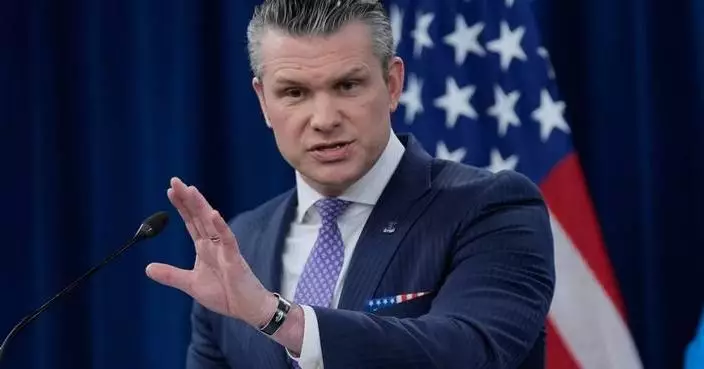
Hegseth sniped at the U.K. for not sending warships to the region, saying at a Washington news conference that “last time I checked there was supposed to be a big, bad Royal Navy that could be prepared to do things like that as well.”
Healey announced that the U.K. is sending more missile and air defense systems to Bahrain, Kuwait and Saudi Arabia, and extending the use of its Typhoon fighter jets in Qatar.
In a social media post, WHO’s director general said the windows in its offices in Iran’s capital were shattered after strikes in the last two days, but that no one was injured.
“Strikes impacting the operations and damaging the premises of WHO and other @UN agencies, the locations of which have been clearly identified, cannot be tolerated and must be avoided at all costs,” Tedros Adhanom Ghebreyesus said.
A young anti-government activist in Iran says he would volunteer with the army if the United States launches ground operations, calling the country’s territorial integrity a “red line.”
“If the idea of occupying islands or part of my country’s territory is implemented, I will definitely be available as a soldier to defend the Iranian nation,” said the 25-year-old from the northern town of Babol, speaking on condition of anonymity because of fears for his safety.
The activist, who joined protests before the war, said he received a weekend text urging volunteers to join national “defense” efforts. He said he would not serve with the Revolutionary Guard, which has crushed past unrest, but would join the regular army.
Iran has seen multiple text-message campaigns urging enlistment, although it is unclear how many recruits they have generated. The country also requires military service for most men over 18, with limited exemptions.
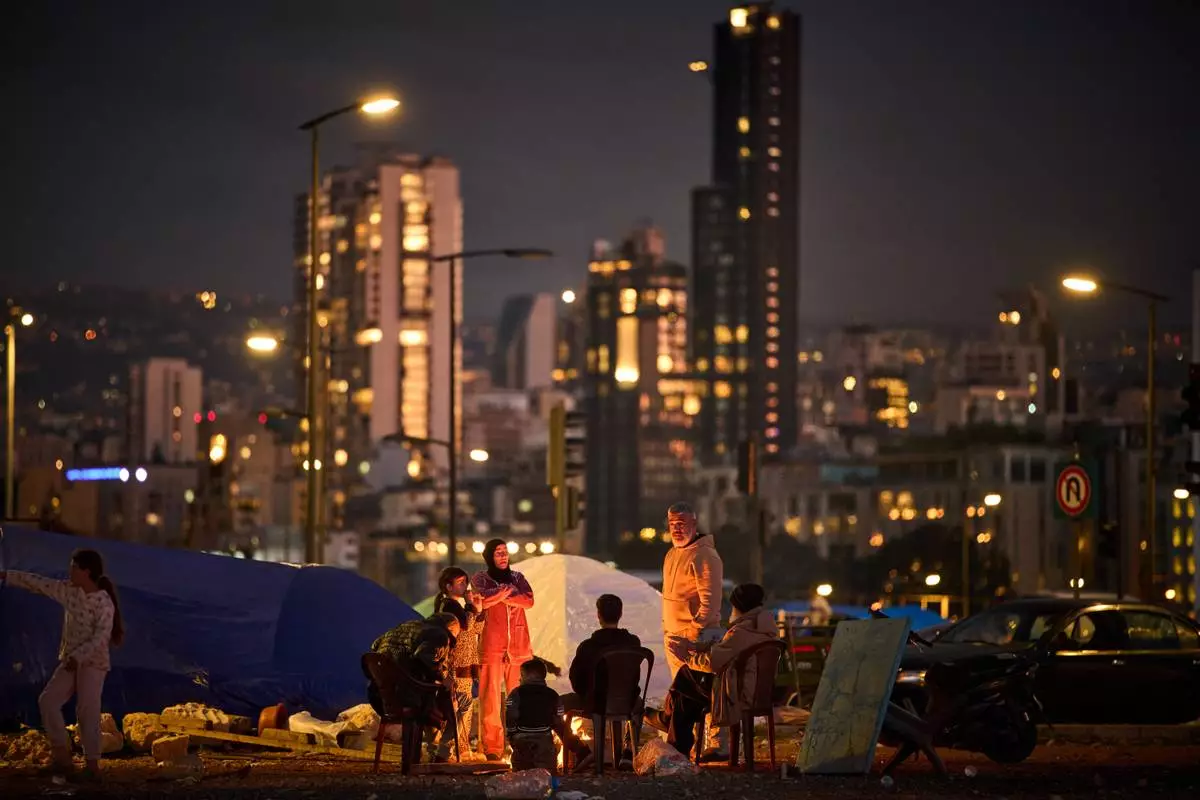
A family who fled Israeli shelling in southern Lebanon warm themselves by a bonfire next to tents used as shelters in Beirut, Lebanon, Tuesday, March 31, 2026. (AP Photo/Emilio Morenatti)
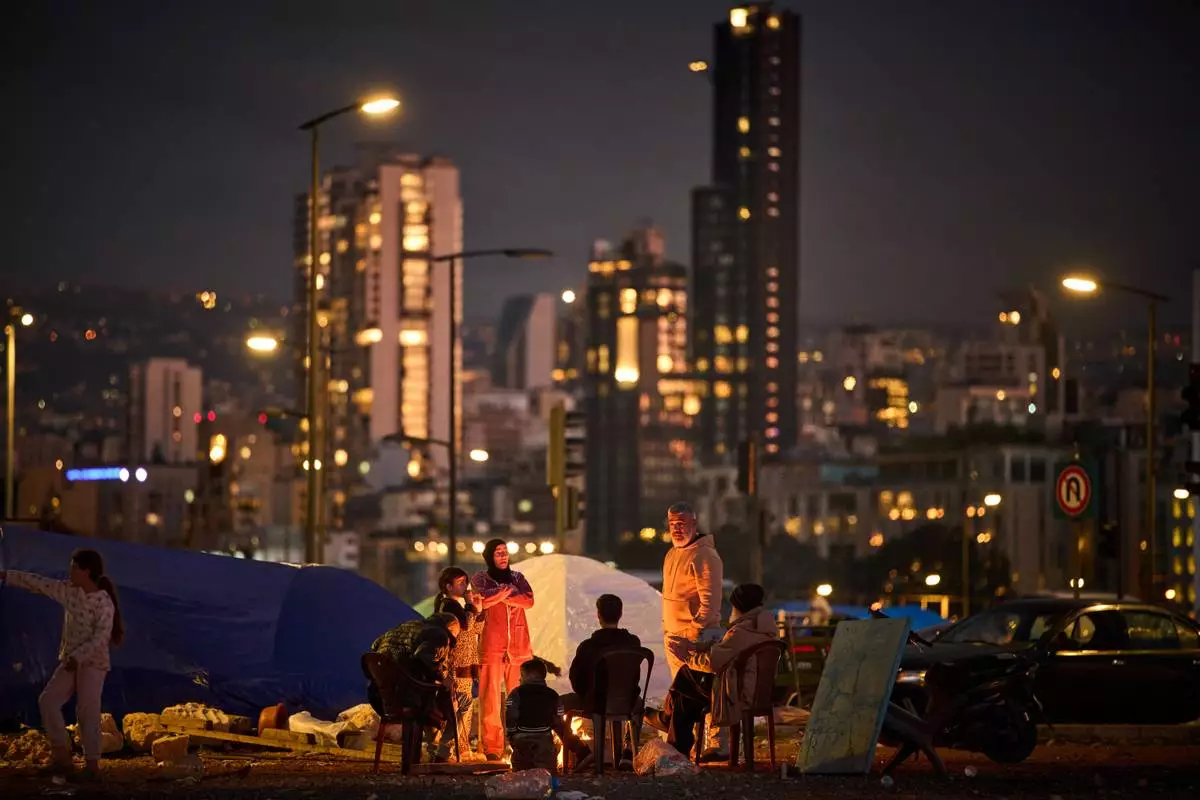
Members of a family who fled Israeli shelling in southern Lebanon warm themselves by a bonfire next to tents used as shelters in Beirut, Lebanon, Tuesday, March 31, 2026. (AP Photo/Emilio Morenatti)
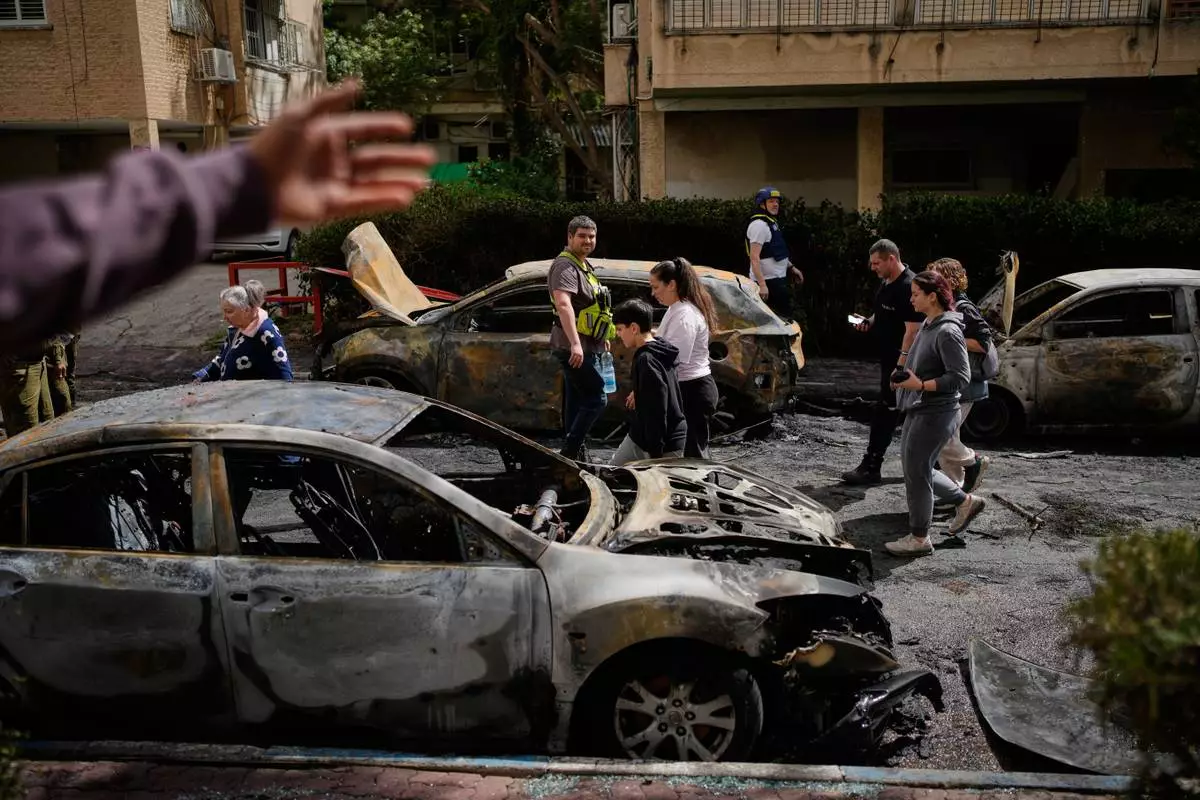
Residents and Israeli security forces inspect a site struck by an Iranian missile in Petah Tikva, Israel, Tuesday, March 31, 2026. (AP Photo/Ohad Zwigenberg)
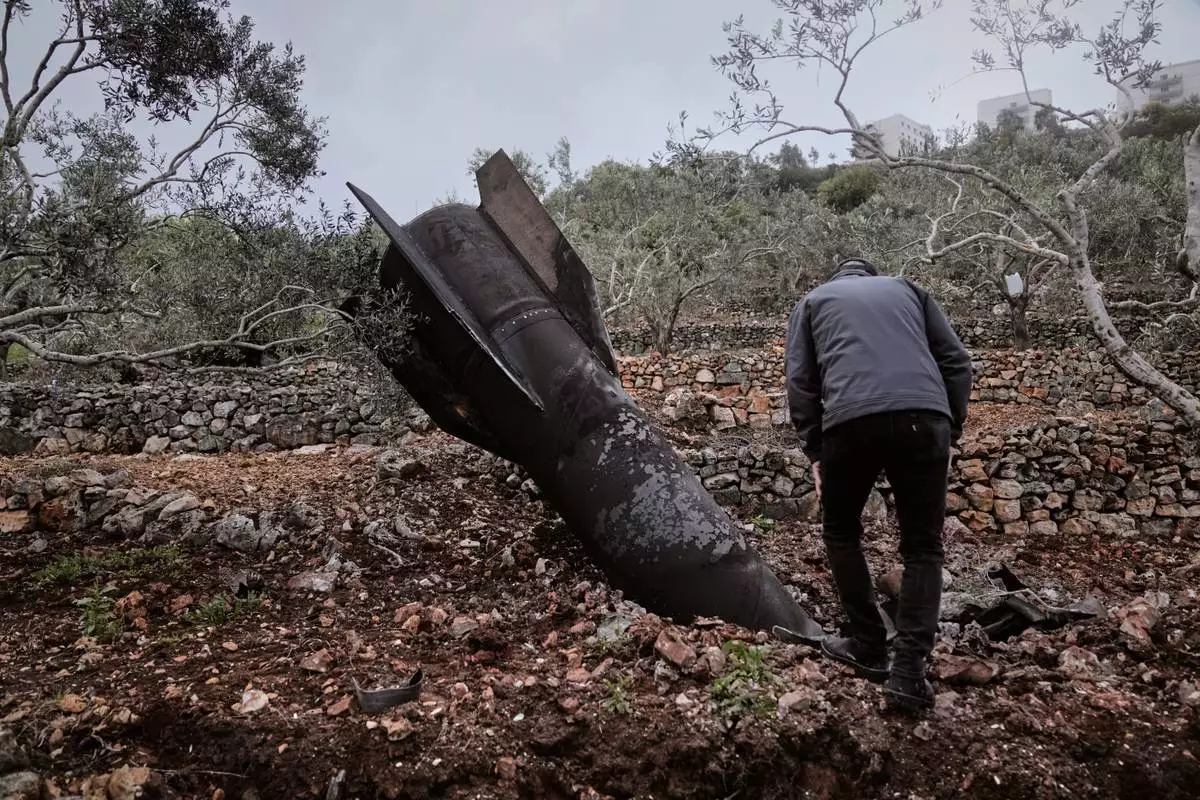
A man inspect the wreckage of an Iranian missile that landed near the West Bank village of Marda, Tuesday, March 31, 2026. (AP Photo/Majdi Mohammed)
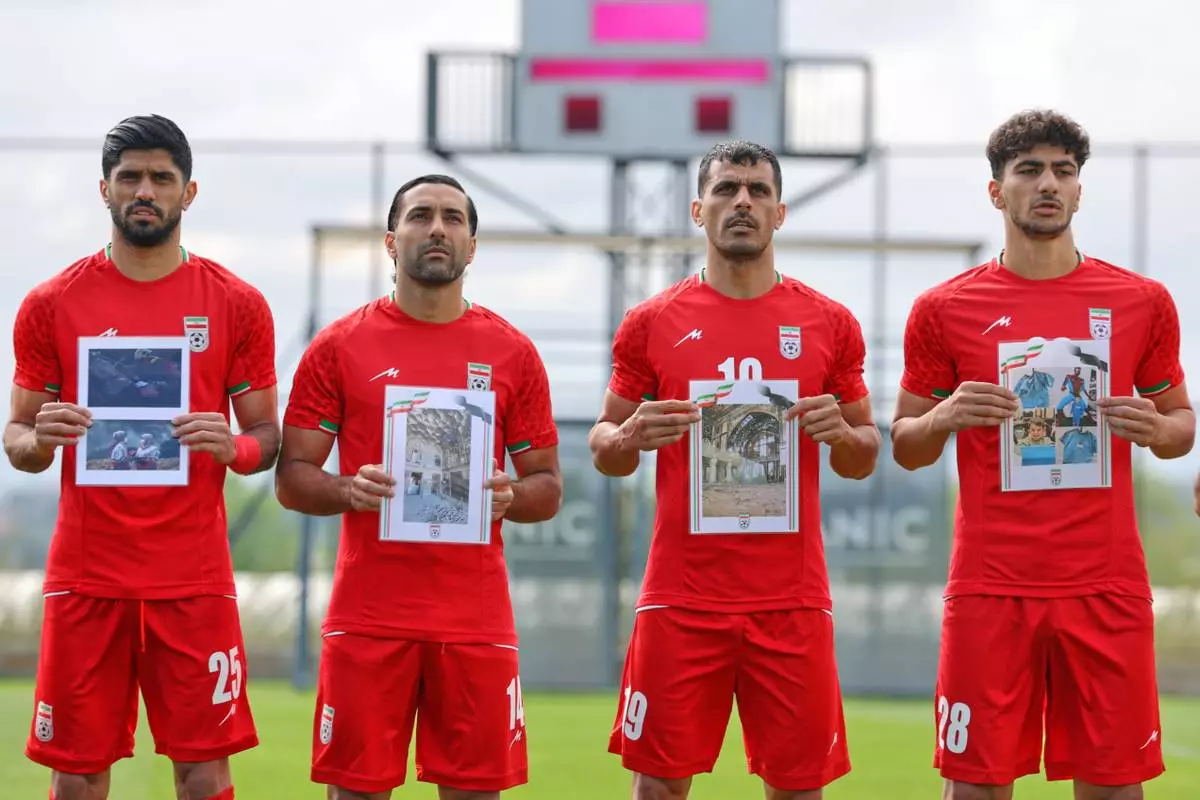
Iran's players sing the national anthem, holding pictures of children allegedly killed in U.S. and Israel strikes in Iran, before a friendly soccer match between Iran and Costa Rica, in Antalya, southern Turkey, Tuesday, March 31, 2026. (AP Photo/Riza Ozel)
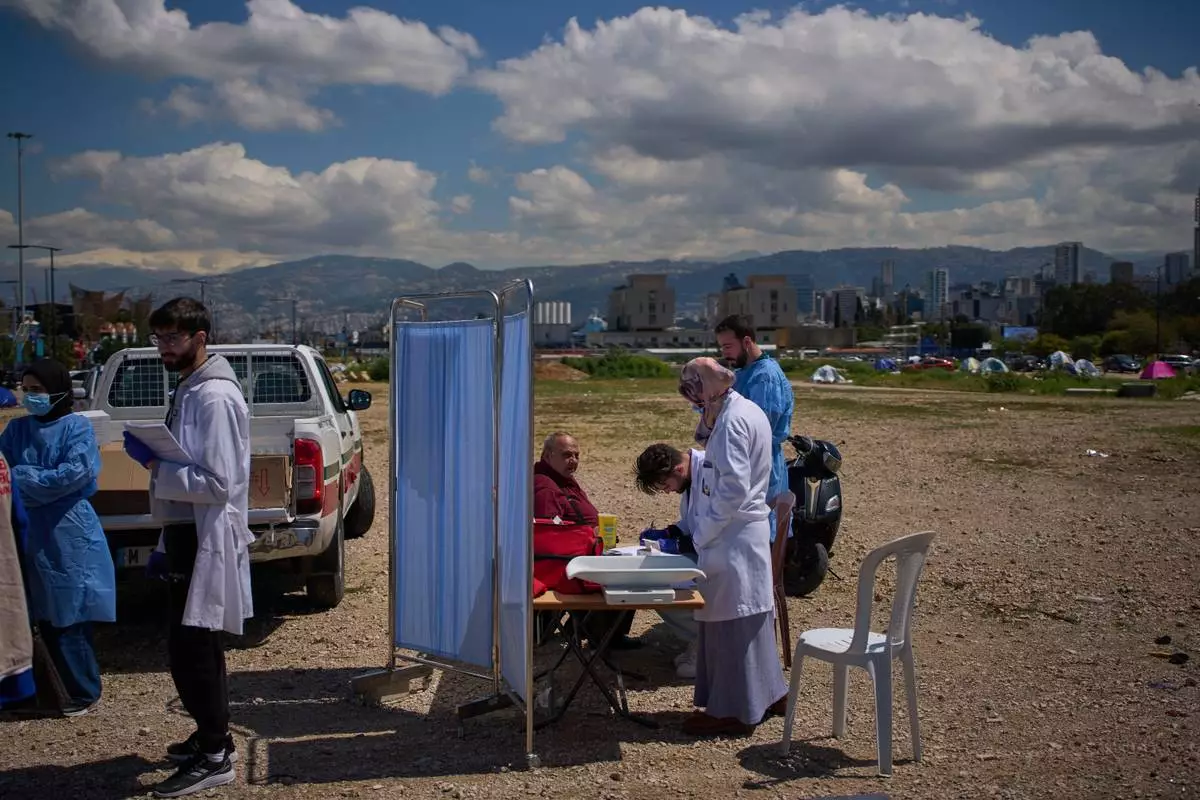
A displaced man receives medical care at a temporary mobile clinic set up near tents sheltering people who fled Israeli airstrikes, in Beirut, Lebanon, Tuesday, March 31, 2026. (AP Photo/Emilio Morenatti)
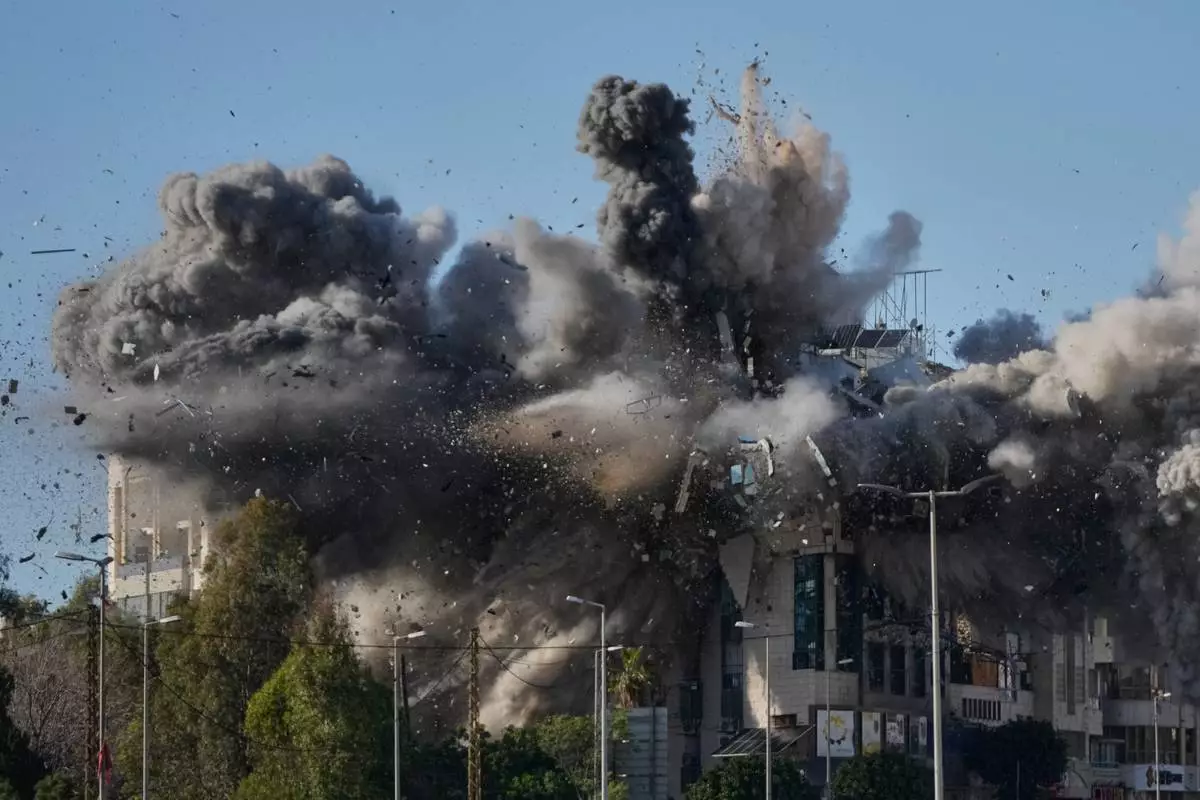
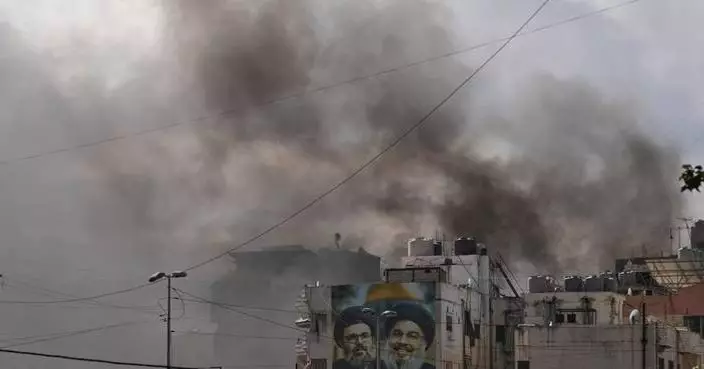
Smoke rises after an Israeli airstrike hits a building near the airport road in Beirut, Lebanon, Tuesday, March 31, 2026. (AP Photo/Hussein Malla)
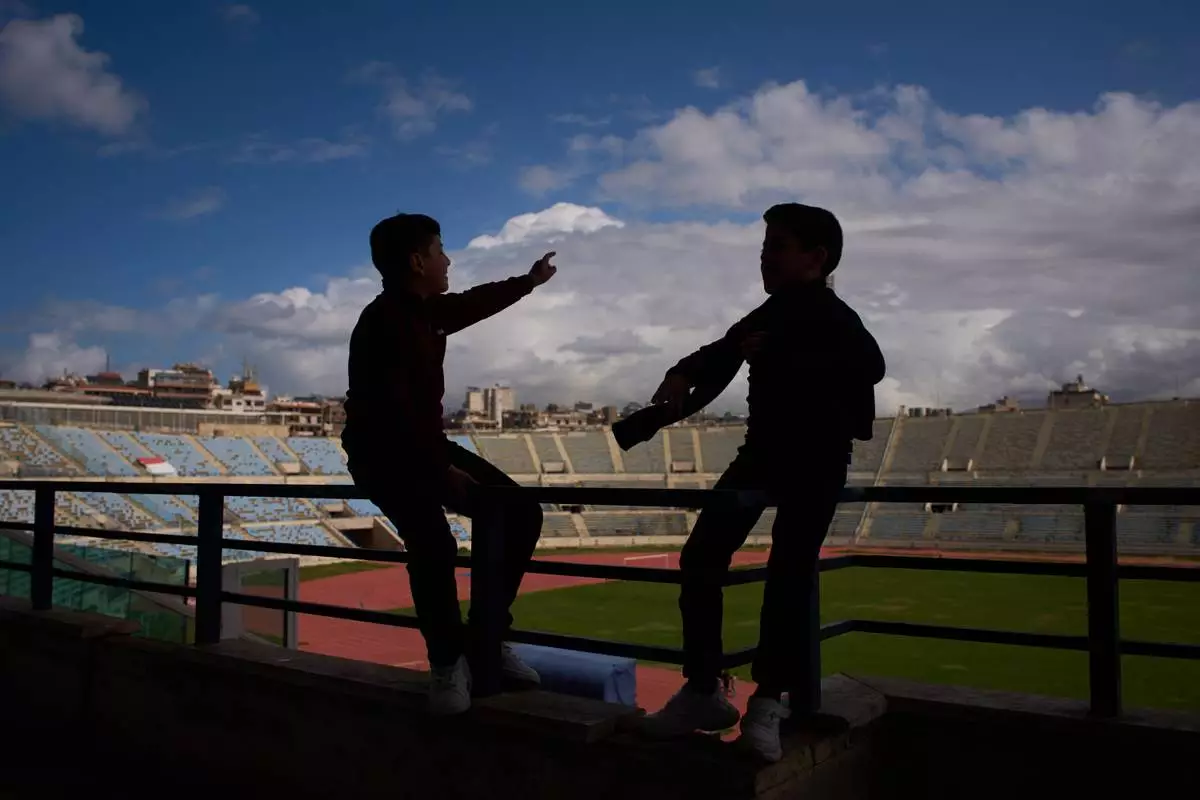
Displaced children talk inside Camille Chamoun Sports City Stadium, now used as a shelter for people displaced by Israeli airstrikes in southern Lebanon, in Beirut, Lebanon, Monday, March 30, 2026. (AP Photo/Emilio Morenatti)
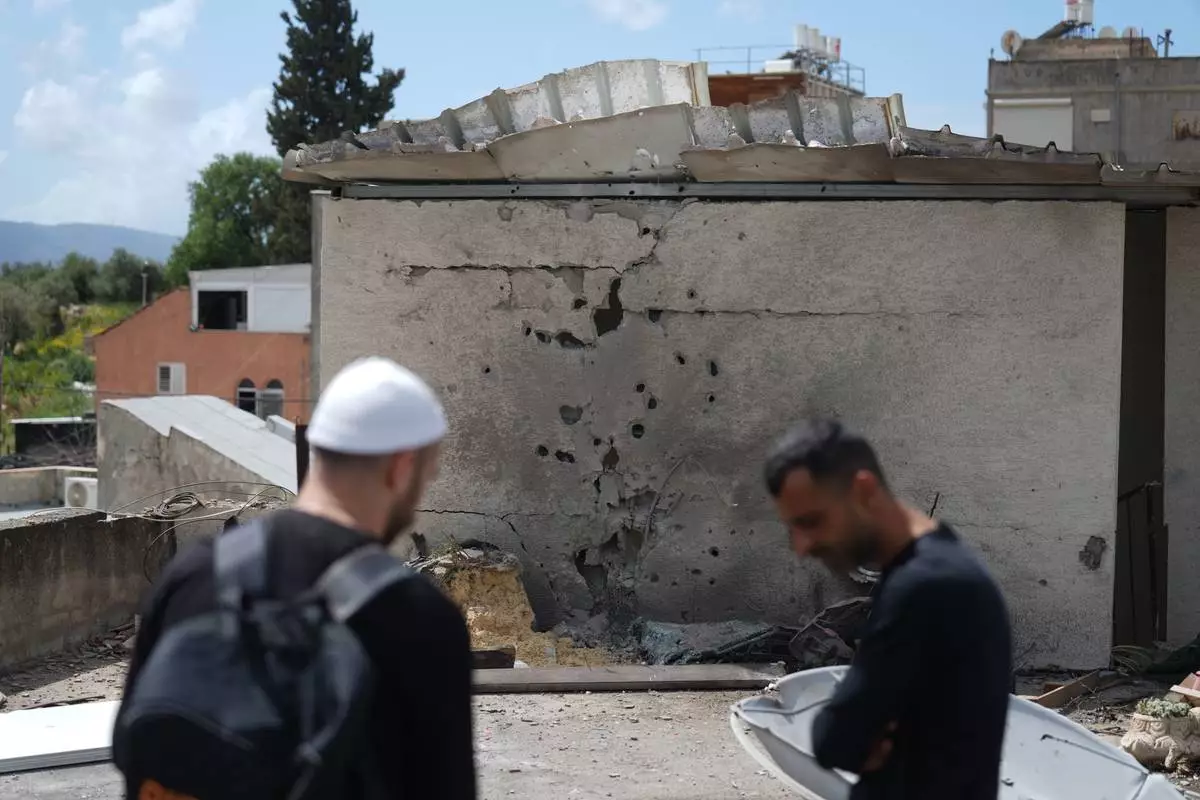
Residents inspect a damaged house following an Iranian missile strike in Shefaram Israel, Monday, March 30, 2026. (AP Photo/Ariel Schalit)
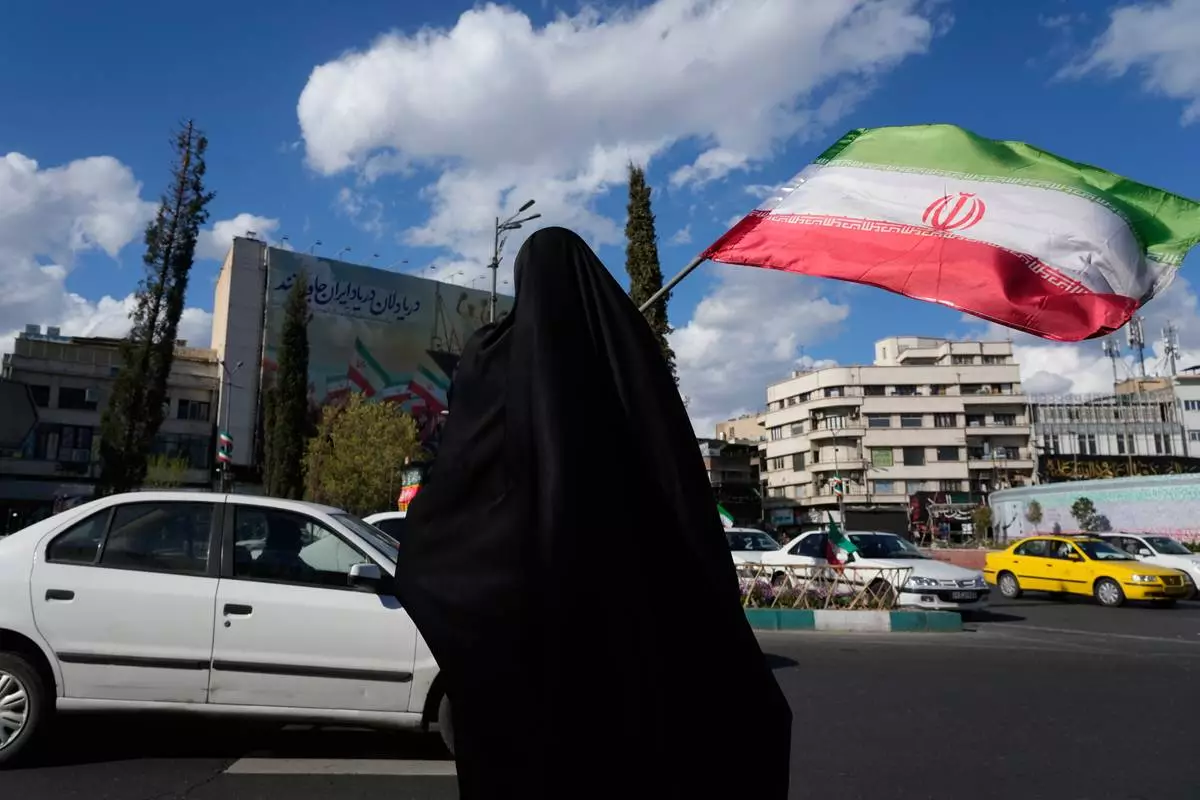
A woman waves an Iranian flag during a campaign in support of the government at the Enqelab-e-Eslami, or Islamic Revolution, square in downtown Tehran, Iran, Monday, March 30, 2026. (AP Photo/Vahid Salemi)
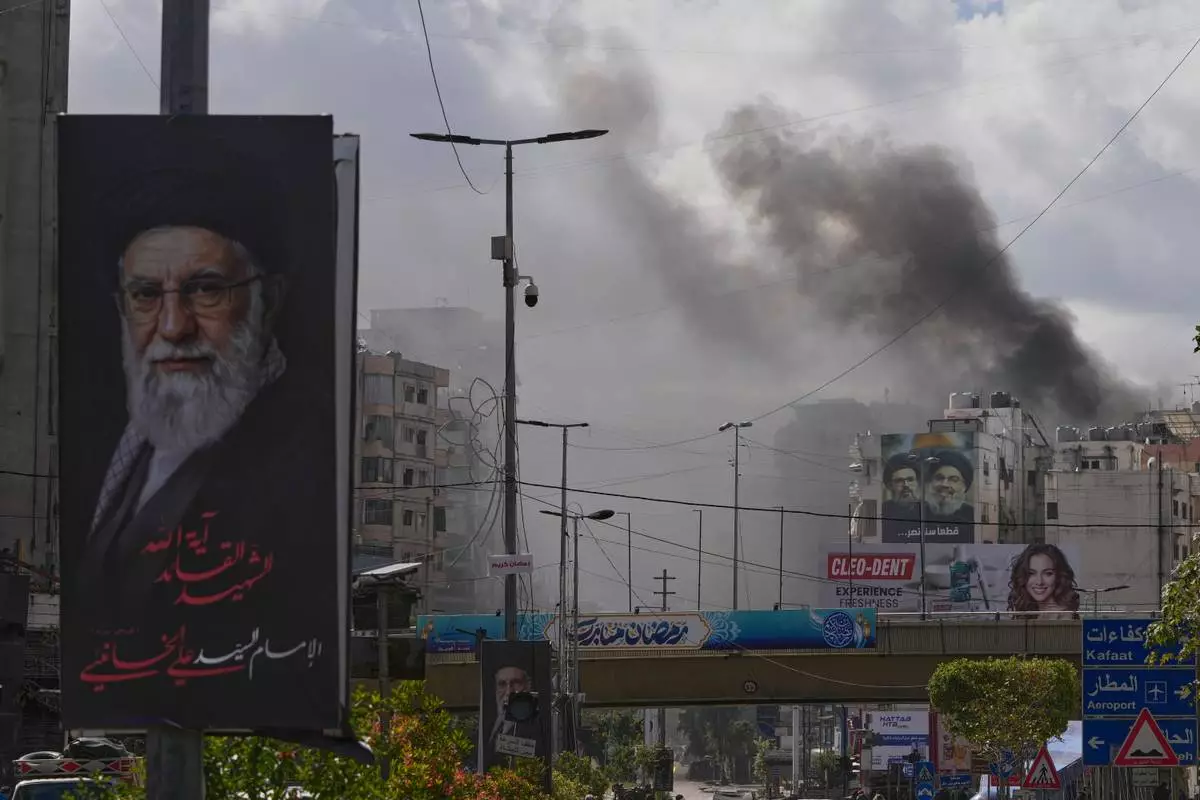
A portrait of Iran's late Supreme Leader Ayatollah Ali Khamenei, left, is seen, as smoke rises following an Israeli airstrike in Dahiyeh, Beirut's southern suburbs, Lebanon, Monday, March 30, 2026. (AP Photo/Hassan Ammar)
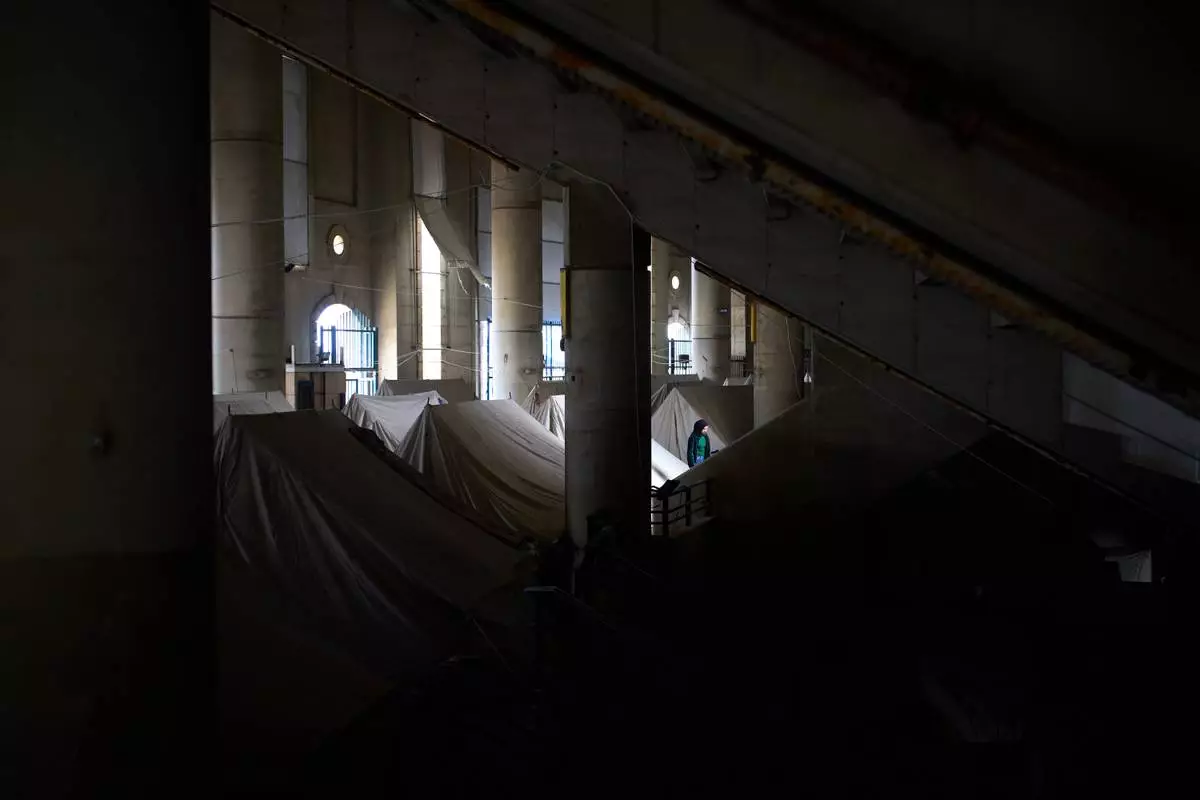
A displaced woman walks next to tents set up inside the Camille Chamoun Sports City Stadium, which has been turned into a shelter for people displaced by Israeli airstrikes in southern Lebanon, in Beirut, Lebanon, Monday, March 30, 2026. (AP Photo/Emilio Morenatti)