
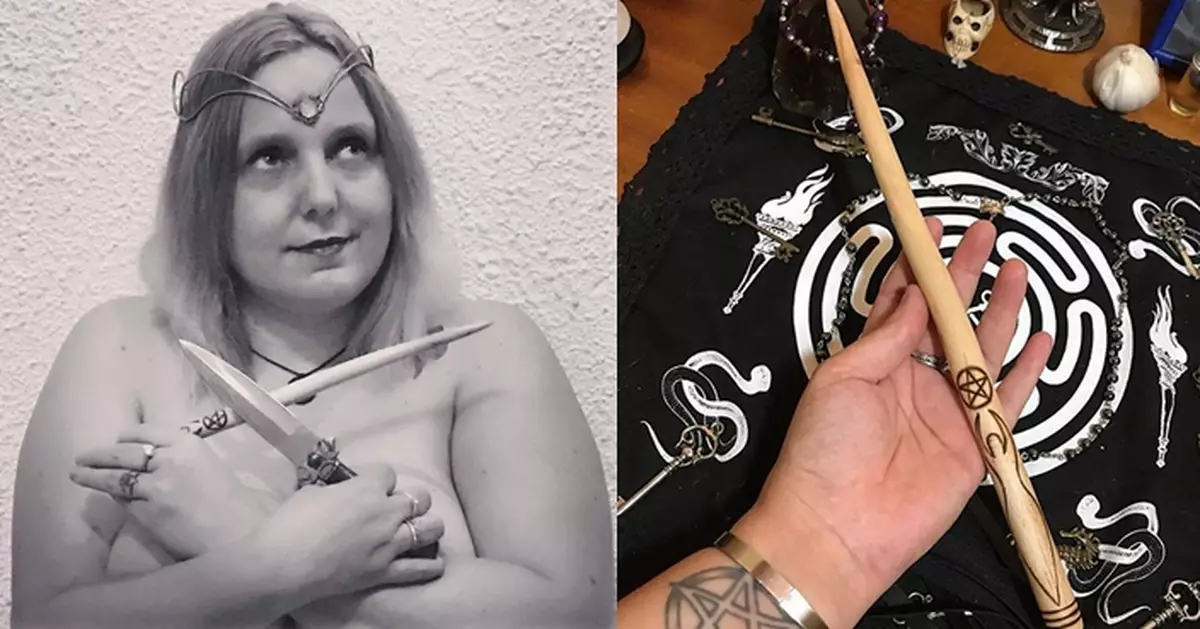
Sonia and her two children cast spells, make potions and pray to the moon – all in the buff.
A naked witch, who performs pagan rituals with her children in the altogether, claims that stripping off helps them to bond with nature.
Click to Gallery
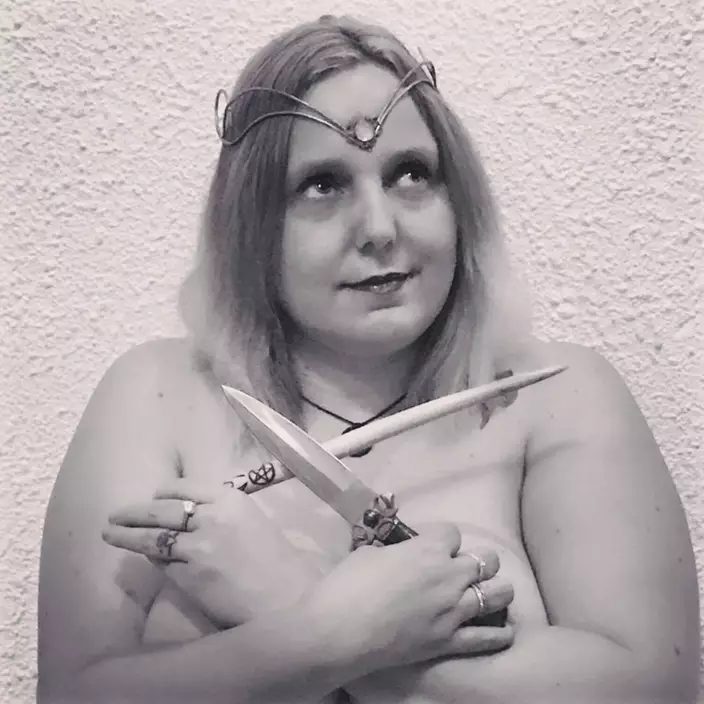
Sonia holding a wand and dagger (Collect/PA Real Life)
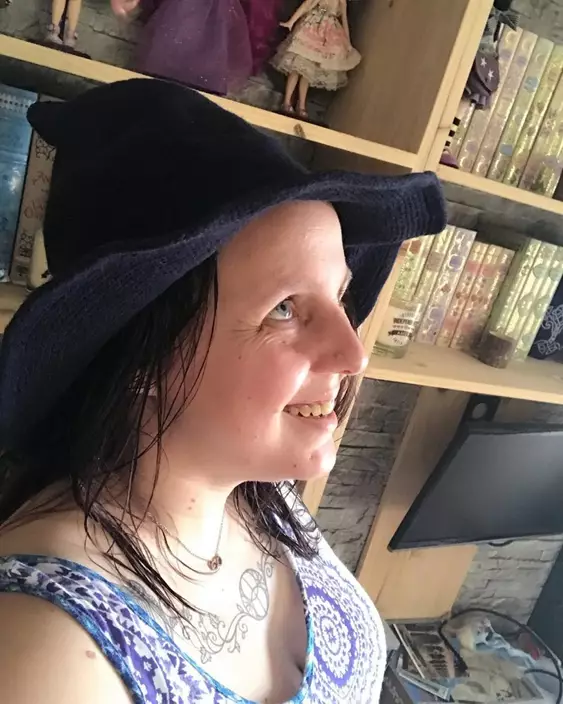
Her witch's hat helps Sonia channel her magic (Collect/PA Real Life)
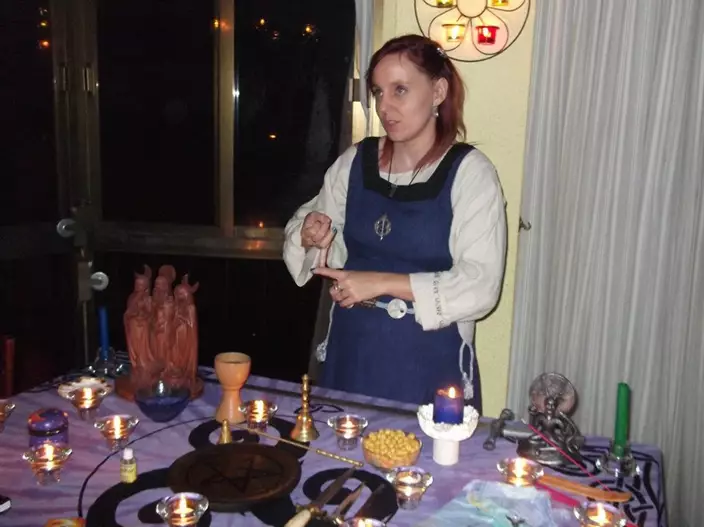
Sonia celebrates the new moon and the full moon every month (Collect/PA Real Life)
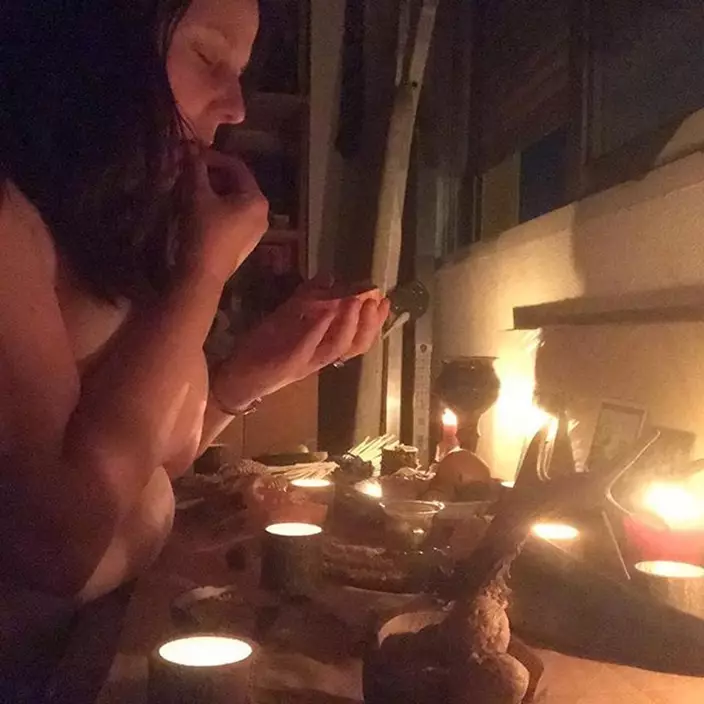
Sonia practises witchcraft naked with both of her two children (Collect/PA Real Life)
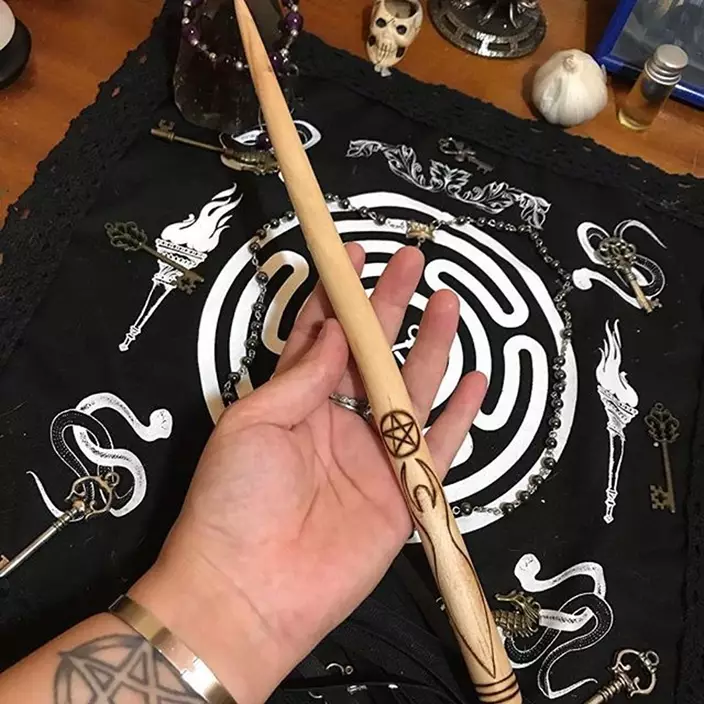
Sonia's wand which she uses to channel her energy (Collect/PA Real Life)
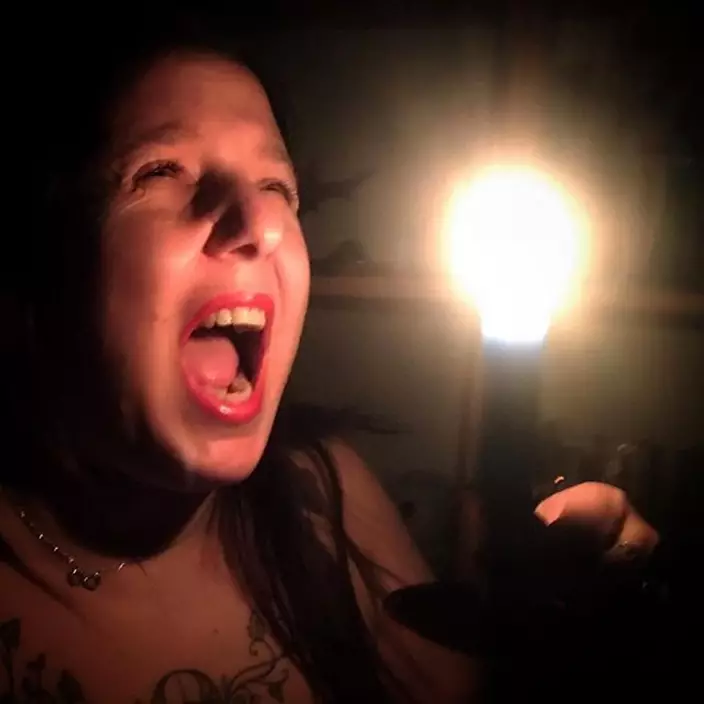
Sonia gathers with a group of other witches to celebrate the new and full moon (Collect/PA Real Life)
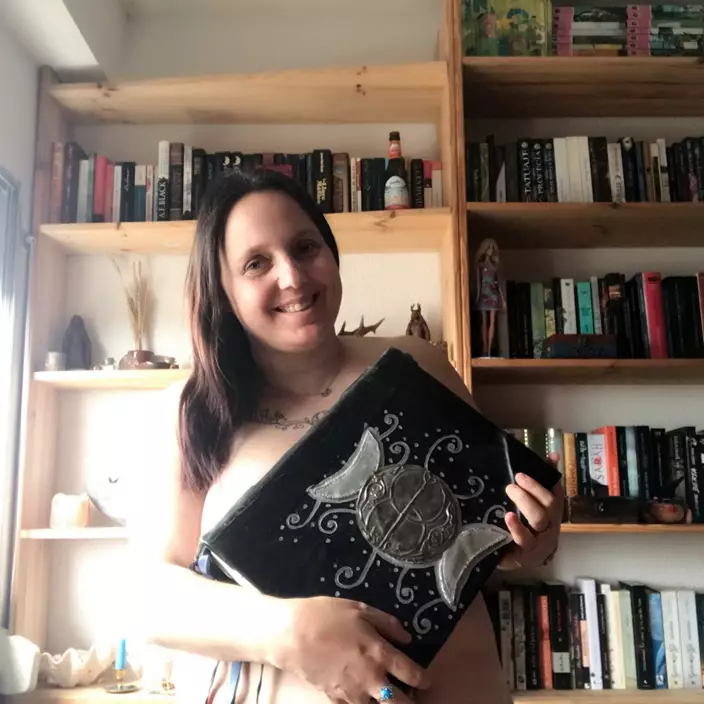
Sonia with her spell book (Collect/PA Real Life)
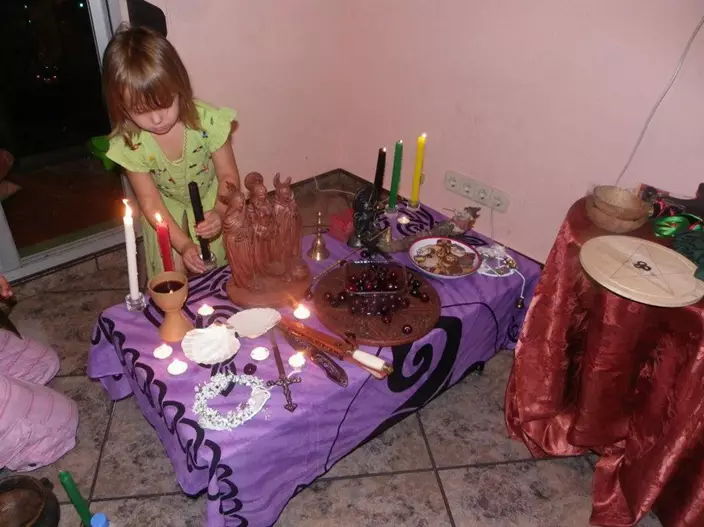
Sonia's daughter Mala has her own mini altar (Collect/PA Real Life)
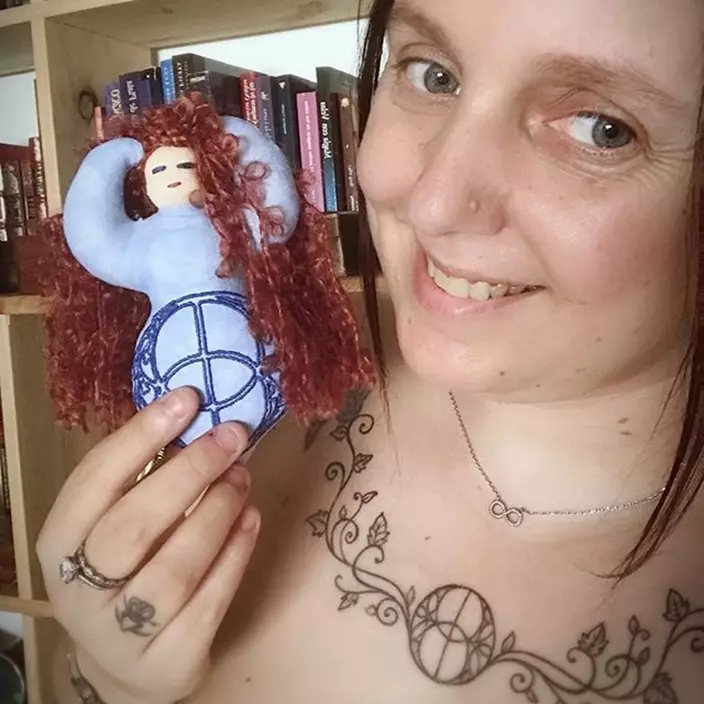
Sonia with a doll she uses for praying (Collect/PA Real Life)
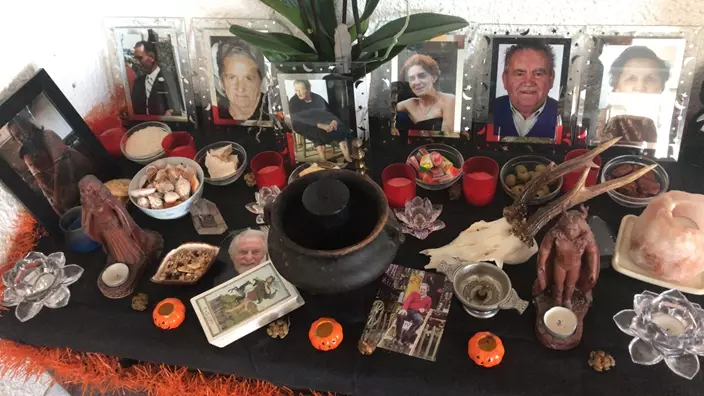
Pictures of Sonia's family members, who she protects with spells (Collect/PA Real Life)
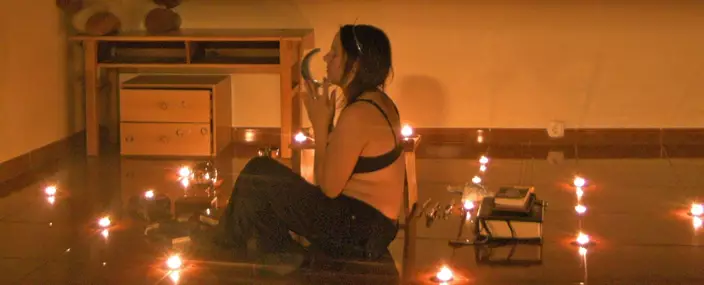
Sonia prefers to worship with as few clothes on as possible (Collect/PA Real Life)
Divorcee Sonia Rincon, 36, performs rituals in her kitchen to celebrate the new moon and the full moon, often helped by her son, Cristian, 15, and daughter, Mala, 11 – placing spells, written on scraps of paper, into a huge cauldron.
Sonia, of Valencia, Spain, who also wears a pointed witch’s hat and has a broomstick, said: “When you are practising witchcraft and Wicca – a contemporary pagan religious movement – you work naked, so you are totally natural and have nothing to hide.”
Sonia holding a wand and dagger (Collect/PA Real Life)
She continued: “It’s a tradition I really like, because sometimes people judge you by the clothes you wear. In witchcraft, you are all the same and when we’re naked, we’re all the same, too.
“We only conduct rituals naked when we’re inside, though. We aren’t exhibitionists and we don’t want to get cold.
“My children were born naked, so they think nudity is perfectly normal.”
Her witch's hat helps Sonia channel her magic (Collect/PA Real Life)
Sonia ‘s interest in witchcraft began when she was just six-years-old.
She recalled: “It was January 6, Three Kings Day- the day when Spanish children receive Christmas presents.
“My cousin, who is now 41, told me my grandfather wasn’t coming. He had passed away and was going somewhere else to be reborn.”
Sonia celebrates the new moon and the full moon every month (Collect/PA Real Life)
Sonia continued: “After that, I began to believe in rebirth and started reading children’s books about mythology.”
Increasingly inquisitive about alternative religions and ways of living, in her teens, Sonia took her research a step further.
She said: “When I was a teenager, we had the internet for the first time.”
Sonia practises witchcraft naked with both of her two children (Collect/PA Real Life)
She continued: “I started to search for information about magic, the moon, new religions, the stars and the legacy of witchcraft and Wicca.
“It all seemed to encourage living very close to nature and, ever since, I’ve used witchcraft to get in touch with the natural world and respect everything in it.”
Brought up as a Catholic, becoming a witch attracted both disapproval and scepticism from some members of her family.
Sonia's wand which she uses to channel her energy (Collect/PA Real Life)
Sonia continued: “Growing up in a Catholic family, if you did something wrong, you were told you would go to hell, so you needed to pray for forgiveness.
“With witchcraft, you are the owner of your own decisions and you will suffer the consequences of them. It’s a freer thing to believe in.
“When, at 16, I decided I wanted to be a witch and not a Catholic, I started buying books about it and began to practise on my own at home.”
Sonia gathers with a group of other witches to celebrate the new and full moon (Collect/PA Real Life)
She added: “But my mother thought it was dangerous, that it was like a sect and I would be making animal sacrifices. She believed all the stories about bad witches killing children!”
Now, not only has Sonia’s mother Antonia, 57, relented, she has even asked for her help.
Sonia laughed: “She’s better about it now. When she needed a driving licence, she asked me if I could make something to help her pass her exam!”
Sonia with her spell book (Collect/PA Real Life)
Sonia continued: “But I said. ‘No, sorry, that is not how it works! You are Catholic, not a witch, so you can’t just pick and choose!’
“Some members of my family just say, ‘She’s getting crazier every day.’
“My cousin Silvia says, ‘If it works for you, that’s ok,’ and some of my friends are curious.”
Sonia's daughter Mala has her own mini altar (Collect/PA Real Life)
As she learns more about making herbal potions, Sonia’s remedies are also proving popular with some of her pals.
She said: “I make something that’s very good for a sore throat and I make a menstruation tea, using shepherd’s bag leaves, flowers of yarrow, sage leaves, Melissa leaves, stevia leaves and valerian flowers.
“Friends come to me saying they have a sore stomach, they have my tea and they’re cured. It’s much better than taking conventional medicine.”
Sonia with a doll she uses for praying (Collect/PA Real Life)
While Sonia insists she has not joined a sect, she does regularly operate as part of a witches’ coven.
She explained: “I often celebrate the full moon with a group of about 16 other witches.”
She continued: “We go and pray to the moon together. We also have dinner together – sharing food and drink, like a little family. We enjoy ourselves.”
Pictures of Sonia's family members, who she protects with spells (Collect/PA Real Life)
For Sonia, the tools of her trade, as well as her cauldron, include a wand – used to channel energy and to write the name in the air of people she wants to protect – and a pointed hat, which again, she channels energy upwards through. It also helps her to be recognised by strangers as a witch.
Her broomstick is strictly for cleaning purposes, but she is a great tarot card collector and reads them to stop her from making impulsive decisions.
“I am guilty of acting on impulse, so consulting the tarot cards helps me to think clearly and not to act in haste,” she said.
Sonia prefers to worship with as few clothes on as possible (Collect/PA Real Life)
Despite her son telling her that one of his teachers had said he was ‘getting too much fantasy at home,’ Sonia is keen to include her children when she performs her twice-monthly rituals.
Describing the next big event on the witch’s calendar, Samhain – a Celtic version of Halloween – on October 31 – the New Year for Wiccans, she said: “We make an altar and put a little dish of my ancestors’ favourite food on it.
“Then we write them a letter and put it in the cauldron.”
She continued: “It’s the last celebration of the year and it gives us the chance to thank them for everything that’s gone on that year.”
Keen to dispel the belief that all witches cast evil spells and do wicked things, Sonia sees her kind of sorcery as a force for good – helping those who practise it to empathise with nature.
She added: “For me, to be a witch is to be completely chilled and never to harm anyone.”
LONDON (AP) — The BBC is hosting a party for David Attenborough at the Royal Albert Hall. Cinemas are playing his nature films. Friends have spent weeks lavishing praise on the man and his work.
But the world’s most famous wildlife presenter is likely to be uncomfortable with all the attention as he celebrates his 100th birthday on Friday, said Alastair Fothergill, the producer of some of Attenborough’s most well-known documentaries.
“He’s always been very clear to all of us that work with him: ‘Remember, the animals are the stars, I’m not,’’’ Fothergill told The Associated Press. “So, yes, surprisingly for one of the most famous men on the planet, he doesn’t like being famous at all.”
But Attenborough has had to accept the accolades this week as scientists, politicians and conservationists celebrated the man who has brought frolicking gorillas, breaching whales and tiny poisonous frogs into living rooms around the world for more than 70 years.
Through BBC programs such as Life on Earth, The Private Life of Plants and The Blue Planet, Attenborough has illuminated the beauty, ferocity and sometimes downright weirdness of nature in a hushed melodic voice that conveys his own awe at what he is witnessing.
Viewers who might never leave their hometowns were transported to the Himalayas, the Amazon and the unexplored forests of Papua New Guinea. But behind the stunning images was an attention to scientific accuracy that helped teach people about complex subjects like evolution, animal behavior and biodiversity.
And as the evidence mounted, he began to sound the alarm about climate change, ocean plastic and other human-caused threats to the planet.
That helped people understand not only how life evolved but, more importantly, why we have to protect it, said Professor Ben Garrod, an evolutionary biologist at the University of East Anglia and himself a broadcaster who has worked alongside Attenborough.
Attenborough, Garrod believes, initially saw himself as a neutral observer but was compelled to speak out when he saw that politicians, business leaders and the public weren’t taking the emergency seriously.
“He is showing you the majesty, the ferocity, the fragility of the natural world. He shouldn’t have ever had to have turned to policymaking and advocacy,” Garrod said.
“I think it’s very easy for a lot of people to say, ‘He should have done it sooner. Why didn’t he act 20 years, 30 years, 40 years ago?’” Garrod then asked: “Why didn’t we?''
Born in London on May 8, 1926, the same year as the late Queen Elizabeth II, Attenborough was raised on the grounds of what is now the University of Leicester, where his father was a senior leader.
His fascination with nature developed when he was a young boy, riding his bicycle into the surrounding countryside where he collected treasures such as abandoned birds’ nests, the shed skin of a snake and, most importantly, fossils.
“I’d find a fossil and show it to my father and he’d say ‘Good, good, tell me all about it.’ So I responded and became my own expert,” Attenborough told Smithsonian Magazine in 1981.
He went on to study geology and zoology at the University of Cambridge.
In 1952, Attenborough joined the BBC, working behind the scenes on “everything from ballet to short stories.” After he'd been there about two months, the capture of a “living fossil” off the coast of East Africa caused an international stir, and he was asked to produce a short piece about the coelacanth.
That story was told in the studio by Professor Julian Huxley, an evolutionary biologist, who used pickled wildlife specimens and a photograph of a coelacanth to explain the fish’s significance.
But Attenborough thought television could do more.
“I’d always wanted to do films on animals around the world,” he recalled in a 1985 interview with The Associated Press. “But the attitude was, ‘We’ve got TV cameras in the studio. What’s this about spending money abroad?’”
In 1954, he finally persuaded the BBC to let him accompany a London Zoo team that traveled to West Africa to collect specimens. That began a decade as host and producer of “Zoo Quest,” kick-starting his career in the field.
One of the most famous moments of that long career came during the 1979 series “Life on Earth,” when Attenborough encountered a family of mountain gorillas in a forest on the border of Rwanda and what was then Zaire (now Congo).
During that scene, voted one of Britain's top TV moments of all time, a young gorilla lies across his body while several babies try to remove his shoes. Attenborough grins, laughs and is speechless with delight.
“I honestly don’t know how long it was,’’ Attenborough later told the BBC. “I suspect it was about 10 minutes, or even a quarter of an hour. I was simply transported.”
“Extraordinary, really,’’ he reflected. “It was one of the most privileged moments of my life.”
Attenborough has combined his knowledge of television, an understanding of his audience and his commitment to science to create a character who could deliver complicated issues surrounding wildlife, conservation and natural history to a mass audience, said Jean-Baptiste Gouyon, a professor of science communication at University College London.
“Basically he gave wildlife television a figure, a front of the house person … which has come to embody television discourse about nature,” Gouyon said.
And on this, his centenary, his fans made a point of finding him. In a recorded audio message he said he thought he would mark the day quietly. As if.
“I’ve been completely overwhelmed by birthday greetings from preschool groups to care home residents and countless individuals and families of all ages,'' he said. “I simply can’t reply to each of you all separately, but I would like to thank you all most sincerely for your kind messages.”
And he isn’t planning to stop now, Fothergill said.
“He said to me recently he feels unbelievably privileged that a man in his late 90s is still being asked to work. And, you know, he will go on forever. He will die in his safari shorts.”
Hilary Fox contributed.
FILE - Head of creative enterprise, Maddie Hall, watches hundreds of television screens with broadcaster and naturalist David Attenborough's face, from when he was a young broadcaster, projected on a 360 degree screen inside the dome within the Market Hall ahead of a public release of an immersive film to mark his 100th birthday on May 8, at Real Ideas in Devonport, Plymouth, England, May 6, 2026. (Ben Birchall/PA via AP, File)
FILE - David Attenborough holds 'Inti', an armadillo from Edinburgh Zoo, before receiving a cheque from the People's Postcode Lottery for the charity Fauna and Flora International of which he is Vice-President, at Prestonfield House, Edinburgh, Jan. 24, 2017. (Jane Barlow/PA via AP, File)
FILE - Three year old Susan and her father David Attenborough pose for a photo with a sulphur-crested cockatoo Georgie, Dec. 7, 1957. (PA via AP)
FILE - David Attenborough, watched by zoo staff, reaches out to a kangaroo during his visit to Taronga Zoo in Sydney, Australia, Oct. 14, 2003. (AP Photo/Dan Peled, File)
FILE - Butterfly Conservation President Sir David Attenborough poses for a photo with a south east Asian Great Mormon Butterfly on his nose, as he launches the Big Butterfly count at London Zoo, July 11, 2012. (John Stillwell/PA via AP, File)