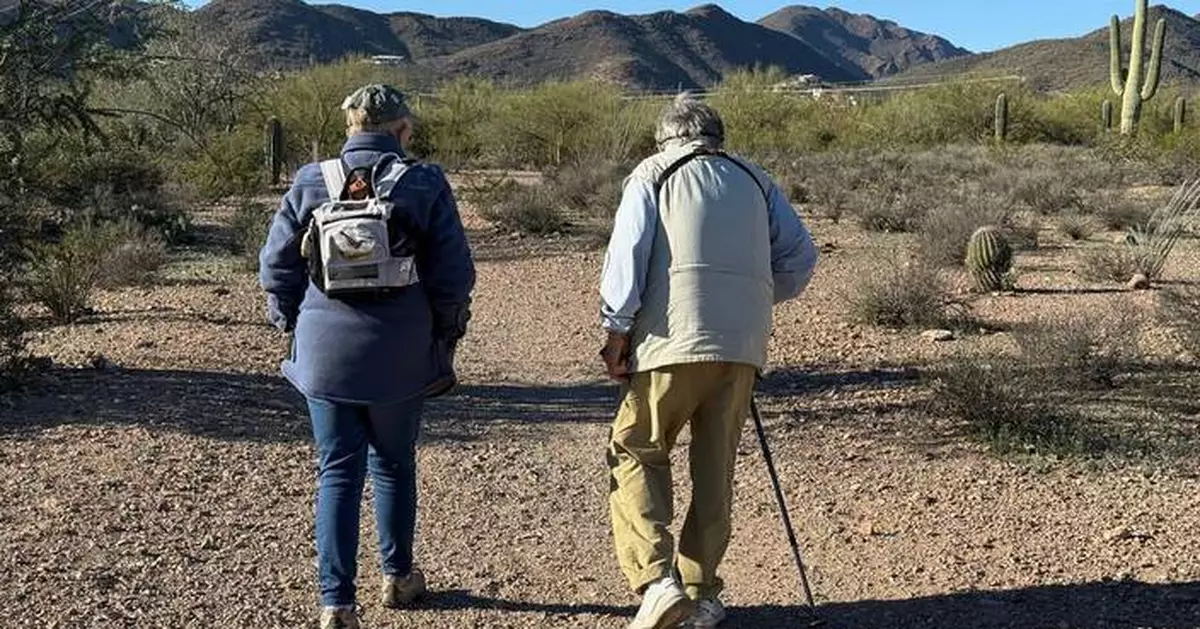
TUCSON, Ariz. (AP) — Wearing an oxygen pack on her back for her COPD, Marcia OBara is leading a group of nature enthusiasts on a mission to see birds. They carry walking sticks on the flat trails, moving at their own pace, without pressure or competition and enjoying a sense of community.
This is Birding for Every BODY, one of numerous such excursions offered each month by the nonprofit Tucson Bird Alliance with Arizona’s Pima County.
Click to Gallery
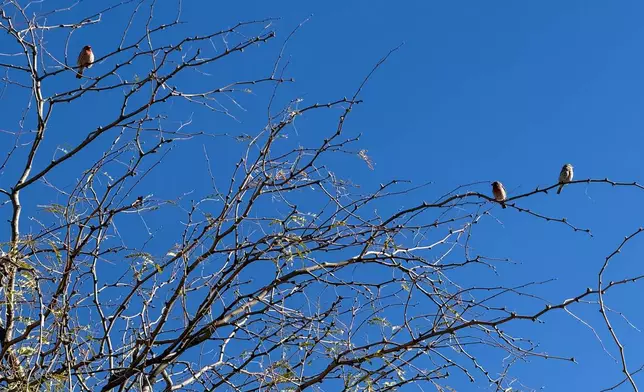
House finches are photographed during an accessible walk for people with limitations at Canoa Ranch, Ariz., outside Tucson, on Feb. 18, 2026. (Anita Sno via AP)
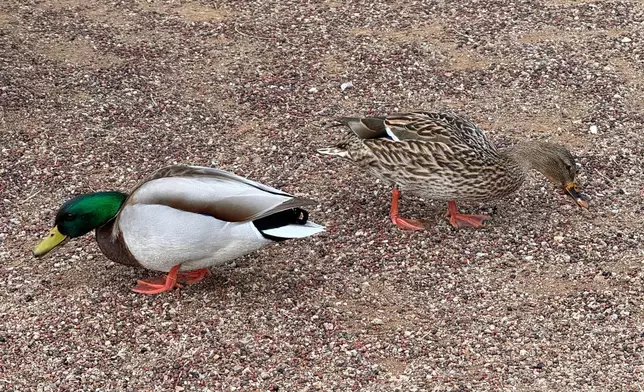
A pair of Mallard ducks appear at Agua Caliente Park in Tucson, Ariz., during an accessible birding outing for people with limitations on Feb. 13, 2026. (Anita Snow via AP)
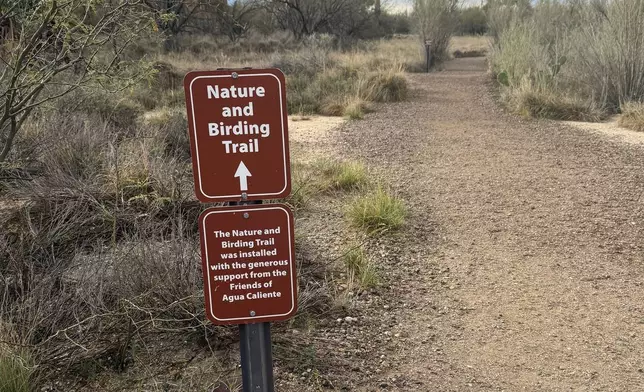
An accessible dirt path leading to a nature and birding trail appears at Feliz Paseos Park in Tucson, Ariz., on Feb. 4, 2026. (Anita Snow via AP)
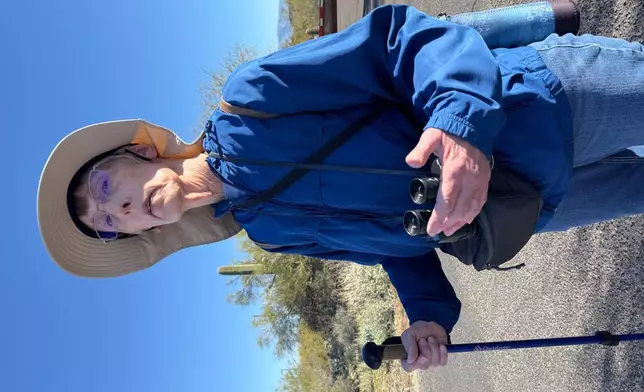
Retired Tucson area teacher Evelyn Spitzer pauses during an accessible birding walk at Feliz Paseos Park in Tucson, Ariz., on Feb. 4, 2026. (Anita Snow via AP)
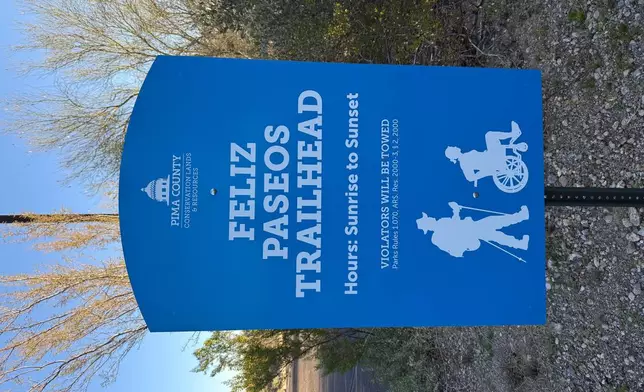
A sign for the Feliz Paseos trailhead is displayed at the park in Tucson, Ariz., on Feb. 4, 2026. (Anita Snow via AP)
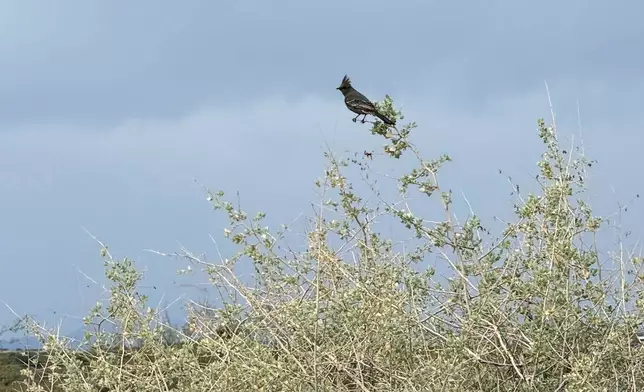
A Phainopepla perching on the branch of a mesquite tree is photographed during an accessible walk for people with limitations at Agua Caliente Park in Tucson, Ariz., on Feb. 13, 2026. (Anita Snow. via AP)
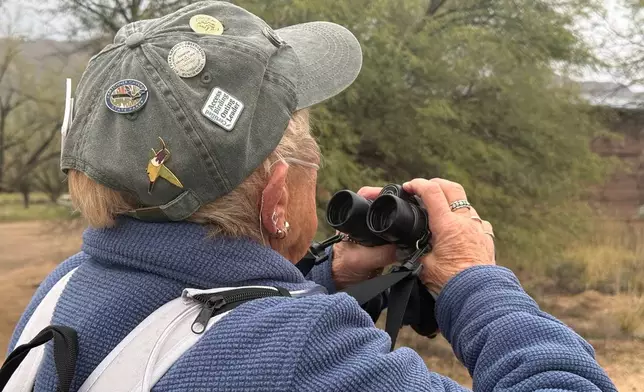
Group leader Marcia OBara checks the landscape for birds during an accessible birding walk at Feliz Paseos Park in Tucson, Ariz., on Feb. 4, 2026. (Anita Snow via AP)
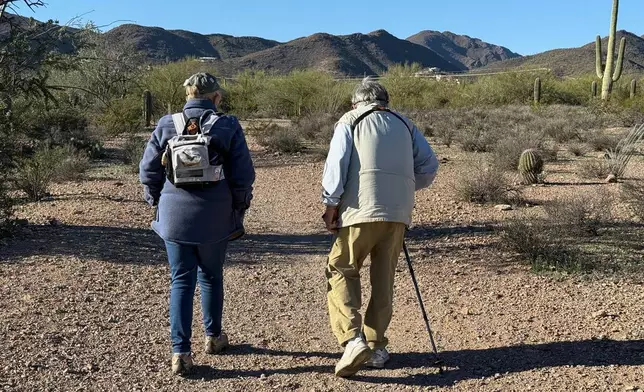
Group leader Marcia OBara, left, wearing an oxygen pack for her COPD, and birding enthusiast Rhea Guertin walk down a smooth dirt path during an accessible outing at Feliz Paseos Park in Tucson, Ariz., on Feb. 4, 2026. (Anita Snow via AP)
It's part of a growing national movement to help people with physical and other limitations experience birding and nature in general.
“It’s an opportunity for people to get out and see birds without pressure, no matter how long it takes or how many birds we see,” said OBara, a retired nurse who has been leading the accessible outings for three years. She said disabled people often cannot keep up on traditional outings, especially when competitive birders are focused on checking off a list of the greatest possible number of species.
For her accessible walks, OBara ensures that all trails are easily traversable, and bathrooms are open and large enough to accommodate mobility scooters and wheelchairs. She checks on the availability of drinking water, shade and benches. Once a walk gets underway, OBara checks to ensure everyone is keeping up, then modulates the pace as needed.
“I used to work in rehab, so I usually know what people need,” OBara said.
While the outings are open to those with wheelchairs and mobility scooters, people who use those devices rarely attend the walks, OBara said, perhaps because they don’t think they’ll be able to keep up.
“But we’d encourage them to come,” OBara said.
On one of several walks she led in February at Tucson-area parks, OBara pointed out a phainopepla, a slender, crested bird perched on a mesquite tree that adores the bright red berries of desert mistletoe clumped on the branches. Quacking mallards and other ducks swam in ponds or pecked the ground.
“It’s nice to just be outside and not think of anything else,” said Rhea Guertin, a retired Rhode Island snowbird who spends four months in Tucson each winter. She used a walking pole for stability.
“I’m just slow,” she explained.
Evelyn Spitzer, a retired Tucson-area teacher, used a walking pole for her heart condition and the lingering effects of a recent surgery.
The organized effort to share birding with people with limitations goes back at least to 2018, when retired Texas teacher Virginia Rose founded the nonprofit Birdability. Rose has used a wheelchair since suffering a spinal injury at age 14.
“Our vision is that birding be truly for everybody and every BODY, regardless of disability,” said Cat Fribley, Birdability’s executive director. She said participants' limitations include mobility issues, blindness or low vision, chronic illness, intellectual or developmental disabilities, mental illness. Some are neurodivergent, deaf, hard of hearing or have other health concerns.
Fribley, who has a mobility scooter for multiple disabilities, said she can go five or six miles while birding on the accessible paths in her residential community in Iowa City, Iowa.
“In the winter, I bird on my back deck with my coffee,” she said.
Other examples of accessible birding include watching from a car, from a canoe on a river, or simply through a kitchen window, advocates said.
Birdability has helped compile a crowdsourced map of accessible birding locations nationwide in partnership with the National Audubon Society, and offers advice to able-bodied birders on how to be more welcoming and inclusive.
The group’s website has many other resources and adaptive devices, such as car-window mounts for cameras, and apps that blind people and others can use to identify and record birdsong.
Occupational therapist Freya McGregor recommends binocular harnesses, which are strapped around the back and chest, saying they're easier on the shoulders and neck than binoculars that hang around the neck.
McGregor — who has a permanent knee injury — runs Access Birding, which trains nature organizations such as state parks and local Audubon chapters on making trails accessible.
Birding “really brings you joy,” said Jerry Berrier, a 73-year-old Massachusetts birder who has been blind since birth. “There is happiness from being out in nature.”
Berrier got hooked as a college student when he learned to identify a huge number of bird calls and songs to satisfy the lab requirement for a biology class. He later taught blind and blind-deaf people how to negotiate the use of laptops and cellphones at the Perkins School for the Blind in Watertown, Massachusetts.
He captures avian songs and calls for his website, www.birdblind.org, to help blind bird enthusiasts record and share their own. Last year, he launched the “Any Bird, Any Body” podcast with his friend, Gary Haritz.
Berrier also helped organize the first national bird-a-thon for blind enthusiasts in the U.S. It drew several hundred participants last year, who reported the birdcalls they heard over 24 hours. The event goes international this year on May 3-4.
“We encourage people to reach out to local organizations to help blind people with the bird-a-thon, he said. “A disability can be very isolating.”
Anita Snow wrote for The Associated Press for more than 35 years before retiring a year ago. When she’s not birding, she writes freelance articles from her home in Tucson, Arizona.
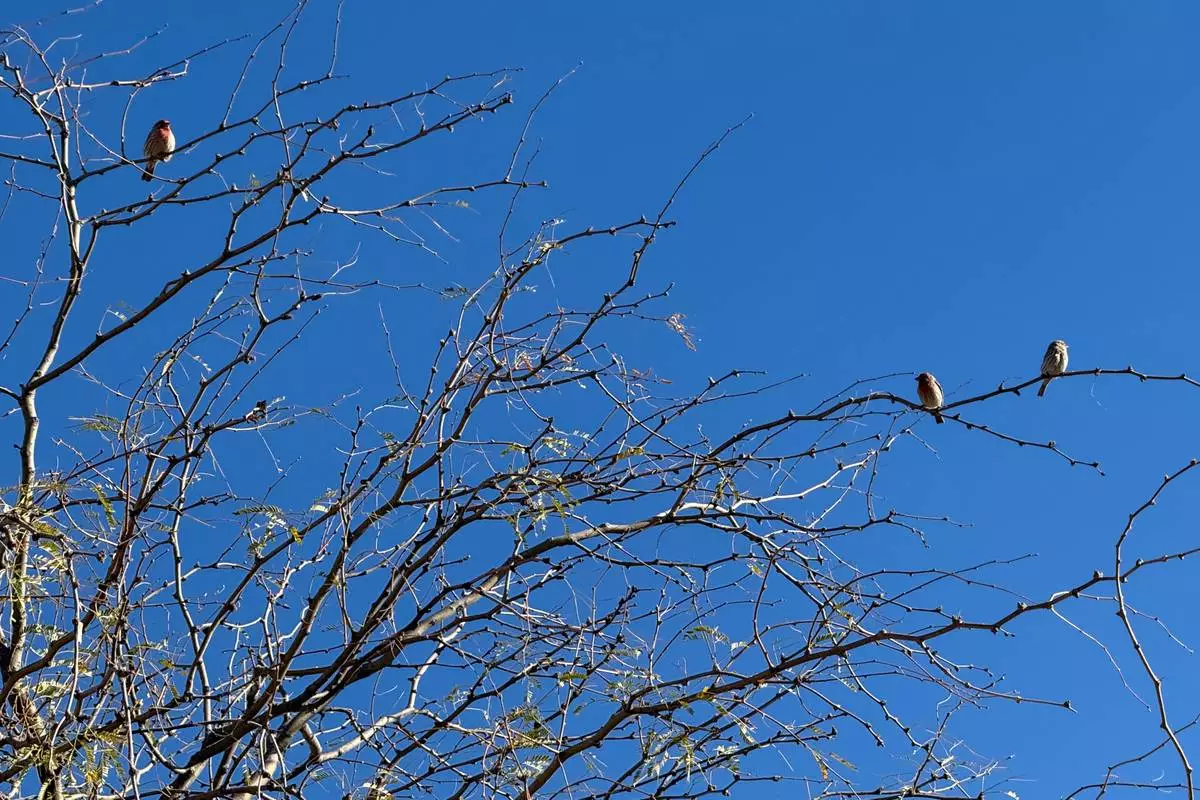
House finches are photographed during an accessible walk for people with limitations at Canoa Ranch, Ariz., outside Tucson, on Feb. 18, 2026. (Anita Sno via AP)
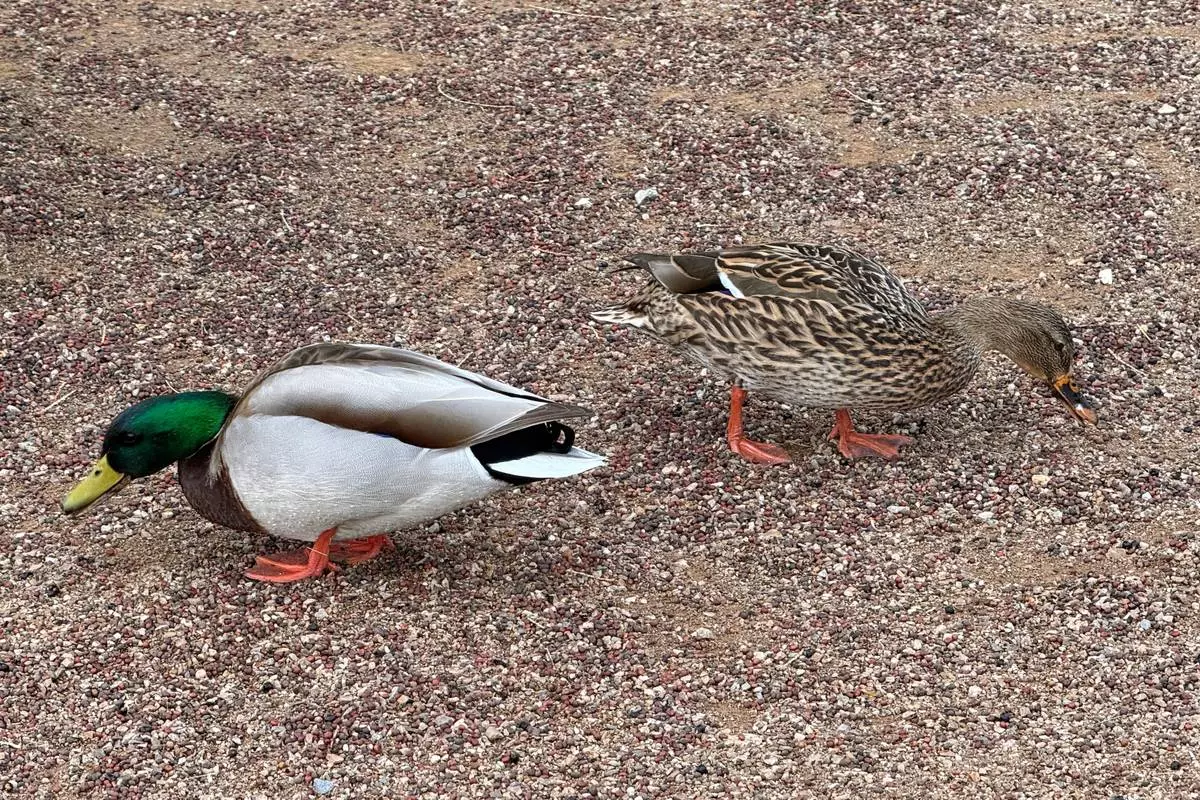
A pair of Mallard ducks appear at Agua Caliente Park in Tucson, Ariz., during an accessible birding outing for people with limitations on Feb. 13, 2026. (Anita Snow via AP)
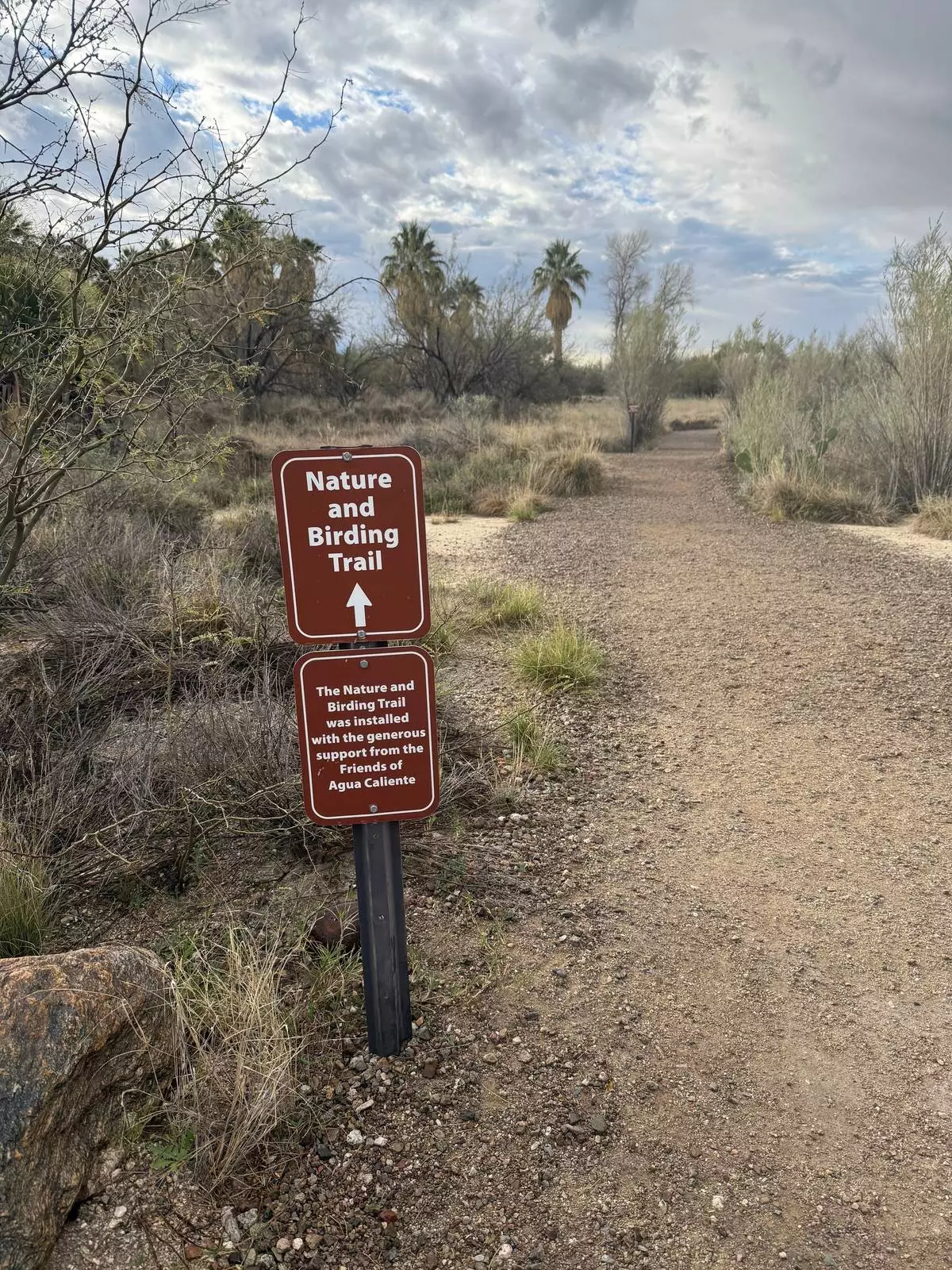
An accessible dirt path leading to a nature and birding trail appears at Feliz Paseos Park in Tucson, Ariz., on Feb. 4, 2026. (Anita Snow via AP)
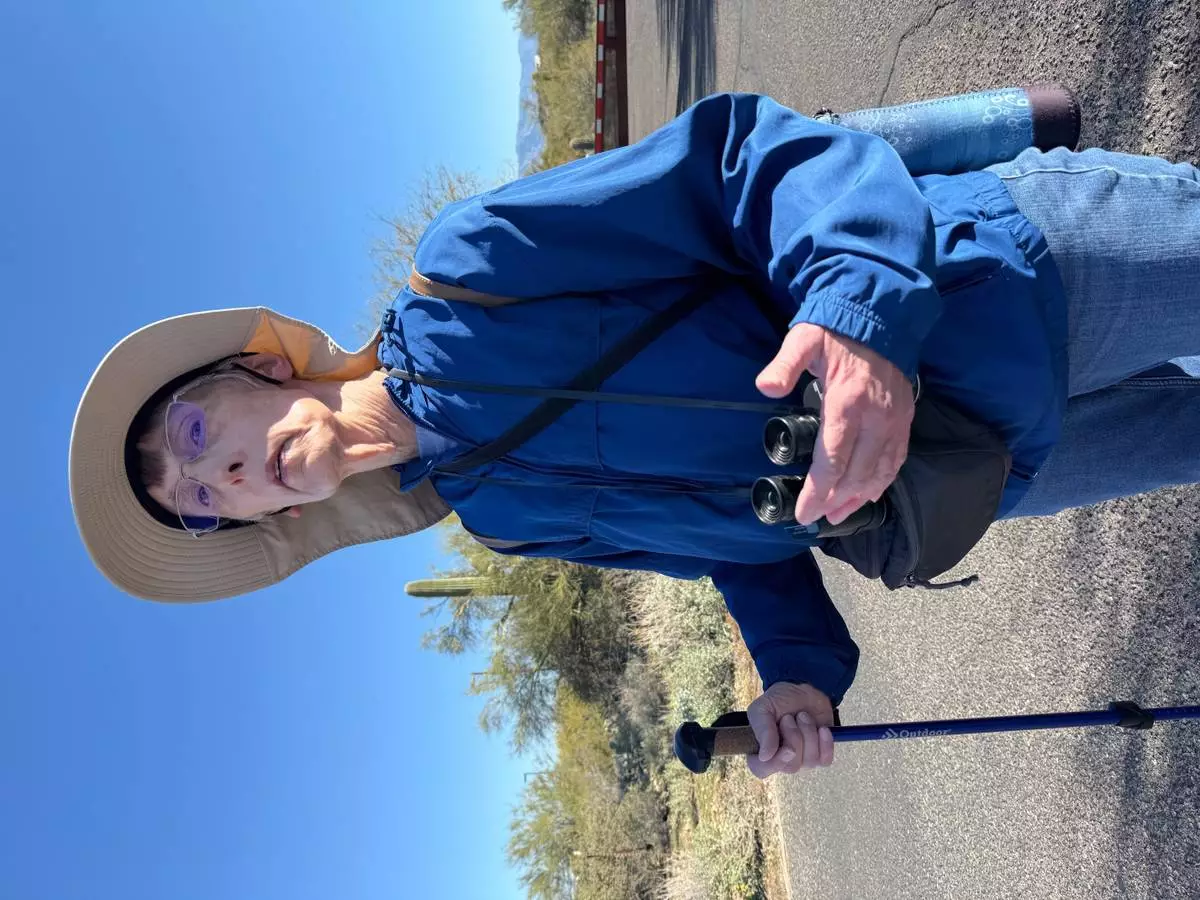
Retired Tucson area teacher Evelyn Spitzer pauses during an accessible birding walk at Feliz Paseos Park in Tucson, Ariz., on Feb. 4, 2026. (Anita Snow via AP)
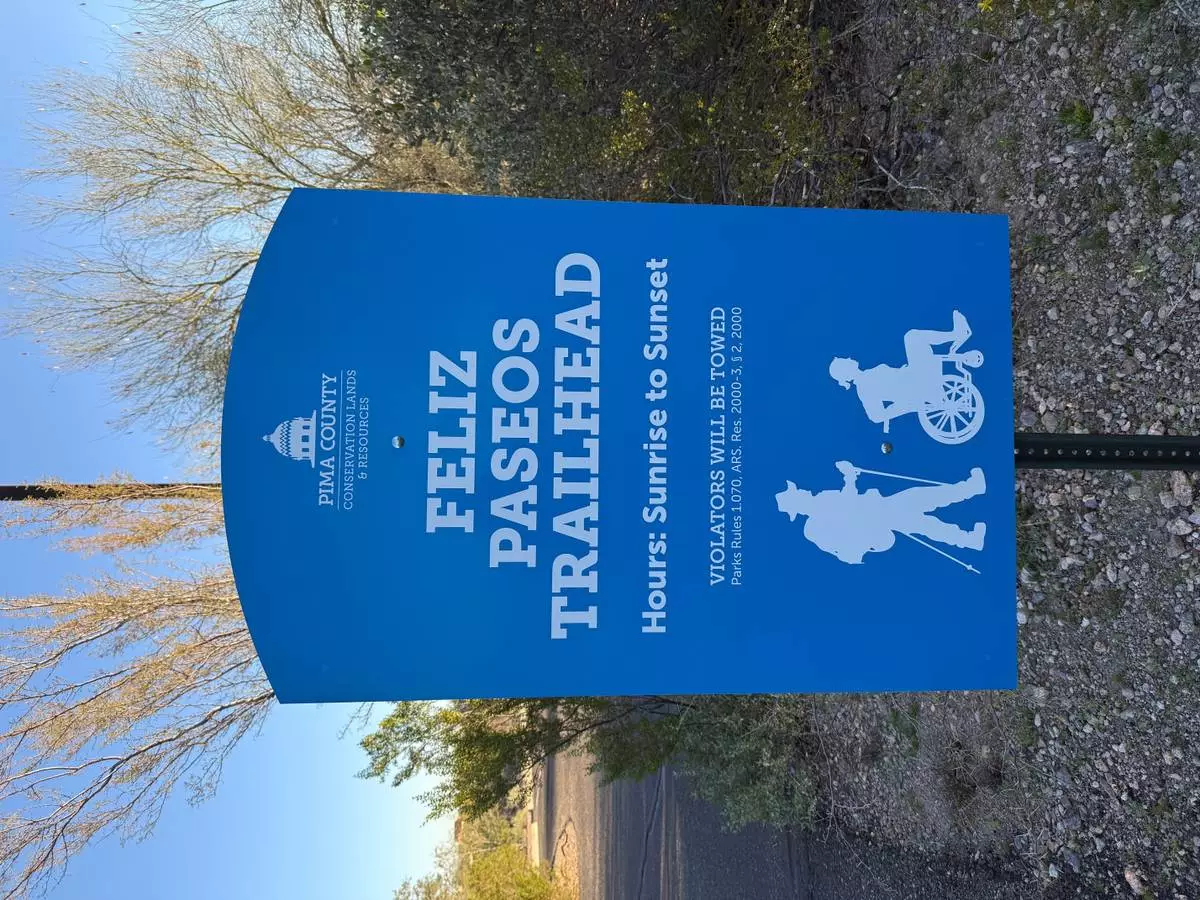
A sign for the Feliz Paseos trailhead is displayed at the park in Tucson, Ariz., on Feb. 4, 2026. (Anita Snow via AP)
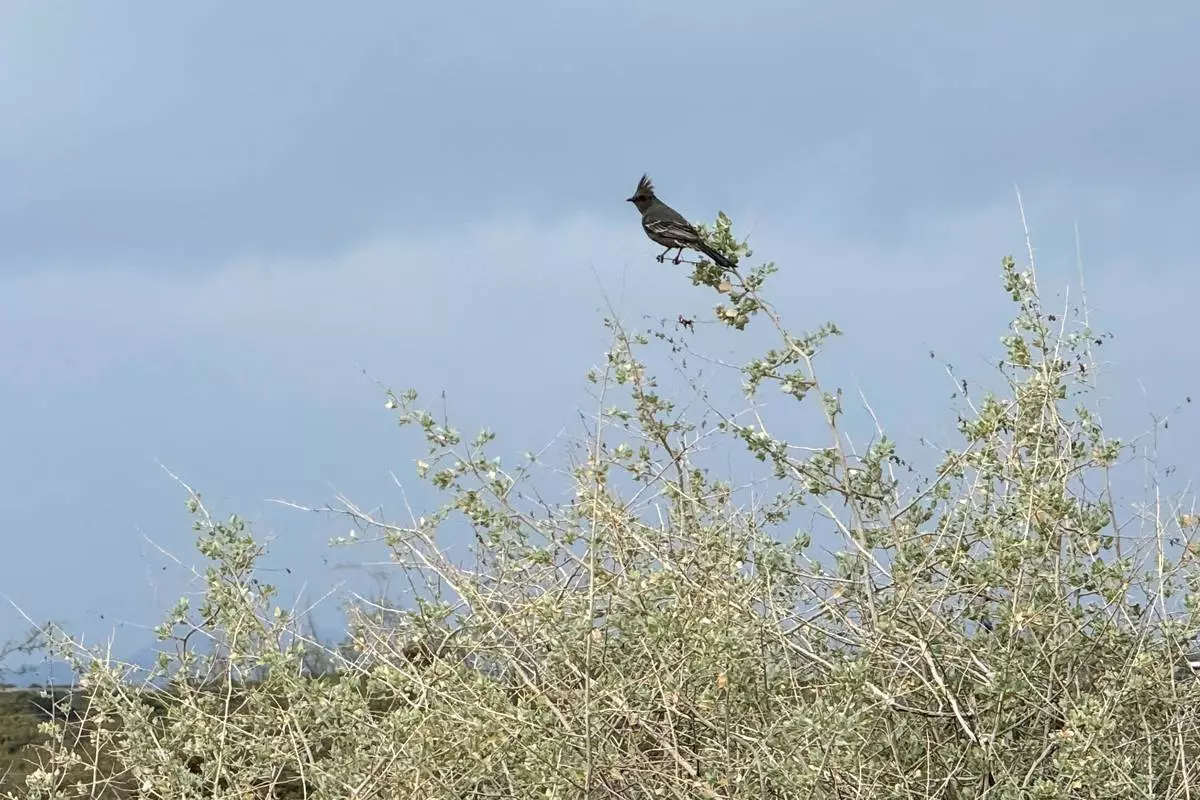
A Phainopepla perching on the branch of a mesquite tree is photographed during an accessible walk for people with limitations at Agua Caliente Park in Tucson, Ariz., on Feb. 13, 2026. (Anita Snow. via AP)
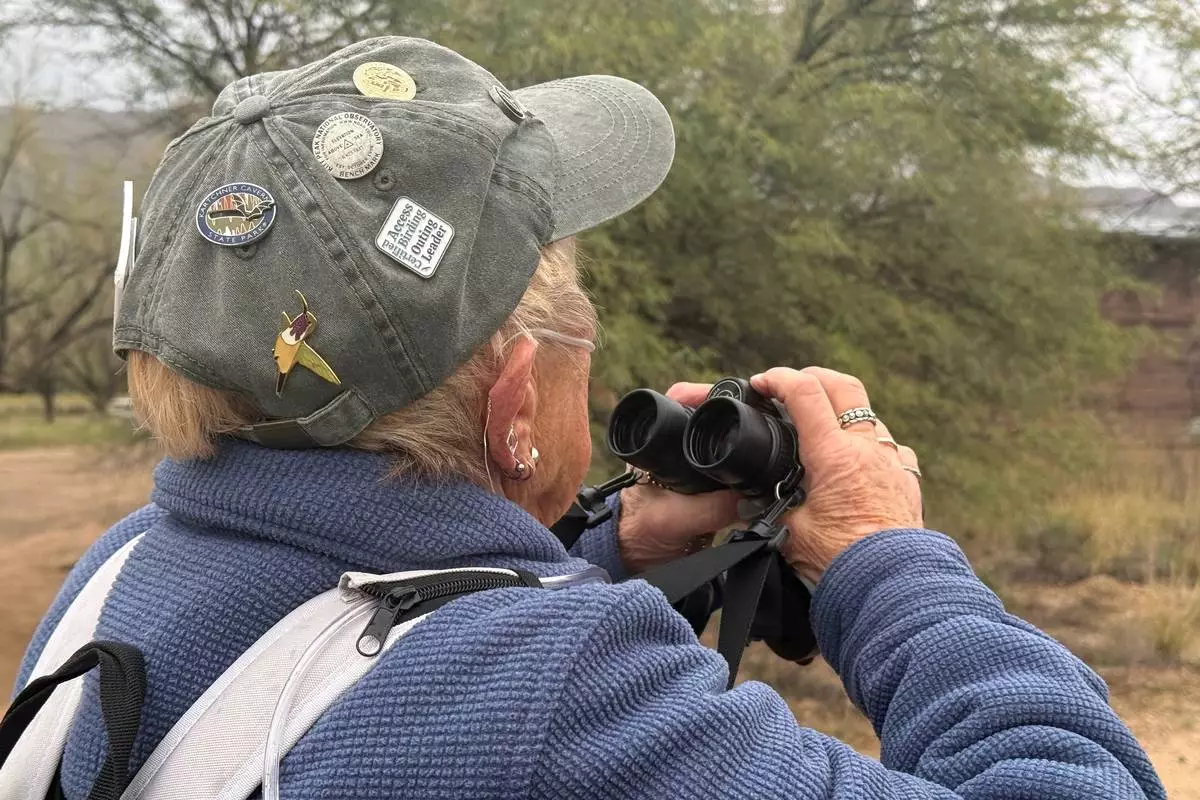
Group leader Marcia OBara checks the landscape for birds during an accessible birding walk at Feliz Paseos Park in Tucson, Ariz., on Feb. 4, 2026. (Anita Snow via AP)
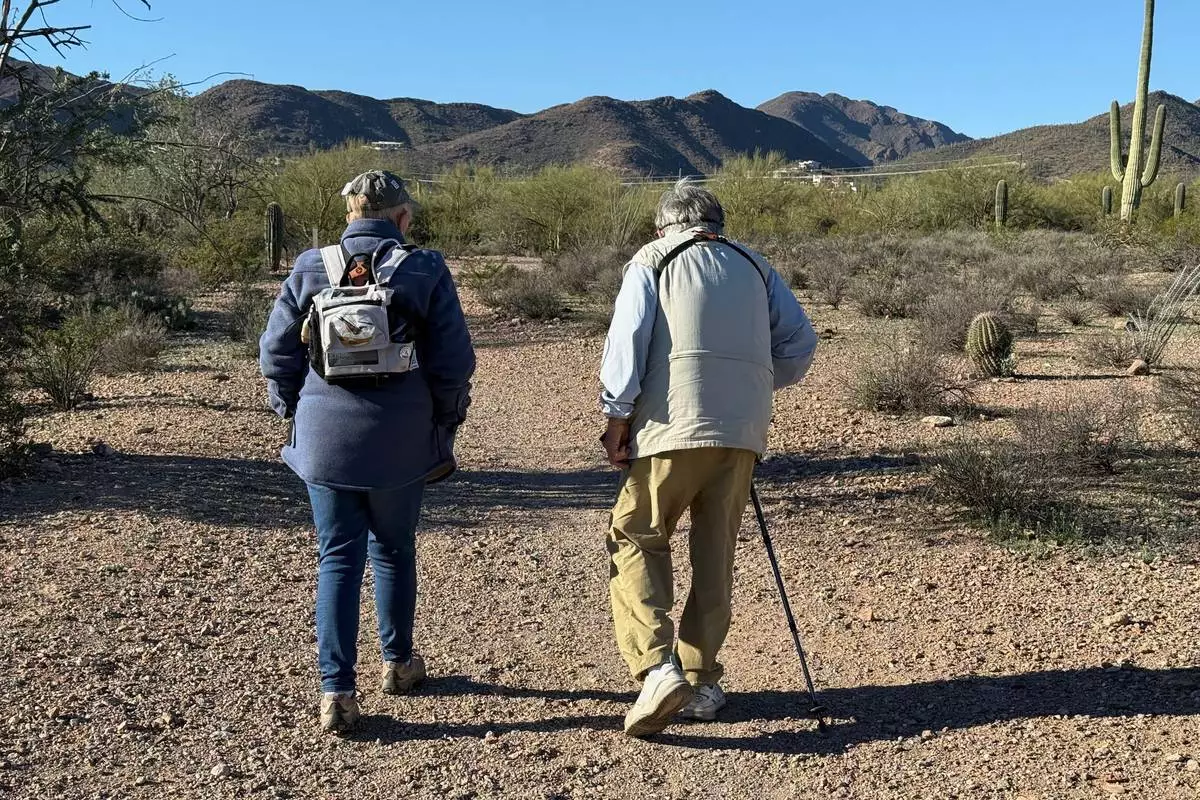
Group leader Marcia OBara, left, wearing an oxygen pack for her COPD, and birding enthusiast Rhea Guertin walk down a smooth dirt path during an accessible outing at Feliz Paseos Park in Tucson, Ariz., on Feb. 4, 2026. (Anita Snow via AP)