MALE, Maldives (AP) — Three Finnish divers arrived in the Maldives Sunday to draw up a fresh plan in the search for the bodies of four Italian divers believed to be deep inside an underwater cave. The initial search was suspended after a local military diver died during a perilous mission to try to reach them.
The group of five Italian divers is believed to have died while exploring a cave at a depth of about 50 meters (160 feet) in Vaavu Atoll on Thursday, according to Italy’s Foreign Ministry. The recreational diving limit in the Maldives is 30 meters (98 feet).
Maldives presidential spokesperson Mohamed Hussain Shareef said the search was suspended after Mohamed Mahudhee, a member of the Maldivian National Defense Force, died of underwater decompression sickness after being transferred to a hospital in the capital on Saturday.
Shareef said Sunday that three Finnish divers, experts in deep and cave diving, have arrived in the archipelago nation and joined the Maldives coastguard in a meeting aimed at mapping a new search strategy.
Mahudhee was buried with military honors in a funeral attended by President Mohamed Muizzu on Saturday night. The diver was part of the group that had briefed Muizzu on the rescue plan when he visited the search site on Friday.
Rough weather has repeatedly hampered rescue efforts.
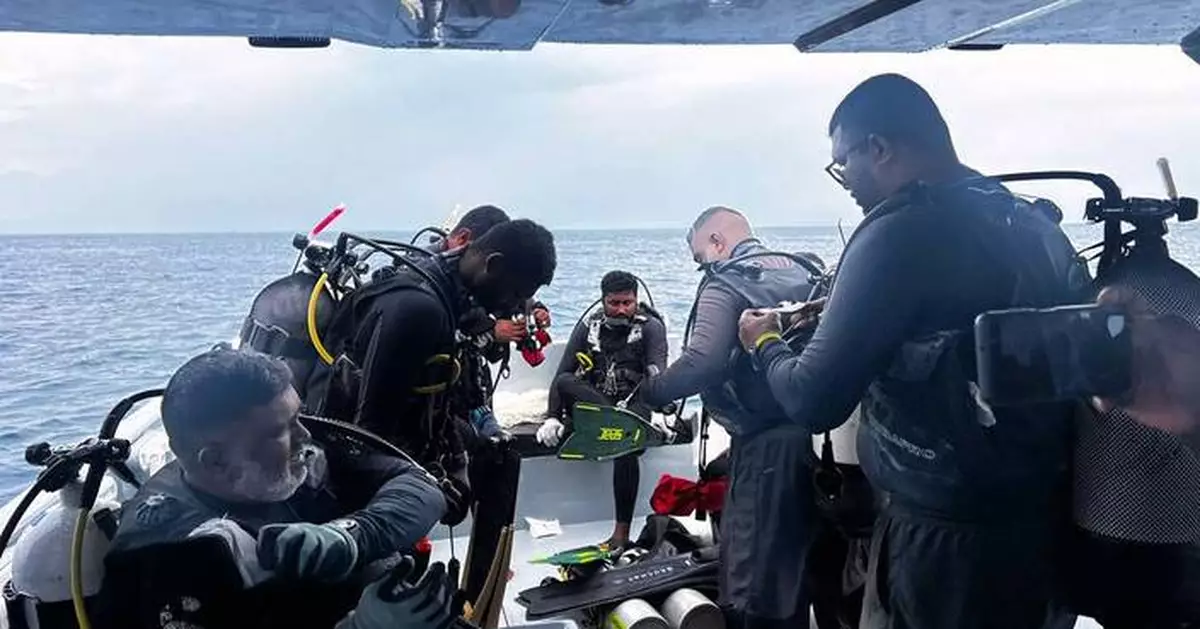
Search operations on Saturday involved eight local divers who worked in shifts to locate the bodies, the Italian Foreign Ministry said. Initial teams had already dived to identify and mark the entrance to the cave system where the Italians disappeared. The cause of the deaths remains under investigation.
Italy’s Foreign Minister Antonio Tajani said everything possible would be done to bring the victims home. He offered his condolences for the death of the Maldivian diver during the rescue efforts.
The victims have been identified as Monica Montefalcone, an associate professor of ecology at the University of Genoa; her daughter, Giorgia Sommacal; marine biologist Federico Gualtieri; researcher Muriel Oddenino; and diving instructor Gianluca Benedetti, according to the Maldivian government.
Benedetti’s body was recovered on Thursday from near the mouth of the cave. Authorities believe the remaining four had entered the cave.
Montefalcone and Oddenino were in the Maldives on an official scientific mission to monitor marine environments and study the effects of climate change on tropical biodiversity, the University of Genoa said in a statement Friday. However, the scuba diving activity during which the deadly accident occurred was not part of the planned research and was “undertaken privately,” it said.
The statement also said the two other victims — student Sommacal and recent graduate Gualtieri — were not involved in the scientific mission.
Carlo Sommacal, Montefalcone’s husband and Giorgia’s father, expressed doubts over the accident, saying that “something must have happened down there” given his wife and daughter’s extensive experience.
Speaking to Italian TV, he described Montefalcone as a careful and highly disciplined diver who would never put her daughter or other colleagues at risk.
The Italian tour operator that managed the diving trip denied authorizing or knowing about the deep dive that violated local limits, its lawyer told Italian daily Corriere della Sera on Saturday.
Orietta Stella, representing Albatros Top Boat, said the operator “did not know” the group planned to descend beyond 30 meters. That threshold requires special permission from Maldivian maritime authorities and the tour operator “would have never allowed it,” she said.
The dive far exceeded what was planned for a scientific cruise focused on coral sampling at standard depths, Stella added. The victims were experienced divers, but the equipment used appeared to be standard recreational gear rather than technical equipment suited for deep cave diving, she said.
Cave diving is a highly technical and dangerous activity that requires specialized training, equipment and strict safety protocols. Risks increase sharply in environments where divers cannot head straight up and at depth, particularly when conditions are poor. Experts say it’s easy to become disoriented or lost inside caves, particularly as sediment clouds can sharply reduce visibility.
Diving at 50 meters also exceeds the maximum depth recommended for recreational divers by most major established scuba certifying agencies, with depths beyond 40 meters (131 feet) considered technical diving and requiring specialized training and equipment.
The Italian Foreign Ministry said the cave is divided into three large chambers connected by narrow passages. Recovery teams explored two of the three chambers on Friday, but the search was limited due to considerations over oxygen and decompression.
Italian officials said that around 20 other Italians on the same expedition aboard the vessel “Duke of York” were safe. Italy’s embassy in Colombo was providing assistance to those onboard and had contacted the Red Crescent, which offered to deploy volunteers to help provide psychological aid.
The Maldives Tourism Ministry said it suspended the operating license of the “Duke of York” pending an investigation.
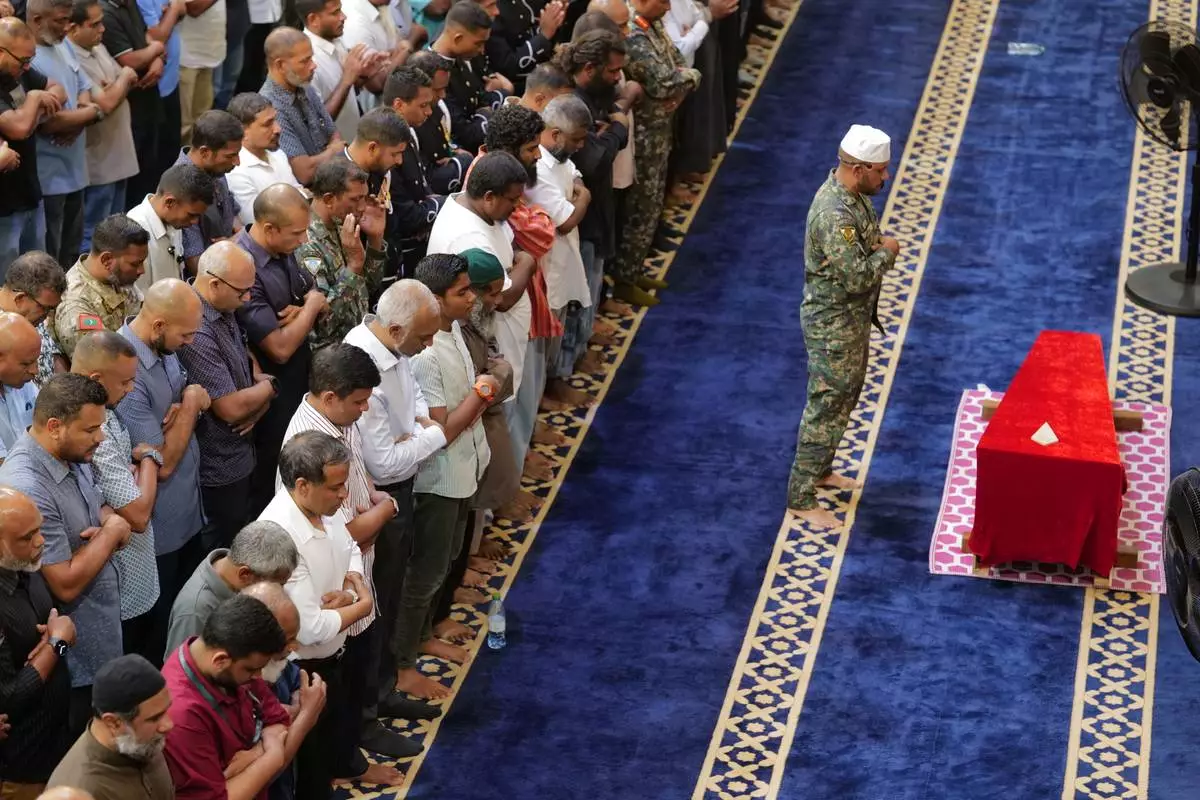
Maldivian President Mohamed Muizzu along with National Defense Force members prays in front of the remains of military diver Mohamed Mahudhee who died during search and rescue operation of four Italian divers, during his funeral in Male, Maldives, Saturday, May 16, 2026. (AP Photo/Mohamed Sharhaan)
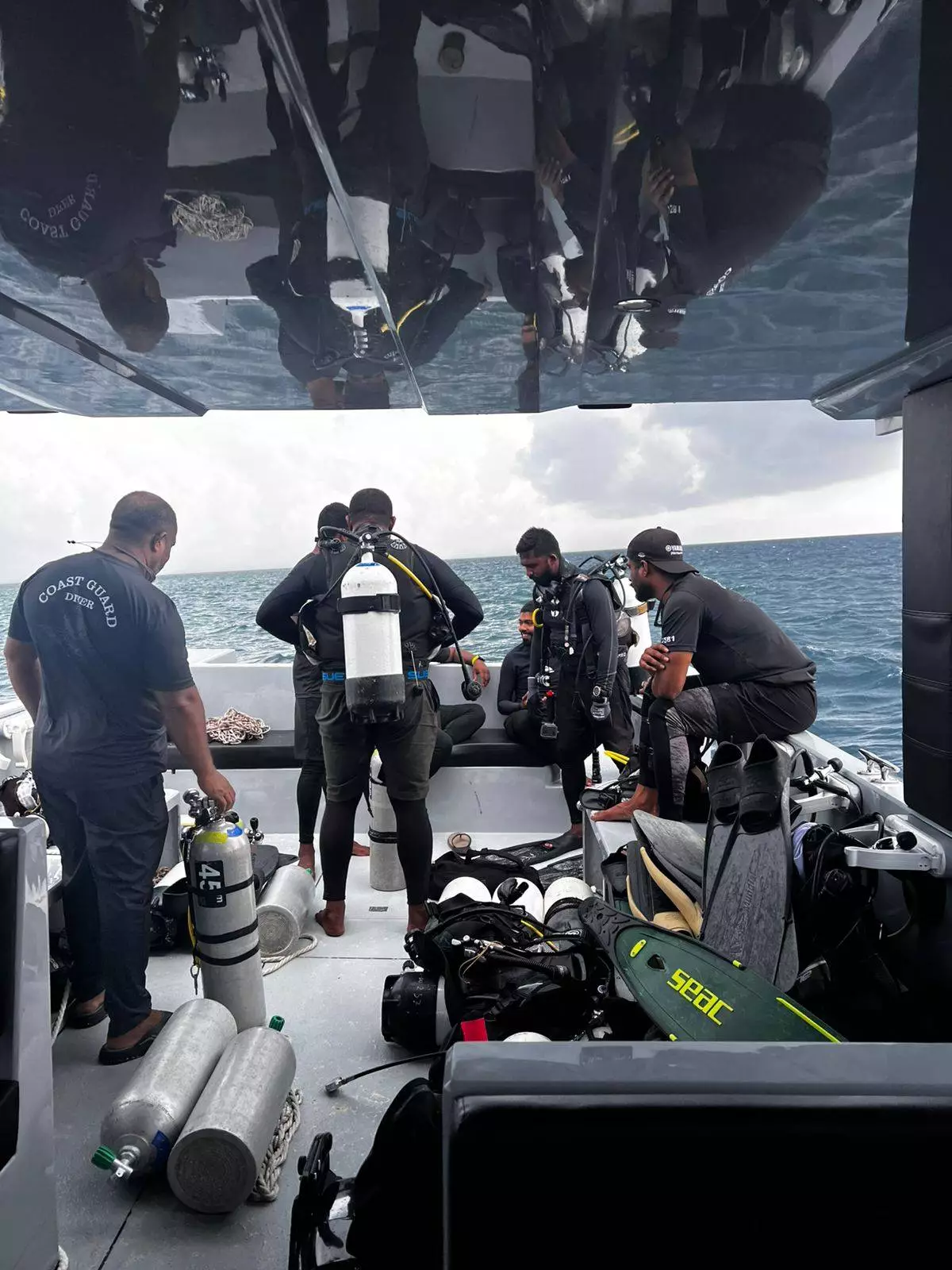
This photograph shared by the Maldives President's Media Division, shows divers preparing to search for the four missing Italian divers near Alimathaa Island, Vaavu Atoll, Maldives, Saturday, May 15, 2026. (Maldives President's Media Division via AP)
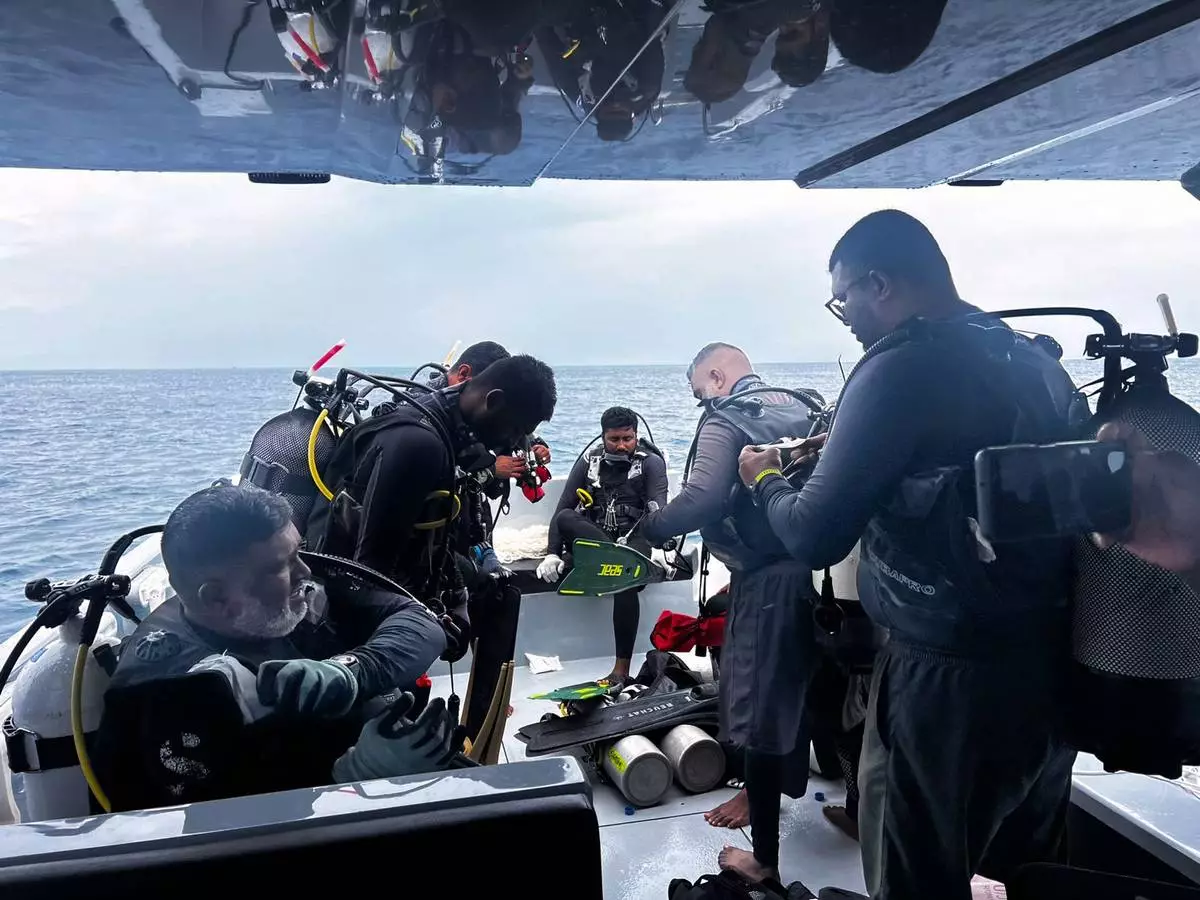
This image released by the Maldives President's Media Division, shows divers preparing to search for the four missing Italian divers near Alimathaa Island, Vaavu Atoll, Maldives, Saturday, May 15, 2026. (Maldives President's Media Division via AP)
TOPEKA, Kan. (AP) — Even as Democratic officials fight the effort in court, the Trump administration has run millions of voter registrations through government databases to determine their eligibility in a process that critics worry could end up purging valid voters from the rolls before the November elections.
At least 67 million registrations, primarily from Republican-controlled states, have gone through a beefed-up verification program at the U.S. Department of Homeland Security, and tens of thousands of those have been flagged as potential noncitizens or people who have died. Some states allow only a month for people to prove their eligibility and others suspend it immediately.
The scanning of state voter rolls at the national level is part of a broader effort by Republican President Donald Trump to federalize certain election functions and promote his messaging that elections are marred by noncitizen voting, even though instances of that are rare. Voting and civil rights advocates say the DHS system is error-prone and can mistakenly flag people who are eligible to vote.
“If a voter is wrongly removed, by the time they learn about it and correct it, they may miss their opportunity to vote in that election,” said Freda Levenson, a lawyer with the American Civil Liberties Union of Ohio. The group is challenging an Ohio law requiring monthly checks with the DHS system.
Voters such as 29-year-old Anthony Nel have been caught in the middle.
The native of South Africa, who became a citizen more than a decade ago, was flagged as a potential noncitizen when Texas ran its voter file through the DHS verification system. Nel's local election office in Denton, north of Dallas, temporarily canceled his registration last fall while he was waiting for a new passport to replace an expired one.
“I’m like, ‘You should know that I’m a citizen, that the passport exists,’” he said in an interview.
Trump has been trying to overhaul U.S. elections, including calling for a federal list of verified voters, and his Department of Justice has pushed states to hand over unredacted voter information for mass checks through the DHS program known as SAVE.
The Justice Department has sued states that refuse, saying the government is trying to ensure that they are complying with federal law and have accurate voter lists. States already take a number of steps to maintain the accuracy of their voter rolls.
SAVE, short for Systematic Alien Verification for Entitlements, was created under an immigration law mandating that DHS help federal, state and local agencies prevent government benefits from going to noncitizens. U.S. Citizenship and Immigration Services, an arm of DHS, said more than 1,300 agencies use it.
At least 25 states have used SAVE to check their voter rolls since April 2025, after the Trump administration significantly expanded its search abilities, and 60 million registrations were checked in a year's time, according to Citizenship and Immigration Services. That figure does not include an additional 7.4 million registrations from North Carolina, where Republicans control the state election board, that were recently run through the system.
Citizenship and Immigration Services said in an emailed statement that it is “committed to helping eliminate voter fraud” to restore Americans' trust in their elections.
“SAVE is one of the most important tools states have to verify voter information,” Kansas Secretary of State Scott Schwab, a Republican, recently told a U.S. House committee examining how states keep voter rolls clean.
Schwab's endorsement is notable because he once was publicly skeptical that noncitizens represented a significant voter fraud threat.
Citizenship and Immigration Services said the 60 million voter registration checks identified about 24,000 potential noncitizens. U.S. Assistant Attorney General Harmeet Dhillon, who runs the Justice Department's Civil Rights Division, said during a recent Fox News interview that those checks also identified about 350,000 people who appear to have died.
North Carolina's State Board of Elections said its check had identified another 34,000 registered voters who are potentially deceased.
Even if all those eventually were verified as ineligible, they would represent small percentages of total registered voters. The figure for noncitizens would be about 400 for every 1 million registrations. Some 384,000 people identified as potentially deceased in about 67 million registrations is a fraction of 1%.
Some voters have been mistakenly flagged.
In Dallas, election officials recently canceled the registration of Domingo Garcia, a 68-year-old lawyer and voting rights activist, without explanation. He has been voting regularly for 50 years, most recently in the state's March 3 primary, and suspects that officials concluded he was deceased.
“I should not have been on any lists,” he said.
Voting rights advocates have filed at least six federal lawsuits over SAVE checks, either against the Trump administration or states using the program.
Nel, a 29-year-old college administrator, is a plaintiff in one of them, filed recently in the District of Columbia against the Justice Department. It alleges an “illegal and unprecedented quest” by the administration for “millions of Americans’ confidential voter data.”
Lawyers also argue that eligible voters will be disenfranchised by hits from outdated or incomplete data.
Nel came to the United States from South Africa with his parents at age 8. His parents became citizens when he was 16, making him a citizen, as well. He said he has voted regularly since he was 18.
Yet he received a letter in October in a white envelope that looked to him like junk mail. It told him he had been identified as a potential noncitizen through a SAVE check of Texas' 18 million voter registrations. He had 30 days to prove otherwise — a deadline he missed because of the time it took to get a new passport.
“It’s clear that this process that they’ve put into place for this doesn’t work,” he said.
Republican officials said the administration does not portray SAVE searches as foolproof. Instead, it identifies registrations that should be further investigated, they said.
In Kansas, Schwab’s office is still investigating its list of flagged registrations and has yet to disclose the number of hits of potentially ineligible voters from a SAVE check of the state’s 2 million registrations.
Once his office forwards flagged names to county officials, a state law enacted this year requires them to list the registrations as “in suspense” or “pending” until the cases are resolved. A flagged person still can vote, but the ballot is set aside for further review and might not be counted.
Texas is supposed to give people with flagged registrations 30 days to prove they are properly registered. North Carolina will require county elections boards to give people whose registrations are challenged a hearing before they can be canceled.
A new Ohio law requires local election boards to “promptly” cancel the registrations of people whom the secretary of state identifies as noncitizens during registration checks that the official is required to make at least monthly.
Ohio Secretary of State Frank LaRose, a Republican, said in an email that people's voting rights are not in danger because "all they need to do to immediately restore their registration status is show proof of citizenship."
But Levenson, the ACLU lawyer, described the approach differently.
"Shoot first and ask questions later,” she said.
Associated Press writers Jack Dura in Bismarck, North Dakota, and Gary Robertson, in Raleigh, North Carolina, contributed to this report.
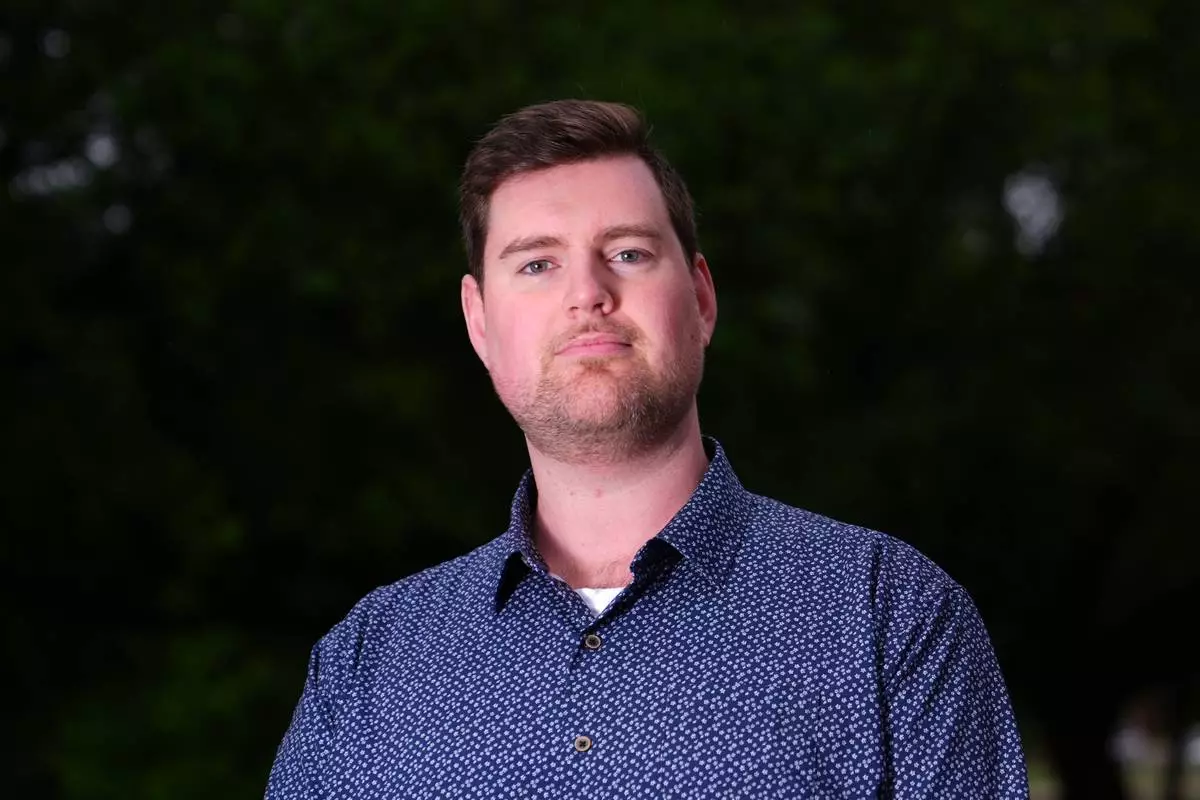
Anthony Nel poses for The Associated Press on Thursday, April 30, 2026, in Denton, Texas. (AP Photo/Julio Cortez)
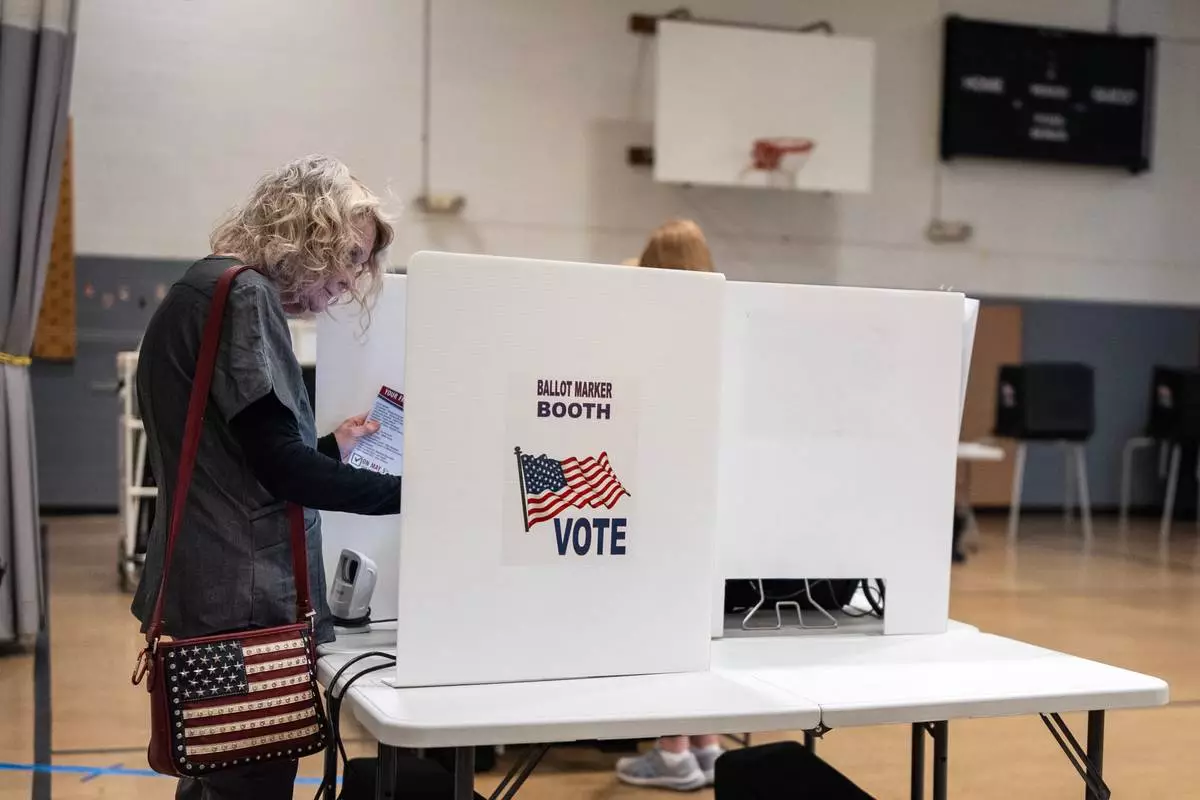
Marylou Zschach fills out her ballot at her polling place at the Burbank Early Childhood School in Columbus, Ohio, Tuesday, May 5, 2026, during the primary election. (AP Photo/Carolyn Kaster)
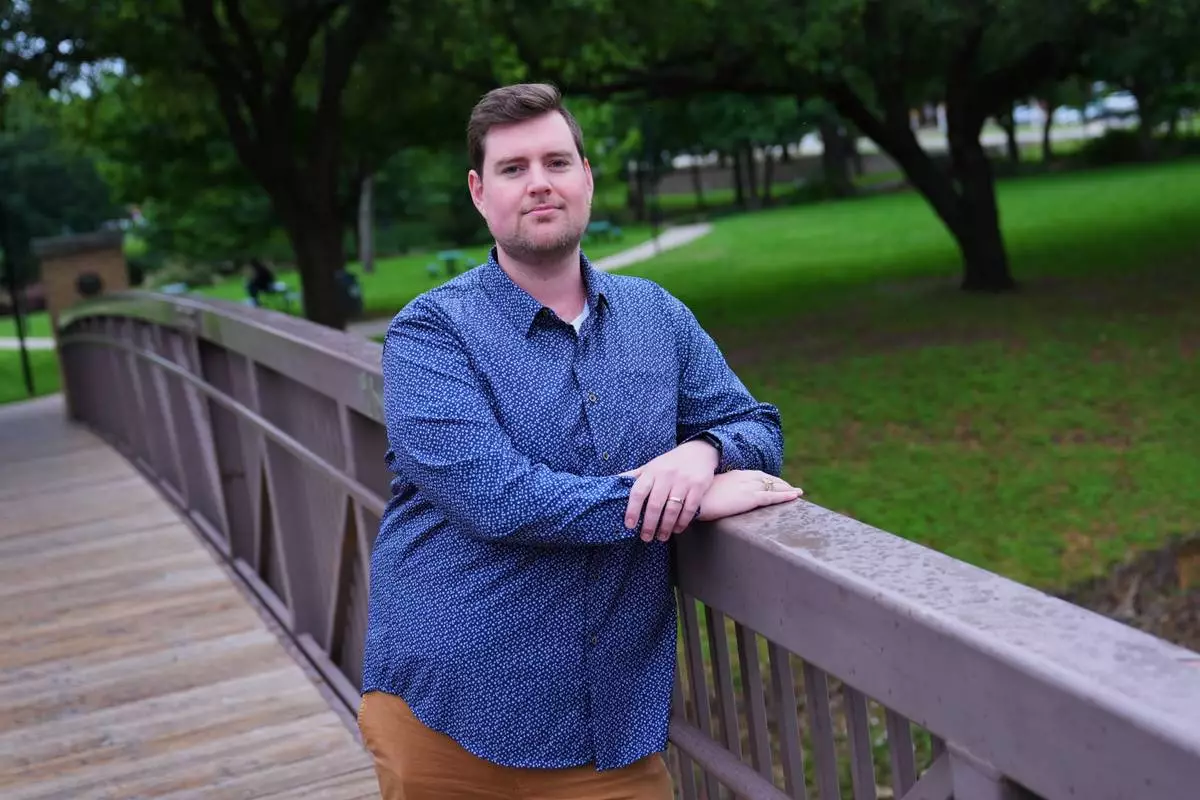
Anthony Nel poses for The Associated Press on Thursday, April 30, 2026, in Denton, Texas. (AP Photo/Julio Cortez)