CAPE TOWN, South Africa (AP) — African health officials say there is a new Ebola outbreak in the Central African country of Congo, with at least 246 suspected cases and 65 deaths.
The severe disease that is often fatal was first identified in 1976 after two outbreaks in quick succession in what is now South Sudan and Congo, according to the World Health Organization.
All the major Ebola outbreaks have been in sub-Saharan Africa, where the viruses that cause it are native. The worst have been in West and Central Africa.
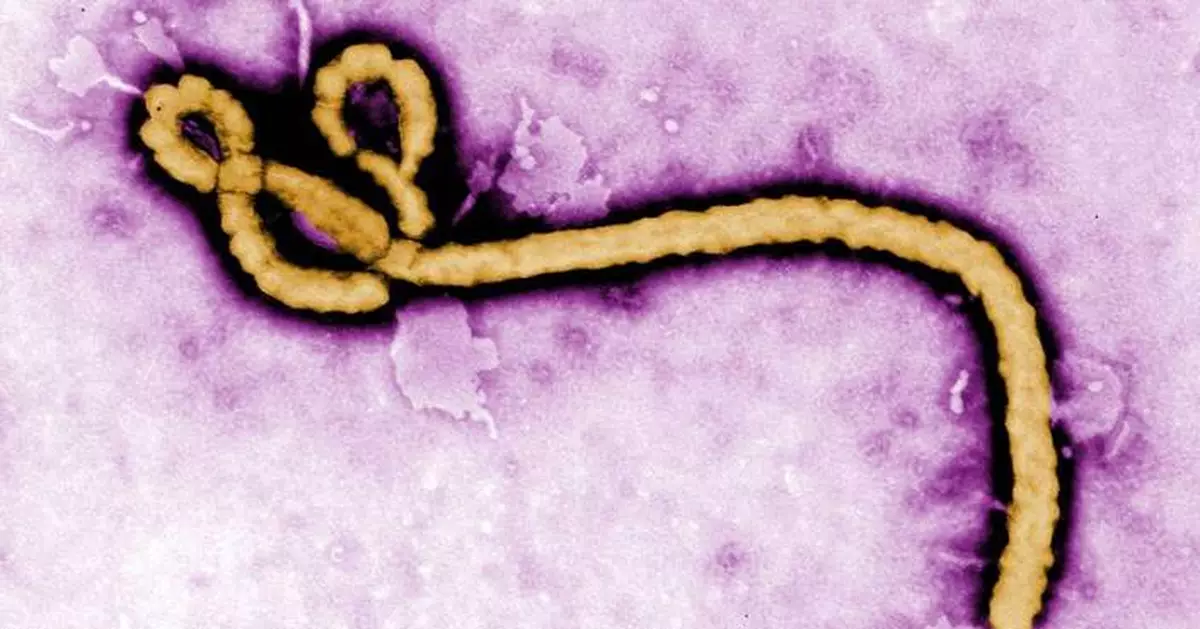
Ebola disease is caused by a group of viruses. Three of them are known to cause large outbreaks: Ebola virus, Sudan virus and Bundibugyo virus, WHO says.
A family of fruit bats are believed to be the natural hosts of the viruses that cause Ebola, and other animals like apes and monkeys can also be infected, according to WHO.
People can be infected by these animals, and the viruses can spread from person to person through contact with the body fluids like the blood, feces or vomit of an infected person, or surfaces that have been contaminated by body fluids.
Symptoms appear from two days to three weeks after exposure, though they usually emerge within about a week, according to the U.S. Centers for Disease Control and Prevention.
Illnesses begin with flu-like symptoms, including fever, aches, fatigue and sore throat. Later, patients can experience gastrointestinal problems, rashes, seizures and bleeding.
The average fatality rate for Ebola is around 50%, according to WHO, with rates varying from 25% to 90% in previous outbreaks.
There are approved vaccines and treatments only for the Ebola virus.
An outbreak a decade ago across several countries in West Africa is the worst on record.
There were more than 28,000 cases and more than 11,000 deaths as the highly contagious disease spread widely in Guinea, Liberia and Sierra Leone and spilled over into nearby nations. A small number of cases were also reported in the United States, the U.K., Italy and Spain linked to travelers from Africa or health workers returning from Africa after helping with the outbreak.
The epidemic was believed to have started in southeastern Guinea when a child — "patient zero" — came into contact with infected fruit bats, according to researchers.
The second-biggest outbreak in history occurred soon after in Congo's North Kivu, South Kivu and Ituri provinces, with some cases in neighboring Uganda. The latest outbreak announced Friday is also in Ituri, on the border with Uganda.
The outbreak eight years ago had more than 3,400 reported cases and more than 2,200 deaths with a fatality rate of 66%, according to the CDC.
Like the 2013-2016 outbreak, the one in Congo was caused by the Ebola virus.
Congo has had more than a dozen significant previous outbreaks, including one as recent as late 2025.
There were 425 reported cases and 224 deaths in an outbreak in Uganda caused this time by the Sudan virus.
Authorities in the East African country were praised for their quick response to the outbreak and limiting its spread. Community work involved educating people on the disease and dispelling misinformation on how it's spread.
Uganda has also had several outbreaks.
The first known outbreak of Ebola occurred 50 years ago in towns in what was then Sudan and now part of South Sudan. Scientists believe it originated in a cotton factory where workers had contact with bats that were in warehouses, though the source has not been confirmed. It was caused by what later became known as the Sudan virus.
At least 151 people died and 284 cases were reported — many after sick people were taken to hospitals and spread the disease to health workers and others while it was still unknown, according to later studies.
An outbreak months later in northern Congo — which was then called Zaire — had 280 deaths and an extremely high fatality rate and first led scientists to identify the Ebola virus. That outbreak started in a remote village near the Ebola River, which the disease was named after.
The first known Ebola infection outside Africa occurred the same year when a British laboratory technician accidentally pricked himself with a needle while studying samples. He recovered.
Very few cases have been recorded outside Africa since Ebola was identified.
AP Africa news: https://apnews.com/hub/africa

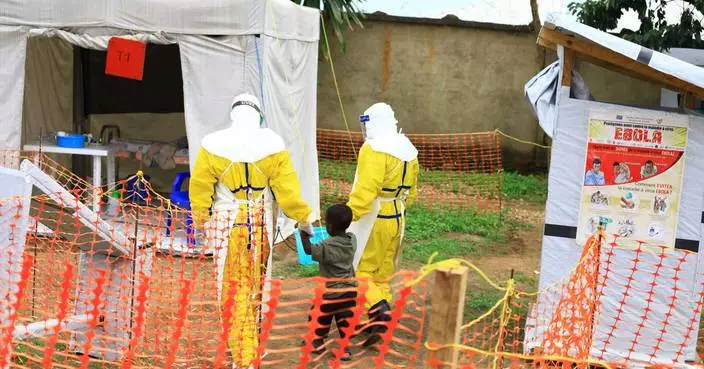
FILE - Health workers wearing protective suits tend to an Ebola victim kept in an isolation tent in Beni, Congo, July 13, 2019. (AP Photo/Jerome Delay, File)
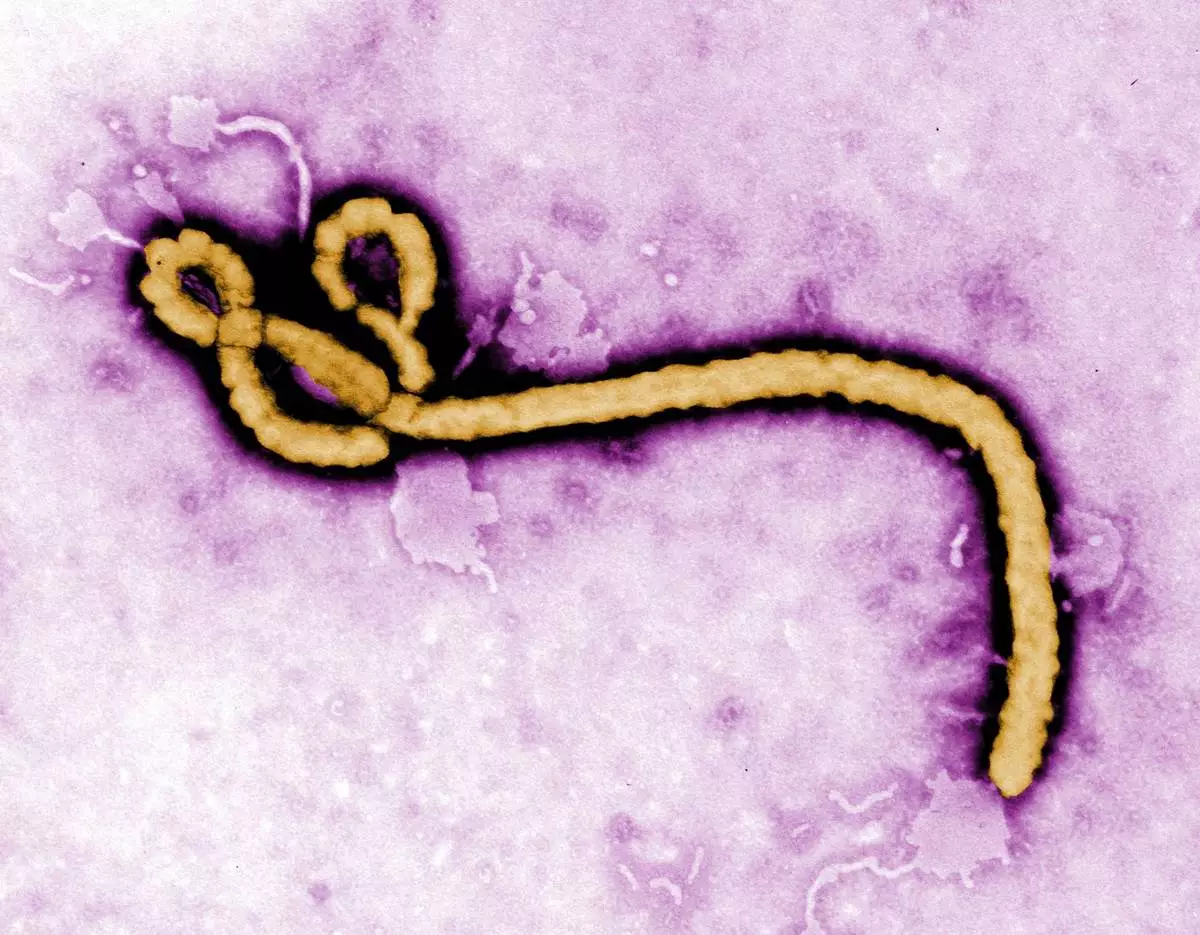
FILE - This undated colorized transmission electron micrograph file image made available by the Centers for Disease Control and Prevention (CDC) shows an Ebola virus virion. (Frederick Murphy/CDC via AP, File)
NEW YORK (AP) — The U.S. stock market is falling from its records Friday and joining a worldwide drop for stocks, as higher oil prices send a shiver through the bond market. Stocks that had been caught up in the euphoria around artificial-intelligence technology led the way lower.
The S&P 500 fell 1.1% from its all-time high set the day before. The Dow Jones Industrial Average was down 518 points, or 1%, as of 12:04 p.m. Eastern time, and the Nasdaq composite was down 1.4% from its own record.
Technology stocks tumbled in a sharp turnaround from their meteoric rises for much of the year, which had carried markets worldwide to records but also raised criticism that they had gone too far.
Nvidia, the stock that quickly became the face of the AI revolution, dropped 3.3% and was the heaviest weight on the S&P 500. It had come into the day with a gain of more than 26% for the year so far.
Applied Materials fell 0.7% even though it reported stronger profit growth for the latest quarter than analysts expected, thanks to the global build out of AI. The company, whose products help make chips and displays, came into the day with a gain of more than 70% for the year so far.
“To us, it looks like markets have pushed into overbought territory,” according to Brian Jacobsen, chief economic strategist at Annex Wealth Management. He said the strong corporate profits and durable U.S. economy that launched U.S. stocks to records remain intact, but “the path is unlikely to be smooth. Periods like this call for discipline more than hope.”
In the meantime, rising oil prices are raising the pressure after already worsening inflation by more than economists had feared. The war with Iran is continuing, and the Strait of Hormuz remains shut to oil tankers, which is preventing them from delivering crude to customers worldwide and driving up oil’s price.
The price for a barrel of Brent crude oil, the international standard, rose 3.8% to $109.74 and is well above its level of roughly $70 from before the war.
Many big U.S. companies have been saying their customers have been able to keep spending on their products and services despite having to pay higher prices for gasoline. But U.S. households have also been telling surveys they’re feeling discouraged about the economy and the pressures building on them because of the war and tariffs.
The worries were most clear Friday in the bond market, where Treasury yields climbed. The yield on the 10-year Treasury rose to 4.58% from 4.47% late Thursday. That’s a notable move for the bond market, and it’s well above its 3.97% level from before the war. The yield on the 30-year Treasury is near its highest level since 2023 after breaking above 5%.
Higher yields can make mortgages and other kinds of loans going to U.S. households and businesses more expensive, which slows the economy. They also tend to push downward on prices for stocks and all kinds of other investments.
Stocks of smaller companies had some of Friday’s sharpest drops. Many of them need to borrow cash to grow, which means higher borrowing costs can hurt them more than their big rivals. The Russell 2000 index of the smallest U.S. stocks fell 2.4%, more than double the S&P 500’s loss.
Yields have been climbing since the war on worries about higher inflation and how it may tie the Federal Reserve’s hands when it comes to short-term interest rates. Not only have traders abandoned virtually all expectations that the Fed will resume its cuts to interest rates this year, they’ve been building some bets that it may even hike rates in 2026, according to data from CME Group.
A couple of reports on the U.S. economy that came in better than expected also helped to lift yields. One said U.S. industrial production improved by more last month than economists expected, while another said manufacturing in New York state is expanding at a faster rate.
In stock markets abroad, indexes fell sharply across Europe and Asia.
South Korea’s Kospi dropped 6.1% for one of the biggest moves. It had been reaching records this year because of the influence of AI beneficiaries like SK Hynix. But it quickly reversed momentum Friday after briefly topping the 8,000 level for the first time.
Some on Wall Street have been warning about a possible break in momentum for tech stocks in general and AI winners in particular.
“If nothing else this should be a ‘shot across the bow’ for how volatility works both ways,” according to Jonathan Krinsky, chief market technician at BTIG.
AP Business Writer Chan Ho-him contributed.

Trader Patrick Casey works on the floor of the New York Stock Exchange, Wednesday, May 13, 2026. (AP Photo/Richard Drew)

President Donald Trump, left, walks with Chinese President Xi Jinping at the Temple of Heaven on Thursday May 14, 2026, in Beijing. (AP Photo/Mark Schiefelbein)
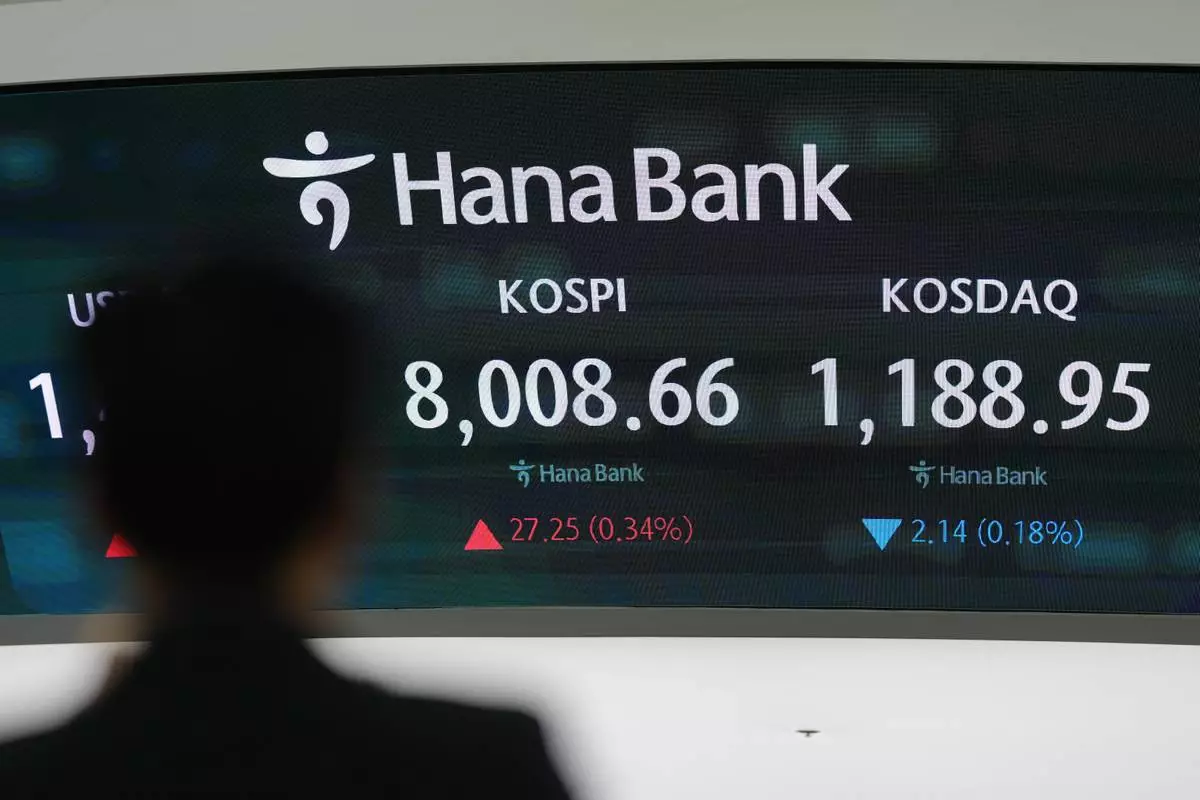
A dealer stands near the screens showing the Korea Composite Stock Price Index (KOSPI), and the Korean Securities Dealers Automated Quotations (KOSDAQ) at a dealing room of Hana Bank in Seoul, South Korea, Friday, May 15, 2026. (AP Photo/Lee Jin-man)

Employees of Hana Bank celebrate in a photo-op to mark the Korea Composite Stock Price Index (KOSPI) of over 8,000 points at a dealing room of Hana Bank in Seoul, South Korea, Friday, May 15, 2026. (AP Photo/Lee Jin-man)