WASHINGTON (AP) — President Donald Trump plans to build an exhibit of statues featuring prominent Americans in a tightly regulated park along the Potomac River, potentially opening a new legal fight over whether his administration is ignoring the approvals process that typically governs Washington's monumental core as he muscles through a dramatic overhaul of the nation's capital.
In a Friday morning social media post, Trump said the National Garden of American Heroes would be built in West Potomac Park, a space near the National Mall that includes the Korean War Veterans Memorial, the Jefferson Memorial, the Franklin Delano Roosevelt Memorial and the Martin Luther King Jr. Memorial. The area is also home to several fields and volleyball courts regularly used by local sports groups.
Trump described the area in his post as a “totally BARREN field of Prime Waterfront Real Estate along our Mighty Potomac River.”
The president has said the garden would commemorate America's 250th anniversary with sculptures recognizing 250 prominent Americans who have made significant cultural, political and other historical contributions to the country. He first raised the idea during Fourth of July celebrations in 2020 and has framed it as a response to protests that resulted in the removal of controversial monuments, including those that commemorated slave owners and Confederate leaders.
In the final days of his first term, Trump, a Republican, signed an executive order naming 244 people including Ronald Reagan and Jackie Robinson who should be honored with statues in the garden. The idea languished under President Joe Biden, a Democrat, but Congress provided $40 million under Trump's big tax and spending cuts law last year to procure the statues included in his executive orders.
That may not be enough, however, to constitute the type of approval typically needed for major projects on or near the National Mall. Federal law requires projects and memorials to get a sign-off from multiple design and planning groups.
White House spokesman Davis Ingle said the garden will “ be built to reflect the awesome splendor of our country’s timeless exceptionalism.”
“President Trump continues to beautify and honor our Nation’s Capital during America’s historic semiquincentennial celebration,” he said.
He didn't comment on whether the administration was seeking the relevant approvals or had already awarded contracts for the statues.
Washington's monumental core is one of the nation's most closely regulated spaces, with the goal of protecting sight lines and preventing new construction that would undermine the area's history. Between the approvals process, design disputes and funding challenges, changes in the area can take years — or even decades — to reach completion. One of the newest additions near the National Mall, the Dwight D. Eisenhower Memorial, took 21 years to finish after Congress initially approved it in 1999.
Trump and his supporters have shown little interest in following such procedures. He moved quickly this month to drain and repaint the Lincoln Memorial Reflecting Pool. He suddenly demolished the East Wing of the White House last year to build a ballroom. Trump's name has been added to the facade of the Kennedy Center, which he plans to close later this summer for a two-year renovation.
Just this week, workers began preliminary surveys and testing of the proposed site of a triumphal arch Trump is seeking between the Lincoln Memorial and Arlington National Cemetery. Part of the site was fenced off, and pink flags typically used as survey markings were planted in the grass.
And the Trump administration is moving forward with plans to transform East Potomac Park from an accessible public golf course into what Trump has described as a “U.S. Open-caliber course.” Interior Secretary Doug Burgum on Thursday released a design plan for the new course that he said would provide “championship-quality golf at affordable, highly discounted rates.”
The plan provided few details on how open the park, which is frequently used by local runners and bikers, would remain to the general public.
Virtually all of the projects have become subject to litigation.
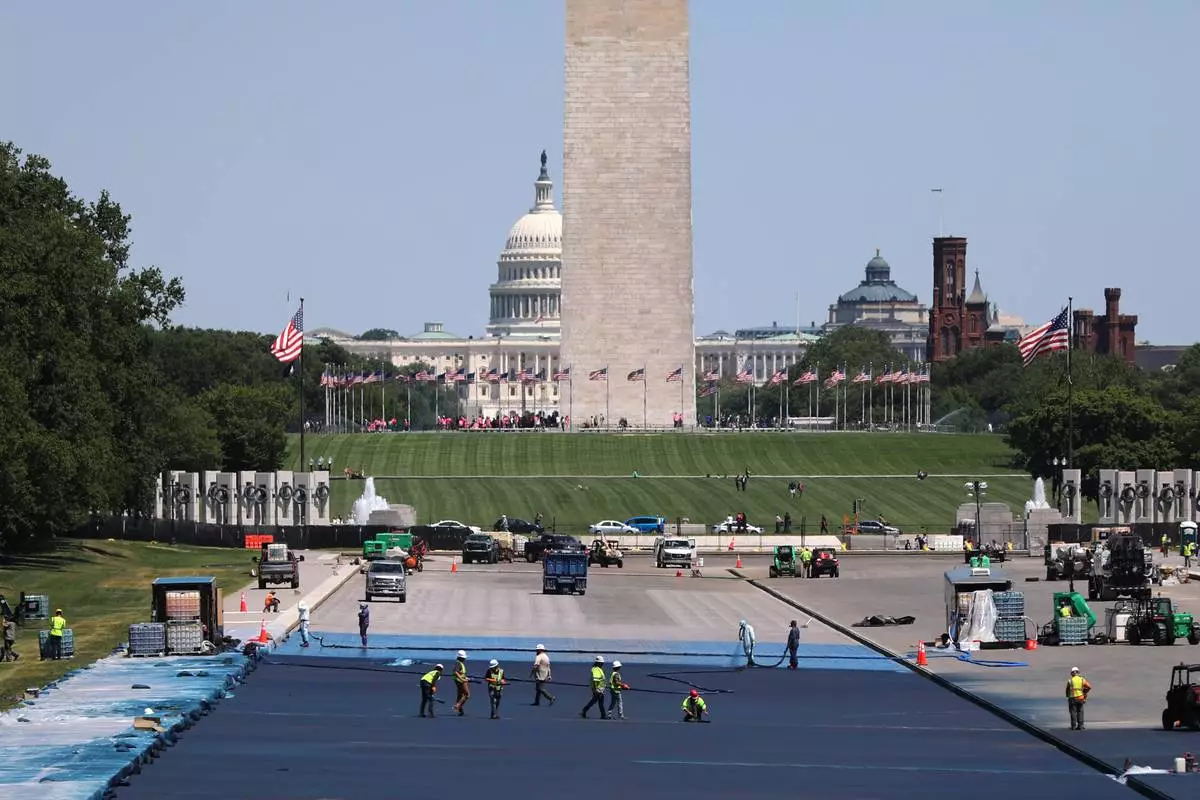
Workers apply a blue protective coating as part of a renovation project to the Lincoln Memorial Reflecting Pool, Tuesday, May 12, 2026, on the National Mall in Washington. (AP Photo/Rahmat Gul)
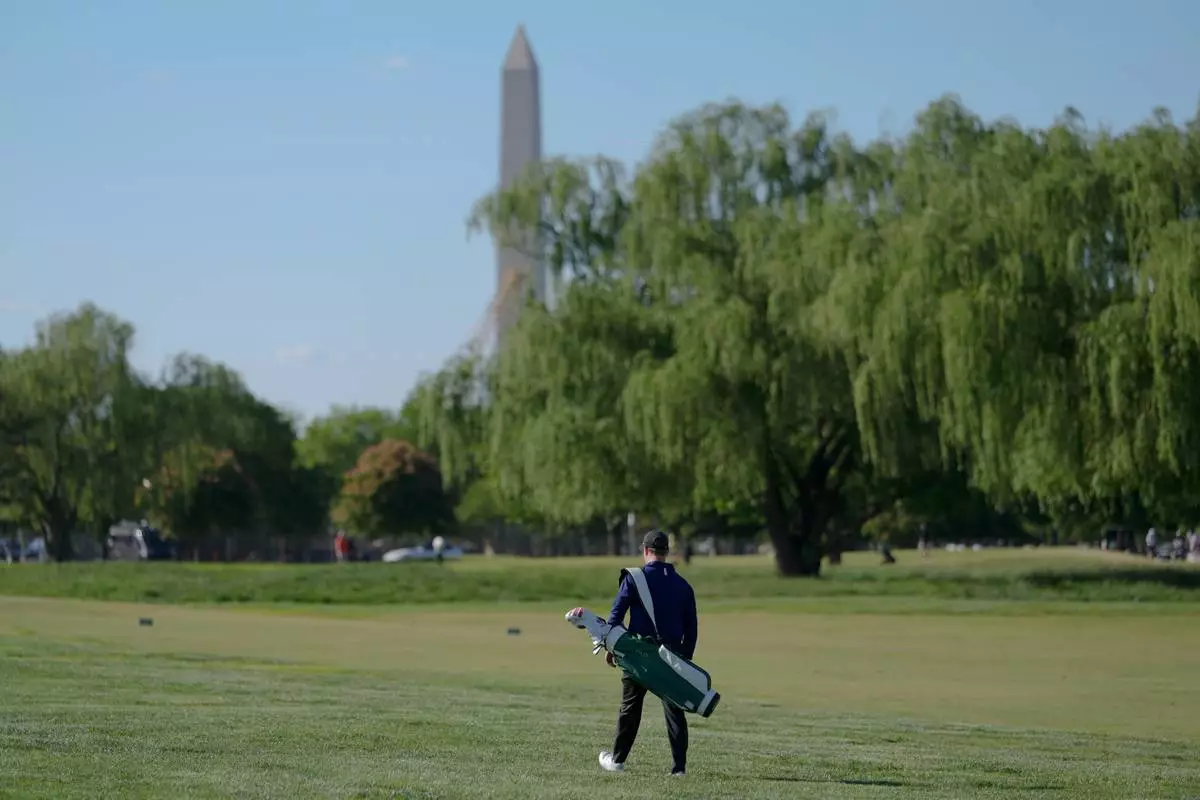
The Washington Monument stands in the background as a golfer walks the East Potomac Golf Course, Sunday, May 3, 2026, in Washington. (AP Photo/Julia Demaree Nikhinson)
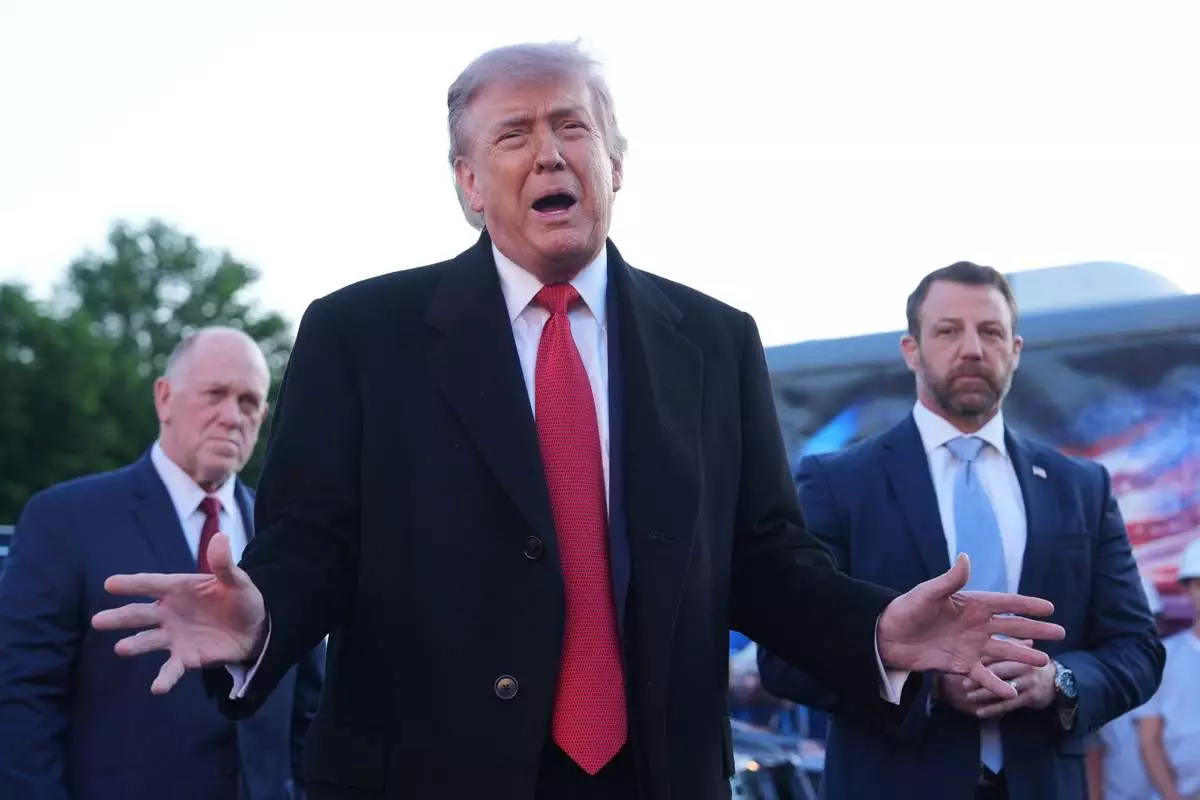
President Donald Trump speaks as he visits the Lincoln Memorial Reflecting Pool to see the new blue protective coating being applied as part of a renovation project, Thursday, May 7, 2026, in Washington, as White House boarder czar Tom Homan and Homeland Security Secretary Markwayne Mullin listen. (AP Photo/Mark Schiefelbein)
PORT ISABEL, Texas (AP) — Until recently, young children ran in and out of their public housing homes in this Gulf Coast town, playing on sun-dappled lawns as mothers looked over their shoulders for the school bus to drop off their older kids. Suddenly, couches, dressers and refrigerators started appearing curbside for movers or garbage collectors.
Within weeks, the neighborhood was a ghost town and the playground was empty.
What prompted the mass exodus was a bungled message from the housing authority in Port Isabel, a South Texas community of 5,000 people, many of whom are immigrants working at hotels and restaurants on the beaches of nearby South Padre Island. The Port Isabel Housing Authority indicated a Trump administration proposal was about to take effect that would end housing assistance to families with at least one member in the country illegally. The events that followed provided a glimpse of what could happen in communities across the U.S. if the proposed rule is actually finalized.
“The impact was not limited to undocumented immigrants, but really to immigrants who are here legally as well as people within their families who are citizens,” Marie Claire Tran-Leung, senior staff attorney at National Housing Law Project, said.
For decades, families with at least one legal or eligible resident have been allowed to live in public housing provided those who are here illegally or are otherwise ineligible due to their immigration status pay a full, unsubsidized share of rent. The U.S. Department of Housing and Urban Development wants to reverse that.
Advocates estimate up to 80,000 people would be kicked out of their homes nationwide under the measure that is part of President Donald Trump’s immigration crackdown. They include U.S. citizens, many of them children born in this country but whose parents were not.
On Feb. 3, the Port Isabel Housing Authority sent residents a letter saying that the Trump administration wanted every household member to prove legal status within 30 days or face eviction. Three weeks later, the agency sent a note of “clarification” that no such proof was required.
It was already too late.
Half of residents living in Port Isabel public housing left within a month of receiving the first letter. The occupancy rate plunged from 91% in January to 43% in May, far below the national average of 94%.
The proposed rule from HUD still has not taken effect.
The housing authority gave no explanation for the initial misunderstanding and officials did not respond to repeated requests for comment from The Associated Press.
Fears about eviction and rumors that U.S. Immigration and Customs Enforcement might get involved prompted panic among some residents.
“My kids and I spoke and wondered what we were going to do, but then we said it’s better to leave and avoid any retaliation,” a single mother from Mexico raising two teenagers who are U.S. citizens told The Associated Press. She, like other former residents, spoke on condition of anonymity due to fears of being deported.
She turned to legal service organizations that told her and others they could stay in public housing. But she and her children decided it was too risky and left their home of nearly a decade, finding an apartment within the same school district that costs about $500 more per month.
The move also added about 10 minutes to the commute to the island, where both the mother and her daughter work. The 18-year-old gets home from school at 4:30 p.m. and grabs a quick dinner before her mom drives her to a job that starts at 5 p.m. The daughter is a top student in her senior class and plans to go to college in the fall with help from scholarship offers, but she worries how her family will make ends meet. Her brother was laid off, and their mom underwent cancer treatment last year, depleting her energy and straining their finances.
Other families face even greater challenges.
A mother of three said she moved her family into a one-bedroom trailer home illegally parked between two other trailer homes. Her oldest son sleeps in the living room.
Another family of three sold beds and other furniture so they could squeeze into a small trailer home, only to find out the landlord wouldn't let them use the mailing address, affecting her children’s school and health insurance.
“Since we got the letter, everything changed from one day to the next. It wasn’t the same anymore. Before the letter, the kids were happy, playing outside,” the mother of two said.
The Trump administration proposed in February that any household with one ineligible resident would disqualify an entire family, estimating that 24,000 recipients were ineligible in 20,000 households.
“We have zero tolerance for pushing aside hardworking U.S. citizens while enabling others to exploit decades-old loopholes,” HUD Secretary Scott Turner said at the time.
The Center on Budget and Policy Priorities, which advocates for low-income families, estimates that 79,600 people could be forced to leave their homes, with a disproportionate impact on children and Latinos.
The rule drew more than 16,000 public comments, many of them critical, including from city leaders across the U.S.
For example, the New York City Council told HUD that an estimated 12% of city of households have at least one member who lacks legal status. Some 240,000 children are in those homes.
“This proposed rule will unequivocally lead to increased displacement, homelessness, poverty, and decreased educational and health outcomes,” the council wrote.
HUD is expected to publish a final version of the rule after considering public comments.
It is almost certain to face legal challenges.
This story has been updated to correct the name of the U.S. Department of Housing and Urban Development.
Associated Press writers Michael Casey in Boston and Elliot Spagat in San Diego contributed to this story.
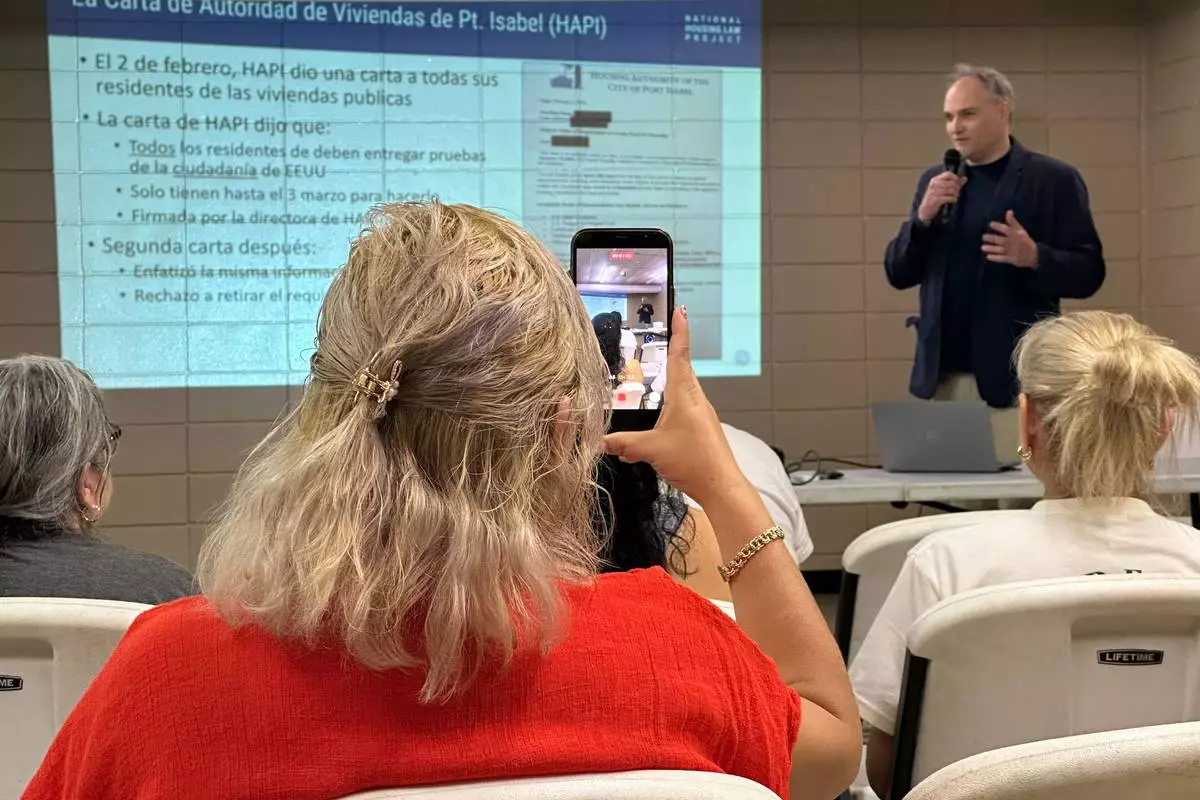
Community members attended a public forum, Feb. 19, 2026, at the Port Isabel Community Center in Port Isabel, Texas, to hear about tenant rights from Eric Dunn, an attorney with National Housing Law Project. (AP Photo/Valerie Gonzalez)
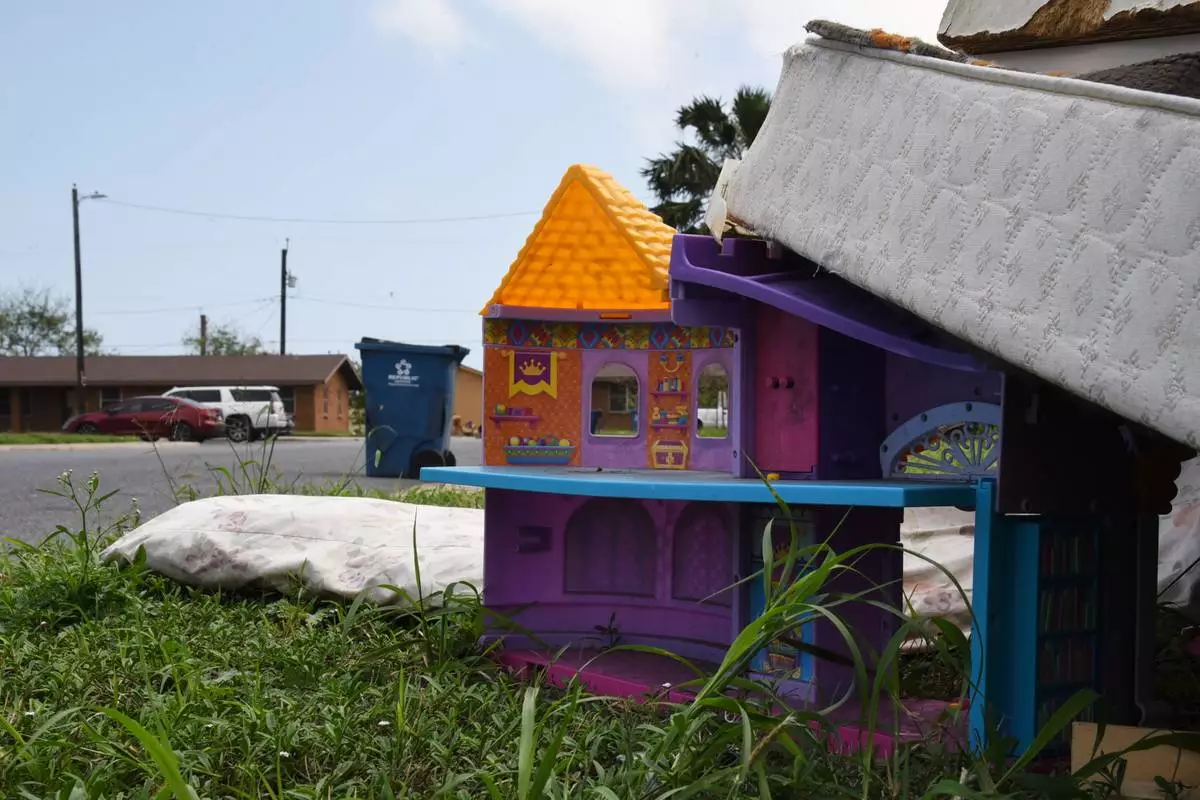
A plastic dollhouse sits among a pile of furniture discarded by families in a public housing subdivision in Port Isabel, Texas, on April 13, 2026. (AP Photo/Valerie Gonzalez)
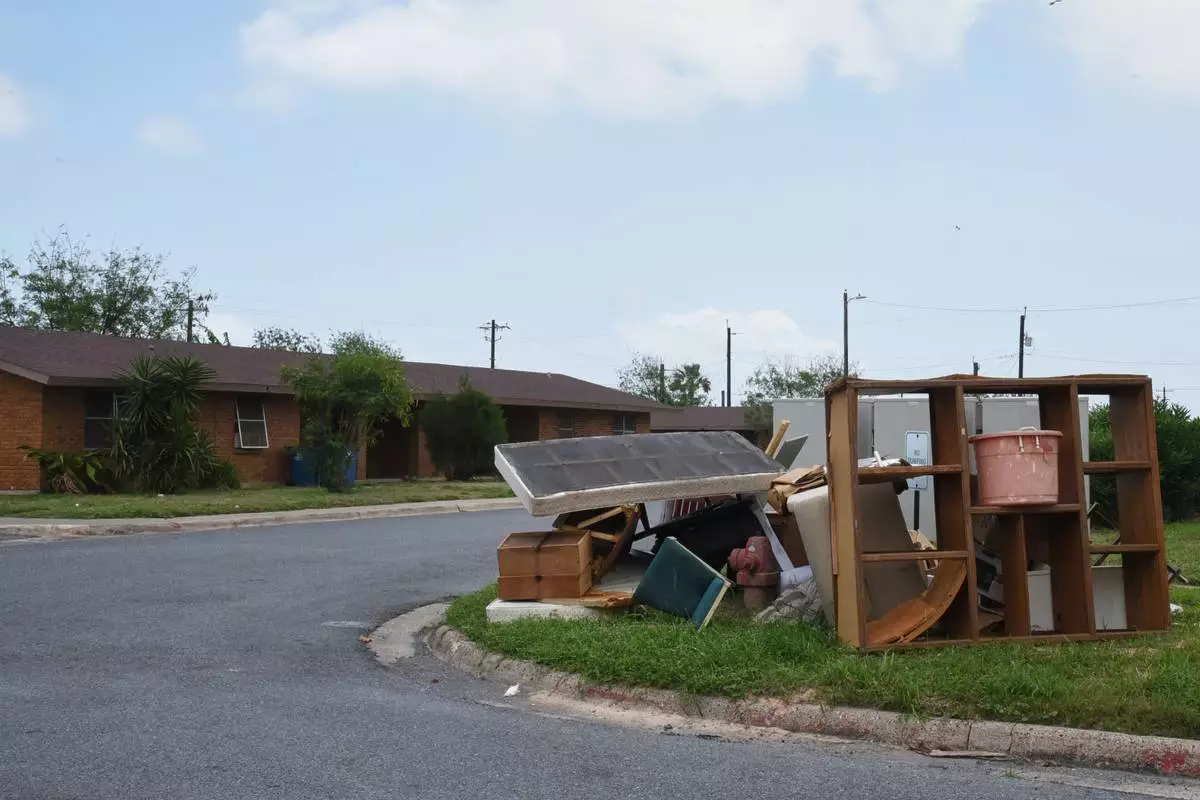
A pile of furniture is seen in a public housing subdivision in Port Isabel, Texas, on April 13, 2026. (AP Photo/Valerie Gonzalez)
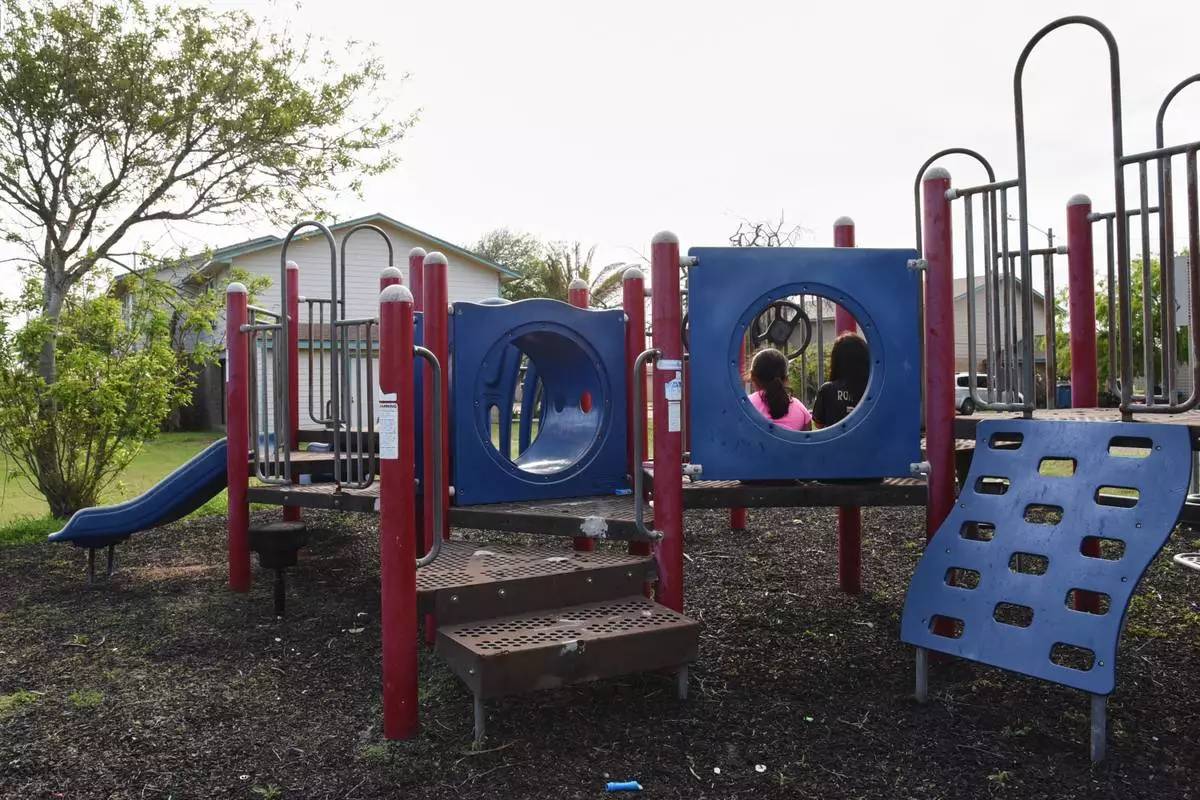
Two sisters play in a neighborhood playground that sits mostly vacant, April 13, 2026, after neighbors left their public housing homes in Port Isabel, Texas. (AP Photo/Valerie Gonzalez)
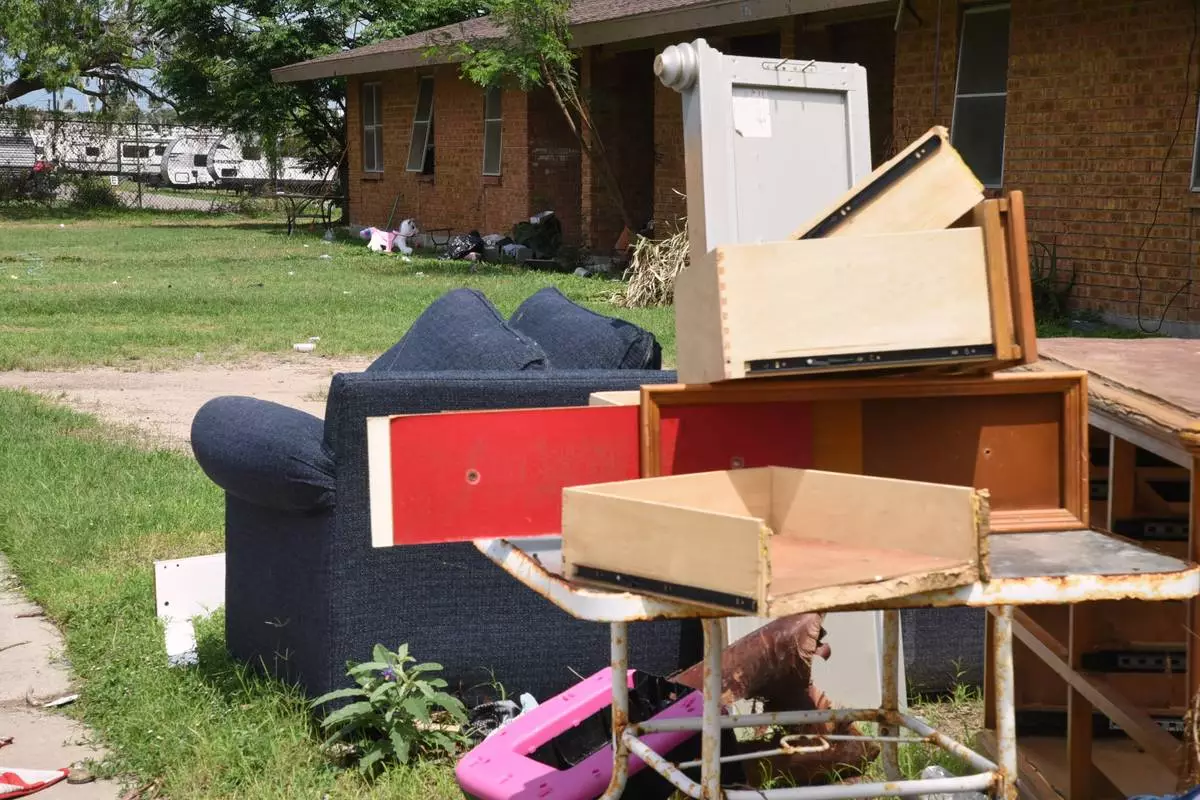
A pile of furniture is piled in a public housing subdivision in Port Isabel, Texas, on April 13, 2026. (AP Photo/Valerie Gonzalez)