Stan Lee was a seminal part of Miya Crummell's childhood. As a young, black girl and self-professed pop culture geek, she saw Lee was ahead of his time.
"At the time, he wrote 'Black Panther' when segregation was still heavy," said the 27-year-old New Yorker who is a graphic designer and independent comic book artist. "It was kind of unheard of to have a black lead character, let alone a title character and not just a secondary sidekick kind of thing."
Crummell spent much of the '90s engrossed in Marvel Comics. And she felt so indebted to Lee that she waited in line to meet him at a 2012 convention.
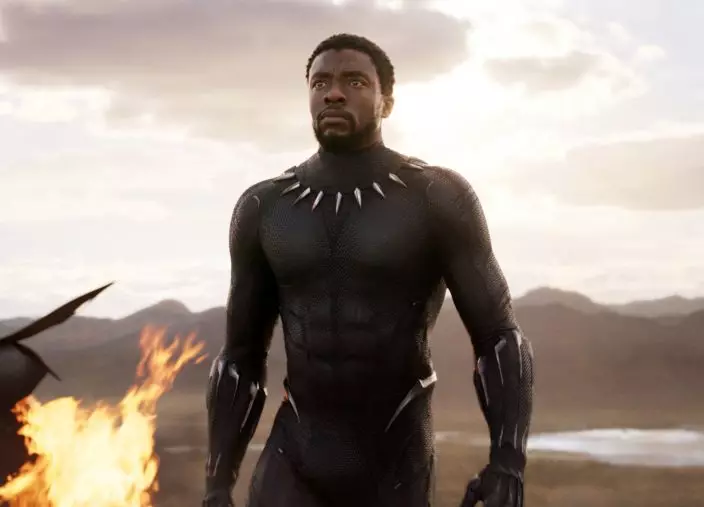
This image released by Disney and Marvel Studios' shows Chadwick Boseman in a scene from "Black Panther." Stan Lee, the master and creator behind Marvel's biggest superheroes, died at age 95 Monday, Nov. 12, 2018, at a Los Angeles hospital. As fans celebrate his contributions to the pop culture canon, some have also revisited how Lee felt that with his comic books came great responsibility. (Marvel StudiosDisney via AP)
"I had a chance to tell him he was my hero," she said. "He influenced my whole career path and I got to thank him for that."
Lee, the master and creator behind Marvel's biggest superheroes, died at age 95 on Monday.
As fans celebrate his contributions to the pop culture canon, some have also revisited how Lee felt that with his comic books came great responsibility. The Marvel wizard used his pen to conquer such real-world foes as racism and xenophobia. Since the 1960s, Lee advocated for tolerance through the only platform he had: the comic book pages. It was on those pages that he wrote "Stan's Soapbox" columns preaching against bigotry and that he introduced characters of color. While Marvel's representation of minorities in comics hasn't been without its stereotyping hiccups, there's no denying Lee broadened the image of the quintessential superhero.
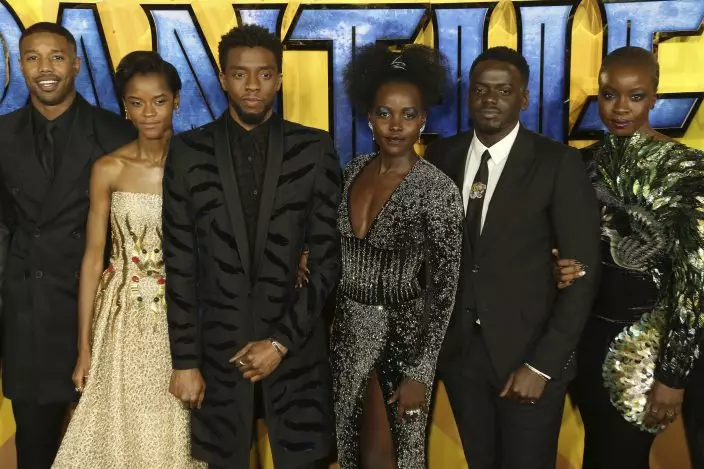
FILE - In this Feb. 8, 2018 file photo, actors Michael B. Jordan, Leitia Wright, Chadwick Boseman, Lupita Nyong'o, Daniel Kaluuya and Danai Gurira pose for photographers upon arrival at the premiere of the film "Black Panther" in London. Stan Lee, the master and creator behind Marvel's biggest superheroes, died at age 95 Monday, Nov. 12, 2018, at a Los Angeles hospital. As fans celebrate Lee's contributions to the pop culture canon, some have also revisited how Lee felt that with his great comic books came great responsibility. (Photo by Joel C RyanInvisionAP, File)
Under Lee's leadership, Marvel Comics introduced a generation of comic book readers to an African prince who rules a mythical and technologically advanced kingdom, a black ex-con whose brown skin repels bullets and the X-Men, a group of heroes whose superpowers are as different as their cultural backgrounds.
The works and ideas of Lee and the artists behind T'Challa, the Black Panther; Luke Cage, Hero for Hire; and Professor Xavier's band of merry mutants — groundbreaking during the 1960s and 1970s — have become a cultural force breaking down barriers to inclusion.
Lee had his fingers in all that Marvel produced, but some of the characters and plot lines "came from the artists being inspired by what was happening in the '60s," said freelance writer Alex Simmons.
Still, there was some pushback by white comics distributors when it came to black heroes and characters. Some bundles of Marvel Comics were sent back because some distributors weren't prepared for the Black Panther and the phenomenal super African kingdom of Wakanda developed by artist and co-creator Jack Kirby.
"Stan had to take those risks," Simmons said. "There was a liberation movement, and I think Marvel became the voice of the people, tied into that rebellious energy and rode with it."
In 1968, a tumultuous year in the nation that saw the assassination of Martin Luther King Jr., Lee wrote one of his most vocal "Soapbox" essays calling bigotry and racism "the deadliest social ills plaguing the world today."
"But, unlike a team of costumed super-villains, they can't be halted with a punch in the snoot, or a zap from a ray gun," Lee wrote. "The only way to destroy them is to expose them — to reveal them for the insidious evils they really are."
Marvel's characters always were at the forefront of how to deal with racial and other forms of discrimination, according to Mikhail Lyubansky, who teaches psychology of race and ethnicity at the University of Illinois, Urbana-Champaign.
"The original X-Men were less about race and more about cultural differences," Lyubansky said. "Black Panther and some of the (Marvel) films took the mantle and ran with the racial issue in ways I think Stan didn't intend. But they were a great vehicle for it."
Some of the efforts to break out minority characters haven't aged well. Marvel characters like the Fu Manchu-esque villain The Mandarin and the Native American athletic hero Wyatt Wingfoot were considered groundbreaking in the '60s and '70s, but may seem dated and too stereotypical when viewed through a 21st-century lens.
"It's interesting. Stan Lee kind of takes the credit and the blame, depending on the character," said William Foster III, who helped establish the East Coast Black Age of Comics Convention and is an English professor at Naugatuck Valley Community College in Waterbury, Connecticut.
Foster, who started reading Marvel Comics in the 1960s, said one reason they appealed to him was because they started including people of color in the background.
"Stan Lee had the attitude of 'We're in New York City. How can we possibly not have black people in New York City?'" Foster said.
Blacks began taking on the roles of heroes and villains. Foster said some characters may have been seen as "tokenism" but that's sometimes where progress has to start.
In 10 years, the Marvel Cinematic Universe films have netted more than $17.6 billion in worldwide grosses. The "Black Panther" movie pulled in more than $200 million in its debut weekend earlier this year.
"I had a lot of white friends growing up," said freelance writer Simmons, who is black. "We watched 'Batman' and we also watched 'The Mod Squad.' My personal belief is that if you put the material out in front of folks and they connect with it, they are going to connect with it."
For many fans and consumers, it's about the product not the skin color or sexual orientation of the character, he added.
Crummell, the comic book artist, said she thinks representation for minorities and women in comic books is improving.
"I think now, they're seeing that everybody reads comics. It's not a specific group now," Crummell said. "It's not just African-American people — it's women, it's Asians, Hispanic characters now. I would credit Stan Lee with kind of breaking the barrier for that."
DUBAI, United Arab Emirates (AP) — Iran fired more missiles at Israel and Gulf Arab states Thursday, demonstrating Tehran’s continued ability to strike its neighbors even as U.S. President Donald Trump claimed the threat from the country was nearly eliminated.
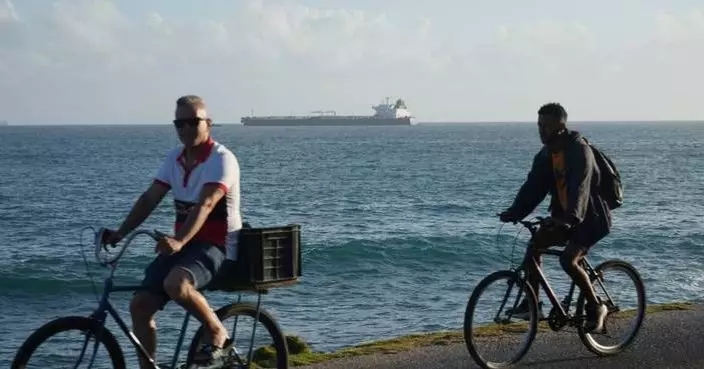
Iran’s attacks on Gulf states along with its chokehold on the Strait of Hormuz have disrupted the world’s energy supplies with effects far beyond the Middle East. That has proved to be Iran’s greatest strategic advantage in the war. Britain held a call with nearly three dozen countries about how to reopen the strait once the fighting is over.
Trump has insisted the strait can be taken by force — but said it is not up to the U.S. to do that. In an address to the American people Wednesday night, he encouraged countries that depend on oil from Hormuz to “build some delayed courage” and go “take it.”
Before the U.S. and Israel started the war on Feb. 28 with strikes on Iran, the waterway was open to traffic and 20% of all traded oil passed through it.
Iran responded defiantly to Trump’s speech, in which the American president claimed U.S. military action had been so decisive that “one of the most powerful countries” is “really no longer a threat.”
A spokesman for Iran’s military, Lt. Col. Ebrahim Zolfaghari, insisted Thursday that Tehran maintains hidden stockpiles of arms, munitions and production facilities. He said facilities targeted so far by U.S. strikes are “insignificant.”
Just before Trump began his address — in which he said U.S. “core strategic objectives are nearing completion” — explosions were heard in Dubai as air defenses worked to intercept an Iranian missile barrage.
Less than a half-hour after the president was done, Israel said its military was also working to intercept incoming missiles. Sirens sounded in Bahrain, home to the U.S. Navy’s 5th Fleet, immediately after the speech.
Attacks continued across Iran on Thursday, with strikes reported in multiple cities.
Iran state media reported that strikes on the B1 bridge, which was still under construction, killed eight people and wounded 95. The outlet, citing authorities in Alborz province, said the victims had gathered under the bridge and along the riverbank for Nature Day, which Iranians celebrate by gathering outside.
In a post on X that included a picture of what appeared to be the same bridge, Iran’s Foreign Minister Abbas Araghchi wrote, “Striking civilian infrastructure only conveys the defeat and moral collapse of an enemy in disarray.”
Trump posted footage on social media showing what he said was the collapse of Iran's biggest bridge and threatening, “Much more to follow.” It was not immediately clear if the footage Trump shared was the B1 bridge, reportedly the tallest in the Middle East.
In Lebanon — where Israel has launched a ground invasion against Iran-backed Hezbollah militants — Israeli strikes have killed 27 people in the past 24 hours, the Health Ministry said.
More than 1,900 people have been killed in Iran during the war, while 19 have been reported dead in Israel. More than two dozen people have died in Gulf states and the occupied West Bank, while 13 U.S. service members have been killed.
More than 1,300 people have been killed and more than 1 million displaced in Lebanon. Ten Israeli soldiers have also died there.
Iranian attacks on about two dozen commercial ships, and the threat of more, have halted nearly all traffic in the waterway that connects the Persian Gulf to the open ocean.
Since March 1, traffic through the strait has dropped 94% over the same period last year, according to the Lloyds List Intelligence shipping data firm. Two ships are confirmed to have paid a fee, the firm said, while others were allowed through based on agreements with their home governments.
Saudi Arabia piped about 1 billion barrels of oil away from the Strait of Hormuz in March, according to maritime data firm Kpler, while Iraq said Thursday that it had started to truck oil across Syria to avoid the strait.
The 35 countries that spoke Thursday, including all G7 industrialized democracies except the U.S., as well as the United Arab Emirates and Bahrain, signed a declaration last month demanding Iran stop blocking the strait.
Thursday’s talks were focused on political and diplomatic measures, but British Foreign Secretary Yvette Cooper said military planners from an unspecified number of countries will also plot ways to ensure security once fighting ends, including potential mine-clearing work and “reassurance” for commercial shipping.
No country appears willing to try to open the strait by force while the war is raging. French President Emmanuel Macron, while on a visit to South Korea, called a military operation to secure the waterway “unrealistic.”
But there is a concern that Iran might limit traffic through the waterway even after U.S. and Israeli attacks cease.
The conflict is driving up prices for oil and natural gas, roiling stock markets, pushing up the cost of gasoline and threatening to make a range of goods, including food, more expensive.
Oil prices remained elevated, however, at $111.54 for a barrel of U.S. crude, having soared following Trump’s address. That's up about 50% from Feb. 28.
Though the oil and gas that typically transits the strait is primarily sold to Asian nations, Japan and South Korea were the only two countries from the region joining Thursday's call about the strait. The supply of jet fuel has also been interrupted, with consequences for travel worldwide.
Rising from Bangkok and Corder reported from The Hague, Netherlands. Associated Press writers Will Weissert in Washington and David McHugh in Frankfurt, Germany, and Toqa Ezzidin in Cairo contributed to this story.
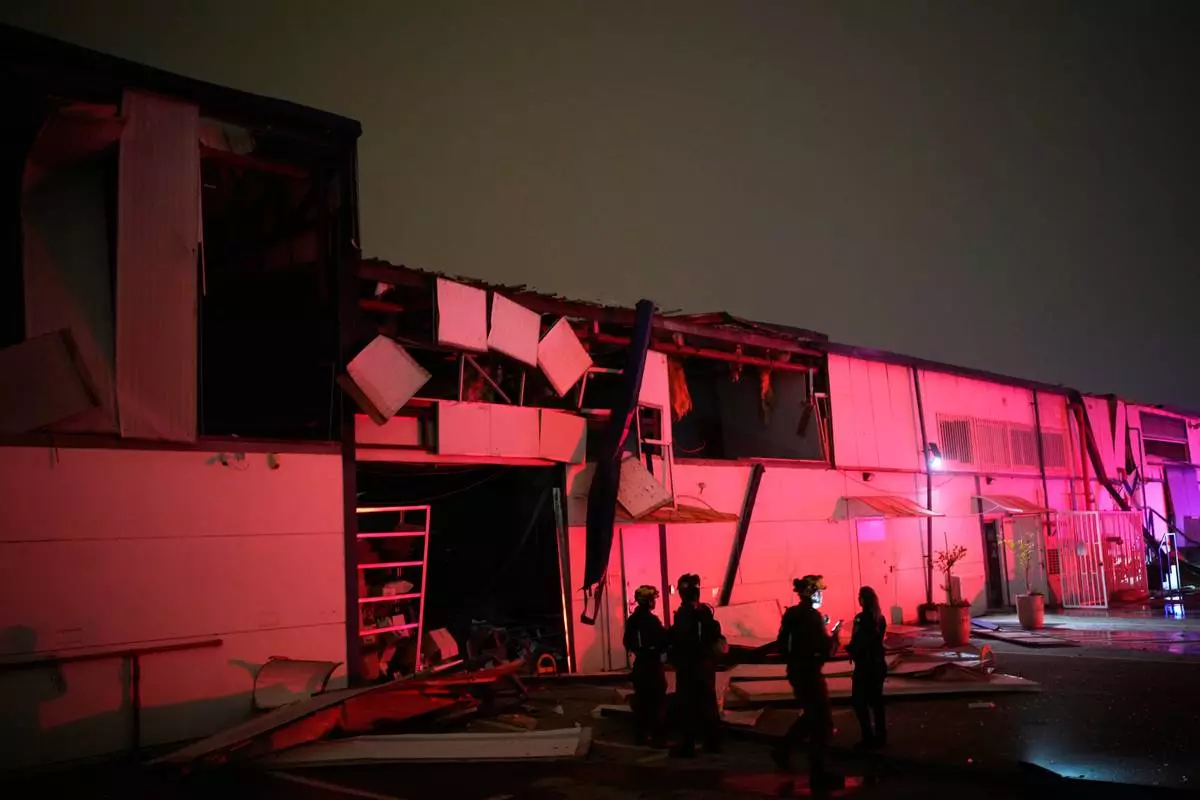
Israeli security forces and rescue teams inspect a site struck by an Iranian missile in Petah Tikva, Israel,Thursday, April 2, 2026. (AP Photo/Ohad Zwigenberg)
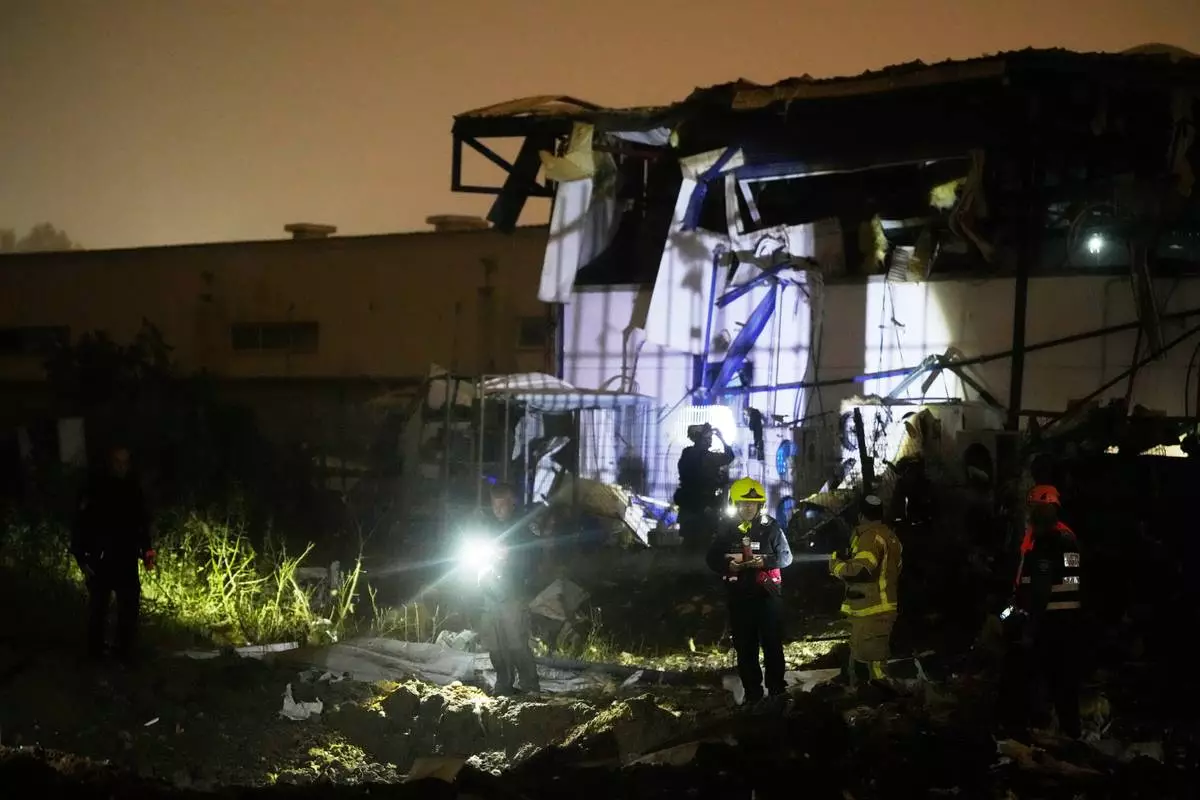
Israeli security forces and rescue teams inspect a site struck by an Iranian missile in Petah Tikva, Israel,Thursday, April 2, 2026. (AP Photo/Ohad Zwigenberg)
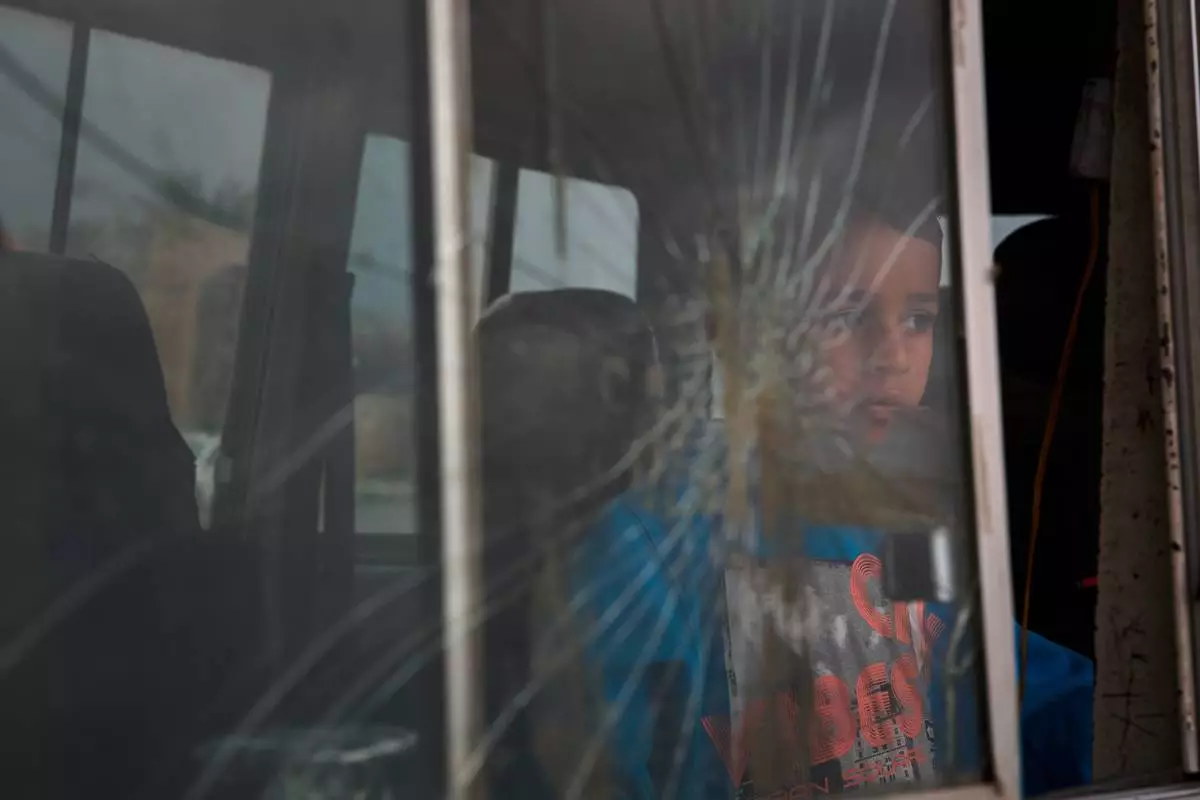
A boy who fled with his family following Israeli strikes in southern Lebanon sits inside the van they are using as shelter in Sidon, Lebanon, Thursday, April 2, 2026. (AP Photo/Emilio Morenatti)
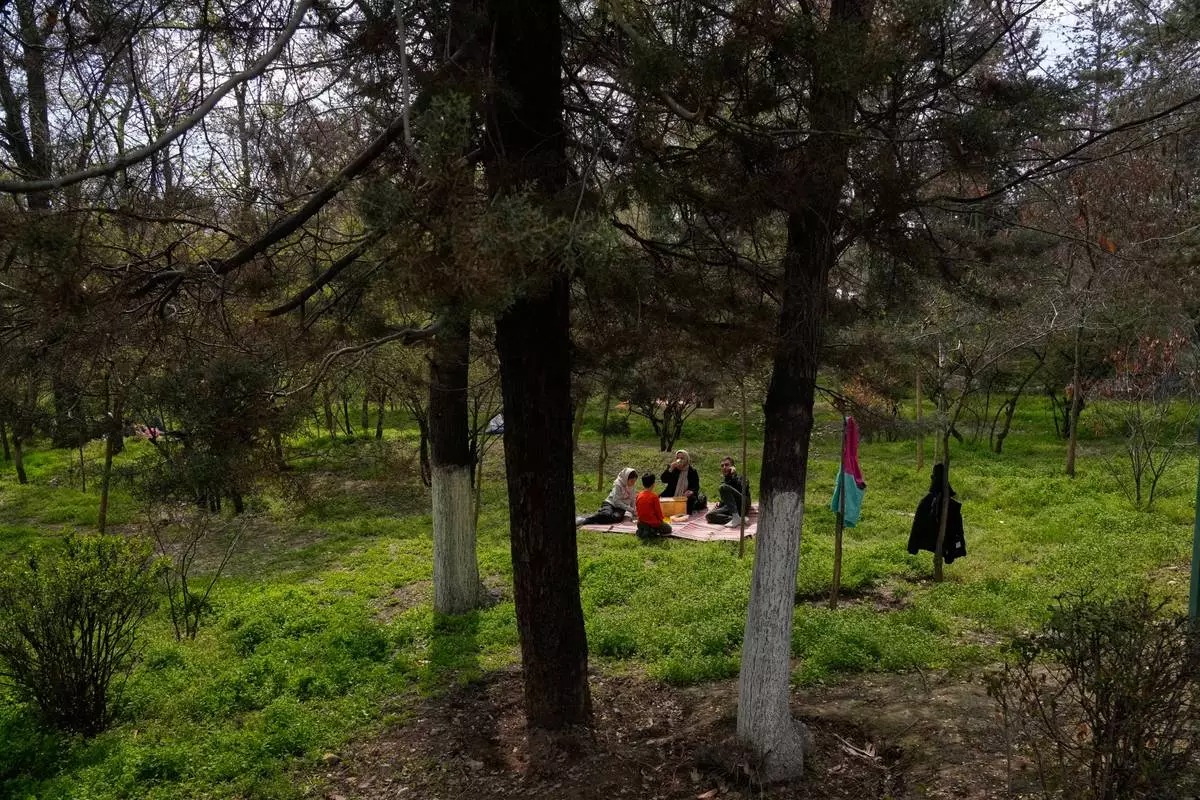
A family enjoys their time during the annual public picnic day, known as Sizdeh Bedar, an ancient tradition, marking the 13th and last day of Iranian New Year, or Nowruz, holidays, at Mellat park in Tehran, Iran, Thursday, April 2, 2026. (AP Photo/Vahid Salemi)
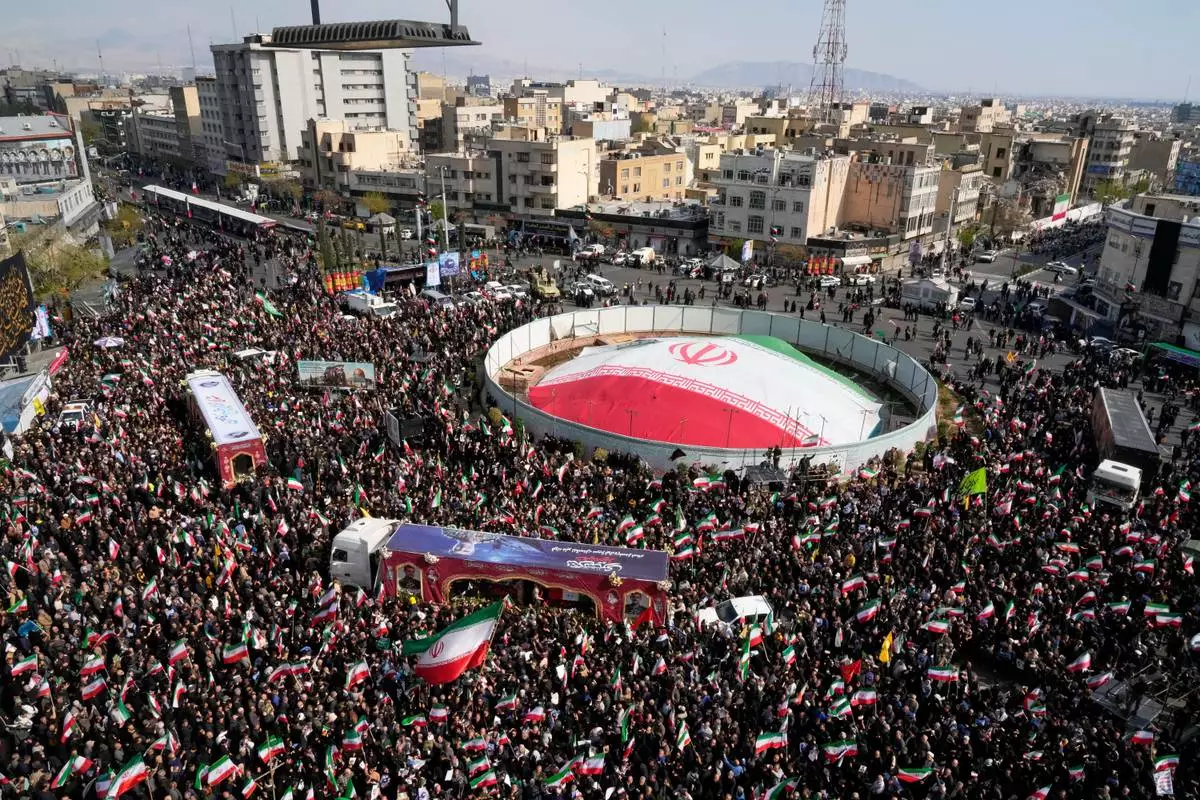
Mourners gather during a funeral procession for Alireza Tangsiri, head of Iran's Islamic Revolutionary Guard Corps Navy, and others killed in Israeli strikes in late March, in Tehran, Iran, Wednesday, April 1, 2026. (AP Photo/Vahid Salemi)
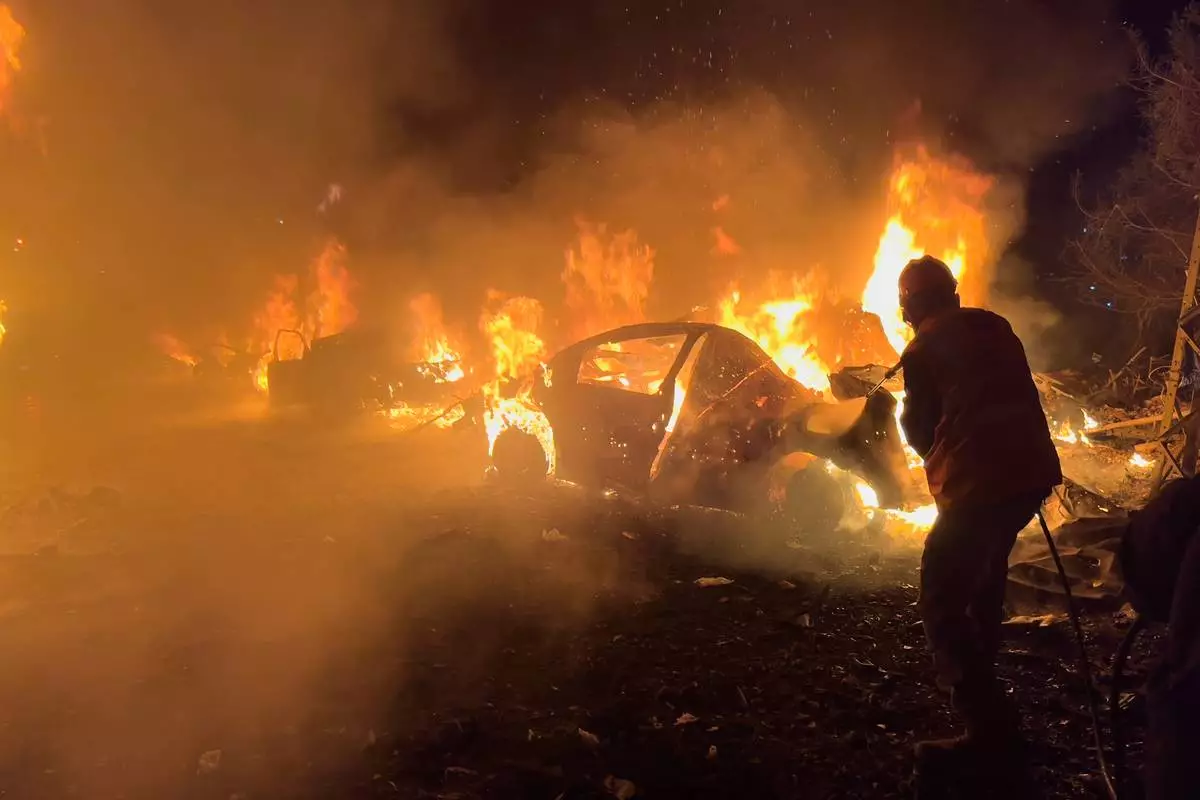
A firefighter extinguishes a car at the site of Israeli airstrikes, in Beirut, Lebanon, Wednesday, April 1, 2026. (AP Photo/Hussein Malla)
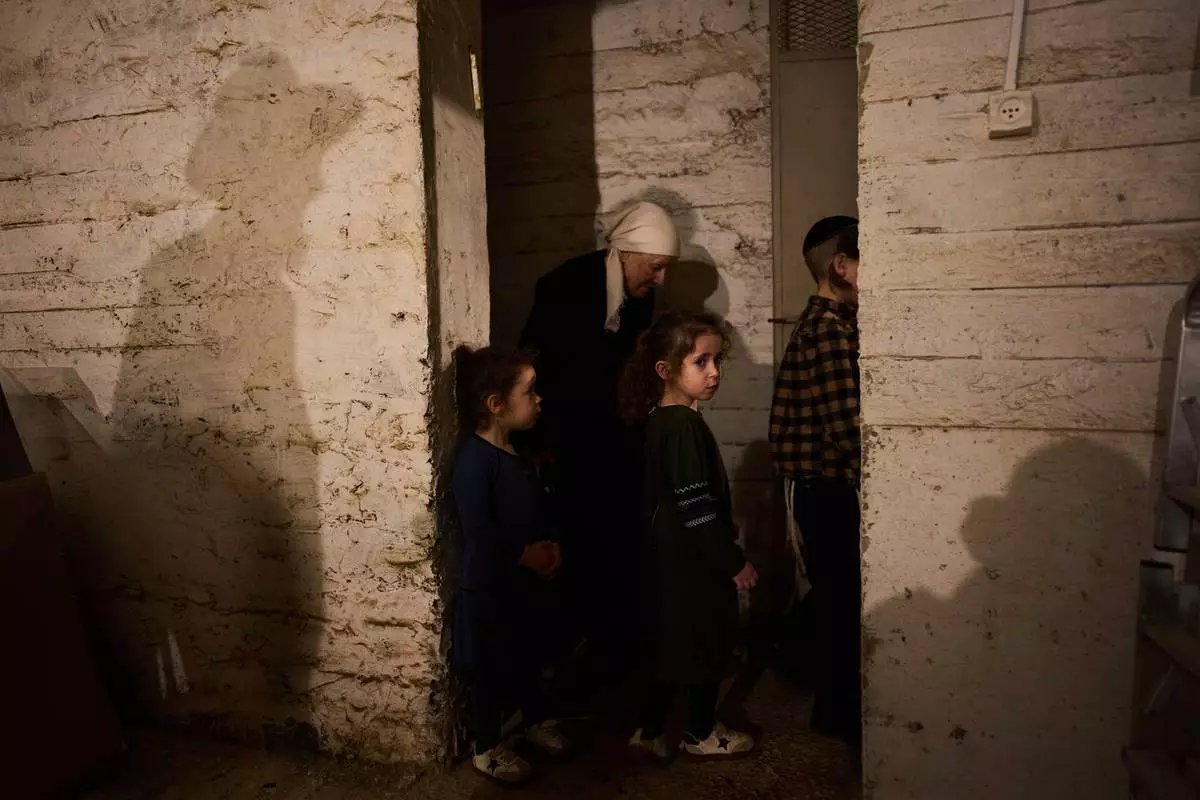
People take cover in a bomb shelter as air raid sirens warn of incoming Iranian missile strikes in Bnei Brak, Israel, Wednesday, April 1, 2026. (AP Photo/Oded Balilty)
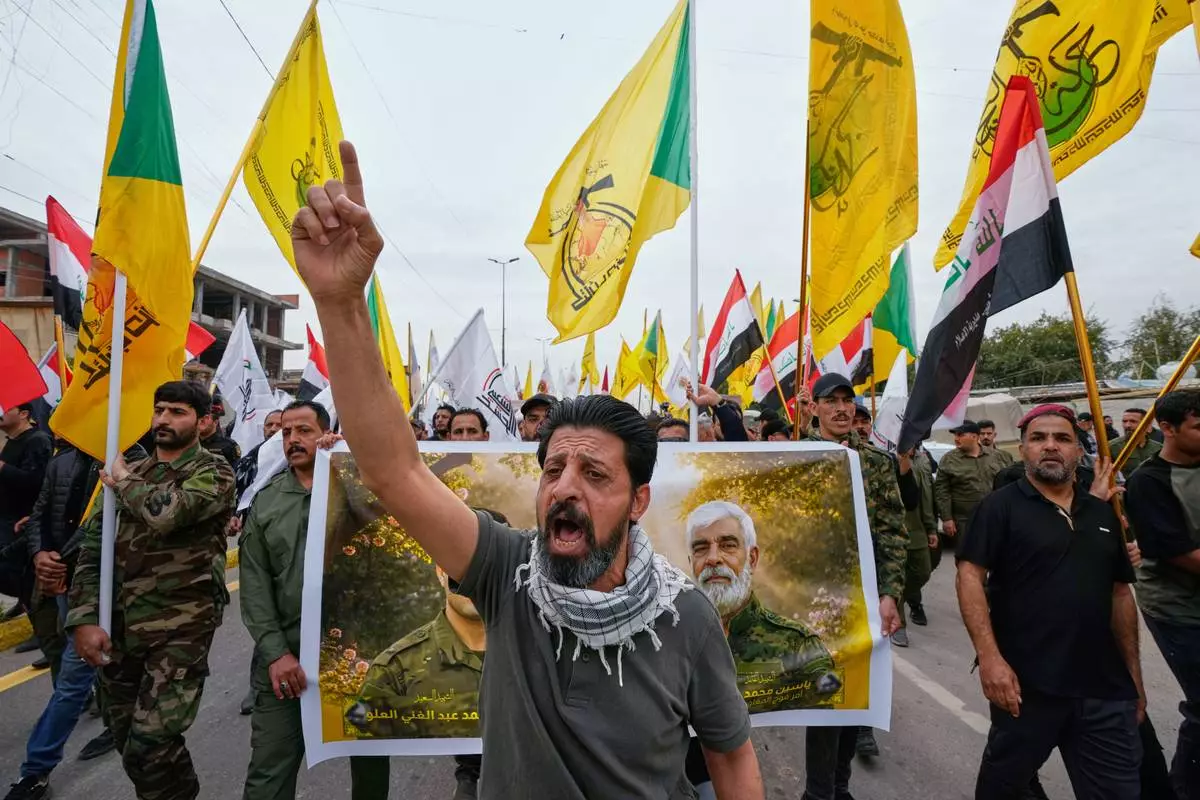
Members from the Popular Mobilization Forces attend a funeral of fighters who were killed in a U.S. airstrike, in Tal Afar, Nineveh province, north of Baghdad, Iraq, Thursday, April 2, 2026. (AP Photo/Hadi Mizban)
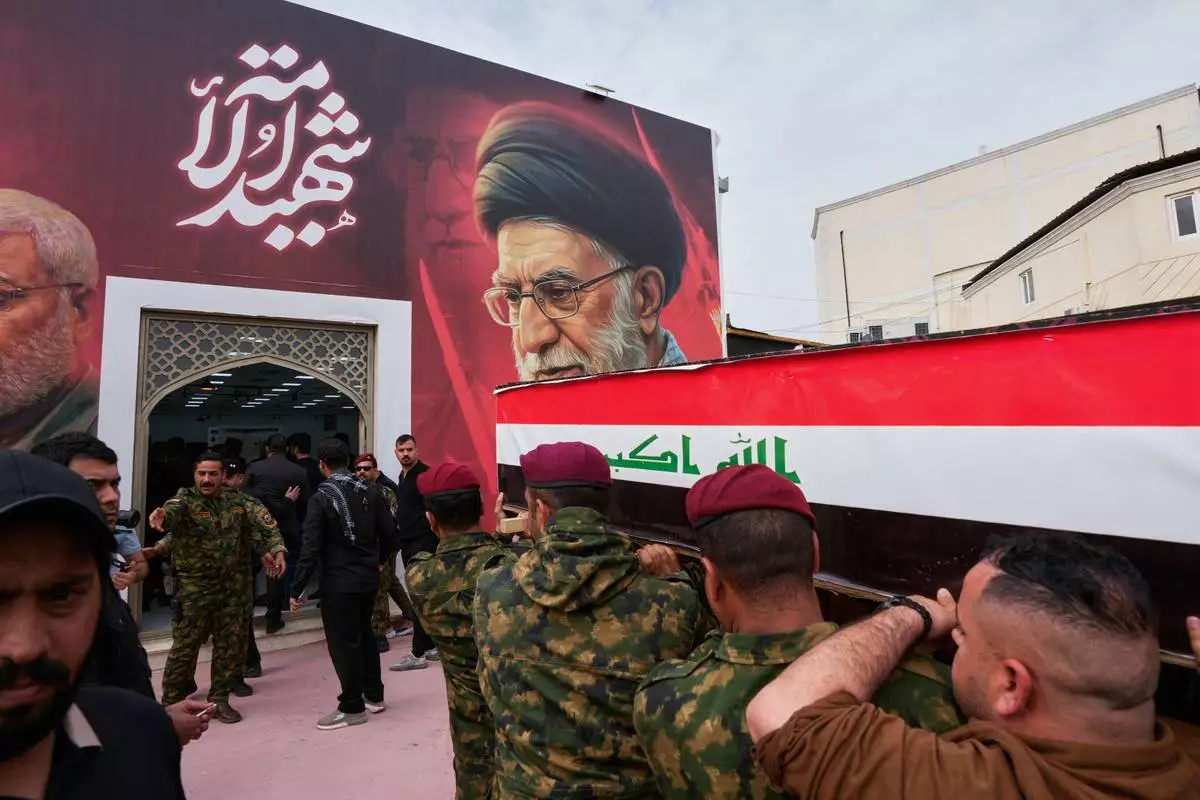
Members from the Popular Mobilization Forces attend a funeral of fighters who were killed in a U.S. airstrike, in Tal Afar, Nineveh province, north of Baghdad, Iraq, Thursday, April 2, 2026. (AP Photo/Hadi Mizban)
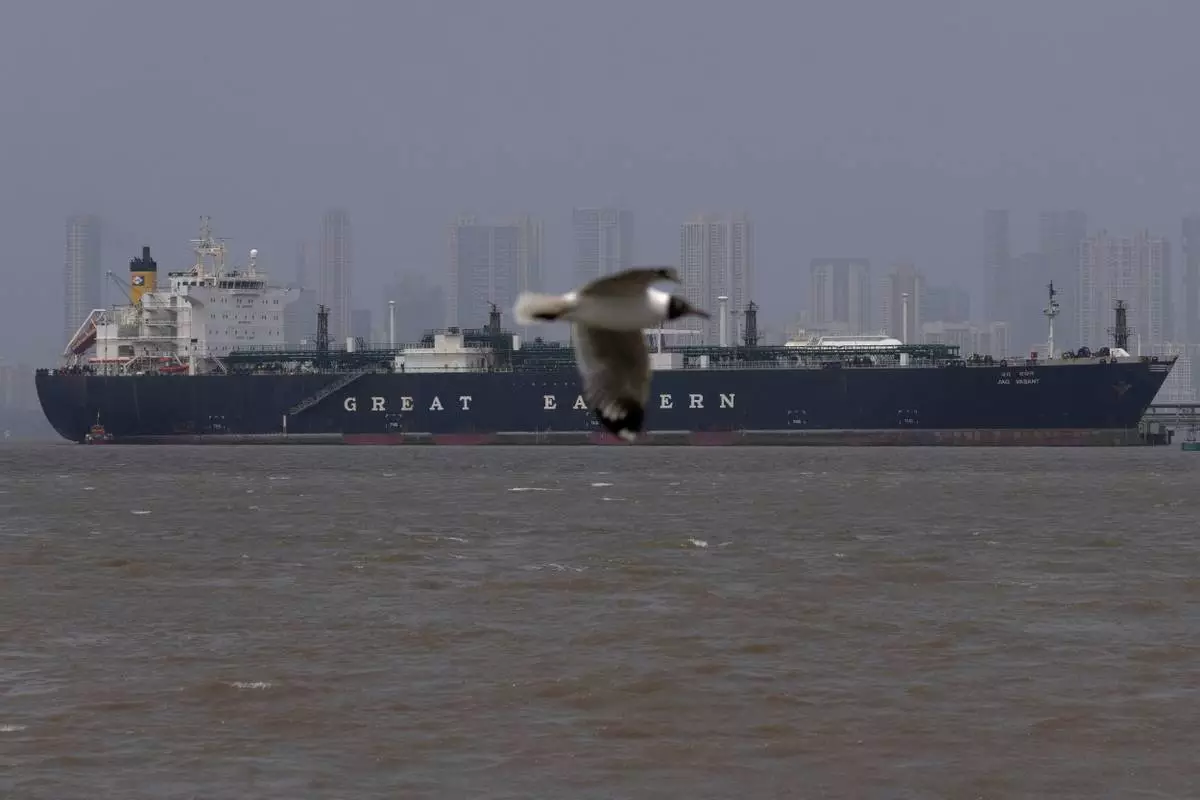
The Indian flagged LPG carrier Jag Vasant transporting liquefied petroleum gas, is seen at the Mumbai Port in Mumbai, India, after it arrived clearing the Strait of Hormuz, Wednesday, April 1, 2026. (AP Photo/Rafiq Maqbool)
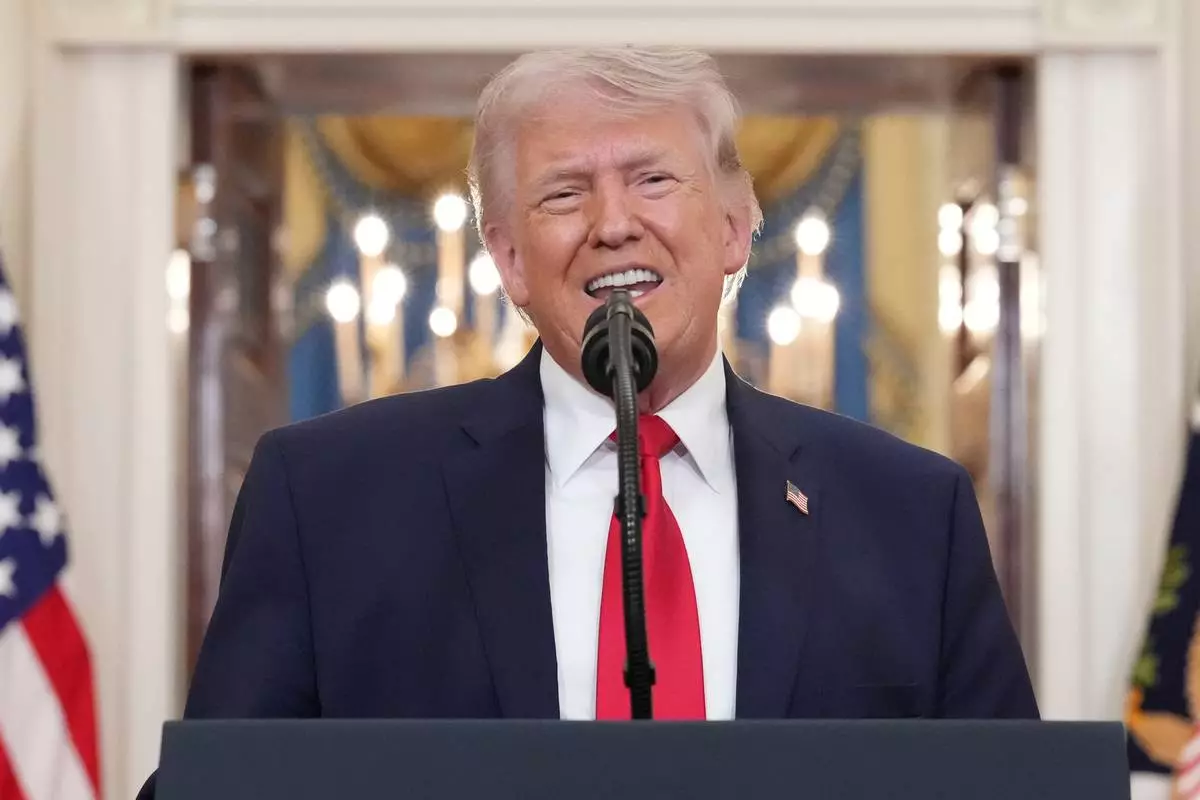
President Donald Trump speaks about the Iran war from the Cross Hall of the White House on Wednesday, April 1, 2026, in Washington. (AP Photo/Alex Brandon, Pool)
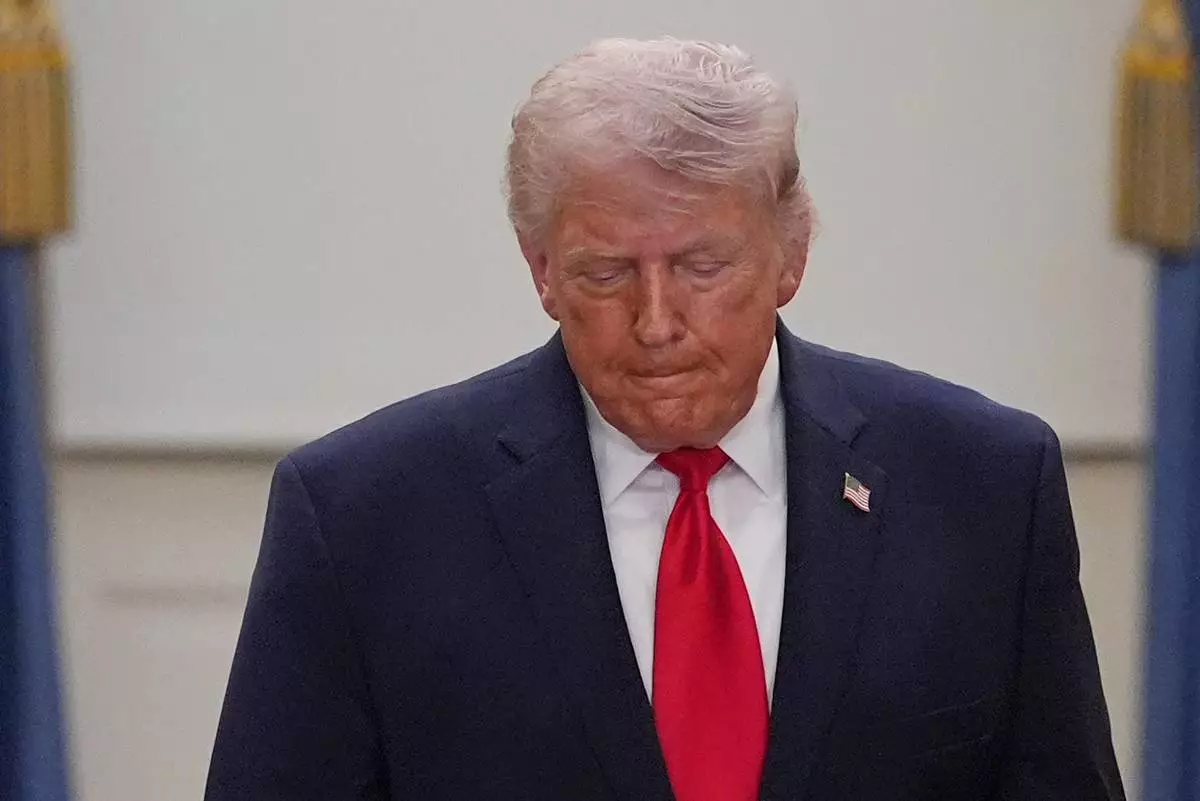
President Donald Trump walks from the Blue Room to speak about the Iran war from the Cross Hall of the White House on Wednesday, April 1, 2026, in Washington. (AP Photo/Alex Brandon, Pool)
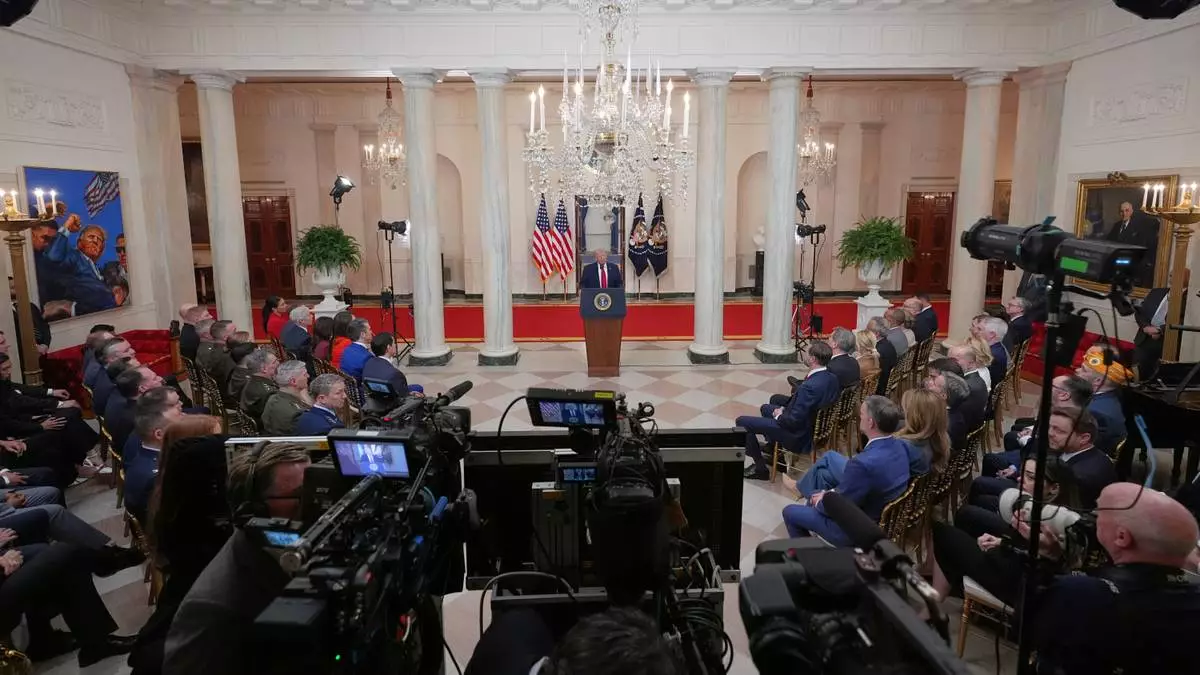
President Donald Trump speaks about the Iran war from the Cross Hall of the White House on Wednesday, April 1, 2026, in Washington. (AP Photo/Alex Brandon, Pool)
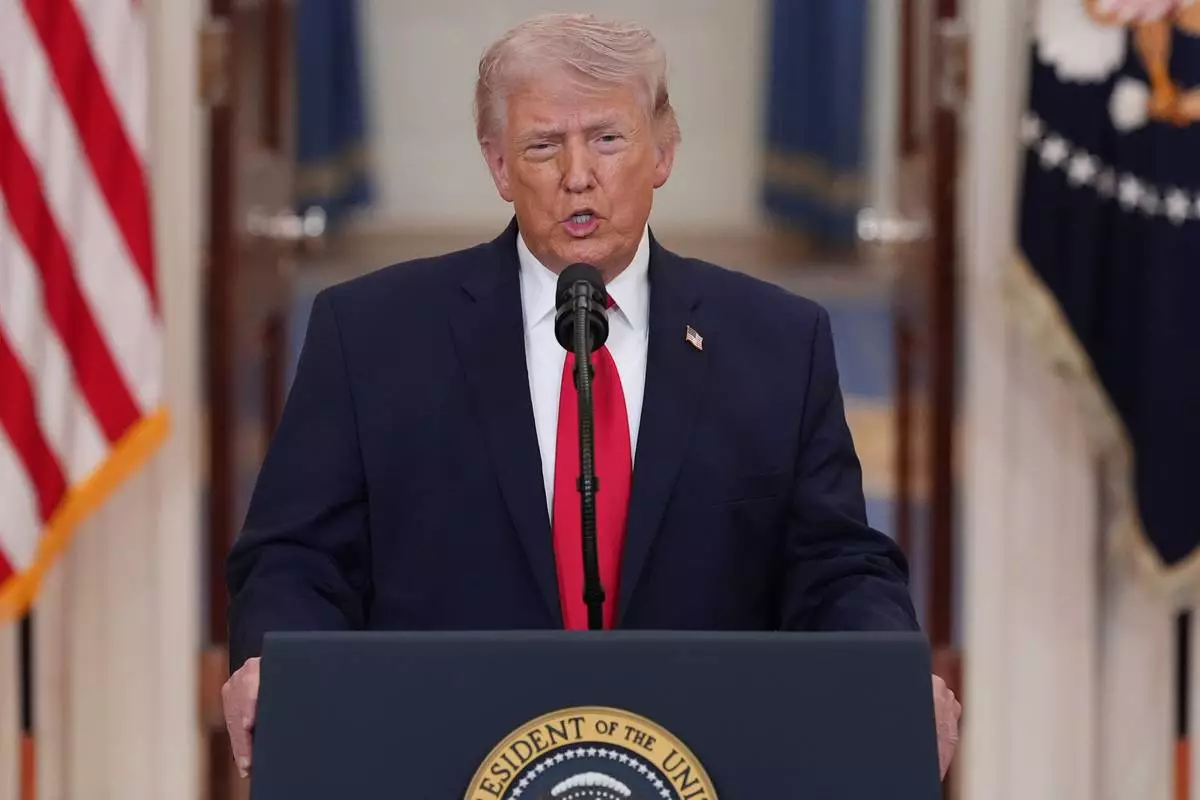
President Donald Trump speaks about the Iran war from the Cross Hall of the White House on Wednesday, April 1, 2026, in Washington. (AP Photo/Alex Brandon, Pool)