Half a century after a notorious prison escape from Alcatraz Island, the FBI has created replicas of decoy heads that inmates used to distract guards from a plan that still captivates researchers and tourists.
Authorities on Thursday unveiled 3D-printed copies of the decoys that inmates Frank Morris and John and Clarence Anglin constructed with soap, plaster and human hair.
Click to Gallery
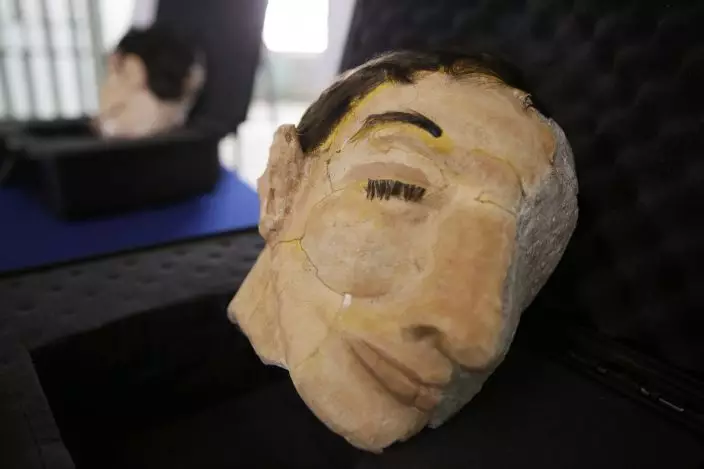
A newly 3D printed decoy head used by prisoners to mount their infamous escape in 1962, is on display during a news conference at Alcatraz Island Thursday, Nov. 15, 2018, in San Francisco. The FBI has created replicas of decoy heads used by prisoners to mount their infamous escape from Alcatraz. Authorities on Thursday unveiled 3D printed replicas of the decoys that inmates had constructed with soap, plaster and human hair to distract guards from their plan. Authorities say inmates Frank Morris and John and Clarence Anglin placed the decoys in their beds before climbing through the wall to escape the island prison in San Francisco Bay. The men were never found. (AP PhotoEric Risberg)
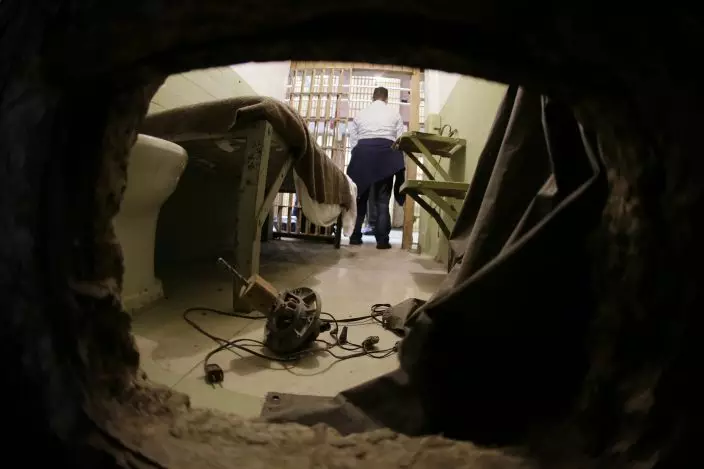
Through this hole cut into the back of a prison cell is the way one of three prisoners mounted a famous 1962 escape, on Alcatraz Island Thursday, Nov. 15, 2018, in San Francisco. The FBI has created replicas of decoy heads used by prisoners to mount their infamous escape from Alcatraz Island in 1962. Authorities on Thursday unveiled 3D printed replicas of the decoys that inmates had constructed with soap, plaster and human hair to distract guards from their plan. Authorities say inmates Frank Morris and John and Clarence Anglin placed the decoys in their beds before climbing through the wall to escape the island prison in San Francisco Bay. The men were never found. (AP PhotoEric Risberg)
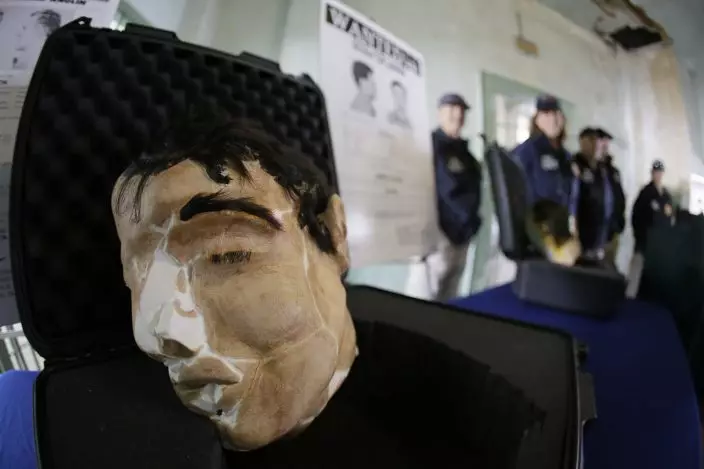
A newly 3D printed decoy head used by prisoners to mount their infamous escape in 1962, is on display as FBI agents looks on before the start of a news conference at Alcatraz Island Thursday, Nov. 15, 2018, in San Francisco. The FBI has created replicas of decoy heads used by prisoners to mount their infamous escape from Alcatraz. Authorities on Thursday unveiled 3D printed replicas of the decoys that inmates had constructed with soap, plaster and human hair to distract guards from their plan. Authorities say inmates Frank Morris and John and Clarence Anglin placed the decoys in their beds before climbing through the wall to escape the island prison in San Francisco Bay. The men were never found. (AP PhotoEric Risberg)
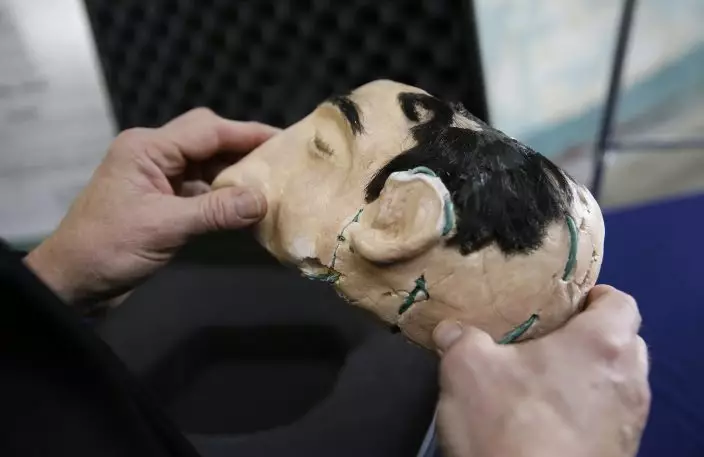
FBI Special Agent in Charge John F. Bennett examines a newly 3D printed decoy head used in a famous 1962 prison escape during a news conference on Alcatraz Island Thursday, Nov. 15, 2018, in San Francisco. The FBI has created replicas of decoy heads used by prisoners to mount their infamous escape from Alcatraz Island in 1962. Authorities on Thursday unveiled 3D printed replicas of the decoys that inmates had constructed with soap, plaster and human hair to distract guards from their plan. Authorities say inmates Frank Morris and John and Clarence Anglin placed the decoys in their beds before climbing through the wall to escape the island prison in San Francisco Bay. The men were never found. (AP PhotoEric Risberg)
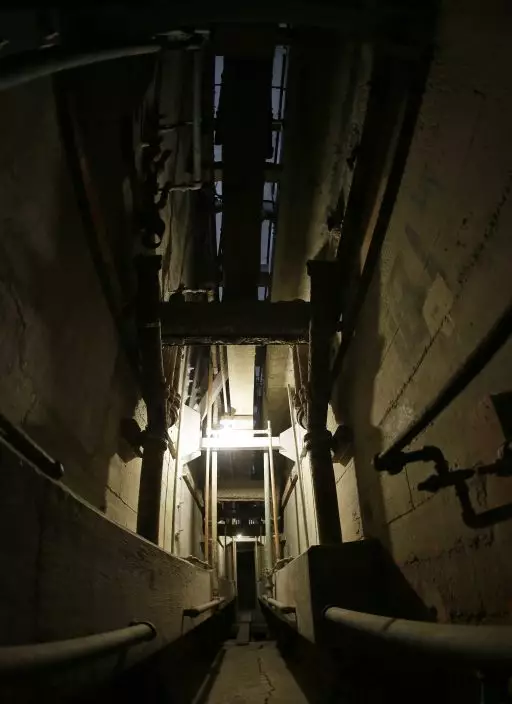
Shown is the area that prisoners climbed behind their cells to reach a rooftop and mount their famous 1962 escape from Alcatraz Island Thursday, Nov. 15, 2018, in San Francisco. The FBI has created replicas of decoy heads used by prisoners to mount their infamous escape from Alcatraz. Authorities on Thursday unveiled 3D printed replicas of the decoys that inmates had constructed with soap, plaster and human hair to distract guards from their plan. Authorities say inmates Frank Morris and John and Clarence Anglin placed the decoys in their beds before climbing through the wall to escape the island prison in San Francisco Bay. The men were never found. (AP PhotoEric Risberg)
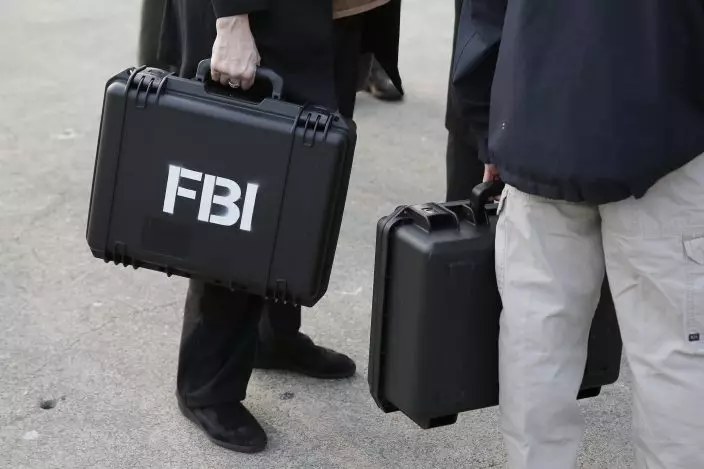
FBI agents carry waterproof cases containing newly 3d printed decoy heads, used to mount a famous prison escape in 1962, to a news conference on Alcatraz Island Thursday, Nov. 15, 2018, in San Francisco. The FBI has created replicas of decoy heads used by prisoners to mount their infamous escape from Alcatraz. Authorities on Thursday unveiled 3D printed replicas of the decoys that inmates had constructed with soap, plaster and human hair to distract guards from their plan. Authorities say inmates Frank Morris and John and Clarence Anglin placed the decoys in their beds before climbing through the wall to escape the island prison in San Francisco Bay. The men were never found. (AP PhotoEric Risberg)
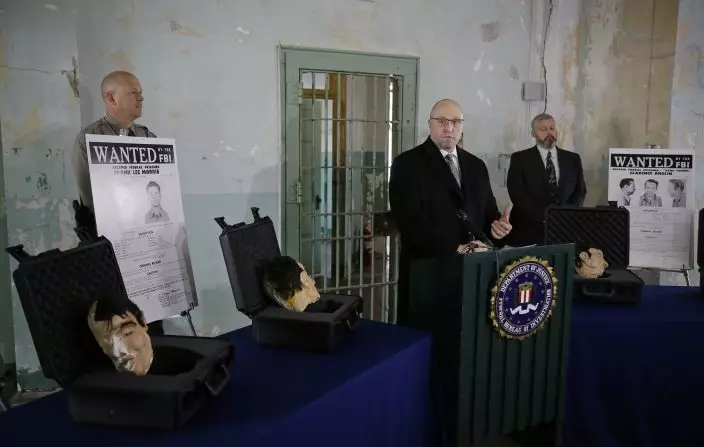
FBI Special Agent in Charge John F. Bennett speaks about the unveiling of new 3D printed decoy heads used in a famous 1962 prison escape during a news conference on Alcatraz Island Thursday, Nov. 15, 2018, in San Francisco. The FBI has created replicas of decoy heads used by prisoners to mount their infamous escape from Alcatraz Island in 1962. Authorities on Thursday unveiled 3D printed replicas of the decoys that inmates had constructed with soap, plaster and human hair to distract guards from their plan. Authorities say inmates Frank Morris and John and Clarence Anglin placed the decoys in their beds before climbing through the wall to escape the island prison in San Francisco Bay. The men were never found. (AP PhotoEric Risberg)
Morris and the Anglin brothers placed the decoys in their beds and climbed through a wall to escape the island prison in San Francisco Bay. The men were never found.
A newly 3D printed decoy head used by prisoners to mount their infamous escape in 1962, is on display during a news conference at Alcatraz Island Thursday, Nov. 15, 2018, in San Francisco. The FBI has created replicas of decoy heads used by prisoners to mount their infamous escape from Alcatraz. Authorities on Thursday unveiled 3D printed replicas of the decoys that inmates had constructed with soap, plaster and human hair to distract guards from their plan. Authorities say inmates Frank Morris and John and Clarence Anglin placed the decoys in their beds before climbing through the wall to escape the island prison in San Francisco Bay. The men were never found. (AP PhotoEric Risberg)
Inmate Clayton West also created a head but never made it out of the maximum-security prison that housed dangerous criminals like Al Capone and offenders with a history of escaping.
Authorities said they made the replicas to share with the public because the original decoys are fragile and are evidence in the still-open investigation into the escape by the U.S. Marshals Service.
"We understand the original items can't be out here — they've got to be archived," said John F. Bennett, FBI special agent in charge in San Francisco. "But we recognize that those items are also part of the rich and historic fabric and the landmark of this city."
Through this hole cut into the back of a prison cell is the way one of three prisoners mounted a famous 1962 escape, on Alcatraz Island Thursday, Nov. 15, 2018, in San Francisco. The FBI has created replicas of decoy heads used by prisoners to mount their infamous escape from Alcatraz Island in 1962. Authorities on Thursday unveiled 3D printed replicas of the decoys that inmates had constructed with soap, plaster and human hair to distract guards from their plan. Authorities say inmates Frank Morris and John and Clarence Anglin placed the decoys in their beds before climbing through the wall to escape the island prison in San Francisco Bay. The men were never found. (AP PhotoEric Risberg)
Bennett said a team from the FBI's laboratory in Quantico, Virginia, traveled to San Francisco to scan the original decoys. Employees at the lab donated their own hair to accurately re-create the original masks, which included human hair that the inmates had collected from the prison barber shop.
"The hair and the paint on here is exactly what the prisoners did," Bennett said, showing the replicas brought to the island in black, waterproof cases.
The FBI investigated the prison break — which was featured in the 1979 movie "Escape from Alcatraz" starring Clint Eastwood — for 17 years before it was turned over to the Marshals Service.
A newly 3D printed decoy head used by prisoners to mount their infamous escape in 1962, is on display as FBI agents looks on before the start of a news conference at Alcatraz Island Thursday, Nov. 15, 2018, in San Francisco. The FBI has created replicas of decoy heads used by prisoners to mount their infamous escape from Alcatraz. Authorities on Thursday unveiled 3D printed replicas of the decoys that inmates had constructed with soap, plaster and human hair to distract guards from their plan. Authorities say inmates Frank Morris and John and Clarence Anglin placed the decoys in their beds before climbing through the wall to escape the island prison in San Francisco Bay. The men were never found. (AP PhotoEric Risberg)
Now, Alcatraz visitors can see models of the heads on display that were used in the movie. The FBI hopes the public will soon be able to view the agency's replicas, which were unveiled to some media outlets along with "Wanted" signs for the long-escaped inmates.
Authorities are investigating any and all credible leads, said Don O'Keefe, U.S. marshal for the Northern District of California.
"Some may believe that we're chasing shadows, but our efforts are meant not just to perform due diligence, but to be a warning to other fugitives, that U.S. Marshals don't give up because of the passing of time," he said in a statement.
FBI Special Agent in Charge John F. Bennett examines a newly 3D printed decoy head used in a famous 1962 prison escape during a news conference on Alcatraz Island Thursday, Nov. 15, 2018, in San Francisco. The FBI has created replicas of decoy heads used by prisoners to mount their infamous escape from Alcatraz Island in 1962. Authorities on Thursday unveiled 3D printed replicas of the decoys that inmates had constructed with soap, plaster and human hair to distract guards from their plan. Authorities say inmates Frank Morris and John and Clarence Anglin placed the decoys in their beds before climbing through the wall to escape the island prison in San Francisco Bay. The men were never found. (AP PhotoEric Risberg)
Shown is the area that prisoners climbed behind their cells to reach a rooftop and mount their famous 1962 escape from Alcatraz Island Thursday, Nov. 15, 2018, in San Francisco. The FBI has created replicas of decoy heads used by prisoners to mount their infamous escape from Alcatraz. Authorities on Thursday unveiled 3D printed replicas of the decoys that inmates had constructed with soap, plaster and human hair to distract guards from their plan. Authorities say inmates Frank Morris and John and Clarence Anglin placed the decoys in their beds before climbing through the wall to escape the island prison in San Francisco Bay. The men were never found. (AP PhotoEric Risberg)
FBI agents carry waterproof cases containing newly 3d printed decoy heads, used to mount a famous prison escape in 1962, to a news conference on Alcatraz Island Thursday, Nov. 15, 2018, in San Francisco. The FBI has created replicas of decoy heads used by prisoners to mount their infamous escape from Alcatraz. Authorities on Thursday unveiled 3D printed replicas of the decoys that inmates had constructed with soap, plaster and human hair to distract guards from their plan. Authorities say inmates Frank Morris and John and Clarence Anglin placed the decoys in their beds before climbing through the wall to escape the island prison in San Francisco Bay. The men were never found. (AP PhotoEric Risberg)
FBI Special Agent in Charge John F. Bennett speaks about the unveiling of new 3D printed decoy heads used in a famous 1962 prison escape during a news conference on Alcatraz Island Thursday, Nov. 15, 2018, in San Francisco. The FBI has created replicas of decoy heads used by prisoners to mount their infamous escape from Alcatraz Island in 1962. Authorities on Thursday unveiled 3D printed replicas of the decoys that inmates had constructed with soap, plaster and human hair to distract guards from their plan. Authorities say inmates Frank Morris and John and Clarence Anglin placed the decoys in their beds before climbing through the wall to escape the island prison in San Francisco Bay. The men were never found. (AP PhotoEric Risberg)