The ability of drones to interfere with airliners — and inconvenience their passengers — has now been demonstrated on two continents, and the problem is likely to get worse as the number of small, unmanned devices multiply.
Law enforcement authorities are trying to figure out who flew a drone so high and so close to Newark Liberty International Airport that incoming flights were held up briefly during a peak hour at one of the nation's busiest airports.
Flights resumed within about 30 minutes — much more quickly than after a similar incident last month at London's Gatwick Airport.
Here are some common questions readers have about these incidents and brief answers.
WHAT HAPPENED IN NEW JERSEY?
The pilots of both a Southwest Airlines flight and a United Airlines flight reported seeing a drone around 3,500 feet (1,000 meters) above Teterboro, New Jersey, about 9 miles (15 kilometers) from the Newark airport, on Tuesday.
As a precaution, the Federal Aviation Administration held up 43 flights already in the air and bound for Newark; nine landed instead at other airports. Another 170 Newark-bound planes were briefly delayed on the ground before taking off from other airports around the country.
No video of the reported drone has surfaced.
WHO WAS OPERATING THE DRONE?
Authorities have not determined that. The FAA alerted New Jersey State Police and the FBI.
CAN WE BE SURE THERE WAS A DRONE?
Some drone operators are skeptical about a drone reported at 3,500 feet and whether pilots in a fast-moving jet could accurately identify such a tiny object.
Vic Moss, a founder of Drone U, a drone-operator school based in Albuquerque, New Mexico, said many consumer drones are restricted from going that high, although home-built devices or older drones are not. There are, however, videos online showing drones at such altitudes.
"It's possible, but it's just incredibly unlikely that it was an actual drone," Moss said. "Drones are the new UFO."
WHAT HAPPENED IN LONDON?
In mid-December, hundreds of flights were canceled and more than 100,000 people were stranded or delayed over two days after reports of drones spotted near the runway at Gatwick Airport, a major international hub.
A few days later, police arrested two men living near the airport but later cleared them, and no other suspects have been identified. Police also said that two drones found near the airport were not involved in the disruption.
A few weeks later, a reported drone sighting briefly halted flights departing from London's Heathrow Airport, one of the world's busiest.
WHY IS THIS HAPPENING?
If the intrusions in New Jersey and London were deliberate, the motives are not clear. Officials in London said there was no indication that the Gatwick incident was terror-related. A criminal investigation has been opened into the Heathrow incident.
WHAT ARE THE LAWS ABOUT FLYING DRONES NEAR AIRPORTS?
Federal rules forbid operating a drone within 5 miles (8 kilometers) of most airports or above 400 feet (120 meters) without a waiver from the FAA.
ARE DRONE MANUFACTURERS RESPONSIBLE?
Devices from the biggest maker of consumer drones, DJI, include so-called geofencing — technology designed to prevent the aircraft from taking off near an airport. A drone that is launched properly but enters a no-fly zone will return to its launch site and land by itself.
Owners say DJI can take days to unlock no-fly restrictions around even small airports.
However, many drones offered for sale don't include such restrictions: They have no GPS or geofencing.
CAN OPERATORS DISABLE SAFETY SYSTEMS?
Yes. There are online discussions in which drone operators talk about hacks, but they involve some level of technological sophistication.
"The geofences (from manufacturers like DJI) are in place, but in some cases they can be defeated — it's not easy," said Tom Kilpatrick, a drone pilot who founded a drone company in Oklahoma. "They are designed to prevent the average drone operator from flying near an airport."
Home-built drones would likely not have those same safety features.
WHAT'S BEING DONE TO PREVENT DRONES FROM INTERFERING?
DJI says it has developed technology to track nearby drones — their flight path and the operator's location — using mobile, ground-based units.
The technology is currently only used to identify other DJI drones, not home-built devices, although drone experts said they believe DJI already has the ability to expand it to track machines made by other manufacturers.
WHAT ARE AIRPORTS DOING?
The Port Authority of New York and New Jersey, which operates the Newark airport, said in a statement that agency officials met last week with counterparts from the FAA, FBI and Homeland Security Department "to review and enhance protocols for the rapid detection and interdiction of drones." A spokesman would not provide specifics and declined to say whether the airport has any anti-drone technology.
After the Gatwick incident, British officials said they have deployed drone-defense equipment at other U.K. airports, although they gave few details.
ARE TOUGHER RULES IN THE WORKS?
Late last year, Congress gave the Homeland Security and Justice departments authority to develop and deploy a system to identify drones and disable — even destroy — drones that authorities consider a threat.
FAA spokesman Greg Martin said any such system has to be designed carefully so that it doesn't interfere with navigation equipment used by planes.
Associated Press journalist Julie Jacobson in New York contributed to this report.
David Koenig can be reached at http://twitter.com/airlinewriter
JERUSALEM (AP) — The Israeli military said it launched strikes on Hezbollah targets in Beirut on Sunday, potentially complicating efforts to finalize a deal to end the U.S.-Iran war. Smoke rose over the Lebanese capital, and the Civil Defense said it retrieved three bodies and six wounded people from the rubble.
Iran threatened a military response.
The deal in its current form is a deep disappointment to Israel's government, which has been sidelined in negotiations led by Pakistan and others. The last time Israel struck the Beirut suburbs a week ago, it set off the most serious escalation of fighting between Iran and Israel since the tenuous ceasefire took hold April 7.
There was no immediate White House comment on Israel’s strikes. U.S. President Donald Trump, who had said the deal could be signed Sunday, has pressed Israeli Prime Minister Benjamin Netanyahu to stop hitting Lebanon hard while a deal is near, but the prime minister has defied him.
Netanyahu's office said the strikes were in response to Hezbollah attacks on northern Israel. Israel’s military said Hezbollah launched three projectiles, releasing footage where an audible boom was followed by rising smoke. There was no immediate comment from the Iranian-backed Hezbollah.
“Israel will not tolerate firing into its territory,” Netanyahu and Defense Minister Israel Katz said in a statement. The military later said it was preparing for potential incoming fire in the coming hours.
An Associated Press photographer at the scene in Beirut said a five-story apartment building with shops on the ground floor was struck. The two lowest floors were the most heavily damaged. Residents of the southern suburbs, many of whom had returned home after weeks of relative calm, could be seen fleeing.
Hezbollah fired missiles into Israel on March 2, two days after the U.S. and Israel attacked Iran, sparking war in the Middle East. Israeli troops have since pushed their invasion of Lebanon deeper than at any point in over a quarter century.
Iran wants a ceasefire deal to include the fighting in Lebanon.
Iran’s parliamentary Speaker Mohammad Bagher Qalibaf, a lead negotiator for Tehran, warned the U.S. on X after Israel's strikes that “if you lack the will and ability to fulfill your commitments, speaking of continuing the path is not possible."
“Without a doubt, these crimes will not go unanswered,” said Gen. Mohammad Jafar Asadi, deputy commander of Iran’s Joint Command Headquarters, the official Mizan news agency reported.
Qatari mediators traveled to Tehran on Sunday to finalize the agreement, according to two regional officials.
The officials, who spoke on condition of anonymity because they were not authorized to speak to the media, expressed cautious optimism that the U.S. and Iran were finally approaching a deal that could halt hostilities that have killed thousands of people and reopen the Strait of Hormuz, whose closure has thrown world markets into disarray.
Pakistani Prime Minister Shehbaz Sharif said Saturday the deal would be signed Sunday, while Iran’s foreign ministry spokesperson Esmail Baghaei said it could happen in the coming days. Trump said the Strait of Hormuz would open immediately after the signing.
The deal is expected to be signed electronically, without an in-person ceremony, though it’s unclear when or how the signing will take place.
Iran's government warned that any division at home over the deal weakens its negotiating position, and those criticizing negotiators are taking aim at a national decision. Iranians must recognize that no war lasts forever, spokesperson Fatemeh Mohajerani told the state-run IRNA news agency.
The deal does not solve the thorniest issues between the U.S. and Iran, including Iran’s nuclear program or its billions of dollars in frozen funds, but offers a 60-day framework for technical discussions on those issues, according to Pakistani and regional officials familiar with the ongoing negotiations. They spoke on condition of anonymity because they were not authorized to speak publicly.
The officials described Pakistan’s effort leading the negotiations, struggling for months to keep both sides from walking out on multiple occasions.
Under the deal being discussed, U.S. and Israel appear to have fallen short of their original goals of destroying Iran’s missile and nuclear programs and ending its support for armed proxies in the region. It is not clear how the deal will address these issues, or if they will be part of the final agreement.
Iran’s nuclear program and highly enriched uranium have long been at the center of tensions with the U.S. and Israel and an international source of concern. Trump on social media asserted Saturday that “when all is calm,” the U.S. would go in and “downblend and destroy” the enriched uranium in Iran or in the U.S.
Iran has 440.9 kilograms (972 pounds) of uranium that is enriched up to 60% purity, a short, technical step from weapons-grade levels of 90%, according to the International Atomic Energy Agency.
Iran has long maintained its nuclear program is peaceful and has not publicly committed to giving up the enriched uranium, which is believed to be buried under three nuclear sites that were badly damaged by U.S. strikes last year.
Critics in Trump’s Republican Party, struggling with an unpopular war ahead of the midterm elections, have criticized the emerging deal. Some said it did not improve on the terms of the 2015 Iran nuclear deal that Trump withdrew the U.S. from during his first term and which he still describes as “bad.”
Meanwhile, Trump was expected to discuss demining the Strait of Hormuz during the Group of Seven summit that starts Monday.
Frankel reported from Jerusalem, Ahmed from Islamabad, Magdy from Cairo and Sewell from Beirut. Associated Press writer Melanie Lidman in Tel Aviv, Israel, contributed.
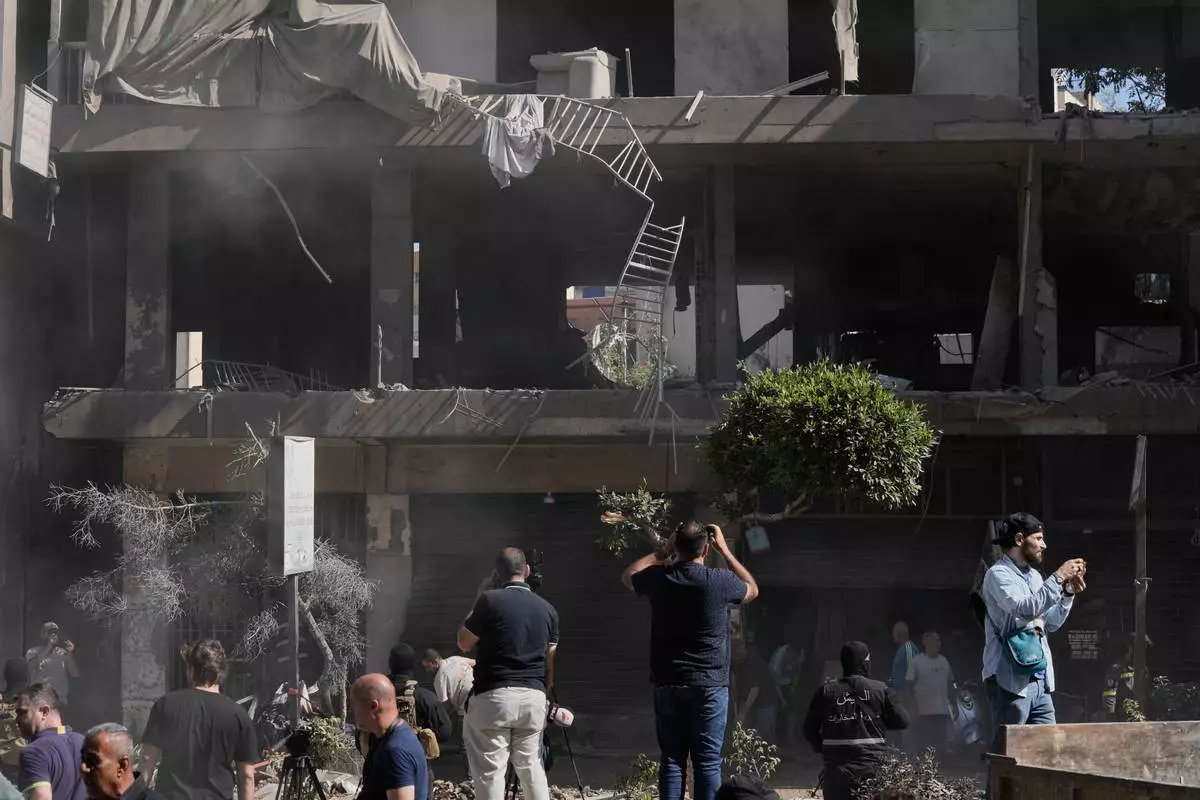
People gather at the site of an Israeli airstrike that struck an apartment in Dahiyeh, Beirut's southern suburbs, Lebanon, Sunday, June 14, 2026. (AP Photo/Bilal Hussein)

A woman checks her cellphone as visitors attend "A Sign on Minab," an event honoring the memory of schoolchildren killed in a Feb. 28, 2026, strike on a school in the southern Iranian city of Minab that was likely caused by U.S. airstrikes, at the Tehran Museum of Contemporary Art in Tehran, Iran, Sunday, June 14, 2026. (AP Photo/Vahid Salemi)
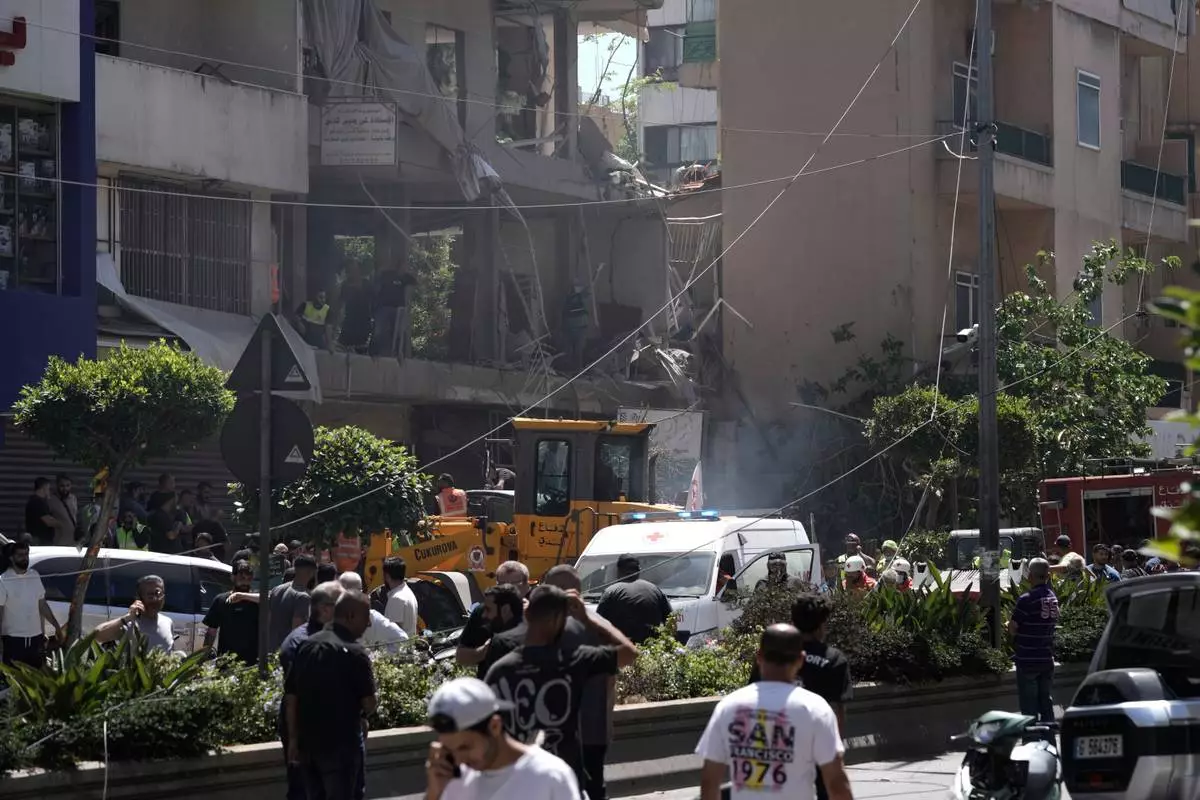
People gather at the site of an Israeli airstrike that struck an apartment in Dahiyeh, Beirut's southern suburbs, Lebanon, Sunday, June 14, 2026. (AP Photo/Bilal Hussein)
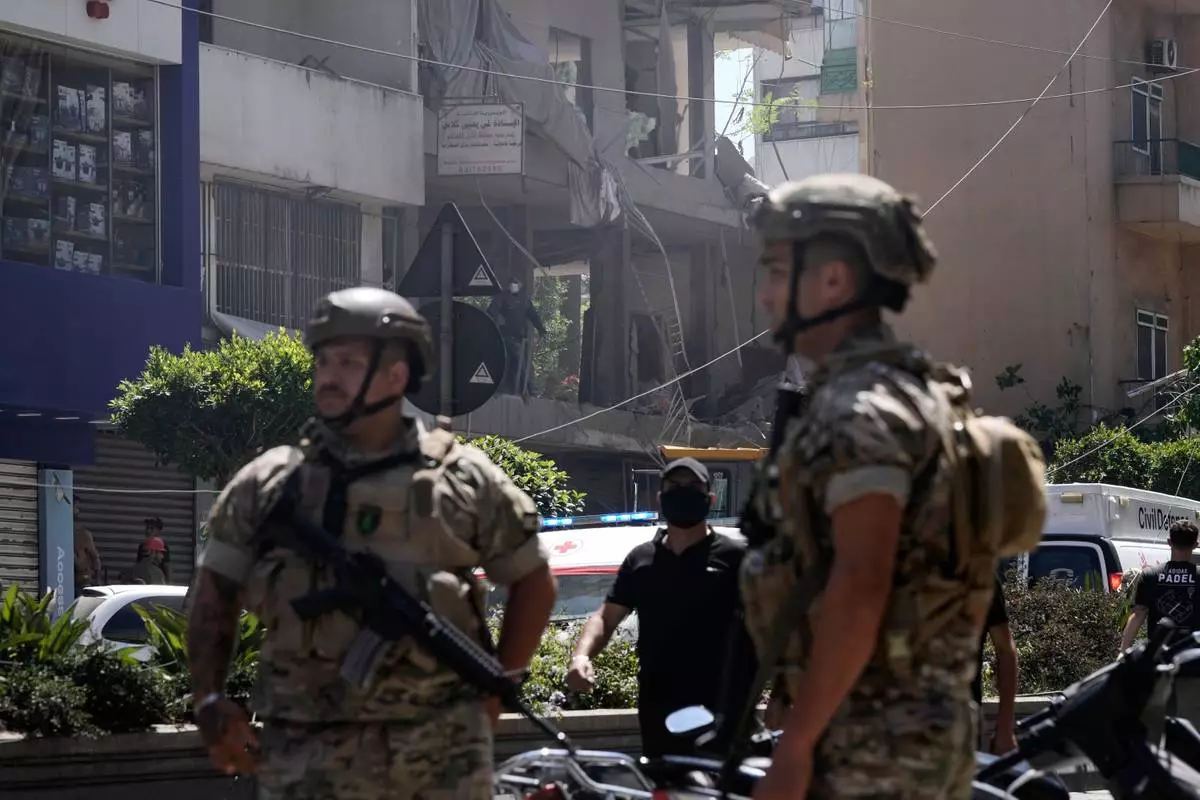
Lebanese soldiers stand guard at the site of an Israeli airstrike that struck an apartment in Dahiyeh, Beirut's southern suburbs, Lebanon, Sunday, June 14, 2026. (AP Photo/Bilal Hussein)
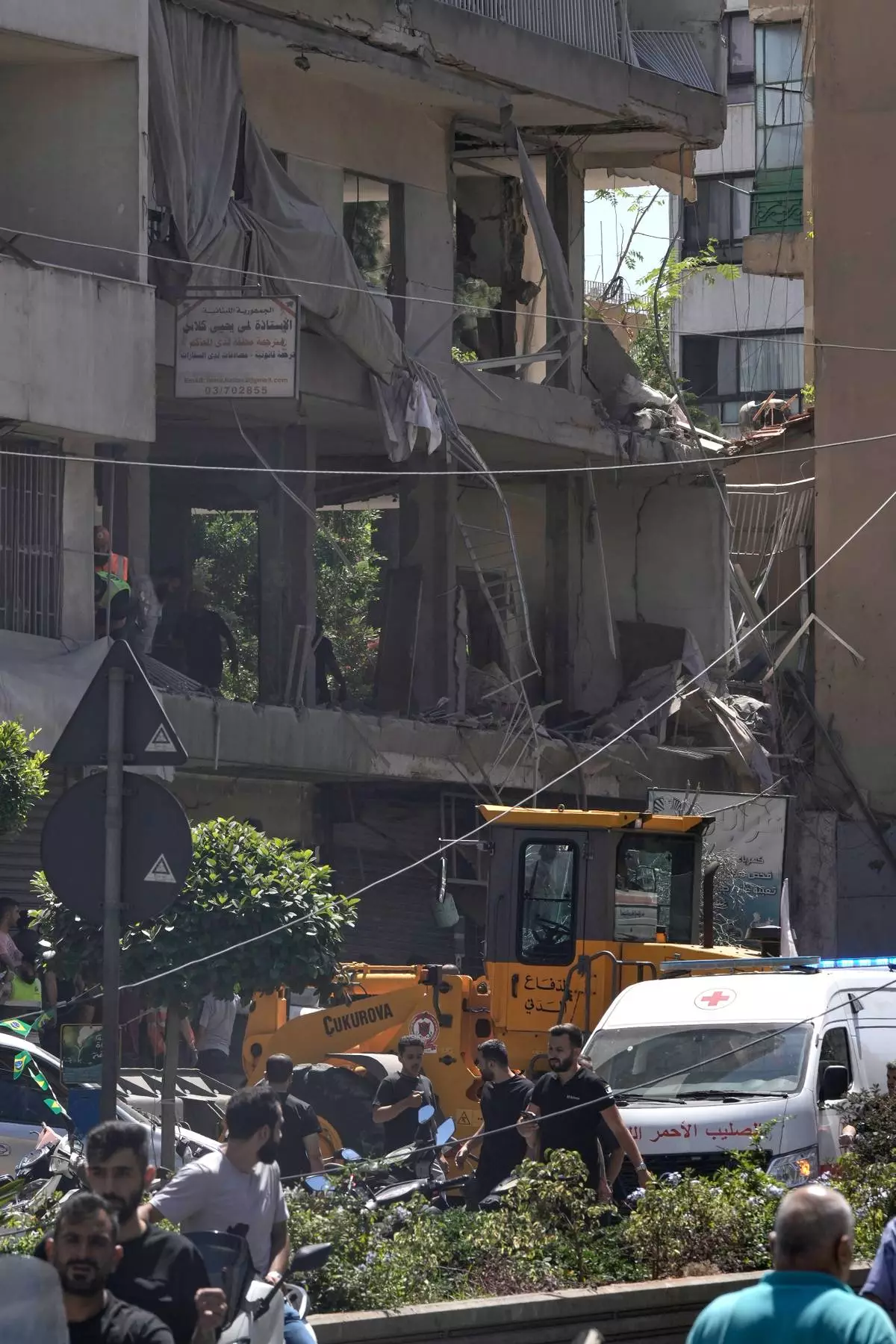
People gather at the site where an Israeli airstrike struck an apartment in Dahiyeh, Beirut's southern suburbs, Lebanon, Sunday, June 14, 2026. (AP Photo/Bilal Hussein)
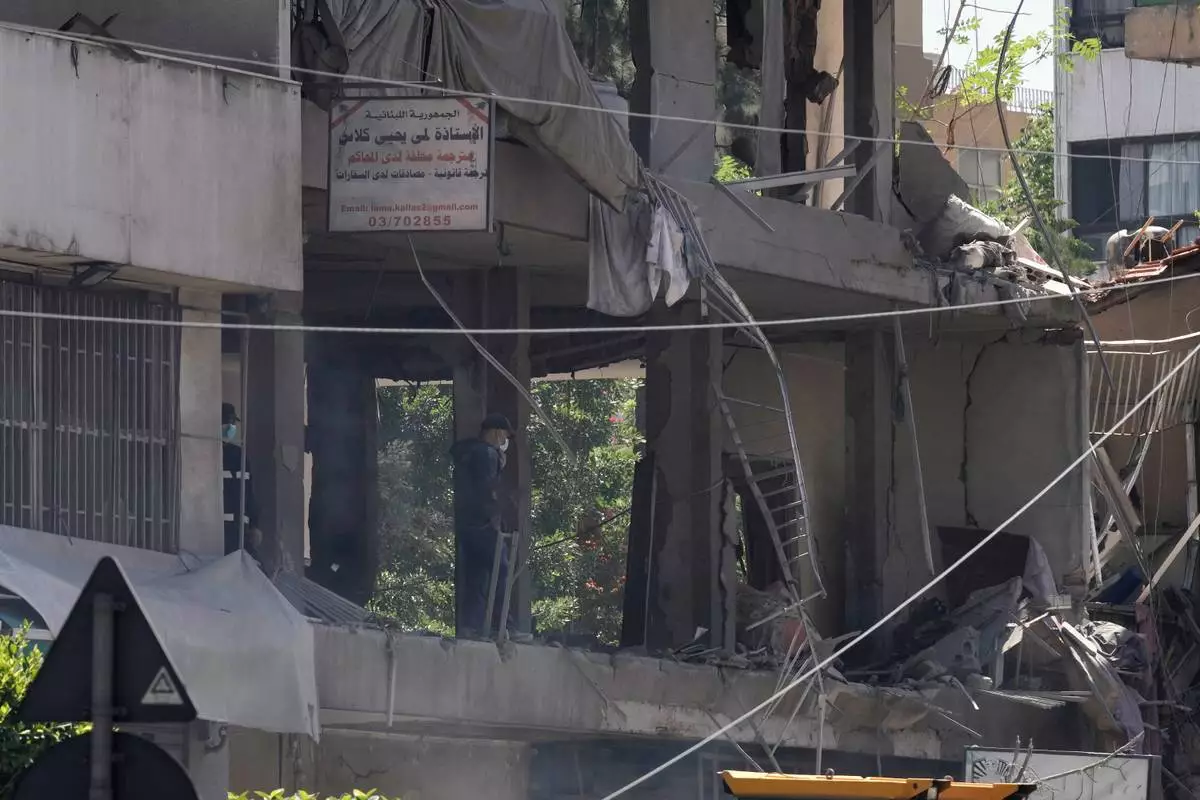
A man checks an apartment that was hit in an Israeli airstrike in Dahiyeh, Beirut's southern suburbs, Lebanon, Sunday, June 14, 2026. (AP Photo/Bilal Hussein)
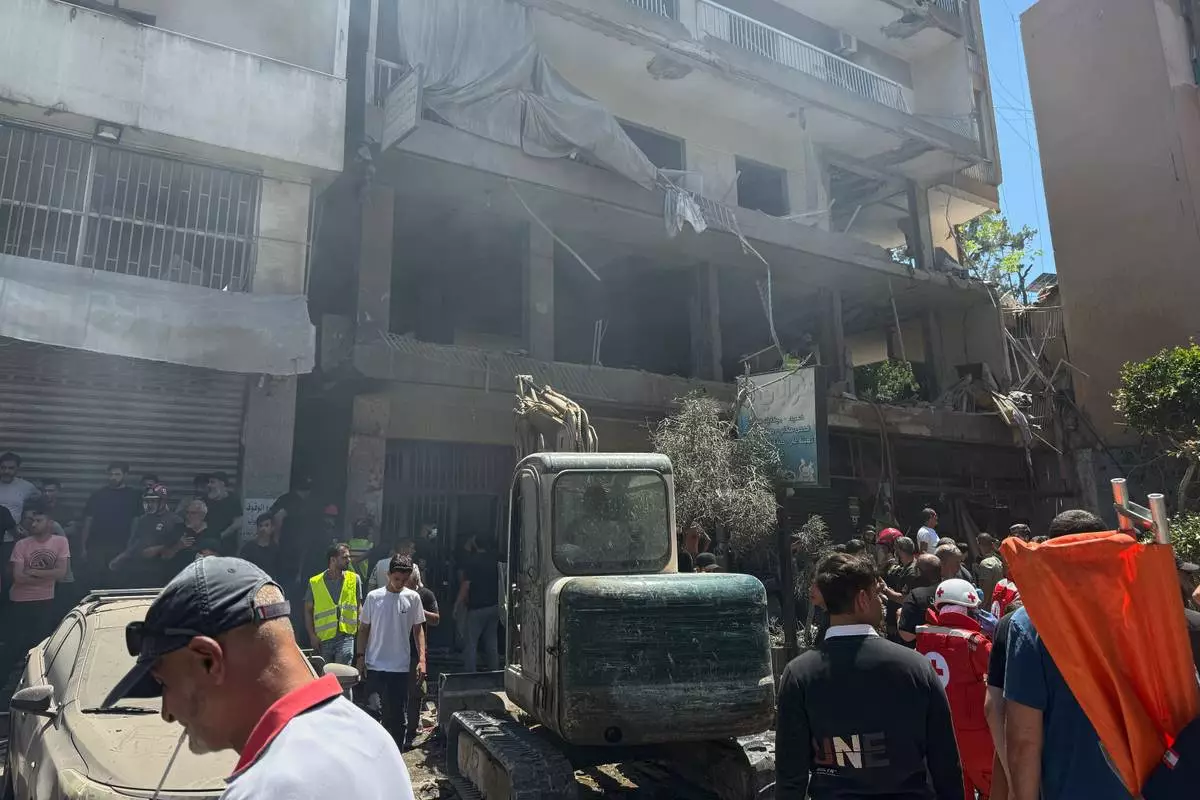
People gather at the site of an Israeli airstrike that struck an apartment in Dahiyeh, Beirut's southern suburbs, Lebanon, Sunday, June 14, 2026. (AP Photo/Bilal Hussein)
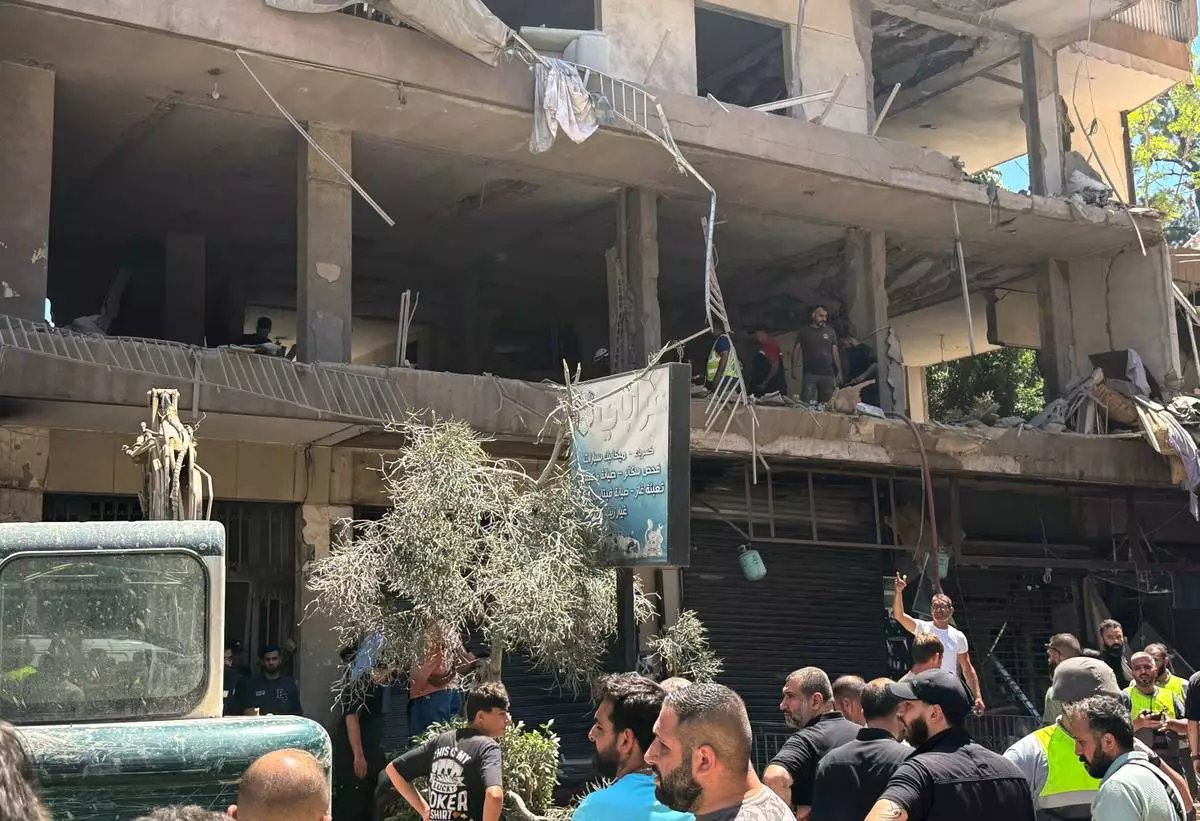
People gather at the site of an Israeli airstrike that struck an apartment in Dahiyeh, Beirut's southern suburbs, Lebanon, Sunday, June 14, 2026. (AP Photo/Bilal Hussein)
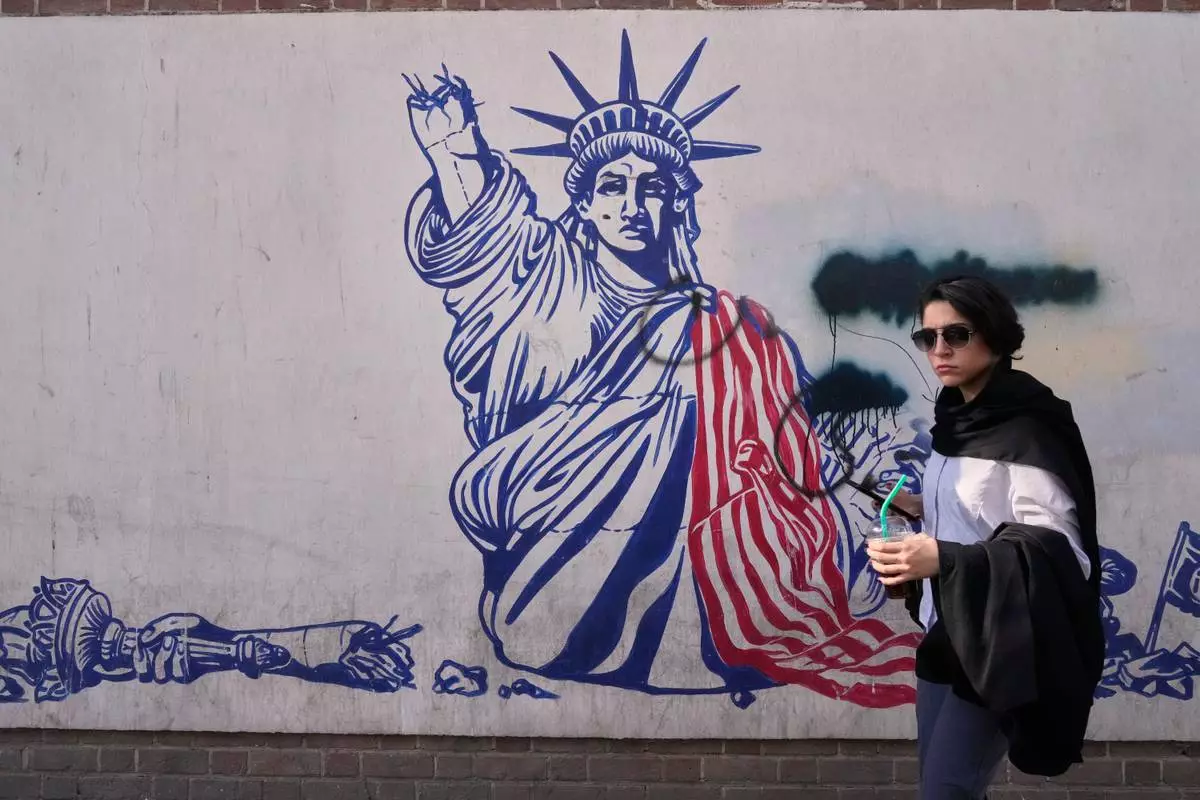
A woman walks past an anti-American mural on the wall of the former U.S. Embassy, now a museum, in Tehran, Iran, Friday, June 12, 2026. (AP Photo/Vahid Salemi)