It was about 2 a.m. on a moonless October night in 1987 when the police chief of a small northern Vermont town spotted a man carrying a black bag and walking down the railroad tracks from Canada toward a waiting van about a mile south of the border.
The man turned out to be linked to a Lebanese extremist group. And in his bag, later recovered from a ditch, were a ski mask and a propane-canister bomb.
Click to Gallery
FILE - In this June 22, 1988 file photo, Georges Younan, right, one of three defendants of Lebanese descent from Montreal, Canada, is led into federal court in handcuffs in Burlington, Vt. Younan and the two others were caught smuggling the makings of a bomb into the U.S., on Oct. 23, 1987, in Richford, Vt. All three were convicted and sent to federal prison. (AP PhotoToby Talbot, File)
FILE - In this June 22, 1988 file photo, Walid Kabbani, right, one of three defendants of Lebanese descent from Montreal, Canada, is led into federal court in handcuffs in Burlington, Vt. Kabbani and the two others were caught smuggling the makings of a bomb into the U.S., on Oct. 23, 1987, in Richford, Vt. All three were convicted and sent to federal prison. (AP PhotoToby Talbot, File)
FILE - In this Oct. 28, 1987 file photo, two of three Canadians of Lebanese descent are led into federal court in Burlington, Vt. Walid Nicolas Kabbani, left, and Walid Mourad were caught with a third accomplice smuggling the makings of a bomb into the U.S., on Oct. 23, 1987, in Richford, Vt. All three were convicted and sent to federal prison. (AP PhotoToby Talbot, File)
FILE - In this June 22, 1988 file photo, Walid Mourad, center, one of three defendants of Lebanese descent from Montreal, Canada, is led into federal court in handcuffs in Burlington, Vt. Mourad and the two others were caught smuggling the makings of a bomb into the U.S., on Oct. 23, 1987, in Richford, Vt. All three were convicted and sent to federal prison. (AP PhotoToby Talbot, File)
FILE - In this June 22, 1988 file photo, Georges Younan, right, one of three defendants of Lebanese descent from Montreal, Canada, is led into federal court in handcuffs in Burlington, Vt. Younan and the two others were caught smuggling the makings of a bomb into the U.S., on Oct. 23, 1987, in Richford, Vt. All three were convicted and sent to federal prison. (AP PhotoToby Talbot, File)
In this Jan. 17, 2019 photo, former town police chief Richard Jewett talks about the night in 1987 when he apprehended a man who carried a bomb across the border from Canada into the United States in Richford, Vt.. At a time when terrorism is part of the discussion about whether to build a wall on the U.S. southern border to protect the country, the Richford incident was the only one of its kind when anyone was caught trying to enter the United States illegally as part of a terrorist plot. (AP PhotoWilson Ring)
FILE - In this June 22, 1988 file photo, Walid Kabbani, right, one of three defendants of Lebanese descent from Montreal, Canada, is led into federal court in handcuffs in Burlington, Vt. Kabbani and the two others were caught smuggling the makings of a bomb into the U.S., on Oct. 23, 1987, in Richford, Vt. All three were convicted and sent to federal prison. (AP PhotoToby Talbot, File)
FILE - In this Oct. 28, 1987 file photo, two of three Canadians of Lebanese descent are led into federal court in Burlington, Vt. Walid Nicolas Kabbani, left, and Walid Mourad were caught with a third accomplice smuggling the makings of a bomb into the U.S., on Oct. 23, 1987, in Richford, Vt. All three were convicted and sent to federal prison. (AP PhotoToby Talbot, File)
FILE - In this June 22, 1988 file photo, Walid Mourad, center, one of three defendants of Lebanese descent from Montreal, Canada, is led into federal court in handcuffs in Burlington, Vt. Mourad and the two others were caught smuggling the makings of a bomb into the U.S., on Oct. 23, 1987, in Richford, Vt. All three were convicted and sent to federal prison. (AP PhotoToby Talbot, File)
"If it had been two minutes later, they would have been in the van and gone on their way, and I'd have never known the difference," recalled Richford's long-retired police chief, Richard Jewett, who won numerous awards for apparently foiling an attack. "I guess luck was on my side."
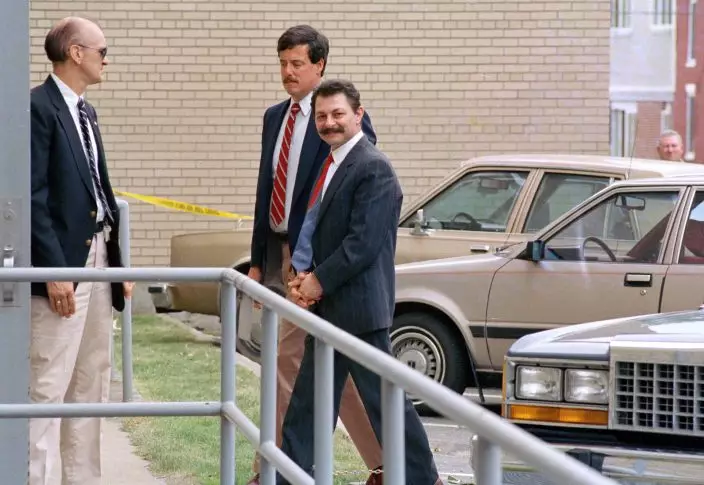
FILE - In this June 22, 1988 file photo, Georges Younan, right, one of three defendants of Lebanese descent from Montreal, Canada, is led into federal court in handcuffs in Burlington, Vt. Younan and the two others were caught smuggling the makings of a bomb into the U.S., on Oct. 23, 1987, in Richford, Vt. All three were convicted and sent to federal prison. (AP PhotoToby Talbot, File)
Whether it was luck or not, Jewett beat the odds in a way. While President Donald Trump, in arguing for a border wall, has said repeatedly that terrorists are slipping across from Mexico, known cases of extremists entering the U.S. through its land borders to the north or the south are exceedingly rare.
Even then, State Department reports on terrorism have expressed more concern about the Canadian border than the Mexican one because Canada, unlike Mexico, has been home to "violent extremists inspired by terrorist groups such as ISIS and al-Qaida and their affiliates and adherents," according to a 2017 paper.
A study issued last month by the libertarian Cato Institute found that between 1975 and 2017, seven people from "special interest" countries — states tied at least loosely to terrorism — were convicted of planning attacks on U.S. soil. Four of those individuals entered illegally from Canada, none from Mexico.
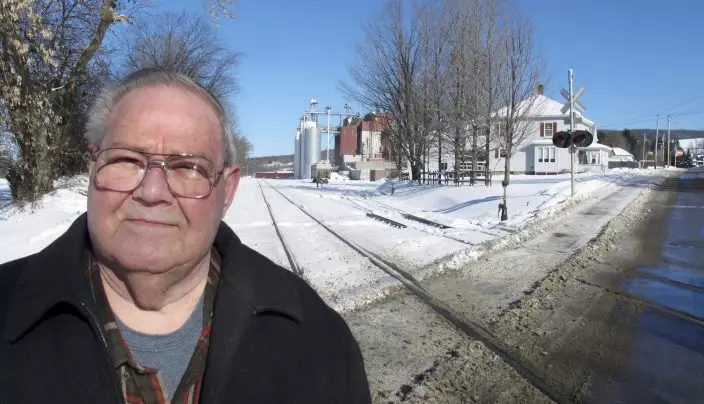
In this Jan. 17, 2019 photo, former town police chief Richard Jewett talks about the night in 1987 when he apprehended a man who carried a bomb across the border from Canada into the United States in Richford, Vt.. At a time when terrorism is part of the discussion about whether to build a wall on the U.S. southern border to protect the country, the Richford incident was the only one of its kind when anyone was caught trying to enter the United States illegally as part of a terrorist plot. (AP PhotoWilson Ring)
The only known terrorists who crossed illegally from Mexico in the 42-year span covered by the Cato study were three ethnic Albanians from Macedonia who came as children with their parents in 1984 and, in their 20s, were arrested in a foiled plot to attack the Army's Fort Dix in New Jersey, in 2007.
"This shows how rare it is for people to try to enter the U.S. illegally as terrorists by crossing a border," said Alex Nowrasteh, one of the authors of the Cato study. "It shows how Mexico is not how these folks typically try to enter and the terrorism justification for building the wall is probably the weakest."
In fact, most people with terroristic intent come into the country by air and are typically in the United States legally. The 19 men who carried out the 9/11 attacks all entered the country legally. The brothers who carried out the 2013 Boston Marathon bombing that killed three people entered the U.S. on tourist visas with their families and were later granted asylum.
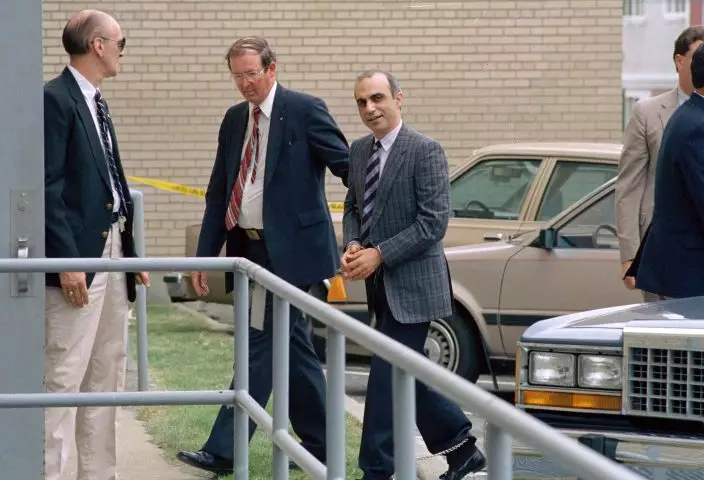
FILE - In this June 22, 1988 file photo, Walid Kabbani, right, one of three defendants of Lebanese descent from Montreal, Canada, is led into federal court in handcuffs in Burlington, Vt. Kabbani and the two others were caught smuggling the makings of a bomb into the U.S., on Oct. 23, 1987, in Richford, Vt. All three were convicted and sent to federal prison. (AP PhotoToby Talbot, File)
On the Canadian border, Ahmed Ressam was caught by border agents in December 1999 after he tried to enter the United States at Port Angeles, Washington, with bomb components in the trunk of his car. It was later determined Ressam planned to attack the Los Angeles airport during the millennium.
"The evidence shows that if we are going to talk about terrorism, there is actually good reason to think more carefully about the U.S.'s northern border than the U.S.'s southern border," said Emily Gilbert, a terrorism expert and director of the Canadian studies program at the University of Toronto.
The U.S.-Canadian border is over 5,500 miles (8,900 kilometers) long, more than 2½ times the length of the U.S. border with Mexico, and is crossed by numerous roads and railroad tracks, with many wide-open stretches. In Richford, the border cuts through farm fields and forests with occasional granite markers in the ground.
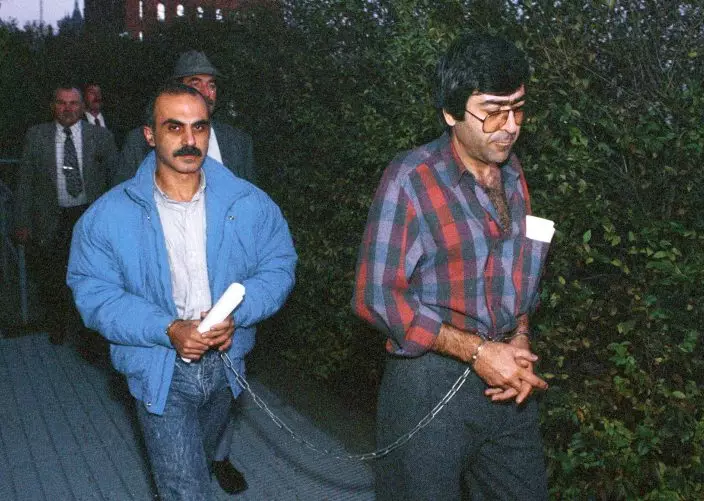
FILE - In this Oct. 28, 1987 file photo, two of three Canadians of Lebanese descent are led into federal court in Burlington, Vt. Walid Nicolas Kabbani, left, and Walid Mourad were caught with a third accomplice smuggling the makings of a bomb into the U.S., on Oct. 23, 1987, in Richford, Vt. All three were convicted and sent to federal prison. (AP PhotoToby Talbot, File)
Worries about terrorists crossing from Canada have been reduced by the close cooperation between the two countries, and security has been tightened since 9/11. Hundreds more Border Patrol agents are stationed along the border (authorities won't disclose the total), surveillance has been enhanced with such things as electronic sensors and helicopters, and those trying to cross the border must show a passport or certain other documents, none of which were required before Sept. 11, 2001.
In the Richford incident, Walid Kabbani was seized at the border, and his two accomplices in the van were arrested at a local hotel the morning after. U.S. authorities said the three men, Lebanese-born Canadians from Montreal, were members of an extremist group responsible for the 1982 assassination of Lebanese President-elect Bashir Gemayel.
Federal officials were never able to say for sure what their intended target was. All three were convicted or pleaded guilty to explosives and immigration violations and went to prison, getting out in the 1990s.
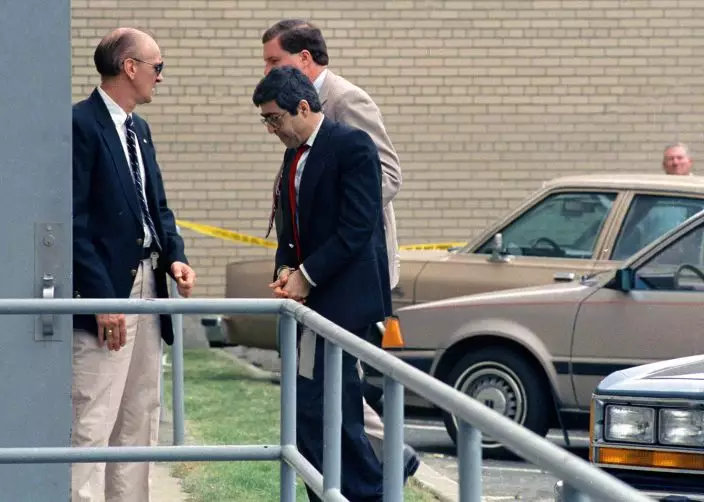
FILE - In this June 22, 1988 file photo, Walid Mourad, center, one of three defendants of Lebanese descent from Montreal, Canada, is led into federal court in handcuffs in Burlington, Vt. Mourad and the two others were caught smuggling the makings of a bomb into the U.S., on Oct. 23, 1987, in Richford, Vt. All three were convicted and sent to federal prison. (AP PhotoToby Talbot, File)
Terrorism was the last thing on Jewett's mind when he became police chief in the border town, which has around 2,300 people and is about 2,000 miles from the Mexican border. He said the current debate about a border wall with Mexico and the recent 35-day government shutdown it provoked has gone too far.
"I do also understand we need some protections on our borders. And I just don't know what it is," Jewett said. "It's hard."
AP researcher Rhonda Shafner in New York contributed to this report.
TEHRAN, Iran (AP) — U.S. President Donald Trump on Sunday made expletive-laden new threats to escalate strikes on Iran and its infrastructure if it doesn't open the Strait of Hormuz by his deadline, after American forces rescued an aviator whose Iran-downed plane fell behind enemy lines.
A defiant Iran struck infrastructure targets in neighboring Gulf Arab countries, challenged the U.S. account of the rescue and threatened to restrict another heavily used waterway in the region, the Bab el-Mandeb Strait off the Arabian Peninsula.
In a social media post, Trump vowed to hit Iran’s power plants and bridges and said the country would be “living in Hell” if the Strait of Hormuz, crucial for global trade, isn’t opened by Tuesday. He ended with “Praise be to Allah.”
Trump has issued such deadlines before but extended them when mediators have claimed progress toward ending the war, which has killed thousands, shaken global markets and spiked fuel prices in just over five weeks.
“It seems Trump has become a phenomenon that neither Iranians nor Americans are able to fully analyze,” Iranian Culture Minister Sayed Reza Salihi-Amiri told visiting Associated Press journalists in an interview in Tehran, adding that the president “constantly shifts between contradictory positions.”
Both sides have threatened and hit civilian targets like oil fields and desalination plants critical for drinking water. Iran’s U.N. mission on social media called Trump’s threat “clear evidence of intent to commit war crime.”
Iran’s military joint command warned of stepped-up retaliatory attacks on regional oil and civilian infrastructure if the U.S. and Israel attack such targets there, according to state television.
The laws of armed conflict allow attacks on civilian infrastructure only if the military advantage outweighs the civilian harm, legal scholars say. It’s considered a high bar to clear, and causing excessive suffering to civilians can constitute a war crime.
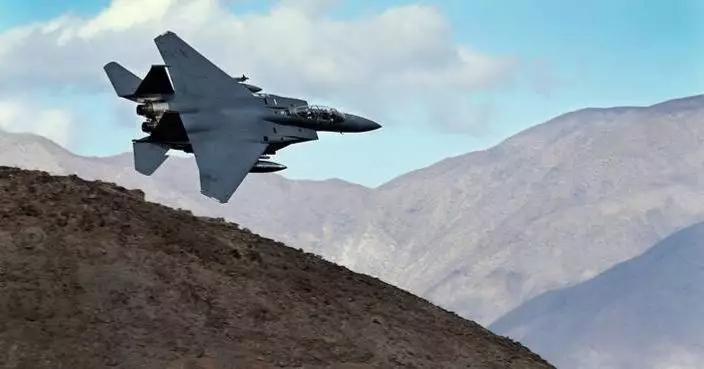
An intense search had followed Friday's crash of the F-15E Strike Eagle, while Iran promised a reward for the “enemy pilot.”
Trump said that the service member was “seriously wounded and really brave” and rescued from “deep inside the mountains" in an operation involving dozens of armed aircraft. He said a second crew member was rescued in “broad daylight” within hours of the crash.
A senior U.S. administration official said that prior to locating the pilot, the CIA spread word inside Iran that U.S. forces had found him and were moving him for exfiltration, confusing Iranian officials. The official spoke on the condition of anonymity to discuss details not yet made public.
The fighter jet was the first known American aircraft to crash in Iranian territory since the U.S. and Israel launched the war with strikes on Iran on Feb. 28.
Iran also shot down another U.S. military plane, demonstrating both the perils of the bombing campaign and the ability of Iran's degraded military to hit back. Neither the status of the A-10 attack aircraft's crew nor where it crashed is known.
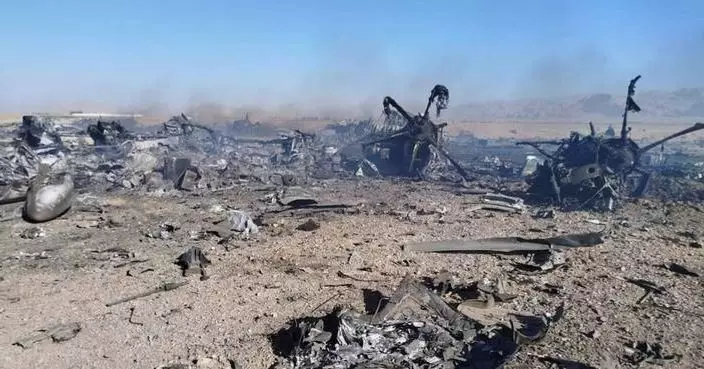
On Sunday, Iran’s state television aired a video showing what it claimed were parts of U.S. aircraft shot down by Iranian forces. The broadcaster said that Iran had shot down a transport plane and two helicopters that were part of the rescue operation.
However, a regional intelligence official briefed on the mission told The Associated Press that the U.S. military blew up two transport planes because of a technical malfunction and brought in additional aircraft to complete the rescue. The official spoke on condition of anonymity to discuss the covert mission.
Two Black Hawk helicopters were hit during the rescue but navigated to safe airspace, according to a person familiar with the situation who spoke on condition of anonymity to discuss the sensitive information.
Trump's upcoming deadline centers on growing alarm over Iran's grip on the Strait of Hormuz, critical for shipments of oil and gas from the Persian Gulf to Europe and Asia as well as humanitarian supplies. Some ships have paid Iran for passage.
An Iranian presidential spokesperson, Seyyed Mohammad Mehdi Tabatabaei, said on social media that the strait can reopen only if some transit revenues compensate Iran for war damages.
A top Iranian adviser, Ali Akbar Velayati, warned on social media that Tehran also could disrupt trade on the Bab el-Mandeb, a key waterway to and from the Suez Canal.
Diplomatic efforts continued.
Oman's Foreign Ministry said that deputy foreign ministers and experts from Iran and Oman met to discuss proposals to ensure “smooth transit” through the strait. Oman has often served as a mediator between the U.S. and Iran.
Egypt said that Foreign Minister Badr Abdelatty had spoken with U.S. envoy Steve Witkoff and Iranian Foreign Minister Abbas Araghchi, as well as with Turkish and Pakistani counterparts.
Islamabad has said that it would soon host talks between the U.S. and Iran.
In Kuwait, Iranian drone attacks caused significant damage to power plants and a petrochemical plant. They also put a water desalination station out of service, according to the Ministry of Electricity.
In Bahrain, a drone attack caused a fire at one of the national oil company’s storage facilities and a state-run petrochemical plant, the kingdom’s official news agency said.
In the United Arab Emirates, authorities responded to fires at a petrochemical plant in Ruwais that they said were caused by intercepted debris, halting operations.
The strikes came a day after Israel struck a major petrochemical plant in Iran that Prime Minister Benjamin Netanyahu said generated revenue used to fund the war. The petrochemical industry converts oil and gas into products like plastics and fertilizer.
Meanwhile, more than 1,900 people have been killed in Iran since the war began.
In Gulf Arab states and the occupied West Bank, more than two dozen people have died, while 19 have been reported dead in Israel and 13 U.S. service members have been killed. In Lebanon, more than 1,400 people have been killed and more than 1 million people have been displaced. Ten Israeli soldiers have died there.
Bassem Mroue reported from Tehran, Iran, Sam Metz from Jerusalem and Samy Magdy from Cairo. Jon Gambrell in Dubai, United Arab Emirates; Lisa Mascaro and Seung Min Kim in Washington; Munir Ahmed in Islamabad; and Farnoush Amiri in New York; contributed to this report.
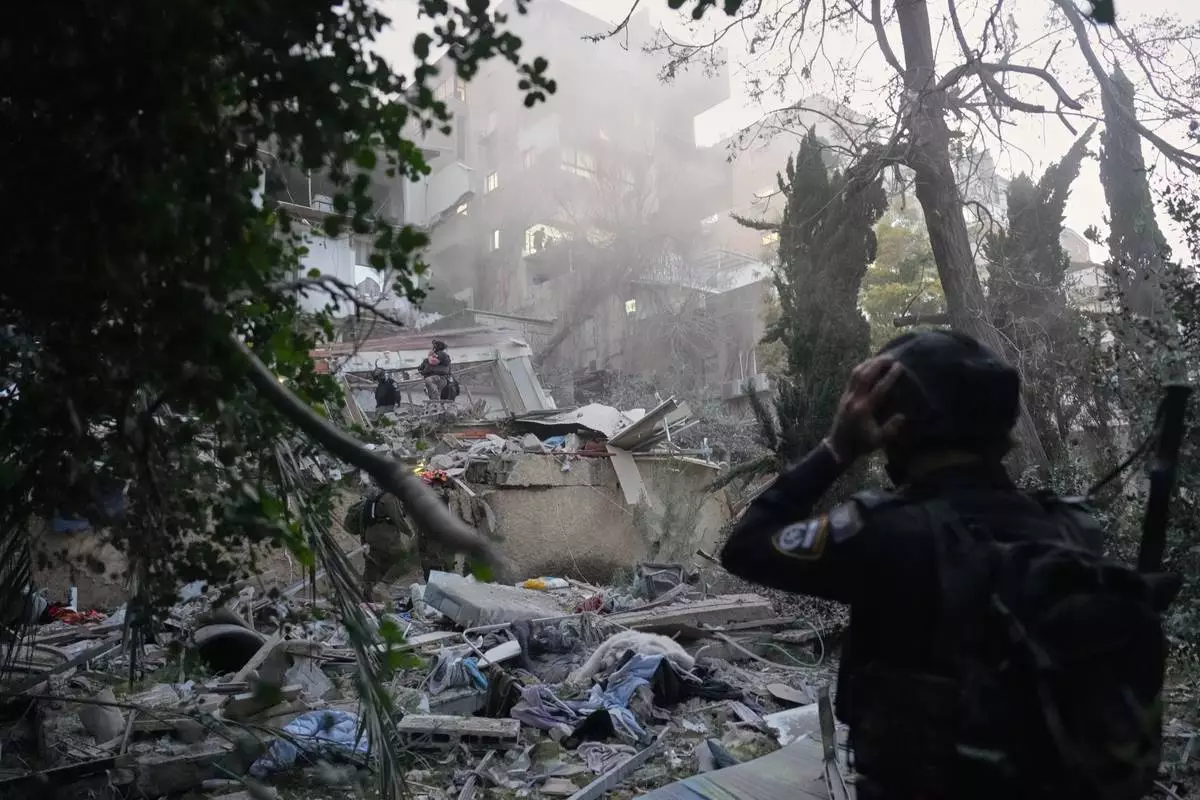
Israeli security forces and rescue teams work amid the rubble of a residential building struck by an Iranian missile in Haifa, Israel, Sunday, April 5, 2026. (AP Photo/Ariel Schalit)
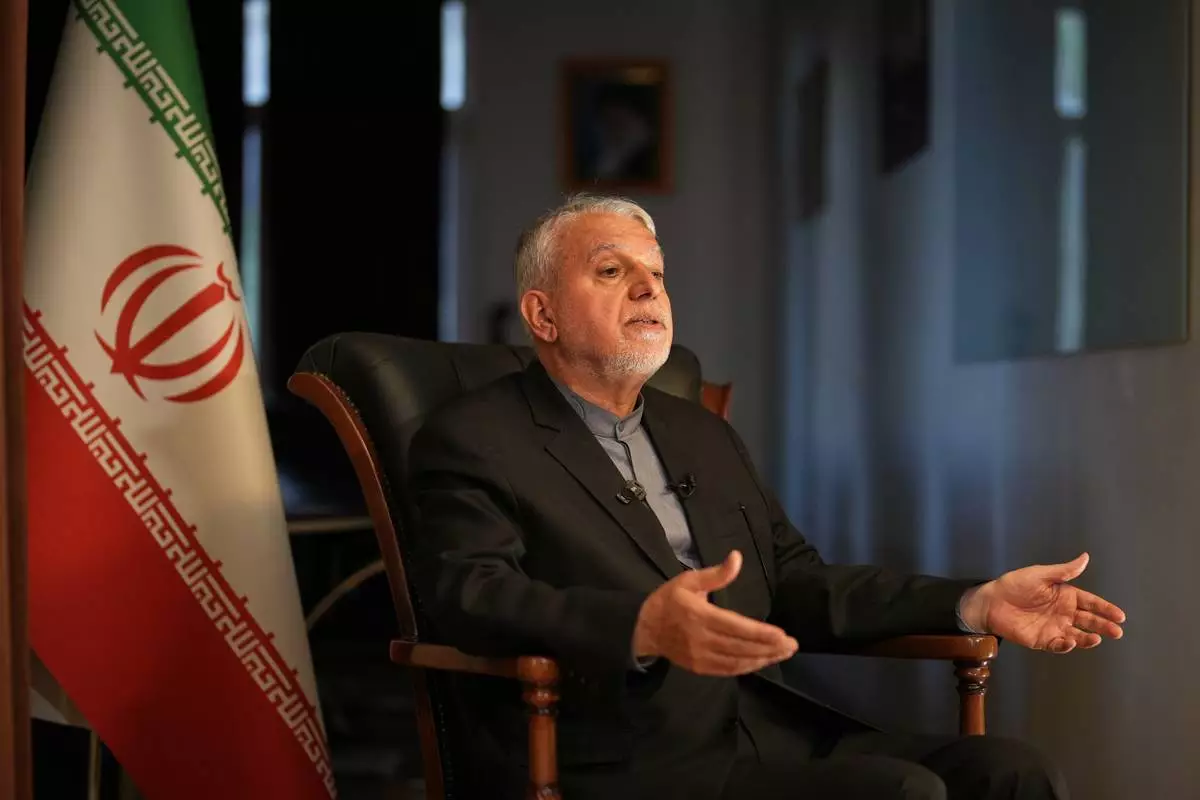
Iran's Minister of Cultural Heritage, Tourism and Handicrafts, Seyed Reza Salehi Amiri, talks during an interview with the Associated Press in Tehran, Iran, Sunday, April 5, 2026. (AP Photo/Francisco Seco)
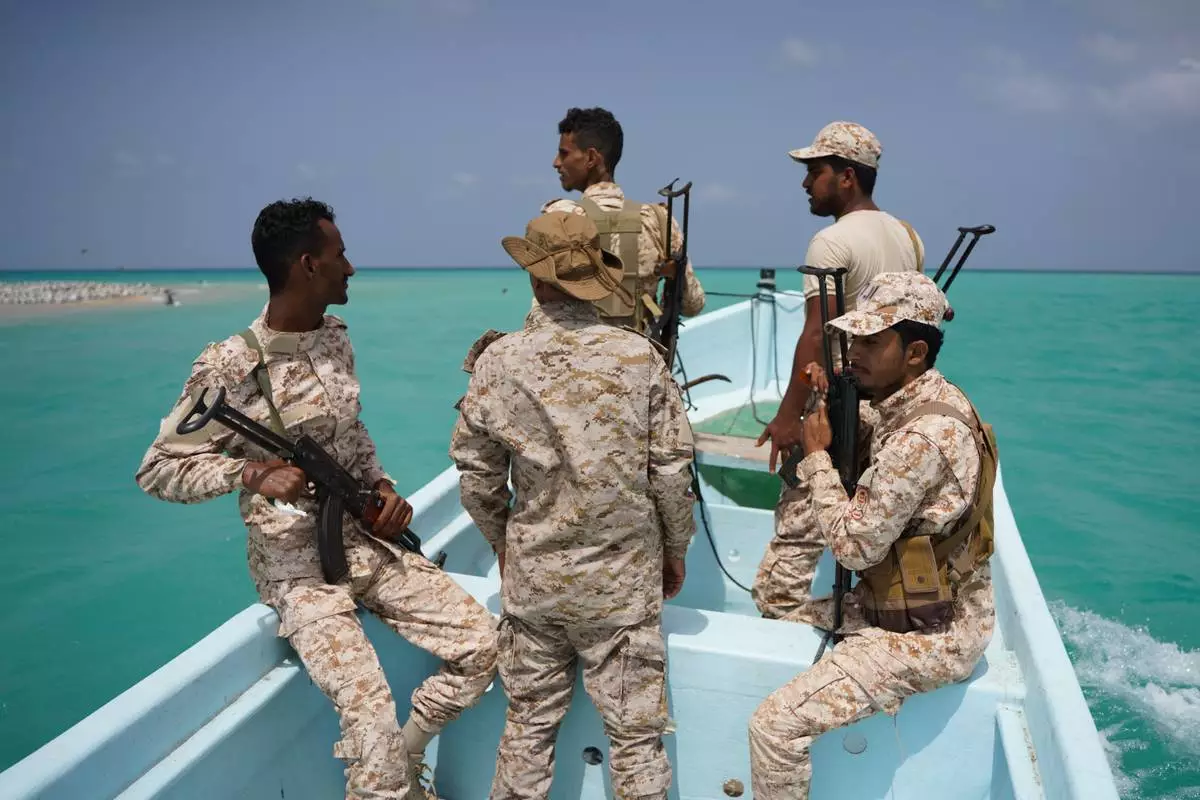
Yemeni soldiers patrol the strategic Bab el-Mandeb Strait, Yemen, Sunday, April 5, 2026. (AP Photo/Abdulnasser Alseddik)
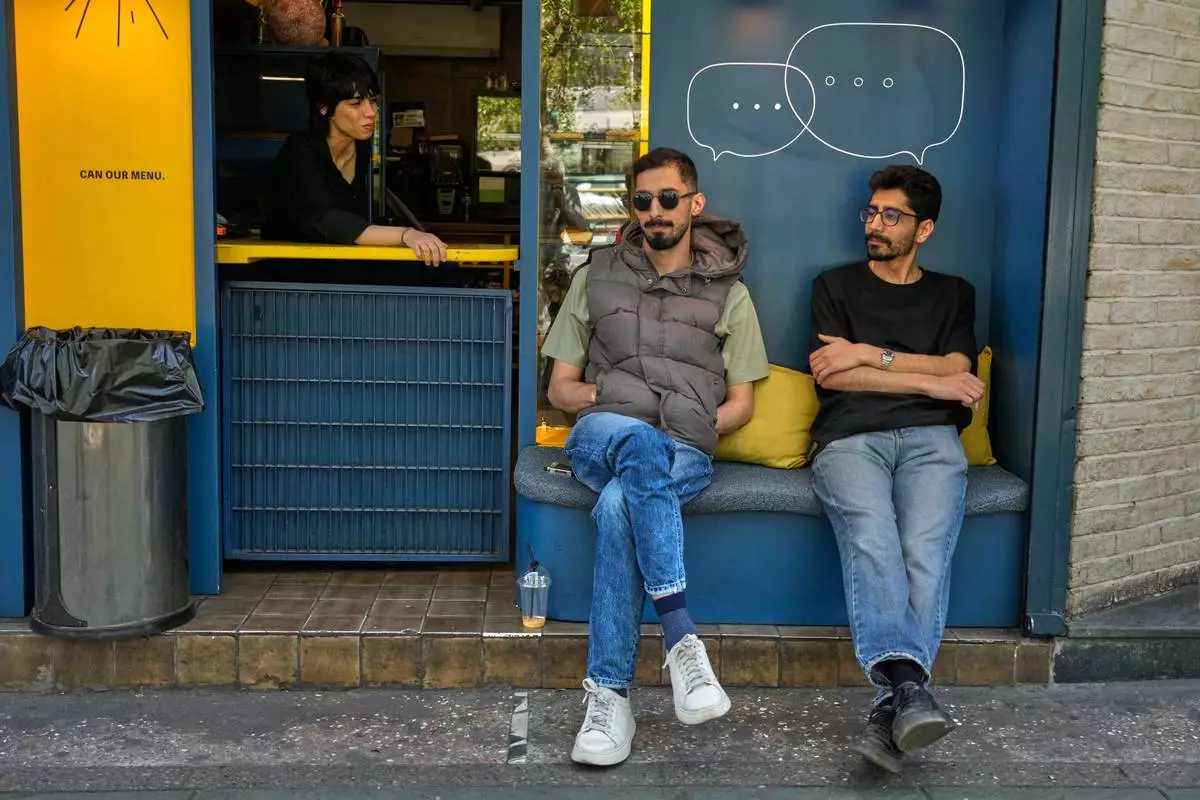
A cafe attendant sits at the counter as two men sit at a cafe in downtown Tehran, Iran, Sunday, April 5, 2026. (AP Photo/Vahid Salemi)
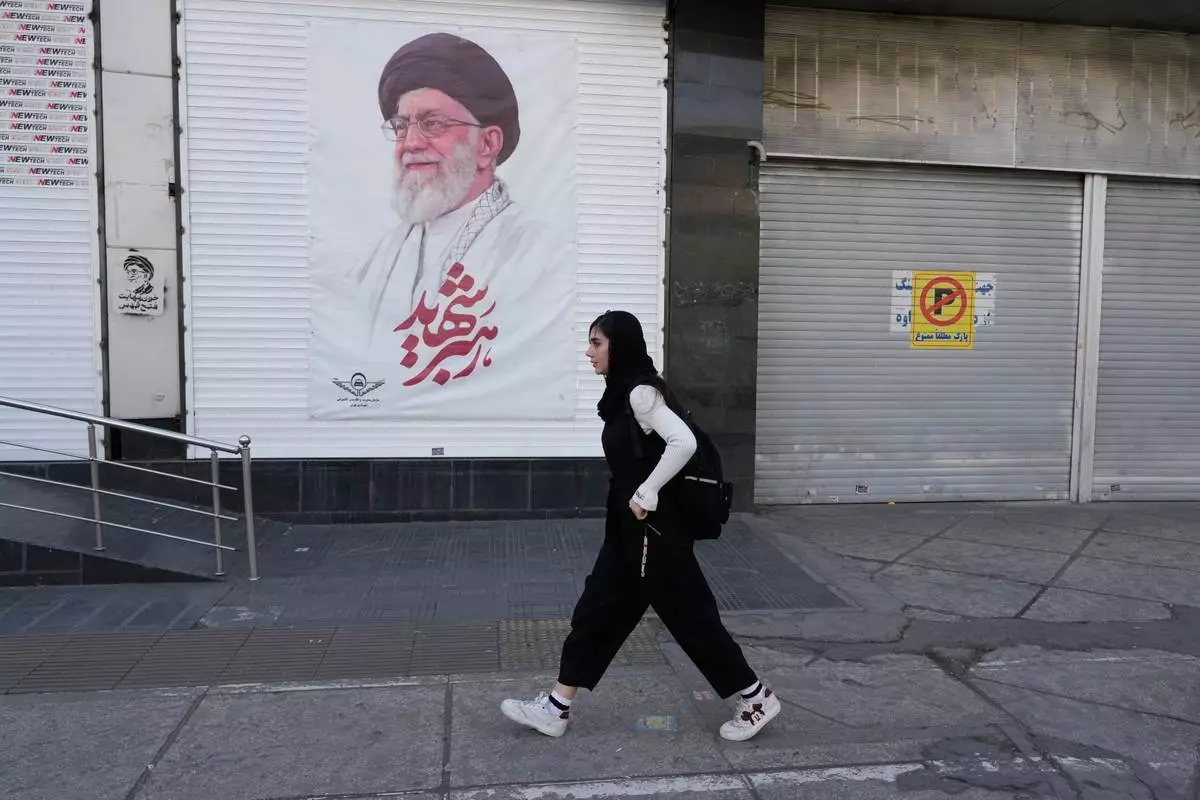
A woman walks past a poster of the late Iranian Supreme Leader Ayatollah Ali Khamenei in downtown Tehran, Iran, Sunday, April 5, 2026. (AP Photo/Vahid Salemi)
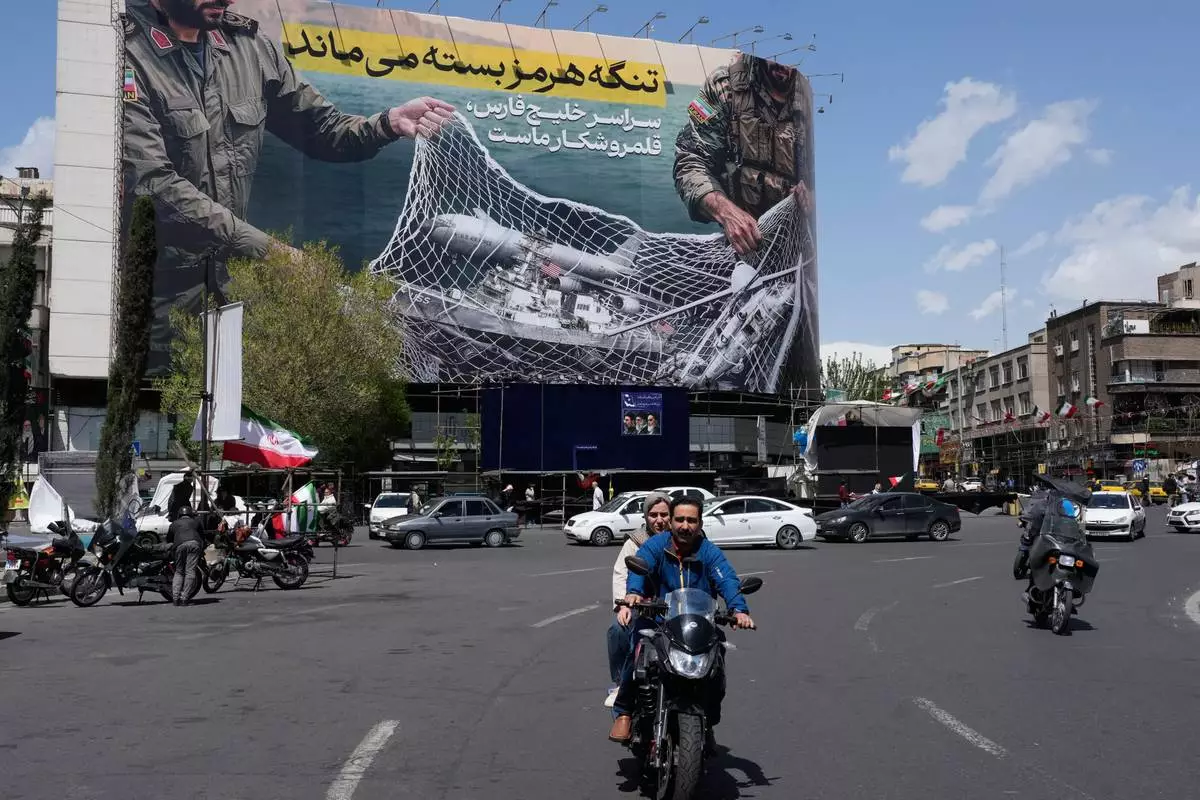
Vehicles and motorcycles move past an anti-U.S. billboard depicting the American aircrafts into the Iranian armed forces fishing net with signs that read in Farsi: "The Strait of Hormuz will remain closed, The entire Persian Gulf is our hunting ground," at the Eqelab-e-Eslami, or Islamic Revolution square in downtown Tehran, Iran, Sunday, April 5, 2026. (AP Photo/Vahid Salemi)
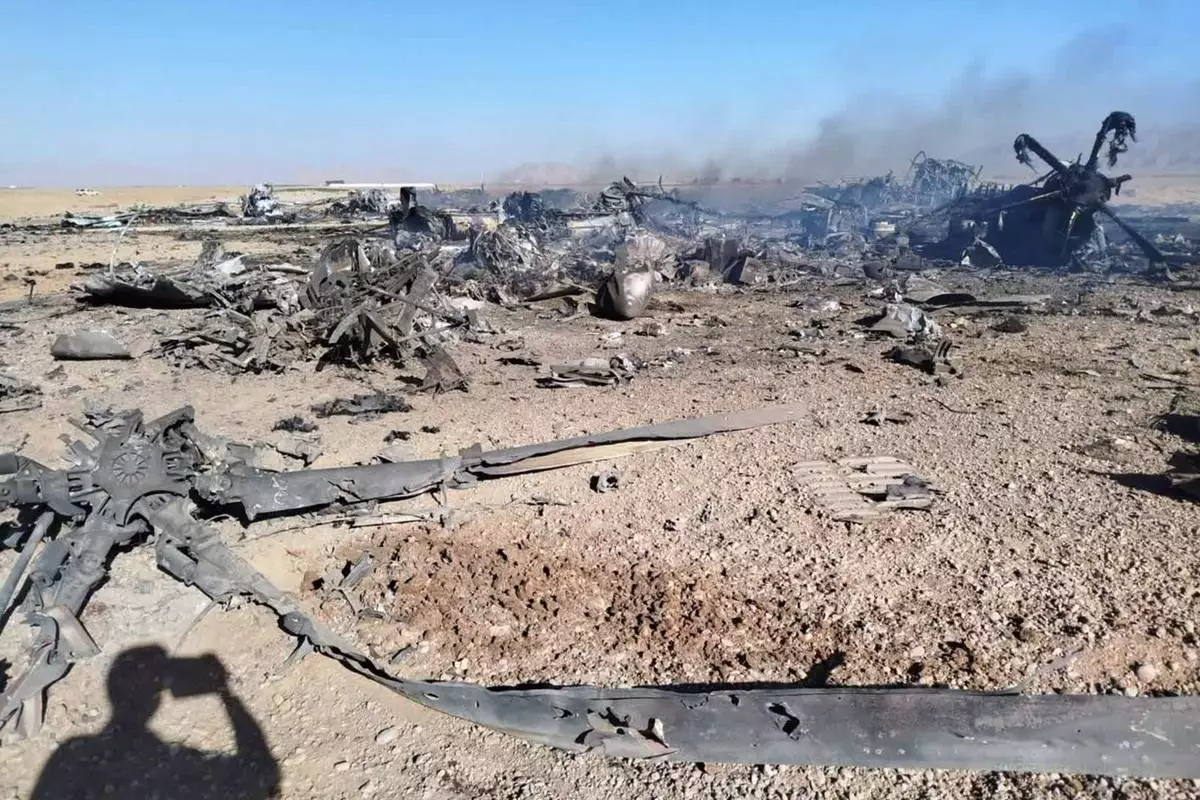
In this image provided by Sepahnews, the Iranian Revolutionary Guard's official website, wreckage is shown at what Iran's state TV claimed was the site of a downed American transport plane and two helicopters involved in a rescue operation, in Isfahan province, Iran, April, 2026. (Sepahnews via AP)
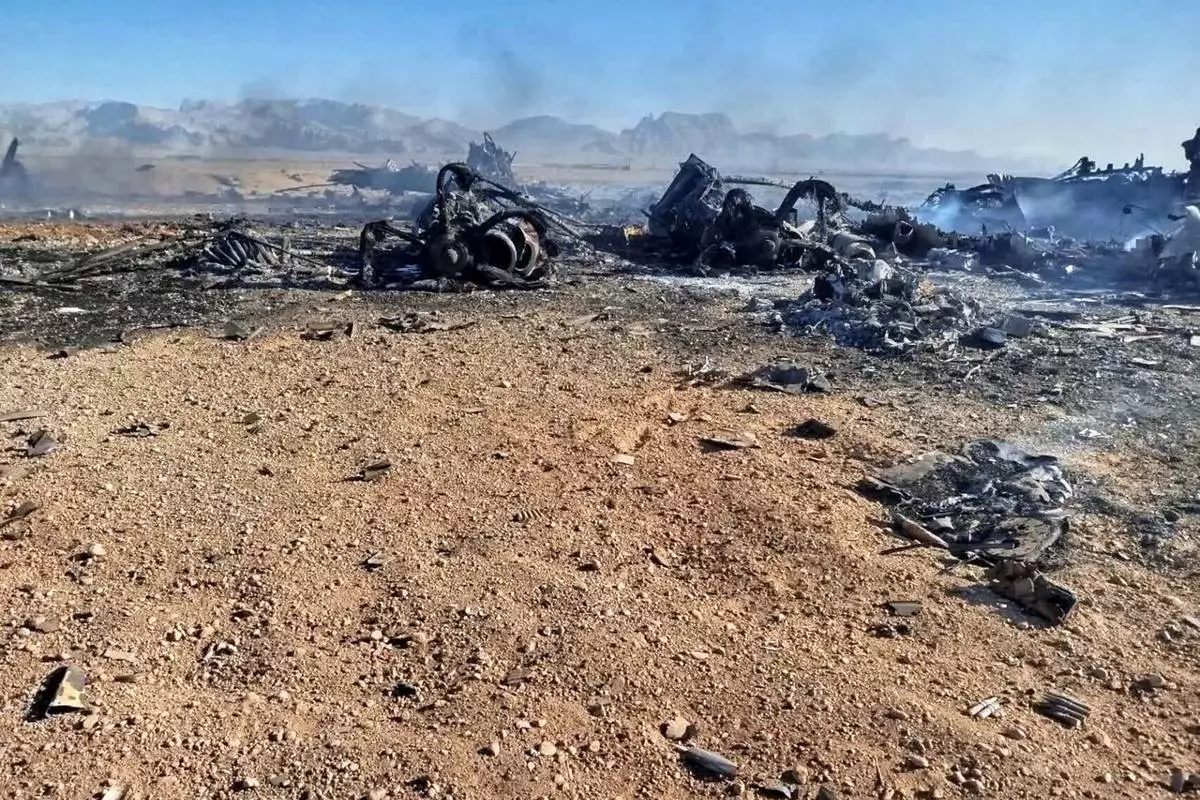
In this image provided by Sepahnews, the Iranian Revolutionary Guard's official website, wreckage is shown at what Iran's state TV claimed was the site of a downed American transport plane and two helicopters involved in a rescue operation, in Isfahan province, Iran, April, 2026. (Sepahnews via AP)
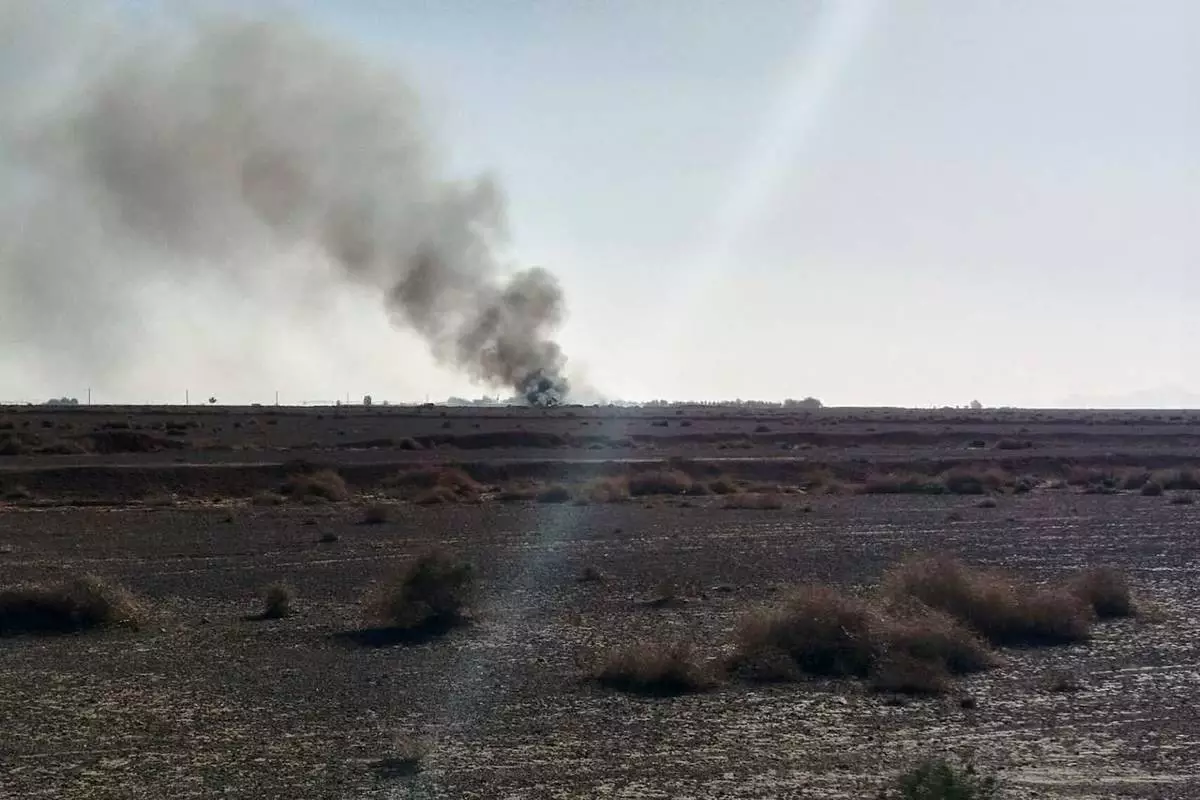
In this image provided by Sepahnews, the Iranian Revolutionary Guard's official website, black smoke rises into the air at what Iran's state TV claimed was the site where an American transport plane and two helicopters involved in a rescue operation were shot down, in Isfahan province, Iran, April, 2026. (Sepahnews via AP)
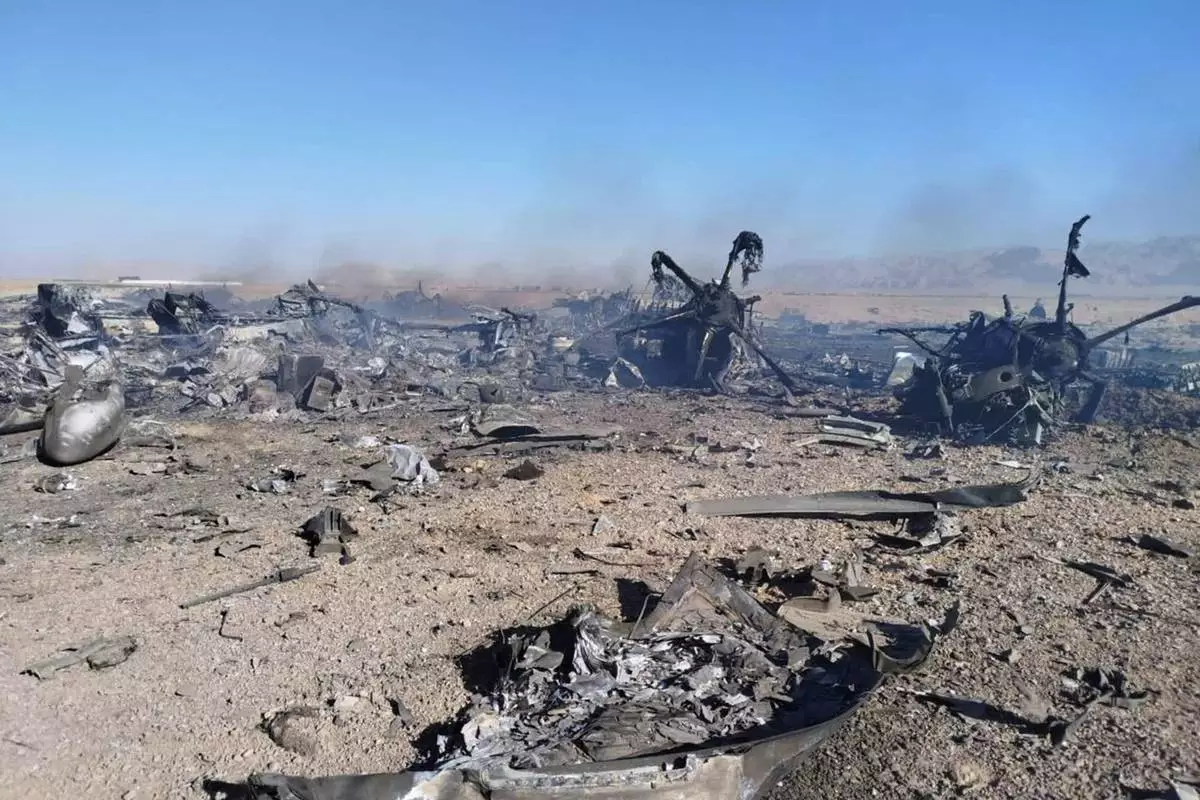
In this image provided by Sepahnews, the Iranian Revolutionary Guard's official website, wreckage is shown at what Iran's state TV claimed was the site of a downed American transport plane and two helicopters involved in a rescue operation, in Isfahan province, Iran, April, 2026. (Sepahnews via AP)
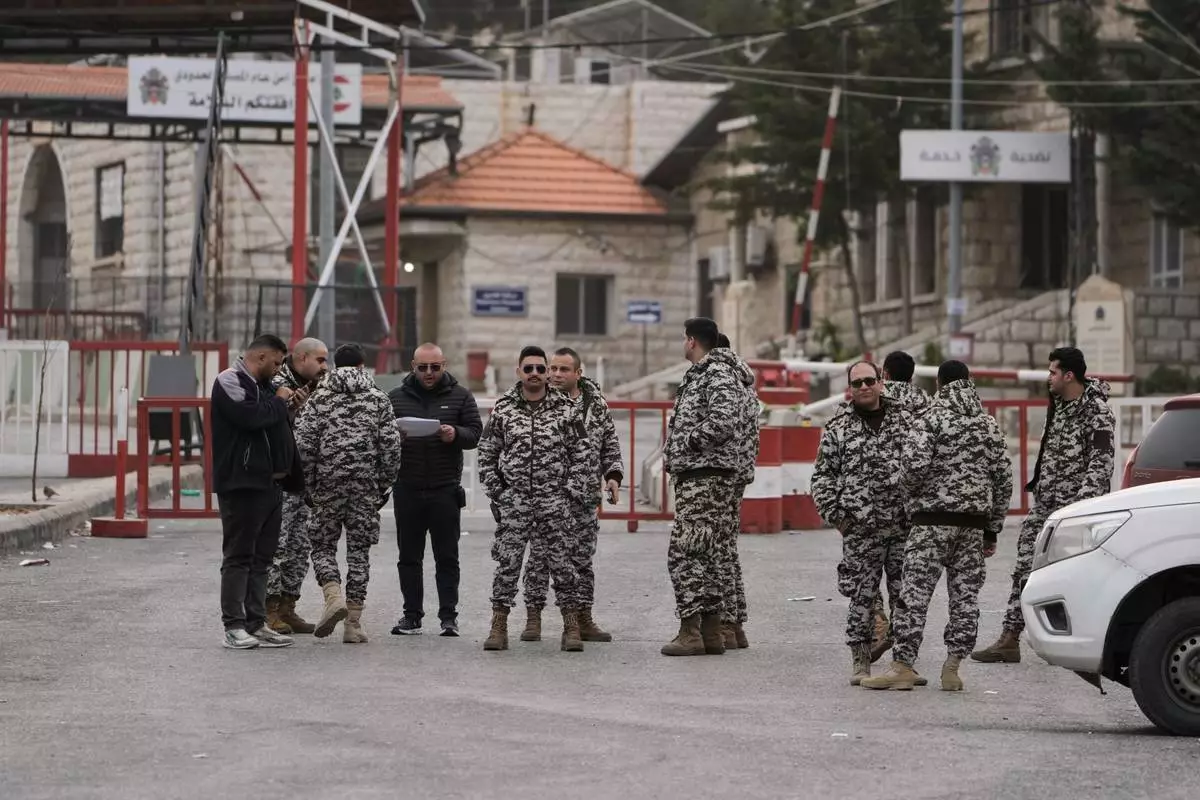
Members of Lebanon's General Security stand at the Masnaa border crossing in the Bekaa valley, eastern Lebanon, Sunday, April 5, 2026. (AP Photo/Bilal Hussein)
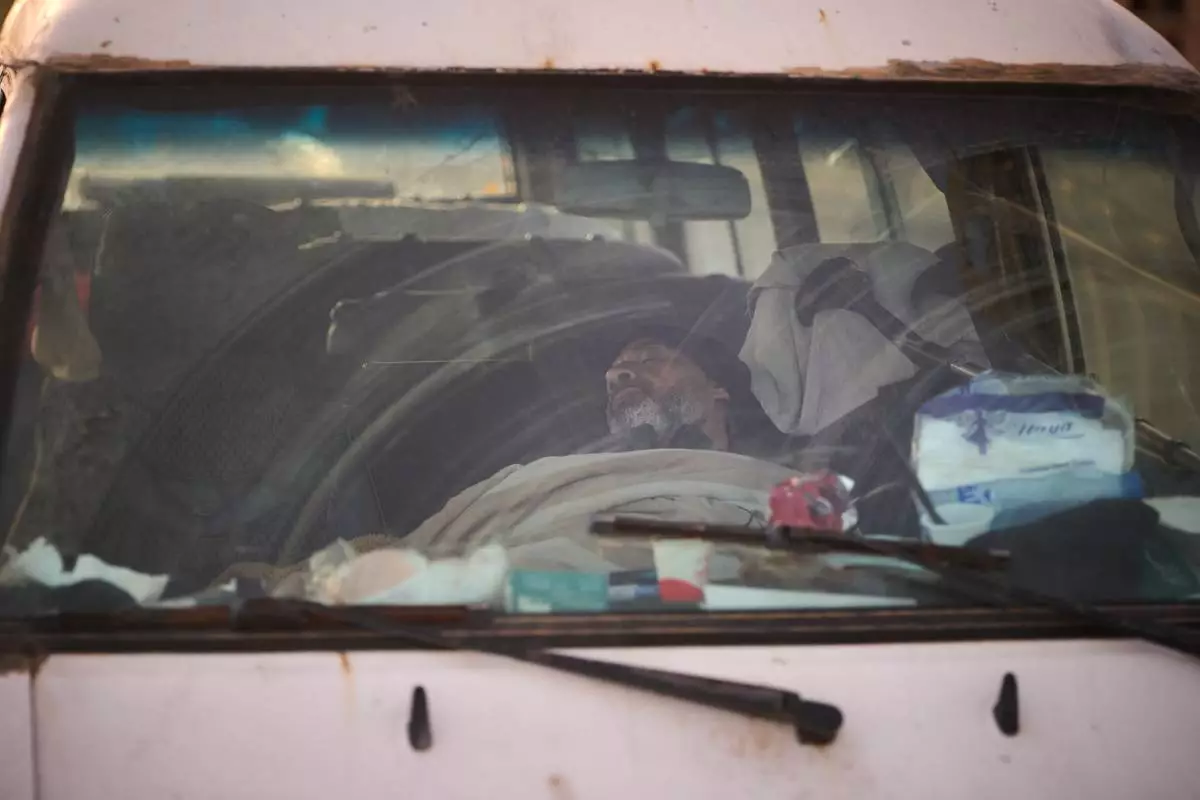
A man, who fled Israeli bombings in southern Lebanon with his family, sleeps in his car used as shelter, along a seaside promenade in downtown Beirut, Lebanon, Sunday, April 5, 2026. (AP Photo/Emilio Morenatti)
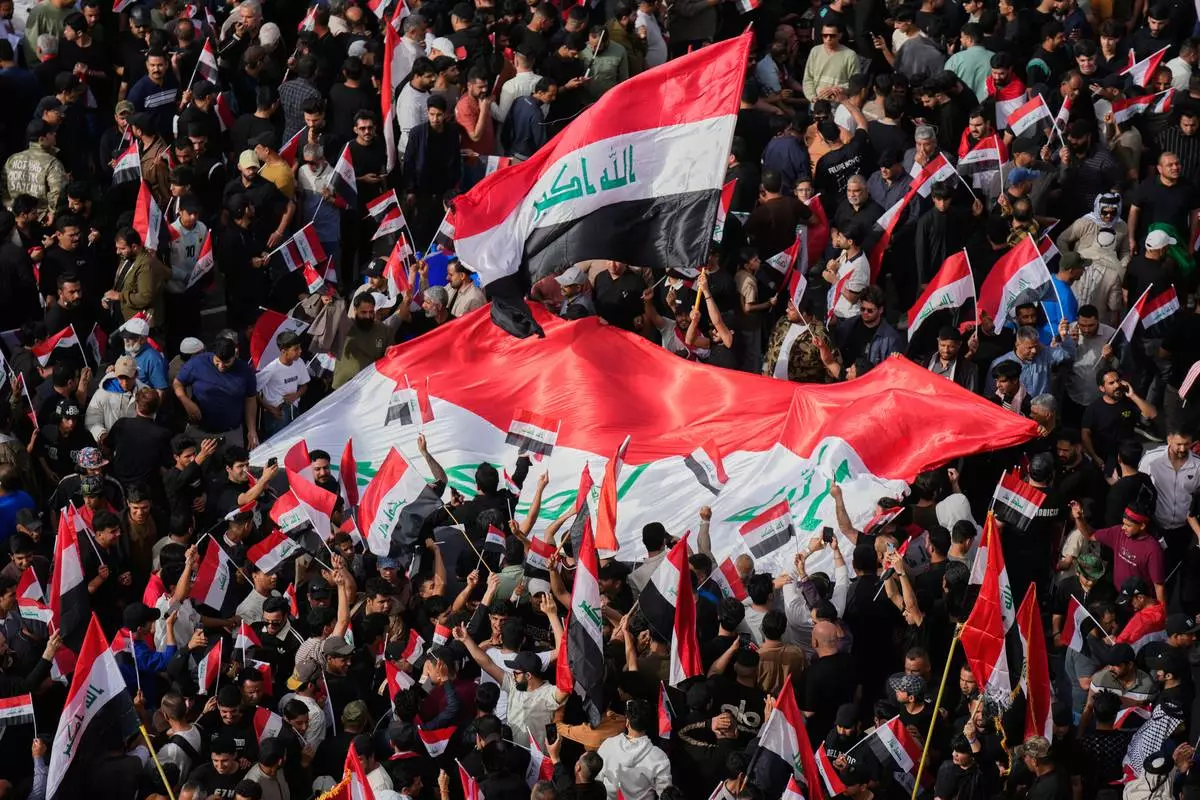
Followers of Iraq's Shiite cleric Muqtada al-Sadr chant slogans as they wave national Iraqi flag during a protest against U.S. and Israeli attacks on multiple cities across Iran, in Tahrir Square, Baghdad, Baghdad, Iraq, Saturday, April 4, 2026. (AP Photo/Hadi Mizban)
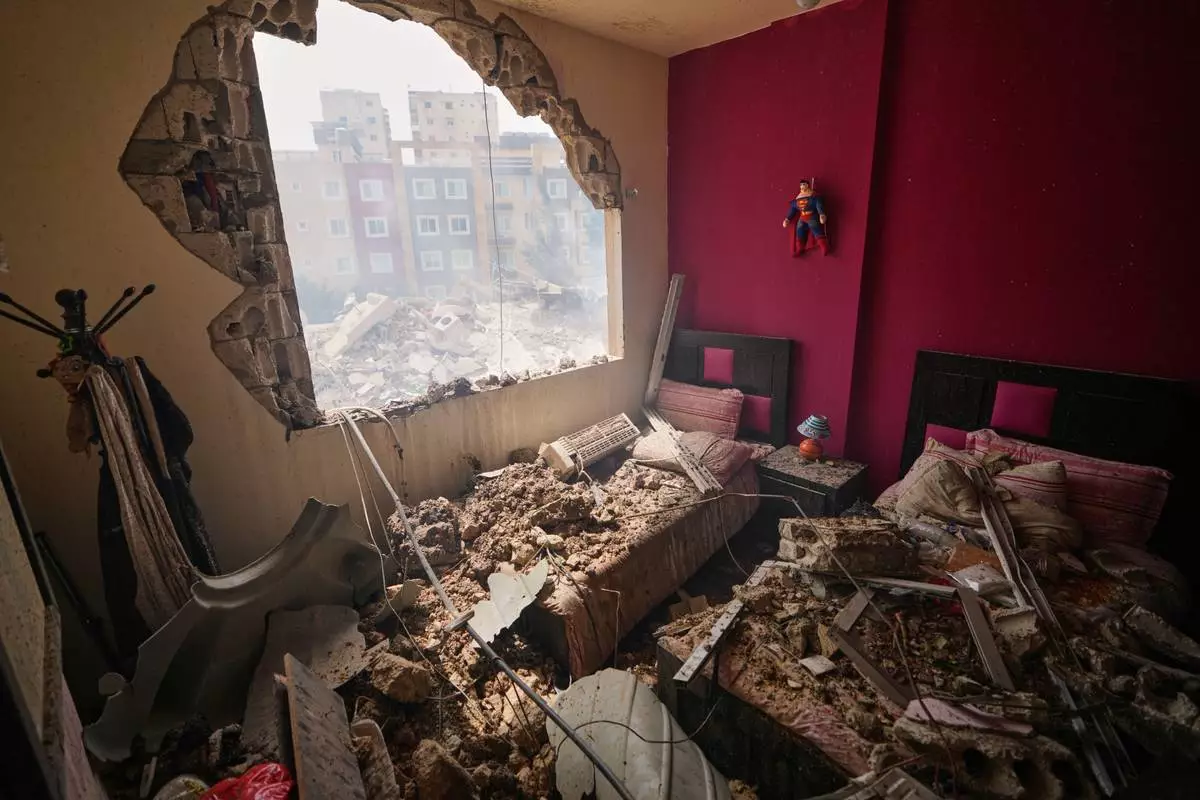
A bedroom is damaged in a building struck in an Israeli airstrike in the southern port city of Tyre, Lebanon, Saturday, April 4, 2026. (AP Photo/Mohammed Zaatari)
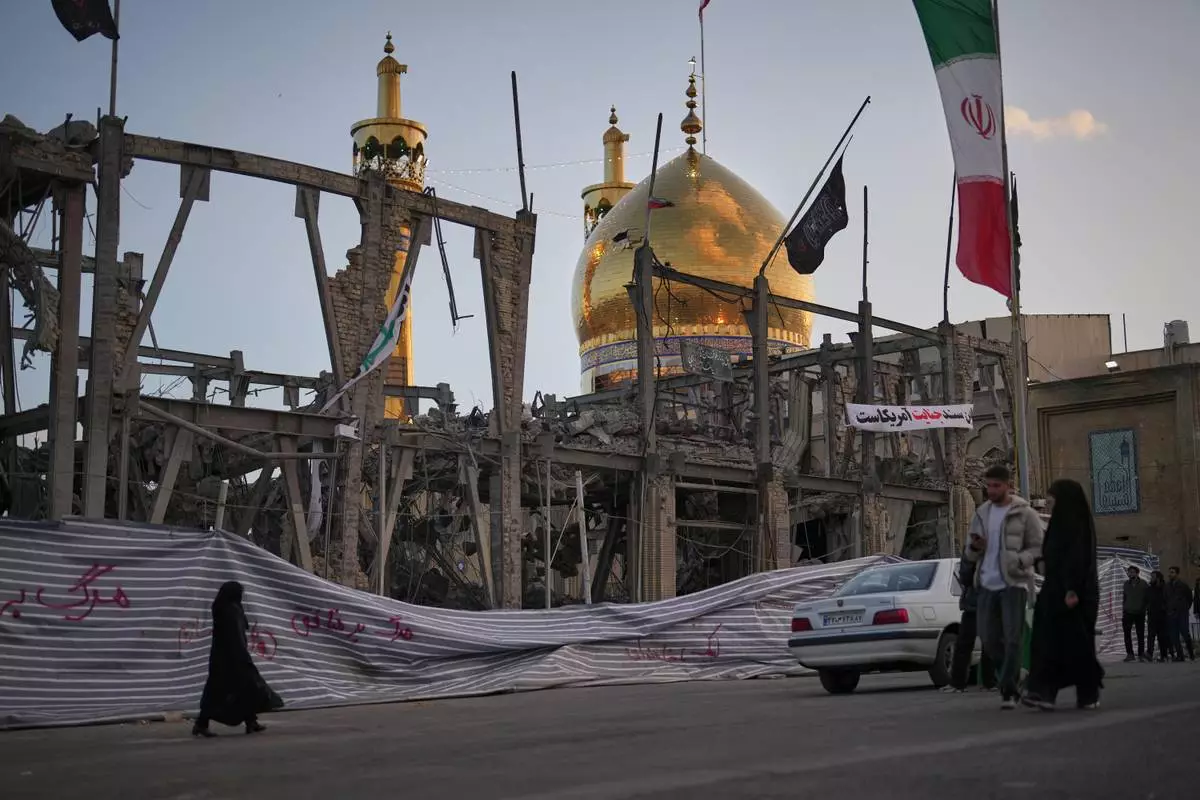
Pedetrians walk by a destroyed building within the Grand Hosseiniyeh, with the mosque visible in the background, which officials at the site say was hit by U.S.-Israeli airstrikes Tuesday, in Zanjan, Iran, Saturday, April 4, 2026. (AP Photo/Francisco Seco)
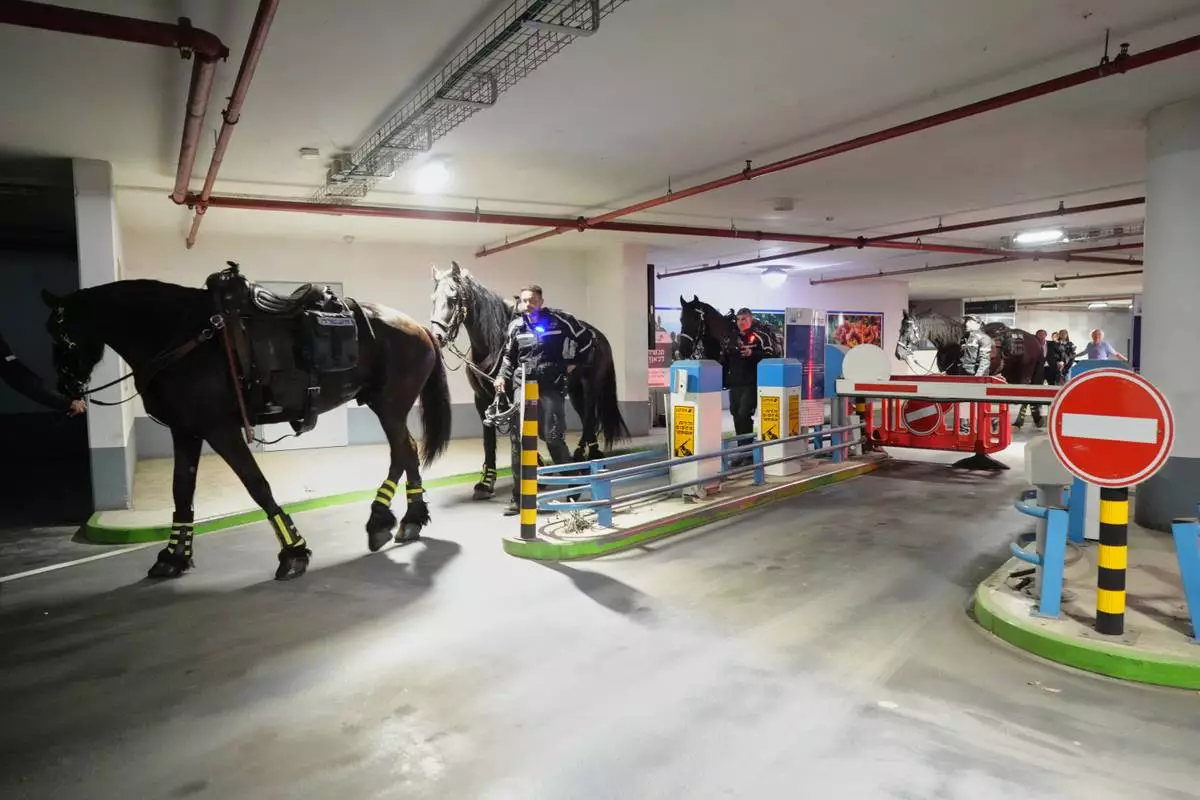
Police officers and their horses take cover in an underground parking garage as sirens warn of an incoming missile fired from Yemen in Tel Aviv, Israel, Saturday, April 4, 2026. (AP Photo/Maya Levin)
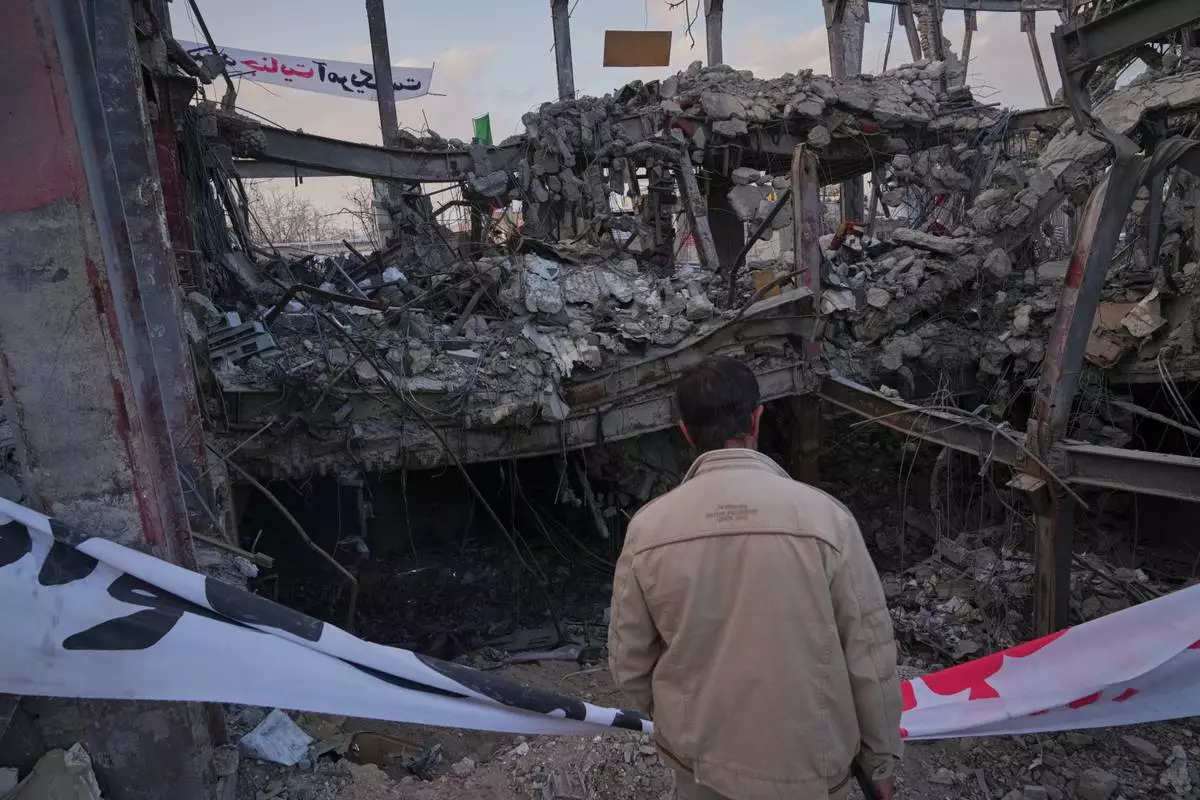
A man looks at a destroyed building within the Grand Hosseiniyeh complex that officials say was hit by U.S.-Israeli airstrikes Tuesday in Zanjan, Iran, Saturday, April 4, 2026. (AP Photo/Francisco Seco)