More than 40 years after a serial killer dubbed the "Doodler" terrorized San Francisco's gay community, police released a sketch Wednesday of what the man might look like today and announced a $100,000 reward for details leading to his capture.
Police believe the killer stabbed at least five men to death between early 1974 and late 1975.
He became known as the "Doodler" after a victim who survived an attack told police the man was doodling while they talked at a late-night diner and said he was a cartoonist.
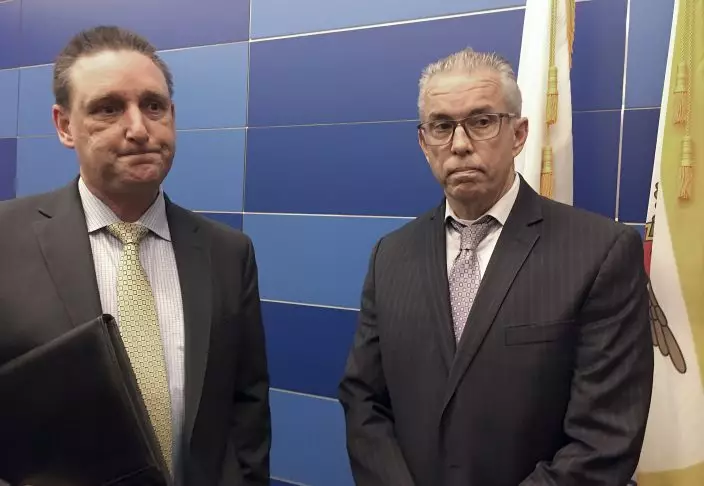
San Francisco Police Department Commander Greg McEachern, left, and Inspector Dan Cunningham, who run the SFPD's cold case unit, stand at a news conference after releasing a pair of sketches, Wednesday, Feb. 6, 2019, showing what a serial killer might look like now in a cold case involving at least five stabbing deaths of gay men in the mid-1970s in San Francisco. The killer was dubbed the "Doodler" after he told a person who later became a victim and survived that he was a cartoonist. It's one of several cases being re-examined after the capture last year of the "Golden State Killer" through DNA analysis. (AP PhotoJocelyn Gecker)
At a news conference, police released a pair of images that showed a 1975 sketch of a suspect and an "age-progression" showing what he might look like now.
"In the 1970s, this was gripping the gay community and San Francisco," police Commander Greg McEachern told the news conference, saying authorities were releasing the new sketch in hopes of bringing justice to victims of the "horrendous homicides."
It's one of several cold cases, particularly serial crimes, being re-examined after the capture last year of the notorious "Golden State Killer" through DNA analysis, McEachern said.
Police described the killer as an African-American male, about 5 feet, 11 inches tall with a lanky build who was likely in his early 20s during the attacks.
At the time, a witness was able to give investigators a description of the attacker, leading to a man being detained in 1976 but never charged.
McEachern said police have interviewed the man since returning to the case and he remains a person of interest. His name was not released and authorities declined to say if he resembled the man in the sketches.
The killer targeted white men he met at after-hours gay clubs and restaurants in San Francisco. He usually sketched them before having sex and stabbing them.
The bodies of four men were found along the beach. Another stabbing victim was found in Golden Gate Park.
"Even now, the story gives me chills," said prominent gay activist Cleve Jones, who recalls how the string of killings terrified the gay community. "Imagine, you're out at a club having a drink, and someone hands you a sketch they've done of you. I can't think of a more disarming ploy to gain someone's trust."
An Associated Press story from 1977 quotes police as saying the suspect at the time could not be charged because three survivors, including a "well-known entertainer" and a diplomat were reluctant to "come out of the closet" to testify against him.
AP interviewed gay rights advocate Harvey Milk at the time about the victims' refusal to testify.
"I can understand their position," Milk said. "I respect the pressure society has put on them."
The interview with AP came just over a year before Milk, the first openly gay man elected to public office in the U.S., was assassinated.
Police on Wednesday also announced a reward of $100,000 for information leading to the arrest of the killer and released audio of an anonymous call made to police on Jan. 27, 1974, reporting a body found near Ocean Beach in San Francisco.
Responding officers discovered the body of 50-year-old Gerald Cavanaugh, the first of the killer's five known victims.
Police are seeking information on the identity of the caller, who declined to give his name.
"I believe there might be a dead person," the caller said. "But I didn't want to get too close to him because you never know what could happen."
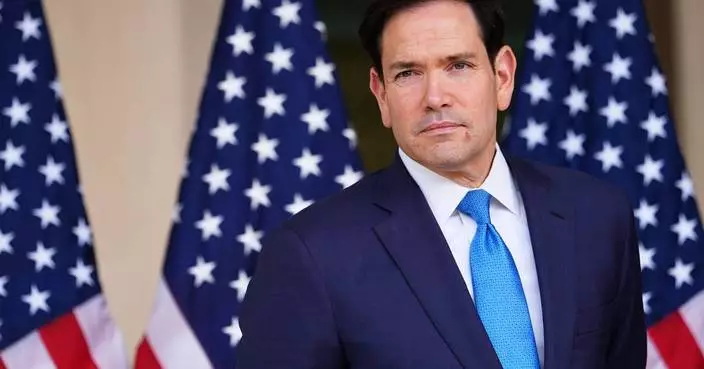
NEW DELHI (AP) — U.S. Secretary of State Marco Rubio’s visit to India marks an effort by Washington and New Delhi to steady strained relations as the two countries seek to reinforce strategic and economic ties despite recent trade tensions.
In meetings Sunday with Indian Prime Minister Narendra Modi and Foreign Minister Subrahmanyam Jaishankar, Rubio stressed cooperation on trade, energy, defense and maritime security. Rubio said the countries remained strategically aligned and expressed optimism about a broader trade deal.
Rubio’s four-day trip also includes talks with members from the Quadrilateral Security Dialogue, the Indo-Pacific alliance more commonly known as the Quad.
Here is what Rubio’s visit means for India-U.S. ties:
Relations between India and the U.S. have strained in recent months after the Trump administration imposed steep tariffs on Indian exports, partly over New Delhi’s continued purchases of Russian oil. The move angered Indian officials and fueled concerns in the Indian government over Washington’s reliability.
The two countries later reached an interim trade arrangement that eased some tariffs and expanded Indian purchases of U.S. goods, including energy products. But talks on a broader trade deal remain unresolved.
Despite the tensions, India and the U.S. continue to strengthen defense and technology ties, with Washington viewing India as a key counterweight to China in the Indo-Pacific region.
During his talks with Jaishankar on Sunday, Rubio described India as one of Washington’s most important strategic partners and said he was optimistic the two countries would finalize a bilateral trade deal soon. Rubio also conveyed an invitation from U.S. President Donald Trump for Modi to visit Washington later this year.
Rubio’s visit also is expected to include talks on Tuesday with foreign ministers from India, Australia and Japan, which are member nations of the Quad alliance along with the United States.
The grouping has become a key platform for cooperation on maritime security, supply chains and regional strategy as China expands its military and economic influence in the Indo-Pacific.
The Quad has repeatedly criticized China’s actions in the South China Sea, accusing Beijing of militarizing disputed waters. The Chinese government has accused the Quad of trying to contain China’s rise and regional influence.
Recent trade tensions between Washington and New Delhi, along with Trump’s recent visit to China, have prompted renewed attention to the grouping.
Praveen Donthi, a senior analyst at the International Crisis Group, said India’s growing global influence has been largely tied to its role in balancing China’s power in the region and any shift in U.S. policy toward Beijing could affect New Delhi’s strategic value to Washington.
“If the U.S. changes its approach towards China, it will diminish India’s importance,” Donthi said.
The Iran war has added to India’s energy concerns, raising worries about shipments through the Strait of Hormuz, a vital route for the country’s crude imports. Rising fuel costs have increased pressure on the Indian economy.
Jaishankar said Sunday that India would continue expanding energy imports, including from the U.S., while diversifying suppliers to keep markets stable and prices affordable. He said New Delhi wants energy markets to remain open and unconstrained to support global economic growth.
India’s purchase of discounted Russian crude since the start of the Ukraine war has at times strained relations with the U.S.
Washington has urged India to increase purchases of U.S. oil and gas as part of broader efforts to diversify energy supplies, with Rubio emphasizing stronger energy cooperation during meetings in New Delhi.
Alongside official meetings, Rubio’s visit also has included cultural engagements.
He began the trip in eastern city Kolkata and visited the Missionaries of Charity headquarters founded by Mother Teresa. He also attended a gala reception in New Delhi marking the 250th anniversary of U.S. independence.
Rubio's itinerary includes stops in the cities of Agra and Jaipur, two of India’s most visited tourist destinations known for monuments, forts and palaces.
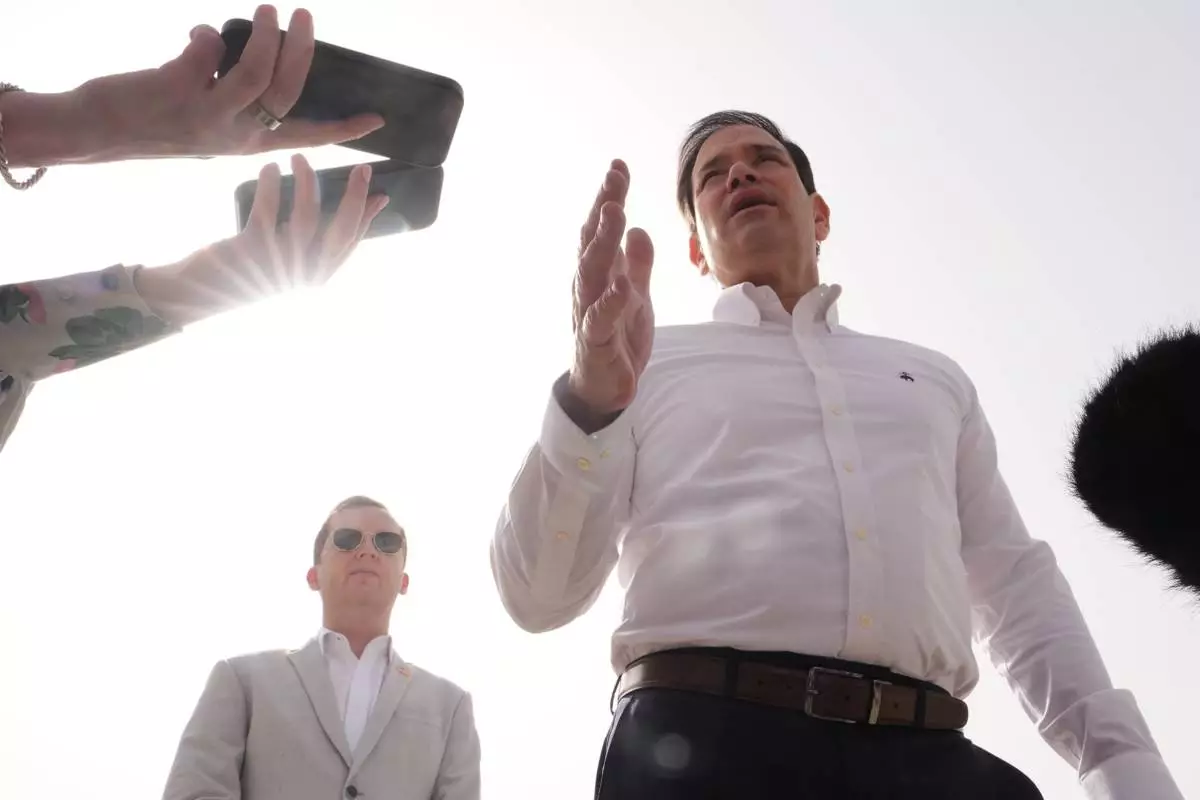
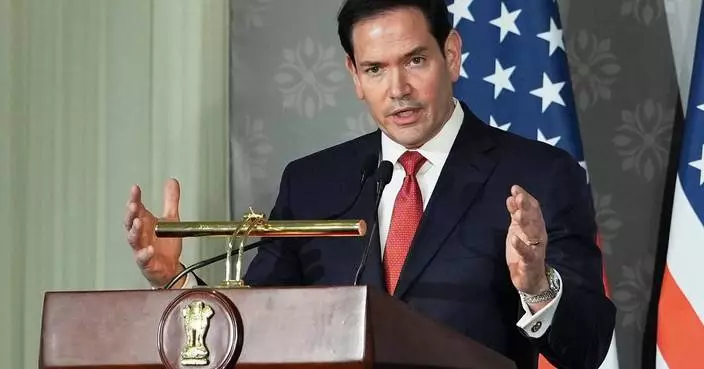
United States Secretary of State Marco Rubio speaks to the journalists before boarding his plane at Indira Gandhi International Airport in New Delhi, India, Monday, May 25, 2026. (AP Photo/Julia Demaree Nikhinson, Pool)
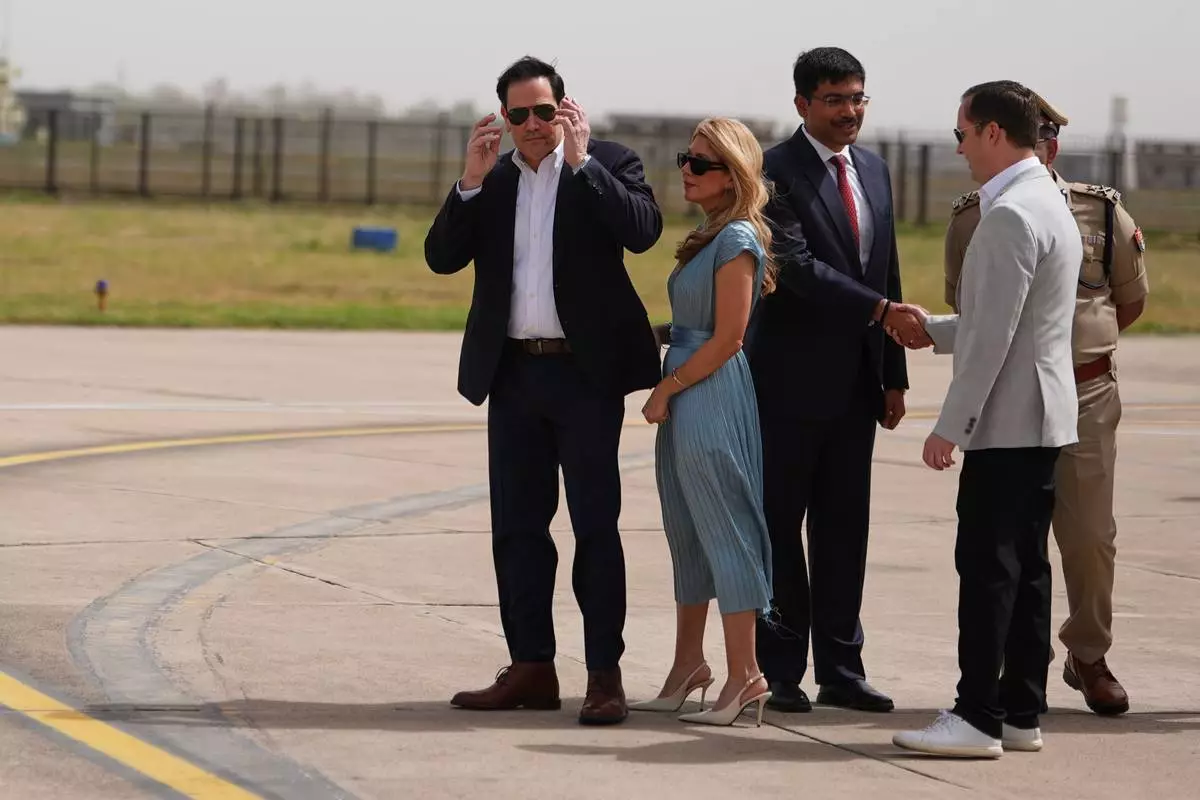
United States Secretary of State Marco Rubio waits with his wife Jeanette Rubio after landing in Agra, India, Monday, May 25, 2026. (AP Photo/Julia Demaree Nikhinson, Pool)
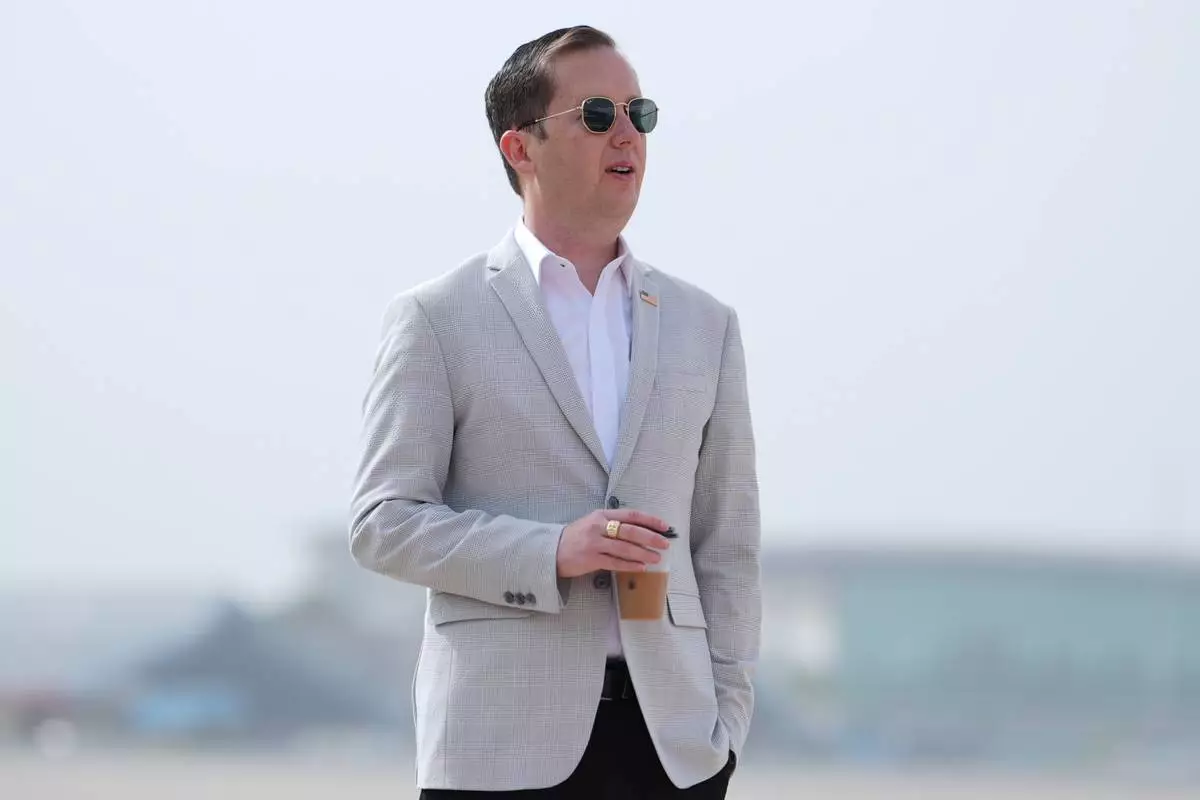
U.S. Special Envoy for South and Central Asia and Ambassador to India Sergio Gor waits to join United States Secretary of State Marco Rubio at Indira Gandhi International Airport in New Delhi, India, Monday, May 25, 2026. (AP Photo/Julia Demaree Nikhinson, Pool)
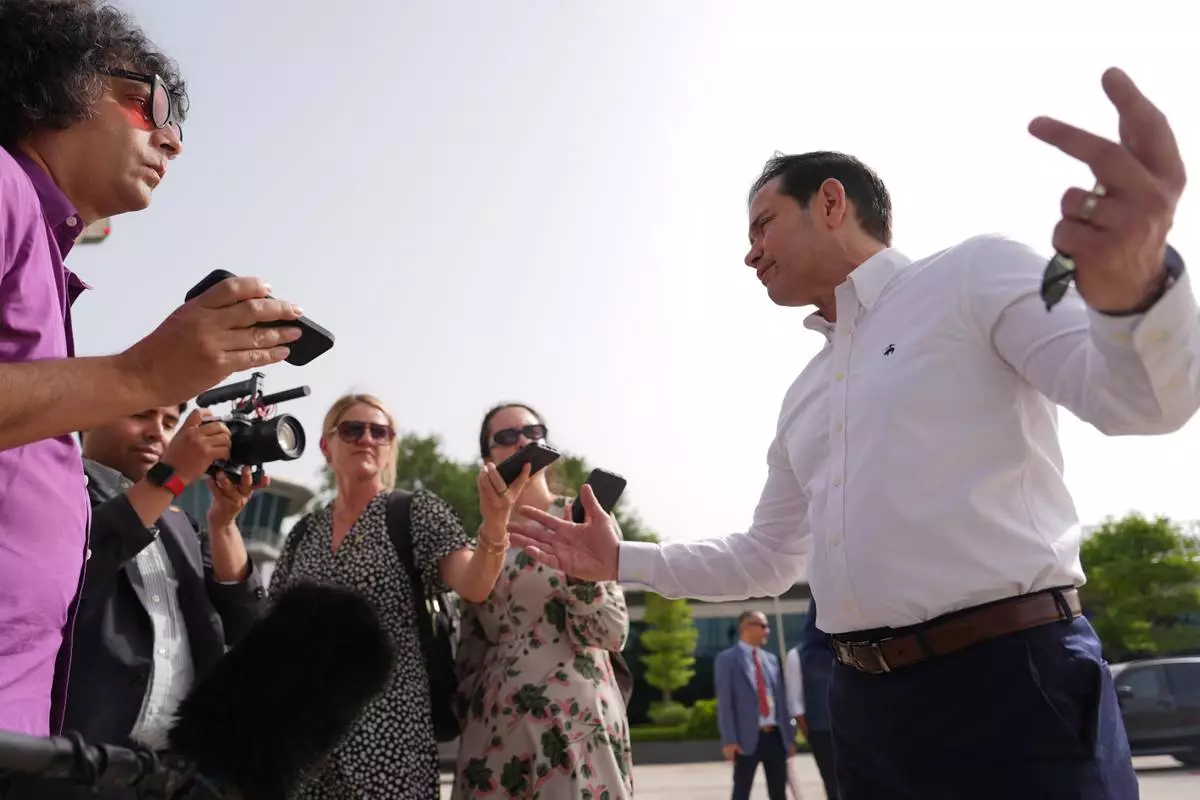
United States Secretary of State Marco Rubio speaks to the journalists before boarding his plane at Indira Gandhi International Airport in New Delhi, India, Monday, May 25, 2026. (AP Photo/Julia Demaree Nikhinson, Pool)
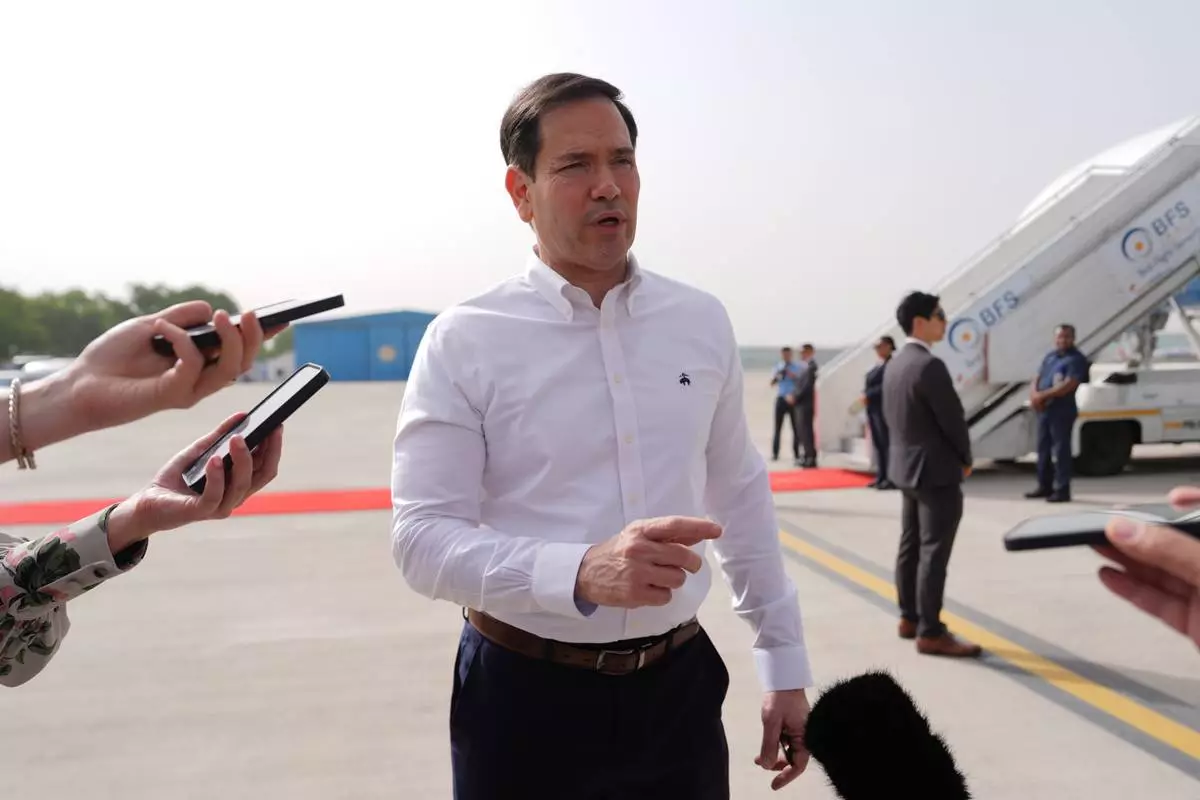
United States Secretary of State Marco Rubio speaks to the journalists before boarding his plane at Indira Gandhi International Airport in New Delhi, India, Monday, May 25, 2026. (AP Photo/Julia Demaree Nikhinson, Pool)