
Not to kick off this review with a spoiler alert, but after seeing "What Men Want" the answer to what men want is probably the same as what women want: Not to be ripped off by yet another dubious rom-com like this.
Taraji P. Henson tries a little too hard in a predictable, gender-switching remake of the Nancy Meyers-led 2000 romantic comedy "What Women Want." This time, a woman unlocks the power to read men's minds. The premise has potential but "What Men Want " is not funny enough, it's poorly edited and blunt when it could have been sharp.
Henson plays Ali, a hard-elbowing, high-powered sports agent who is bitter and brash — "OK, Bridezilla, take a Xanax," she tells one of her three best friends. To a co-worker, she says: "I'm going to need you to calm down, baby man-child." There's a weird '90s feel to the look and dialogue of this film, accentuated by a dusty soundtrack that features hits by TLC, Bell Biv DeVoe, 2 Live Crew, En Vogue and Salt-N-Pepa.
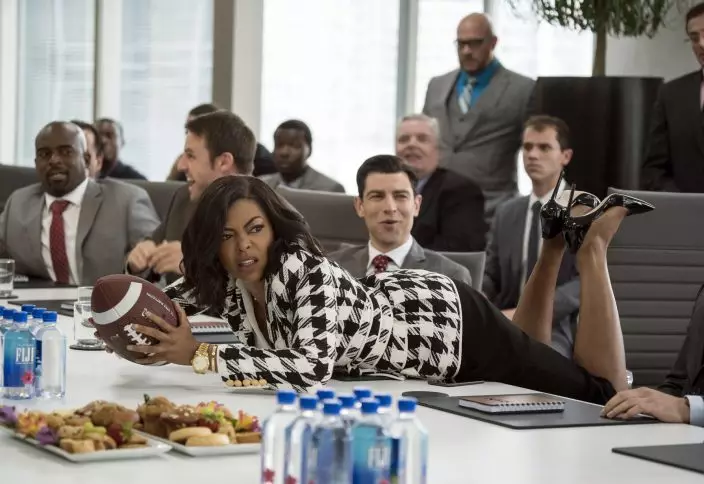
This image released by Paramount Pictures shows Taraji P. Henson in a scene from "What Men Want." (Jess MiglioParamount Pictures via AP)
Ali is repeatedly passed up for promotion at her smarmy, all-male firm, which seems to leak testosterone in buckets. "You don't connect well with men," she is told by the boss. To make partner, Ali vows to land the biggest sports target of the season: The No. 1 NBA draft pick. Along the way, she somehow bangs her head and then can hear the inner thoughts of any man nearby. That happens about 30 minutes in, which is an eternity of set-up, including a flabby and pointless scene at a club.
And what are men secretly thinking about? According to this film, it is fears of being fat, feeling lame, worry about bodily functions, trying not to completely geek out about little things, a near-universal adoration of arena skyboxes, mundane stuff like lost keys, and the occasional horrific X-rated bluntness.
If you expected director Adam Shankman and writers Tina Gordon, Peter Huyck and Alex Gregory to find rich material to discuss male privilege in these #MeToo days, think again. Men actually come off not so bad here. The women, though, end up worse: There's a scene with all of Ali's best friends wrestling during a horrific, weave-yanking cat fight at a church that's the nadir of filmmaking in 2019.
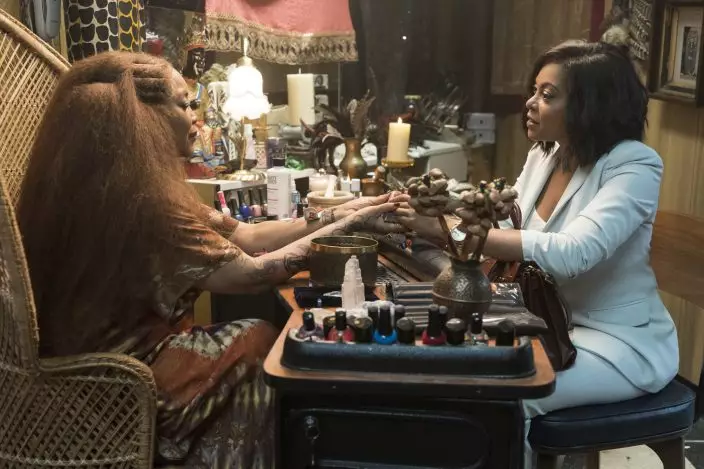
This image released by Paramount Pictures shows Erykah Badu, left, and Taraji P. Henson in a scene from "What Men Want." (Jess MiglioParamount Pictures via AP)
Ali learns to use nuggets of insight into co-workers' minds to gain an advantage and falls for a boyfriend whose inner thoughts seem to be pure. But Ali also learns that it's not what's in men's minds that really counts. It's what's in their HEARTS. And winning, if you're a nasty person, DOESN'T matter. Cue the montage of her fixing all the things she just did wrong. (Just not this film.)
Henson does as best she can with this material, attempting Lucille Ball-level physical comedy. But she's laboring and often overshadowed by the one unpredictable spark in the film — provided by Erykah Badu. The singer-songwriter is in rare form here as an off-kilter fortune teller, shooting electricity in every scene, while small roles by Tracy Morgan and Pete Davidson are oddly flat. (If you're still bored, there's always playing Cameo Bingo: Look for appearances by sports figures Mark Cuban, Shaquille O'Neal, Lisa Leslie, Grant Hill and Karl-Anthony Towns.)
The script is uneven and heavy, with some of the only jokes coming from Badu and a few movie references to "Black Panther" and "Get Out." Mostly, this is a film that still thinks people having a hard time navigating a beaded curtain is funny and that surprise S&M sex is hysterical.
Another thing that seems forced in "What Men Want" is the tremendous amount of alcohol sucked down. There's day-drinking, blackout nights and cocktails at work. The cast drink margaritas, whiskey neat, wine, beer and vodka and cranberry. Toward the end, it seems like every scene had some booze, a lazy way to create mischief. But, come to think of it, if alcohol was offered to the audience, this whiff of a film would be better received.
"What Men Want," a Paramount Pictures release, is rated R for "for language and sexual content throughout, and some drug material." Running time: 117 minutes. One star out of four.
MPAA definition of R: Restricted. Under 17 requires accompanying parent or adult guardian.
Online: https://www.paramount.com/movies/what-men-want
Mark Kennedy is at http://twitter.com/KennedyTwits