Skip to Content Facebook Feature Image

Why home maintenance deserves a spot in the annual health and budget plans

TECH

Why home maintenance deserves a spot in the annual health and budget plans
TECH

TECH

Why home maintenance deserves a spot in the annual health and budget plans

2026-01-04 21:00 Last Updated At:01-05 13:20

Many people start the new year thinking about ways to improve their health, be more organized and manage their finances. Experts say there is one area that touches on each of those resolutions — home care.

Early and routine home maintenance goes beyond fixing visible damage. It helps ensure a healthy living environment, extends the life of a home and can protect its long-term value, according to real estate professionals. Planning ahead for regular upkeep and for unexpected emergencies can reduce the risk of costly repairs later and help spread expenses more evenly throughout the year.

According to research by the U.S. Department of Energy and the Environmental Protection Agency, about three-quarters of existing homes are expected to still be in use in 2050.

“Maintaining the homes that we have is really essential to protecting our health and our well-being,” said Amanda Reddy, executive director of the National Center for Healthy Housing, an organization that researches and advocates for reducing housing-related health disparities.

Despite who owns the property, Reddy says, keeping residences dry, clean, pest-free, well-ventilated and safe is the goal, which can mean different types of maintenance depending on the type of home, where someone lives and the time of year. Here's what experts say about home care and what tasks to put on the checklist this year:

On average, Americans spend about 90% of their time indoors, 70% of that time inside of a residence, according to the National Human Activity Pattern Survey.

“It's not just that we spend time indoors, but at home. If you are older, very young, have health concerns, or work from home, it is likely more than that,” Reddy said, emphasizing the reason why home care is a valuable investment.

What many people think of maintenance includes addressing water and gas leaks, pest infestations, cracks and other major repairs, but home builders say not everything needs a professional and can include actions as simple as wiping counters and sweeping floors of food debris, opening windows for better ventilation or clearing out clogged filters and drains.

Residents should also consider the needs of those living in the home, commonly used spaces such as kitchens, bathrooms and bedrooms, and typically neglected areas like attics and basements. Reddy says “anywhere we’re spending time” or often ignoring and possibly missing necessary repairs should be prioritized.

“At the end of the day, doing any preventative maintenance at all matters more than doing it perfectly or at exactly the right time,” Reddy said. “But timing can make a big difference. A lot of these tasks are seasonal or annual, and you’re not just going to do it one time. Homes are stressed differently by different times of the year, so seasonal maintenance helps us catch problems before they’re made worse by environmental stressors.”

When it comes to maintenance, planning and preparing for anticipated and routine changes in the environment can help mitigate natural wear and tear on the exterior of homes and also create healthy conditions inside — where most people shelter from extreme weather events.

“What happens outside the house rarely stays outside the house. What’s outside gets inside, what’s inside builds up," Reddy said, adding that fluctuating outdoor conditions put stress on appliances and systems at different times of the year. “For most people, the seasonal rhythm not only makes sense because of those stressors, it also just is more realistic and effective than trying to tackle a long, overwhelming checklist all at once."

For example, experts say the best time to prepare for cold and wet climate, storms and other natural disasters is to address concerns before temperatures drop. Similarly, it is recommended that residents address systems in homes that work to reduce the effects of extreme high temperatures, dry and drought conditions and associated risks like wildfires and air quality in the offseason.

Professional guidance from home inspectors, builders and real estate agents says spring and summer tasks should focus on preparing for warmer weather. Experts recommend checking air conditioning systems, cleaning dryer vents to prevent fire hazards, testing sprinkler systems, tending to gardens and plants around homes' exterior and inspecting appliances, electrical equipment and plumbing fixtures. Experts also say spring is a good time to clean and do any house projects that involve painting or remodeling since rain is unlikely to cause delays during that time.

In the fall and winter months, experts suggest focusing on temperature control and air quality measures as people tend to shelter indoors during incoming colder weather. American Home Inspectors Training guidance says check heating systems, clean air filters, make sure carbon monoxide detectors are working, seal air leaks, prioritize pest control, clean and repair roofs and chimneys, and inspecting drainage options in and around homes.
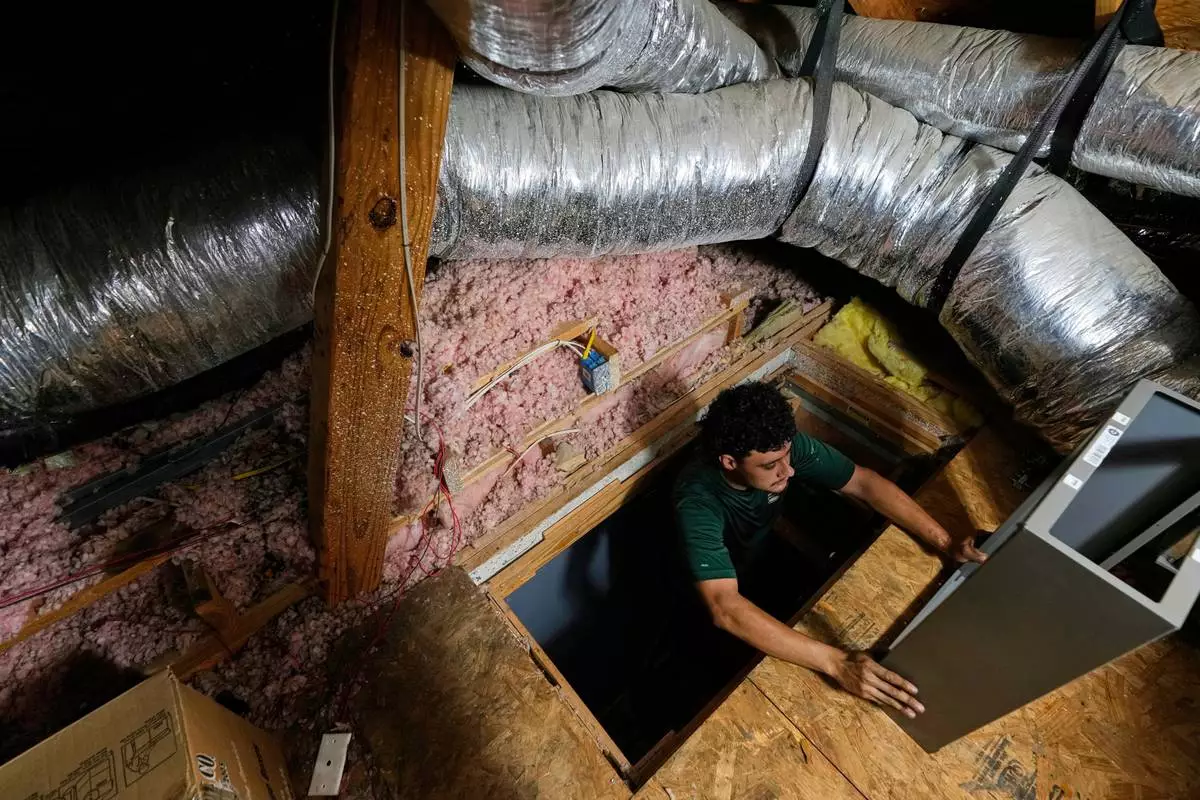
FILE - An installer climbs into an attic with parts of a new HVAC system that was installed in a residential home in Fate, Texas, on Wednesday, July 30, 2025. (AP Photo/Tony Gutierrez, File)


FILE - An installer climbs into an attic with parts of a new HVAC system that was installed in a residential home in Fate, Texas, on Wednesday, July 30, 2025. (AP Photo/Tony Gutierrez, File)

COLUMBUS, Ohio (AP) — In rain, snow and bitter cold, a steady drumbeat of small protests have been held in recent months on the Ohio State University main campus with a single goal in mind: removing billionaire retail mogul Les Wexner's name from buildings where it's emblazoned.

At issue — for union nurses at OSU's Wexner Medical Center, for former athletes at the Les Wexner Football Complex, and for some student leaders who may walk past the Wexner Center for the Arts near the campus oval — is Wexner's well-documented association with the late sexual predator Jeffrey Epstein.

Similar cries are arising over a Wexner-named building at Harvard University and others around the country whose names appeared in the Epstein files, including Steve Tisch, Casey Wasserman, Glenn Dubin and Howard Lutnick.

It's all part of the backlash across higher education against figures with ties to Epstein, who cultivated an extensive network including powerful people in the arts, business and academia. Scrutiny has landed on university donors as well as several academics whose emails with Epstein surfaced in the latest files, including some who have resigned.

Wexner hasn't been charged with any crime in connection with Epstein, the one-time financial adviser by whom he says he was “duped.”

But a group of former Ohio State athletes who survived a sweeping sexual abuse scandal at the school argues that the retired L Brands founder 's generosity to his alma mater is now tainted by the knowledge that Epstein was entangled in many of his family's spending decisions, including around the football complex's naming.

“Ohio State University cannot credibly separate itself from these facts, nor can it justify continuing to honor Les Wexner with an athletic facility,” their naming removal request read. It went on, “To do so is to ignore the voices of survivors, former athletes, and the broader community who expect accountability, transparency, and moral leadership.”

At Harvard, a group of students and faculty at the prestigious Kennedy School has targeted the Leslie H. Wexner Building and the Wexner-Sunshine Lobby. The renaming request submitted in March cites Wexner’s “strong ties to Epstein” and argues Epstein profited off Wexner, “which enabled Epstein to use his wealth and power to traffic and abuse children and women.”

Some Harvard students and alumni also want the Farkas name removed from Farkas Hall, which hosts the Hasty Pudding Theatricals Man and Woman of the Year. The building was renamed in 2011 following a significant donation from Andrew Farkas, graduate chairman of the Hasty Pudding Institute, in honor of his father.

Farkas had a longtime personal and business relationship with Epstein, including co-owning a marina with him in the Caribbean. He also repeatedly asked Epstein to donate to Hasty Pudding. Between roughly 2013 and 2019, Epstein regularly donating $50,000 annually to secure top-tier donor status, for a total of more than $300,000.

“As I’ve said repeatedly, I deeply regret ever having met this individual, but at no time have I conducted myself inappropriately,” Farkas said in a statement.

Pushback against buildings named for Epstein associates and others named in the Epstein files is growing on some U.S. campuses.

Just last weekend, the student body at Haverford College in Pennsylvania voted to urge President Wendy Raymond to forge ahead with the renaming process for the Allison & Howard Lutnick Library. The building is named for the U.S. commerce secretary who has faced resignation calls over his relationship with Epstein.

Raymond had said in a February open letter that she wasn't ready to do that. In a statement to The Associated Press following Sunday’s vote, Raymond said she respected the process and would respond to the resolution within the customary 30-day period.

At Ohio State, pleas against the Wexner name are making their way through a five-step review procedure, most of which takes place outside public view and with no set timeline. The university's new president, Ravi Bellamkonda said, “I think the process is thorough, fair, and open, and I will promise you that we will give each request a full consideration.”

A spokesman for Harvard confirmed the school has received the Wexner-related name removal request but would not comment further. It would be the university's second name change, after the John Winthrop House, which bore the name of a Harvard professor and a like-named ancestor, was changed to Winthrop House in July over their connections to slavery.

Tufts University, home to the Tisch Library and the Steve Tisch Sports and Fitness Center, said it continues to look at the matter. The library has moved to clarify that it was not named for Steve, but, in 1992, for his father Preston Tisch, an honored alum. The sports center removed a set of Steve Tisch's handprints during spring break. The university said that was part of a planned renovation.

UCLA's Wasserman Football Center and Stony Brook University's Dubin Family Athletic Performance Center also are named for individuals who appear in the files.

The current clamor bears some resemblance to the controversy that surrounded the wealthy Sackler family's culpability in the deadly opioid crisis, because in both cases the institutions involved had received vast sums from the family.

Some major institutions — including museums in New York and Paris, Tufts and the University of Oxford in England — did remove the Sackler name, but Harvard chose not to. In a 15-page report explaining its 2024 decision, the university said the legacy of Arthur M. Sackler, whose company Purdue Pharma made the potent opioid OxyContin, was “complex, ambiguous and debatable.”

The Epstein-tainted names are on campus buildings also are typically generous donors, as well as alumni.

Wexner, his wife Abigail and their charities have given Ohio State well over $200 million over the years, for example. That included $100 million to benefit the Wexner Medical Center; at least $15 million for the Wexner Center, a contemporary art museum named for Wexner's father, Harry; and $5 million split with an Epstein-run foundation toward construction of the football complex. The Wexners have given another $42 million to the Harvard Kennedy School.

Anne Bergeron, a museum consultant and author who specializes in the ethics of building naming rights in the cultural sector, said universities are serious about their gift acceptance standards while also recognizing that the conduct of individual donors may be judged differently over time.

“It’s no surprise that a lot of these situations arise within the university sphere, because with students — especially the younger generation — there is virtually no tolerance for being associated with anyone who doesn’t represent the best of humanity,” she said

She called this “a moment of reckoning” for universities and said they have to guard against the appearance of a quid pro quo in their building namings.

Michael Oser, a Columbus-area resident, articulated the frustration of some defenders of retaining the Wexner name in a recent letter-to-the-editor of The Columbus Dispatch.

“OSU took the money. Built the buildings. Cut the ribbons. Smiled for the photos There were no formal ‘morality clauses’ attached back then, just gratitude and applause,” he wrote. “Now, years later, some want to play moral referee while the university keeps the cash and the concrete. That’s not accountability. That’s convenience.”

Lauren Barnes, a student in the Kennedy School's master's program leading the effort to remove Wexner's name, said she struggles most days as a survivor of sexual abuse and the mother of a 14-year-old to walk into a building with a name linked to Epstein.

“Thinking about all the children in this world that deserve safety and also all the survivors on campus that have to walk under the Wexner name, I know what that’s like to have my heart race and my hands get sweaty,” she said. “I hate that anyone else has to have that feeling walking under that name and just dealing with it kind of everywhere on campus.”

One protester at Ohio State, Audrey Brill, told a local ABC affiliate that it now “feels gross” thinking of women delivering babies at OSU's Wexner Medical Center “given everything that we’re learning about where this money went” — and she feels removing Wexner's name could help.

Some protesters also want the name of Dr. Mark Landon, a prominent Ohio State gynecologist who received five-figure quarterly payments from Epstein between 2001 and 2005, removed from a visitor’s lounge in the hospital’s new $2 billion, 26-story tower. Landon have said the money was for biotech investment consulting for Wexner, not health care for Epstein or any of his victims.

This story corrects headlines, summary and story to replace “Epstein associates” with individuals “whose names appeared in the Epstein files.”

Casey contributed from Boston.

A sign is displayed on Farkas Hall, which was endowed by Harvard University alum Andrew Farkas, Friday, Jan. 31, 2025, in Cambridge, Mass. (AP Photo/Charles Krupa, File)

A sign is displayed on Farkas Hall, which was endowed by Harvard University alum Andrew Farkas, Friday, Jan. 31, 2025, in Cambridge, Mass. (AP Photo/Charles Krupa, File)

A sign is seen outside of the Les Wexner Football Complex at the Wood Hayes Athletic Center, Monday, March 30, 2026, in Columbus, Ohio. (AP Photo/Patrick Aftoora-Orsagos)

A sign is seen outside of the Les Wexner Football Complex at the Wood Hayes Athletic Center, Monday, March 30, 2026, in Columbus, Ohio. (AP Photo/Patrick Aftoora-Orsagos)

The Ohio State University Wexner Medical Center is seen Monday, March 30, 2026, in Columbus, Ohio. (AP Photo/Patrick Aftoora-Orsagos)

The Ohio State University Wexner Medical Center is seen Monday, March 30, 2026, in Columbus, Ohio. (AP Photo/Patrick Aftoora-Orsagos)

Lauren Barnes, a student in the Kennedy School's master's program, stands in front of the Leslie H. Wexner Building at Harvard University in Cambridge, Mass., on Wednesday, April 1, 2026. (AP Photos/Michael Casey)

Lauren Barnes, a student in the Kennedy School's master's program, stands in front of the Leslie H. Wexner Building at Harvard University in Cambridge, Mass., on Wednesday, April 1, 2026. (AP Photos/Michael Casey)

The Les Wexner Football Complex at the Wood Hayes Athletic Center is seen Monday, March 30, 2026, in Columbus, Ohio. (AP Photo/Patrick Aftoora-Orsagos)

The Les Wexner Football Complex at the Wood Hayes Athletic Center is seen Monday, March 30, 2026, in Columbus, Ohio. (AP Photo/Patrick Aftoora-Orsagos)

Recommended Articles