

The Trump administration used an annual report on human rights abuses to call out close partner Saudi Arabia on Wednesday over the killing of U.S.-based journalist Jamal Khashoggi last year.
The State Department annual global human rights report said The Washington Post columnist was killed by agents of the kingdom while he was inside the Saudi Consulate in Istanbul. But it drew no conclusion as to who was responsible, despite the belief of intelligence agencies and lawmakers that Saudi Crown Prince Mohammed bin Salman ordered the murder. The report noted Saudi Arabia's Public Prosecutor's Office has indicted 11 suspects and said 10 people were under investigation but has not released more information.
"At year's end the PPO had not named the suspects nor the roles allegedly played by them in the killing, nor had they provided a detailed explanation of the direction and progress of the investigation," it said. The report added that the murder was one of several cases in which "the government or its agents engaged in arbitrary or unlawful killings,"

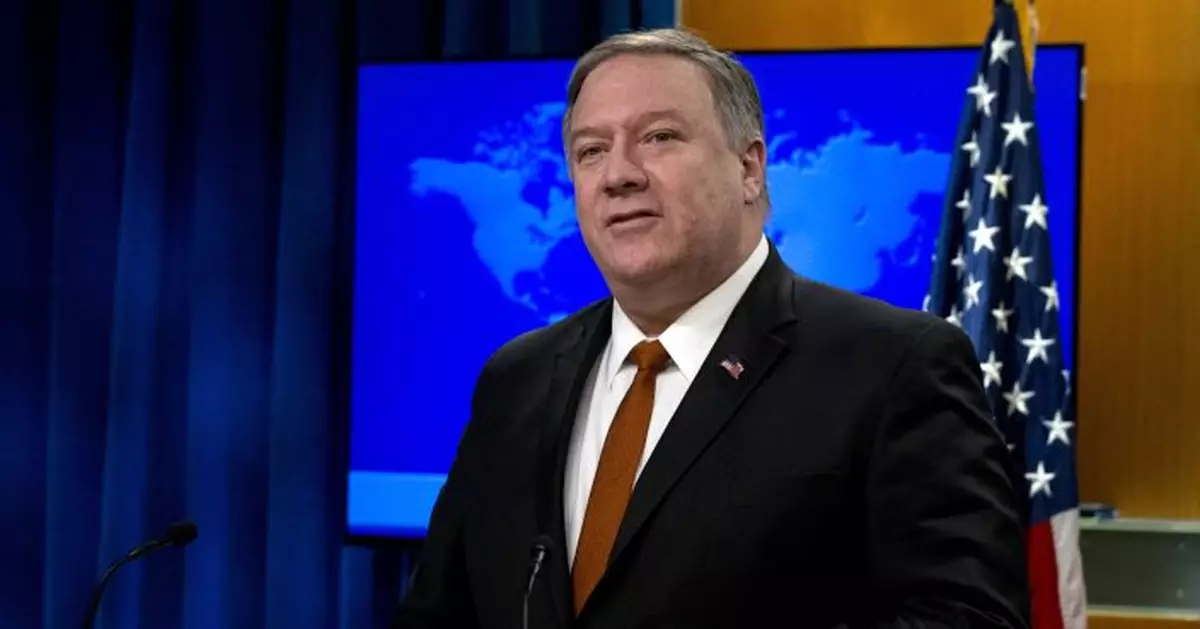
Michael Kozak, ambassador for the Bureau of Democracy, Human Rights, and Labor speaks during the release of the 2018 Country Reports on Human Rights Practices at the Department of State in Washington, Wednesday, March 13, 2019. (AP PhotoJose Luis Magana)
The report said a range of other human rights abuses have taken place in Saudi Arabia, including the arrest of at least 20 prominent women's rights activists, executions for nonviolent offenses, forced disappearances and torture of prisoners. It also highlighted issues related to the Saudi military operation in Yemen, saying that airstrikes by the Saudi-led coalition that is fighting Iranian-backed rebels "resulted in civilian casualties and damage to infrastructure on a number of occasions."
It also notes some gains in the monarchy, including that women were allowed to vote and run as candidates in municipal elections for the first time.
Khashoggi had been living in Virginia in self-imposed exile as he wrote columns critical of the Saudi government under the crown prince, the de factor leader.
His killing in October caused tensions to soar between the U.S. and Saudi Arabia, with members of Congress saying they believed the crown prince was behind the operation, an allegation the Saudi government has denied. President Donald Trump has been reluctant to place blame on a country that is central to his Middle East policy strategy.
In presenting the report, Secretary of State Mike Pompeo said the U.S. "will expose violations of human rights wherever they occur." He did not mention Saudi Arabia in his remarks, but he also made clear that the Trump administration will deal with foreign countries no matter how poor their rights record to advance national interests.
"The policy of this administration is to engage with other governments, regardless of their record, if doing so will further U.S. interests," Pompeo said, in an apparent effort to limit criticism of Trump's outreach to serial rights abuser North Korea.
In addition to Saudi Arabia, the report pointed out abuses committed by NATO ally Turkey.
Turkey arbitrarily arrested tens of thousands of lawmakers, lawyers and journalists for alleged terrorism ties or legitimate speech and did not look thoroughly into abuse allegations. "The government continued to take limited steps to investigate, prosecute, and punish members of the security forces and other officials accused of human rights abuses; impunity for such abuses remained a problem," the report said.
Human rights groups lambasted the report as inadequate even with Pompeo's qualification that the administration must work to promote U.S. national interests.
"From its shielding of Saudi leaders from accountability over the murder of Jamal Khashoggi, to its cozy relationship with NATO allies trending towards authoritarianism, the Trump administration seems disinterested in its own advice," said Human Rights First. "With respect to the Khashoggi killing, the administration's continued insistence that it is waiting on a Saudi-led investigation is laughable, given the complete absence of rule of law in that country."
The report notes abuses in a number of familiar U.S. adversaries like China, Cuba, Iran, North Korea, Myanmar and Russia, all of which were cited for major violations, including forced disappearances, torture, arbitrary killings and arrests and political prosecutions.
Pompeo said China "is in a league of its own when it comes to human rights abuses," citing mass detentions of hundreds of thousands of Muslims and ethnic Kazakhs as well as repression of Tibetans, Christians and other religious minorities.
In Burma, the report said evidence had surfaced to support allegations that the military carried out a campaign of ethnic cleansing against Rohingya Muslims in 2017 and it accused the government of preventing humanitarian assistance from reaching those displaced.
In Iran, the report said "the government's human rights record remained extremely poor and worsened in several key areas." Those included executions for crimes without fair trials and forced disappearances.
Russia was cited for abuses in Ukraine, as well as authoritarian moves against opposition figures.
Closer to home, the report identified widespread abuses in Cuba and Venezuela.
"Government officials, at the direction of their superiors, committed most human rights abuses and failed to investigate or prosecute those who committed the abuses," the report for Cuba said. "Impunity for the perpetrators remained widespread."
In Venezuela, where the administration no longer recognizes President Nicolas Maduro as the country's legitimate leader, the report said abuses included extrajudicial killings by security forces, torture, harsh and life-threatening prison conditions, restrictions on free expression and the press, sham elections, pervasive corruption and impunity, trafficking in persons and child labor. "The government took no effective action to investigate officials who committed human rights abuses, and there was impunity for such abuses," it said.