Skip to Content Facebook Feature Image

Jimmy Page reflects on Led Zeppelin's legacy and its sound

ENT

Jimmy Page reflects on Led Zeppelin's legacy and its sound
ENT

ENT

Jimmy Page reflects on Led Zeppelin's legacy and its sound

2019-04-19 23:53 Last Updated At:04-20 00:00

When Jimmy Page was a young student, he had already developed such an inseparable relationship with his guitar that school officials would often confiscate it.

"It would be given back at the end of the day. And this was quite repetitive," Page said.

That dedication worked out pretty well for Page, who took Led Zeppelin to the zenith as one of the most powerful outfits in rock history.
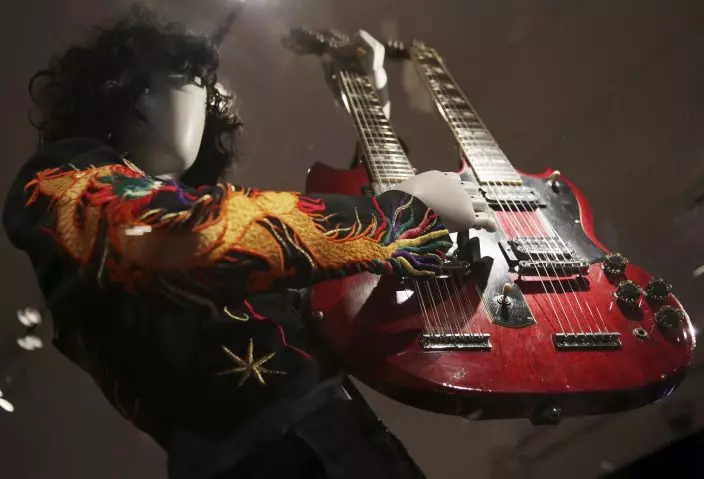
This April 1, 2019 file photo shows a double-neck guitar played by Jimmy Page of Led Zeppelin displayed at the exhibit "Play It Loud: Instruments of Rock & Roll," at the Metropolitan Museum of Art in New York. The exhibit, which showcases the instruments of rock and roll legends, runs until Oct. 1, 2019. (AP PhotoSeth Wenig, File)

This April 1, 2019 file photo shows a double-neck guitar played by Jimmy Page of Led Zeppelin displayed at the exhibit "Play It Loud: Instruments of Rock & Roll," at the Metropolitan Museum of Art in New York. The exhibit, which showcases the instruments of rock and roll legends, runs until Oct. 1, 2019. (AP PhotoSeth Wenig, File)

Now some of the instruments that he used to create that Zeppelin sound are on display at an exhibition called "Play It Loud: Instruments of Rock & Roll" at the Metropolitan Museum of Art in New York.

Seven of Page's guitars, a few costumes and some of his equipment have been loaned to the exhibit, alongside dozens of guitars, drums and memorabilia from such legends as Chuck Berry, Jerry Lee Lewis, Bo Diddley and John Lennon.

While visiting the exhibition, Page sat down with The Associated Press to discuss the band's legacy, why its music has endured and prospects for another reunion concert.

AP: How frustrating are the Led Zeppelin reunion questions? You weren't completely happy with Live Aid or the 40th anniversary concert for Atlantic Records in 1988. What about the 2007 concert in London?

Page: I'm rather pleased that we did it, because we sort of looked still similar to what we looked now, and, yeah, we did a really good job. But I don't think there's going to be another one.

AP: Let's talk about your earliest recollection with the guitar.

Page: I was taking my guitar to school so that I could play at recess because I became so involved with it, we became inseparable. I had to do my academic studies, that was the deal I had with my dad. And the rest of the time I could play guitar. So, I took that one step further: I would take that to school and play at recess.

AP: Your guitar work for Led Zeppelin was far ahead of the curve...

Page: I'd like to think that it was, because the first album, I sort of knew, as we were doing the tracks, exactly how I was going to layer everything and the textures of them.... There's a variety of moods on 'Led Zeppelin I.' So, again, it was me challenging and pushing as far as I possibly could, not even thinking of my limitations, just going beyond, beyond, beyond.

AP: What's it like having your guitars in the Met?

Page: You approach the gallery through Greco-Roman statues, and then the first thing you see is Chuck Berry's guitar. I said, 'What? The original one, the blond one,' and they said, 'Yes.' And I said, 'What would you like? Tell me what you want to help this along and you can have whatever it is that you want.'

AP: You gave them your Sovereign Harmony acoustic guitar. How important is it?

Page: That guitar I had way back in the early '60s. And it's been with me all the way through, to the point where I used it as a writing tool... That particular guitar is the vehicle whereby the first album for Led Zeppelin is written, the second album is written, the third album is written, the fourth album is written and it's the guitar that actually culminates with playing 'Stairway to Heaven.'

AP: Why has the Led Zeppelin catalogue endured?

Page: It approaches so many different styles and moods and it's very passionate. And it also very gentle. And it's very hard. And it's extremely dynamic. If anybody wants to be playing the guitar, the harmonica, the drums, the bass, the keyboards — well, it's all there. And it's organic music where everyone is playing together. I think it's a great legacy to have produced, to be honest.

Follow John Carucci at http://www.twitter.com/jacarucci
WASHINGTON (AP) — The U.S. military said Wednesday it struck five alleged drug-smuggling boats over two days, killing a total of eight people while others jumped overboard and may have survived.

U.S. Southern Command, which oversees South America, did not reveal where the attacks on Tuesday and Wednesday occurred. Previous attacks have been in the Caribbean Sea and in the eastern Pacific Ocean.

A video of Tuesday's attack posted by Southern Command on social media shows three boats traveling in a close formation, which is unusual, and the military said they were in a convoy along known narco-trafficking routes and “had transferred narcotics between the three vessels prior to the strikes.” The military did not provide evidence to back up the claim.

The military said three people were killed when the first boat was struck, while people in the other two boats jumped overboard and distanced themselves from the vessels before they were attacked. Southern Command said it immediately notified the U.S. Coast Guard to activate search and rescue efforts.

Southern Command's statement did not say whether those who jumped off the boats were rescued.

Calling in the Coast Guard is notable because the U.S. military drew heavy scrutiny after U.S. forces killed the survivors of an attack in early September with a follow-up strike to their disabled boat. Some Democratic lawmakers and legal experts said the military committed a crime, while the Trump administration and some Republican lawmakers say the follow-up strike was legal.

U.S. forces attacked two more boats on Wednesday, killing five people who were allegedly smuggling drugs along known trafficking routes, Southern Command said in a separate statement. It did not provide evidence of the alleged trafficking or reveal the body of water in which the attacks occurred. Videos posted with the statement on social media showed a boat in the water and explosions.

The latest attacks bring the total number of known boat strikes to 35 and the number of people killed to at least 115 since early September, according to numbers announced by the Trump administration.

President Donald Trump has justified the attacks as a necessary escalation to stem the flow of drugs into the United States and asserted that the U.S. is engaged in an “armed conflict” with drug cartels.

Along with the strikes, the Trump administration has built up military forces in the region as part of an escalating pressure campaign on Venezuelan President Nicolás Maduro, who has been charged with narco-terrorism in the United States.

Meanwhile, the CIA was behind a drone strike last week at a docking area believed to have been used by Venezuelan drug cartels, according to two people familiar with details of the operation who requested anonymity to discuss the classified matter.

It was the first known direct operation on Venezuelan soil since the U.S. began strikes in September, a significant escalation in the administration’s pressure campaign on Maduro’s government.

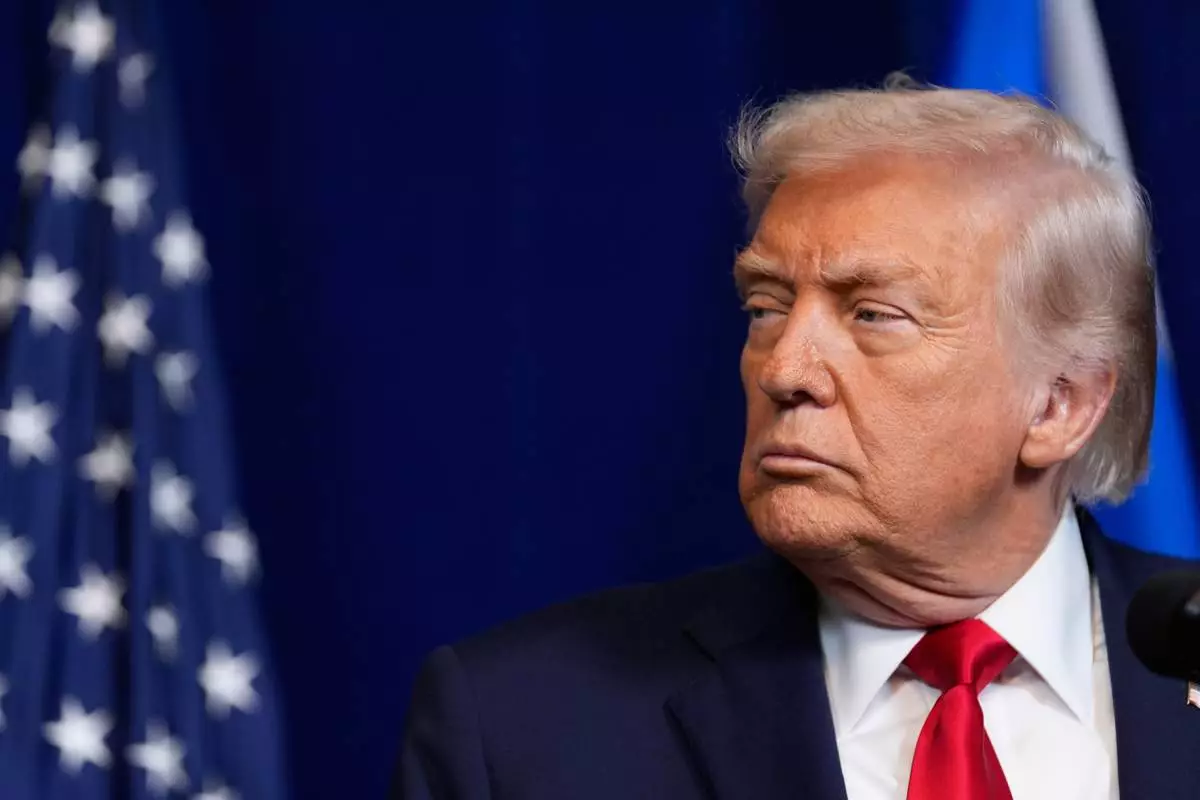
President Donald Trump listens during a news conference with Israel's Prime Minister Benjamin Netanyahu at Mar-a-Lago, Monday, Dec. 29, 2025, in Palm Beach, Fla. (AP Photo/Alex Brandon)

President Donald Trump listens during a news conference with Israel's Prime Minister Benjamin Netanyahu at Mar-a-Lago, Monday, Dec. 29, 2025, in Palm Beach, Fla. (AP Photo/Alex Brandon)

Recommended Articles