Indigenous leaders met with lawmakers to discuss land rights and the role of their communities in the protection of the environment Thursday amid protests against the policies of Brazil's new far-right president.
The discussions in the Chamber of Deputies came on the second day of the Free Land Encampment, an annual three-day protest by indigenous groups held in Brazil's capital.
Click to Gallery
A Guarani man poses for a selfie while sitting in the lower house chamber in Brasilia, Brazil, Thursday, April 25, 2019. Brazil's lower house received indigenous leaders to discuss land rights and the Chamber of Deputies' role in the protection of the environment. Discussions held Thursday were occurring on the sidelines of an annual three-day protest known as the Free Land Encampment in Brasilia. (AP PhotoEraldo Peres)
Indigenous leaders meet with lawmakers to discuss land rights and the Chamber of Deputies' role in the protection of the environment in Brasilia, Brazil, Thursday, April 25, 2019. Discussions held in congressional chambers Thursday were occurring on the sidelines of an annual three-day protest known as the Free Land Encampment in Brasilia. (AP PhotoEraldo Peres)
Kayapo leader Raoni Metuktire, from left, Joenia Wapichana, the first indigenous congresswoman to be elected to Brazil's lower house, and indigenous leader Sonia Guajajara, attend a meeting with lawmakers to discuss land rights and the Chamber of Deputies' role in the protection of the environment in Brasilia, Brazil, Thursday, April 25, 2019. Discussions held in congressional chambers Thursday were occurring on the sidelines of an annual three-day protest known as the Free Land Encampment in Brasilia. (AP PhotoEraldo Peres)
An indigenous man poses for a selfie during a meeting with lawmakers to discuss land rights and the Chamber of Deputies' role in the protection of the environment in Brasilia, Brazil, Thursday, April 25, 2019. Discussions held in congressional chambers Thursday were occurring on the sidelines of an annual three-day protest known as the Free Land Encampment in Brasilia. (AP PhotoEraldo Peres)
An indigenous man films a meeting with lawmakers to discuss land rights and the Chamber of Deputies' role in the protection of the environment in Brasilia, Brazil, Thursday, April 25, 2019. Discussions held in congressional chambers Thursday were occurring on the sidelines of an annual three-day protest known as the Free Land Encampment in Brasilia. (AP PhotoEraldo Peres)
An young Xakriaba indian smiles during a meeting with lawmakers to discuss land rights and the Chamber of Deputies' role in the protection of the environment in Brasilia, Brazil, Thursday, April 25, 2019. Discussions held in congressional chambers Thursday were occurring on the sidelines of an annual three-day protest known as the Free Land Encampment in Brasilia. (AP PhotoEraldo Peres)
Indigenous men wait to attend a meeting with lawmakers to discuss land rights and the Chamber of Deputies' role in the protection of the environment in Brasilia, Brazil, Thursday, April 25, 2019. Discussions held in congressional chambers Thursday were occurring on the sidelines of an annual three-day protest known as the Free Land Encampment in Brasilia. (AP PhotoEraldo Peres)
National Assembly member Marina Silva, a former minister of environment, attends a meeting with indigenous leaders to discuss land rights and the Chamber of Deputies' role in the protection of the environment in Brasilia, Brazil, Thursday, April 25, 2019. Discussions held in congressional chambers Thursday were occurring on the sidelines of an annual three-day protest known as the Free Land Encampment in Brasilia. (AP PhotoEraldo Peres)
More than 1,000 indigenous people set up tents on the lawn of the congressional building Wednesday and began demonstrating against President Jair Bolsonaro's vow to encourage the expansion of mining and industrial farming in protected indigenous areas.
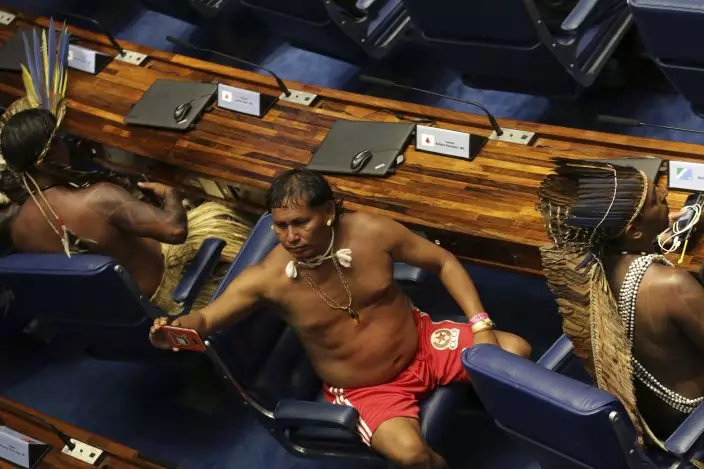
A Guarani man poses for a selfie while sitting in the lower house chamber in Brasilia, Brazil, Thursday, April 25, 2019. Brazil's lower house received indigenous leaders to discuss land rights and the Chamber of Deputies' role in the protection of the environment. Discussions held Thursday were occurring on the sidelines of an annual three-day protest known as the Free Land Encampment in Brasilia. (AP PhotoEraldo Peres)
"What is being disputed is the land," said Sonia Guajajara, an indigenous leader and former vice presidential candidate.
Bolsonaro "wants to give the indigenous territories to the United States, to foreigners, to explore our natural resources. We fight not only for our rights, our constitutional rights, but for our right to exist," Guajajara told The Associated Press on Wednesday night.
Soon after being sworn in Jan. 1, Bolsonaro transferred the authority for designating indigenous land and granting environmental licenses for businesses on indigenous reserves from the government's indigenous affairs agency to the Agriculture Ministry. He also shifted the indigenous affairs agency, FUNAI, from the Justice Ministry to a new ministry for family, women and human rights that is being led by an ultraconservative evangelical pastor.
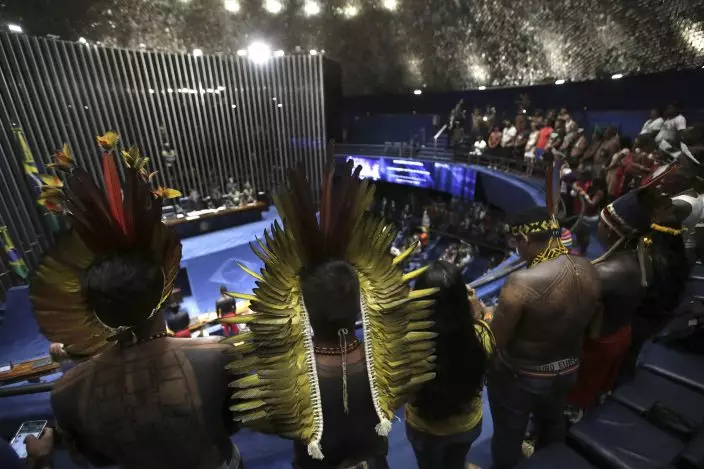
Indigenous leaders meet with lawmakers to discuss land rights and the Chamber of Deputies' role in the protection of the environment in Brasilia, Brazil, Thursday, April 25, 2019. Discussions held in congressional chambers Thursday were occurring on the sidelines of an annual three-day protest known as the Free Land Encampment in Brasilia. (AP PhotoEraldo Peres)
During an earlier meeting with Chamber of Deputies Speaker Rodrigo Maia on Wednesday, Ivan Valente, a lawmaker who is part of an indigenous lobbying group, said the president's changes were "leaving the fox taking over the chicken coop."
Maia responded by saying that he would push to undo the changes when the proposals come up for debate.
Putting FUNAI back under the Justice Ministry "seems to me the most reasonable, the most rational (decision) that guarantees more security for each one of you," Maia said.
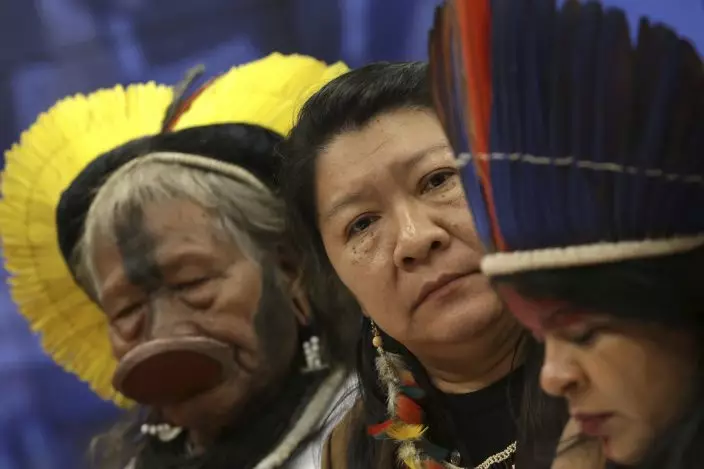
Kayapo leader Raoni Metuktire, from left, Joenia Wapichana, the first indigenous congresswoman to be elected to Brazil's lower house, and indigenous leader Sonia Guajajara, attend a meeting with lawmakers to discuss land rights and the Chamber of Deputies' role in the protection of the environment in Brasilia, Brazil, Thursday, April 25, 2019. Discussions held in congressional chambers Thursday were occurring on the sidelines of an annual three-day protest known as the Free Land Encampment in Brasilia. (AP PhotoEraldo Peres)
Guajajara told a cheering crowd that indigenous leaders will continue to oppose Bolsonaro's plans.
"We are in Brasilia to show that our resistance is strong and that our compromise with our peoples is bigger than any imposition. We are not going to accept these attacks with our arms crossed," Guajajara said.
At a gathering in 2017, police shot tear gas at indigenous protesters who fired back with bows and arrows.
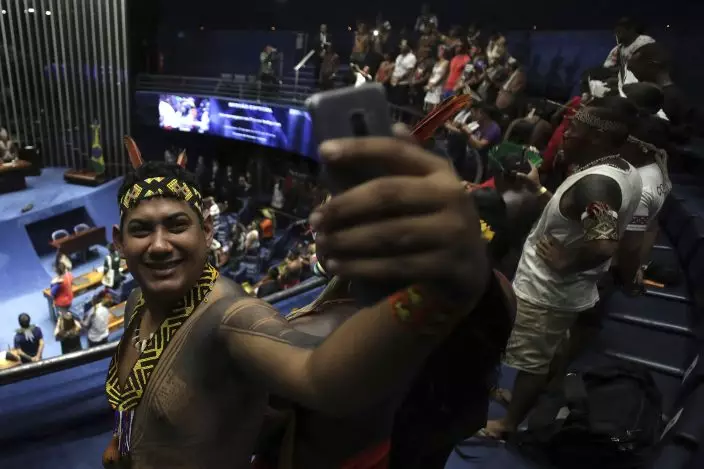
An indigenous man poses for a selfie during a meeting with lawmakers to discuss land rights and the Chamber of Deputies' role in the protection of the environment in Brasilia, Brazil, Thursday, April 25, 2019. Discussions held in congressional chambers Thursday were occurring on the sidelines of an annual three-day protest known as the Free Land Encampment in Brasilia. (AP PhotoEraldo Peres)
This year's protest is to end with a group march Friday.
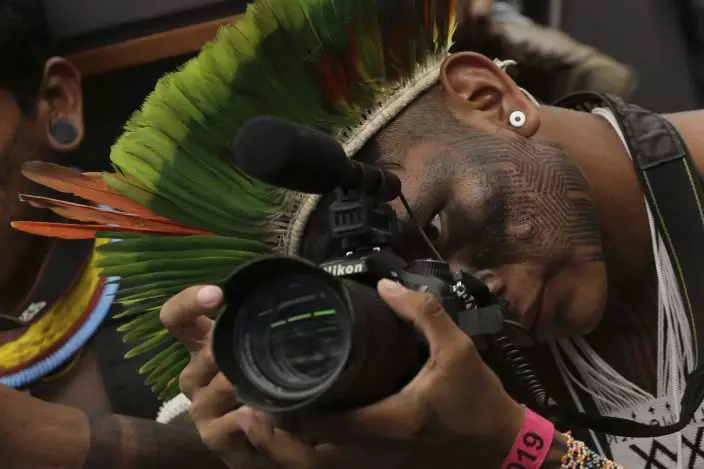
An indigenous man films a meeting with lawmakers to discuss land rights and the Chamber of Deputies' role in the protection of the environment in Brasilia, Brazil, Thursday, April 25, 2019. Discussions held in congressional chambers Thursday were occurring on the sidelines of an annual three-day protest known as the Free Land Encampment in Brasilia. (AP PhotoEraldo Peres)

An young Xakriaba indian smiles during a meeting with lawmakers to discuss land rights and the Chamber of Deputies' role in the protection of the environment in Brasilia, Brazil, Thursday, April 25, 2019. Discussions held in congressional chambers Thursday were occurring on the sidelines of an annual three-day protest known as the Free Land Encampment in Brasilia. (AP PhotoEraldo Peres)

Indigenous men wait to attend a meeting with lawmakers to discuss land rights and the Chamber of Deputies' role in the protection of the environment in Brasilia, Brazil, Thursday, April 25, 2019. Discussions held in congressional chambers Thursday were occurring on the sidelines of an annual three-day protest known as the Free Land Encampment in Brasilia. (AP PhotoEraldo Peres)
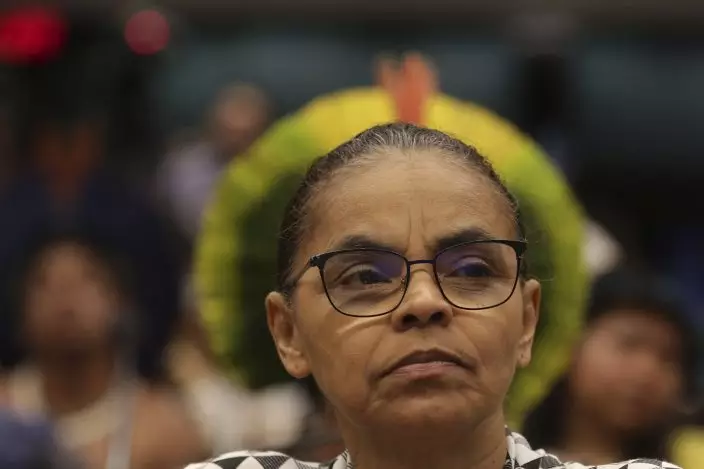
National Assembly member Marina Silva, a former minister of environment, attends a meeting with indigenous leaders to discuss land rights and the Chamber of Deputies' role in the protection of the environment in Brasilia, Brazil, Thursday, April 25, 2019. Discussions held in congressional chambers Thursday were occurring on the sidelines of an annual three-day protest known as the Free Land Encampment in Brasilia. (AP PhotoEraldo Peres)
PHILADELPHIA (AP) — Thousands of teenagers from more than a dozen countries, many standing on their chairs in a cavernous convention hall, screamed and cheered as Josh Shapiro took the stage.
Pennsylvania's Democratic governor still may be unknown among many Americans outside his home state, but here at BBYO, the world's largest conference of young Jewish leaders, Shapiro is a rock star.
“We're facing some challenges out there,” he said. He didn't mention the arson attack his family escaped in the middle of the night last year, or the antisemitism that he says he faces regularly.
“And this is a moment,” he went on as the crowd waved Israeli flags, “where I lean on my faith. I am proud of my faith.”
Shapiro may be the nation's most prominent Jewish politician as antisemitism surges across America, and he's made his religion central to his political identity — what he calls living his faith “out loud.” At this pivotal moment, as he marches toward a dominant reelection this fall that is expected to propel him into the next presidential campaign, the 52-year-old governor is attempting to straddle an almost impossible chasm as both a Jewish progressive and a Zionist.
Perhaps more than any other issue, Shapiro’s ability to navigate personal and political risks related to his faith will ultimately determine how far he can rise in an evolving Democratic Party.
He is already among his party's top White House prospects, powered by a broad political coalition he's assembled in one of the nation's most important swing states. He's also one of the leaders most vilified by progressive activists, largely because of his staunch support for Israel.
Shapiro has defended Israel’s right to defend itself after Hamas' attack on Oct. 7, 2023, while also voicing concern for Palestinian civilians and criticizing Prime Minister Benjamin Netanyahu as a “dangerous and destructive force." At home, the governor was critical of pro-Palestinian campus protests that he said were hostile toward Jewish students.
His positioning did not sit well among some critics, who still refer to him as “Genocide Josh.” Tensions were reopened with Shapiro’s recent book, in which he recalled a senior aide to Kamala Harris asking if Shapiro had ever been an agent of the Israeli government while he was being vetted as a potential vice president.
There's never been a Jewish president or vice president, and few leading Democrats lean into their faith as openly as Shapiro. He observes Shabbat every Friday night with his family. He keeps Kosher. His kids go to Jewish day school. And on the campaign trail, he speaks openly about his spiritual values and quotes the Bible at virtually every stop.
Shapiro’s allies acknowledge the risks, but they ultimately believe his faith will help him connect with more Americans as he takes the next step in his political career.
“He is intentionally choosing to go a different route and to be a different person, and it’s authentic to who he is and also what he believes,” said Baptist Pastor Marshall Mitchell, a close friend and spiritual adviser to Shapiro. “Great elected officials, great Americans, great thinkers, never discount the influence and impact of faith.”
Shapiro said in an interview with The Associated Press that antisemitism is “a very real problem” among both Democrats and Republicans.
“I think anyone who’s trying to lead this country, anyone who’s trying to lead a state, lead a community, has a responsibility to call it out no matter which side of the aisle it’s on," he said.
The governor said he and his family face new incidents of antisemitism on a regular basis, citing most recently the February arrest of a man near Harrisburg charged with making terroristic threats and stalking.
Anti-Defamation League leader Jonathan Greenblatt, a Shapiro ally, said he’s currently seeing the highest levels of antisemitic hate crimes and harassment nationwide since his organization began tracking such data more than a half century ago.
Greenblatt criticized extremists and leaders from both political parties, but he was quick to praise President Donald Trump for opposing anti-Israel protests on college campuses, even if the president's approach was “heavy handed.”
“I think we need to recognize that on the far left, in progressive circles, being anti-Zionist has become very permissible," Greenblatt said.
Zionism is the belief that the Jewish people have a right to establish a Jewish nation-state in their ancestral homeland in the Middle East.
Hamas' attack on Israel and Israel's subsequent war in Gaza became a dividing line in American politics as Shapiro's clout was rising.
As protests against Israel spread, Shapiro said universities should not tolerate antisemitic intimidation any more than they would allow white supremacy, a comparison that inflamed critics on the left.
“Gov. Shapiro has a damning history regarding U.S. policy toward Israel, including his failure to call for an end to U.S. complicity in the Israeli genocide in Gaza, and his smearing and attacks against those speaking out for Palestinian rights,” said Beth Miller, the political director for the anti-Zionist group Jewish Voice for Peace Action.
Shapiro’s leadership, Miller said, “is sharply out of line with his constituency — including American Jews.”
Polling shows that views on Israel are complex. About six in 10 American Jews said Israel has committed war crimes against Palestinians in Gaza, according to a Washington Post survey conducted in September. About four in 10 described Israel's actions as genocide.
However, about three-quarters said Israel’s existence is vital for the long-term future of the Jewish people.
In his new book “Where We Keep the Light,” which was released last month, Shapiro opened up about the vetting process as Harris considered the governor as her running mate two years ago.
He wrote that one of Harris' advisers asked, “Have you ever been an agent of the Israeli government?”
"Had I been a double agent for Israel? Was she kidding? I told her how offensive the question was," Shapiro wrote. He added that the episode "said a lot about some of the people around the VP.”
In his interview with the AP, Shapiro declined to expand on what the question said about Harris' team, and he declined to say whether it was an example of antisemitism.
He said “we should all be able to agree that antisemitism is wrong” while having “honest disagreements” about U.S. foreign policy.
"When I analyze Middle East policy, I’m focused on what is in the best interest of the United States of America, what advances our national security, what advances our economic interests, what creates more stability in the globe,” he said. “And in my opinion, that’s having a safe and secure Israel, side by side with a safe and secure Palestinian state, where Palestinian leadership recognizes Israel’s right to exist, and where kids growing up on both sides of the border have an opportunity to grow up with promise and prosperity in their future.”
Shapiro, his children and some extended family were sleeping inside the Pennsylvania governor's mansion after celebrating Passover on April 13, 2025, when a stranger broke into the house and exploded multiple Molotov cocktails.
Cody Allen Balmer, 38, then called 911 and denounced what Shapiro “wants to do to the Palestinian people.” He later told police he would have beaten the governor with a hammer if he had found him.
Balmer pleaded guilty to attempted murder, terrorism and 22 counts of arson, among other charges.
Shapiro said the incident still haunts him today.
“I’m one of the fortunate ones in that I wasn’t killed the way Melissa Hortman was or Charlie Kirk was. I wasn’t injured the way Gabby Giffords or Steve Scalise were physically,” he told AP, referring to Democratic and Republican leaders who suffered political attacks. “But I think we also walk around with the emotional scars of it.”
Shapiro said he struggles with the idea that “this work that I love” has also “brought my family close to death."
“That’s a hard thing to work through as a as a dad,” he added. “I’m still working through it candidly.”
Rev. Jerome Fordham, who leads the Pennsylvania chapter of the National Action Network, said Shapiro's challenges have allowed him to relate to people on a deeper level.
“He’s doing a fantastic job despite the fact that they tried to kill him and his family,” said Fordham, who was in the audience at a recent NAACP gala where Shapiro spoke. ”As a Jew, he can connect with everybody. He understands struggle, just as the Black community understands struggle."
Shapiro told the AP that he would not back away from his faith.
"I refuse to live in fear, I refuse to back down,” Shapiro said. “Even though the threats are increasing, the light I see and the joy I find in others is also increasing. And that allows me to frankly ignore the noise and ignore the hate and focus on the goodness in people.”

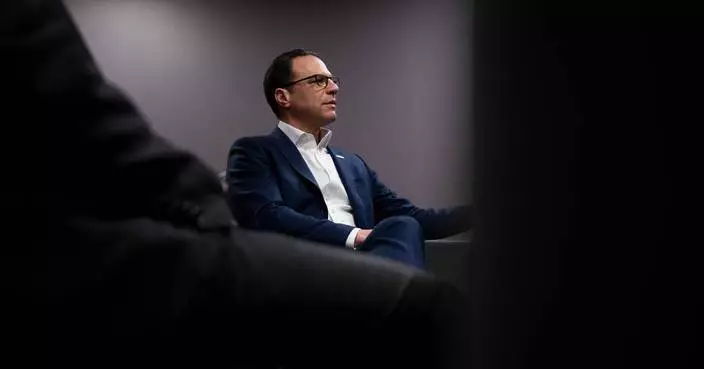
Pennsylvania Gov. Josh Shapiro greets speakers during a B'nai B'rith Youth Organization International Convention on Thursday, Feb. 12, 2026, in Philadelphia. (AP Photo/Joe Lamberti)
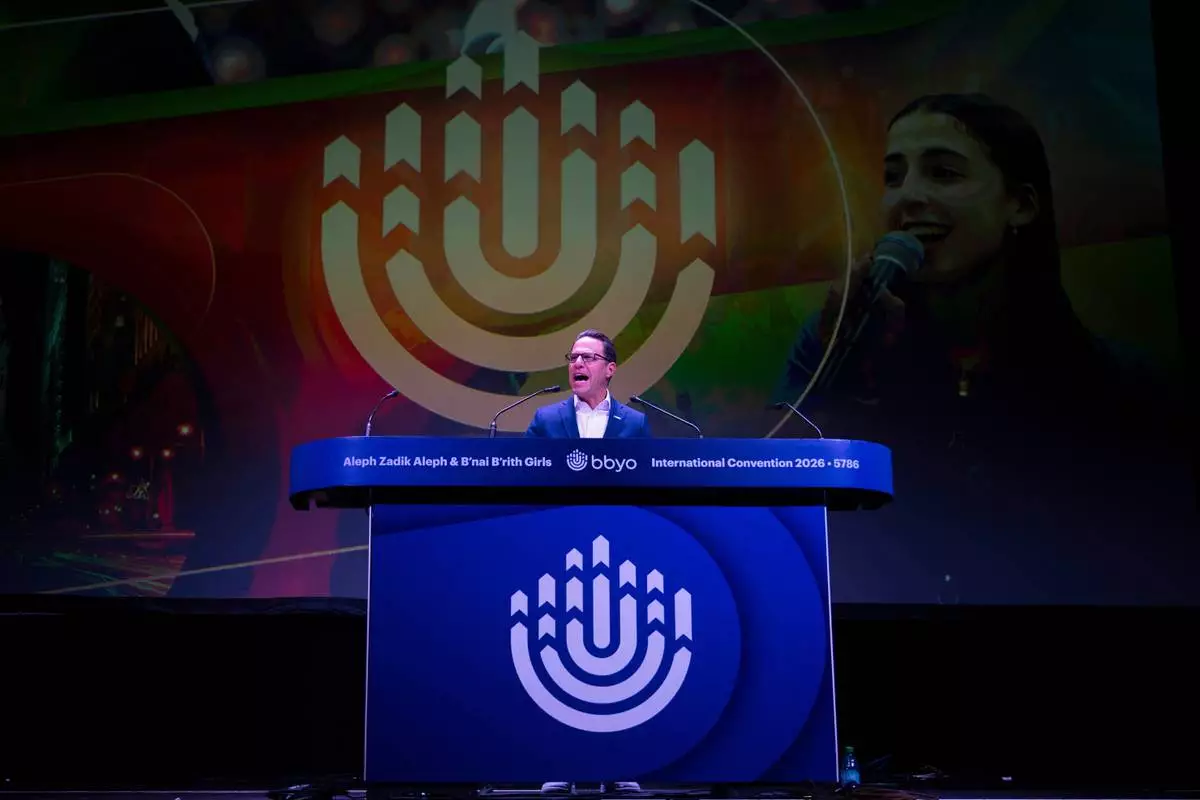
Pennsylvania Gov. Josh Shapiro speaks during a B'nai B'rith Youth Organization International Convention on Thursday, Feb. 12, 2026, in Philadelphia. (AP Photo/Joe Lamberti)

Attendees are seen at a B'nai B'rith Youth Organization International Convention on Thursday, Feb. 12, 2026, in Philadelphia. (AP Photo/Joe Lamberti)

Pennsylvania Gov. Josh Shapiro leaves the stage at a B'nai B'rith Youth Organization International Convention on Thursday, Feb. 12, 2026, in Philadelphia. (AP Photo/Joe Lamberti)
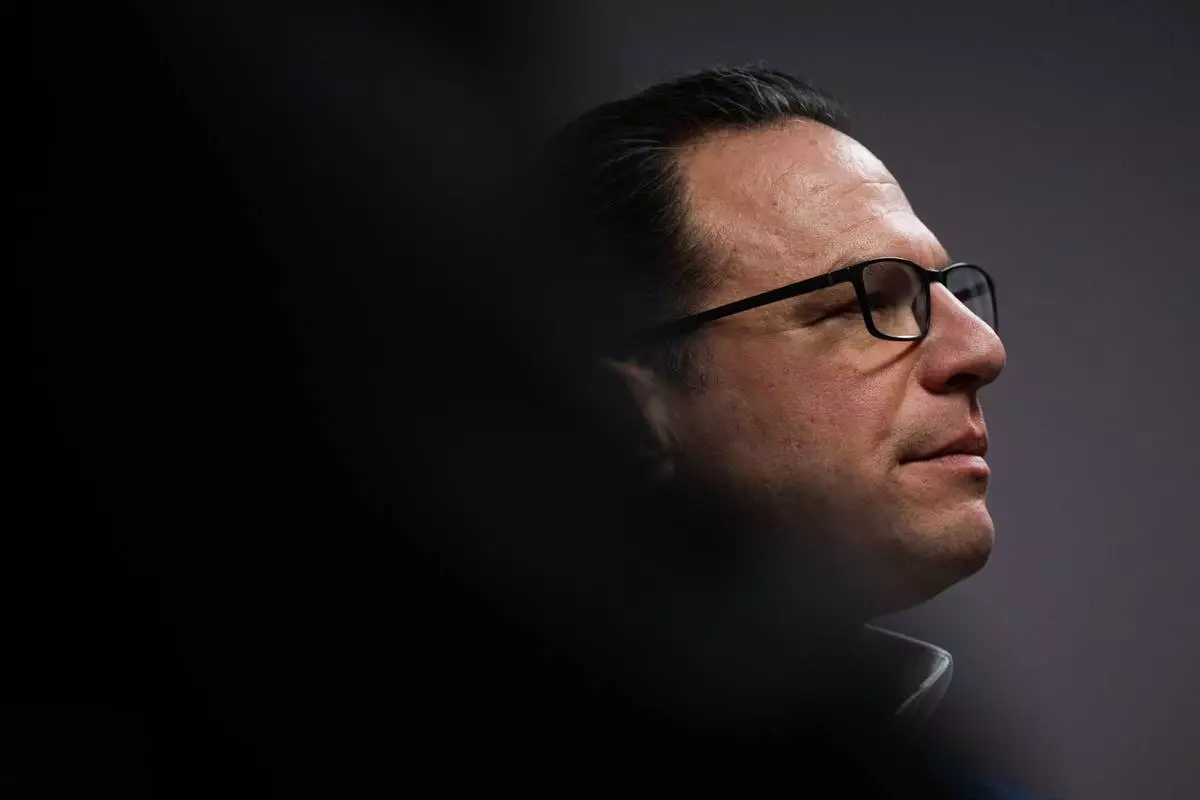
Pennsylvania Gov. Josh Shapiro is seen after a B'nai B'rith Youth Organization International Convention on Thursday, Feb. 12, 2026, in Philadelphia. (AP Photo/Joe Lamberti)