Skip to Content Facebook Feature Image

Descendants ensure Chinese rail workers aren't forgotten

News

Descendants ensure Chinese rail workers aren't forgotten
News

News

Descendants ensure Chinese rail workers aren't forgotten

2019-05-10 01:42 Last Updated At:01:50

Michael Kwan can't help but think about what life was like on a daily basis for his great-great-grandfather in the 1860s, working 12-hour days in California's Sierra Nevada mountain range on the Transcontinental Railroad that would reshape the American landscape.

"You're not talking about 12 hours sitting at a desk or sitting on a bench. You're talking about 12 hours of lifting and hammering and blowing things up," said Kwan, a judge in Salt Lake City. "And I complain when my trainer says we're going to add 10 pounds."

Kwan and other Chinese Americans are pushing for these workers — some of whom lost their lives building the Western portion of the railroad — to get more than a token mention in history books. This week marks 150 years since the completion of the Transcontinental Railroad, and several days' worth of events are planned. Kwan, who is president of the Chinese Railroad Workers Descendants Association, and his group are participating as part of a drive to be more involved in railroad celebrations and long-term projects.
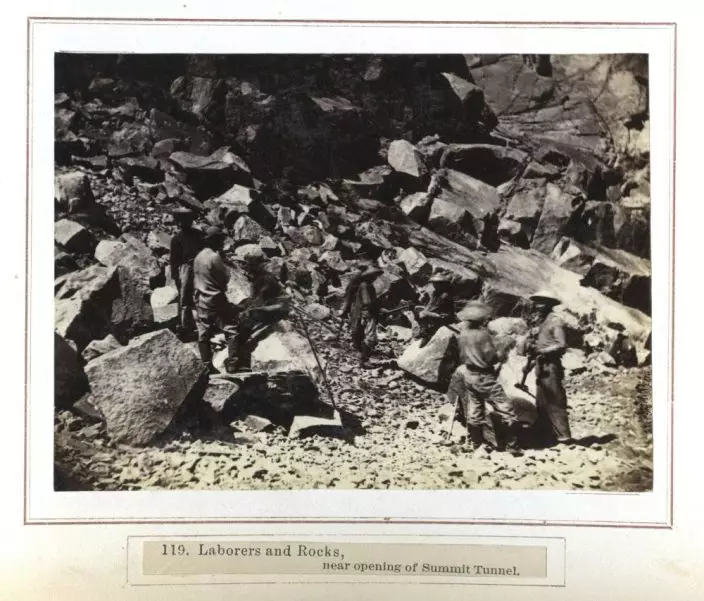
In this photo made between 1862 and 1869, railroad workers, including some Chinese laborers, are seen near an opening of the Summit Tunnel of the Central Pacific Railroad in Northern California. Members of the Chinese Railroad Workers Descendants Association are gathering in Utah in May 2019 to commemorate the 150th anniversary of the railroad’s completion. (Alfred A. HartStanford University via AP)

In this photo made between 1862 and 1869, railroad workers, including some Chinese laborers, are seen near an opening of the Summit Tunnel of the Central Pacific Railroad in Northern California. Members of the Chinese Railroad Workers Descendants Association are gathering in Utah in May 2019 to commemorate the 150th anniversary of the railroad’s completion. (Alfred A. HartStanford University via AP)

The group will be in Promontory Summit, Utah, Friday for a photo reenactment of the hammering of the final golden spike of the Transcontinental Railroad on May 10, 1869. And Margaret Yee, whose ancestors helped build the railroad, will tap a ceremonial spike alongside Utah Gov. Gary Herbert and a descendant of Union Pacific's chief engineer on the project at an event Thursday in Ogden, Utah.

"We haven't really pushed the envelope and insisted that these contributions be recognized until fairly recently," Kwan said.

The descendants group is raising money for a statue of a Chinese railroad worker at Golden Spike National Historic Park. Like previous years, they are sponsoring this week's Golden Spike Conference, which includes theatrical productions and panels, including one with Tony-winning playwright David Henry Hwang.
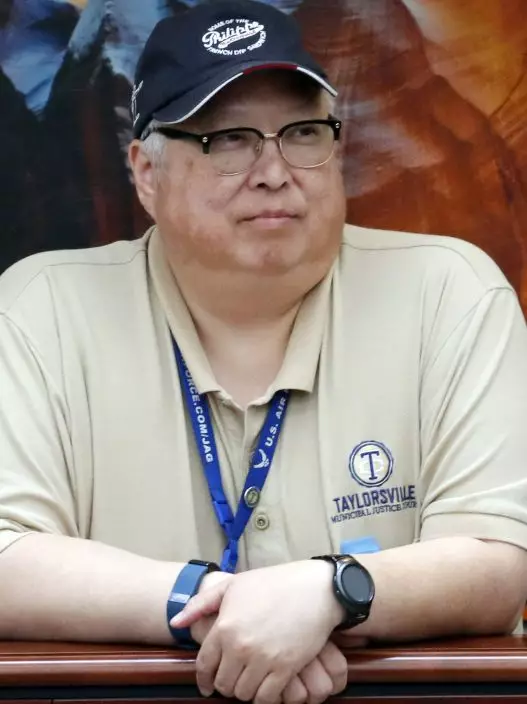
In this Tuesday, May 7, 2019, photo, Michael Kwan poses for a photograph in Salt Lake City. Kwan can't help but think about what life was like on a daily basis for his great-great-grandfather in the 1860s, working 12-hour days in California's Sierra Nevada mountain range on the Western portion of the Transcontinental Railroad that would reshape the American landscape. Kwan and other Chinese Americans are pushing for these workers some of whom lost their lives to get more than a token mention in history books as several days of celebrations kick off this week in Utah to commemorate the 150th anniversary of the completion Transcontinental Railroad. (AP PhotoRick Bowmer)

In this Tuesday, May 7, 2019, photo, Michael Kwan poses for a photograph in Salt Lake City. Kwan can't help but think about what life was like on a daily basis for his great-great-grandfather in the 1860s, working 12-hour days in California's Sierra Nevada mountain range on the Western portion of the Transcontinental Railroad that would reshape the American landscape. Kwan and other Chinese Americans are pushing for these workers some of whom lost their lives to get more than a token mention in history books as several days of celebrations kick off this week in Utah to commemorate the 150th anniversary of the completion Transcontinental Railroad. (AP PhotoRick Bowmer)

Michael Solorio feels fortunate that his family was able to determine that his maternal great-great-great-grandfather, Lim Lip Hong, worked as a foreman on the Central Pacific Railroad while thousands of other workers remain nameless. A junior at Stanford University, it's not lost on him that he is attending a school founded by Central Pacific Railroad president Leland Stanford, who profited from Chinese labor.

"It feels kind of weird to know that this school stands because of the labor of my great-grandfather and many others like him put in," Solorio said. "Even after all this work was put in to make the railroad, there continued to be real intense racism against the Chinese."

The 20,000 Chinese immigrants who worked on the Central Pacific portion, from California to Utah, between 1864 and 1869 accounted for about 90% of that railroad's workforce, said Stanford University professor Gordon Chang. Other groups including the Irish, members of The Jesus Christ of Latter-day Saints and former slaves navigating Reconstruction also helped work on the entire railroad.

Chinese laborers were often the most exploited. They contended with racism, pay disparity and dangerous tasks in grueling terrain. At an elevation as high as 7,000 feet (2,133 meters) on the Sierra Nevada range, they were ordered to blast through solid granite using nitroglycerine. Some suffered brutal deaths in explosions. Avalanches also took lives.

"Their bodies weren't recovered till next spring. Sometimes they would be uncovered as the snow melted with their work tools still in their hands," Chang said.

There is no definitive data on the death toll among Chinese workers. While some reports back then suggest about 150 died, Chang believes deaths numbered in the hundreds. In his book, "Ghosts of Gold Mountain," he points to newspaper articles that mention the shipping of remains or "bone boxes" to China and Chinese groups in America keeping their own census records.

Clamoring for recognition for them has gotten louder in recent years. In 2014, the U.S. Department of Labor inducted the Chinese railroad workers into their Hall of Honor. New York Rep. Grace Meng, a Democrat, introduced a resolution in March that would honor them and renewed a call for an honorary postage stamp.

Chang has gone further in ensuring Chinese laborers and their sacrifices are embedded in the historical narrative as director of the Chinese Railroad Workers in North America Project. The project has amassed a treasure trove of oral histories, letters, periodicals and other materials since 2012. Chang said he was surprised when hundreds of people attended a project showcase at Stanford.

"I think it indicates there's a tremendous interest and curiosity and hunger for this," Chang said.

Max Chang, a board member of the Golden Spike foundation that's been helping plan anniversary events, has been giving volunteer presentations on Chinese workers at elementary and middle schools throughout Utah. The Salt Lake City native is not a descendant, but it always bothered him that Chinese laborers were "a really small footnote" in history classes.

"I had to do a lot of research to make sure I got the story right," he said. "I'm just a parent who wants to make sure my children and grandchildren will eventually know the story of the Chinese railroad worker."

He is in talks with Utah education officials about making the lessons a permanent part of history classes.

Kwan, of the descendants group, said education can help dispel the tendency for people to see Asian Americans as not fitting the image of what is "American."

"We've been here for more than 150 years and we have contributed every step of the way," Kwan said. "That's the dream: Have people stop asking us where we're from."

Follow Terry Tang on Twitter at www.twitter.com/ttangAP
CARACAS, Venezuela (AP) — Venezuela’s acting President Delcy Rodriguez used her first state of the union address on Thursday to promote oil industry reforms that would attract foreign investment, an objective aggressively pushed by the Trump administration since it toppled the country’s longtime leader less than two weeks ago.

Rodríguez, who has been under pressure from the U.S. to fall in line with its vision for the oil-rich nation, said sales of Venezuelan oil would go to bolster crisis-stricken health services, economic development and other infrastructure projects.

While she sharply criticized the Trump administration and said there was a “stain on our relations,” the former vice president also outlined a distinct vision for the future between the two historic adversaries, straying from her predecessors, who have long railed against American intervention in Venezuela.

“Let us not be afraid of diplomacy” with the U.S., said Rodriguez, who must now navigate competing pressures from the Trump administration and a government loyal to former President Nicolás Maduro.

The speech, which was broadcast on a delay in Venezuela, came one day after Rodríguez said her government would continue releasing prisoners detained under Maduro in what she described as “a new political moment” since his ouster.

Trump on Thursday met at the White House with Venezuelan opposition leader María Corina Machado, whose political party is widely considered to have won 2024 elections rejected by Maduro. But in endorsing Rodríguez, who served as Maduro’s vice president since 2018, Trump has sidelined Machado.

In her speech, Rodríguez said money earned from foreign oil sales would go into two funds: one dedicated to social services for workers and the public health care system, and another to economic development and infrastructure projects.

Hospitals and other health care facilities across the country have long suffered. Patients are asked to provide practically all supplies needed for their care, from syringes to surgical screws. Economic turmoil, among other factors, has pushed millions of Venezuelans to migrate from the South American nation in recent years.

In moving forward, the acting president must walk a tightrope, balancing pressures from both Washington and top Venezuelan officials who hold sway over Venezuela's security forces and strongly oppose the U.S. Her recent public speeches reflect those tensions — vacillating from conciliatory calls for cooperation with the U.S., to defiant rants echoing the anti-imperialist rhetoric of her toppled predecessor.

American authorities have long railed against a government they describe as a “dictatorship,” while Venezuela’s government has built a powerful populist ethos sharply opposed to U.S. meddling in its affairs.

For the foreseeable future, Rodríguez's government has been effectively relieved of having to hold elections. That's because when Venezuela’s high court granted Rodríguez presidential powers on an acting basis, it cited a provision of the constitution that allows the vice president to take over for a renewable period of 90 days.

Trump enlisted Rodríguez to help secure U.S. control over Venezuela’s oil sales despite sanctioning her for human rights violations during his first term. To ensure she does his bidding, Trump threatened Rodríguez earlier this month with a “situation probably worse than Maduro.”

Maduro, who is being held in a Brooklyn jail, has pleaded not guilty to drug-trafficking charges.

Before Rodríguez’s speech on Thursday, a group of government supporters was allowed into the presidential palace, where they chanted for Maduro, who the government insists remains the country’s president. “Maduro, resist, the people are rising,” they shouted.

Follow AP’s coverage of Latin America and the Caribbean at https://apnews.com/hub/latin-america

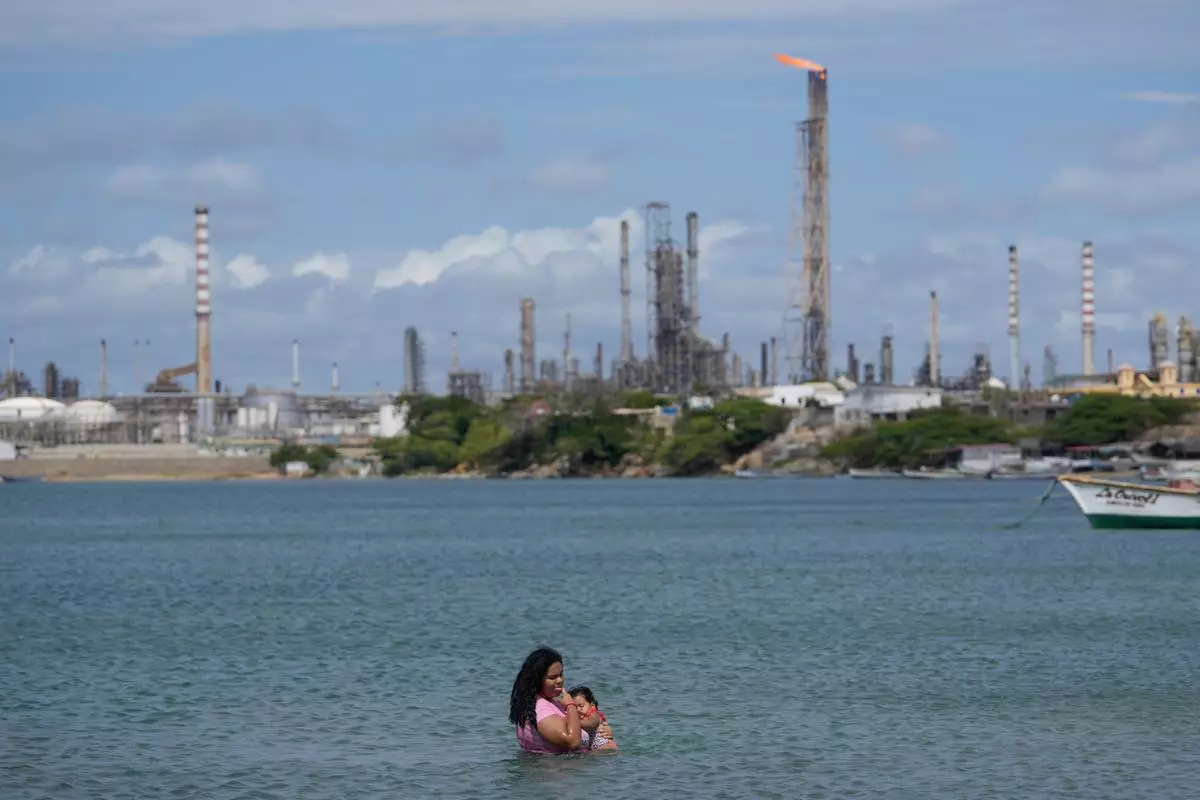
Ceylis Mendez and her daughter Zoe cool off in the Gulf of Venezuela in front of the Cardon oil refinery off the shore of Punta Cardon, Venezuela, Wednesday, Jan. 14, 2026. (AP Photo/Matias Delacroix)

Ceylis Mendez and her daughter Zoe cool off in the Gulf of Venezuela in front of the Cardon oil refinery off the shore of Punta Cardon, Venezuela, Wednesday, Jan. 14, 2026. (AP Photo/Matias Delacroix)

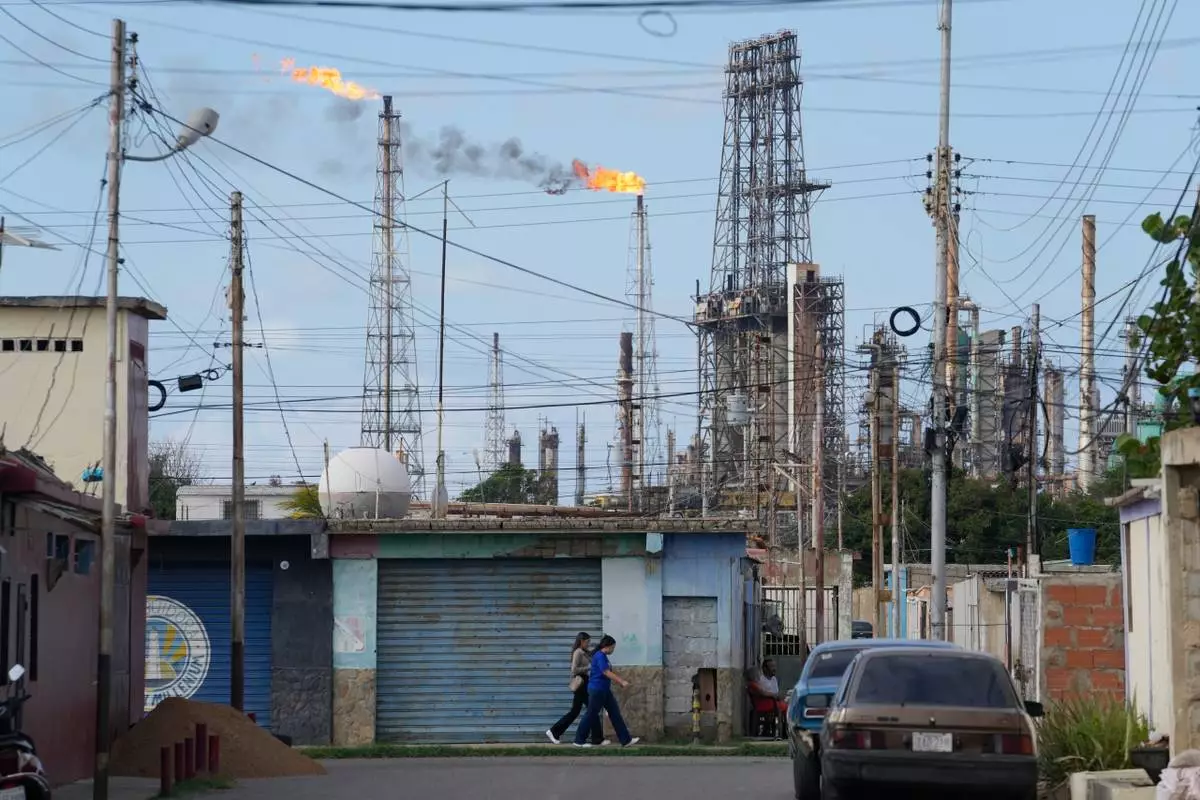
Flames rise from flare stacks at the Amuay refinery in Los Taques, Venezuela, Wednesday, Jan. 14, 2026. (AP Photo/Matias Delacroix)

Flames rise from flare stacks at the Amuay refinery in Los Taques, Venezuela, Wednesday, Jan. 14, 2026. (AP Photo/Matias Delacroix)

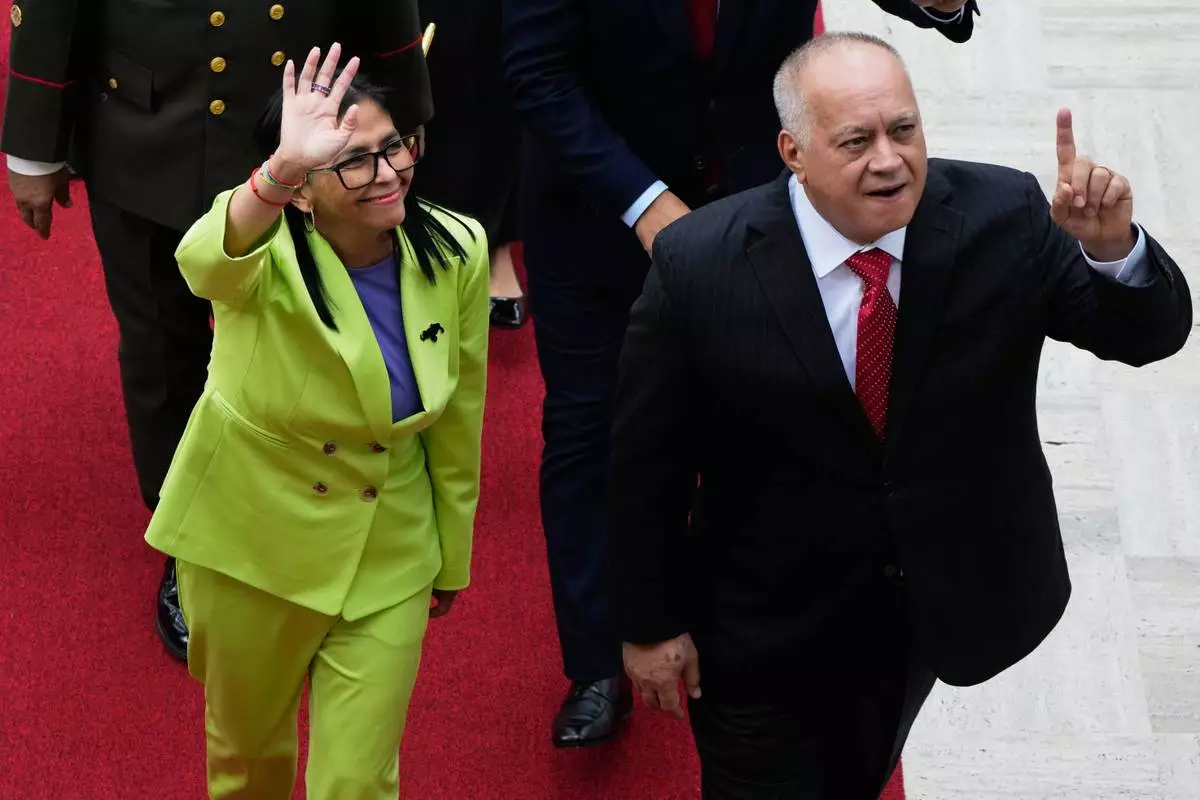
Venezuela's acting President Delcy Rodriguez, left, and Interior Minister Diosdado Cabello arrive at the National Assembly in Caracas, Venezuela, Thursday, Jan. 15, 2026. (AP Photo/Ariana Cubillos)

Venezuela's acting President Delcy Rodriguez, left, and Interior Minister Diosdado Cabello arrive at the National Assembly in Caracas, Venezuela, Thursday, Jan. 15, 2026. (AP Photo/Ariana Cubillos)

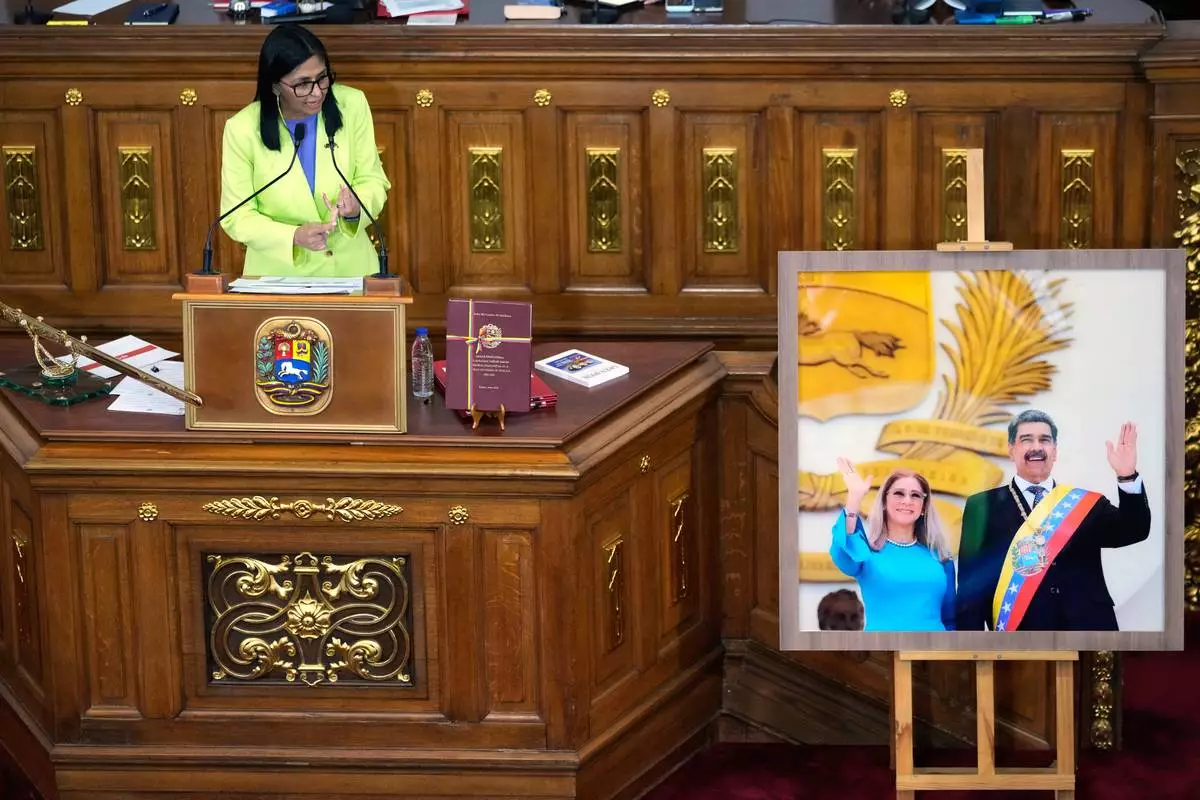
Venezuela's acting President Delcy Rodriguez addresses lawmakers next to a picture of former President Nicolas Maduro and his wife Cilia Flores, at the National Assembly in Caracas, Venezuela, Thursday, Jan. 15, 2026. (AP Photo/Ariana Cubillos)

Venezuela's acting President Delcy Rodriguez addresses lawmakers next to a picture of former President Nicolas Maduro and his wife Cilia Flores, at the National Assembly in Caracas, Venezuela, Thursday, Jan. 15, 2026. (AP Photo/Ariana Cubillos)

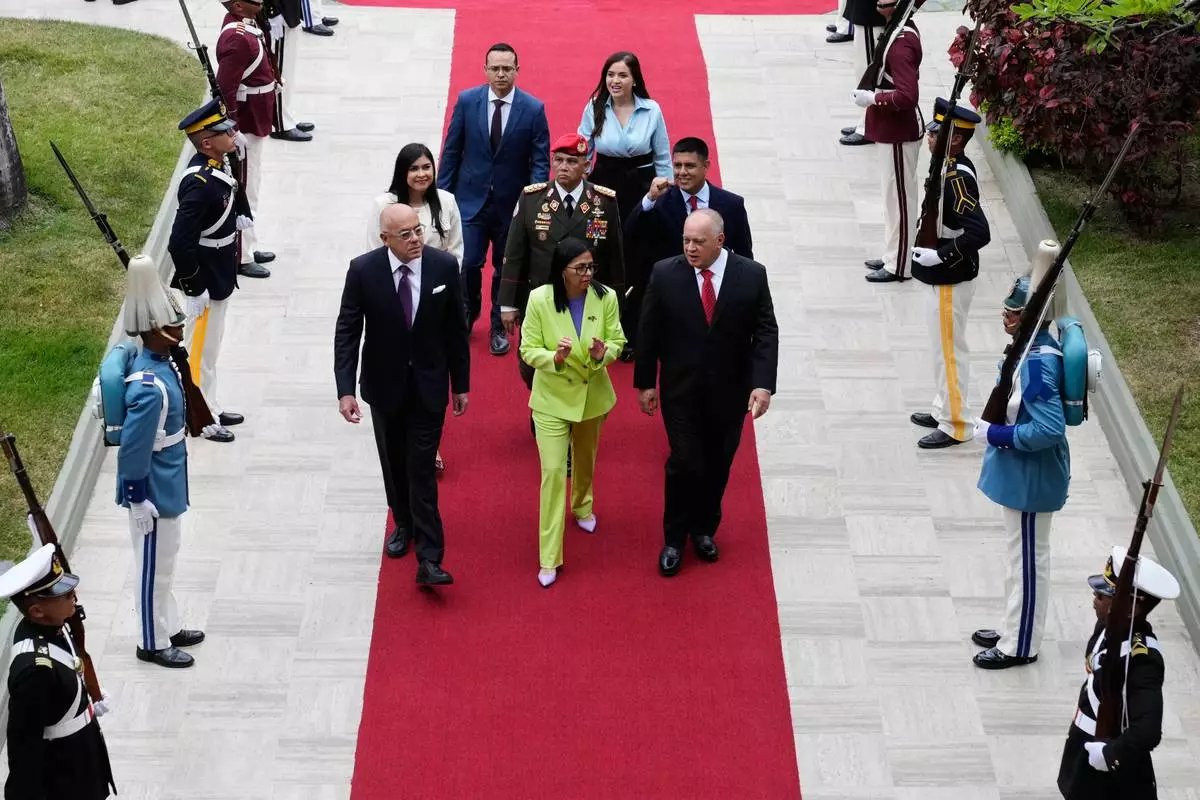
Venezuela's acting President Delcy Rodriguez, center, her brother National Assembly President, Jorge Rodriguez, left, and Interior Minister Diosdado Cabello arrive at the National Assembly in Caracas, Venezuela, Thursday, Jan. 15, 2026. (AP Photo/Ariana Cubillos)

Venezuela's acting President Delcy Rodriguez, center, her brother National Assembly President, Jorge Rodriguez, left, and Interior Minister Diosdado Cabello arrive at the National Assembly in Caracas, Venezuela, Thursday, Jan. 15, 2026. (AP Photo/Ariana Cubillos)

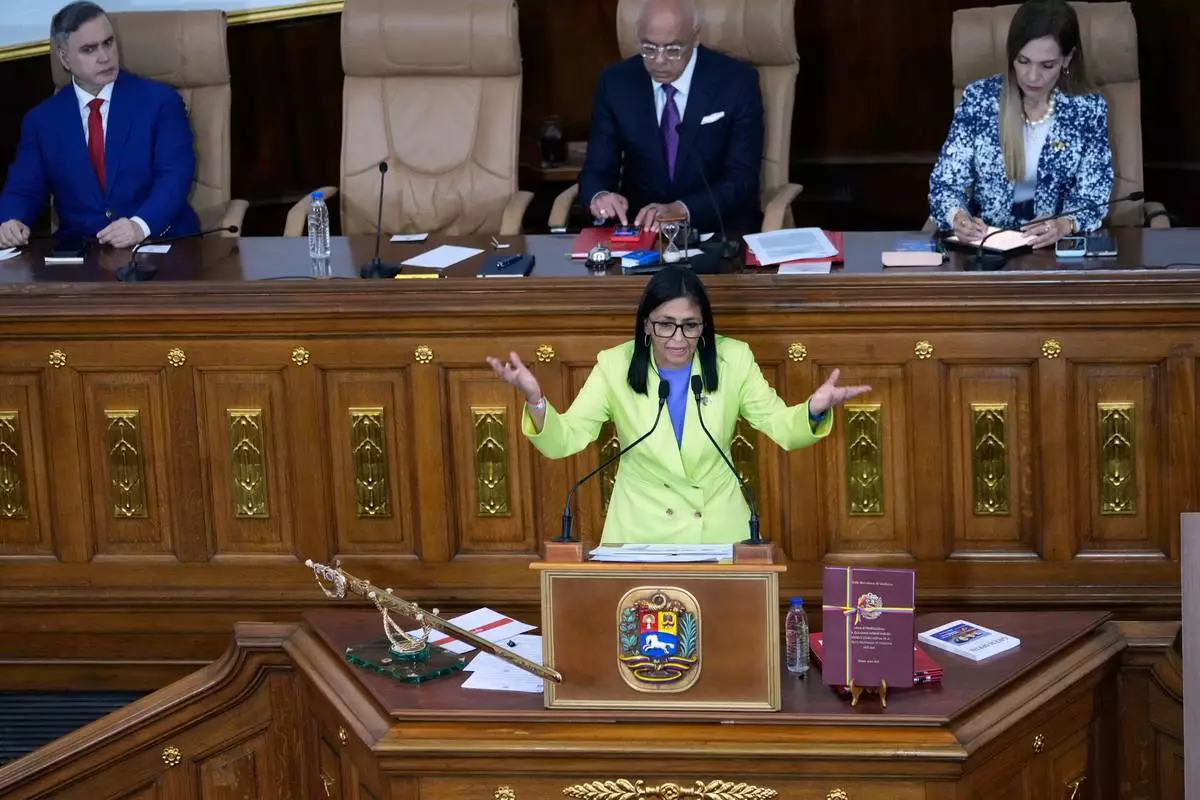
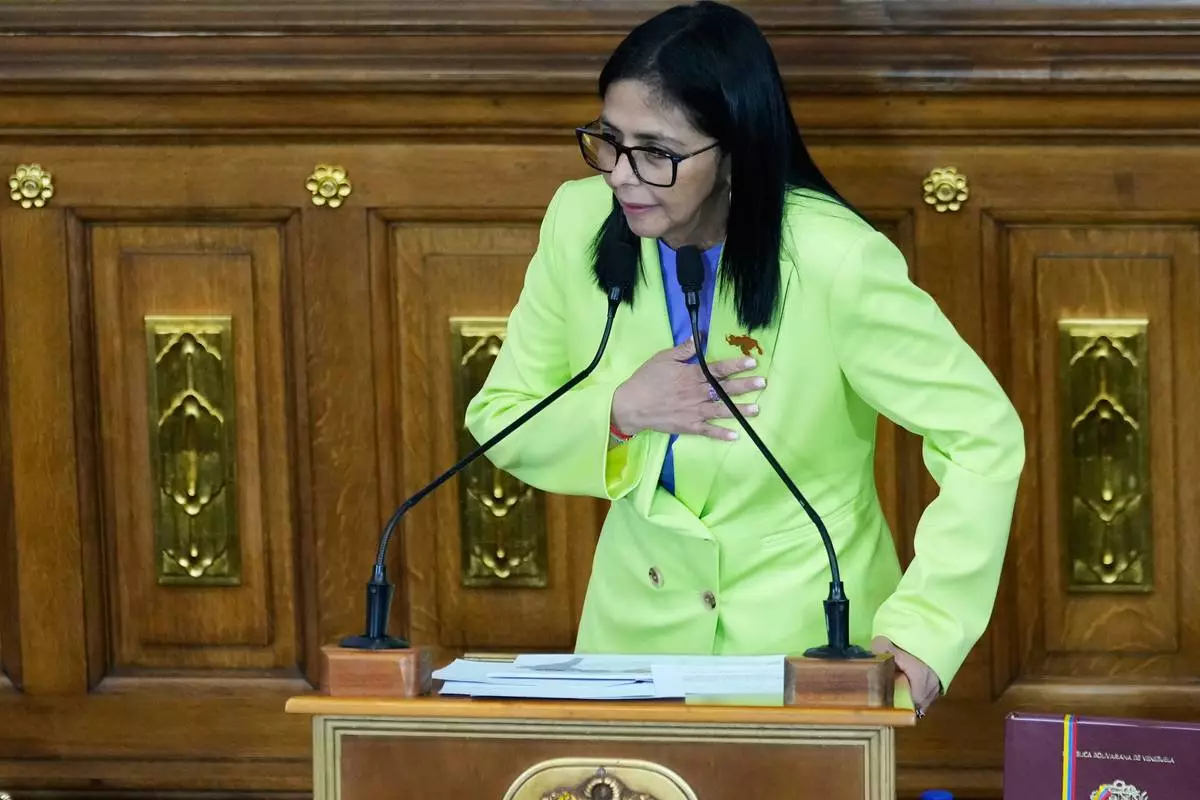
Venezuela's acting President Delcy Rodriguez addresses the National Assembly in Caracas, Venezuela, Thursday, Jan. 15, 2026. (AP Photo/Ariana Cubillos)

Venezuela's acting President Delcy Rodriguez addresses the National Assembly in Caracas, Venezuela, Thursday, Jan. 15, 2026. (AP Photo/Ariana Cubillos)

Venezuela's acting President Delcy Rodriguez addresses the National Assembly in Caracas, Venezuela, Thursday, Jan. 15, 2026. (AP Photo/Ariana Cubillos)

Venezuela's acting President Delcy Rodriguez addresses the National Assembly in Caracas, Venezuela, Thursday, Jan. 15, 2026. (AP Photo/Ariana Cubillos)

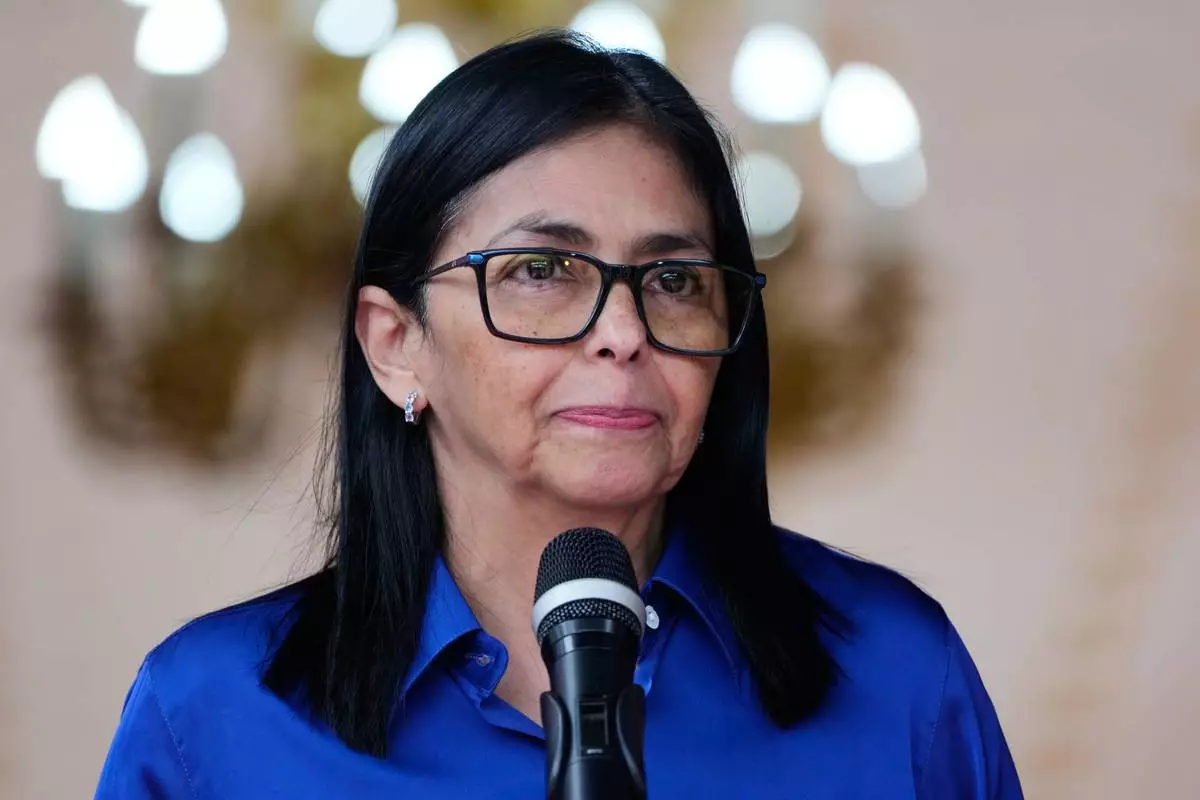
Venezuela's acting President Delcy Rodriguez makes a statement to the press at Miraflores presidential palace in Caracas, Venezuela, Wednesday, Jan. 14, 2026. (AP Photo/Ariana Cubillos)

Venezuela's acting President Delcy Rodriguez makes a statement to the press at Miraflores presidential palace in Caracas, Venezuela, Wednesday, Jan. 14, 2026. (AP Photo/Ariana Cubillos)

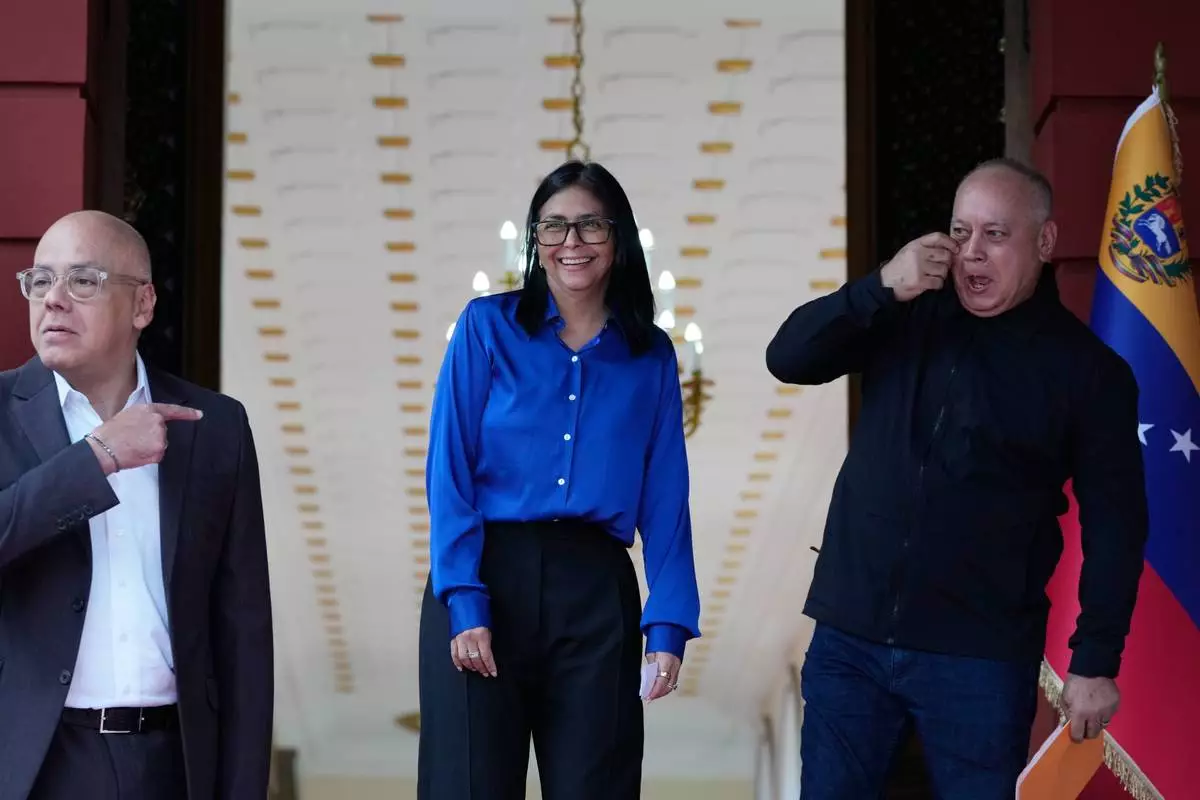
Venezuela's acting President Delcy Rodriguez, center, smiles flanked by Interior Minister Diosdado Cabello, right, and National Assembly President Jorge Rodriguez after making a statement to the press at Miraflores presidential palace in Caracas, Venezuela, Wednesday, Jan. 14, 2026. (AP Photo/Ariana Cubillos)

Venezuela's acting President Delcy Rodriguez, center, smiles flanked by Interior Minister Diosdado Cabello, right, and National Assembly President Jorge Rodriguez after making a statement to the press at Miraflores presidential palace in Caracas, Venezuela, Wednesday, Jan. 14, 2026. (AP Photo/Ariana Cubillos)

Recommended Articles