A healthy lifestyle can cut your risk of developing Alzheimer's or other forms of dementia even if you have genes that raise your risk for these mind-destroying diseases, a large study has found.
People with high genetic risk and poor health habits were about three times more likely to develop dementia versus those with low genetic risk and good habits, researchers reported Sunday. Regardless of how much genetic risk someone had, a good diet, adequate exercise, limiting alcohol and not smoking made dementia less likely.
"I consider that good news," said John Haaga of the U.S. National Institute on Aging, one of the study's many sponsors. "No one can guarantee you'll escape this awful disease" but you can tip the odds in your favor with clean living, he said.
Results were discussed at the Alzheimer's Association International Conference in Los Angeles and published online by the Journal of the American Medical Association.
About 50 million people have dementia, and Alzheimer's disease is the most common type. Genes and lifestyle contribute to many diseases, but researchers only recently have had the tools and information to do large studies to see how much each factor matters.
One such study a few years ago found that healthy living could help overcome genetic risk for heart disease. Now researchers have shown the same to be true for dementia.
Dr. Elzbieta Kuzma and colleagues at the University of Exeter Medical School in England used the UK Biobank to study nearly 200,000 people 60 or older with no signs or symptoms of dementia at the start. Their genetic risk was classified as high, medium or low based on dozens of mutations known to affect dementia. They also were grouped by lifestyle factors.
After about eight years of study, 1.8% of those with high genetic risk and poor lifestyles had developed dementia versus 0.6% of folks with low genetic risk and healthy habits.
Among those with the highest genetic risk, just over 1% of those with favorable lifestyles developed dementia compared to nearly 2% of those with poor lifestyles.
One limitation: Researchers only had information on mutations affecting people of European ancestry, so it's not known whether the same is true for other racial or ethnic groups.
The results should give encouragement to people who fear that gene mutations alone determine their destiny, said Dr. Rudy Tanzi, a genetics expert at Massachusetts General Hospital. Less than 5% of the ones tied to Alzheimer's are "fully penetrant," meaning that they guarantee you'll get the disease, he said.
"That means that with 95% of the mutations, your lifestyle will make a difference," Tanzi said. "Don't be too worried about your genetics. Spend more time being mindful of living a healthy life."
One previous study in Sweden and Finland rigorously tested the effect of a healthy lifestyle by assigning one group to follow one and included a comparison group that did not. It concluded that healthy habits could help prevent mental decline. The Alzheimer's Association is sponsoring a similar study under way now in the United States.
Healthy living also is the focus of new dementia prevention guidelines that the World Health Organization released in February.
Marilynn Marchione can be followed at http://twitter.com/MMarchioneAP
The Associated Press Health and Science Department receives support from the Howard Hughes Medical Institute's Department of Science Education. The AP is solely responsible for all content.
https://www.ap.org/press-releases/2018/ap-hhmi-expand-collaboration-to-bolster-health-science-coverage
ANCHORAGE, Alaska (AP) — A state appeals court will decide whether to dismiss felony voter misconduct charges against an Alaska resident born in American Samoa, one of numerous cases that has put a spotlight on the complex citizenship status of people born in the U.S. territory.
The Alaska Court of Appeals heard arguments Thursday in the case against Tupe Smith, who was arrested after winning election to a regional school board in 2023. Smith has said she relied on erroneous information from local election officials in the community of Whittier when she identified herself as a U.S. citizen on voter registration forms.
American Samoa is the only U.S. territory where residents are not automatically granted citizenship by being born on American soil and instead are considered U.S. nationals. Paths to citizenship exist, such as naturalization, though that process can be expensive and cumbersome.
American Samoans can serve in the military, obtain U.S. passports and vote in elections in American Samoa, but they cannot hold public office in the U.S. or participate in most U.S. elections.
Smith's attorneys have asked the appeals court to reverse a lower court's decision that let stand the indictment brought against her. Smith's supporters say she made an innocent mistake that does not merit charges, but the state has argued that Smith falsely and deliberately claimed citizenship.
State prosecutors separately have brought charges against 10 other people from American Samoa in Whittier, including Smith’s husband, Michael Pese.
Thursday's arguments centered on the meaning of the word intentionally.
Smith “and others like her who get caught up in Alaska’s confusing election administration system and do not have any intent to mislead or deceive should not face felony voter misconduct charges,” one of her attorneys, Whitney Brown, told the court.
But Kayla Doyle, an assistant attorney general, said that as part of ensuring election integrity, it's important that oaths being relied upon are accurate.
About 25 people gathered on a snowy street outside the Anchorage courthouse before Thursday’s hearing to support Smith. Some carried signs that read, ”We support Samoans.”
State Sen. Forrest Dunbar, a Democrat who attended the rally, said the Alaska Department of Law has limited resources.
“We should be going after people who are genuine criminals, who are violent criminals, or at least have the intent to deceive,” he said.
In a court filing in 2024, one of Smith's previous attorneys said that when Smith answered questions from the Alaska state trooper who arrested her, she said she was aware that she could not vote in presidential elections but was “unaware of any other restrictions on her ability to vote."
Smith said she marks herself as a U.S. national on paperwork. But when there was no such option on voter registration forms, she was told by city representatives that it was appropriate to mark U.S. citizen, according to the filing.
Smith “exercised what she believed was her right to vote in a local election. She did so without any intent to mislead or deceive anyone,” her current attorneys said in a filing in September. “Her belief that U.S. nationals may vote in local elections, which was supported by advice from City of Whittier election officials, was simply mistaken.”
The state has said Smith falsely and deliberately claimed citizenship. Prosecutors pointed to the language on the voter application forms she filled out in 2020 and 2022, which explicitly said that if the applicant was not at least 18 years old and a U.S. citizen, “do not complete this form, as you are not eligible to vote.”
The counts Smith was indicted on “did not have anything to do with her belief in her ability to vote in certain elections; rather they concerned the straightforward question of whether or not Smith intentionally and falsely swore she was a United States citizen,” Doyle said in a court filing last year.
One of Smith's attorneys, Neil Weare, co-founder of the Washington-based Right to Democracy Project, has said the appeals court could dismiss the case or send it back to the lower court “to consider whether the state can meet the standard it has set forth for voter misconduct.” The state also could decide to file other charges if the case is dismissed, he said.
The court did not give a timeline for when it would issue a ruling.
Bohrer reported from Juneau, Alaska.
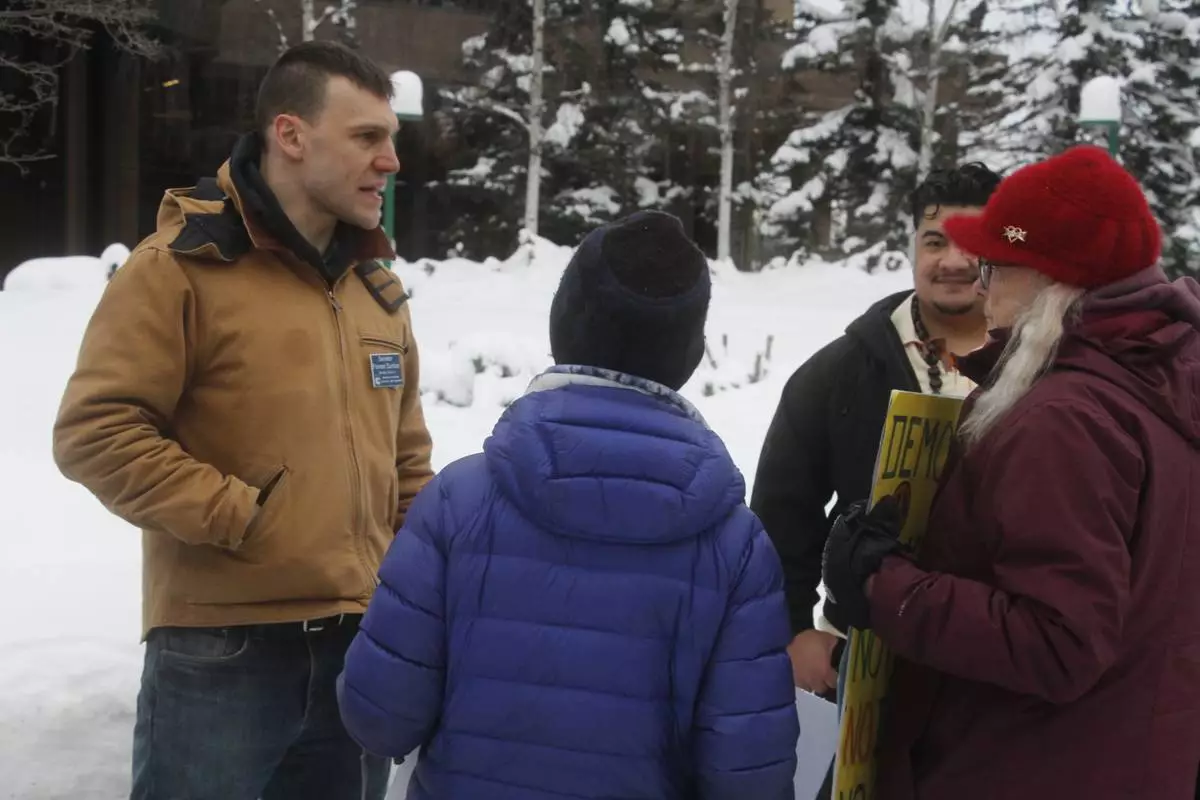
State Sen. Forrest Dunbar, left, stands with supporters of Tupe Smith gathered Thursday, Jan. 15, 2026, outside the Boney Courthouse in Anchorage, Alaska, ahead of the Alaska Court of Appeals hearing a challenge to the voter misconduct case brought against American Samoa native Tupe Smith by the state. (AP Photo/Mark Thiessen)
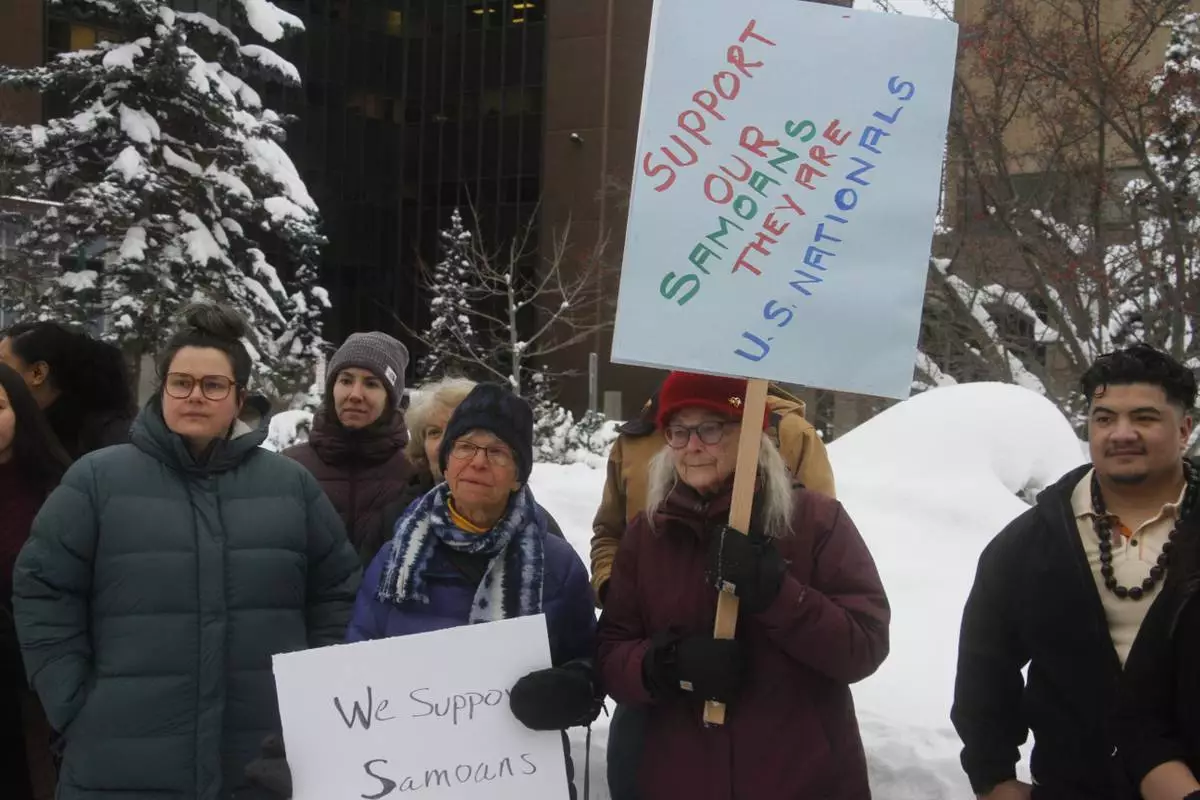
Supporters of Tupe Smith gather outside the Boney Courthouse in Anchorage, Alaska, Thursday, Jan. 15, 2026, ahead of the Alaska Court of Appeals hearing a challenge to the voter misconduct case brought against American Samoa native Tupe Smith by the state. (AP Photo/Mark Thiessen)
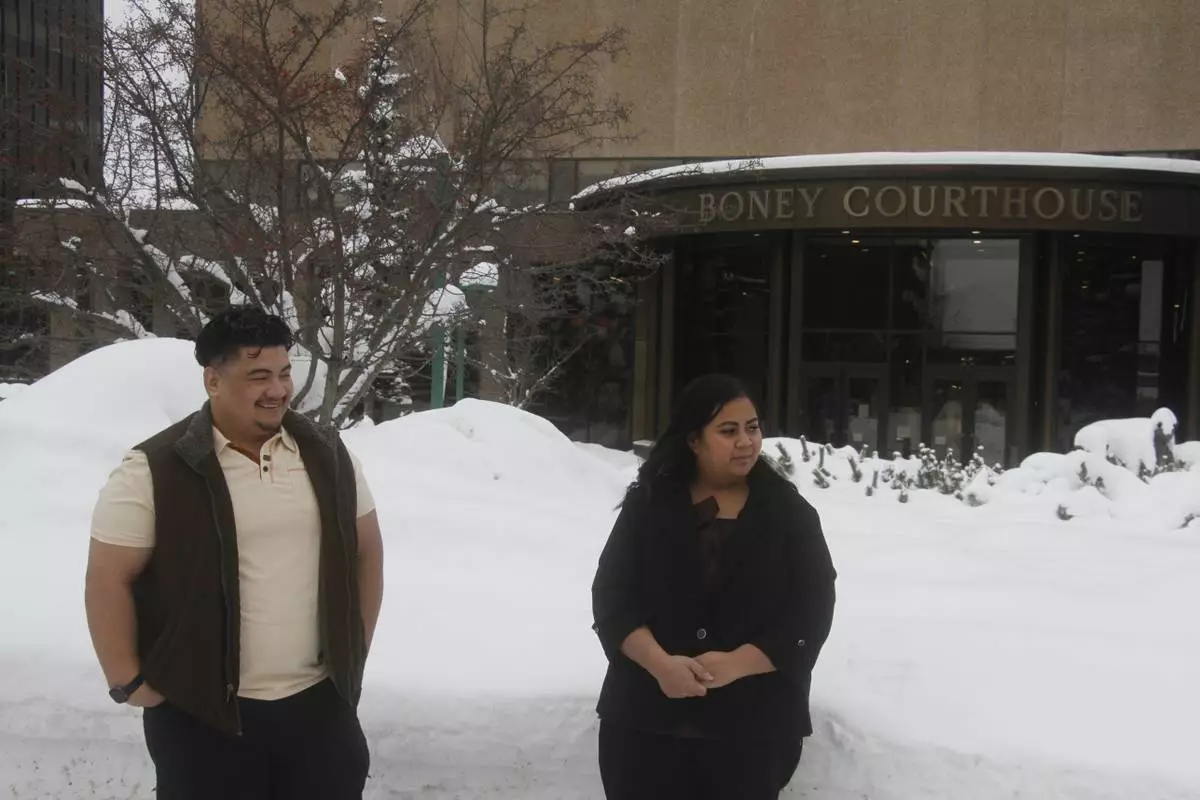
Michael Pese and his wife, Tupe Smith, stand outside the Boney Courthouse in Anchorage, Alaska, Thursday, Jan. 15, 2026, ahead of the Alaska Court of Appeals hearing a challenge to the voter fraud case brought against her by the state. (AP Photo/Mark Thiessen)
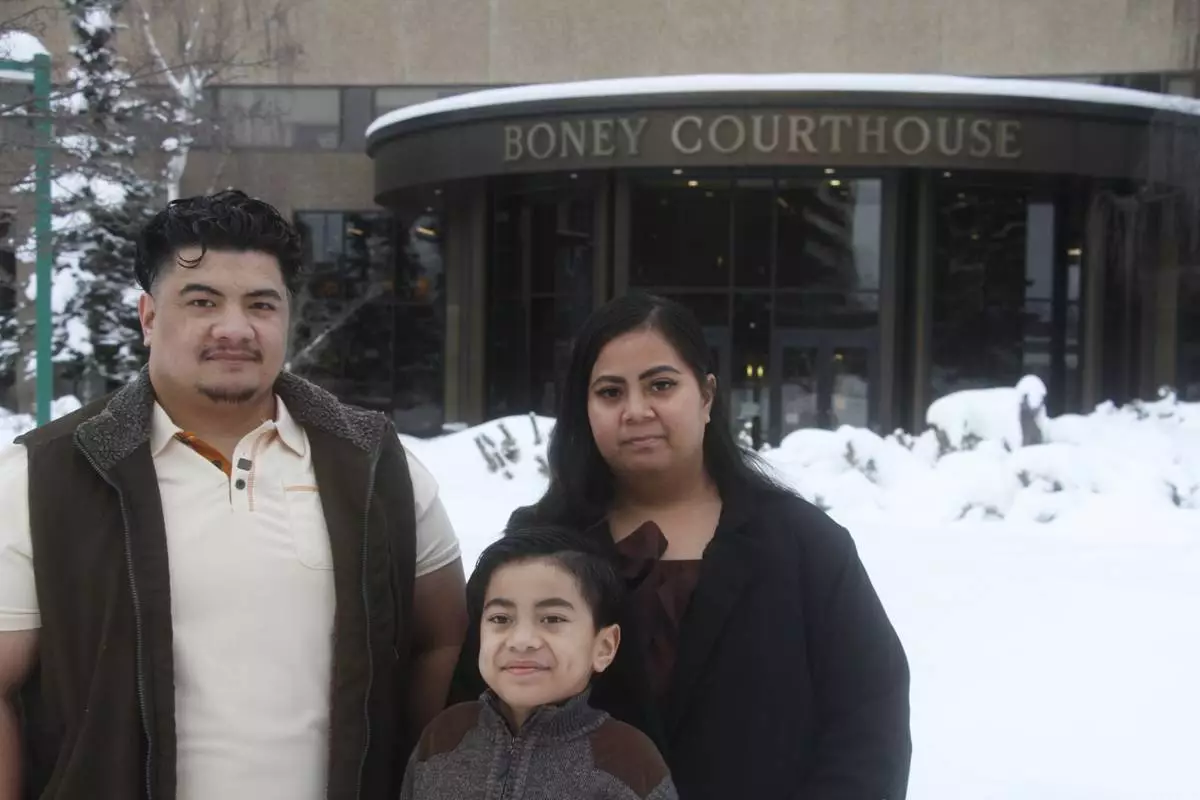
Michael Pese, left, his wife, Tupe Smith, and their son Maximus pose for a photo outside the Boney Courthouse in Anchorage, Alaska, Thursday, Jan. 15, 2026, ahead of the Alaska Court of Appeals hearing a challenge to the voter fraud case brought against her by the state. (AP Photo/Mark Thiessen)

FILE - Tupe Smith poses for a photo outside the school in Whittier, Alaska, May 13, 2025. (AP Photo/Mark Thiessen, File)