An anonymous online forum called 8chan has drawn attention in the wake of mass shootings in Texas and Ohio because violent U.S. extremists have used it to share tips and encourage one another. The site suffered sporadic outages Monday after its cybersecurity provider cut off support for what it called a "cesspool of hate."
WHAT IS 8CHAN?
The online message board dates back to 2013. It allows users to post graphic and extremist content and doesn't censor posts.
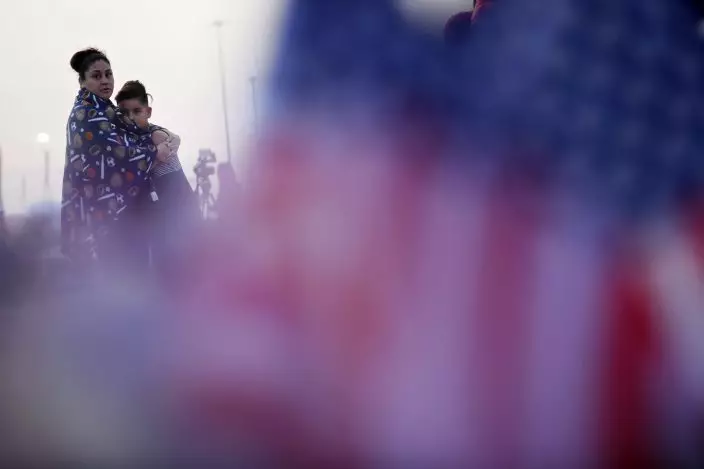
Clarissa Hernandez holds Ezra Magallanes as they visit a makeshift memorial for victims of a mass shooting at a shopping complex Monday, Aug. 5, 2019, in El Paso, Texas. (AP PhotoJohn Locher)
The site has been linked to violent extremists. Police are investigating commentary posted on 8chan believed to have been written by the suspect in a shooting Saturday that killed 22 people in El Paso, Texas.
If there is a connection, it would be the third known instance of a shooter posting to the site before going on a rampage. In March, the gunman in mass shootings at two New Zealand mosques posted a rambling manifesto to the site, as did another who injured several people and killed one at a California synagogue in April.
WHY DID 8CHAN GO DOWN?
The site went down briefly after security provider Cloudflare said it would stop supporting the site. Without Cloudflare, the site was vulnerable to outside hackers who shut down the site.
"8chan has repeatedly proven itself to be a cesspool of hate," Cloudflare CEO Matthew Prince wrote. "They have proven themselves to be lawless and that lawlessness has caused multiple tragic deaths."
CAN 8CHAN BE REGULATED?
8chan's popularity rose after the similarly named but unaffiliated site 4chan cracked down on more extreme posts. Because the U.S. doesn't specifically outlaw domestic terrorism the way it does foreign-sponsored extremism, such sites enjoy broad protection from government oversight under the U.S. Constitution's First Amendment.
Even if that weren't the case, sites like 8chan are also difficult to regulate because users can simply move on if moderations grow more strict or if a site shuts down.
"Dealing with incitement to violence and hatred online goes well beyond any one platform," the American Defamation League's Oren Segal said.
HAVANA (AP) — The names, ranks and ages of the 32 Cuban military personnel killed during the capture of Venezuelan President Nicolás Maduro by U.S. forces were published Tuesday by the Cuban government, which announced two days of mourning.
Among the deceased are colonels, lieutenants, majors and captains, as well as some reserve soldiers, ranging in age from 26 to 60.
The uniformed personnel belonged to the Revolutionary Armed Forces and the Ministry of the Interior, Cuba's two main security agencies. The publication did not specify their missions or exactly how they died.
Cuban state media published their details and headshots, which show them clad in olive-green military uniforms.
On Tuesday, Cuban Foreign Minister Bruno Rodríguez said that Cubans were “prepared to give their lives” against any U.S. intervention as the island pondered a future without Maduro as Venezuela's leader.
“The U.S. president, displaying a complete lack of understanding about Cuba and repeating the agenda of lies of Cuban-American politicians and other interest groups, blasphemes against and threatens our people,” Rodríguez wrote on X. “Our valiant people, true to their history of struggle, will defend their nation against any imperialist aggression.”
In a statement Sunday, Cuban authorities had acknowledged the deaths of the personnel who were in the South American nation as part of agreements between the two countries.
“Our compatriots fulfilled their duty with dignity and heroism, falling after fierce resistance in direct combat against the attackers, or as a result of the bombing of the facilities,” the official statement said.
Information about the Cuban officers killed began trickling out on Monday night, with Cubans publicly saying they had died for a just cause.
“You have to say that to say the same thing as the government,” said Luis Domínguez, who runs the website, Represores Cubanos, or Cuban Repressors, which doxes officials allegedly involved in human rights abuses and violations of democratic norms.
“Inside, Cubans have to be saying something else," he added.
Domínguez said he believes that one of those killed, 67-year-old Col. Humberto Alfonso Roca Sánchez, used to be the garrison commander of Punto Cero, where Fidel Castro once lived.
Another officer who was killed, 62-year-old Col. Lázaro Evangelio Rodríguez Rodríguez, is believed to have overseen Cuba’s coast and border guards, Domínguez said.
As top-tier economic and political allies, Cuba and Venezuela have agreements in areas ranging from security to energy, with the sale of subsidized oil to the island since 2000. However, the extent of military or advisory exchanges has rarely been reported.
A post published Monday on the independent website La Joven Cuba, a blog that provides a platform for many opposition voices on the island, featured a profile of 1st Lt. Yunio Estévez. It was written by a journalist who was a close friend. The post included details of the 32-year-old's life and featured pictures with his three children, whom he had raised together in Guantánamo province in eastern Cuba.
La Joven Cuba report stated that Estévez, a communications expert in charge of a personal security department, was shot during the attack. The post was removed later that evening at the family’s request, the website reported.
The U.S. strike on Venezuela prompted the Organization of American States to hold a special meeting on Tuesday, where a protester interrupted the speech of U.S. Ambassador Leandro Rizzuto.
“The majority of people are against this!” cried out Medea Benjamin, co-founder of Code Pink, a U.S.-based anti-war nonprofit. “Hands off Venezuela!”
She called for sanctions to be lifted as OAS officials called for security guards who eventually led her out of the room.
Rizzuto resumed his speech after Benjamin was removed: “I understand there are many raw emotions.”
He called the strike a “targeted law enforcement action” against an “indicted criminal.”
“Let me be clear, the U.S. did not invade Venezuela,” Rizzuto said. “President Trump offered Maduro multiple offramps. This was not an interference in democracy…it actually removed the obstacle to it.”
He said the U.S. wants a better and democratic future for Venezuela.
“You cannot continue to have the largest oil reserves in the world under the control of adversaries of the Western Hemisphere while the people of Venezuela have no electricity, substandard quality of life, and its profits don’t benefit the people in Venezuela,” Rizzuto said. “The profits are stolen by a handful of oligarchs around the world, including those inside of Venezuela.”
He also called on the release of an estimated 1,000 political prisoners, saying the U.S. supports the request of the Inter-American Commission on Human Rights to visit the detention center in person.
After Rizzuto spoke, Peruvian Ambassador Rodolfo Coronado called for a minute of silence for the victims of Maduro’s regime.
During the OAS meeting, representatives of several countries strongly condemned the U.S. strike.
Mauricio Jaramillo, Colombia’s vice minister of foreign relations, denounced what he said was an attack against Venezuela’s sovereignty. He said the unilateral military action was a “clear violation of international law” that set “an extremely worrying” precedent.
Before the special OAS meeting began, about a dozen protesters gathered outside holding signs that read, “No war on Venezuela” and “Arepas Not Bombs.”
Coto reported from San Juan, Puerto Rico.
Follow AP’s coverage of Latin America and the Caribbean at https://apnews.com/hub/latin-america
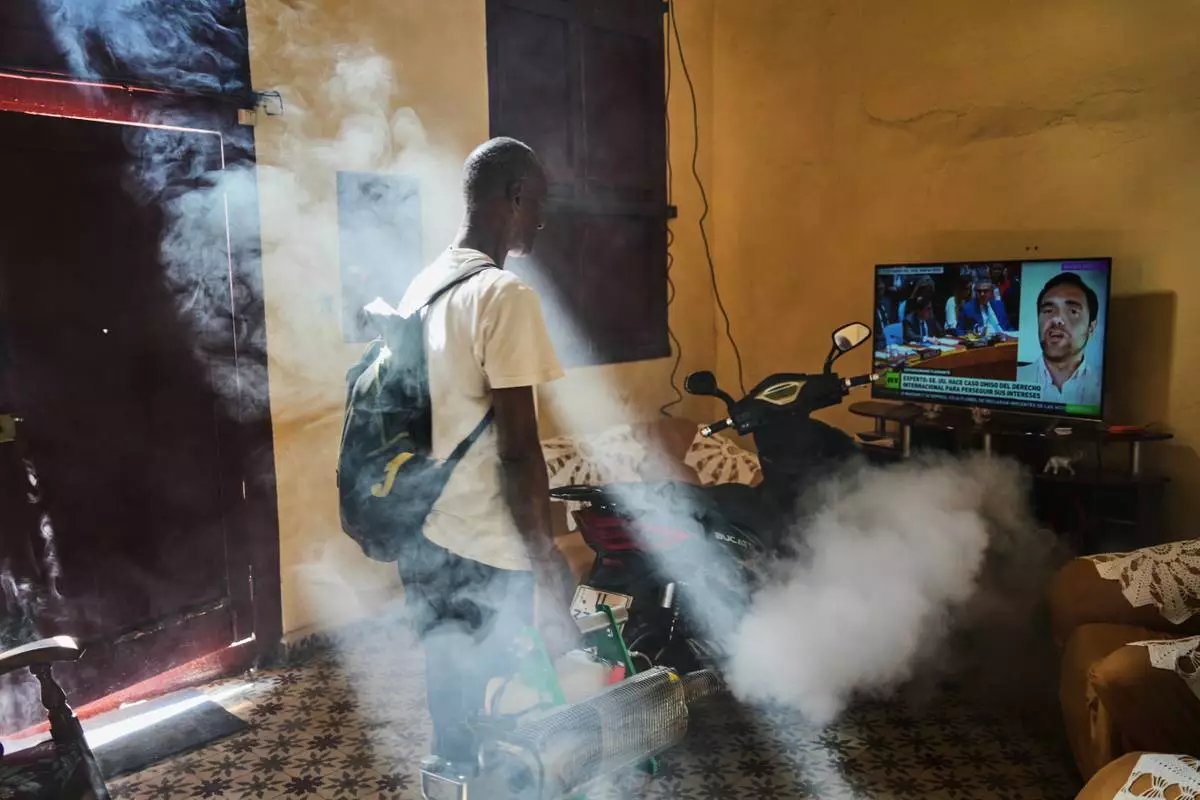
A mosquito control worker fumigates a home where a television plays a government television news report concerning the U.S. forces' capture of Venezuelan President Nicolas Maduro and his wife, in Old Havana, Cuba, Tuesday, Jan. 6, 2026. (AP Photo/Ramon Espinosa)
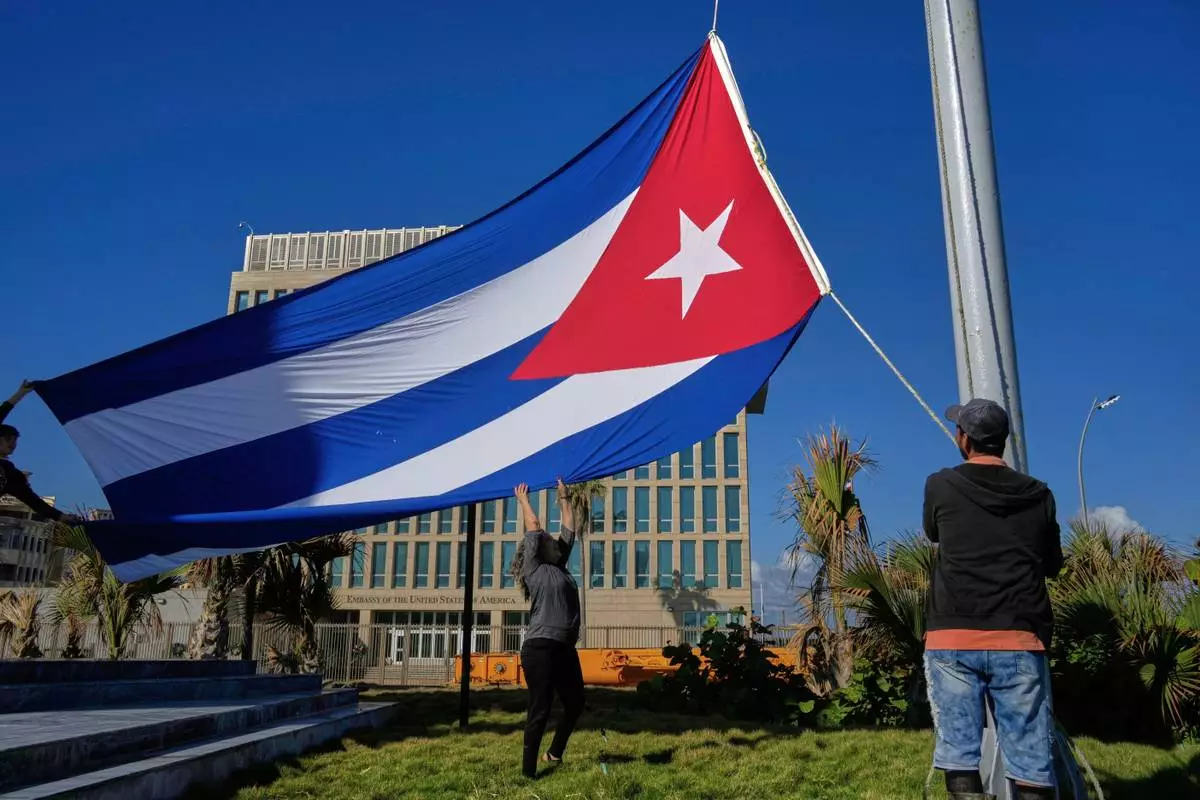
Workers fly the Cuban flag at half-mast at the Anti-Imperialist Tribune near the U.S. embassy in Havana, Cuba, Monday, Jan. 5, 2026, in memory of Cubans who died two days before in Caracas, Venezuela during the capture of Venezuelan President Nicolas Maduro by U.S. forces. (AP Photo/Ramon Espinosa)