Jimmy Carter is celebrating his 95th birthday, becoming the first U.S. president to reach that milestone as he continues his humanitarian work and occasionally wades back into politics and policy debates almost four decades after leaving office.
Carter, who served from 1977-1981 and still lives in tiny Plains, Georgia, planned no public celebrations on Tuesday.
The 39th president, born in 1924 and raised during the Great Depression, has slowed physically in recent years, acknowledging recently that he has trouble walking after hip replacement surgery in May. But he remains active with programs at the post-presidency center he and Rosalynn Carter opened in Atlanta in 1982. He still teaches Sunday School at Maranatha Baptist Church in Plains. The Carters plan to travel later this week to Nashville, Tennessee, where they will help build houses for Habitat for Humanity.
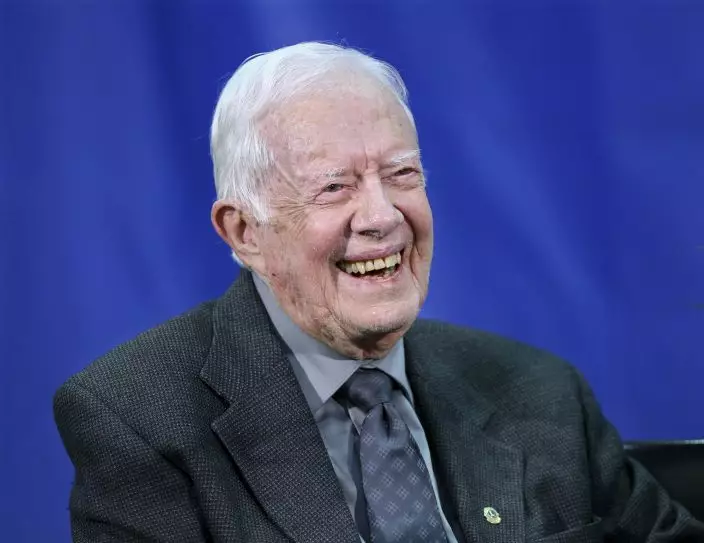
FILE - In this Sept. 18, 2018 file photo, former President Jimmy Carter answers questions from students during his annual town hall with Emory University freshman in the campus gym in Atlanta. Carter turns 95 on Tuesday, Oct. 1, 2019. (Curtis ComptonAtlanta Journal-Constitution via AP, File)
Carter survived a dire cancer diagnosis in 2015 and became the longest-lived U.S. president in history this spring, surpassing George H.W. Bush, who died in 2018. Rosalynn Carter, now 92, is among the longest-lived first ladies. The couple has been married 73 years.
In recent public appearances, the former president has sounded like a man still intent on securing his legacy, amplifying his criticisms of American military spending and war, blasting the proliferation of money in U.S. politics and urging action to combat the climate crisis. And he's expressed particular pride that the U.S. engaged in no foreign wars during his tenure.
"I just want to keep the whole world at peace," Carter said in September during his annual Carter Center report.

FILE- In this Sept. 30, 2018 file photo, former President Jimmy Carter and Rosalynn Carter are seen ahead of an NFL football game between the Atlanta Falcons and the Cincinnati Bengals, in Atlanta. Former President Carter turns 95 on Tuesday, Oct. 1, 2019. (AP PhotoJohn Amis, File)
"We have been at war more than 226 years. We have been at peace for about 16 years," he said of the U.S. since the Declaration of Independence in 1776. He asserted that every U.S. military conflict from the Korean War onward has been a war of "choice."
"The United States is very deeply inclined to go to war," Carter said, partly as "a mechanism by which we can implant American policies ... in other countries." A Naval Academy graduate and World War II veteran, Carter said presidents feed the cycle, in part because "we make a hero" out of wartime commanders-in-chief.
The Carter Center, which has focused mainly on public health, election monitoring and conflict resolution, has "never voiced an opinion publicly" on individual wars, Carter noted.
"This is primarily my fault," the former president said, explaining that he wants the center to become a more forceful advocate on questions of war around the world, including "wars by the United States." He said the Carter Center could engage in "constructive criticism of the United States government ... without being partisan about it."
An outspoken Christian, Carter sometimes frames his views on war in terms of his faith, noting that Jesus is referred to in the Bible as the "prince of peace." But at the Carter Center in September and a day later in his town hall with Emory University freshmen, the former president emphasized economic consequences of war.
China, he noted, has "been at peace" since he normalized relations with Beijing in 1979. Since then, Carter said, the U.S. has spent trillions on military conflict, while China has invested similar amounts in high-speed rail, new college campuses and other infrastructure. He told Emory freshmen he's not "favorably" comparing China's human rights record, but rather emphasizing the costs of war.
Carter hasn't backed anyone in the Democratic presidential primaries, even as some candidates call on the former president . But he says re-electing President Donald Trump would be "a disaster."
He disclosed that he voted for Bernie Sanders, a democratic socialist, over the establishment favorite Hillary Clinton in the 2016 Democratic primary. This time, Carter cautions Democrats not to go too far left, warning that an embrace of single-payer, government-run health insurance could cost the party votes among moderates and independents. That would seem to rule out Sanders and another progressive favorite, Elizabeth Warren.
But Carter said he would like to see a woman as president, and made a notable observation on age, saying he couldn't have managed "the duties I experienced when I was president" when he was 80 years old . That could be seen to nix not only Sanders, at 78, but the more moderate former Vice President Joe Biden, who is 76. Warren is 70.
Two longshot candidates who apparently fit Carter's stated priorities for the party are Mayor Pete Buttigieg of South Bend, Indiana, a 37-year-old who was born after Carter's presidency ended, and Minnesota Sen. Amy Klobuchar, a moderate who is close to Carter's vice president and fellow Minnesotan, Walter Mondale. Both have visited Carter since declaring their candidacies.
Carter has given no indication that he will endorse, making clear only that he'll be "voting Democratic" in the general election.
While he matter-of-factly declares his intentions to vote next fall, Carter also talks with the realism of a nonagenarian, born when the world population was quarter of what it is today and the life expectancy of American males was 58 years.
He noted he's often said he wanted to live long enough to announce the end of Guinea worm disease, a parasitic infection attributed to poor drinking water. There were 3.5 million cases in 21 countries in 1986, when the Carter Center began its eradication program. In 2018, there were 28 cases worldwide.
A year later, Carter expresses disappointment over an outbreak of the disease among dogs, with new human cases in Chad, Angola and Cameroon. Researchers from multiple universities, he said, are "trying to figure out what to do about it."
Meanwhile, the former president told a rapt Carter Center audience that they might have heard his final annual report, because he plans to start devoting more time to his family.
"This may be our last conversation with you," Carter said. "We may or may not have one next year."
---
Follow Barrow on Twitter at https://twitter.com/BillBarrowAP .
Iran eased some restrictions on its people and, for the first time in days, allowed them to make phone calls abroad via their mobile phones on Tuesday. It did not ease restrictions on the internet or permit texting services to be restored as the death toll from days of bloody protests against the state rose to at least 2,000 people, according to activists.
Although Iranians were able to call abroad, people outside the country could not call them, several people in the capital told The Associated Press.
The witnesses, who spoke on condition of anonymity for fear of reprisal, said SMS text messaging still was down and internet users inside Iran could not access anything abroad, although there were local connections to government-approved websites.
It was unclear if restrictions would ease further after authorities cut off all communications inside the country and to the outside world late Thursday.
Here is the latest:
U.K. Foreign Secretary Yvette Cooper has announced plans for “full and further sanctions” against Iran that target finance, energy, transport and other significant industries after the Foreign Office summoned the Islamic Republic’s ambassador to explain the nation’s response to recent protests.
Cooper told the House of Commons on Tuesday that a “desperate regime,’’ must not be allowed to undermine a “genuine grassroots movement’’ which has spread through many regions and all parts of society.
“And that is why we and other governments across the world are determined not to play into the hands of the regime or to allow our words or actions to be twisted to support their lies and propaganda,’’ she said.
“The world is watching Iran, and the UK will continue to confront the regime’s lies, to call out its repression and to take the steps necessary to protect the UK’s interests.”
The American president said he canceled meetings with Iranian officials, telling protesters, ‘help is on its way,’ without giving details.
Trump did not offer any details about what the help would entail, but it came after he said earlier this week Iran wants to negotiate with Washington after a threat to strike the Islamic Republic.
European Commission President Ursula von der Leyen says the new sanctions will be imposed on Iranian officials over the crackdown on protestors.
“The rising number of casualties in Iran is horrifying. I unequivocally condemn the excessive use of force and continued restriction of freedom,” von der Leyen said in a post on social media.
She said that in cooperation with EU foreign policy chief Kaja Kallas “further sanctions on those responsible for the repression will be swiftly proposed. We stand with the people of Iran who are bravely marching for their liberty.”
The EU has already imposed sanctions on members of the Revolutionary Guard Corps and others over past concerns about human rights abuses in Iran.
Kaja Kallas said in Berlin Tuesday that the Iranian government might go the way of former President Bashar Assad’s government in Syria, which fell swiftly in late 2024 in a “surprise for everybody.” But she added that “very often these regimes are very, very resilient.”
Kallas said that “right now … it is not clear whether the regime is going to fall or not.” She said it would ultimately have to be up to the Iranian people to make decisions.
The U.S.-based Human Rights Activists News Agency, which has been accurate in previous unrest in recent years, gave the latest death toll on Tuesday.
It said 1,847 of the dead were protesters and 135 were government-affiliated.
This came a day after the European Parliament announced it would ban Iranian diplomats and representatives.
“Iran does not seek enmity with the EU, but will reciprocate any restriction,” Foreign Minister Abbas Araghchi wrote Tuesday on X.
He also criticized the European Parliament for not taking any significant action against Israel for the more than two-year war in Gaza that has killed more than 71,400 Palestinians, while banning Iranian diplomats after just “a few days of violent riots.”
Dutch Foreign Minister David van Weel said he summoned Iran’s ambassador to the Netherlands “to formally protest the excessive violence against peaceful protesters, large-scale arbitrary arrests, and internet shutdowns, calling for immediate restoration of internet access inside the Islamic Republic.
In a post on X, Weel also said the Dutch government supports EU sanctions against “human rights violators in Iran.”
The United Nations human rights chief is calling on Iranian authorities to immediately halt violence and repression against peaceful protesters, citing reports of hundreds killed and thousands arrested in a wave of demonstrations in recent weeks.
“The killing of peaceful demonstrators must stop, and the labelling of protesters as ‘terrorists’ to justify violence against them is unacceptable,” U.N. High Commissioner for Human Rights Volker Türk said in a statement Tuesday.
Alluding to a wave of protests in Iran in 2022, Türk said demonstrators have sought “fundamental changes” to governance in the country, “and once again, the authorities’ reaction is to inflict brutal force to repress legitimate demands for change.”
“This cycle of horrific violence cannot continue,” he added.
It was also “extremely worrying” to hear some public statements from judicial officials mentioning the prospect of the use of the death penalty against protesters through expedited judicial proceedings, Türk said.
“Iranians have the right to demonstrate peacefully. Their grievances need to be heard and addressed, and not instrumentalized by anyone,” Türk said.
Finland’s foreign minister says she is summoning the Iranian ambassador after authorities in Tehran restricted internet access.
“Iran’s regime has shut down the internet to be able to kill and oppress in silence," Elina Valtonen wrote in a social media post Tuesday, adding, “this will not be tolerated. We stand with the people of Iran — women and men alike.”
Finland is “exploring measures to help restore freedom to the Iranian people” together with the European Union, Valtonen said.
Separately, Finnish police said they believe at least two people entered the courtyard of the Iranian embassy in Helsinki without permission Monday afternoon and tore down the Iranian flag. The embassy’s outer wall was also daubed with paint.
Iranian security forces arrested what a state television report described as “terrorist groups” linked to Israel in the southeastern city of Zahedan.
The report, without providing additional details, said the group entered through Iran’s eastern borders and carried U.S.-made guns and explosives that the group had planned to use in assassinations and acts of sabotage.
The Israeli military did not immediately comment on the allegations.
The Nobel Peace Prize laureate hailed people who have “long warned about this repression, at great personal risk.”
“The protests in Iran cannot be separated from the long-standing, state-imposed restrictions on girls’ and women’s autonomy, in all aspects of public life including education. Iranian girls, like girls everywhere, demand a life with dignity,” Yousafzai wrote on X.
“(Iran’s) future must be driven by the Iranian people, and include the leadership of Iranian women and girls — not external forces or oppressive regimes,” she added.
Yousafzai was awarded the peace prize in 2014 at the age of 17 for her fight for girls’ education in her home country, Pakistan. She is the youngest Nobel laureate.
The French Foreign Ministry said it has “reconfigured” its embassy in Tehran after reports that the facility's nonessential staff left Iran earlier this week.
The embassy's nonessential staff left the country Sunday and Monday, French news agency Agence France-Presse reported.
The ambassador remained on site and the embassy continued to function, the ministry said late Monday night.
Associated Press writer Angela Charlton contributed from Paris.
German Chancellor Friedrich Merz said he believes the Iranian government is in its “final days and weeks,” as he renewed a call for Iranian authorities to end violence against demonstrators immediately.
“If a regime can only keep itself in power by force, then it’s effectively at the end,” Merz said Tuesday during a visit to Bengaluru, India. “I believe we are now seeing the final days and weeks of this regime. In any case, it has no legitimacy through elections in the population. The population is now rising up against this regime.”
Merz said he hoped there is “a possibility to end this conflict peacefully," adding that Germany is in close contact with the U.S. and European governments.
The Israeli military said it continues to be “on alert for surprise scenarios” due to the ongoing protests in Iran, but has not made any changes to guidelines for civilians, as it does prior to a concrete threat.
“The protests in Iran are an internal matter,” Israeli military spokesperson Brig. Gen. Effie Defrin wrote on X.
Israel attacked Iran’s nuclear program over the summer, resulting in a 12-day war that killed nearly 1,200 Iranians and almost 30 Israelis. Over the past week, Iran has threatened to attack Israel if Israel or the U.S. attacks.
Mobile phones in Iran were able to call abroad Tuesday after a crackdown on nationwide protests in which the internet and international calls were cut. Several people in Tehran were able to call The Associated Press.
The AP bureau in Dubai, United Arab Emirates, was unable to call those numbers back.
Witnesses said the internet remained cut off from the outside world. Iran cut off the internet and calls on Thursday as protests intensified.
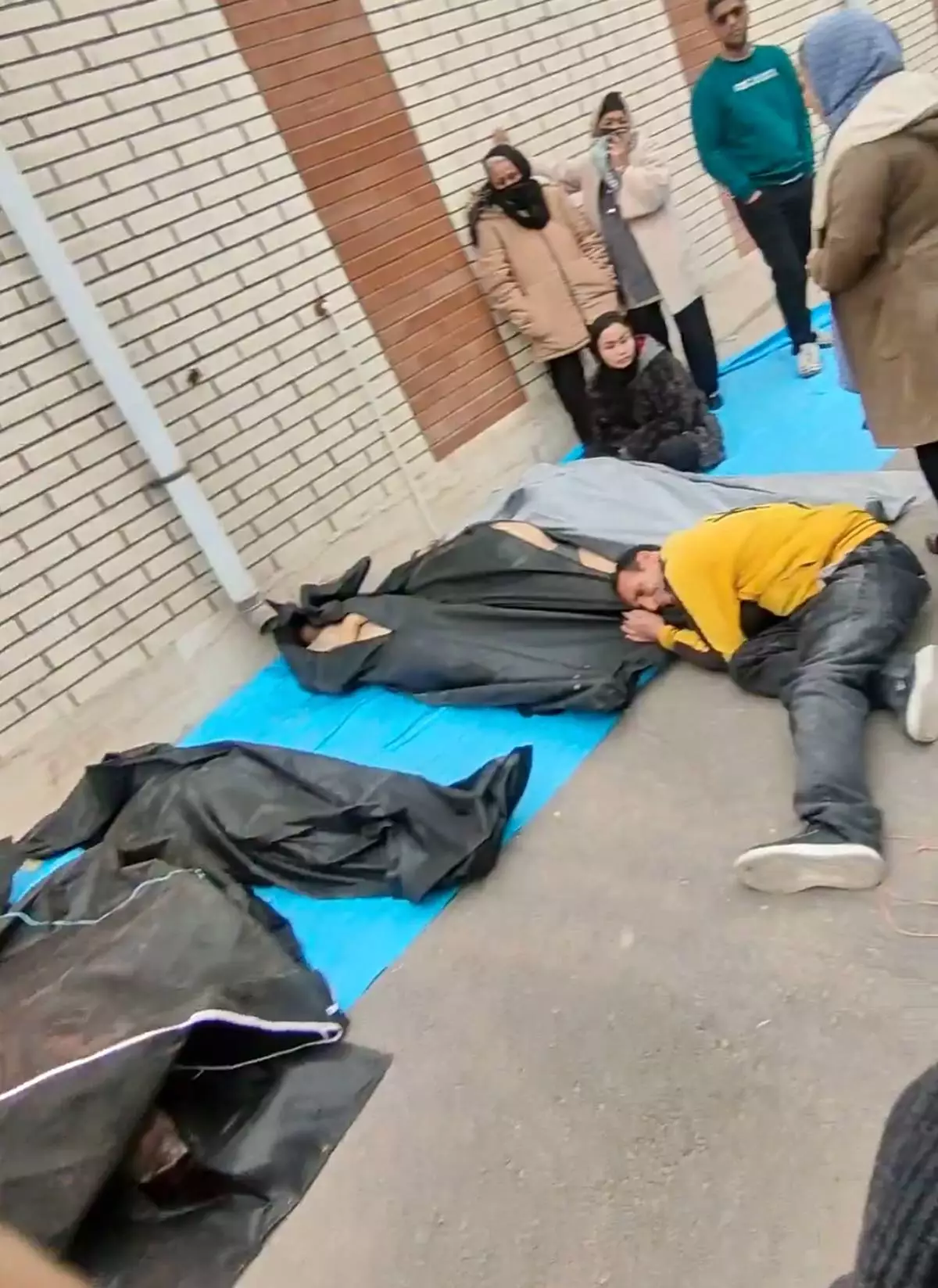
This frame grab from videos taken between Jan. 9 and Jan. 11, 2026, and circulating on social media purportedly shows images from a morgue with dozens of bodies and mourners after crackdownon the outskirts of Iran's capital, in Kahrizak, Tehran Province. (UGC via AP)
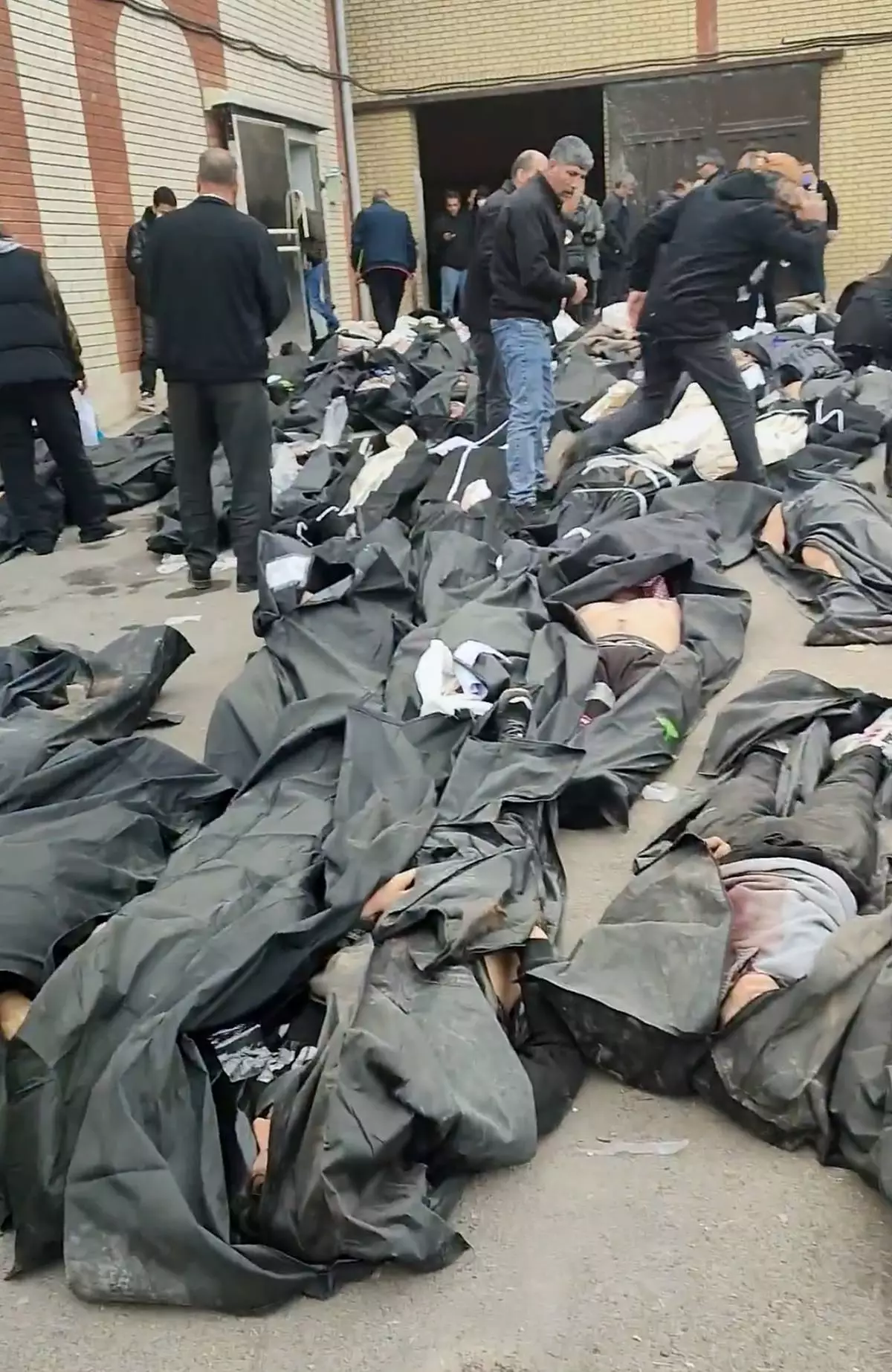
This frame grab from videos taken between Jan. 9 and Jan. 11, 2026, and circulating on social media purportedly shows images from a morgue with dozens of bodies and mourners after crackdown on the outskirts of Iran's capital, in Kahrizak, Tehran Province. (UGC via AP)
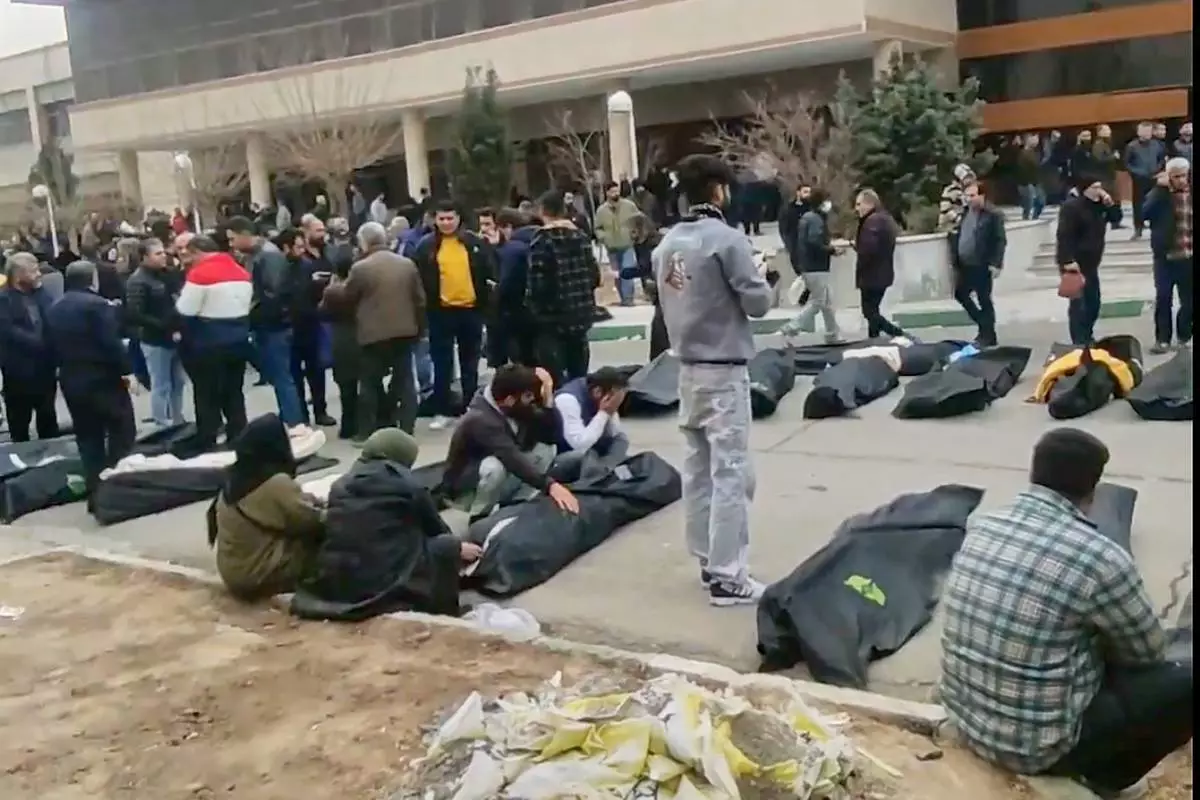
This frame grab from videos taken between Jan. 9 and Jan. 11, 2026, and circulating on social media purportedly shows images from a morgue with dozens of bodies and mourners after crackdown on the outskirts of Iran's capital, in Kahrizak, Tehran Province. (UGC via AP)
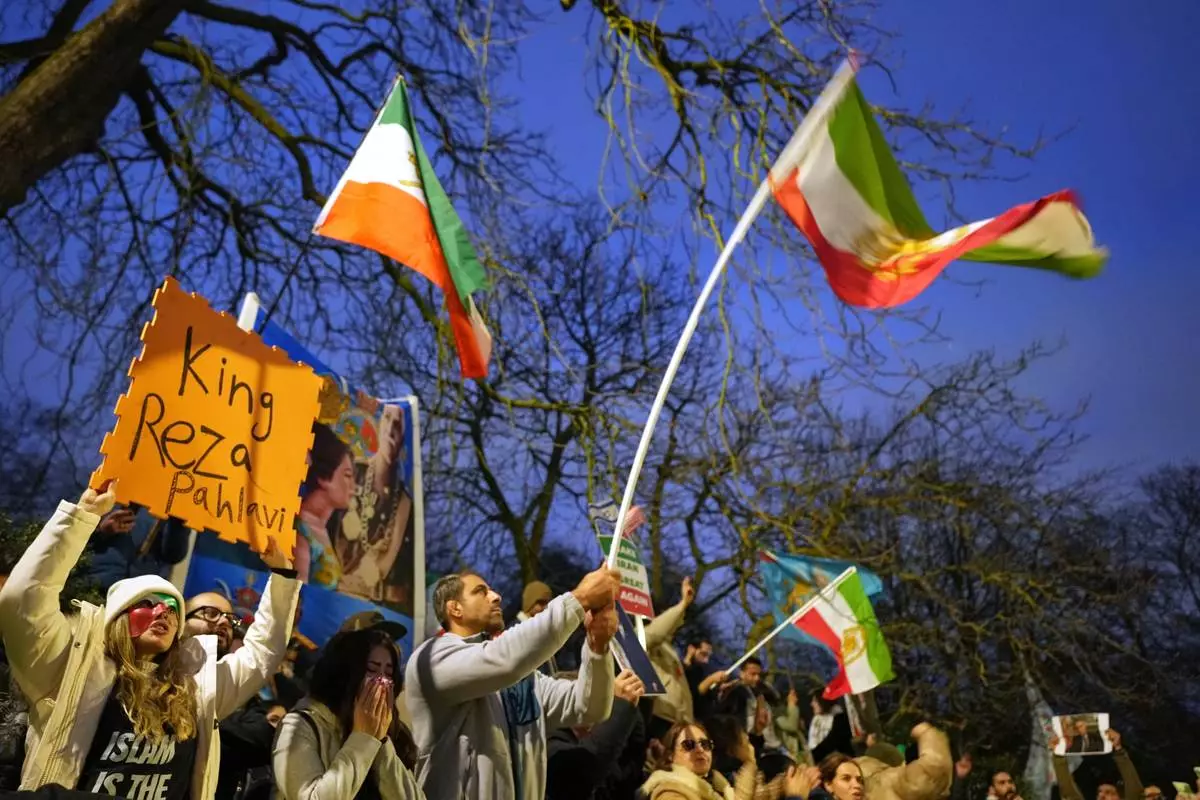
Protesters hold up placards and flags as they demonstrate outside the Iranian Embassy in London, Monday, Jan. 12, 2026. (AP Photo/Alastair Grant)
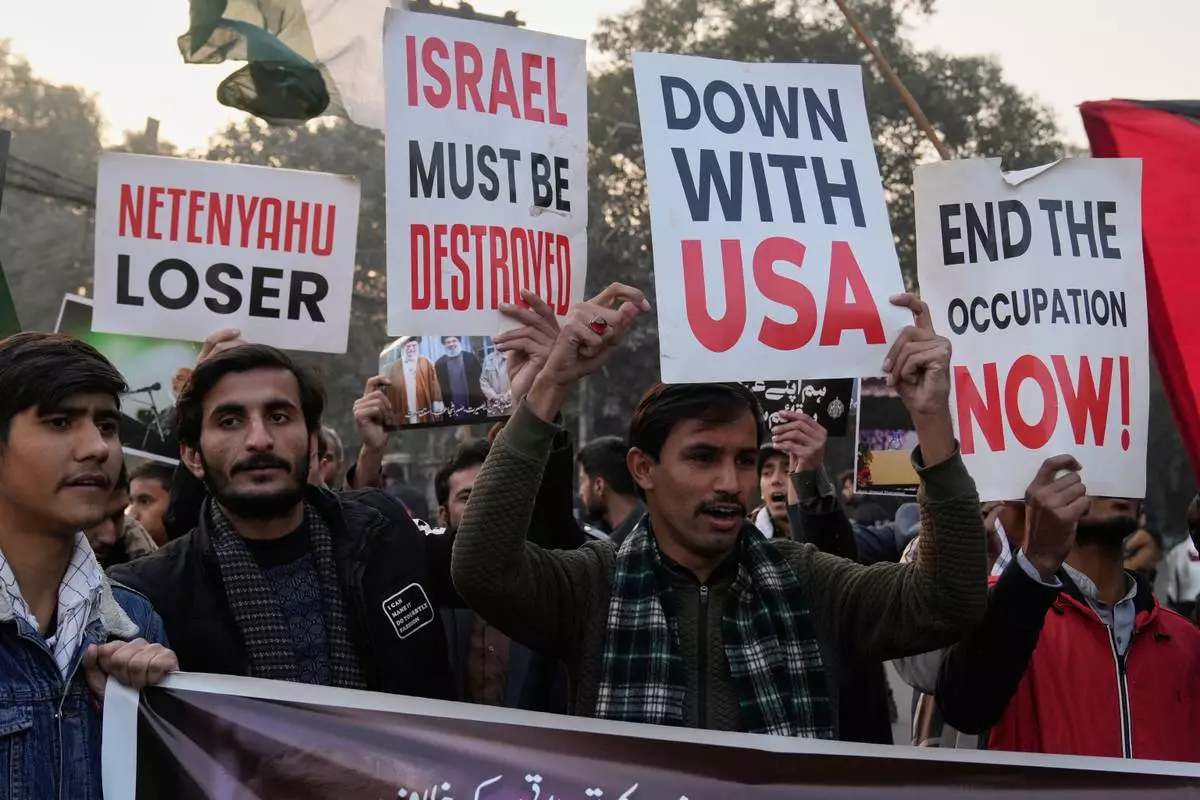
Shiite Muslims hold placards and chant slogans during a protest against the U.S. and show solidarity with Iran in Lahore, Pakistan, Sunday, Jan. 11, 2026. (AP Photo/K.M. Chaudary)
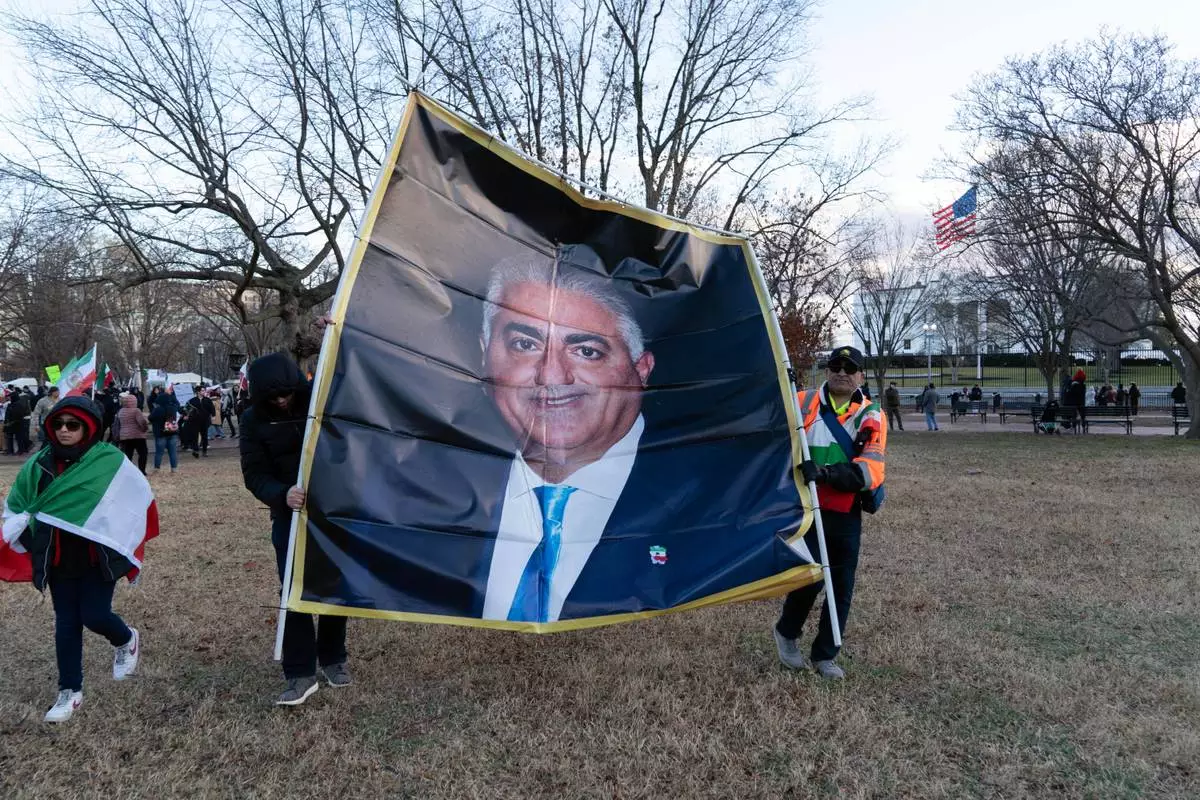
Activists carrying a photograph of Reza Pahlavi take part in a rally supporting protesters in Iran at Lafayette Park, across from the White House, in Washington, Sunday, Jan. 11, 2026. (AP Photo/Jose Luis Magana)
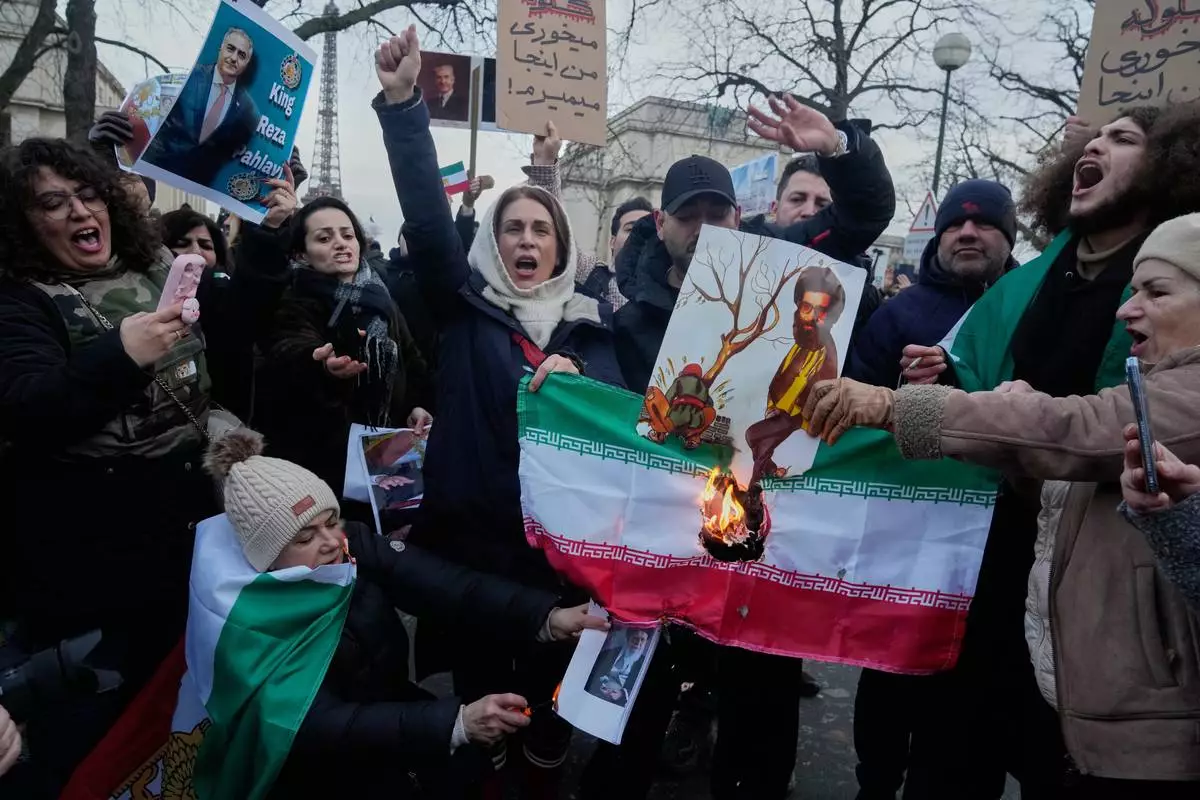
Protesters burn the Iranian national flag during a rally in support of the nationwide mass demonstrations in Iran against the government in Paris, Sunday, Jan. 11, 2026. (AP Photo/Michel Euler)
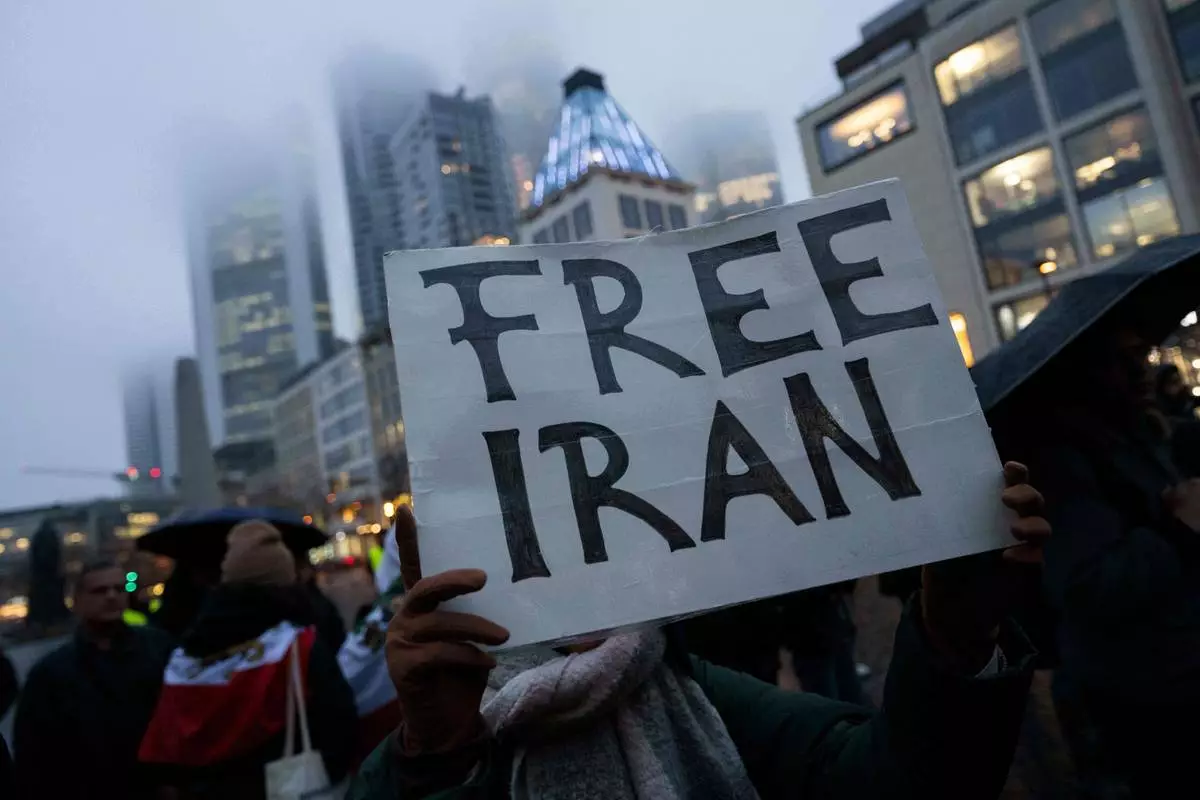
People attend a rally in Frankfurt, Germany, Monday, Jan. 12, 2026. (Boris Roessler/dpa via AP)
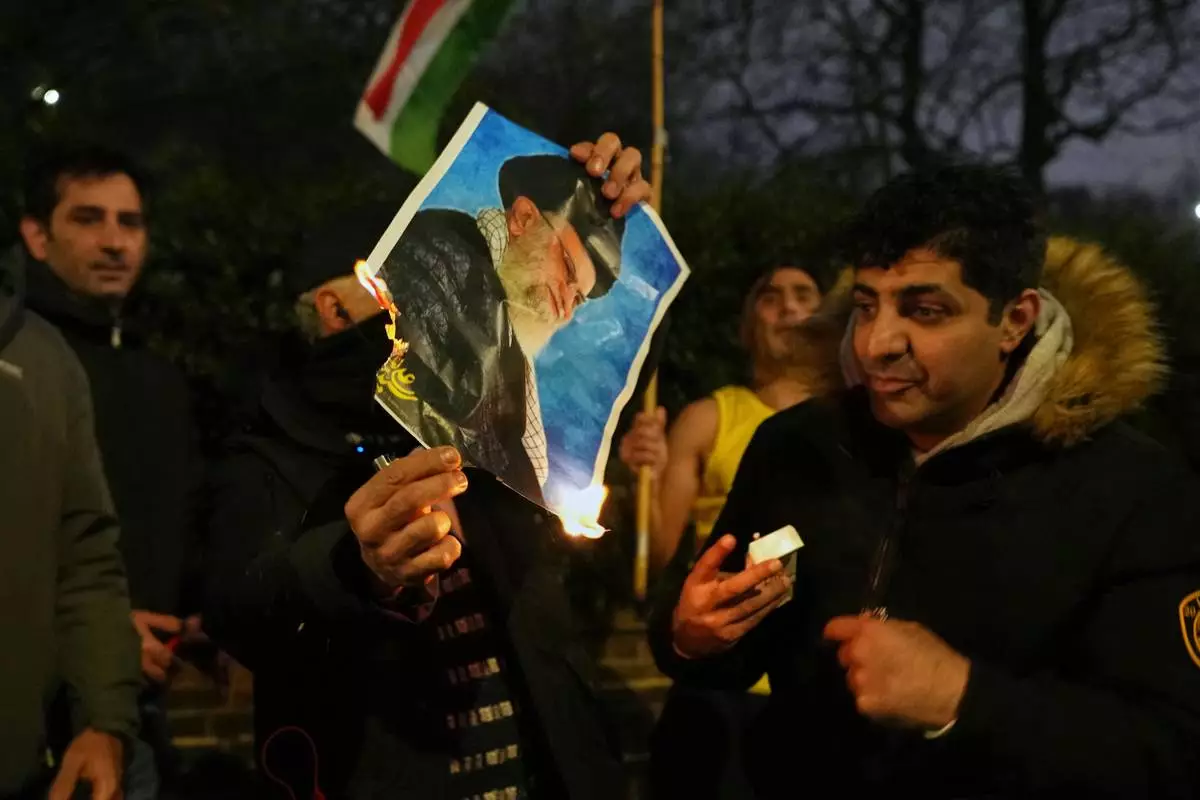
A picture of Ayatollah Ali Khamenei is set alight by protesters outside the Iranian Embassy in London, Monday, Jan. 12, 2026. (AP Photo/Alastair Grant)