North Korea stands to lose a rare legitimate source of foreign currency, worth hundreds of millions of dollars a year, if nations that employ its people as guest workers abide by a U.N. order to send them all home by this weekend.
Sanctions imposed by the U.N. Security Council in December 2017 after North Korea tested a long-range missile required member states to repatriate all North Korean workers from their territories within 24 months, a deadline that arrives Sunday.
Click to Gallery
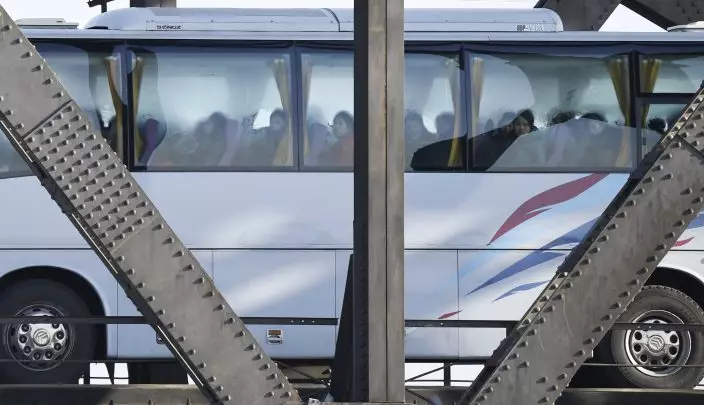
In this Dec. 5, 2019, photo, North Korean female workers look out of windows as the bus carrying them crosses the Sino-Korean Friendship Bridge from North Korea's Sinuiju to China's Dandong. A U.N.-set deadline for member states to repatriate all North Korean workers on their soils falls on Sunday, Dec. 22. The estimate for the number of North Koreans working in China has been as high as 50,000 to 80,000, with the vast majority working in factories the country's northeast along the long border with North Korea. China hosts the most North Korean workers. (Kyodo News via AP)
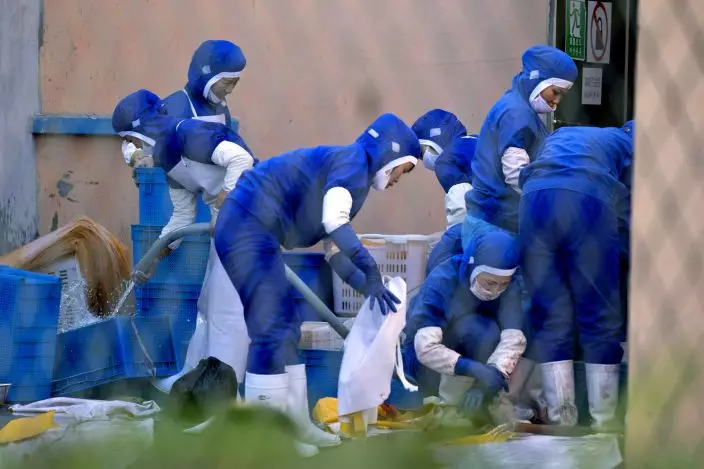
FILE - In this Sept. 4, 2017, file photo, workers at a seafood processing plant where North Korean workers are distinguished from the Chinese workers by blue overalls, wash up after work in the city of Hunchun, in northeastern China's Jilin province. A U.N.-set deadline for member states to repatriate all North Korean workers on their soils falls on Sunday, Dec. 22, 2019. The estimate for the number of North Koreans working in China has been as high as 50,000 to 80,000, with the vast majority working in factories the country's northeast along the long border with North Korea. China hosts the most North Korean workers. (AP PhotoNg Han Guan, File)
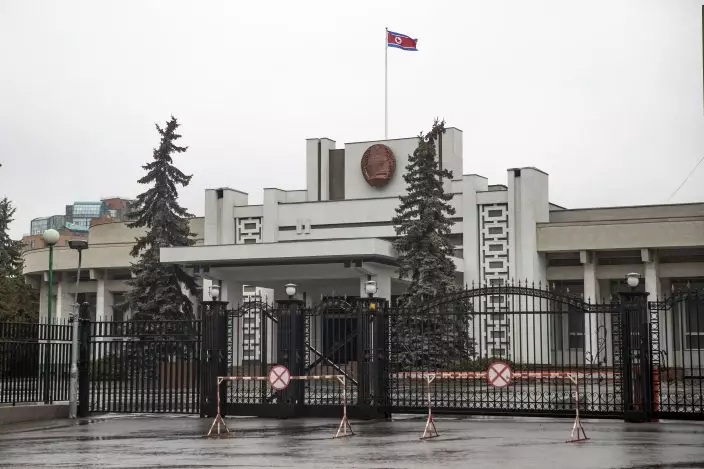
This Wednesday, Dec. 18, 2019, photo shows the building of the North Korean Embassy in Moscow, Russia. A U.N.-set deadline for member states to repatriate all North Korean workers on their soils falls on Sunday, Dec. 22. The interim U.N. reports show that about 80 percent of the North Koreans repatriated worldwide were from Russia, where most were employed in the construction, forestry and logging industries. (AP PhotoPavel Golovkin)
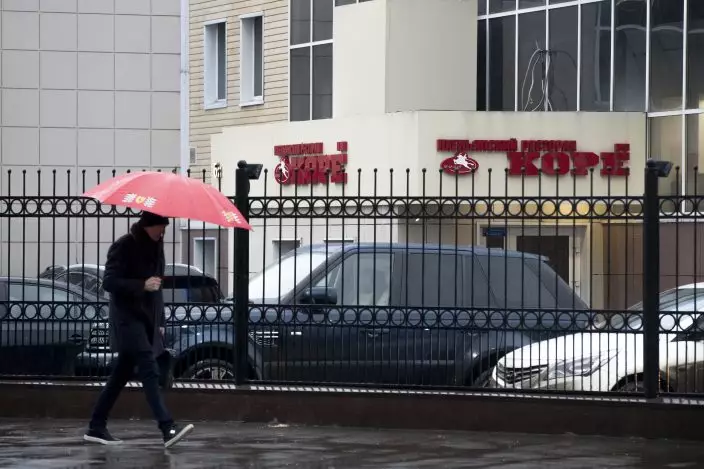
In this Wednesday, Dec. 18, 2019, photo, a man walks past an entrance of the North Korean restaurant Kope in Moscow, Russia. A U.N.-set deadline for member states to repatriate all North Korean workers on their soils falls on Sunday, Dec. 22. The interim U.N. reports show that about 80 percent of the North Koreans repatriated worldwide were from Russia, where most were employed in the construction, forestry and logging industries. (AP PhotoPavel Golovkin)
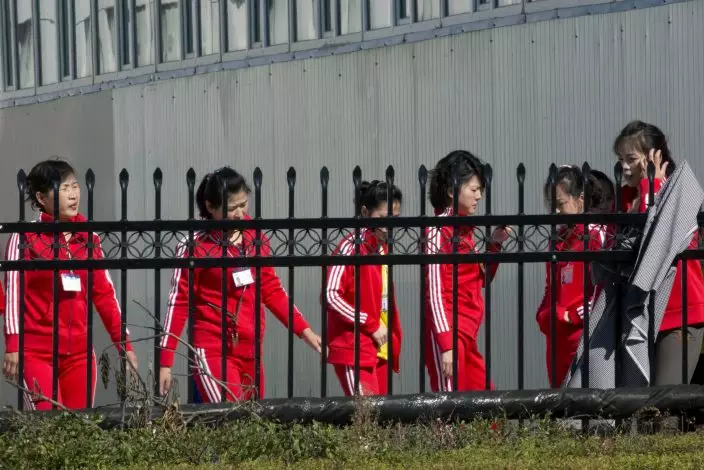
FILE - In this Sept. 30, 2017, file photo, North Korean workers gather after lunch at the Hong Chao Zhi Yi garment factory in Hunchun, in northeastern China's Jilin province. A U.N.-set deadline for member states to repatriate all North Korean workers on their soils falls on Sunday, Dec. 22, 2019. The estimate for the number of North Koreans working in China has been as high as 50,000 to 80,000, with the vast majority working in factories the country's northeast along the long border with North Korea. China hosts the most North Korean workers. (AP PhotoNg Han Guan, File)
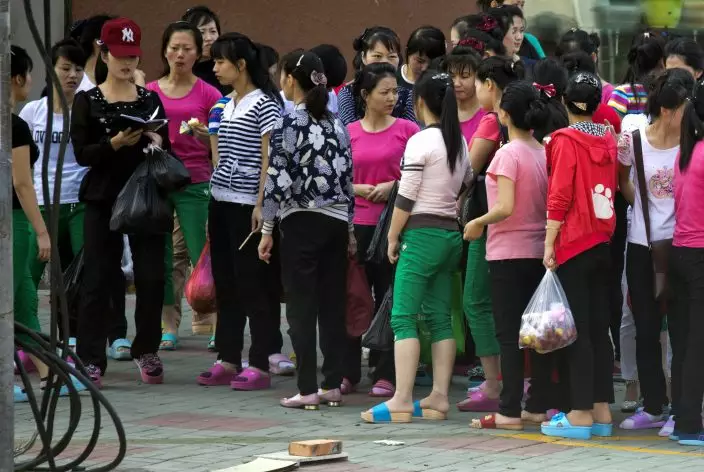
FILE - In this Sept. 2, 2017, file photo, North Korean workers from the Hong Chao Zhi Yi garment factory gather for a head count after shopping at a street market in the city of Hunchun in northeastern China's Jilin province. The estimate for the number of North Koreans working in China has been as high as 50,000 to 80,000, with the vast majority working in factories the country's northeast along the long border with North Korea. China hosts the most North Korean workers. (AP PhotoNg Han Guan, File)
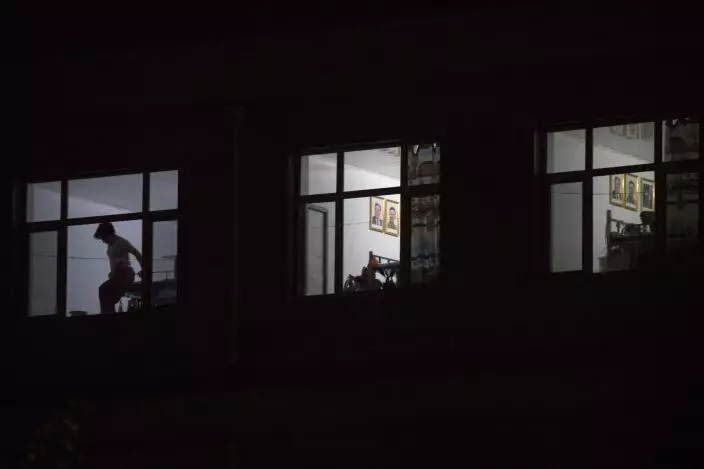
FILE - In this Sept. 4, 2017, file photo, portraits of late North Korean leaders Kim Il Sung and Kim Jong Il are hung on the walls in rooms of a dormitory for workers with the seafood processing factory Hunchun Pagoda, in the city of Hunchun in northeastern China's Jilin province. The workers wake up each morning on metal bunk beds in fluorescent-lit Chinese dormitories, North Koreans outsourced by their government to process seafood that ends up in American stores and homes. Privacy is forbidden. They cannot leave their compounds without permission. (AP PhotoNg Han Guan)
There are no U.N. penalties for not following through, however, and it appears unlikely that there will be a mass exodus of the thousands of workers still believed employed in places like China and Russia.
In this Dec. 5, 2019, photo, North Korean female workers look out of windows as the bus carrying them crosses the Sino-Korean Friendship Bridge from North Korea's Sinuiju to China's Dandong. A U.N.-set deadline for member states to repatriate all North Korean workers on their soils falls on Sunday, Dec. 22. The estimate for the number of North Koreans working in China has been as high as 50,000 to 80,000, with the vast majority working in factories the country's northeast along the long border with North Korea. China hosts the most North Korean workers. (Kyodo News via AP)
But if even half of North Korean workers were sent back home, North Korea would still suffer financially, said analyst Oh Gyeong-seob at Seoul’s Korea Institute for National Unification.
THE NUMBERS
In China, Russia and elsewhere, there is strong demand for cheap North Korean workers.
FILE - In this Sept. 4, 2017, file photo, workers at a seafood processing plant where North Korean workers are distinguished from the Chinese workers by blue overalls, wash up after work in the city of Hunchun, in northeastern China's Jilin province. A U.N.-set deadline for member states to repatriate all North Korean workers on their soils falls on Sunday, Dec. 22, 2019. The estimate for the number of North Koreans working in China has been as high as 50,000 to 80,000, with the vast majority working in factories the country's northeast along the long border with North Korea. China hosts the most North Korean workers. (AP PhotoNg Han Guan, File)
The U.S. State Department previously estimated there were about 100,000 North Korean workers worldwide, and civilian experts said those workers brought North Korea an estimated $200 million to $500 million in revenue a year.
North Korean workers abroad are under the constant surveillance of their country's security agents, toil more than 12 hours a day and take home only a fraction of their salaries, with the rest going to their government. Human rights organizations have called them modern-day slaves, but their jobs are highly coveted in North Korea.
According to interim reports that member states submitted to the U.N., 23,245 North Korean workers have so far been repatriated. But those figures don’t include China, which hasn't publicized its own report, or a dozen other countries that have yet to submit their reports and are believed to have employed North Koreans.
This Wednesday, Dec. 18, 2019, photo shows the building of the North Korean Embassy in Moscow, Russia. A U.N.-set deadline for member states to repatriate all North Korean workers on their soils falls on Sunday, Dec. 22. The interim U.N. reports show that about 80 percent of the North Koreans repatriated worldwide were from Russia, where most were employed in the construction, forestry and logging industries. (AP PhotoPavel Golovkin)
CHINA
The estimate for the number of North Koreans working in China has been as high as 50,000 to 80,000, with the vast majority working in factories the country's northeast along the long border with North Korea. China hosts the most North Korean workers.
Lim Soo-ho, a sanctions expert at Seoul’s Institute for National Security Strategy, said Beijing would find it difficult to persuade local governments in the region to send those workers home as their small special economic zones mainly rely on North Korean labor.
In this Wednesday, Dec. 18, 2019, photo, a man walks past an entrance of the North Korean restaurant Kope in Moscow, Russia. A U.N.-set deadline for member states to repatriate all North Korean workers on their soils falls on Sunday, Dec. 22. The interim U.N. reports show that about 80 percent of the North Koreans repatriated worldwide were from Russia, where most were employed in the construction, forestry and logging industries. (AP PhotoPavel Golovkin)
Lim said he has seen no signs that the number of North Korean workers in northeastern China was decreasing.
Kim Donggil, a Korea expert at Beijing’s Peking University, said China would be lax in enforcing repatriation.
Staff at North Korean restaurants in Beijing shut their doors and hung up phones when asked about whether they would be sending North Korean employees back home.
FILE - In this Sept. 30, 2017, file photo, North Korean workers gather after lunch at the Hong Chao Zhi Yi garment factory in Hunchun, in northeastern China's Jilin province. A U.N.-set deadline for member states to repatriate all North Korean workers on their soils falls on Sunday, Dec. 22, 2019. The estimate for the number of North Koreans working in China has been as high as 50,000 to 80,000, with the vast majority working in factories the country's northeast along the long border with North Korea. China hosts the most North Korean workers. (AP PhotoNg Han Guan, File)
RUSSIA
The interim U.N. reports show that about 80 percent of the North Koreans repatriated worldwide were from Russia, where most were employed in the construction, forestry and logging industries.
A Russian interim report said the number of North Koreans with valid work permits in the country decreased to 11,490 in late 2018 from 30,023 a year earlier. Public records show the Labor Ministry hasn’t issued a single work authorization for North Korean workers this year.
FILE - In this Sept. 2, 2017, file photo, North Korean workers from the Hong Chao Zhi Yi garment factory gather for a head count after shopping at a street market in the city of Hunchun in northeastern China's Jilin province. The estimate for the number of North Koreans working in China has been as high as 50,000 to 80,000, with the vast majority working in factories the country's northeast along the long border with North Korea. China hosts the most North Korean workers. (AP PhotoNg Han Guan, File)
There are signs that more North Korean workers are preparing to return home.
North Korea’s national airliner, Air Koryo, temporarily increased the number of flights from Vladivostok to Pyongyang in the second half of December, while train tickets this month from the Russian city of Ussuriysk to Pyongyang have already sold out, according to Russian data.
One company, the Yenisei construction company based in Krasnoyarsk in eastern Siberia, said they no longer employ any North Korean workers and are in fact going out of business.
FILE - In this Sept. 4, 2017, file photo, portraits of late North Korean leaders Kim Il Sung and Kim Jong Il are hung on the walls in rooms of a dormitory for workers with the seafood processing factory Hunchun Pagoda, in the city of Hunchun in northeastern China's Jilin province. The workers wake up each morning on metal bunk beds in fluorescent-lit Chinese dormitories, North Koreans outsourced by their government to process seafood that ends up in American stores and homes. Privacy is forbidden. They cannot leave their compounds without permission. (AP PhotoNg Han Guan)
“North Korean workers were good for us from many aspects — soft power, economics, political influence," Russia's ambassador to North Korea, Alexander Matsegora, said in a recent interview with the Vladivostok radio. "Now we are going to lose all that.”
ELSEWHERE
The United Arab Emirates repatriated 823 North Korean workers, more than half of the North Koreans who were earning income in the country, as of December 2017, according to an interim report by the country in March.
Qatar told the U.N. in March that there were only 70 North Koreans working in the country, down from about 2,500 in January 2016. Most of the North Koreans had been working in construction, though Qatar has said none of them had ever worked on construction sites related to the 2022 World Cup.
Kuwait, which once had thousands of North Korean laborers, said it has sent back more than half of them.
Vietnam said in June that it repatriated 51 North Korean workers. Singapore said in March that it revoked the work permits of all North Korean nationals and had not granted new ones.
Experts say North Korea has also sent workers to at least 13 African nations, including Uganda, Angola, Ethiopia, Senegal, South Africa and Equatorial Guinea. Only Equatorial Guinea has filed an interim U.N. report, though it didn’t give a say how many North Koreans had been repatriated.